
18 Practical Content Marketing Hacks To Boost Online Growth
These content marketing hacks can help you strengthen your online presence, attract the right audience, and achieve better marketing results. However, creating content alone doesn’t guarantee long-term business growth or meaningful engagement.
You need practical strategies to improve visibility, reach potential customers, and make your content more effective. From optimizing existing articles to using smarter distribution techniques, these 18 approaches can help you build a stronger content marketing strategy.
18 Powerful Content Marketing Hacks To Boost Your Results
Content marketing hacks can help you reach a wider audience, strengthen engagement, and make your marketing efforts more effective. Small improvements to your existing content marketing strategy can produce meaningful results without requiring a larger budget.
The following 18 practical techniques cover everything from SEO and content creation to social media marketing and audience engagement. Whether you’re a blogger, freelancer, or online business owner, these ideas can help you build a stronger online presence and support long-term growth.
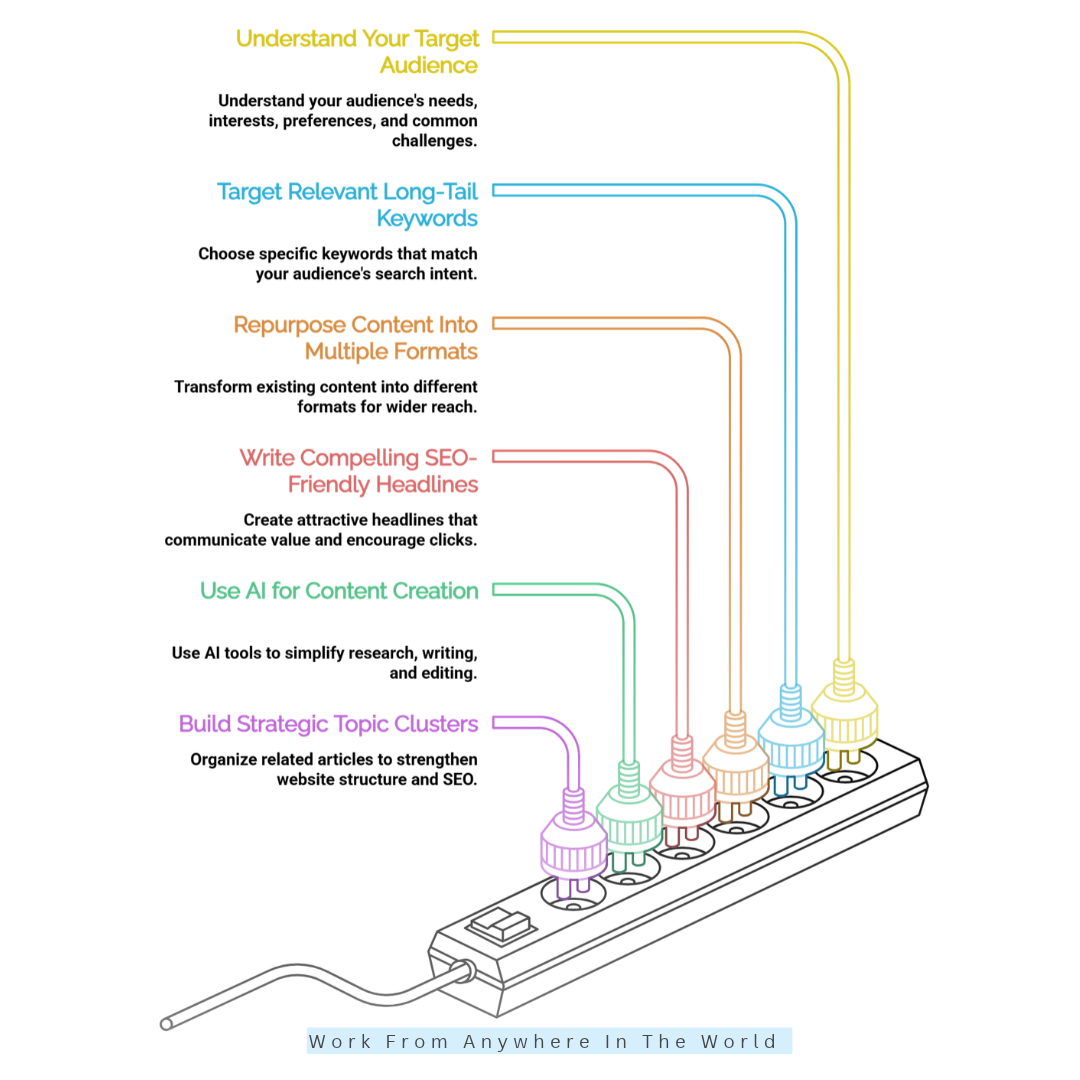
1. Identify Your Target Audience Before Creating Content
Understanding your target audience helps you produce content that speaks directly to their concerns, questions, and interests. Start by identifying their age group, professional background, online behaviour, and common problems.
You can collect useful insights through customer feedback, social media discussions, Google Analytics, and audience surveys. These resources help you understand what potential readers need and how they interact with your content.
For example, if you target beginner bloggers, topics such as keyword research, website optimization, and content planning may attract their attention.
Audience research also helps you choose suitable content formats and distribution channels. When your content matches what people are looking for, it becomes more valuable and encourages meaningful engagement.
2. Target Long-Tail Keywords To Attract Relevant Traffic
Long-tail keywords are specific search phrases that often reveal what users are looking for. Targeting these keywords can help your website reach audiences with particular questions or needs.
Instead of focusing only on a broad term like “content marketing,” consider phrases such as “content marketing strategies for small businesses.” Our guide on identifying long-tail keywords explains how to find relevant search phrases.
Tools like Semrush, Ahrefs, and Ubersuggest can help identify keyword opportunities. You can also explore Google’s autocomplete suggestions and People Also Ask questions for additional keyword ideas.
Choose phrases that match your article’s purpose and search intent. Our guide to long-tail keyword finder tools offers more options for researching keywords and creating focused content without unnecessarily competing for broad terms.
3. Repurpose Existing Content Into Multiple Formats
Repurposing content lets you reach different audiences without creating every piece from scratch. For example, one detailed blog post can become several LinkedIn updates, Instagram carousels, Pinterest pins, short videos, and email newsletters.
Each format can highlight a different section of the original article. You can also turn a webinar into a blog post or transform customer questions into educational social media content.
Canva, CapCut, and ChatGPT can help simplify this process. Our guide on using Canva offers practical ideas for creating visual content for different platforms.
Adapt your message to each platform rather than copying identical content everywhere. This strategy saves production time and helps maintain a consistent publishing schedule.
4. Write SEO-Friendly Headlines That Encourage Clicks
Your headline influences whether someone decides to explore your content. A clear, specific, and benefit-focused title can make an article more appealing in search results and social media feeds.
Try including relevant keywords, numbers, and descriptive power words where appropriate. For example, “Content Marketing Tips” is less specific than “25 Powerful Content Marketing Tips to Grow Your Business.”
Make sure your headline accurately reflects the information inside the article. You can experiment with different title structures and review their click-through rates using Google Search Console.
Effective headlines communicate an article’s value while setting clear expectations for readers. Avoid exaggerated promises and focus on helping readers understand what they’ll gain from your content.
5. Use AI Tools To Improve Your Content Creation Process
AI-powered tools can make content research, planning, and editing more efficient. ChatGPT can help generate blog topics, organize outlines, suggest headlines, and identify potential subtopics.
Grammarly can assist with grammar and readability, while Canva supports visual content creation. Our Canva Review explores its features for designing graphics, presentations, and other marketing materials.
You can also use AI to summarize research materials and develop social media content ideas. However, AI-generated information requires human review because it may contain outdated details, unsupported claims, or repetitive explanations.
Adding original examples, professional insights, and reliable references helps improve the final result. Treat AI as a productivity assistant, not a replacement for editorial judgment.
6. Develop Topic Clusters To Strengthen Your Website SEO
Topic clusters organize related articles around a central subject, helping your website build comprehensive topical coverage. Start with a pillar page covering a broad topic, then create supporting articles that explore individual areas in greater detail.
For example, a content marketing pillar page could link to articles about keyword research, content calendars, blog writing, and content distribution.
Connect these pages using relevant internal links and descriptive anchor text. Our guide on building internal links for SEO explains how to connect related content effectively.
This structure helps visitors discover useful resources while giving search engines additional context about your website. It also provides a clear content roadmap, making it easier to plan future articles around your primary niche.
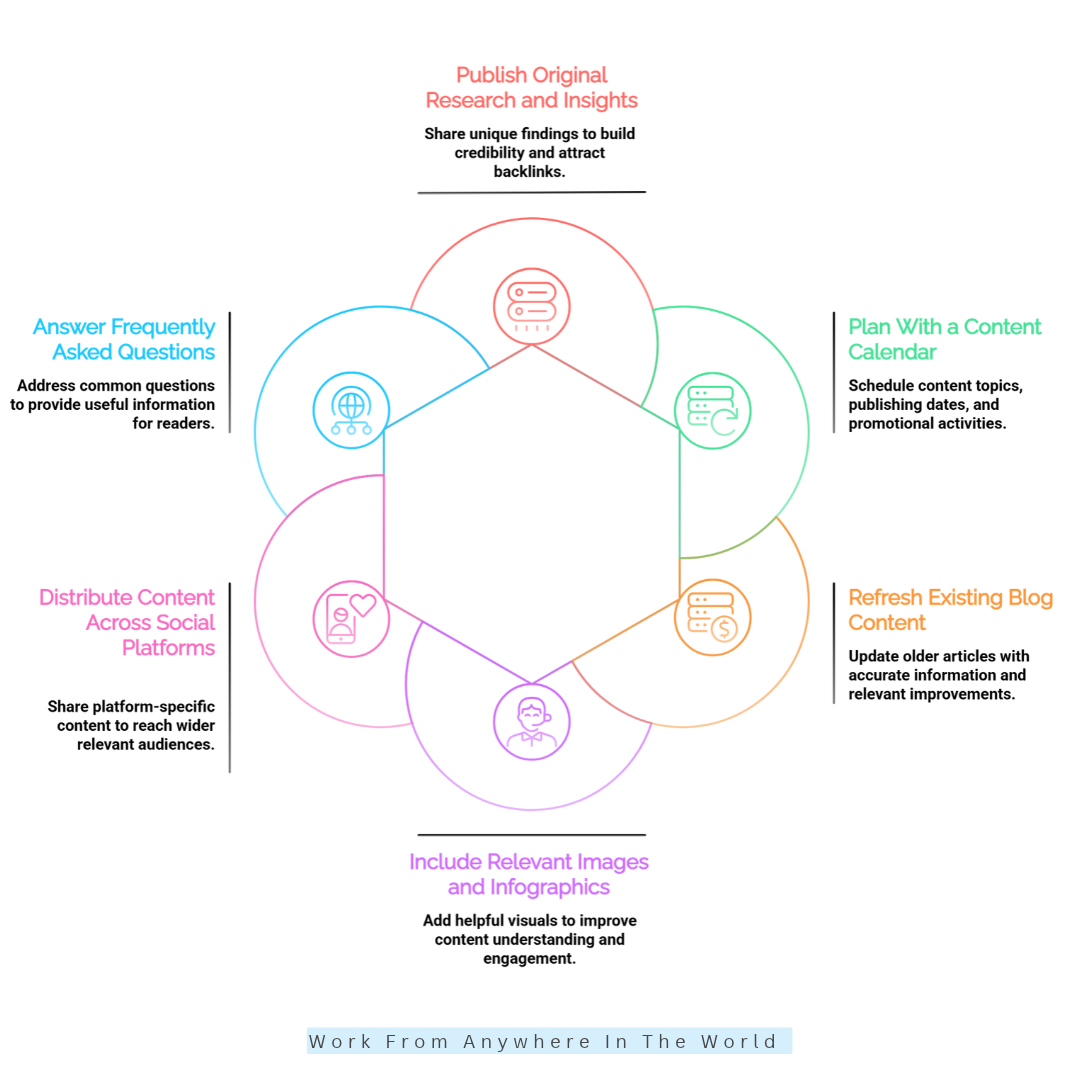
7. Publish Original Research To Make Your Content Stand Out
Original research gives readers information they may not find in ordinary articles. You can conduct customer surveys, analyze industry data, interview professionals, or examine trends within your business.
For example, a marketing agency could survey small business owners about their biggest content creation challenges and publish the findings in a detailed report. Include relevant charts, explanations, and practical observations to make the research easier to understand.
When using external statistics, verify the source and publication date. You can also explore existing social media growth statistics to understand how published data can support your research.
Original findings can strengthen your content’s credibility and give other publishers valuable information to reference. They may also create opportunities to earn relevant backlinks, which you can explore further in our guide to backlinking strategies.
8. Create A Monthly Content Marketing Calendar
A content marketing calendar helps organize topics, publishing dates, platforms, and promotional activities. Begin by defining your primary content categories and choosing achievable publishing goals that support your overall content marketing strategy.
For example, you could publish four blog posts, eight social media graphics, and four short videos each month. Assign specific dates for research, writing, editing, and distribution.
Tools like Google Sheets, Trello, and Notion can help manage the schedule. Our Trello App Review explores how this project management tool can help organize tasks and track progress.
A monthly calendar also makes it easier to plan seasonal campaigns and coordinate content across different platforms. For businesses managing multiple channels, a clear LinkedIn content strategy can complement the broader publishing schedule.
Most importantly, a content calendar gives you a clear overview of upcoming activities and reduces last-minute content creation.
9. Update Old Blog Posts To Improve Organic Search Traffic
Older articles can provide valuable opportunities to improve website performance. Review existing posts to identify outdated information, missing sections, broken links, and declining search visibility.
Google Search Console can identify pages that receive impressions yet attract relatively few clicks. Our guide to SEO strategies for organic traffic explores additional ways to improve search visibility.
Consider refining your page titles, summaries, internal links, examples, and accompanying visuals. You can also explore our steps to increase organic traffic for more practical SEO tips.
Add relevant information that reflects changes in your industry. For example, an article about social media marketing tools may need updated platform features and recommendations.
Focus on making the content more accurate and useful rather than changing publication dates without meaningful improvements.
Wealthy Affiliate – Mini Review
If you’ve ever thought about turning your blog, passion, or niche into an online business,
Wealthy Affiliate (WA) is one of the most beginner-friendly platforms I’ve used.
It combines step-by-step training, website hosting, AI-powered tools,
keyword research, and an active community all in one place.
What I like most is that you can start for free (no credit card needed), explore the platform,
test the tools, and connect with other entrepreneurs before upgrading.
WA isn’t a “get rich quick” scheme — success comes from consistent effort
and applying what you learn over time.
10. Add Relevant Images And Infographics To Blog Posts
Visuals help readers understand complex information more easily and enhance the overall reading experience. You can include screenshots, diagrams, comparison graphics, and infographics to support important sections of an article.
For example, a blog about email marketing automation could feature a visual workflow showing how subscribers receive different emails. Our guide on how to create infographics offers additional ideas for presenting information visually.
Canva and Adobe Express are useful tools for creating professional graphics. For website optimization, compress images, use descriptive file names, and add meaningful alternative text.
You can also explore WordPress image optimizer plugins to help reduce image file sizes and improve loading performance.
Choose visuals that directly support the topic instead of adding decorative images without purpose. Well-organized visuals can make long articles more engaging and accessible.
11. Promote Blog Posts Across Multiple Social Media Platforms
Social media distribution helps your content reach audiences beyond organic search visitors. However, each platform has different content preferences and audience behaviours.
LinkedIn is useful for professional insights, Pinterest supports visual content discovery, Instagram works well for short videos and carousels, and YouTube offers opportunities for detailed tutorials.
Instead of sharing the same message everywhere, adapt your content to each platform. Our Instagram marketing tips and Pinterest marketing strategies offer additional ideas for reaching audiences on these platforms.
For example, a blog about SEO strategies could become a LinkedIn educational post, an Instagram carousel, and a Pinterest infographic. You can also explore Facebook post ideas for small businesses and YouTube content ideas to expand your promotional activities.
Our guide on sharing content on social media provides additional distribution ideas. When needed, include relevant links to encourage potential customers to visit your website and explore the full source.
12. Answer Popular Questions In Your Blog Content
Answering frequently asked questions helps you address the specific concerns people have about your topic. You can discover useful questions through Google’s People Also Ask section, autocomplete suggestions, customer conversations, and online communities.
For example, an article about content marketing could answer questions about its benefits, costs, tools, and effectiveness. Organize these questions under descriptive H2 or H3 headings and provide clear, informative explanations.
A relevant FAQ section can improve content completeness and help readers find answers quickly. It may also support search visibility by covering related queries, although featured snippets and rich results are never guaranteed.
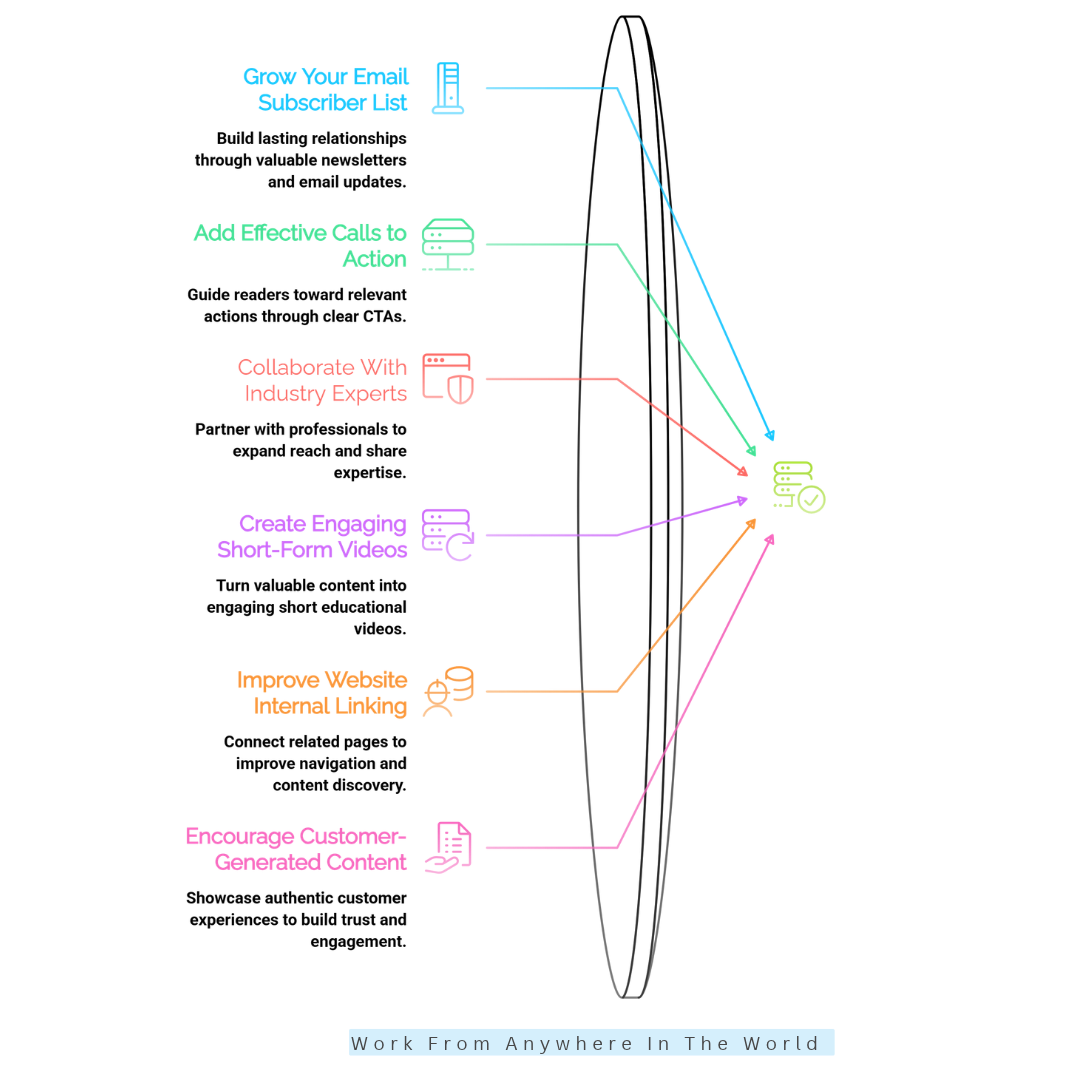
13. Build An Email Subscriber List For Long-Term Engagement
Businesses can interact directly with consumers who are interested in their content through email marketing. Our guide to building an email list explores practical ways to attract subscribers and grow your audience.
You can encourage website visitors to subscribe by offering useful resources such as free templates, checklists, e-books, or exclusive newsletters. For example, a marketing blog could provide a downloadable 30-day content calendar in exchange for an email subscription.
Platforms like Mailchimp, Brevo, and Kit can help manage subscribers and organize campaigns. Our guide to email marketing tools for beginners explores different options for managing email campaigns.
Focus on sending relevant information, practical advice, and occasional business updates. Our email marketing content strategies offer additional ideas for creating messages that keep subscribers engaged.
A valuable email newsletter can encourage repeat website visits, strengthen audience relationships, and support future marketing campaigns.
14. Add Strategic Calls To Action To Important Content
Calls to action encourage readers to take a meaningful next step after exploring your content. You may ask visitors to download a resource, read another article, sign up for a newsletter, or contact your company, depending on your marketing objectives.
For example, a blog about SEO strategies could include a CTA offering a free website optimization checklist. You can also build a landing page for free to give interested visitors a dedicated place to access your offer.
Place calls to action where they naturally connect with the surrounding information. Use clear and benefit-focused language so readers understand what they will receive.
A relevant CTA encourages readers to become subscribers, explore your services, or take other meaningful actions without making your content overly promotional. Our guide to eCommerce conversion rate optimization strategies explores additional ways to encourage visitors to take action.
15. Collaborate With Industry Experts And Relevant Bloggers
Collaborating with industry professionals can introduce your content to new audiences and provide additional perspectives. You could conduct expert interviews, contribute guest articles, participate in industry discussions, or create joint educational resources.
Our guide to guest blogging explores this approach, while our guest posting best practices offer practical advice for contributing content to other websites.
For example, a digital marketing blogger could interview an SEO specialist about website optimization challenges. These collaborations can make your content more informative while creating opportunities to build professional relationships.
Choose partners whose expertise and audience interests match your subject. Our networking guide for beginners offers additional ideas for building professional connections.
Focus on providing useful information rather than collaborating only to exchange promotional mentions. Relevant partnerships can also lead to natural backlinks and additional content distribution opportunities.
16. Create Short Videos To Promote Educational Content
Short-form videos offer an effective way to communicate useful information through quick demonstrations and explanations. You can explore the role of video content in social media to understand how videos support audience engagement.
You can turn individual sections of your existing blog posts into short videos for Instagram Reels, TikTok, and YouTube Shorts. For example, an article about website SEO could inspire videos explaining keyword placement, internal linking, and image optimization.
Keep each video focused on one main idea, and use readable captions for viewers watching without sound. Tools such as CapCut and Canva can help with editing.
You can also explore current video marketing trends for additional content ideas. Point viewers to your website for more instructional materials, examples, and in-depth tutorials.
17. Strengthen Your Content Strategy With Internal Links
Internal linking connects related pages on your site, allowing visitors to access more information. For example, a blog about content marketing could link to supporting articles about keyword research, SEO-friendly content writing, and social media promotion.
Use anchor text that is descriptive and accurately conveys what visitors can expect to find when they click. You can also link supporting articles back to relevant pillar pages to create a more organized website structure.
Review important pages regularly to identify opportunities for relevant internal links and fix broken destinations. An effective internal linking approach enhances navigation and helps search engines understand the connections between pages.
18. Encourage Customers To Share User-Generated Content
User-created content includes customer reviews, images, testimonials, videos, and social media updates that highlight your products or services. It offers an opportunity to showcase genuine customer experiences rather than relying entirely on brand-created promotional material.
For instance, a virtual pet shop might encourage customers to post images of their pets playing with toys they’ve bought. You can feature suitable submissions on your website or social media accounts after obtaining permission.
Encourage participation through branded hashtags, customer feedback requests, and community campaigns. Our guide to social media engagement strategies offers additional ways to encourage audience interaction.
Authentic user contributions can make your brand more relatable and provide helpful information for people considering your products.
Best Content Marketing Tools To Improve Productivity
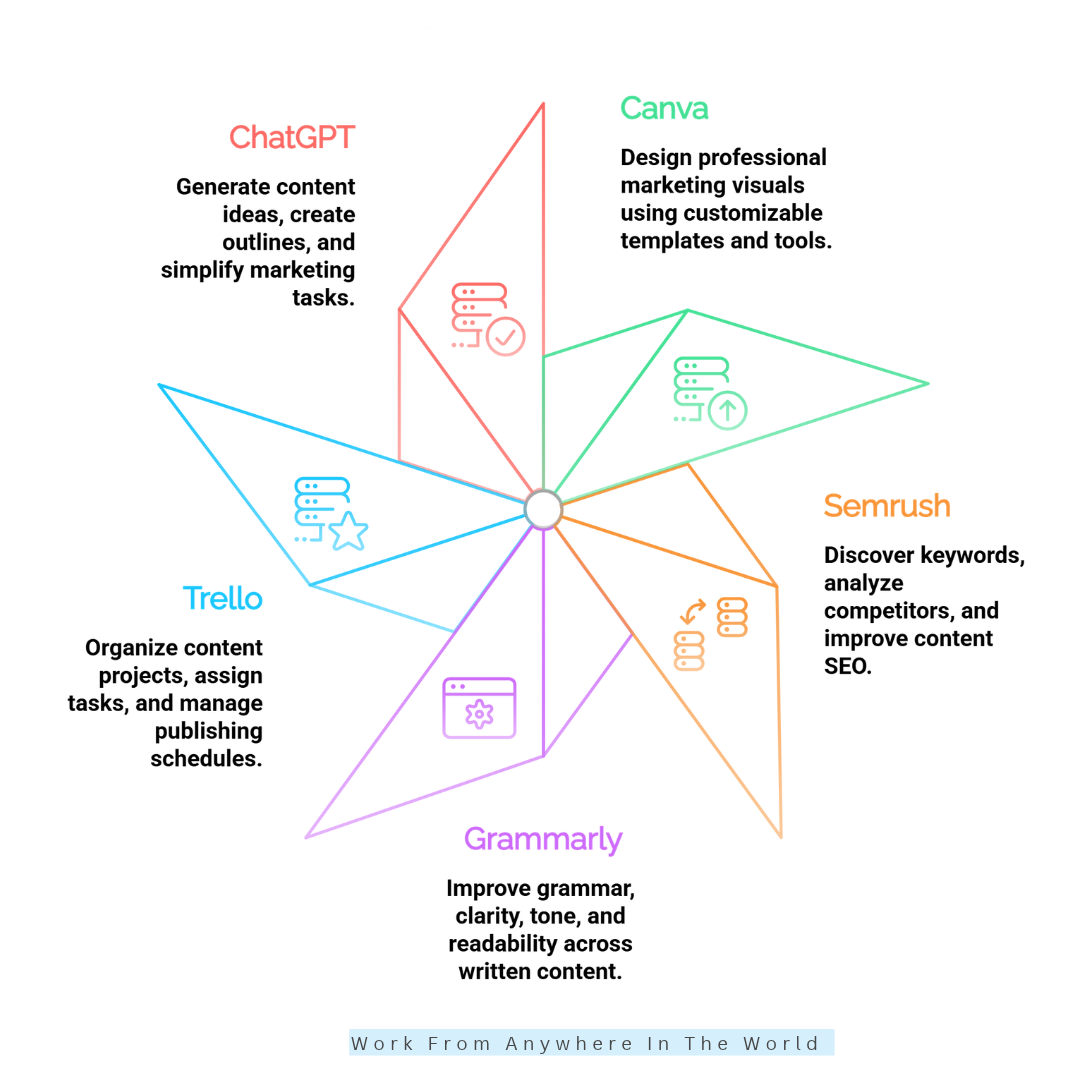
The right content marketing tools can simplify research, writing, design, publishing, and performance tracking. Here are five useful tools to consider:
1. ChatGPT
ChatGPT helps marketers brainstorm blog topics, develop content outlines, generate social media ideas, and organize marketing campaigns. You can also use it to improve headlines, summarize research, and repurpose existing articles into different formats.
It supports content planning and creative workflows, making it useful for bloggers, freelancers, and marketing teams.
2. Canva
Canva makes it easier to create professional-looking marketing visuals without advanced graphic design skills. You can design blog graphics, Pinterest pins, Instagram carousels, presentations, and promotional materials using customizable templates.
Its collaboration and brand management features also help teams maintain consistent visual styles across different marketing platforms.
3. Semrush
Semrush provides useful features for keyword research, competitor analysis, SEO audits, and content planning. Marketers can discover relevant search terms, evaluate keyword opportunities, and identify topics that attract potential customers.
Its content marketing features also support topic research and content optimization, helping businesses develop more focused organic marketing strategies. Our Semrush review explores its features and overall value.
4. Grammarly
Grammarly helps improve written content by identifying grammatical mistakes, spelling issues, and unclear sentences. It also suggests improvements to tone, clarity, and readability.
Bloggers and marketers can use it to review website copy, email newsletters, social media captions, and articles before publishing. This makes the editing process faster and more consistent.
5. Trello
Trello helps organize content marketing projects through visual boards, lists, and task cards. You can create separate workflows for topic research, writing, editing, approval, and publishing.
It also lets teams assign responsibilities, set deadlines, and monitor progress. This makes managing editorial calendars and coordinating multiple content projects easier.
Frequently Asked Questions
Q1: What Are The Four Primary Categories Of Content Marketing?
The four main categories are written, visual, video, and audio content. Examples include blog posts, infographics, educational videos, and podcasts.
Each format serves different audience preferences and marketing goals. Combining several formats can help businesses reach more people and present information in engaging ways.
Q2: What Steps Should I Follow To Develop A Content Marketing Strategy?
Start by identifying your target audience, setting clear objectives, researching relevant keywords, and choosing appropriate content formats. Establish a realistic publishing schedule to maintain consistency.
Monitor your results using website analytics and audience feedback. Adjust your strategy over time to improve engagement, search visibility, and content effectiveness.
Q3: Is Content Marketing Good For Small Businesses?
Yes. Content marketing helps small businesses build brand awareness, attract potential customers, establish credibility, and generate leads without relying entirely on paid advertising.
Publishing useful blog posts, videos, and social media content can also strengthen customer relationships. Consistent, relevant information encourages visitors to return and learn more about your business.
Q4: How Does Content Marketing Help SEO?
Content marketing supports SEO by targeting relevant keywords, answering search queries, attracting backlinks, and creating opportunities for internal linking.
Well-organized, informative articles help search engines understand your website’s subject matter. Regularly updating existing content can also improve its usefulness and support long-term organic visibility.
Q5: How Often Should I Publish Content For Effective Marketing?
There is no fixed publishing frequency that works for every business. Your ideal schedule depends on your audience, available resources, and marketing goals.
Focus on publishing valuable, well-researched content consistently rather than producing large quantities of rushed articles. Even one or two quality blog posts each week can support a sustainable content marketing strategy.
Q6: How Can I Measure The Success Of My Content Marketing Efforts?
You can measure content marketing success by tracking website traffic, search rankings, audience engagement, email subscriptions, and conversions. Tools such as Google Analytics and Google Search Console provide useful performance insights.
Review which articles attract visitors, encourage engagement, and generate meaningful actions. Use these findings to improve existing content and plan future marketing campaigns more effectively.
Conclusion
Successful content marketing is about creating valuable information, understanding your audience, and building meaningful connections. The right strategies and tools can simplify content creation, improve productivity, and help you reach potential customers across different platforms.
Whether you’re managing a blog, promoting a small business, or growing a brand, consistency and quality matter. Start with practical improvements, monitor your results, and refine your approach over time to build a sustainable content marketing strategy.
I trust you enjoyed these 18 Practical Content Marketing Hacks To Boost Online Growth. Please stay tuned for more insightful blogs on affiliate marketing, online business, and working from anywhere in the world.
Take care!
— JeannetteZ 🌍✨
💬 Your Opinion Is Important To Me
Do you have thoughts, ideas, or questions? I’d love to hear from you. Please leave your comments below or email me directly at Jeannette@WorkFromAnywhereInTheWorld.com.
📚 More Work From Anywhere Reads
🚀 Ready to Build a Business You Can Run from Home
Or from Anywhere in the World?
Imagine earning income on your terms — from home, a cozy café, or wherever life takes you.
With the right tools, training, and community support, it’s entirely possible.
Start your own online business for free — no credit card needed.
Disclosure
This post may contain affiliate links. As an Amazon Associate and participant in other affiliate programs, I earn from qualifying purchases at no extra cost to you. Please read my full affiliate disclosure.