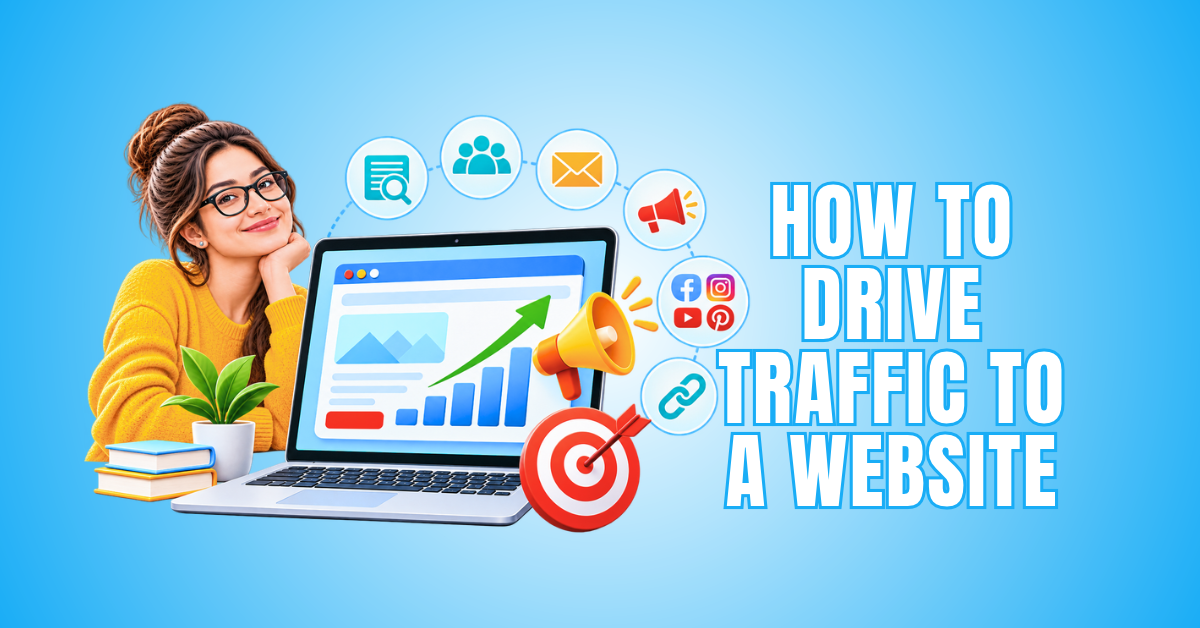
How To Drive Traffic To A Website: 14 Proven Strategies
Learning how to drive traffic to a website is essential for bloggers, entrepreneurs, and online business owners who want to reach more people. Creating a website is an exciting first step, but attracting visitors helps turn it into a valuable online resource.
Whether you manage a blog, an online store, or a business website, consistent traffic creates opportunities to connect with potential customers. It also helps you share useful information and strengthen your online presence.
A successful website traffic strategy combines search engine optimization (SEO), valuable content, social media, and targeted promotion. Each approach can help you reach different audiences and encourage visitors to explore your website.
You don’t need a large advertising budget to get started. Begin with affordable strategies, monitor your results, and gradually expand your efforts as your website grows.
14 Proven Ways To Drive Traffic To A Website
Learning how to drive traffic to a website involves more than publishing content and hoping visitors will find it. A successful approach combines several strategies that work together to improve visibility and attract the right audience.
From search engine optimization and social media promotion to email marketing and paid advertising, each method offers different opportunities. Choosing the right combination depends on your audience, goals, and available resources.
You don’t need to implement all 14 strategies at once. Start with the methods that suit your website, track your progress, and gradually expand your efforts as you discover what works best.
1. Strengthen Your Website’s Search Engine Optimization (SEO)
Search engine optimization (SEO) is one of the most effective ways to attract visitors actively searching for information, products, or services. Strong SEO practices help search engines understand your content and connect it with relevant audiences.
Start by identifying keywords that match your audience’s search intent. Our guide to the best free keyword research tools explores resources that can help you discover suitable topics and search phrases.
Choose one primary topic for each important page or article. Include its main keyword naturally in the title tag, H1 heading, URL, introduction, and relevant subheadings without forcing unnecessary repetition.
Technical SEO is equally important for long-term visibility. Improve crawlability, indexability, mobile usability, page loading speed, and your website’s overall structure to help search engines access your content.
Internal linking also helps visitors discover related information while allowing search engines to understand connections between pages. Our guide on how to build internal links for SEO explains practical ways to strengthen your website’s linking structure.
Set up Google Search Console to monitor search impressions, clicks, queries, and indexing issues. Reviewing this information regularly can reveal opportunities to improve existing articles.
Strong SEO fundamentals can also help search engines discover content that may appear in AI-powered search experiences. However, visibility in these features is not guaranteed, and search performance depends on many factors.
Semrush’s April 2026 analysis of more than 50,000 websites reported that organic search generated over one trillion visits worldwide in 2025. This finding highlights the continued importance of organic search as a traffic source.
How To Implement SEO
- Research relevant keywords: Learn how to use Semrush for keyword research or explore our Ahrefs keyword research guide to discover search terms that match your audience’s interests and search intent.
- Match keywords with appropriate pages: Give each important article or landing page a clear primary topic and search intent.
- Optimize on-page SEO: Improve page titles, headings, URLs, meta descriptions, and introductory paragraphs without keyword stuffing.
- Strengthen technical SEO: Check mobile usability, page speed, crawlability, indexing, and internal linking to support website accessibility.
- Monitor organic performance: Use Google Search Console to identify search trends, review indexing issues, and discover opportunities for improvement.
2. Optimize Your Content For Generative AI Search (GEO)
Generative Engine Optimization (GEO) focuses on improving your content’s visibility in AI-powered search experiences. These include ChatGPT, Perplexity, and Google’s AI Overviews, where users can discover information through conversational answers.
People increasingly use AI tools to research topics, compare products, and explore recommendations. For bloggers and entrepreneurs, this creates another opportunity to reach audiences beyond traditional search results.
AI is also creating opportunities for entrepreneurs who want to develop new income streams. Our guide to AI content creation side hustles explores ways to use AI-assisted tools for creative projects and online business opportunities.
Begin by creating original, well-researched content that answers your audience’s questions directly. Our guide on writing SEO-friendly content explores ways to make articles useful, organized, and easier for search engines to understand.
Include first-hand experiences, relevant examples, credible references, and accurate statistics whenever appropriate. These details can make your articles more informative and distinguish them from generic content.
For example, a blogger reviewing a web hosting provider could share screenshots, explain the setup process, and describe actual experiences. Such information gives readers practical insights that generic product descriptions may lack.
Clear organization also matters. Use descriptive headings, concise explanations, and logical sections so readers and search systems can identify important information without unnecessary confusion.
Our article on how to make your content better offers additional ideas for improving clarity, usefulness, and reader engagement.
Technical accessibility remains essential. Make sure important pages can be crawled and indexed, and avoid unintentionally blocking search engines from accessing valuable content.
According to Google’s guidance on AI search features, established SEO practices remain relevant. Websites don’t need special AI-specific markup to become eligible for Google’s AI-powered search experiences.
However, GEO does not guarantee that an AI assistant will mention, cite, or recommend your website. Visibility depends on the platform, the question being asked, and how its search and retrieval systems operate.
How To Implement GEO
- Identify relevant audience questions: Research the questions people ask about your niche, including those they may submit to AI assistants when comparing products or seeking advice.
- Create original, comprehensive answers: Provide clear explanations, practical examples, and useful information that addresses readers’ needs rather than simply repeating existing articles.
- Support important claims with trustworthy sources: Reference official documentation, reputable research, and reliable statistics to strengthen accuracy and credibility.
- Demonstrate genuine expertise and experience: Share first-hand observations, original photographs, testing results, or practical knowledge whenever they add value.
- Monitor AI referral visits and brand visibility: Review available referral data in your analytics tools and observe how your brand appears in relevant AI search experiences, recognizing that some visits may not be identifiable as AI referrals.
3. Publish Original, Experience-Based Blog Content
Publishing helpful, original content gives people a reason to discover your website and return for more information. However, producing large numbers of articles doesn’t automatically guarantee increased traffic.
Readers appreciate practical advice, genuine experiences, and useful examples that go beyond information available elsewhere. Our guide on writing high-quality blog posts explores ways to create informative articles that engage readers.
Start by researching your audience’s needs and identifying gaps in existing content. Look for questions that competing articles haven’t answered thoroughly or topics that could benefit from clearer explanations.
For example, a gardening blogger could share original photographs, seasonal observations, and practical growing experiences. Documenting successful techniques and unexpected challenges gives readers valuable first-hand insights.
Our article on gardening influencers explores how passionate gardeners share their knowledge, inspire audiences, and build opportunities around their gardening experiences.
Product reviews can also benefit from experience-based content. Explain how you evaluated products, describe their advantages and limitations, and include relevant comparisons when possible.
Original screenshots, photographs, tables, and demonstrations can make complicated information easier to understand. These elements are especially useful when explaining software, reviewing products, or teaching practical skills.
A thoughtful content marketing strategy also helps you connect individual articles with broader business goals. This includes choosing relevant topics and creating content that addresses different audience needs.
Remember to review older articles whenever important information changes. Updating outdated instructions, broken links, and inaccurate statistics helps maintain your website’s usefulness and credibility.
Our guide to common blogging mistakes explores additional issues that can affect content quality and long-term blogging success.
Google’s people-first content guidance emphasizes originality, reliability, and satisfying reader experiences. Focus on publishing content that genuinely helps your audience rather than simply increasing your article count.
How To Implement Experience-Based Content
- Research audience questions: Use Google autocomplete, keyword research tools, and reader feedback to identify topics people genuinely want to explore.
- Analyze competing articles: Look for missing explanations, unanswered questions, outdated information, or opportunities to provide more useful examples.
- Prepare a detailed outline: Organize your main ideas, supporting information, and practical examples before writing to create a logical article structure.
- Include original insights and experiences: Add photographs, screenshots, product observations, demonstrations, and first-hand examples whenever they improve understanding.
- Verify and update information: Check key facts, review credible sources, and refresh outdated content to keep it accurate and useful.
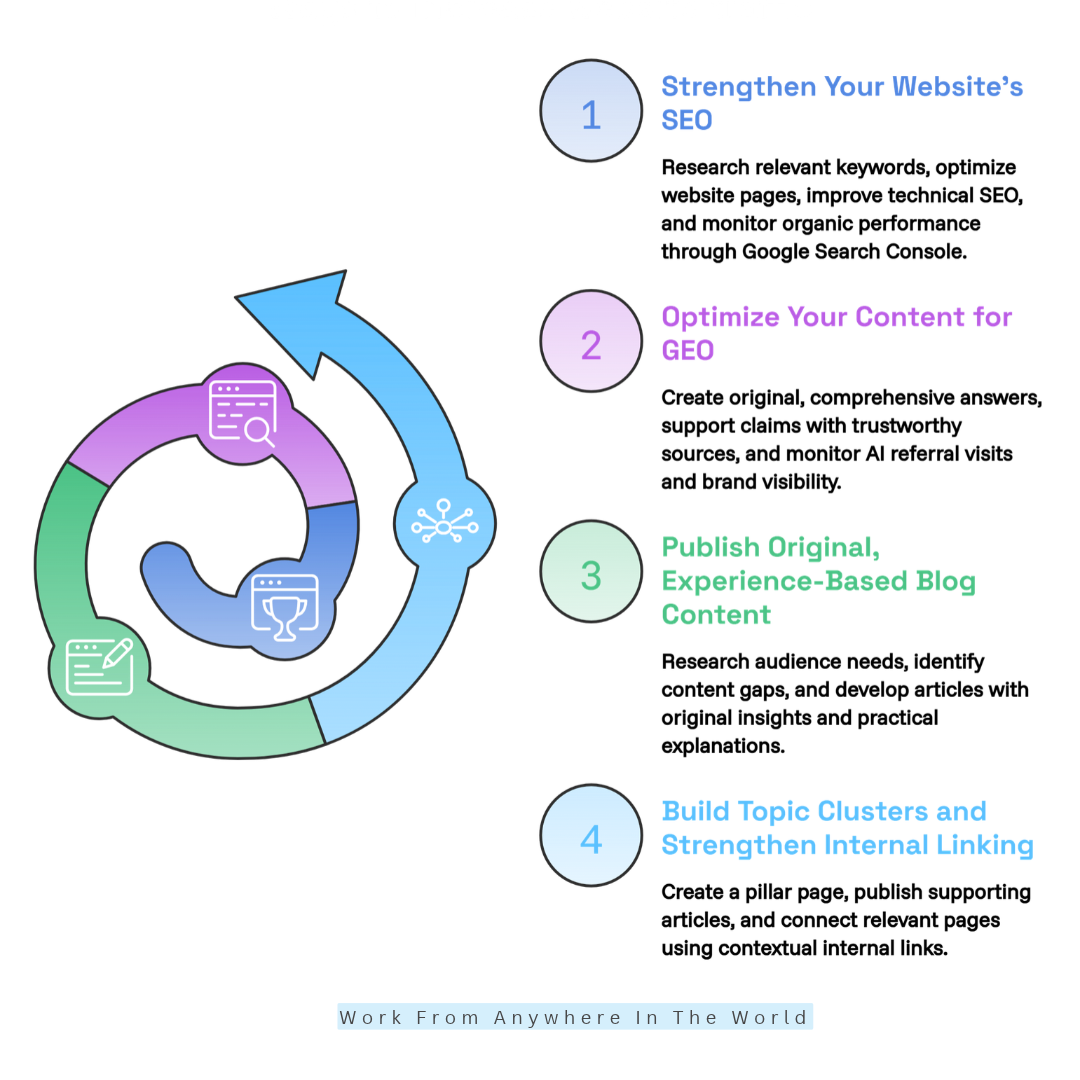
4. Build Topic Clusters And Strengthen Internal Linking
A topic cluster connects related articles around a central subject, helping visitors explore information in greater depth. This structure also makes your website easier to navigate and helps search engines understand how your content fits together.
Start by creating a comprehensive pillar page that covers a broad topic. Then develop supporting articles that answer more specific questions and provide additional information.
For example, a digital marketing website could publish a main SEO guide supported by articles about keyword research, technical SEO, content optimization, and link building. Each article explores a specific aspect of the broader subject.
Our guide to link building strategies demonstrates how a supporting article can explore one important SEO technique in greater detail. Related articles can then direct readers toward additional information.
Connect your pillar page and supporting articles using natural, descriptive anchor text. These links help visitors move between related subjects without having to search your website manually.
For example, someone reading about keyword research may also benefit from learning about on-page optimization. Linking these articles creates a logical path through your content.
Our guide on building internal links for SEO explains practical ways to connect relevant pages and strengthen your website’s overall linking structure.
Remember to review older articles whenever you publish new supporting content. Adding relevant links to existing posts helps readers discover fresh information while keeping your topic clusters connected.
Internal links also help search engines discover important pages and understand relationships between different subjects. However, links should always provide genuine value rather than being added simply to increase their number.
A well-organized topic cluster can encourage visitors to explore several related articles during one visit. Over time, this creates a more useful content library and supports a consistent website traffic strategy.
How To Build A Topic Cluster
- Choose three to five core topics: Identify broad subjects that match your website’s niche, audience interests, and long-term content goals.
- Create a comprehensive pillar page: Develop a detailed guide covering each core topic and introduce the most important related subjects.
- Identify supporting keywords and questions: Research specific search terms, audience concerns, and related topics that deserve their own articles.
- Publish detailed supporting articles: Create useful content that explores individual subjects through practical explanations, examples, and relevant resources.
- Connect pages through contextual internal links: Link pillar pages and supporting articles using descriptive anchor text that helps readers discover related information.
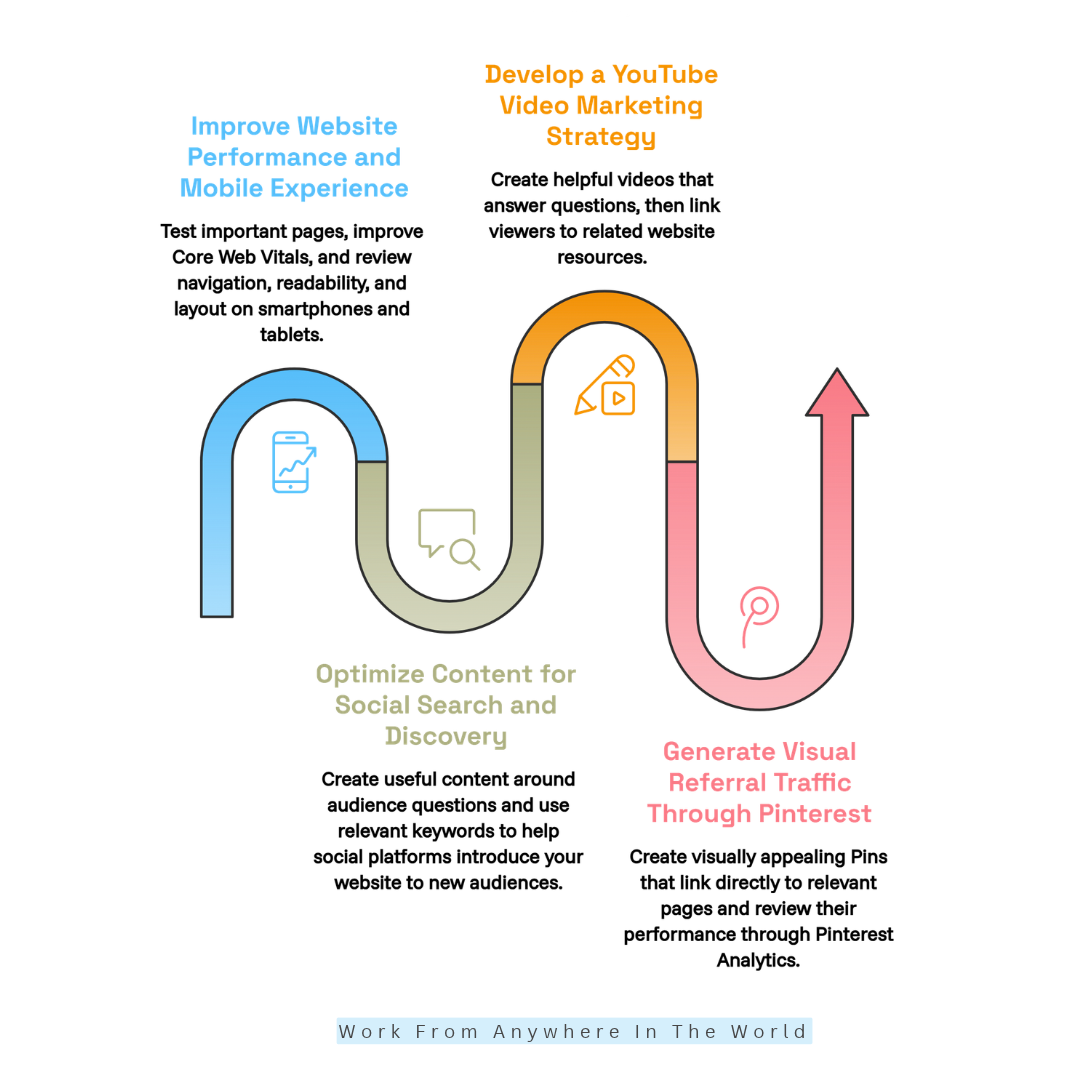
5. Improve Website Performance And Mobile Experience
A fast, user-friendly website makes it easier for visitors to access information, explore pages, and complete important tasks. Slow loading times and confusing navigation can discourage readers from returning.
Start by testing your most important pages using Google PageSpeed Insights. This free tool identifies potential performance problems and provides recommendations for improving the browsing experience.
Review both laboratory diagnostics and available real-user performance data. Laboratory tests help identify technical issues, while field data reflects how actual visitors experience your website.
Our guide to improving website speed explores practical techniques for reducing loading delays and improving overall website performance.
Large images are a common cause of unnecessary loading delays, particularly on photography blogs and online stores. Compress photographs and use efficient formats such as WebP or AVIF when appropriate.
Our article on the best WordPress image optimizer plugins introduces tools that can help reduce image file sizes while maintaining suitable visual quality.
Unnecessary JavaScript, CSS, and plugins can also affect performance. Remove unused resources, review caching options, and choose hosting infrastructure that supports your website’s requirements.
Google’s Core Web Vitals provide important measurements of loading performance, responsiveness, and visual stability. These include Largest Contentful Paint (LCP), Interaction to Next Paint (INP), and Cumulative Layout Shift (CLS).
Google recommends an LCP of 2.5 seconds or less, an INP of 200 milliseconds or less, and a CLS score of 0.1 or less. These thresholds are assessed at the 75th percentile of real-user page visits.
Mobile usability deserves equal attention because visitors increasingly access websites through smartphones and tablets. Test navigation menus, text readability, image layouts, and interactive elements on smaller screens.
Our comparison of mobile websites vs desktop websites explores how different devices influence website design and the browsing experience. Understanding these differences can help you create a more accessible, user-friendly website.
For example, a recipe website with large photographs and complicated menus may work beautifully on a desktop but become difficult to navigate on a phone. Responsive design helps visitors access the same information more comfortably.
Our guide on how to make your WordPress site faster explores additional optimization techniques for WordPress website owners.
Remember that website performance requires ongoing attention. Review important pages after installing plugins, changing themes, or adding new design features to identify potential problems early.
How To Improve Website Performance
- Test important pages: Use Google PageSpeed Insights to identify loading delays, performance problems, and opportunities for improvement.
- Optimize website images: Compress large files and use WebP or AVIF formats where suitable without sacrificing essential visual quality.
- Reduce unnecessary scripts: Remove unused JavaScript, CSS, and plugins that may slow down page loading or affect responsiveness.
- Improve mobile usability: Check navigation menus, typography, button sizes, and layouts to make browsing easier on smaller screens.
- Monitor Core Web Vitals: Use Google Search Console to review available real-user performance reports and identify pages that need attention.
6. Optimize Content For Social Search And Discovery
Social media platforms have become important discovery channels where people search for recommendations, tutorials, product reviews, and practical solutions. This creates opportunities for businesses to reach audiences beyond traditional search engines.
Platforms such as Instagram, TikTok, Facebook, and LinkedIn allow users to discover content through searches, recommendations, and personalized feeds. Our guide to social media search engines explores how these platforms help people find information.
Instead of publishing random promotional messages, create content around questions your target audience already asks. Understanding their interests helps you develop posts that are useful, relevant, and more likely to attract attention.
For example, a gardening blogger could share a short video demonstrating how to grow tomatoes in containers. Interested viewers could then explore a detailed guide on growing tomatoes in containers for planting instructions, practical growing tips, and additional information.
Use relevant keywords in captions, descriptive titles, hashtags, and on-screen text where appropriate. These details help explain your content and may improve its discoverability within individual platforms.
Our guide on writing the perfect Instagram caption explores ways to create informative captions that encourage readers to engage with your posts.
Professional audiences may respond better to industry insights, practical advice, and business-related discussions. Our guide on how to make a LinkedIn profile stand out explores ways to strengthen your professional presence and attract attention.
Whenever possible, direct interested visitors toward a relevant article rather than simply sending everyone to your homepage. A specific resource provides a clearer reason to continue exploring your website.
Remember that social media traffic works best when your posts provide genuine value. Helpful content can build trust and encourage people to discover more without relying on constant promotional messages.
Monitor your results to understand which platforms attract engaged visitors. Our guide to social media analytics tools explores resources for measuring content performance and audience engagement.
How To Implement Social Search Optimization
- Research audience questions: Explore popular topics, relevant keywords, and frequently asked questions on social platforms to understand what your audience wants to learn.
- Optimize captions and descriptions: Include relevant search terms in post captions, titles, video descriptions, and hashtags without making the wording unnatural.
- Create educational content: Share short tutorials, practical demonstrations, useful tips, and answers to specific questions that encourage audience engagement.
- Link to relevant website resources: Direct interested viewers to detailed articles, tutorials, or product comparisons when additional information would be helpful.
- Monitor referral traffic: Use Google Analytics 4 to identify visitors arriving from social platforms and evaluate how they interact with your website.
7. Develop A YouTube Video Marketing Strategy
YouTube can help you drive traffic to a website through video discovery, search results, and recommendations. People regularly watch tutorials, product comparisons, reviews, and educational videos before exploring additional information online.
This makes YouTube particularly valuable for bloggers and business owners who publish detailed resources. Our guide to video marketing trends explores how video content can support digital marketing and audience engagement.
Start by identifying questions your audience frequently asks. Choose subjects that complement your existing website content and provide opportunities to share useful explanations, demonstrations, or practical advice.
For inspiration, our article on YouTube content ideas for beginners explores different video formats that can help creators develop engaging content.
For example, a digital marketing website could create videos about keyword research, SEO tools, or website optimization. Each video could then direct interested viewers to a related article containing additional instructions, screenshots, or comparisons.
You can also repurpose existing website content into videos. Our guide on turning blog posts into YouTube videos explains how written articles can become useful visual resources for different audiences.
Make sure every video provides meaningful information on its own. Viewers should get a helpful answer without needing to visit your website to understand the topic.
Your website can then offer additional resources, downloadable templates, detailed examples, or step-by-step instructions. This gives interested viewers a genuine reason to explore your content further.
Pay attention to video titles, descriptions, and thumbnails. Clear titles help explain the subject, while relevant descriptions provide context and opportunities to share related website links.
Building an audience also requires consistency and thoughtful planning. Our guide on how to grow your channel on YouTube explores strategies for developing a channel and connecting with viewers.
Consider embedding relevant YouTube videos within your blog articles. A written tutorial and a visual demonstration can complement each other, giving readers different ways to understand the information.
Our article on YouTube channel growth strategies offers additional ideas to improve visibility and encourage long-term audience engagement.
Remember to monitor video performance alongside website referral traffic. This helps you identify which topics encourage viewers to explore your articles and which videos primarily drive engagement on YouTube.
How To Implement YouTube Marketing
- Research relevant video topics: Identify audience questions, popular search terms, and subjects that complement your existing website articles.
- Create helpful educational videos: Produce tutorials, demonstrations, comparisons, and reviews that provide useful information without relying on promotional messages.
- Optimize titles, descriptions, and thumbnails: Use descriptive wording, relevant keywords, and clear visuals that accurately represent each video’s content.
- Add relevant website links: Include links to related articles in video descriptions and pinned comments when they offer useful additional information.
- Embed videos in blog posts: Add relevant YouTube videos to existing articles to connect your written and visual content and improve the reader experience.
8. Generate Visual Referral Traffic Through Pinterest
Pinterest can help you drive traffic to a website by connecting your content with people searching for ideas, inspiration, and practical solutions. Unlike many traditional social platforms, Pinterest encourages users to discover and save resources for future reference.
This makes it particularly valuable for websites covering gardening, recipes, home improvement, travel, crafts, fashion, and lifestyle topics. Our guide to Pinterest marketing strategies explores ways to improve visibility and connect with interested audiences.
Well-designed Pins can continue attracting attention long after publication, although their reach depends on relevance, competition, and audience interest. Creating useful, visually appealing content can encourage users to explore your website.
For example, a gardening blogger could create a vertical Pin featuring colourful vegetables and flowers growing in containers. The Pin could direct interested readers to a comprehensive guide on container gardening tips, where they can explore practical advice for creating and maintaining a beautiful container garden.
Instead of displaying only your blog title, create graphics that clearly communicate the article’s main benefit. Strong visuals, readable headlines, and relevant descriptions help users understand what they can expect.
Our guide on using Canva explains how to create attractive graphics for blog posts and social media platforms. Canva can be particularly useful for designing Pinterest Pins with consistent branding.
Organize your Pinterest boards around subjects that match your website’s content. Use descriptive board names and relevant keywords to help users discover related ideas.
Each Pin should link directly to the most relevant article or landing page. Sending visitors to the exact resource they expect creates a smoother experience than directing everyone to your homepage.
Pinterest can also support affiliate marketing when promotional content follows platform policies and applicable disclosure requirements. Our article on affiliate programs for Pinterest explores opportunities for creators interested in affiliate partnerships.
Avoid publishing identical graphics repeatedly without adding value. Experiment with fresh images, different headlines, and alternative designs to discover which approaches resonate with your audience.
Monitor impressions, outbound clicks, and other relevant metrics through Pinterest Analytics. These insights can help you identify successful Pins and refine your visual marketing strategy.
How To Implement Pinterest Marketing
- Create a Pinterest business account: Set up your profile and organize relevant boards around your website’s main topics and audience interests.
- Design attractive vertical Pins: Use clear headlines, high-quality images, and consistent branding to communicate your content’s benefits.
- Optimize Pinterest keywords: Include relevant search terms naturally in Pin titles, descriptions, and board names to improve content discoverability.
- Link to relevant website pages: Direct each Pin to the most appropriate blog article, tutorial, or landing page rather than linking to your homepage by default.
- Publish fresh designs and monitor results: Experiment with different visuals and headlines, then use Pinterest Analytics to evaluate impressions, outbound clicks, and audience engagement.
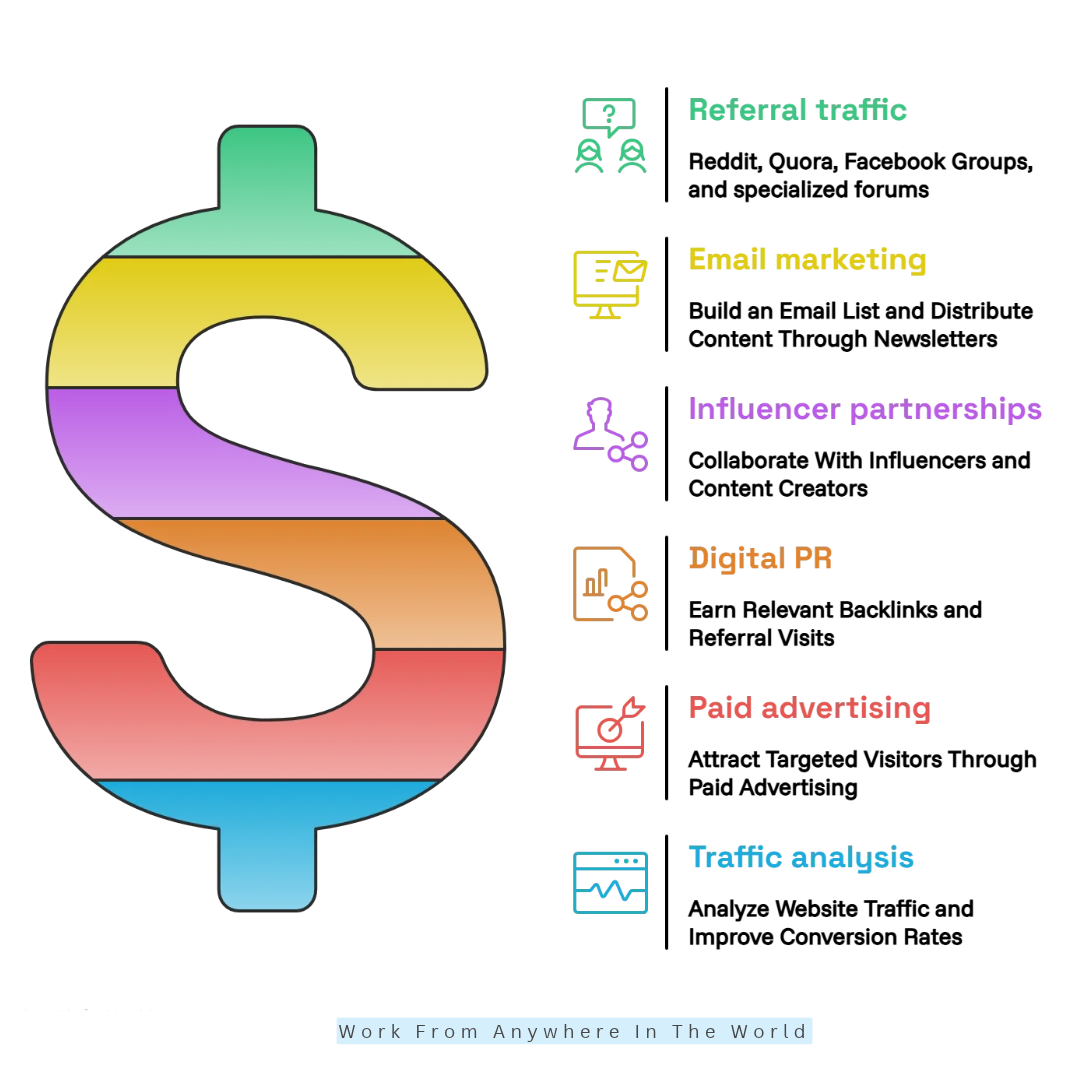
9. Attract Referral Traffic Through Reddit, Quora, And Online Communities
Online communities can help you drive traffic to a website by connecting with people who are already discussing topics related to your niche. These conversations provide opportunities to answer questions, share experiences, and introduce helpful resources.
Platforms such as Reddit, Quora, Facebook Groups, and specialized forums bring together people interested in products, services, tutorials, and practical solutions. Participating in relevant discussions can help you understand your audience’s needs.
Start by identifying communities where your target audience regularly asks questions. Look for active discussions that match your expertise rather than joining groups simply because they have large memberships.
For example, a freelance writer could participate in discussions about finding clients, setting rates, or managing projects. Sharing practical advice may encourage interested readers to explore additional resources on the writer’s website.
Quora is particularly useful for discovering questions people want answered. Our guide on how to make money on Quora explores opportunities associated with the platform and its question-and-answer format.
However, community participation should focus on helping others rather than promoting your website repeatedly. Members are more likely to appreciate thoughtful answers that address their concerns without unnecessary advertising.
Reddit communities, for example, often have specific rules about promotional content and external links. Read each community’s guidelines before participating, and avoid sharing the same website link across multiple discussions.
Facebook Groups and specialized forums may also restrict promotional messages. Respect these requirements and contribute useful information even when linking to your own content is not permitted.
Building relationships within communities can support long-term audience engagement. Our guide on how to build an online community explores ways to encourage meaningful conversations and develop connections around shared interests.
When a website link genuinely supports your answer, introduce it naturally and explain why it is relevant. For example, a detailed tutorial may include screenshots or instructions that would be difficult to add to a short community response.
Remember that building credibility requires patience and consistent participation. Our article on online community management explores strategies for maintaining constructive discussions and encouraging engagement.
Monitor referral traffic to identify which communities attract interested visitors. Focus on the quality of those visits rather than simply counting how many people click your links.
How To Generate Community Referral Traffic
- Identify relevant online communities: Find active Reddit communities, Quora discussions, Facebook Groups, and specialized forums that match your audience’s interests.
- Understand community guidelines: Review each group’s rules concerning promotional content, external links, and acceptable participation before posting.
- Provide helpful answers: Share practical advice, relevant examples, and useful explanations that directly address members’ questions.
- Share relevant website resources: Include links only when permitted and when your article provides additional information that genuinely supports the discussion.
- Build credibility through participation: Contribute consistently, respond respectfully, and develop relationships instead of relying on repeated promotional messages.
10. Build An Email List And Distribute Content Through Newsletters
Email marketing can help you drive traffic to a website by encouraging subscribers to return for new articles, useful resources, and relevant updates. Unlike social media, email provides a direct communication channel with people who have chosen to hear from you.
Building a subscriber list takes time, but it can become a valuable part of your long-term traffic strategy. Our guide on the best ways to build an email list explores practical approaches to attracting interested subscribers.
Start by placing a simple newsletter subscription form in relevant locations throughout your website. Explain what readers can expect and give them a clear reason to subscribe.
For example, a gardening website could offer a seasonal planting checklist, while a business blog might provide a downloadable content planning template. These resources give visitors something useful in exchange for subscribing.
Once people join your list, send newsletters featuring new articles, practical tips, and resources related to their interests. Our guide to email marketing content strategies explores ways to create messages that engage subscribers.
Avoid sending the same promotional message to everyone. Segmenting subscribers according to their interests, preferences, or previous interactions can help you share more relevant information.
For example, subscribers interested in blogging might appreciate SEO tutorials and content creation advice. Readers interested in eCommerce may prefer product marketing tips or online store management resources.
Choosing suitable email marketing software can simplify subscriber management and newsletter distribution. Our guide to the best email marketing tools for beginners introduces platforms that support email campaigns and audience communication.
Email performance should also be measured carefully. Klaviyo’s 2026 email benchmarks, based on data from more than 183,000 customers, provide comparisons across opens, clicks, conversions, and revenue.
These measurements can help marketers evaluate campaign effectiveness beyond open rates alone. Our article on Klaviyo email tips explores additional ways to improve email marketing campaigns.
Pay particular attention to clicks that lead subscribers back to your website. Tracking these visits helps you identify which articles, resources, and newsletter topics generate meaningful engagement.
As your audience grows, newsletters may also create opportunities for additional income. Our guide on how to monetize a newsletter explores different approaches to generating revenue from an engaged subscriber audience.
Remember that successful email marketing depends on trust and relevance. Send useful content at a reasonable frequency, respect subscriber preferences, and make unsubscribing straightforward.
How To Implement Email Marketing
- Add newsletter subscription forms: Place clear, accessible sign-up forms on relevant website pages and explain what subscribers will receive.
- Offer valuable subscription incentives: Provide useful checklists, downloadable guides, templates, or other resources that match your audience’s interests.
- Segment your email subscribers: Organize subscribers by interests and preferences to deliver more relevant content.
- Share helpful website resources: Send newsletters featuring new articles, practical tutorials, and useful updates that encourage interested readers to return.
- Monitor campaign performance: Track click-through rates, website sessions, and conversions to identify successful content and improve future newsletters.
11. Collaborate With Influencers And Content Creators
Collaborating with influencers and content creators can help you drive traffic to a website by introducing your content to audiences who already trust their recommendations. These partnerships can increase visibility and attract visitors interested in your niche.
Influencer marketing can work particularly well for websites covering beauty, technology, travel, fitness, food, fashion, and lifestyle topics. The key is finding creators whose audiences share interests with your website visitors.
Our guide on how to become a content creator explores how creators develop content, connect with audiences, and establish their online presence.
A relevant creator might share your blog article, review a product, demonstrate a service, or feature one of your resources. These collaborations give potential visitors a reason to explore your website.
For example, a gardening website could collaborate with a creator who shares practical planting advice and seasonal growing experiences. Our Nature article on gardening influencers explores how gardening enthusiasts inspire audiences and develop opportunities around their expertise.
Smaller creators can sometimes attract more relevant visitors than accounts with large but less targeted audiences. A dedicated gardening community may be more interested in planting tutorials than followers of a general entertainment account.
Focus on audience relevance, genuine engagement, and the quality of previous collaborations rather than follower numbers alone. Review how creators communicate with their audiences and whether their content aligns with your website.
Our article on the positive effects of social media influencers explores how creators can influence audiences, share information, and encourage engagement.
Different platforms also provide opportunities to discover suitable collaboration partners. Our guide to the best platforms for influencers highlights platforms creators can use to build their presence and connect with audiences.
Consider partnerships that provide genuine value, such as educational interviews, collaborative tutorials, product demonstrations, or guest contributions. These formats can benefit both audiences without relying entirely on promotional messages.
When arranging a collaboration, provide a relevant landing page or trackable campaign link. This helps visitors find the promised information and allows you to evaluate referral traffic.
Be transparent about sponsored partnerships, free products, and other material relationships. Clear disclosures help audiences understand the nature of a recommendation and support responsible influencer marketing.
Finally, compare referral visits, engagement, leads, and conversions to evaluate each partnership. Use these insights to identify creators who attract interested visitors rather than focusing only on impressions.
How To Implement Influencer Marketing
- Identify relevant content creators: Find influencers whose topics, values, and audiences closely match your website’s niche and target visitors.
- Evaluate audience engagement: Review comments, content quality, audience relevance, and previous collaborations instead of relying solely on follower counts.
- Develop valuable collaborations: Propose tutorials, interviews, product reviews, demonstrations, or resource features that provide genuine benefits to both audiences.
- Create trackable campaign links: Direct visitors to relevant landing pages and use appropriate tracking methods to measure referral traffic.
- Measure partnership results: Compare website visits, audience engagement, leads, and conversions to identify collaborations that deliver meaningful results.
Wealthy Affiliate – Mini Review
If you’ve ever thought about turning your blog, passion, or niche into an online business,
Wealthy Affiliate (WA) is one of the most beginner-friendly platforms I’ve used.
It combines step-by-step training, website hosting, AI-powered tools,
keyword research, and an active community all in one place.
What I like most is that you can start for free (no credit card needed), explore the platform,
test the tools, and connect with other entrepreneurs before upgrading.
WA isn’t a “get rich quick” scheme — success comes from consistent effort
and applying what you learn over time.
11. Collaborate With Influencers And Content Creators
Collaborating with influencers and content creators can help you drive traffic to a website by introducing your content to audiences who already trust their recommendations. These partnerships can increase visibility and attract visitors interested in your niche.
Influencer marketing can work particularly well for websites covering beauty, technology, travel, fitness, food, fashion, and lifestyle topics. The key is finding creators whose audiences share interests with your website visitors.
Our guide on how to become a content creator explores how creators develop content, connect with audiences, and establish their online presence.
A relevant creator might share your blog article, review a product, demonstrate a service, or feature one of your resources. These collaborations give potential visitors a reason to explore your website.
For example, a gardening website could collaborate with a creator who shares practical planting advice and seasonal growing experiences. These partnerships can introduce specialized audiences to relevant articles, tutorials, and resources.
Our Nature guide to sustainable business ideas for nature lovers explores how people can turn their interests in gardening, wildlife, and eco-friendly living into meaningful online opportunities.
Smaller creators can sometimes attract more relevant visitors than accounts with large but less targeted audiences. A dedicated gardening community may be more interested in planting tutorials than followers of a general entertainment account.
Focus on audience relevance, genuine engagement, and the quality of previous collaborations rather than follower numbers alone. Review how creators communicate with their audiences and whether their content aligns with your website.
Our article on the positive effects of social media influencers explores how creators can influence audiences, share information, and encourage engagement.
Different platforms also provide opportunities to discover suitable collaboration partners. Our guide to the best platforms for influencers introduces platforms that creators can use to develop their presence and connect with audiences.
Consider partnerships that provide genuine value, such as educational interviews, collaborative tutorials, product demonstrations, or guest contributions. These formats can benefit both audiences without relying entirely on promotional messages.
When arranging a collaboration, provide a relevant landing page or trackable campaign link. This helps visitors find the promised information and allows you to evaluate referral traffic.
Be transparent about sponsored partnerships, free products, and other material relationships. Clear disclosures help audiences understand the nature of a recommendation and support responsible influencer marketing.
Finally, compare referral visits, engagement, leads, and conversions to evaluate each partnership. Use these insights to identify creators who attract interested visitors rather than focusing only on impressions.
How To Implement Influencer Marketing
- Identify relevant content creators: Find influencers whose topics, values, and audiences closely match your website’s niche and target visitors.
- Evaluate audience engagement: Review comments, content quality, audience relevance, and previous collaborations instead of relying solely on follower counts.
- Develop valuable collaborations: Propose tutorials, interviews, product reviews, demonstrations, or resource features that provide genuine benefits to both audiences.
- Create trackable campaign links: Direct visitors to relevant landing pages and use appropriate tracking methods to measure referral traffic.
- Measure partnership results: Compare website visits, audience engagement, leads, and conversions to identify collaborations that deliver meaningful results.
13. Attract Targeted Visitors Through Paid Advertising
Paid advertising can help you drive traffic to a website by reaching potential visitors more quickly than many organic marketing strategies. It allows businesses to promote relevant content, products, and services to carefully selected audiences.
Different advertising platforms offer different targeting opportunities. Our guide to the best paid traffic sources explores options for attracting visitors through paid promotional campaigns.
Google Ads can reach people actively searching for products, services, or solutions. Meanwhile, platforms such as Meta, LinkedIn, and Pinterest offer audience targeting based on factors such as interests, demographics, and professional characteristics.
Choosing the right platform depends on your audience and marketing goals. Our article on the best ways to advertise your business online explores different approaches to promoting businesses through digital channels.
Social media advertising can also introduce your website to people who may not be actively searching for your content. Our guide to social media advertising tactics explains strategies for developing campaigns that reach relevant audiences.
For example, an online business selling digital products could use short educational videos to demonstrate their benefits. Our article on TikTok advertising formats explores different promotional formats available to advertisers.
However, paying for website visitors does not automatically guarantee meaningful results. A successful campaign requires a clear objective, relevant advertising content, and a landing page that matches the visitor’s expectations.
For example, an advertisement promoting a free blogging checklist should direct visitors to a page where they can access that resource. Sending everyone to a general homepage may create unnecessary confusion.
Our guide on how to build a landing page for free explores ways to create focused pages that support specific marketing goals.
Advertising expenses also deserve careful attention. Costs vary depending on the platform, competition, audience, and campaign settings. Our article on social media advertising costs explains factors that influence promotional budgets.
Start with a manageable budget and monitor campaign performance before increasing your spending. Track not only clicks but also newsletter subscriptions, enquiries, purchases, and other meaningful actions.
Use conversion tracking to understand whether paid visitors are helping you achieve your objectives. Compare advertising costs with the results generated to identify campaigns worth improving or expanding.
Paid advertising can complement your organic traffic strategy, but it should not replace valuable content and a user-friendly website. Combining these approaches can help you attract visitors while developing a stronger long-term online presence.
How To Implement Paid Advertising
- Choose a suitable advertising platform: Select Google Ads, Meta, LinkedIn, Pinterest, or another platform based on your audience, available budget, and campaign objectives.
- Define a specific campaign goal: Decide whether you want to generate newsletter subscriptions, enquiries, product sales, or another measurable result.
- Create targeted advertising campaigns: Use relevant search keywords, audience segments, and promotional messages that match the interests of potential visitors.
- Develop focused landing pages: Direct visitors to pages that clearly deliver the information, product, or resource promised in your advertisements.
- Monitor advertising performance: Track cost per click, conversions, and return on ad spend where applicable before increasing your campaign budget.
14. Analyze Website Traffic And Improve Conversion Rates
Learning how to drive traffic to a website also means understanding what visitors do after they arrive. Attracting thousands of visitors is encouraging, but traffic becomes more valuable when people subscribe, enquire, make purchases, or return for additional information.
A website may receive substantial traffic without generating meaningful results. That is why successful traffic analysis should consider both visitor numbers and the quality of those visits.
Start by using Google Analytics 4 to understand where visitors come from, which pages they explore, and how they interact with your content. Our guide on how to set up Google Analytics in WordPress explains how WordPress website owners can begin tracking visitor activity.
Google Analytics provides information about traffic sources, user engagement, and important actions completed on your website. Our article on the benefits of Google Analytics explores how these insights support better marketing decisions.
Pay attention to the difference between visitors who briefly view a page and those who explore additional articles or complete meaningful actions. Understanding these patterns helps you identify content that attracts genuinely interested audiences.
Our guide to Google Analytics website metrics explains measurements that can help you evaluate website performance and visitor behaviour.
Google Search Console provides additional information about how your website performs in Google Search. Review search queries, impressions, clicks, and average positions to identify opportunities for improving visibility.
For example, an article receiving many search impressions but relatively few clicks may benefit from a clearer page title or more compelling search description. However, changes should accurately reflect the page’s content.
Traffic analysis can also reveal pages that attract visitors but generate few subscriptions, enquiries, or sales. These pages may need clearer calls to action, more relevant information, or improved navigation.
For online stores, our guide to eCommerce conversion rate optimization strategies explores ways to improve the shopping experience and encourage visitors to complete purchases.
Consider the entire visitor journey rather than focusing on individual pages alone. Someone might discover your website through a search result, read several articles, subscribe to your newsletter, and return later to make a purchase.
Review performance regularly and compare results over meaningful periods. Look for patterns in traffic sources, engagement, and conversions before deciding which strategies deserve additional attention.
Remember that improving website traffic is an ongoing process. By combining reliable analytics with useful content and a positive browsing experience, you can make informed decisions that support sustainable growth.
How To Analyze And Improve Website Performance
- Set up website analytics tools: Configure Google Analytics 4 and Google Search Console correctly to monitor visitor activity and search performance.
- Review traffic and engagement metrics: Examine traffic sources, landing pages, engagement, and important conversion events to understand visitor behaviour.
- Identify underperforming pages: Look for articles that attract visitors but generate few meaningful actions, and investigate possible reasons.
- Improve the visitor experience: Refine calls to action, navigation, content relevance, and page usability to make important actions easier to complete.
- Compare performance over time: Evaluate traffic quality, conversions, and engagement trends, then prioritize channels that consistently attract valuable visitors.
Q1: Does Social Media Help Increase Website Traffic?
Yes. Social media can introduce your content to new audiences and generate referral visits. Platforms such as Facebook, Pinterest, Instagram, and LinkedIn can help attract visitors interested in your topics.
Share helpful tips, engaging visuals, and relevant articles rather than constant promotions. Consistent participation and valuable content can encourage followers to explore your website.
Q2: How Often Should I Publish Blog Posts?
There is no universal publishing frequency. Publishing one or two well-researched articles per week can be a practical starting point, depending on your available time and resources.
Focus on providing accurate information, useful examples, and original insights. A consistent publishing schedule that maintains content quality is more valuable than rushing to produce additional articles.
Q3: Is SEO Better Than Paid Advertising For Website Traffic?
Both strategies can help you drive traffic to a website. SEO supports long-term organic visibility, while paid advertising can attract targeted visitors more quickly when campaigns are properly managed.
SEO generally requires patience and ongoing optimization, while advertising involves financial investment. Combining both approaches can help businesses balance immediate visibility with sustainable traffic growth.
Q4: How Long Does It Take To Increase Website Traffic?
Increasing website traffic can take several weeks or months, depending on your niche, competition, and marketing strategies. Organic search traffic often develops gradually as your content gains visibility.
Social media and paid advertising may attract visitors sooner, but consistent results require ongoing effort. Focus on publishing helpful content, improving existing pages, and monitoring your progress.
Q5: Can I Drive Traffic To My Website Without Spending Money?
Yes. You can attract website visitors through SEO, helpful blog posts, social media, Pinterest, YouTube, and online communities. These methods require time and effort rather than a paid advertising budget.
Start with one or two strategies that suit your audience and available resources. As your website grows, you can expand your approach and explore additional traffic sources.
Q6: What Is The Best Traffic Source For A New Website?
The best traffic source depends on your niche, audience, and content. SEO can support long-term growth, while Pinterest, YouTube, and social media may help new websites reach interested visitors.
Begin by identifying where your audience searches for information and spends time online. Test a few relevant channels, monitor visitor engagement, and concentrate on those producing meaningful results.
Conclusion
Learning how to drive traffic to a website involves combining valuable content, effective SEO, social media engagement, and thoughtful promotion. Each strategy offers opportunities to reach new audiences and encourage visitors to explore your website.
You don’t need to implement all 14 strategies immediately. Start with a few approaches that match your audience, available resources, and business goals.
Focus on creating helpful content, improving the visitor experience, and building meaningful connections with your readers. Consistent effort can strengthen your website’s visibility and encourage people to return.
Remember to monitor your results and adjust your strategies as your website grows. Attracting the right visitors and providing genuine value can support sustainable traffic growth and long-term online success.
I trust you enjoyed this article on How To Drive Traffic To A Website: 14 Proven Strategies. Please stay tuned for more insightful blogs on affiliate marketing, online business, and working from anywhere in the world.
Take care!
— JeannetteZ 🌍✨
💬 Your Opinion Is Important To Me
Do you have thoughts, ideas, or questions? I’d love to hear from you. Please leave your comments below or email me directly at Jeannette@WorkFromAnywhereInTheWorld.com.
📚 More Work From Anywhere Reads
🚀 Ready to Build a Business You Can Run from Home
Or from Anywhere in the World?
Imagine earning income on your terms — from home, a cozy café, or wherever life takes you.
With the right tools, training, and community support, it’s entirely possible.
Start your own online business for free — no credit card needed.
Disclosure
This post may contain affiliate links. As an Amazon Associate and participant in other affiliate programs, I earn from qualifying purchases at no extra cost to you. Please read my full affiliate disclosure.