
15 Best Places To Sell Used Stuff Online
Finding the best places to sell used stuff online can make it easier to turn unwanted belongings into extra money while clearing space around your home. Clothing, electronics, furniture, books, collectibles, and many everyday items may still have value to someone else.
Selling online also gives you access to more potential buyers than relying on local sales alone. Depending on the item, you can choose a general marketplace or a platform designed for a particular type of product.
However, not every marketplace suits everything you want to sell. Fees, shipping options, local pickup, seller protections, and the type of buyers using the platform can all influence your decision.
Choosing the right marketplace can also save time and help you avoid listing items where they are unlikely to attract much interest. Matching your items with the right buyers gives you a better chance of completing a successful sale.
This guide explores some of the best places to sell used stuff, from large online marketplaces to specialized platforms for clothing, furniture, sneakers, musical instruments, and more.
Why Selling Online Is More Popular Than Ever
Selling online has become increasingly popular because it gives sellers access to a much larger audience than traditional local selling. An item that attracts little interest nearby may appeal to buyers in another city, province, or even country.
Online marketplaces have also made the process more accessible. People can list unwanted belongings without running a physical store or building their own eCommerce website.
Many platforms provide built-in tools to create listings, communicate with buyers, accept payments, and arrange shipping. Others focus on local transactions, making them useful for furniture and other items that are difficult or expensive to ship.
Buyers have also become increasingly comfortable purchasing used goods online. Clothing, electronics, collectibles, furniture, books, and specialized items can all find new owners through marketplaces designed to connect buyers and sellers.
For individuals clearing out their homes, this creates an opportunity to earn extra money from items they no longer use. Choosing a marketplace suited to the item can make the selling process more practical and help you reach interested buyers.
15 Best Places To Sell Used Stuff Online
Where you sell your belongings can affect how quickly they sell and how much effort the process requires. Different platforms attract different audiences and specialize in different types of products.
Some marketplaces allow you to sell almost anything, while others focus on clothing, furniture, electronics, collectibles, or other specific categories. Matching the item with the right audience can improve your chances of finding an interested buyer.
Consider whether you want to sell locally or reach buyers farther away. Local selling can be convenient for large or heavy items, while shipping gives smaller products access to a much broader market.
Fees, payment methods, shipping options, seller protections, and listing requirements can also vary considerably between platforms. Understanding these differences can help you choose a marketplace that suits both the item and the way you prefer to sell.
The following 15 platforms offer a range of options for turning unwanted belongings into extra money. Comparing their strengths can help you decide which ones deserve a place in your online selling strategy.
1. eBay
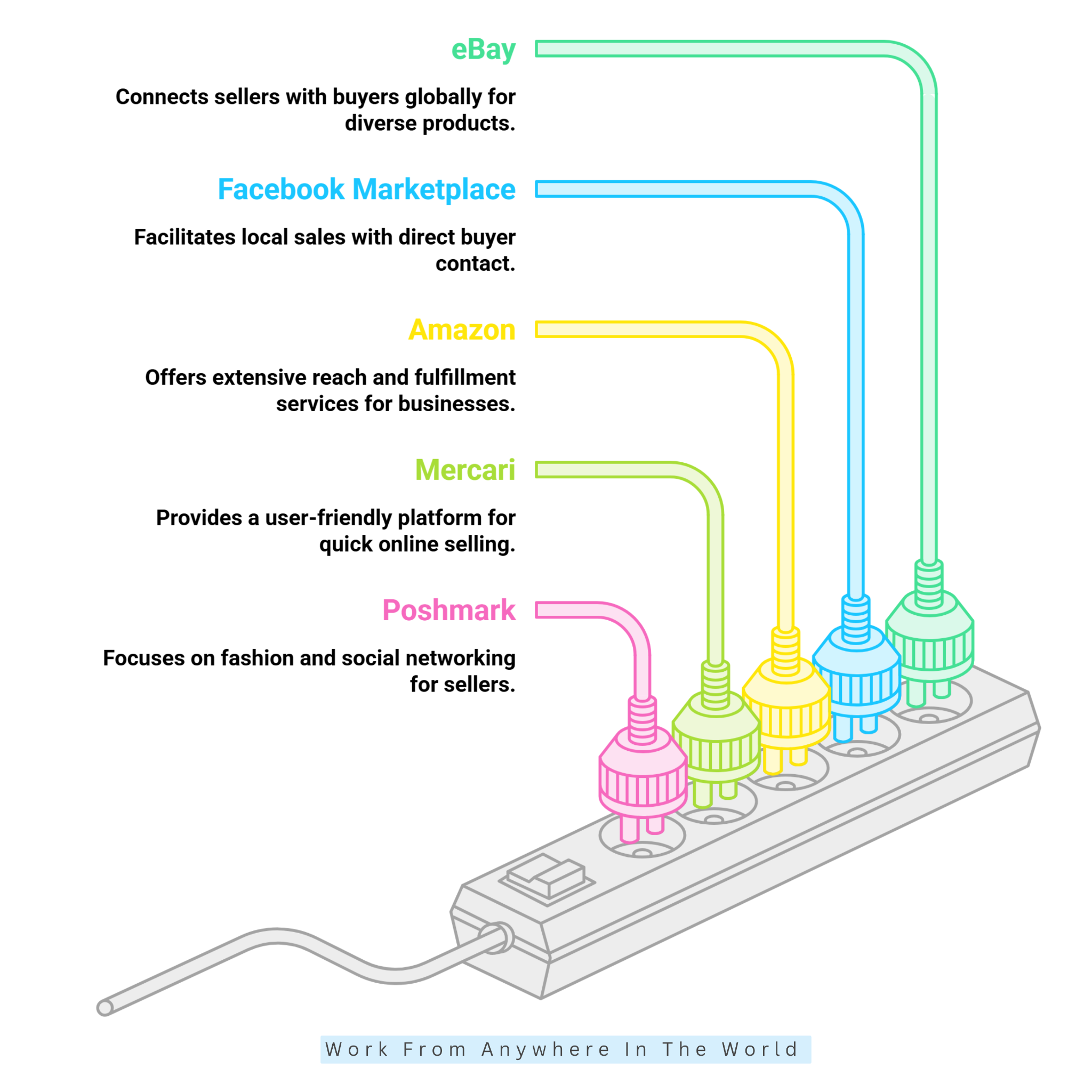
eBay is one of the best-known online marketplaces for selling used goods. Its broad range of categories makes it suitable for everything from electronics and clothing to collectibles, trading cards, auto parts, and vintage items.
One of eBay's biggest advantages is its large audience. Sellers can reach buyers well beyond their local area, which can be particularly useful for unusual, collectible, or specialized items that may have limited demand nearby.
Sellers can choose between auction-style and fixed-price listings, depending on the item and how they prefer to sell. Auctions can suit products where buyer demand may influence the final price, while fixed-price listings give sellers greater control over the amount they are asking.
Before listing, review eBay's current selling fees, shipping options, payment procedures, and seller policies. These can vary by product category and other factors, so checking eBay directly keeps the information current.
eBay can work well for occasional sellers clearing out their homes as well as people who want to develop a larger resale business. If you're new to selling on eBay, learning how to create effective listings and work with buyers can help you get started with more confidence.
Key Points
- Best for: Electronics, collectibles, clothing, vintage goods, and specialized items.
- Selling options: Auction-style and fixed-price listings.
- Audience: Great for reaching buyers beyond your local area.
- Keep in mind: Review current fees, shipping requirements, and seller policies before listing.
2. Facebook Marketplace
Facebook Marketplace is a convenient option for selling unwanted items to people in your local area. It works particularly well for furniture, home décor, bicycles, baby equipment, appliances, electronics, and other items that buyers may prefer to collect in person.
Sellers can create listings directly through Facebook, allowing them to reach people already using the platform. Interested buyers can contact sellers through Messenger to ask questions or arrange the transaction.
Local selling can be particularly useful for large, heavy, or fragile items that would be difficult or expensive to ship. It can also make it possible to complete a sale without packaging an item or arranging delivery.
However, sellers should still use caution when communicating with unfamiliar buyers. Follow Facebook's current safety guidance, protect your personal information, and choose an appropriate location when arranging an in-person exchange.
Facebook Marketplace is a practical choice for people who want to declutter their homes or sell used belongings locally. Its broad range of categories makes it suitable for many everyday household items.
Key Points
- Best for: Furniture, appliances, electronics, bicycles, and household items.
- Selling style: Particularly useful for local sales and pickup.
- Communication: Buyers and sellers can communicate through Messenger.
- Keep in mind: Use appropriate precautions when arranging local transactions.
3. Amazon
Amazon gives sellers access to a large online marketplace covering an enormous range of product categories. You can sell books, electronics, home goods, toys, office supplies, and many other products through the platform.
However, Amazon is somewhat different from marketplaces such as eBay or Facebook Marketplace. It is generally better suited to products with established listings or sellers who plan to sell inventory regularly, rather than simply clearing miscellaneous belongings from around the house.
Sellers can choose from different selling plans depending on how they intend to use the platform. Amazon also offers Fulfillment by Amazon (FBA), which allows eligible sellers to send inventory to Amazon for storage, packing, shipping, and other fulfilment services.
Before choosing Amazon, consider the product you want to sell and the costs involved. Selling fees, fulfilment expenses, category requirements, and other policies can affect whether Amazon makes sense for a particular item.
Amazon can be a useful option if you want to move beyond occasional secondhand sales and develop a more structured online selling business. For someone simply decluttering a home, however, another marketplace on this list may be easier to use.
Key Points
- Best for: Books, electronics, home goods, toys, and products with established demand.
- Selling style: Better suited to structured or ongoing selling than casual local decluttering.
- Fulfilment: FBA is available for sellers who want Amazon to handle eligible inventory and orders.
- Keep in mind: Check current selling fees, category requirements, and fulfilment costs.
4. Mercari
Mercari is an online resale marketplace designed to make listing and selling used items relatively straightforward. It covers a wide range of categories, including clothing, electronics, books, toys, collectibles, sports equipment, and household goods.
Sellers can create listings through Mercari's app or website by adding photographs, a description, and a price. This makes the platform accessible to people selling a few unwanted belongings as well as regular sellers.
Mercari also provides shipping options that can simplify sending items to buyers. Sellers should compare the available methods and consider an item's size, weight, and value before deciding how they want to handle delivery.
Before listing, review Mercari's current fees, payment procedures, shipping policies, and seller protections. These details can change, so checking the platform directly is more useful than relying on fixed figures.
Mercari can be a good choice for sellers who want a general marketplace without limiting themselves to one particular product category. Its broad selection makes it especially useful when you have different types of used items to sell.
Key Points
- Best for: Clothing, electronics, books, toys, collectibles, and household goods.
- Selling style: Suitable for both occasional and regular resale.
- Shipping: Sellers have several shipping options.
- Keep in mind: Check current fees, shipping policies, and seller protections before listing.
5. Poshmark
Poshmark is an online resale marketplace focused on fashion. Sellers can list clothing, shoes, handbags, jewellery, accessories, beauty products, and selected home items.
The platform combines traditional marketplace features with social elements. Sellers can share listings, interact with other users, and join shopping events designed to give products extra exposure.
Poshmark can be particularly useful when you have recognizable brands, current styles, or good-quality clothing and accessories to sell. Clear photographs, accurate descriptions, and detailed information about size and condition can help buyers evaluate an item.
Shipping is integrated into the selling process, which can make order fulfilment relatively straightforward. Sellers should still review Poshmark's current shipping procedures, fees, payment policies, and seller protections before creating listings.
Poshmark suits sellers who are comfortable spending time maintaining their listings and engaging with the platform. If you have a wardrobe or collection of fashion items to clear out, its fashion-focused audience can be a significant advantage.
Key Points
- Best for: Clothing, shoes, handbags, jewellery, accessories, and selected home goods.
- Audience: Particularly useful for reaching fashion-focused buyers.
- Selling style: Includes social and community features alongside traditional listings.
- Keep in mind: Review current fees, shipping procedures, and seller policies.
6. Depop
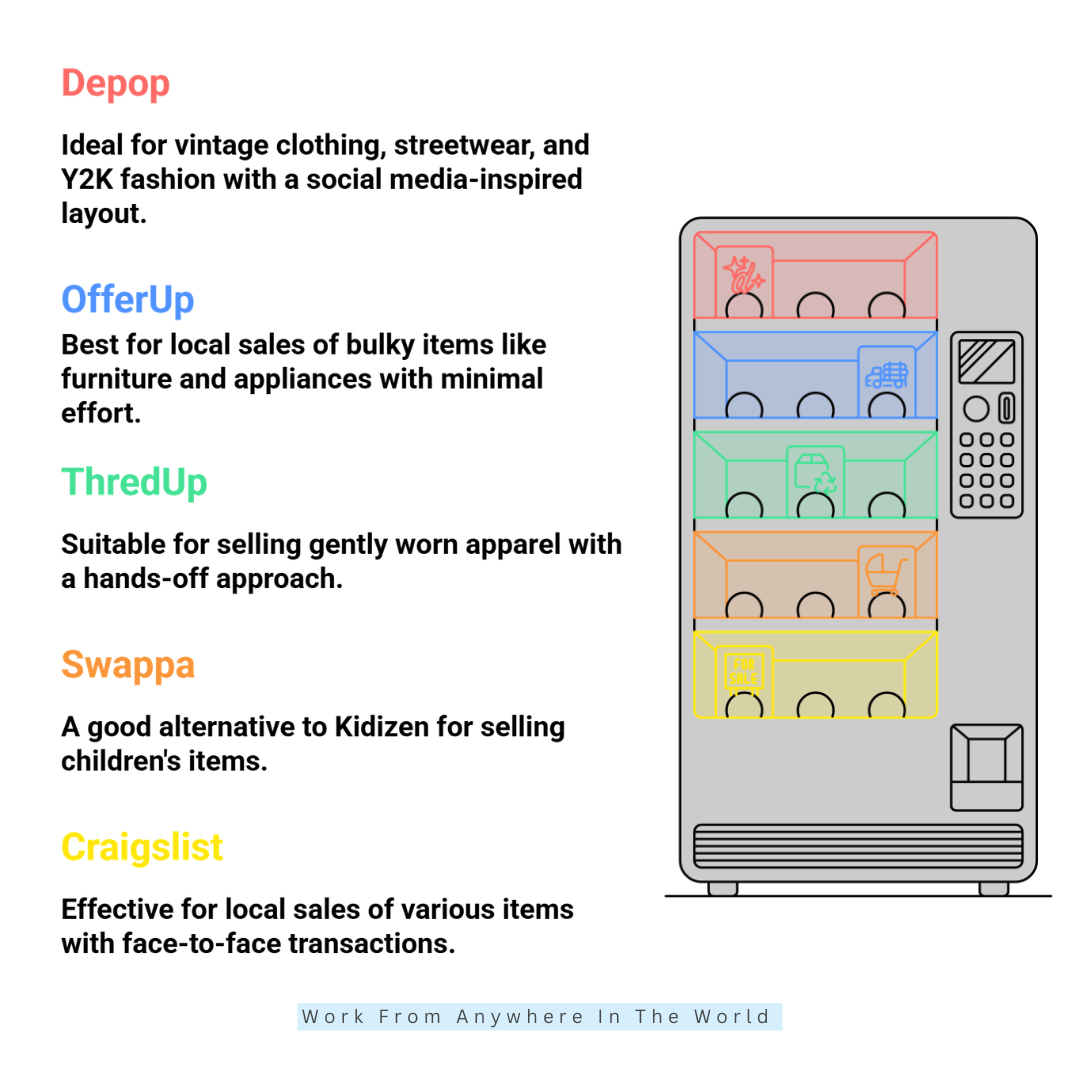
Depop is a fashion-focused resale marketplace known for vintage clothing, streetwear, sneakers, and distinctive secondhand pieces. Its visual, social-media-inspired format makes presentation particularly important for sellers.
The platform is especially popular with shoppers looking for individual styles rather than traditional retail fashion. Vintage pieces, unusual finds, independent designs, and clothing tied to specific fashion trends can all suit Depop's audience.
Strong photographs can make a noticeable difference on this platform. Sellers should show items clearly, provide accurate sizing and condition details, and write descriptions that help buyers understand exactly what they are buying.
Depop also encourages sellers to develop a recognizable shop presence. Consistent photographs, useful descriptions, and regularly updated listings can make a shop easier for interested buyers to browse and revisit.
Before selling, review Depop's current fees, shipping options, payment procedures, and seller policies. Depop can be particularly suitable if you have vintage or distinctive fashion items that may benefit from a more specialized audience.
Key Points
- Best for: Vintage clothing, streetwear, sneakers, and distinctive fashion pieces.
- Audience: Best for shoppers interested in individual, trend-driven styles.
- Selling style: Visual presentation and shop identity play an important role.
- Keep in mind: Review current fees, shipping options, and seller policies.
7. OfferUp
OfferUp is a marketplace designed primarily for local buying and selling. It can be particularly useful for furniture, appliances, bicycles, tools, exercise equipment, electronics, and other bulky items that may be difficult or expensive to ship.
Sellers can create listings by uploading photographs, adding a description, and setting an asking price. Interested buyers can then communicate through the platform to ask questions or arrange a transaction.
Because OfferUp emphasizes local selling, it can be useful when you are moving, clearing out a garage, or replacing larger household items. Connecting with nearby buyers may allow you to avoid packaging and shipping altogether.
The platform includes features such as user profiles, ratings, and in-app messaging. Even with these features, sellers should use appropriate precautions when arranging meetings and exchanging items with people they do not know.
Before listing, review OfferUp's current selling options, policies, and safety recommendations. For sellers who prefer local pickup rather than shipping, OfferUp can provide a practical way to find nearby buyers.
Key Points
- Best for: Furniture, appliances, bicycles, tools, exercise equipment, and electronics.
- Selling style: Best for local transactions.
- Communication: Buyers and sellers can communicate through the platform.
- Keep in mind: Follow current safety guidance when arranging in-person transactions.
Wealthy Affiliate – Mini Review
If you’ve ever thought about turning your blog, passion, or niche into an online business,
Wealthy Affiliate (WA) is one of the most beginner-friendly platforms I’ve used.
It combines step-by-step training, website hosting, AI-powered tools,
keyword research, and an active community all in one place.
What I like most is that you can start for free (no credit card needed), explore the platform,
test the tools, and connect with other entrepreneurs before upgrading.
WA isn’t a “get rich quick” scheme — success comes from consistent effort
and applying what you learn over time.
8. ThredUp
ThredUp offers a different approach to selling used clothing online. Rather than creating individual listings and communicating directly with buyers, sellers send eligible items to ThredUp and let the company handle much of the selling process.
This can make ThredUp appealing if you have gently used clothing, shoes, handbags, or accessories but don't want to spend time photographing and listing each item yourself.
After receiving your items, ThredUp evaluates what it can accept and handles tasks such as photographing, pricing, listing, and shipping accepted pieces. This creates a more hands-off experience than traditional peer-to-peer marketplaces.
The trade-off is that sellers have less control over the process and potential earnings. Before sending anything, review ThredUp's current acceptance standards, payout structure, processing options, and policies so you understand what may happen to your items.
ThredUp can be particularly useful when convenience matters more to you than managing every part of the sale yourself. It offers another way to give unwanted clothing a second life while potentially earning money from items you no longer wear.
Key Points
- Best for: Gently used clothing, shoes, handbags, and accessories.
- Selling style: More hands-off than traditional peer-to-peer marketplaces.
- Convenience: ThredUp handles much of the listing and selling process for accepted items.
- Keep in mind: Check current acceptance standards, payouts, processing options, and policies before sending your items.
9. Swappa
Swappa is a specialized marketplace for buying and selling used technology. It can be a good choice for phones, laptops, tablets, watches, gaming equipment, cameras, audio equipment, and other eligible tech products.
Unlike general marketplaces where you can list almost anything, Swappa focuses on specific product categories. Sellers find their exact product, create a listing with photographs and condition details, and submit it for review before it goes live.
The platform requires eligible devices to meet its listing criteria, including being fully functional. For cellular devices, Swappa also uses information such as the IMEI to help verify listings before approval.
Swappa is a U.S.-based marketplace, which matters for international readers. Sellers located outside the United States currently cannot create listings, although international buyers may purchase under certain conditions.
Before listing, review Swappa's current eligibility requirements, fees, payment procedures, and shipping policies. For U.S. sellers with working electronics they no longer need, its specialized technology audience can make it worth considering.
Key Points
- Best for: Phones, laptops, tablets, gaming equipment, cameras, and other eligible technology.
- Selling style: Direct marketplace sales with listings reviewed before publication.
- Audience: Particularly useful for sellers of used technology.
- Keep in mind: Sellers must currently be located in the United States.
10. Craigslist
Craigslist is a long-established classified marketplace that can help you sell items locally. It works particularly well for furniture, appliances, vehicles, tools, musical instruments, and other belongings that may be difficult or expensive to ship.
Listings are organized by location, allowing sellers to reach buyers in their surrounding area. This can make Craigslist particularly practical when you want an item collected rather than packaged and shipped.
The straightforward classified format also means sellers handle much of the transaction themselves. You will generally communicate directly with interested buyers, answer questions, negotiate when appropriate, and arrange payment and pickup.
Because Craigslist offers fewer built-in transaction features than some newer marketplaces, use extra caution when dealing with unfamiliar buyers. Protect your personal information, watch for unusual payment requests, and follow Craigslist's current safety recommendations.
Craigslist can be a practical option for larger secondhand belongings and local sales. For sellers who prefer a simple classified listing without managing shipping, it remains worth considering.
Key Points
- Best for: Furniture, appliances, vehicles, tools, musical instruments, and bulky household goods.
- Selling style: Primarily local classified listings.
- Advantage: Local pickup can eliminate packaging and shipping.
- Keep in mind: Sellers arrange many aspects of the transaction directly with buyers.
11. Vinted
Vinted is an online marketplace focused primarily on secondhand fashion. It can be a good option for selling clothing, shoes, handbags, accessories, children's clothing, and other eligible items you no longer use.
The platform is designed around person-to-person resale, making it particularly suitable for people clearing out their wardrobes. Sellers create listings with photos, descriptions, condition details, and asking prices.
Vinted also provides integrated tools for communicating with buyers, arranging eligible shipping, and managing payments. Available features can vary by country, so sellers should check what is offered in their location before listing.
As with any marketplace, review Vinted's current fees, permitted items, shipping procedures, payment policies, and seller protections. This matters because Vinted operates in multiple markets where terms and services may differ.
Vinted can be a practical choice for giving unwanted clothing and accessories another life. Its focus on secondhand goods can help sellers reach buyers who are specifically interested in pre-owned items.
Key Points
- Best for: Clothing, shoes, handbags, accessories, and children's clothing.
- Selling style: Person-to-person secondhand marketplace.
- Audience: Best for buyers looking for pre-owned fashion.
- Keep in mind: Features, policies, and selling options may vary by country.
12. StockX
StockX is a specialized marketplace for sneakers, streetwear, trading cards, collectibles, watches, handbags, and other eligible products. It is particularly useful for items where authenticity and current market demand can strongly influence value.
Rather than relying only on traditional fixed-price listings, StockX uses a marketplace system where buyers can place bids, and sellers can set asking prices. Sellers can also complete a sale when an existing bid meets the amount they are willing to accept.
Authentication is an important part of the StockX process. StockX verifies eligible products through its authentication procedures before they reach the buyer, which can provide extra confidence for higher-value or frequently counterfeited items.
Before listing, check whether your particular item is eligible and review StockX's current seller fees, shipping requirements, authentication procedures, and payment policies. These details can vary and may affect the amount you ultimately receive.
StockX can be especially useful if you have limited-edition sneakers, desirable collectibles, or other products with an established resale market. Its specialized approach may help you reach buyers already searching for those particular items.
Key Points
- Best for: Sneakers, streetwear, trading cards, collectibles, watches, and handbags.
- Selling style: Marketplace pricing based on bids and seller asking prices.
- Authentication: Eligible products go through StockX's verification process.
- Keep in mind: Check current eligibility, fees, shipping requirements, and seller policies.
13. GOAT
GOAT is a specialized marketplace for sneakers, luxury fashion, apparel, and accessories. It can be particularly useful for sellers with sought-after footwear, designer pieces, and other products that appeal to collectors and fashion enthusiasts.
The platform allows eligible sellers to offer both new and pre-owned items. This gives people an opportunity to sell pieces from their own collections as well as products purchased specifically for resale.
Authentication is an important part of GOAT's marketplace. Depending on the item and transaction, products may go through verification procedures designed to confirm authenticity and ensure they match the listing before reaching the buyer.
GOAT can be particularly suitable for limited-edition sneakers, designer collaborations, and other products with strong resale demand. Its specialized audience may make it easier to reach buyers who understand these items' value.
Before listing, review GOAT's current seller requirements, fees, authentication procedures, shipping policies, and payment terms. These details can vary by transaction and seller circumstances.
Key Points
- Best for: Sneakers, luxury fashion, apparel, and accessories.
- Selling style: Suitable for eligible new and pre-owned products.
- Authentication: Eligible transactions may go through GOAT's verification process.
- Keep in mind: Review current seller requirements, fees, shipping procedures, and policies.
14. Chairish
Chairish is a specialized marketplace for vintage furniture, designer décor, fine art, lighting, rugs, antiques, and other distinctive home furnishings. It can be particularly suitable for higher-quality pieces that may not attract the right buyers on a general marketplace.
The platform appeals to people looking for unique and carefully selected home furnishings, including interior designers, collectors, and homeowners. This specialized audience can help when selling vintage, antique, or designer pieces.
Sellers create detailed listings with photographs, descriptions, dimensions, condition information, and other relevant details. Chairish reviews submitted listings before publishing to ensure they meet the platform's requirements.
Because many furniture and décor items are large or fragile, sellers should pay particular attention to available delivery and shipping arrangements. The most suitable option can depend on the item's size, value, location, and destination.
Before listing, review Chairish's current commission structure, listing requirements, shipping options, and seller policies. For distinctive furniture, art, and décor, the platform can connect you with buyers specifically searching for these types of pieces.
Key Points
- Best for: Vintage furniture, designer décor, fine art, lighting, rugs, and antiques.
- Audience: Best for buyers looking for distinctive or higher-quality home furnishings.
- Listing process: Submitted listings are reviewed before publication.
- Keep in mind: Review current commissions, listing requirements, and shipping options.
15. Reverb
Reverb is a specialized online marketplace for musical instruments and audio equipment. It can be a good option for selling guitars, keyboards, drums, amplifiers, microphones, recording equipment, DJ gear, and studio accessories.
Because Reverb focuses specifically on music gear, sellers can reach buyers who are already searching for particular instruments, brands, models, and equipment. This specialized audience can be especially useful for vintage, collectible, or higher-quality items.
Sellers create their own listings with photographs, descriptions, condition details, and asking prices. Reverb also provides tools designed specifically for music gear, including pricing information that can help sellers research comparable products.
Shipping requirements can vary considerably depending on what you are selling. A guitar, amplifier, microphone, and small accessory may each require a different approach, so consider packaging and shipping costs before setting your price.
Before listing, review Reverb's current fees, payment procedures, shipping options, and seller policies. For musicians clearing out unused equipment or upgrading their gear, Reverb provides a focused alternative to a general online marketplace.
Key Points
- Best for: Musical instruments, recording equipment, DJ gear, and studio accessories.
- Audience: Buyers specifically interested in music and audio equipment.
- Selling tools: Includes features designed to help sellers list and price music gear.
- Keep in mind: Consider packaging and shipping requirements, particularly for large or fragile equipment.

Frequently Asked Questions
Q1: How Do I Price My Items To Sell Quickly?
Research similar items on the marketplace you plan to use and compare their condition, brand, age, and features. When possible, look at recently sold items rather than asking prices alone.
Set a realistic price based on your research, leaving room for negotiation if appropriate. Competitive pricing can help attract serious buyers without unnecessarily undervaluing your item.
Q2: Which Online Marketplace Should I Use To Reach More Buyers?
The best marketplace depends on what you're selling and the type of buyer you want to reach. Large general marketplaces like eBay can work well for many products, while specialized platforms may reach a more targeted audience.
For example, Reverb focuses on musical equipment, while StockX and GOAT specialize in particular fashion and collectible categories. Reaching the right buyers can matter more than choosing the largest marketplace.
Q3: Is It Safe To Sell My Stuff Online?
Selling online can be relatively safe when you use established marketplaces and follow their recommended payment and communication procedures. Be cautious if a buyer asks you to move communication or payment outside the platform.
For local transactions, protect your personal information and choose an appropriate meeting location. Also watch for unusual payment requests, overpayments, or messages asking for sensitive information.
Q4: What Items Sell The Fastest Online?
Popular electronics, clothing, sneakers, furniture, gaming equipment, collectibles, and household goods can attract considerable buyer interest. However, demand varies by marketplace, location, condition, season, and current trends.
An item is also more likely to attract buyers when it is accurately described, clearly photographed, and realistically priced.
Q5: Should I Offer Shipping Or Local Pickup?
The better option depends largely on the item. Local pickup can be convenient for furniture, appliances, exercise equipment, and other large or heavy belongings that would be difficult to ship.
Shipping can give smaller items access to buyers outside your local area. Before offering it, consider packaging requirements, shipping costs, insurance, and the marketplace's current shipping policies.
Q6: How Can I Make My Listings Stand Out?
Use clear photographs taken in good lighting and show the item from several angles. Your title and description should include the details buyers are likely to search for, such as the brand, model, size, colour, and condition.
Be honest about wear or damage and respond promptly to reasonable questions. A complete, accurate listing can help buyers make decisions with greater confidence.
Q7: Do I Need To Pay Taxes When Selling Used Items Online?
Tax rules depend on where you live, what you sell, how frequently you sell, and whether your activity is considered personal selling or a business. Selling an occasional personal belonging may be treated differently from regularly buying products for resale.
Keep appropriate records and check the tax requirements that apply in your jurisdiction. If you're uncertain about your obligations, guidance from the relevant tax authority or a qualified tax professional can help.
Q8: Can I Sell On More Than One Platform At The Same Time?
Yes. Listing an item on more than one marketplace can expose it to different groups of buyers and may increase your chances of making a sale.
However, you'll need to manage the listings carefully. Once an item sells on one platform, remove it promptly from the others so another buyer doesn't purchase something that is no longer available.
Conclusion
Turning unwanted belongings into extra money often comes down to choosing a marketplace that suits what you have to sell. Clothing, electronics, furniture, collectibles, musical instruments, and everyday household goods may all perform better on different platforms.
Consider more than marketplace size when making your choice. The type of audience, selling process, fees, shipping options, local pickup, and seller protections can all influence which platform works best for you.
Clear photographs, accurate descriptions, realistic pricing, and honest information about an item's condition can also make a significant difference. These details help buyers understand what you're offering and make more confident purchasing decisions.
You don't need to use every marketplace on this list. Start with the platforms that best suit the items you have to sell, learn how they work, and consider additional options when they offer a worthwhile advantage.
Selling belongings you no longer need can clear valuable space while giving those items a useful second life. With the right marketplace and a little preparation, they may also put some extra money back in your pocket.
I trust you enjoyed this article on the [Blog Post Title]. Please stay tuned for more insightful blogs on affiliate marketing, online business, and working from anywhere in the world.
Take care!
— JeannetteZ 🌍✨
💬 Your Opinion Is Important To Me
Do you have thoughts, ideas, or questions? I’d love to hear from you. Please leave your comments below or email me directly at Jeannette@WorkFromAnywhereInTheWorld.com.
📚 More Work From Anywhere Reads
🚀 Ready to Build a Business You Can Run from Home
Or from Anywhere in the World?
Imagine creating income on your terms — from home, a cozy café, or wherever life takes you.
With the right tools, training, and community support, it’s entirely possible.
Start your own online business for free — no credit card needed.
Disclosure
This post may contain affiliate links. As an Amazon Associate and participant in other affiliate programs, I earn from qualifying purchases at no extra cost to you. Please read my full affiliate disclosure.