SEO Strategies For Organic Traffic: 12 Proven Ways To Grow
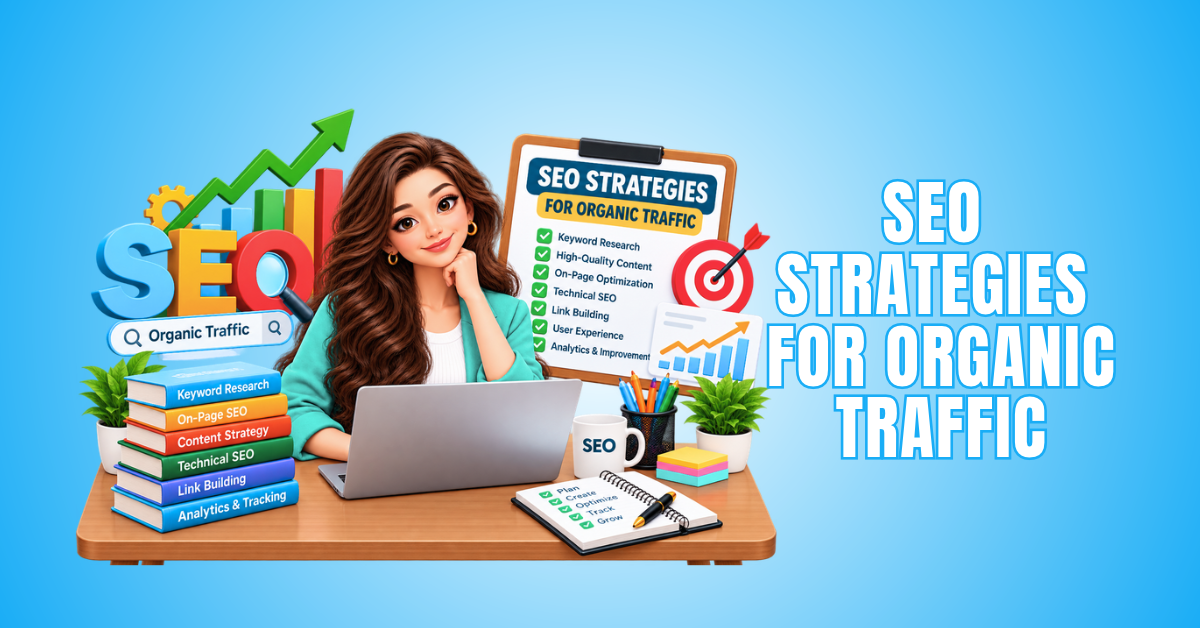
SEO strategies for organic traffic help websites attract relevant visitors without relying entirely on paid advertising. A thoughtful approach combines useful content, technical improvements, and an understanding of what your audience is searching for.
Regularly publishing articles matters, but content alone doesn’t guarantee visibility. Search engines also need to understand your pages, while readers need clear reasons to visit and explore your website.
Effective SEO begins with choosing relevant keywords, creating valuable content, and making your website easy to navigate. Internal links, a mobile-friendly design, and reliable performance also improve the experience.
Whether you’re building a new blog or improving an established website, organic growth requires patience and consistent effort. Small improvements across several areas often matter more than relying on a single SEO technique.
This guide explores 12 practical SEO strategies to strengthen your website, reach the right audience, and build sustainable organic traffic over time.
Why Is Organic Traffic Important For Website Growth?
Organic traffic brings visitors to your website through unpaid search engine results. These visitors discover your content while looking for information, solutions, products, or services that match their interests.
Unlike paid advertising, organic traffic doesn’t require you to pay for every click. However, building consistent search visibility takes time, ongoing effort, and a well-planned SEO strategy.
One of its greatest advantages is reaching people who are already interested in your subject. When your content answers their questions, visitors have a reason to explore other articles and return for more information.
Organic traffic also supports long-term website growth by helping readers discover useful content across your site. Well-maintained articles can keep attracting visitors long after publication.
Understanding these benefits makes it easier to see why investing in SEO is worthwhile. Let’s explore the main reasons organic traffic matters for your website.
1. Attracts Highly Relevant Visitors
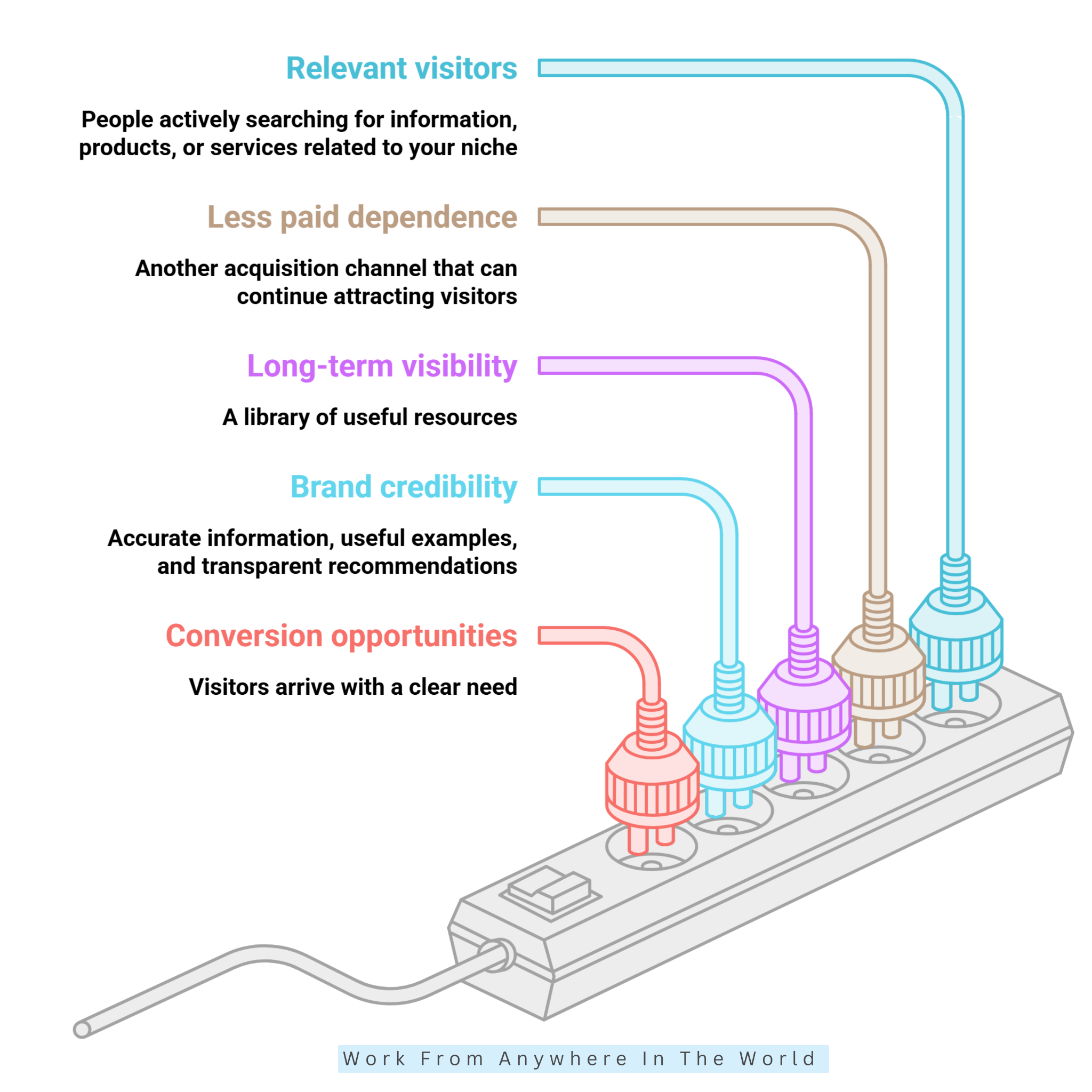
Organic traffic connects your website with people actively searching for information, products, or services in your niche. When your content matches their search intent, visitors are more likely to find useful answers and explore your website further.
For example, someone interested in making money through travel blogging is looking for specific guidance. An article that explains income opportunities, practical steps, and common challenges provides more value than a general discussion about travelling.
Relevant visitors are also more likely to engage with your content, read related articles, and consider subscribing to your newsletter. Some may eventually become customers or purchase products through your affiliate recommendations.
By targeting keywords that reflect your audience’s interests, you build traffic with a clearer purpose. The goal isn’t simply to attract more visitors but to reach people who genuinely benefit from what your website offers.
2. Reduces Dependence On Paid Advertising
Paid advertising helps businesses attract visitors quickly, but that traffic usually stops when advertising campaigns end. Organic search provides another way to reach potential readers and customers without paying for every website visit.
Once your content gains visibility in search results, it may continue attracting visitors for months or even years. For example, a helpful tutorial or detailed product comparison might generate regular visits long after publication.
However, organic traffic isn’t completely free. Creating quality content, maintaining your website, improving technical SEO, and updating older articles all require time, effort, and sometimes financial investment.
Combining organic SEO with paid advertising gives businesses more flexibility in their marketing strategies. Paid campaigns can support short-term promotions, while well-maintained organic content contributes to longer-term visibility.
Building both traffic sources also reduces your reliance on a single marketing channel. This creates more opportunities to reach your audience while managing advertising expenses over time.
3. Builds Long-Term Website Visibility
One of the greatest advantages of organic traffic is the potential for lasting visibility. Well-researched articles can keep attracting visitors long after publication, especially when they answer questions that stay relevant over time.
For example, an evergreen guide about keyword research may attract readers for several years. However, keeping its information accurate requires reviewing outdated tools, updating instructions, and checking whether the advice still reflects current SEO practices.
Building a collection of useful articles also creates more opportunities to appear in search results. Understanding what makes online content go viral can also help you create engaging material readers want to share.
Internal links between related articles help visitors discover additional resources and allow search engines to understand how your content connects. This encourages readers to explore your website rather than leaving after viewing a single page.
Search rankings are never guaranteed, and even established articles may experience traffic fluctuations. Regular updates and following practical steps to write better content help maintain the long-term value of your website.
4. Strengthens Brand Credibility
Appearing regularly in relevant search results helps people become familiar with your website and the information you provide. When visitors consistently find accurate advice, practical examples, and helpful resources, they have more reasons to trust your brand.
For example, a website offering reliable guidance about blogging and online business can gradually establish a reputation as a useful source of information. Readers who appreciate your content may return when they need further advice or recommendations.
A clear brand identity also helps visitors recognize what makes your website different. Understanding brand positioning allows you to communicate your strengths, highlight your expertise, and create a more consistent experience for your audience.
High-quality articles may also attract references from other websites, bloggers, and industry professionals. These mentions introduce your content to new audiences and contribute to your online reputation.
However, appearing in search results doesn’t automatically establish credibility. Honest recommendations, transparent information, and a positive user experience are essential for building lasting trust with readers.
5. Improves Opportunities For Conversions
Organic traffic creates opportunities to turn website visitors into subscribers, customers, or potential clients. When people discover your content while searching for a specific solution, they may already be interested in taking the next step.
For example, someone comparing email marketing platforms may be closer to choosing a service than a visitor reading a general introduction to online marketing. A detailed comparison that explains features, benefits, and limitations helps readers make informed decisions.
Your content should provide a clear next step that matches the visitor’s interests. This might involve subscribing to a newsletter, reading a related article, or exploring an affiliate recommendation.
Understanding how effective affiliate marketing can be also helps you evaluate how relevant traffic contributes to your website’s income opportunities.
Relevant calls to action work best when they complement the information rather than interrupt the reading experience. Honest recommendations and transparent explanations help visitors feel confident about their decisions.
Monitor conversion rates alongside organic traffic to understand how visitors interact with your website. Tools such as Google Analytics can help you measure meaningful actions and identify opportunities to improve your content.
Attracting thousands of visitors means little if they aren’t interested in what your website offers. A smaller audience with clear needs and genuine interest may contribute more to your long-term business goals.
6. Supports A Better Understanding Of Your Audience
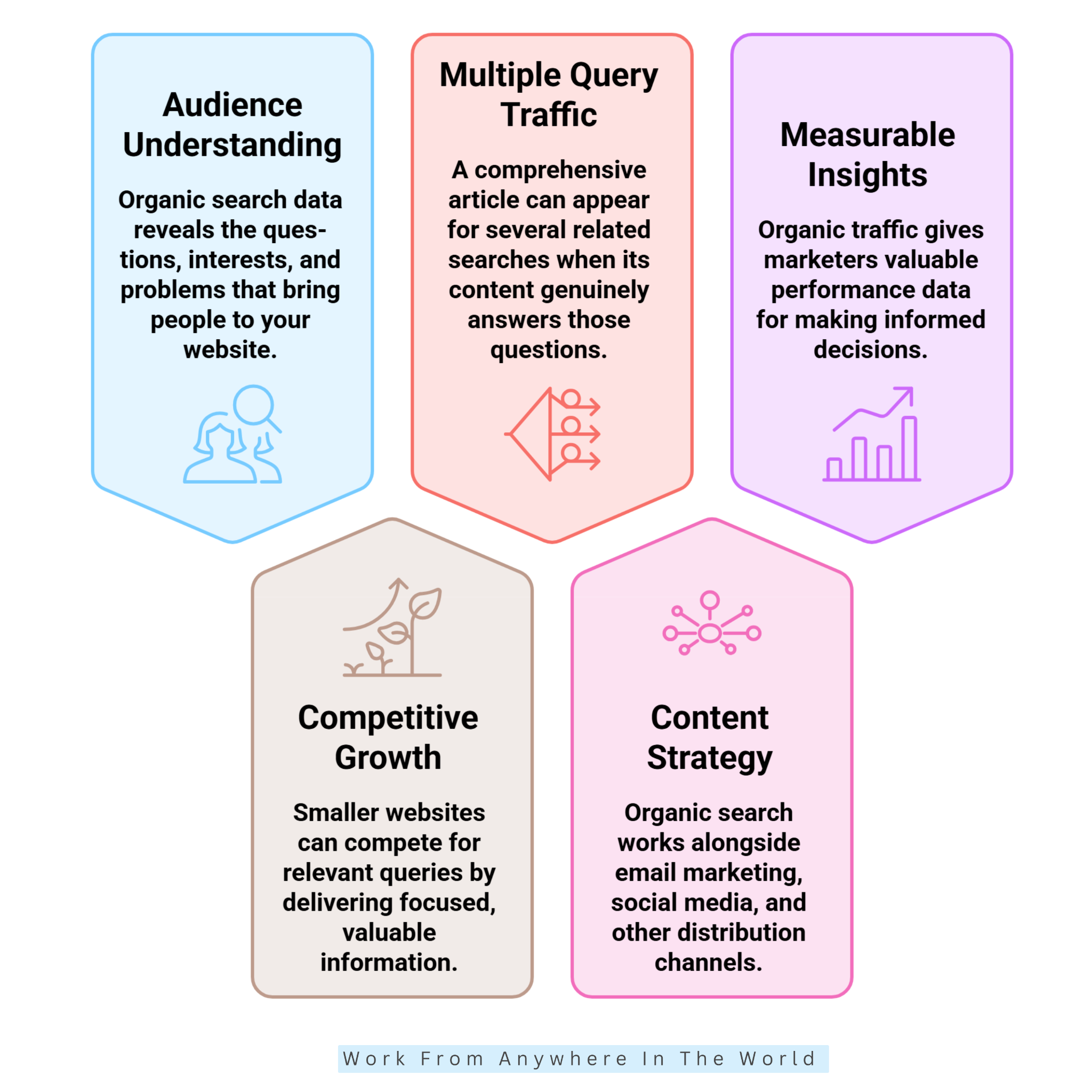
Organic search data provides valuable insights into the questions, interests, and challenges that bring visitors to your website. Understanding these patterns helps you create content that reflects what people genuinely want to learn.
Google Search Console shows which search queries generate impressions and clicks for your website. It also helps you identify pages that attract attention but receive relatively few visits, revealing opportunities to improve titles, descriptions, and content.
For example, a gardening blog might discover that readers frequently search for solutions to yellowing leaves or poor plant growth. These searches could inspire troubleshooting articles and practical resources, such as container gardening tips, that address common growing challenges.
You can also compare related searches to identify questions your existing articles haven’t answered. Expanding useful sections or creating new resources helps you address those information gaps without publishing unnecessary content.
Audience research becomes even more valuable when combined with website analytics. Learning how to conduct target audience analysis helps you understand your readers’ interests, preferences, and needs so you can create more relevant content.
By using actual search data rather than relying entirely on assumptions, you can make more informed editorial decisions. This supports a content strategy that grows alongside your audience’s changing needs.
7. Creates Opportunities For Competitive Growth
Organic search gives smaller websites opportunities to compete with established businesses by focusing on specific topics and audience needs. You don’t always need a large advertising budget or a well-known brand to attract visitors through search engines.
For example, a new travel blog may struggle to rank for a broad keyword such as “travel tips.” However, a detailed article about working remotely from a particular destination might face less competition while attracting readers with more specific interests.
Long-tail keywords are particularly useful because they often reflect clearer search intent. Learning how to identify long-tail keywords helps smaller websites discover specific questions and topics that larger competitors may not have addressed thoroughly.
Studying competing websites also helps you identify content gaps and opportunities for improvement. Our guide to SEO competitive analysis explains how examining competitors can inform your keyword research and content strategy.
A consistent publishing schedule, helpful articles, and a well-organized website contribute to long-term growth. As your relevant content grows, you create more opportunities to reach readers searching for information in your niche.
Competition remains an important consideration, and rankings are never guaranteed. However, focusing on achievable keywords and delivering genuinely useful information gives smaller websites a practical way to strengthen their organic visibility.
8. Generates Traffic Across Multiple Search Queries
A comprehensive article can attract visitors through several related search queries. Even when it targets one primary keyword, it may appear in results for other relevant searches.
For example, a guide to website speed might attract searches about image compression, caching, and Core Web Vitals. These related topics help readers understand different aspects of website performance.
Clear headings organize information into sections that answer specific questions. Practical examples and natural keyword variations make the article more useful without unnecessary repetition.
Google Search Console shows which queries drive impressions and clicks for each page. Reviewing this data helps you identify popular topics and opportunities to improve existing content.
An article receiving impressions for image optimization queries might benefit from advice about compression and file formats. Our guide to WordPress image optimizer plugins provides further information for interested readers.
However, not every related keyword belongs in the same article. Topics requiring detailed explanations or serving different search intentions may deserve their own supporting articles.
9. Strengthens Your Overall Content Marketing Strategy
Organic search works alongside email marketing, social media, and other ways of reaching your audience. Together, these channels help people discover your content and return.
For example, someone might find your article through Google and later subscribe to your newsletter. You can also share the article on social media or introduce it to readers in an online community.
One article can serve several purposes without requiring you to create everything from scratch. Our guide to content repurposing strategies explores ways to turn existing material into new formats.
Email newsletters offer another opportunity to reconnect with interested readers. Effective email marketing content strategies help you share useful information and encourage subscribers to explore your website.
Organize related articles into topic clusters and connect them with relevant internal links. This helps visitors discover additional resources and makes your content easier to navigate.
A coordinated content marketing strategy gives each article more opportunities to reach the right audience. It also helps you build lasting relationships with readers across different channels.
10. Provides Measurable Insights For Continuous Improvement
Organic traffic provides useful information about how your website performs in search results. Reviewing this data helps you understand what’s working and where you need to improve.
Google Search Console tracks clicks, impressions, click-through rates, and average search positions. Google Analytics provides additional insights into visitor engagement, traffic sources, and important actions taken on your website.
For example, an article might receive many search impressions but relatively few clicks. Reviewing its title and meta description could reveal opportunities to make the search listing more relevant and appealing.
Another article might attract steady traffic but generate few newsletter subscriptions. Improving the call to action or adding relevant supporting information could encourage more visitors to take the next step.
Compare performance over similar periods to identify meaningful trends. Seasonal demand, search algorithm changes, and temporary fluctuations can affect your results, so avoid making decisions based on a few days of data.
Regular performance reviews help you prioritize content updates and website improvements. Over time, these insights support better decisions and a more effective organic traffic strategy.
SEO Strategies For Organic Traffic
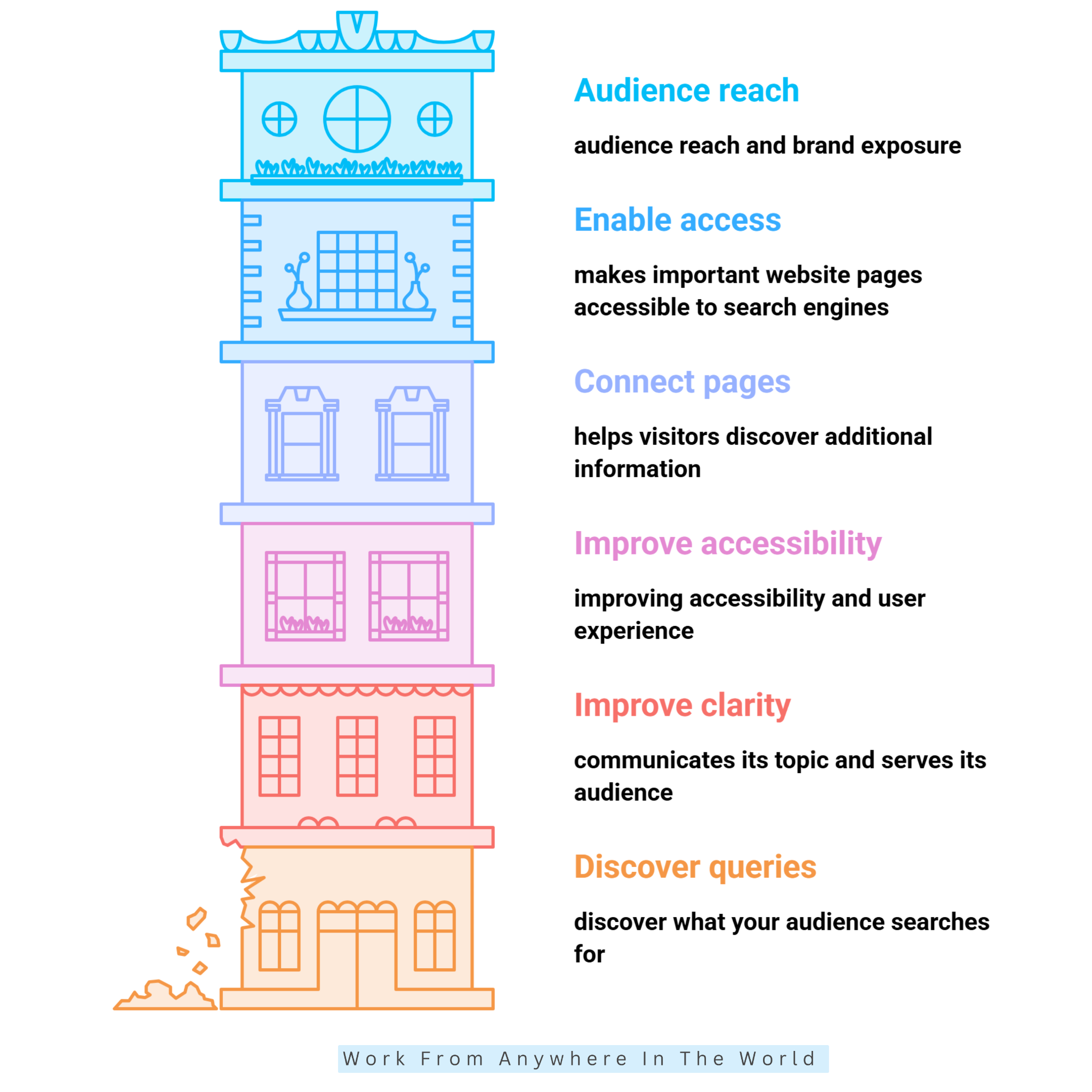
Effective SEO strategies for organic traffic combine keyword research, valuable content, and technical website improvements. Each element helps search engines understand your pages while making your website more useful to visitors.
Successful SEO begins with understanding what your audience is searching for. Choosing relevant keywords and creating informative articles gives your content a stronger foundation for attracting interested readers.
Website performance also matters. Clear navigation, internal linking, mobile-friendly pages, and fast loading times make it easier for visitors to explore your content and find the information they need.
Promoting your articles through social media, online communities, and other marketing channels creates additional opportunities for discovery. Regular content updates and performance reviews help you identify areas that need attention.
The following 12 strategies explain how to improve different aspects of your website’s SEO. Together, they provide a practical approach to building organic visibility and supporting long-term growth.
1. Keyword Research And Search Intent Optimization
Keyword research helps you understand what your audience is searching for and which topics deserve attention. Choosing relevant keywords gives your content a clear purpose and helps you reach interested readers.
Start with a broad topic and explore related searches using tools such as Google Keyword Planner, Google Trends, Semrush, and Ahrefs. Compare keyword suggestions to identify useful topics and questions.
Google Search Console provides another valuable source of information. Its search performance reports show which queries already drive impressions and clicks to your website.
Evaluate each keyword’s search intent, estimated demand, competition, and relevance. Then examine the current search results to understand whether readers expect a tutorial, comparison, product page, or direct answer.
Group closely related keywords into a useful content plan instead of creating separate articles for every variation. A comprehensive guide often serves readers better than several short posts covering nearly identical information.
Finally, write naturally and focus on answering the reader’s questions. Matching search intent and providing accurate, helpful information matter more than repeating exact keywords throughout an article.
2. On-Page SEO Optimization
On-page SEO helps search engines understand your content while making your website easier for visitors to navigate. It involves improving individual pages so they clearly address a particular topic and meet readers’ needs.
Start with a descriptive SEO title and a clear main heading (H1), which tells readers what the page is about. Use H2 headings for the main sections and H3 headings for sub-sections. This creates a logical structure that helps readers and search engines understand your content.
Include your primary keyword naturally in the introduction, headings, and other relevant places. Avoid repeating it unnecessarily, as useful explanations and readable writing matter more than keyword density.
Write a compelling meta description that accurately summarizes the article. Keep URLs short and descriptive, and use meaningful anchor text when linking to related pages on your website.
Review competing search results to understand what information readers expect. Look for missing details, unanswered questions, or opportunities to explain things more clearly and add practical examples.
Finally, check that your content answers the reader’s main question and offers genuine value. Well-organized pages support both SEO and usability, but perfect metadata or keyword placement doesn’t guarantee higher rankings.
3. Image SEO And Visual Content Marketing
Image SEO helps search engines understand your pictures while improving accessibility and the visitor experience. Relevant, well-optimized images also make articles more appealing and easier to follow.
Choose images that support your content and give each file a descriptive name. Use suitable dimensions and compress large files to improve loading times without sacrificing too much image quality.
Add meaningful alternative text, often called alt text, to informative images. Describe what the image shows in context rather than filling the description with unnecessary keywords.
Use responsive images that adapt to different screen sizes. Lazy loading helps images farther down the page, while important images near the top should load quickly.
Original photographs, screenshots, charts, and infographics make tutorials more useful. Visual content also works well on social platforms.
Our article on the role of video content in social media explores how videos engage audiences. For more inspiration, explore these shareable social media content ideas to discover other ways to connect with your audience.
Make sure search engines can access your important images. Check that image URLs work correctly and that your website settings don’t prevent search engines from discovering them.
Image optimization is particularly valuable for visual subjects such as travel, recipes, products, and gardening. Although it doesn’t guarantee higher rankings, it helps create a more useful, engaging website.
Wealthy Affiliate – Mini Review
If you’ve ever thought about turning your blog, passion, or niche into an online business,
Wealthy Affiliate (WA) is one of the most beginner-friendly platforms I’ve used.
It combines step-by-step training, website hosting, AI-powered tools,
keyword research, and an active community all in one place.
What I like most is that you can start for free (no credit card needed), explore the platform,
test the tools, and connect with other entrepreneurs before upgrading.
WA isn’t a “get rich quick” scheme — success comes from consistent effort
and applying what you learn over time.
4. Internal Linking Strategy
Internal linking connects related pages within your website. These links help visitors discover useful information and allow search engines to understand how your content fits together.
For example, an article about keyword research might link to a guide on improving website content. Readers can explore the next topic without having to search for it themselves.
Start by identifying your most important articles, especially comprehensive guides known as pillar pages. Then connect them to supporting articles that explain related topics in greater detail.
Use descriptive anchor text, which is the clickable wording within a link. Instead of writing “click here,” choose words that tell readers what information they’ll find on the linked page.
Our guide on building internal links for SEO in WordPress explains how to create useful connections between articles. It offers practical guidance for organizing links throughout your website.
Review older posts regularly to find opportunities for additional internal links. Pay close attention to valuable pages with few incoming links, and make sure existing links still lead to working destinations.
Keep your links relevant and easy for search engines to follow. A thoughtful internal linking strategy improves navigation and helps readers explore your content without overwhelming them with unnecessary links.
5. Technical SEO And Website Performance
Technical SEO focuses on how well your website works behind the scenes. It helps search engines find and understand your pages while giving visitors a smoother browsing experience.
Start by checking whether search engines can access your important pages. Sometimes, website settings or technical errors prevent articles from appearing in search results, even when the content is valuable.
Use Google Search Console to monitor your website’s visibility. Its URL Inspection tool helps you investigate individual pages and identify possible indexing problems.
Website speed is another important consideration. Slow-loading pages frustrate visitors, especially those using mobile devices or slower internet connections.
You can use Google PageSpeed Insights to test your website’s performance. The results highlight areas that may need attention, such as oversized images, unnecessary scripts, or slow-loading page elements.
Make sure your website works well on smartphones, tablets, and computers. Visitors should be able to read your content, navigate menus, and move between pages without difficulty.
Our article on mobile websites vs desktop websites explores the differences between browsing experiences. Understanding these differences helps you create a more comfortable experience for visitors using different devices.
Check for broken pages, incorrect redirects, and other issues that disrupt navigation. If your website has an XML sitemap, make sure it includes the key pages you want search engines to find.
Focus on fixing problems that affect visitors or prevent search engines from accessing your content. A technically sound website provides a strong SEO foundation, but useful, relevant content remains essential for attracting organic traffic.
6. Guest Posting
Guest posting involves writing an article for another website or online publication. It introduces your expertise to new readers and creates opportunities to build relationships within your industry.
Start by finding reputable websites that cover topics related to your niche. Look for publications with an engaged audience and content that would genuinely interest your potential readers.
Before contacting a website, read several of its articles and check its contributor guidelines. This helps you understand its writing style, preferred topics, and expectations for guest authors.
Prepare a specific article idea that offers something useful to its audience. A thoughtful proposal with a clear topic and practical benefits is more appealing than a generic request to publish your work.
Our guide on how to do guest posting explains the process in greater detail. It’s a useful starting point if you’re approaching another website for the first time.
Once your idea is accepted, write an original, well-researched article that meets the publication’s standards. Include helpful examples and accurate information rather than focusing entirely on promoting your website.
Some publications allow contributors to include a short author biography or a relevant link to their website. Follow the publisher’s rules and Google’s guidelines for sponsored or paid links.
Successful guest posting focuses on reaching the right audience and sharing valuable information. Relevant contributions build recognition and professional connections, while links earned through genuine editorial recommendations may also support SEO.
7. Forum Posting And Community Engagement
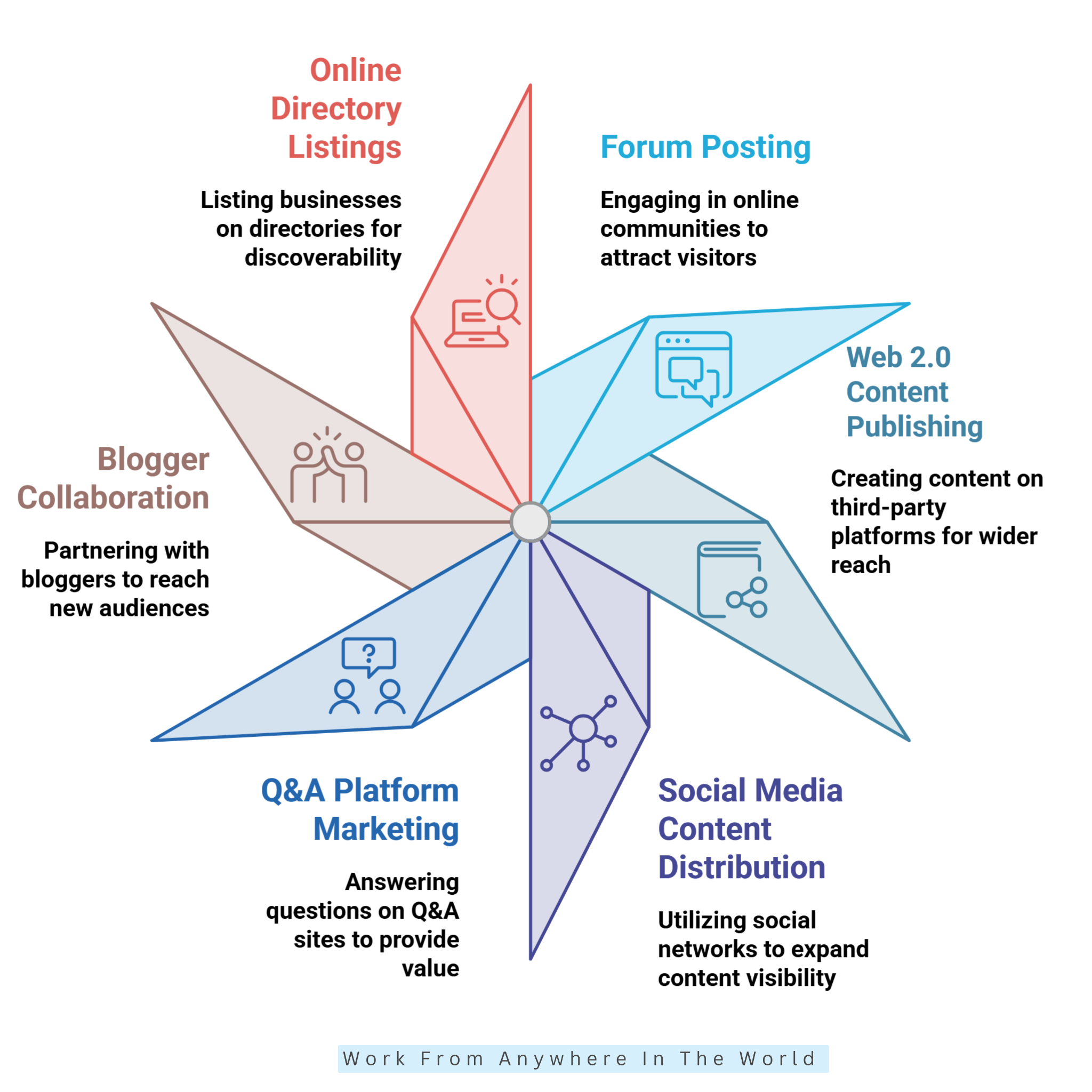
Online forums and discussion communities bring together people with shared interests. Participating in relevant conversations helps you understand your audience and introduce your expertise to potential readers.
Start by exploring platforms such as Reddit, Quora, and specialist forums related to your niche. Look for active communities where members regularly ask questions and exchange useful information.
Read the community guidelines before joining discussions. Some forums welcome links to helpful resources, while others restrict promotional content to keep conversations focused on members’ needs.
Search for questions you can answer confidently. Share practical advice, explain solutions, and offer examples that help people understand the topic without requiring them to visit your website.
When a relevant article provides additional information, consider sharing its link if the community permits it. Avoid posting the same link repeatedly or turning every response into an advertisement.
Building relationships takes time, but consistent participation helps people recognize your expertise. Our guide on how to build an online community offers additional ideas for encouraging meaningful conversations and lasting connections.
Pay attention to recurring questions and common challenges. These discussions provide valuable inspiration for blog posts, tutorials, and frequently asked questions that address your audience’s interests.
Forum participation is primarily a way to build trust and attract interested visitors. It can generate referral traffic and useful content ideas, but forum links alone are not a reliable way to improve search rankings.
8. Web 2.0 Content Publishing
Web 2.0 refers to websites that allow people to create, publish, and share their own content. Instead of simply reading information, users can contribute articles, ideas, and discussions.
Platforms such as Medium let you publish articles beyond your own website. This introduces your writing to readers who might not otherwise discover your blog.
Some publishing platforms also allow writers to share content without revealing their real names. Our guide to the 10 best anonymous blogging platforms explores options for writers who prefer greater privacy. However, choose platforms based on your audience and what suits your content.
Start by choosing a topic that interests your target audience. Write an original article that provides useful information, practical examples, or a fresh perspective on a familiar subject.
For example, a travel blogger might publish an article about working remotely while exploring another country. They could then direct interested readers to a more detailed travel guide on their website.
Avoid copying entire blog posts onto several platforms without a clear purpose. Instead, create content that offers something worthwhile to each audience and encourages readers to explore your work further.
When the platform permits it, include a relevant link to an article on your website. Make sure the link adds useful information rather than serving as an unnecessary promotion.
Build your presence through consistent publishing and genuine interaction with readers. Responding to comments and sharing helpful insights encourages stronger connections.
For more inspiration, explore our 15 proven tips to connect with your audience. These ideas can help you develop meaningful relationships with readers across different online platforms.
Web 2.0 publishing is most valuable for reaching new audiences and generating referral traffic. Focus on creating worthwhile content rather than using third-party websites primarily to influence search rankings.
9. Social Media Content Distribution
Social media helps your articles reach people who haven’t discovered your website through search engines. Sharing useful content across relevant platforms creates opportunities to attract new readers and build awareness of your brand.
Choose social media platforms based on your audience and the type of content you publish. Pinterest works well for visual tutorials, while LinkedIn is often better suited to professional and business-related topics.
For example, a freelance writer could share practical career advice on LinkedIn. Our guide to an effective LinkedIn content strategy offers ideas for reaching and engaging a professional audience.
Choosing the right social media platforms is important for reaching interested readers. Different networks attract different audiences, so focus on those that suit your niche and content.
Our guide to social media marketing essentials explains how social media supports business growth. It offers a useful starting point for developing a more focused approach.
Give readers a clear reason to visit your website. Share an interesting insight or practical tip, then direct them to the full article when it provides additional information.
Participate in relevant Facebook groups and other online communities where sharing helpful resources is permitted. Focus on answering questions and contributing to discussions rather than repeatedly promoting your articles.
Use Google Analytics to identify which social platforms send visitors to your website. Compare traffic and engagement to discover where your content attracts the most interested readers.
Remember that visitors arriving from social networks are generally counted separately from organic search traffic. Social shares don’t directly guarantee higher Google rankings, but effective distribution expands your reach and helps more people discover your content.
10. Q&A Platform Marketing
Question-and-answer platforms allow people to seek advice and receive responses from others with relevant knowledge. Answering questions in your area of expertise helps you reach readers who are already interested in your topic.
Start by exploring websites such as Quora and other communities where people ask specific questions. Search for topics related to your blog and identify questions you can answer confidently.
Choose questions that reflect common problems or interests within your niche. For example, a beginner blogger might ask how to find suitable keywords or attract visitors without paying for advertising.
Write a complete answer that addresses the question directly. Explain your recommendations in simple language and include practical examples that readers can apply themselves.
If you’ve published a detailed guide that adds useful information, consider linking to it when the platform allows. However, your answer should remain helpful even when readers don’t visit your website.
Avoid posting identical responses to multiple questions or adding promotional links unnecessarily. Thoughtful answers build credibility, while repetitive advertising can discourage readers and violate platform rules.
Pay attention to questions that appear frequently or receive considerable interest. They may reveal gaps in your existing content and inspire new tutorials, blog posts, or frequently asked questions.
Track visitors arriving from Q&A platforms to understand which answers attract interested readers. This helps you decide where to spend your time and which topics deserve further attention.
Q&A marketing is most valuable for sharing expertise, understanding your audience, and attracting relevant visitors. It supports content discovery, but links from these platforms don’t guarantee improved search rankings.
11. Blogger Collaboration
Blogger collaboration involves working with other content creators to produce useful information and reach new audiences. A successful partnership allows both bloggers to share their expertise while introducing readers to different perspectives.
Start by identifying bloggers who cover topics related to your niche. Look for creators whose audiences share similar interests, even if their websites focus on slightly different subjects.
For example, a travel blogger could collaborate with someone who writes about remote work. Together, they might create a guide to working online while travelling or share practical advice through an interview.
Review potential partners’ articles, audience engagement, and writing style before contacting them. A smaller blog with interested readers may offer a better partnership than a larger website with little audience interaction.
Building professional relationships is key to successful collaboration. Our guide to networking for beginners offers practical ideas for making connections and developing relationships that may lead to future partnerships.
Choose a collaboration format that suits both creators. Possibilities include expert interviews, jointly written guides, original surveys, webinars, or articles that bring together different areas of expertise.
When approaching another blogger, clearly explain your idea and how it benefits their readers. A thoughtful proposal is more appealing than a general link-exchange request.
Agree on responsibilities before starting the project. Decide who will research, write, edit, publish, and promote the content so everyone understands their role.
Once you publish the collaboration, share it through your websites, newsletters, and social media channels. Encourage genuine discussion and make it easy for interested readers to explore the finished resource.
Review referral traffic, reader engagement, and newsletter subscriptions to understand the results. These insights help you decide whether future collaborations with the same creator would be worthwhile.
Blogger collaboration works best when both partners contribute meaningful value. Focus on building professional relationships and creating helpful content rather than arranging excessive backlink exchanges to influence search rankings.
12. Online Directory Listings
Online directories are websites that organize businesses and services into searchable categories. They help people discover companies, compare options, and find contact information relevant to their needs.
Some directories focus on local businesses, while others serve specific industries or professional groups. A well-chosen listing introduces your website to people who are already searching for related products or services.
Start by identifying reputable directories that match your business and audience. Look for established platforms, professional associations, and industry-specific websites that visitors genuinely use.
Create a complete profile with your business name, website address, contact information, and an accurate description of your services. Choose the most relevant category so visitors understand what your business offers.
If your business has a physical location, keep its address and telephone number consistent across listings. Accurate details make it easier for potential customers to contact you and avoid confusion.
Eligible local businesses can also create a Google Business Profile. This free service helps businesses manage how they appear in Google Search and Maps.
To improve your business’s visibility in local searches, explore our guide to local SEO for small businesses. It explains practical ways to reach nearby customers and strengthen your online presence.
However, not every online business qualifies for a Google Business Profile. Websites that operate entirely online without eligible in-person customer contact should focus on suitable industry directories instead.
Review your listings occasionally to update contact information, services, and operating hours. Remove outdated details and confirm links still point to the right pages.
Avoid submitting your website to hundreds of unrelated directories simply to collect backlinks. Low-quality listings rarely add value and can create unnecessary maintenance work.
Focus on directories that help real customers discover your business. Relevant listings support visibility and referral traffic, but directory links alone don’t guarantee higher search rankings.
Frequently Asked Questions
Q1: How Long Does SEO Take To Increase Organic Traffic?
SEO improvements often take several months to produce noticeable results. The timeline depends on your website’s history, competition, content quality, and technical performance.
New websites may need more time to establish visibility. Monitor your progress regularly and focus on publishing helpful content rather than expecting immediate results.
Q2: What Is The Difference Between Organic Traffic And Referral Traffic?
Organic traffic comes from unpaid search engine results. For example, someone who finds your article through a regular Google search contributes to your organic search traffic.
Referral traffic generally comes from links on other websites. Visits from social media platforms are usually tracked separately in analytics reports.
Q3: How Can I Measure SEO Performance?
Google Search Console shows how your website performs in Google Search. You can monitor clicks, impressions, search queries, and the pages attracting visitors.
Google Analytics helps you understand visitor behaviour, engagement, and conversions. Reviewing both tools provides a clearer picture of your SEO progress.
Q4: Can I Increase Organic Traffic Without Paying For Advertising?
Yes. Organic SEO focuses on attracting visitors through unpaid search results. Useful content, relevant keywords, internal links, and a well-functioning website all contribute to this process.
Although you don’t pay for individual organic clicks, SEO still requires time and effort. Consistent improvements are usually more valuable than quick shortcuts.
Q5: How Often Should I Update My Website Content For SEO?
Review key articles periodically to ensure the information stays accurate and useful. Update outdated examples, broken links, and instructions that no longer reflect current practices.
Not every article needs frequent changes. Prioritize pages with outdated information, declining performance, or opportunities to answer readers’ questions more thoroughly.
Q6: Which SEO Strategy Should Beginners Focus On First?
Begin with keyword research and understanding what your audience wants to find. Then create helpful content that answers those questions clearly and thoroughly.
After you publish your content, improve headings, internal links, images, and website performance. Building a strong foundation is more useful than trying to master every SEO technique immediately.
Conclusion
Effective SEO strategies for organic traffic begin with understanding your audience and creating content that answers their questions. Keyword research, on-page optimization, internal linking, and website performance all contribute to a stronger foundation for long-term growth.
You don’t need to implement every strategy at once. Start with the improvements that matter most to your website, then gradually explore guest posting, blogger collaborations, and other opportunities to reach interested readers.
Remember that organic traffic growth takes patience and consistent effort. Monitor your results, update older content, and continue improving the experience you provide for visitors.
Most importantly, focus on creating a website that people find useful and enjoyable. When helpful content and thoughtful SEO practices work together, you’re building something more valuable than a temporary increase in traffic.
I trust you enjoyed this guide to SEO strategies for organic traffic. Please stay tuned for more practical tips on affiliate marketing, online business, and working from anywhere in the world.
I trust you enjoyed this SEO Strategies for Organic Traffic: 12 Proven Ways to Grow. Please stay tuned for more insightful blogs on affiliate marketing, online business, and working from anywhere in the world.
Take care!
— JeannetteZ 🌍✨
💬 Your Opinion Is Important To Me
Do you have thoughts, ideas, or questions? I’d love to hear from you. Please leave your comments below or email me directly at Jeannette@WorkFromAnywhereInTheWorld.com.
📚 More Work From Anywhere Reads
🚀 Ready to Build a Business You Can Run from Home
Or from Anywhere in the World?
Imagine creating income on your terms — from home, a cozy café, or wherever life takes you.
With the right tools, training, and community support, it’s entirely possible.
Start your own online business for free — no credit card needed.
Disclosure
This post may contain affiliate links. As an Amazon Associate and participant in other affiliate programs, I earn from qualifying purchases at no extra cost to you. Please read my full affiliate disclosure.