

How To Use Semrush For Blogging: 10 Practical Steps
Discovering how to use Semrush for blogging can help you find better keywords, improve your content, and attract more readers. This powerful SEO platform helps you make informed decisions instead of guessing what readers want.
With Semrush, you can discover relevant topics, understand search intent, and analyze competing websites. These insights help you create useful articles that match your audience’s interests.
Whether you manage a personal blog or publish content for a business, Semrush can strengthen your SEO strategy. Its research tools help you identify opportunities and improve existing content.
By following a clear workflow, you can create blog posts that attract relevant visitors and support long-term growth. In this guide, you’ll learn how to use Semrush for blogging to research keywords, optimize articles, and build a stronger SEO strategy.
What Is Semrush?
Semrush is an all-in-one SEO and digital marketing platform that helps bloggers improve their online visibility. It provides tools for keyword research, competitor analysis, content optimization, backlink analysis, and website performance monitoring.
With Semrush, bloggers can discover what their audience searches for and identify valuable content opportunities. These insights help them develop a more focused, data-driven blogging strategy.
One of its biggest advantages is the ability to analyze competing websites and discover keywords that attract organic traffic. Our guide to SEO competitive analysis explains how competitor research can uncover opportunities for your own blog.
Semrush also helps evaluate keyword difficulty, organize content ideas, and monitor search rankings. Understanding how to choose keywords for blog posts can make this research more effective.
Its website auditing tools identify technical SEO issues that may affect search visibility. Addressing these problems can improve your website’s overall optimization and user experience.
Whether you manage a personal blog, niche website, or business publication, Semrush can simplify your SEO workflow. Combining its insights with SEO-friendly content helps you create articles that satisfy search intent.
With consistent research and thoughtful optimization, Semrush can support long-term organic growth. It gives bloggers valuable information to plan, publish, and improve their content.
Why Should Bloggers Use Semrush For SEO?
Semrush helps bloggers make informed decisions about content, keywords, and website performance. Its research tools provide valuable insights into audience interests, competing websites, and SEO opportunities.
Instead of relying on guesswork, bloggers can use Semrush to identify promising topics and understand what readers are searching for. This makes it easier to plan useful articles that address real questions and interests.
Semrush also helps you monitor search rankings, identify technical issues, and evaluate your content strategy. These insights can strengthen your blogging efforts and support long-term organic growth.
Whether you’re starting a new blog or improving an established website, understanding these benefits can help you make better SEO decisions. Here are six valuable reasons to consider Semrush for your blogging strategy.
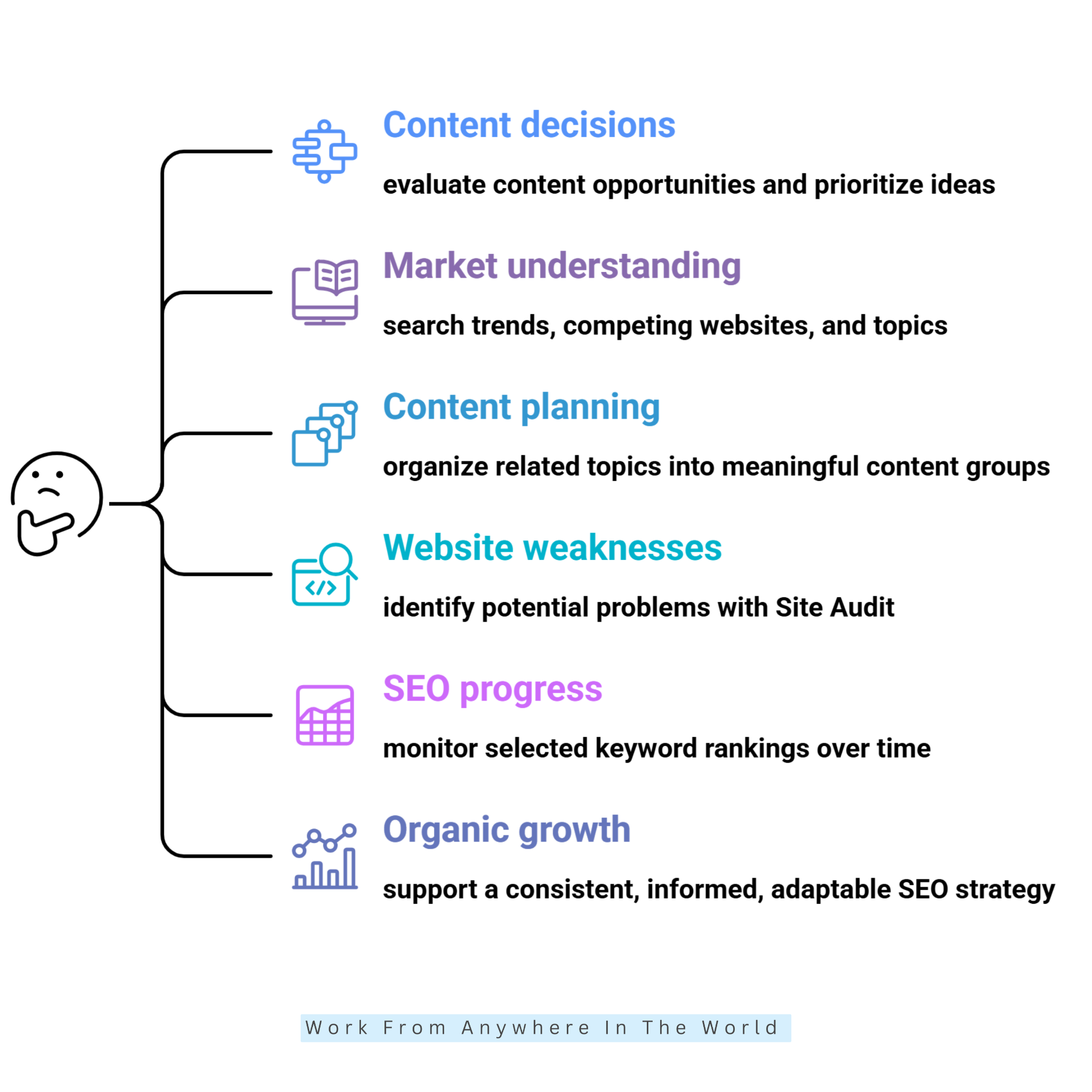
1. Make Smarter Content Decisions
Every successful blog starts with topics that genuinely help its audience. Semrush helps you evaluate content opportunities through estimated search demand, keyword difficulty, and competitor insights.
Instead of spending hours on topics with uncertain potential, you can compare different ideas. This makes it easier to prioritize subjects that match your readers’ interests.
Our guide to how to identify long-tail keywords explains how specific search phrases can reveal valuable content opportunities. These keywords often help bloggers target readers with clearer search intentions.
Combining Semrush research with your expertise creates a more purposeful content strategy. You can focus your writing time on relevant topics with realistic opportunities for search visibility.
2. Understand Your Market
Understanding your niche provides a stronger foundation for building a competitive blog. Semrush helps you explore search trends, competing websites, and topics attracting attention within your industry.
You can examine how established publishers reach their audiences and identify subjects worth exploring. These findings may reveal emerging interests, unanswered questions, and opportunities to offer a fresh perspective.
Our guide to the best ways to beat your competition at blogging explores strategies for standing out in a competitive niche. Understanding what other bloggers offer helps you develop content that brings something different to readers.
Whether you write about gardening, technology, or pet care, market research helps you understand changing interests. This knowledge supports articles that remain relevant to your audience.
3. Strengthen Content Planning
A well-planned blog creates a connected learning experience instead of presenting unrelated articles. Semrush helps you explore keyword relationships and organize relevant subjects into meaningful content groups.
These connections make it easier to develop pillar articles, supporting guides, and an editorial calendar. For example, a gardening blog could connect articles about soil preparation, composting, and plant nutrition.
Our guide to getting started with content marketing explores ways to organize and develop valuable content. A clear strategy helps bloggers maintain consistency while addressing their audience’s needs.
Structured content planning also creates natural opportunities for internal linking. Learning how to build internal links for SEO can help visitors discover related articles while clarifying relationships between your pages.
4. Identify Website Weaknesses
Even valuable blog content can struggle when technical problems affect website accessibility or search engine crawling. Semrush’s Site Audit tool helps identify potential issues that deserve attention.
These may include broken links, missing metadata, and certain crawlability problems. Reviewing the findings helps bloggers understand which website elements may need improvement.
Rather than making random technical changes, you can investigate reported issues and prioritize important fixes. Our on-page SEO guide explains additional optimization practices that support website visibility.
A technically accessible website helps visitors navigate content more comfortably. It also makes it easier for search engines to discover and evaluate eligible pages.
5. Measure SEO Progress
Tracking performance over time helps bloggers recognize meaningful improvements. Semrush’s Position Tracking tool monitors selected keyword rankings and changes in search visibility.
You can identify articles gaining momentum and investigate pages experiencing ranking declines. These insights help you decide which content deserves additional attention.
Combining Semrush reports with Google Search Console provides a broader understanding of search performance. Our guide to Google Analytics website metrics explores additional measurements for evaluating visitor behaviour.
Regular performance reviews encourage evidence-based decisions rather than reactions to temporary ranking changes. They also help you recognize which blogging strategies deserve further investment.
6. Support Long-Term Organic Growth
Sustainable blogging growth requires useful content, consistent publishing, and ongoing website improvements. Semrush supports these activities through keyword research, competitive analysis, and performance monitoring.
Over time, these insights can help you refine your editorial priorities and expand your topical coverage. You can also revisit older articles when new information or changing search patterns make updates worthwhile.
Our guide to SEO strategies for organic traffic explores additional ways to strengthen long-term search visibility. Combining practical optimization techniques with regular content updates supports a more consistent blogging strategy.
Although Semrush cannot guarantee rankings or traffic growth, its research tools provide useful guidance. A thoughtful approach helps you adapt to changing audience needs while building a stronger foundation for your blog.
How To Use Semrush For Blogging
Learning how to use Semrush for blogging becomes easier when you follow a clear, step-by-step process. From researching keywords to analyzing competitors, each tool helps you make more informed decisions about your content.
You don’t need to master every Semrush feature before getting started. Begin with the tools that support your immediate blogging goals and gradually expand your knowledge.
A structured workflow can help you discover valuable topics, organize related articles, and improve your website’s search visibility. The following steps explain how to put Semrush’s research tools to work for your blog.
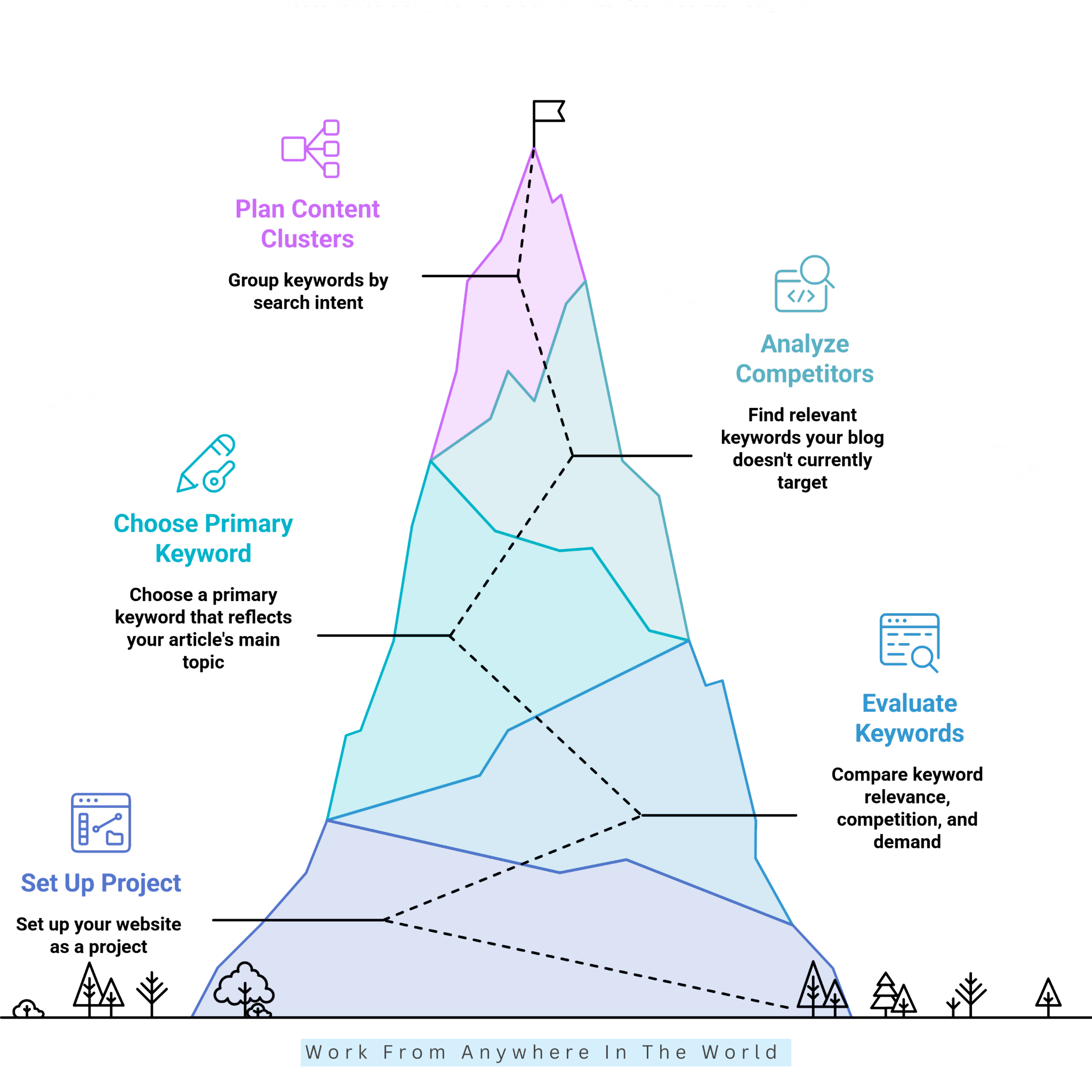
1. Set Up Your Semrush Account And Project
Before starting keyword research, create a Semrush account and set up your website as a project. Visit the official Semrush website to register or sign in.
Enter your blog’s domain and follow the prompts to configure your project. This allows you to organize important SEO activities around your website.
Depending on your subscription, you can activate tools such as Site Audit and Position Tracking. These features help monitor technical website issues and selected keyword rankings.
When configuring Position Tracking, choose the location and device type relevant to your audience. Accurate targeting helps make your ranking reports more meaningful.
You can also connect Google Search Console and Google Analytics where supported. Our guide to setting up Google Analytics in WordPress can help you understand the initial setup process.
Remember that Semrush traffic estimates and Google Search Console measurements serve different purposes. Comparing these sources thoughtfully gives you a more complete understanding of your website’s performance.
2. Use The Semrush Keyword Magic Tool
The Keyword Magic Tool helps bloggers discover relevant search phrases and evaluate their potential. Open the tool, enter a broad topic, and select your target country database.
Semrush displays related keywords alongside metrics such as estimated search volume, keyword difficulty, and search intent. These details help you compare opportunities before choosing a topic.
For example, a pet blogger researching cat food might discover searches about homemade recipes and feeding schedules. Each phrase could inspire a useful article addressing a specific reader question.
Explore the Questions filter to uncover queries people commonly search for. You can also compare related phrases to identify subjects that deserve further research.
Our guide to long-tail keyword finder tools explores additional ways to discover specific search phrases. These keywords can help you identify focused topics for your blog.
However, remember that longer keywords aren’t automatically easier to rank for. Competition, search intent, content quality, and your website’s authority all influence ranking difficulty.
3. Choose The Right Primary Keyword And Search Intent
Choosing the right primary keyword gives your article a clear direction. Start with a phrase that accurately represents the subject you want to cover.
Next, identify related keywords that provide additional context. For example, an article about using Semrush for blogging might naturally discuss keyword research, competitor analysis, and content optimization.
Understanding search intent is equally important because it reveals what readers expect to find. Search queries generally fall into four categories:
- Informational: Readers want answers, explanations, or instructions.
- Navigational: Readers want to find a particular website or page.
- Commercial: Readers are researching or comparing products and services.
- Transactional: Readers are ready to complete an action, such as making a purchase.
Review Google’s search results for your chosen keyword before writing. Look at the types of pages appearing and consider whether readers expect a tutorial, comparison, or detailed guide.
Our article on how to use Google Keyword Planner introduces another useful approach to keyword research. Comparing research methods can help you make more informed content decisions.
When your article matches search intent, readers are more likely to find the information they need. This creates a stronger foundation for helpful, relevant blog content.
4. Analyze Competitors With Semrush
Competitor analysis helps you discover which topics and keywords attract search visibility within your niche. Semrush’s Organic Research tool provides insights into competing websites and their estimated search performance.
Enter a competitor’s domain and explore its organic keywords and top-performing pages. Look for topics that interest your audience and identify opportunities to add value.
You can also use Keyword Gap to compare your website with competing domains. This helps reveal relevant keywords that other websites rank for, but your blog may not currently target.
For example, a gardening blogger might discover opportunities involving composting, soil preparation, or indoor plant care. These findings can inspire new articles or improvements to existing content.
Our Semrush tutorial offers additional guidance for exploring SEO research tools. It can help you develop a more structured approach to evaluating opportunities.
Use competitor research to inspire original ideas rather than copying existing articles. Your experience, examples, and unique perspective are what make your content valuable.
5. Build A Content Plan With Keyword Clusters
Keyword clustering helps bloggers organize related search terms into meaningful content groups. Semrush’s Keyword Strategy Builder can support this process by identifying keyword relationships and potential content opportunities.
Instead of creating unrelated articles, you can build a collection of posts around a central subject. This approach makes your website easier for readers to explore.
For example, a pet care blog might publish a comprehensive guide to cat nutrition. Supporting articles could explore wet versus dry food, feeding schedules, and how to understand cat food labels.
The main guide introduces the broader subject, while supporting posts answer more specific questions. Together, they create a connected collection of helpful resources.
Review each keyword group and consider whether it deserves one comprehensive article or several focused posts. Search intent and differences between topics should guide your decisions.
Add relevant internal links between published articles to help readers discover related information. A thoughtful linking structure also helps search engines understand connections between your pages.
Finally, organize your planned articles into an editorial calendar that fits your publishing schedule. Consistent, purposeful content development can strengthen your blog’s topical coverage over time.
6. Create SEO-Friendly Blog Posts With Semrush
Semrush offers content optimization tools that help bloggers plan articles and improve their SEO. Depending on your subscription, features such as SEO Writing Assistant can suggest improvements to readability, keyword usage, and content structure.
Start by choosing one primary keyword and several relevant supporting phrases. These terms help establish your article’s main topic and provide additional context for readers.
Next, create an outline that answers your audience’s most important questions. Organize the information using descriptive H2 and H3 headings that make your article easy to navigate.
Our guide to writing SEO-friendly content explores additional techniques for creating articles that appeal to readers and search engines. Combining helpful information with thoughtful optimization creates a stronger foundation for your blog.
Write a compelling SEO title and a concise meta description that accurately summarizes your content. Include relevant keywords naturally without sacrificing clarity or readability.
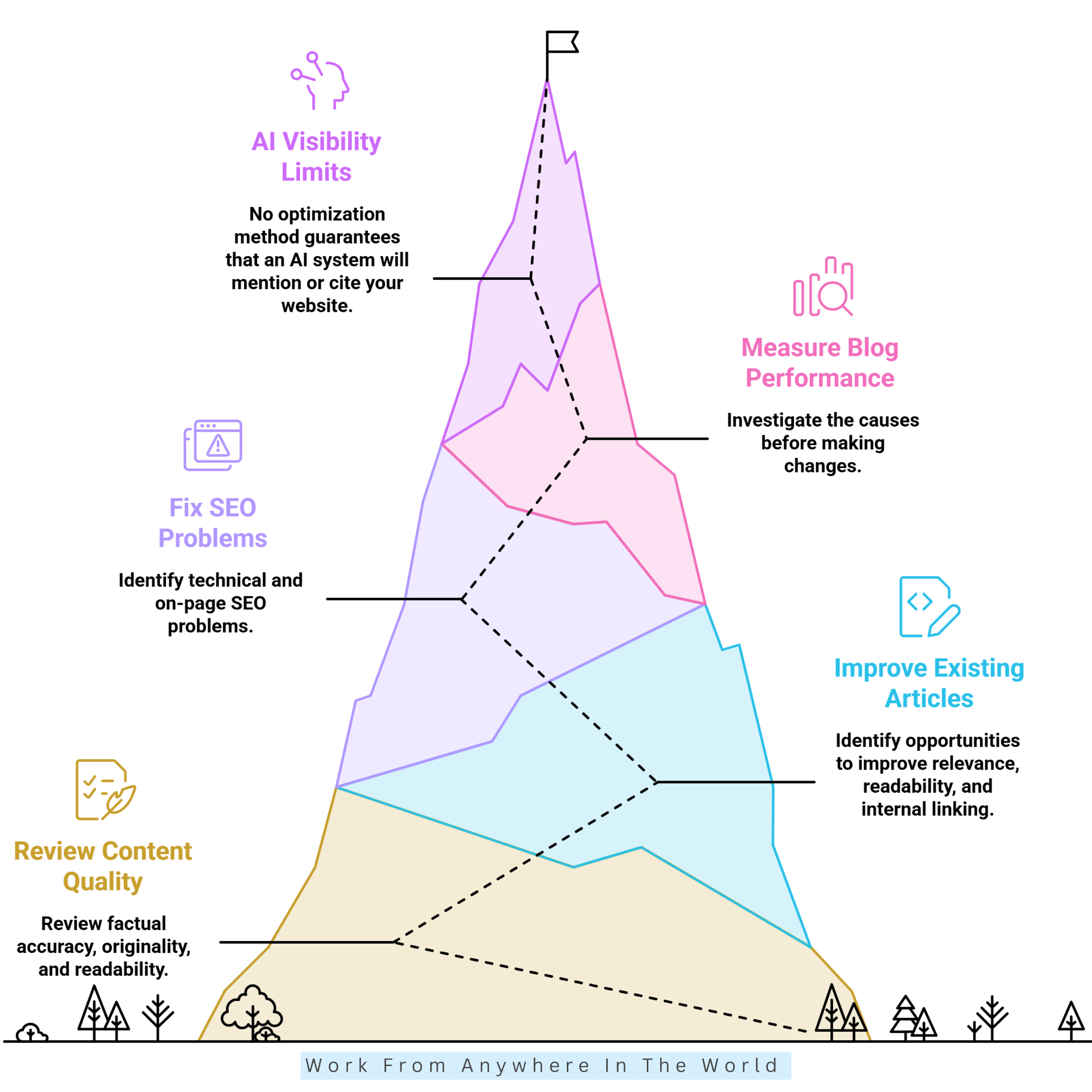
Before publishing, review your article for factual accuracy, originality, and overall usefulness. Semrush recommendations can guide improvements, but your readers’ needs should always come first.
7. Optimize Existing Articles With Semrush On-Page SEO Checker
Updating existing blog posts can reveal valuable opportunities to improve search visibility and reader experience. Semrush’s On-Page SEO Checker provides recommendations for selected pages and target keywords, depending on your subscription.
Start by reviewing Google Search Console to identify articles receiving impressions for relevant searches. Look for pages that could benefit from clearer explanations, updated information, or additional details.
Next, examine those articles using Semrush’s recommendations. Consider which suggested improvements would genuinely make the content more helpful.
For example, a tomato-growing guide might receive impressions for watering-related searches. If the article barely discusses watering schedules, adding practical guidance could better address readers’ questions.
You can also improve headings, replace outdated information, and strengthen connections between related articles. Our guide to building internal links for SEO explains how thoughtful linking helps readers discover useful content.
Remember that successful optimization isn’t simply about adding more words or keywords. Focus on improving accuracy, relevance, and the overall reading experience.
8. Use Site Audit To Identify Technical SEO Problems
Semrush’s Site Audit tool helps bloggers identify technical and on-page SEO issues that may affect website performance. Regular audits can reveal problems that aren’t immediately noticeable when browsing your own pages.
Start by opening your Semrush project and configuring the website crawl settings. Run an audit to generate a report highlighting potential errors, warnings, and notices.
Review the findings carefully and prioritize issues according to their relevance and potential impact. Not every warning requires immediate action, so investigate problems before making changes.
For example, broken internal links can frustrate visitors and make related articles harder to discover. Other reported issues may include missing title tags, duplicate metadata, or crawlability problems.
Our eCommerce SEO audit checklist provides additional guidance for bloggers who also manage online stores. Many technical SEO principles apply to both content websites and eCommerce businesses.
After addressing important issues, run another Site Audit to evaluate your progress. Regular checks help you maintain a more accessible and dependable website.
Remember that Semrush cannot confirm whether Google has indexed a particular page. Use Google Search Console’s URL Inspection tool when investigating individual URLs and indexing concerns.
Wealthy Affiliate – Mini Review
If you’ve ever thought about turning your blog, passion, or niche into an online business,
Wealthy Affiliate (WA) is one of the most beginner-friendly platforms I’ve used.
It combines step-by-step training, website hosting, AI-powered tools,
keyword research, and an active community all in one place.
What I like most is that you can start for free (no credit card needed), explore the platform,
test the tools, and connect with other entrepreneurs before upgrading.
WA isn’t a “get rich quick” scheme — success comes from consistent effort
and applying what you learn over time.
9. Track Blog Rankings And Measure Results
Tracking your blog’s performance helps you understand whether your SEO strategy is producing meaningful results. Semrush’s Position Tracking tool monitors selected keywords and shows how their rankings change over time.
Start by reviewing the keywords most relevant to your website and audience. Look for improvements in search visibility and identify articles that may need additional attention.
Compare these findings with Google Search Console data, including clicks, impressions, click-through rates, and average positions. These measurements help you understand how people discover your content through Google Search.
Google Analytics provides additional information about visitor engagement and conversions. Together, these tools offer a broader picture of how your blog performs.
Set aside time each month to review your most important articles. Identify pages gaining visibility, posts losing rankings, and search queries receiving impressions but relatively few clicks.
Before making changes, investigate what might be influencing the results. Search intent, competing content, and changes in search results can all affect performance.
Remember that small ranking fluctuations are normal and don’t always require immediate action. Consistent monitoring helps you recognize meaningful trends and prioritize worthwhile improvements.
10. Use Semrush For GEO And AI Search Visibility
Generative Engine Optimization (GEO) focuses on making content useful, accurate, and accessible to AI-powered search experiences. As search technology evolves, bloggers may need to consider how their articles appear beyond traditional search results.
Semrush offers AI visibility features that help monitor brand mentions and explore visibility across supported AI search platforms. The available tools and reports depend on your subscription and the products you use.
Start by creating articles that answer readers’ questions clearly and directly. Use descriptive headings, logical sections, and straightforward explanations that make information easy to understand.
Support factual claims with reliable sources and include practical examples whenever possible. Original insights and firsthand experience can also make your content more valuable to readers.
Related articles help you explore a subject from different perspectives. Connecting useful resources through natural internal links creates a more organized experience for visitors.
Review older content regularly to correct outdated information and improve unclear explanations. Accurate, well-maintained articles provide a stronger foundation for both traditional SEO and AI search discovery.
Remember that no optimization technique guarantees your website will appear in an AI-generated answer. AI systems determine which sources to reference through processes that website owners cannot fully control.
The most sustainable approach is to prioritize helpful, trustworthy, and original content. These principles support your readers while giving your blog a stronger foundation as search technology evolves.
Semrush Pricing Plans: Which Option Is Best For Bloggers?
Semrush offers free and paid subscription options for bloggers, freelancers, businesses, and marketing teams. Its current SEO and AI search plans include SEO, Starter, Pro+, and Advanced.
Each plan offers different research tools, monitoring capabilities, and usage limits. Visit the official Semrush pricing page for current prices, features, and subscription options.
Free Plan
The free plan is a practical starting point for beginner bloggers who want to explore Semrush without committing to a paid subscription. It provides limited access to selected research tools and reports.
This option is useful when you’re learning the basics of keyword research and evaluating whether Semrush suits your blogging needs.
SEO Plan
The SEO plan is designed for freelancers and small businesses that want to improve their organic search visibility. It includes keyword research, competitor analysis, Position Tracking, and Site Audit capabilities.
This option may suit individual bloggers who need more consistent SEO research and website monitoring.
Starter Plan
The Starter plan combines SEO research with additional AI search visibility features. It is designed for small teams and agencies expanding their optimization activities.
Bloggers interested in monitoring both traditional search performance and AI visibility may find these capabilities useful.
Pro+ Plan
The Pro+ plan offers higher monitoring limits and additional capabilities for growing websites and marketing teams. These include historical SEO data, content optimization, and more extensive tracking options.
It may suit established bloggers managing multiple websites or developing a broader content strategy.
Advanced Plan
The Advanced plan is intended for organizations and agencies with more complex SEO requirements. It offers expanded monitoring capabilities, advanced integrations, and custom pricing.
Most individual bloggers are unlikely to need this level of functionality when starting out.
Which Plan Should You Choose?
If you’re new to blogging, begin with the free plan and explore the available features. Upgrade when usage limits or missing tools begin restricting your research and optimization workflow.
Established bloggers should compare paid plans based on their website size, publishing goals, and budget. Remember that the most expensive subscription isn’t necessarily the best choice for your needs.
Pricing, features, trial eligibility, and usage limits can change over time. Always verify the latest details with Semrush before subscribing, including applicable taxes and currency conversion charges.
Frequently Asked Questions
Q1: Is Semrush Good For Beginner Bloggers?
Yes, Semrush is a valuable SEO platform for beginner bloggers who want to improve their content strategy. It helps you discover relevant keywords, research competitors, and understand what your audience is searching for.
Beginners can start with the free plan and explore one tool at a time. Learning keyword research first makes it easier to understand more advanced features as your blog grows.
Q2: How Do I Find Low-Competition Keywords In Semrush?
Open Semrush’s Keyword Magic Tool, enter a topic related to your niche, and select your target country. Use the keyword difficulty filter to explore potentially less competitive phrases, then compare search volume and relevance.
Look for keywords that match your audience’s interests and your website’s ability to compete. Remember that low keyword difficulty doesn’t guarantee rankings, so review the search results before choosing your target.
Q3: Does Semrush Help With AI Search Visibility And GEO?
Yes, Semrush offers AI visibility features that help website owners investigate brand mentions and visibility across supported AI search platforms. These insights can support Generative Engine Optimization (GEO) alongside traditional SEO activities.
Focus on creating original, accurate content with clear explanations and reliable supporting sources. Although these practices can improve content quality and discoverability, no SEO tool can guarantee inclusion in AI-generated answers.
Q4: Can Semrush Help With Backlink Research?
Yes, Semrush’s Backlink Analytics tool helps bloggers examine backlinks, referring domains, and other link-related metrics. You can also research competing websites to understand where their backlinks originate.
These insights may reveal opportunities to connect with relevant websites and build genuine professional relationships. Focus on earning backlinks through valuable content and legitimate outreach rather than purchasing links or using manipulative tactics.
Q5: Can I Use Semrush To Improve Older Blog Posts?
Yes, Semrush can help you identify opportunities to improve existing articles through keyword research, content analysis, and on-page SEO recommendations. These insights can reveal outdated information, missing topics, and opportunities to strengthen your content.
Start with articles that already receive search impressions but could better answer readers’ questions. Updating information, improving headings, and adding relevant internal links can make older posts more useful.
Q6: How Often Should Bloggers Use Semrush?
Bloggers can use Semrush whenever they research new topics, plan articles, or review website performance. Weekly keyword research and monthly performance checks provide a manageable routine for many website owners.
You can also run periodic website audits and revisit older content when rankings or audience interests change. Consistent monitoring helps you recognize worthwhile improvements without spending unnecessary time checking SEO metrics.
Conclusion
Learning how to use Semrush for blogging can help you build a more focused and effective SEO strategy. Instead of relying on guesswork, you can make informed decisions based on keyword research, competitor insights, and website performance.
Semrush provides valuable tools for discovering content opportunities and understanding what your audience wants to read. Its optimization features can also help you improve existing articles and create more useful content.
Regular website audits and ranking reports allow you to identify areas that need attention. These insights make it easier to refine your blogging strategy as your website grows.
Remember that successful blogging requires more than SEO tools and keyword rankings. Original ideas, accurate information, and a genuine understanding of your readers remain essential.
Start with the Semrush features that best support your goals and gradually expand your knowledge. With patience, consistent effort, and thoughtful improvements, you can build a stronger foundation for long-term organic growth.
I trust you enjoyed this article on How to Use Semrush for Blogging: 10 Practical Steps. Please stay tuned for more helpful guides on affiliate marketing, online business, and working from anywhere in the world.
Take care!
— JeannetteZ 🌍✨
💬 Your Opinion Is Important To Me
Do you have thoughts, ideas, or questions? I’d love to hear from you. Please leave your comments below or email me directly at Jeannette@WorkFromAnywhereInTheWorld.com.
📚 More Work From Anywhere Reads
🚀 Ready to Build a Business You Can Run from Home
Or from Anywhere in the World?
Imagine earning income on your terms — from home, a cozy café, or wherever life takes you.
With the right tools, training, and community support, it’s entirely possible.
Start your own online business for free — no credit card needed.
Disclosure
This post may contain affiliate links. As an Amazon Associate and participant in other affiliate programs, I earn from qualifying purchases at no extra cost to you. Please read my full affiliate disclosure.





That’s a great article, I really enjoyed reading it. I’ll come back to your site and check more and hope to see more articles like this. Thank you!
Thanks so much, Ali. Your comment means the world to me.
Take care
Jeannette