Yoast SEO Review: 10 Powerful Features, Pros And Cons
This Yoast SEO review explores one of the most popular WordPress plugins for improving website optimization. It helps bloggers, businesses, and content creators manage on-page SEO, readability, metadata, and essential technical settings.
But does Yoast SEO offer enough value for your website? Understanding its strengths and limitations can help you choose the right SEO tools for your needs.
We’ll explore its key features, pros and cons, and pricing plans. You’ll also discover whether the free plugin or premium subscription is the better choice for your website.
What Is Yoast SEO?
Yoast SEO is a WordPress plugin that helps website owners optimize content for search engines and improve readability. It provides suggestions for keyphrase placement, SEO titles, meta descriptions, internal linking, and other optimization tasks.
The plugin also automates technical SEO elements, including XML sitemaps and structured data, making website optimization more manageable.
Yoast SEO suits personal blogs, business websites, online publications, and e-commerce stores. The free version covers essential SEO tasks, while Premium offers related keyphrase analysis, internal linking suggestions, redirect management, and AI-assisted tools.
One major advantage is its integration with the WordPress editing workflow. You can review optimization suggestions while creating or updating content without switching between multiple platforms.
Website owners comparing SEO plugins may also find our AIOSEO vs Yoast comparison helpful when evaluating features, usability, and optimization tools.
However, Yoast SEO is not a complete SEO research suite. It cannot replace dedicated tools for comprehensive keyword research, backlink analysis, or competitor research.
For better results, combine Yoast SEO with Google Search Console, explore our best free keyword research tools, and follow a consistent content strategy.
Features Of Yoast SEO
Yoast SEO offers a range of features designed to simplify search engine optimization for WordPress websites. These tools help bloggers and business owners improve their content and website structure.
From real-time content analysis to technical SEO settings, the plugin supports several important optimization tasks. Beginners can follow its recommendations while experienced users can fine-tune their strategies.
Understanding these features can also help you develop stronger on-page SEO practices and improve your overall SEO strategy for organic traffic.
Let’s explore the main features of Yoast SEO, how they work, and how they can improve your website’s search performance.
1. Real-Time SEO Analysis
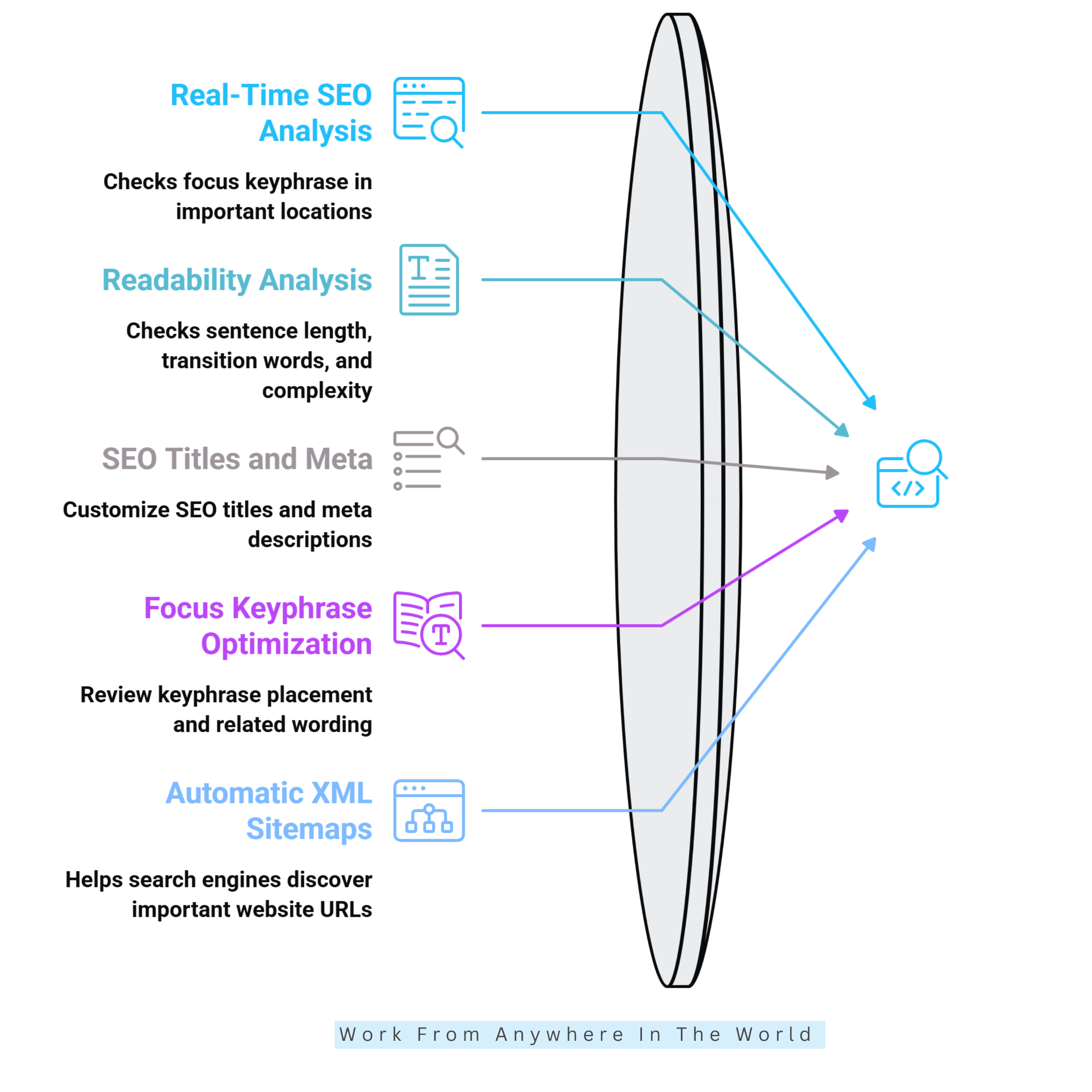
Yoast SEO analyzes your content as you write and checks whether your focus keyphrase appears in important locations. These include the title, introduction, URL, and meta description.
It also evaluates other on-page elements and presents actionable suggestions through a colour-coded feedback system. This helps beginners identify common optimization gaps before publishing.
For example, someone writing about container gardening can check whether their main topic appears naturally in relevant places.
The analysis is especially useful when applying SEO tips for improving website visibility. It encourages writers to review their content before publishing rather than relying on guesswork.
However, the analysis is a useful checklist, not a ranking guarantee. Content quality, search intent, competition, and website authority still influence search performance.
2. Readability Analysis
Yoast’s readability analysis helps writers create easier-to-understand content. Depending on the language, its checks assess sentence length, paragraph length, transition words, passive voice, and word complexity.
These suggestions help writers explain complicated subjects to beginners. For example, a technical article about keyword research may become clearer when dense paragraphs are divided into shorter sections.
Writers can use the feedback to improve flow without changing the article’s meaning. This is especially helpful when learning how to write SEO-friendly content.
Following practical steps to write better content can further improve clarity, organization, and reader engagement.
However, readability scores are guidelines, not strict rules. The goal is to communicate accurately and naturally rather than make every sentence follow an identical structure.
3. SEO Titles And Meta Descriptions
Yoast lets you customize SEO titles and meta descriptions for individual posts and pages. Its search-result preview helps you assess how your wording might appear in Google results.
This makes it easier to create relevant headlines and descriptions that explain what readers can expect. Learning how to write catchy headlines can also strengthen your content strategy.
For example, a gardening article could use a title that promises practical advice about growing herbs indoors. The description could highlight the main benefits or steps covered.
Premium includes AI-assisted tools for generating metadata suggestions. However, you should review every suggestion for accuracy, originality, and brand voice.
Search engines may rewrite titles or snippets depending on the query. Therefore, the preview provides guidance rather than guaranteeing how your content will appear.
Understanding click-through rates can also help you evaluate whether your titles and descriptions encourage searchers to visit your website.
4. Focus Keyphrase Optimization
Yoast helps you optimize a page around a selected focus keyphrase. Its analysis checks how often the phrase appears in important elements and identifies opportunities to improve placement.
The free version supports basic keyphrase optimization, while Premium adds related keyphrase analysis, synonyms, and word-form recognition for supported languages.
For example, an article about starting a vegan blog might target “how to start a vegan blog” while naturally incorporating related phrases about vegan blogging.
This approach helps writers consider keyword variations without relying on repetitive exact-match phrases. Learning how to identify long-tail keywords can also reveal more specific topics worth targeting.
However, Yoast does not replace keyword research. Understanding how to choose keywords for blog posts helps you evaluate search intent, audience needs, and competition before optimizing your draft.
5. Automatic XML Sitemaps
Yoast automatically generates XML sitemaps to help search engines discover important website URLs. The sitemap updates as supported content changes, reducing the need for manual maintenance.
This feature is particularly useful for blogs and business websites that publish new pages regularly. For example, a gardening website can use its sitemap to help search engines discover recently published plant-care guides.
Submitting the sitemap through Google Search Console can support URL discovery. However, including a sitemap does not guarantee indexing or higher rankings.
Website owners should also consider their overall website hosting setup, ensuring important pages remain accessible to visitors and search engines.
Maintaining good website speed can further improve the user experience, although performance improvements serve a different purpose from XML sitemaps.
Make sure important pages are accessible, indexable, and useful to visitors. A sitemap supports discovery, but it cannot fix thin, duplicated, or poorly organized content.
6. Automatic Schema Markup
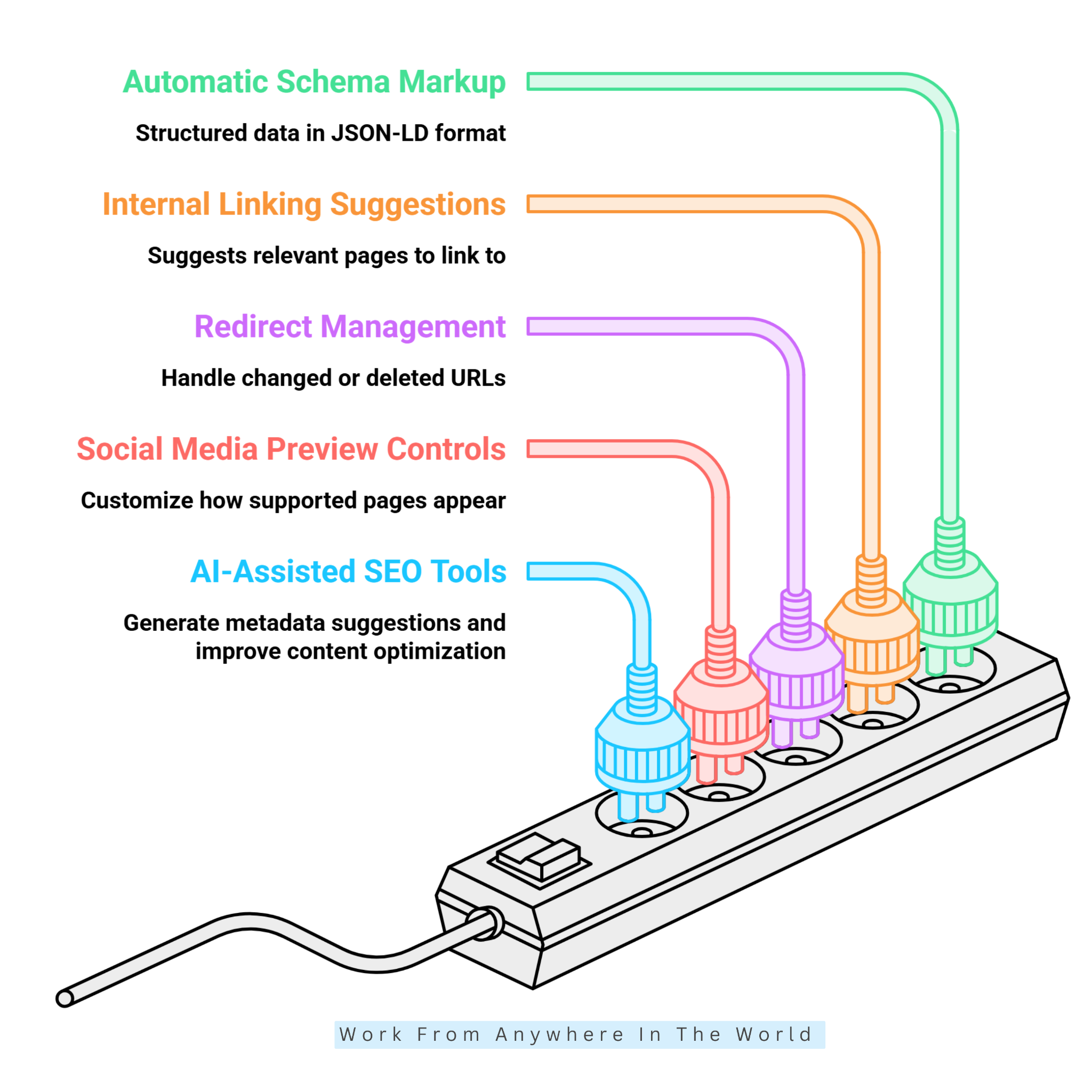
Yoast automatically creates structured data in JSON-LD format, helping search engines understand your website’s content and organization.
Depending on the page, this can include information about articles, authors, organizations, and other supported entities. The plugin connects related information through a structured schema graph, reducing the need for manual coding.
For example, an article can identify its headline, author, and publishing details. This is one of several elements involved in on-page SEO optimization.
Structured data also forms part of a broader SEO approach. Understanding the different types of SEO optimization can help website owners combine technical improvements with quality content.
However, structured data does not guarantee rich results or better rankings. Keep your information accurate, choose the right content types, and validate structured data when needed.
7. Internal Linking Suggestions
Internal links connect related pages and help visitors explore your website. Yoast SEO Premium suggests relevant pages to link to while you edit content.
This can save time when managing a large blog with hundreds of articles. Learning how to build internal links for SEO can also help you create a clearer website structure.
For example, a comprehensive gardening guide could link to separate posts about composting, seed selection, and natural garden pest control.
These connections help readers discover useful information while supporting broader SEO strategies for organic traffic.
Premium also offers tools that make internal link management easier. Still, review every suggestion before adding it.
Relevant links improve navigation, while unnecessary links can distract readers and weaken the article’s overall flow.
8. Redirect Management
Yoast SEO Premium includes redirect management to help website owners handle changed or deleted URLs. A redirect sends visitors from an outdated address to an appropriate destination, reducing broken-link problems.
For example, changing /beginner-gardening/ to /gardening-for-beginners/ may require a permanent redirect from the old URL.
Yoast can simplify this process within WordPress, making it useful during website redesigns and content updates. Following a website migration checklist can help you prepare for larger structural changes.
Redirects should point to genuinely relevant destinations rather than unrelated pages. When updating an online store, an eCommerce SEO audit checklist can help identify other optimization issues that need attention.
After making changes, test important URLs to confirm they work correctly. You can also consult Yoast’s official redirect manager guide for additional guidance.
The feature saves time, but it does not replace careful planning when restructuring a website.
Wealthy Affiliate – Mini Review
If you’ve ever thought about turning your blog, passion, or niche into an online business,
Wealthy Affiliate (WA) is one of the most beginner-friendly platforms I’ve used.
It combines step-by-step training, website hosting, AI-powered tools,
keyword research, and an active community all in one place.
What I like most is that you can start for free (no credit card needed), explore the platform,
test the tools, and connect with other entrepreneurs before upgrading.
WA isn’t a “get rich quick” scheme — success comes from consistent effort
and applying what you learn over time.
9. Social Media Preview Controls
Yoast helps you customize how supported pages appear when shared on social platforms such as Facebook and X. You can set social titles, descriptions, and images instead of relying entirely on default page metadata.
Premium includes social preview controls that let you review the presentation before publishing. This can be particularly useful when learning how to share content on social media.
For example, a blog post about indoor plants might benefit from a descriptive headline and a clear image showing the plants.
These settings help keep content consistent across distribution channels. Applying effective social media engagement strategies can also encourage more interaction with your published articles.
However, social platforms may cache older information or display previews differently. Check important shared links after updating their metadata to ensure the information appears as intended.
10. AI-Assisted SEO Tools
Yoast offers AI-assisted tools that can help generate metadata suggestions and improve selected parts of the content optimization process.
Premium includes AI-powered optimization features, while its broader product range offers additional tools for content planning and AI visibility.
These capabilities can save time when managing many pages. For example, publishers exploring AI content creation opportunities may find automated suggestions useful when updating older articles.
Suggested titles can provide starting points for editorial revisions. Combining these tools with a thoughtful content marketing strategy helps maintain consistency across a website.
However, human review is still required for AI-generated recommendations. They may miss context, use generic wording, or include inaccurate details.
Use these tools to support your workflow, not replace expertise, original thinking, or careful review of the final content.
Pros Of Yoast SEO
Yoast SEO offers several advantages for WordPress users who want to improve their website’s search visibility. Its combination of content guidance and technical automation makes everyday optimization more manageable.
From beginner-friendly recommendations to convenient publishing tools, the plugin supports different experience levels. Understanding these benefits can help you decide whether Yoast fits your website’s needs.
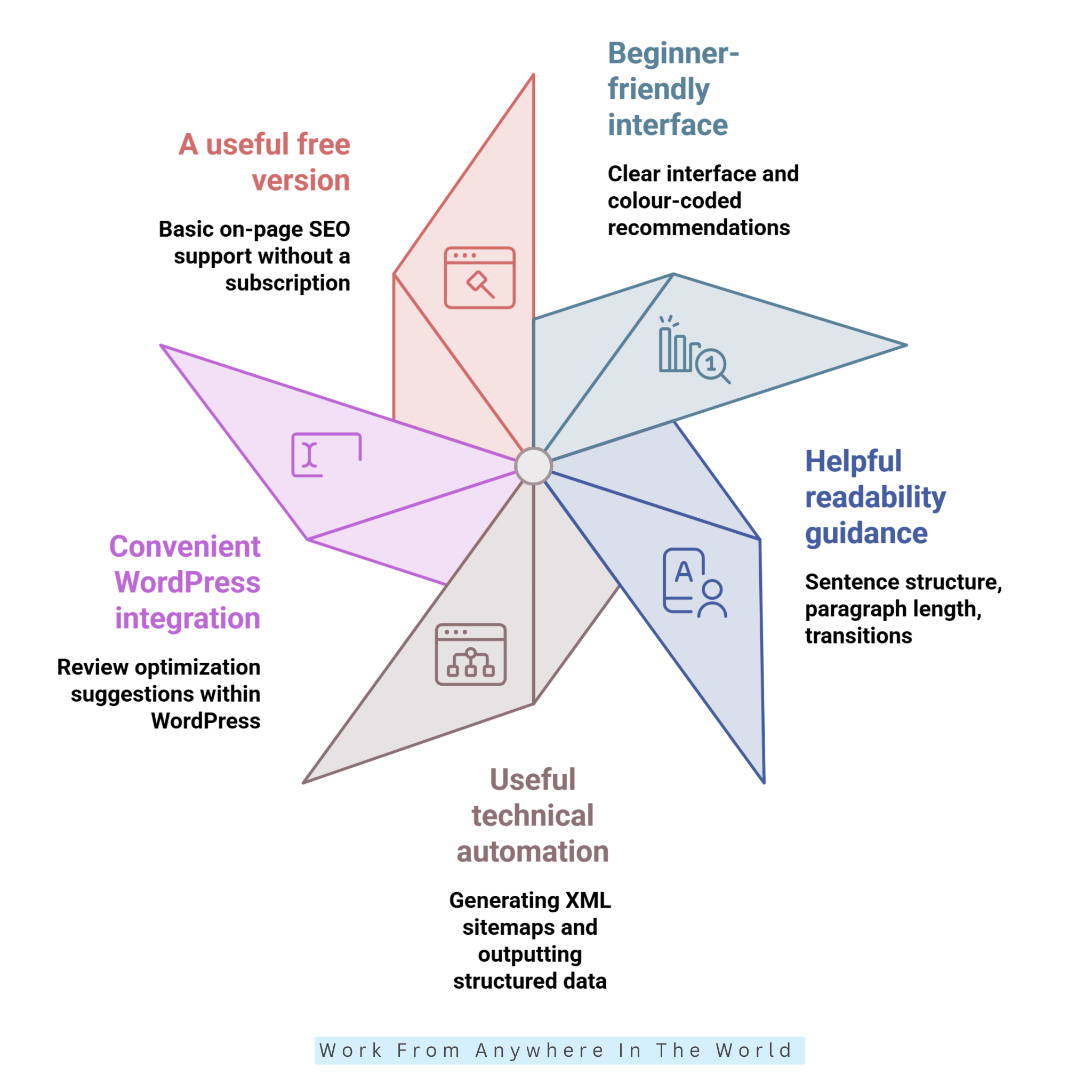
1. Beginner-Friendly Interface
Yoast makes essential SEO tasks easier to understand through its clear interface and colour-coded recommendations. Beginners can review titles, descriptions, and content optimization while writing in WordPress.
This reduces the learning curve and helps establish a consistent publishing routine. Anyone following a WordPress tutorial for beginners can gradually become familiar with these optimization tasks.
Instead of remembering every on-page detail, users can follow the suggestions and gradually develop stronger optimization habits. This makes the publishing process more organized and less overwhelming for newcomers.
The interface is especially useful for solo bloggers who manage research, writing, editing, and publishing themselves. Understanding why WordPress is a popular website platform also provides helpful context.
Although experience matters, Yoast offers a practical starting point for learning SEO fundamentals without requiring advanced technical skills or coding knowledge.
2. Helpful Readability Guidance
The readability analysis provides actionable feedback on sentence structure, paragraph length, transitions, and other writing elements. These checks help bloggers identify passages that may confuse readers or disrupt an article’s flow.
For example, a beginner’s guide can feel more approachable when lengthy explanations are divided into focused paragraphs. Applying practical ways to improve website content can further strengthen clarity and organization.
The feature also encourages writers to review passive constructions and unnecessary complexity. This makes editing more systematic, especially for websites that publish new content frequently.
However, the best results come from combining automated feedback with editorial judgment, audience knowledge, and accurate information. Developing strong content creation skills also helps writers recognize when suggestions are appropriate.
Rather than following every recommendation mechanically, writers should focus on producing clear, natural content that communicates their message effectively.
3. Useful Technical Automation
Yoast handles several technical SEO tasks automatically, including generating XML sitemaps and outputting structured data. These features reduce manual work and help website owners maintain essential optimization settings as their content grows.
Beginners can build a solid technical foundation without writing code or configuring every element. This is particularly helpful for website owners who prefer concentrating on content rather than technical maintenance.
The automation is especially useful for websites that publish new articles, update existing pages, and manage multiple content types. It also reduces the likelihood of overlooking routine setup tasks.
However, other aspects of website performance, such as making a WordPress site faster, still require attention. Automated SEO features cannot replace regular website maintenance.
Website owners should periodically check indexing, crawlability, and technical errors because a plugin cannot identify or resolve every possible SEO problem independently.
For example, reviewing an eCommerce website’s SEO settings may reveal additional optimization opportunities beyond Yoast’s automated features.
4. Convenient WordPress Integration
Yoast works directly within the WordPress publishing workflow, allowing writers to review optimization suggestions without repeatedly switching between applications. This makes everyday content management more convenient.
The integration is valuable for bloggers, editors, and marketing teams that publish content regularly. Choosing suitable blogging tools can further improve their overall workflow.
The plugin brings several checks together in one place, including keyphrase analysis, readability feedback, and metadata controls. Writers can review these elements while preparing articles for publication.
Premium adds internal linking suggestions and redirect management, which can simplify larger content operations. These features are particularly helpful when managing extensive websites with many related articles.
By reducing repetitive tasks, Yoast helps teams focus more attention on content quality and planning. Exploring other WordPress plugins and their features can also help website owners build an efficient editorial toolkit.
Ultimately, Yoast’s practical value depends on how frequently you publish and whether its included tools match your existing editorial process.
5. A Useful Free Version
Yoast’s free plugin provides substantial functionality for websites that need basic on-page SEO support. Users can optimize selected keyphrases, review readability, customize metadata, and access important technical features without purchasing a subscription.
This makes it attractive to personal bloggers, new businesses, and publishers on a limited budget. Comparing the best free WordPress SEO plugins can help beginners understand their available options.
You can establish a repeatable optimization process before deciding whether advanced tools would improve productivity. This allows you to become familiar with essential SEO practices while keeping expenses manageable.
The free version may be enough for websites with straightforward requirements. As your site grows, you can evaluate whether additional features would save time or improve your workflow.
For example, an AIOSEO vs Yoast comparison can help you understand the differences between competing plugins and determine which features matter most.
Compare the value of Premium features against your actual workload rather than upgrading simply because a paid option exists.
Cons Of Yoast SEO
Although Yoast SEO offers many useful features, it also has limitations worth considering. Understanding these drawbacks can help you decide whether the plugin meets your website’s requirements.
Some limitations involve keyword research and advanced functionality, while others relate to automated recommendations. Let’s explore where Yoast may need support from additional tools or human expertise.
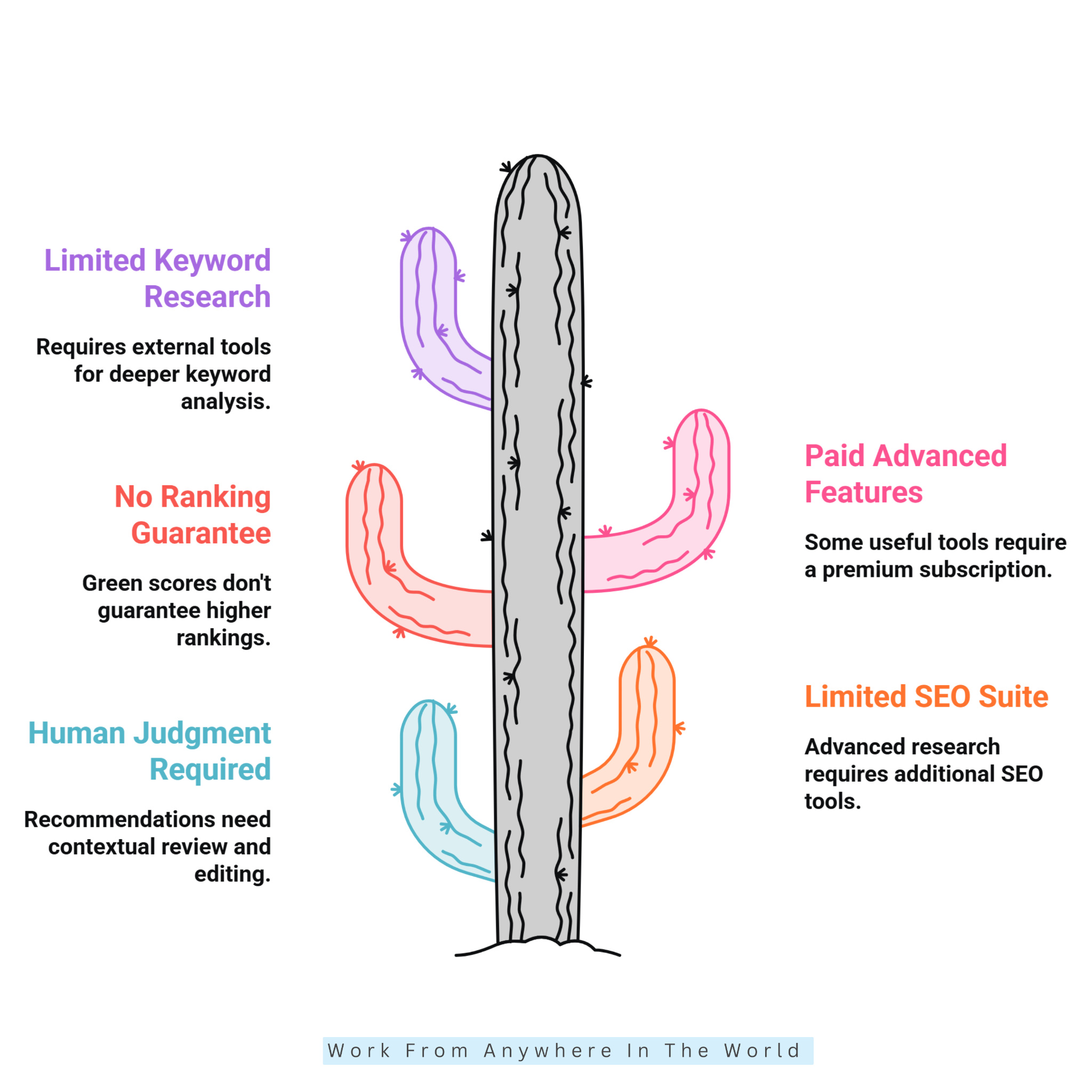
1. Limited Keyword Research Capabilities
Yoast focuses on optimizing content around selected keyphrases rather than providing a complete keyword research environment. It doesn’t offer the same depth of keyword databases, search-volume analysis, backlink research, or competitor intelligence as specialist SEO platforms.
As a result, you may need additional tools to identify promising topics and evaluate competition before writing. Exploring free keyword research tools can help you identify suitable opportunities.
For example, a green optimization score cannot tell you whether a keyword attracts enough relevant searches or matches your business goals.
Yoast works best once research has established the page’s target topic, audience, and search intent. Learning how to use Ahrefs for keyword research can complement the plugin’s optimization features.
2. Advanced Features Require Payment
The free plugin covers many essential tasks, but paid products offer several advanced capabilities. These may include redirect management, additional keyphrase analysis, internal linking suggestions, and expanded AI-assisted workflows.
For beginners, the annual subscription may be difficult to justify if the free version already meets their needs. Businesses managing large websites may find the time savings more valuable.
The decision depends on publishing frequency, technical requirements, and available budget. Comparing alternatives through an AIOSEO review can help you understand other available features.
Review the feature list carefully before purchasing, and compare the subscription cost with alternative workflows. A SEOPress vs Semrush comparison also illustrates how different SEO tools serve different purposes.
Consider which services are already included in your existing SEO setup before committing to another subscription. This helps you avoid paying for overlapping features and ensures that every tool contributes meaningful value to your optimization strategy.
3. Scores Do Not Guarantee Rankings
Yoast’s traffic-light indicators can make optimization easier to understand, but they measure specific checks rather than a page’s overall quality.
A green score does not guarantee higher rankings, strong engagement, or conversions. Search engines also consider relevance, content usefulness, competition, links, and other signals.
Writers who focus exclusively on plugin recommendations may overuse keywords or make unnecessary edits. Understanding how to rank higher on Google requires looking beyond automated scores.
For better results, treat the analysis as an editorial checklist. Prioritize search intent, accurate information, original insights, and a satisfying reading experience.
Effective backlinking strategies can also support broader SEO efforts, although they operate independently of Yoast’s content scores. The plugin should support sound SEO decisions, not determine every decision.
4. It Is Not A Complete SEO Suite
Yoast is primarily a website optimization plugin, not an all-in-one SEO research platform. It helps with content analysis and technical foundations, but comprehensive backlink analysis, advanced competitor research, and detailed rank tracking may require other services.
This can increase the total cost for marketers who want everything in one dashboard. For example, an agency managing multiple clients may need separate platforms to investigate competitors and measure keyword movements.
Learning SEO competitive analysis can help marketers understand the additional research involved in evaluating competing websites.
Yoast remains useful within that workflow, but it cannot replace every specialist tool. Exploring a Semrush tutorial can demonstrate how dedicated platforms support broader SEO research.
Evaluate your full requirements before deciding whether one plugin is sufficient for your SEO operations.
5. Recommendations Need Human Judgment
Automated suggestions cannot fully understand every audience, subject, or writing style. A recommendation to shorten a sentence may not suit a technical explanation, while a keyword suggestion might make a paragraph sound unnatural.
Language support and analysis can also vary by feature. Writers should review the context before making changes, especially when managing multilingual websites. Our Lingotek Translation Review explores another tool for working with content in different languages.
For example, a specialist article may need industry terminology that a general readability check considers complex. Removing that terminology could reduce accuracy rather than improve clarity.
Understanding how to connect with your audience can help you decide whether suggested changes genuinely improve the reader’s experience.
Use Yoast to identify possible improvements, then decide whether each change benefits readers, preserves meaning, and supports the article’s purpose.
Practical website content improvement techniques can complement automated feedback without sacrificing originality or your writing style.
Yoast SEO Pricing And Plans
Yoast SEO offers a free plugin and paid plans for website owners who need more advanced optimization tools. The right option depends on how often you publish, your website’s size, and the features you actually use.
Yoast SEO Free is a good starting point for bloggers and small businesses. It includes essential SEO analysis, readability checks, XML sitemaps, structured data, and tools for editing page titles and meta descriptions.
If you manage a straightforward WordPress blog, these features may cover most of your everyday needs. You can begin optimizing your content without committing to a paid subscription.
Yoast SEO Premium includes advanced keyphrase optimization, internal linking suggestions, redirect management, AI-assisted tools, and additional learning and support resources.
This plan may suit bloggers and businesses that publish frequently or manage extensive content libraries. Its additional features can simplify routine optimization and website maintenance.
Yoast WooCommerce SEO combines Premium features with additional tools designed to improve product-page optimization. It is intended for online store owners who want more specialized SEO support.
If you’re considering this option, our WooCommerce Guide explains how the platform works and what to consider when managing an online store.
Yoast SEO AI+ includes a broader SEO toolkit and features for monitoring brand visibility in AI-generated answers. It is designed for website owners seeking additional AI-focused optimization capabilities.
Paid plans are subject to applicable taxes, and subscription costs may change. Visit the official Yoast website for current pricing, plan details, and available features before purchasing.
Frequently Asked Questions About Yoast SEO
Q1: Is Yoast SEO Good For Beginners?
Yes. Yoast SEO offers a beginner-friendly interface, content analysis, and readability feedback that make optimizing WordPress pages easier. Its colour-coded recommendations help newcomers understand essential SEO practices.
Beginners can gradually develop stronger optimization habits without advanced technical knowledge. However, learning basic SEO principles remains important for making informed decisions beyond the plugin’s suggestions.
Q2: Does Yoast SEO Guarantee Higher Google Rankings?
No. Yoast SEO supports content optimization, but rankings depend on search intent, content quality, competition, website performance, and other factors. A green optimization score does not guarantee better visibility.
The plugin helps identify potential improvements, but search engines evaluate many signals beyond its recommendations. Focus on creating accurate, helpful content that genuinely answers your audience’s questions.
Q3: Is Yoast SEO Better Than Rank Math?
Both plugins offer useful features for improving WordPress SEO, including content analysis, metadata controls, and technical optimization tools. However, their interfaces and available features differ.
The better choice depends on your website’s needs, publishing workflow, budget, and preferred tools. Comparing their free and premium features can help you select the most suitable option.
Q4: Can I Use Yoast SEO Without Coding Knowledge?
Yes. Yoast SEO handles several technical tasks automatically, including XML sitemap generation and structured data. Most everyday optimization settings can be managed directly within WordPress.
Beginners can adjust titles, descriptions, and keyphrase settings without writing code. However, more complex technical SEO problems may still require additional tools or professional assistance.
Q5: Can Yoast SEO Help Optimize Older Blog Posts?
Yes. Yoast SEO allows you to review existing articles, improve metadata, assess readability, and update keyphrase optimization. These features are useful when refreshing older website content.
Regular content reviews also provide opportunities to correct outdated information and improve internal linking. Combining Yoast’s recommendations with careful editing helps keep older articles relevant and useful.
Q6: Does Yoast SEO Work With WooCommerce?
Yes. Yoast SEO works with WooCommerce websites, helping store owners manage essential optimization settings. A dedicated WooCommerce SEO extension provides additional features for online stores.
These tools can support product-page optimization and improve how search engines understand store content. However, effective eCommerce SEO also requires quality product descriptions, website performance, and a positive shopping experience.
Conclusion
Yoast SEO is a practical choice for WordPress users who want accessible on-page optimization, readability guidance, and essential technical SEO automation. Its beginner-friendly interface makes everyday optimization more manageable.
The free version provides a solid foundation for bloggers and small businesses, while Premium offers additional features that can simplify content management and technical maintenance.
However, Yoast cannot replace dedicated keyword research, backlink analysis, or comprehensive SEO tools. Its recommendations work best when combined with accurate information, original insights, and a thoughtful content strategy.
Ultimately, choose Yoast based on your website’s needs, publishing goals, and available resources. Focus on creating helpful content that serves your readers rather than simply chasing green optimization scores.
I trust you enjoyed this Yoast SEO Review: 10 Powerful Features, Pros and Cons. Please stay tuned for more insightful blogs on affiliate marketing, online business, and working from anywhere in the world.
Take care!
— JeannetteZ 🌍✨
💬 Your Opinion Is Important To Me
Do you have thoughts, ideas, or questions? I’d love to hear from you. Please leave your comments below or email me directly at Jeannette@WorkFromAnywhereInTheWorld.com.
📚 More Work From Anywhere Reads
🚀 Ready to Build a Business You Can Run from Home
Or from Anywhere in the World?
Imagine earning income on your terms — from home, a cozy café, or wherever life takes you.
With the right tools, training, and community support, it’s entirely possible.
Start your own online business for free — no credit card needed.
Disclosure
This post may contain affiliate links. As an Amazon Associate and participant in other affiliate programs, I earn from qualifying purchases at no extra cost to you. Please read my full affiliate disclosure.