
Is SEO Worth It? 12 Powerful Benefits That Make It A Smart Investment
Is SEO worth it? For businesses, bloggers, and website owners who want to attract relevant visitors, build credibility, and grow online, search engine optimization remains a valuable investment. Unlike advertising, which typically stops generating traffic when you stop spending, effective SEO can deliver results over time. However, success depends on your goals, competition, content quality, and consistency. Understanding how SEO works helps you decide whether it belongs in your growth strategy.
12 Powerful Benefits That Make SEO Worth It
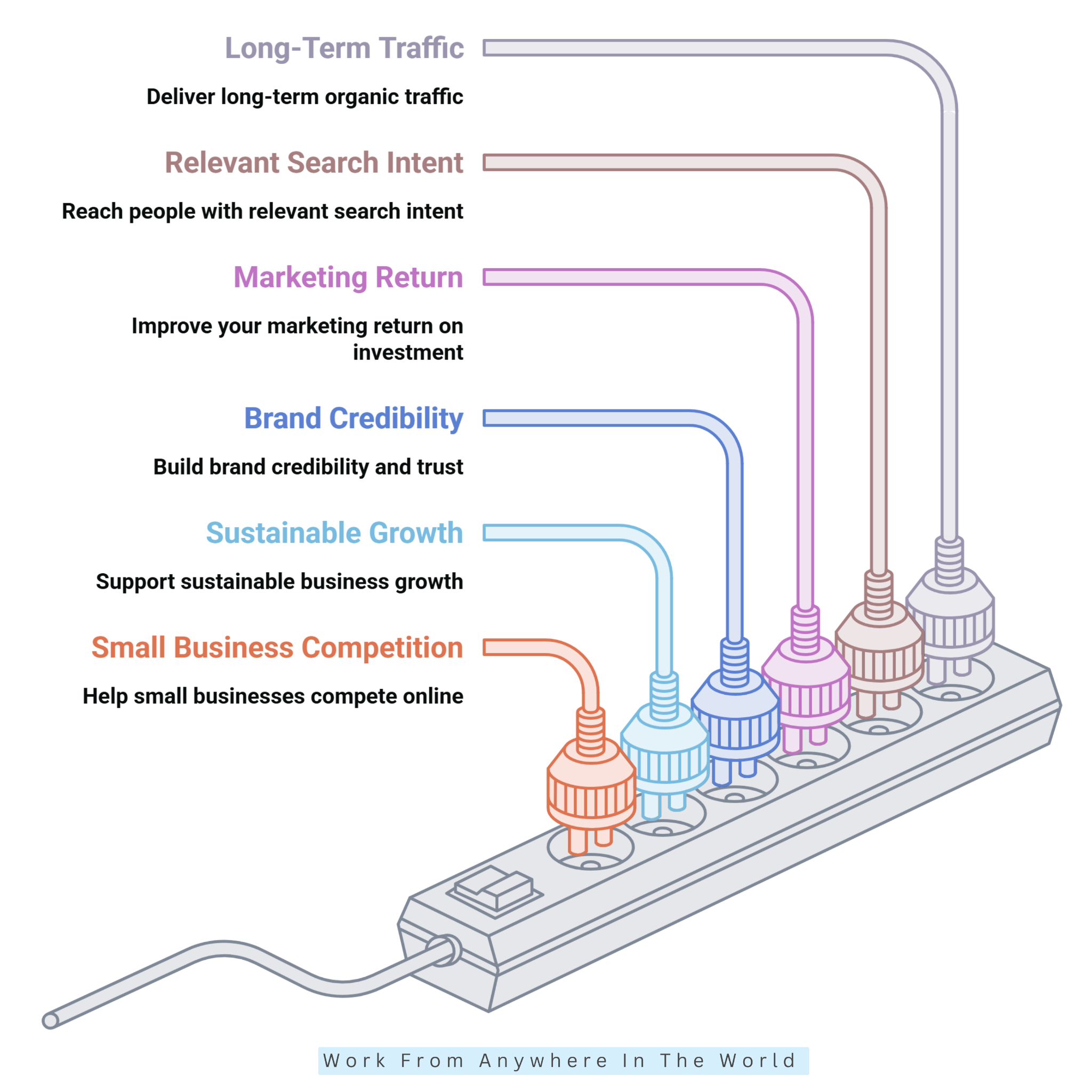
1. SEO Can Deliver Long-Term Organic Traffic
SEO can be a worthwhile investment when you want your website to attract visitors beyond the initial publication of your content. When your content answers relevant search queries and earns strong visibility, it can keep bringing visitors without paying for every click. For example, a gardening blog that publishes a detailed guide to growing tomatoes may attract readers throughout the growing season and beyond. Organic traffic potential depends on search competition, content relevance, and ongoing website improvements. Rankings can change because of competition, search engine updates, and changing user needs. To stay visible, focus on useful content, solid technical SEO, and regular updates that keep key information accurate and relevant.
2. SEO Helps You Reach People With Relevant Search Intent
SEO connects your site with people actively looking for information, products, or services relevant to your business. Understanding search intent helps you create pages that match what users actually want. Someone searching for “how to improve website speed” needs practical instructions, while someone searching for “best website speed optimization tools” may want comparisons before making a decision. A product page would not satisfy both needs equally well. When your content matches the purpose behind a search, visitors are more likely to find it useful. Research relevant keywords, examine the types of pages ranking for them, and create content that answers each audience’s specific questions.
3. SEO Can Improve Your Marketing Return On Investment
SEO can become a cost-effective marketing channel when its contribution to business results exceeds the resources invested. Paid advertising can generate exposure while a campaign runs, while organic search visibility can continue after the initial optimization work. However, SEO still involves costs such as content production, technical improvements, research, and professional services. Its financial value depends on whether those investments generate qualified leads, sales, or other meaningful outcomes. For example, a service business may attract potential customers through optimized service pages and helpful articles. Track organic conversions, revenue, and campaign expenses to understand performance. Tracking results over time gives a clearer picture than rankings or traffic alone.
4. SEO Builds Brand Credibility And Trust
Appearing in relevant search results can introduce your brand to people who have never encountered your business before. Strong visibility creates opportunities to demonstrate expertise, but trust ultimately depends on the quality of the experience you provide. Accurate information, transparent business details, helpful explanations, and genuine customer reviews can help visitors assess your credibility. For example, a pet care website can strengthen reader confidence by citing reliable veterinary sources and clearly distinguishing professional guidance from general advice. Publishing content merely to gain rankings is unlikely to build lasting trust. Instead, demonstrate your knowledge, support important claims with evidence, and keep your website’s information clear, current, and useful.
5. SEO Supports Sustainable Business Growth
SEO can support business growth by helping potential customers discover your products, services, and expertise through different types of searches. A well-organized website can attract visitors through educational articles, product categories, service pages, and relevant comparison guides. For instance, an online pet store might publish articles about choosing suitable toys while optimizing its product categories for shoppers ready to buy. These pages serve different needs but can work together to guide visitors through their purchasing journey. SEO generally requires consistent effort rather than a single optimization task. Focus on topics closely related to your offerings, connect relevant pages through internal links, and expand your content based on audience needs and measured performance.
6. SEO Helps Small Businesses Compete Online
Small businesses can use SEO to reach specific audiences without competing exclusively for broad, highly competitive keywords. More focused search phrases often reveal clearer needs and can provide practical opportunities for smaller websites. For example, a new clothing store may struggle to rank for “clothes online” but can target more specific searches for particular styles, materials, or customer preferences. These phrases may still be competitive, so evaluate their search demand and ranking difficulty before targeting them. A focused strategy works best when it reflects what the business genuinely offers. Research specific customer questions, develop useful landing pages, and provide information that helps your audience make confident decisions.
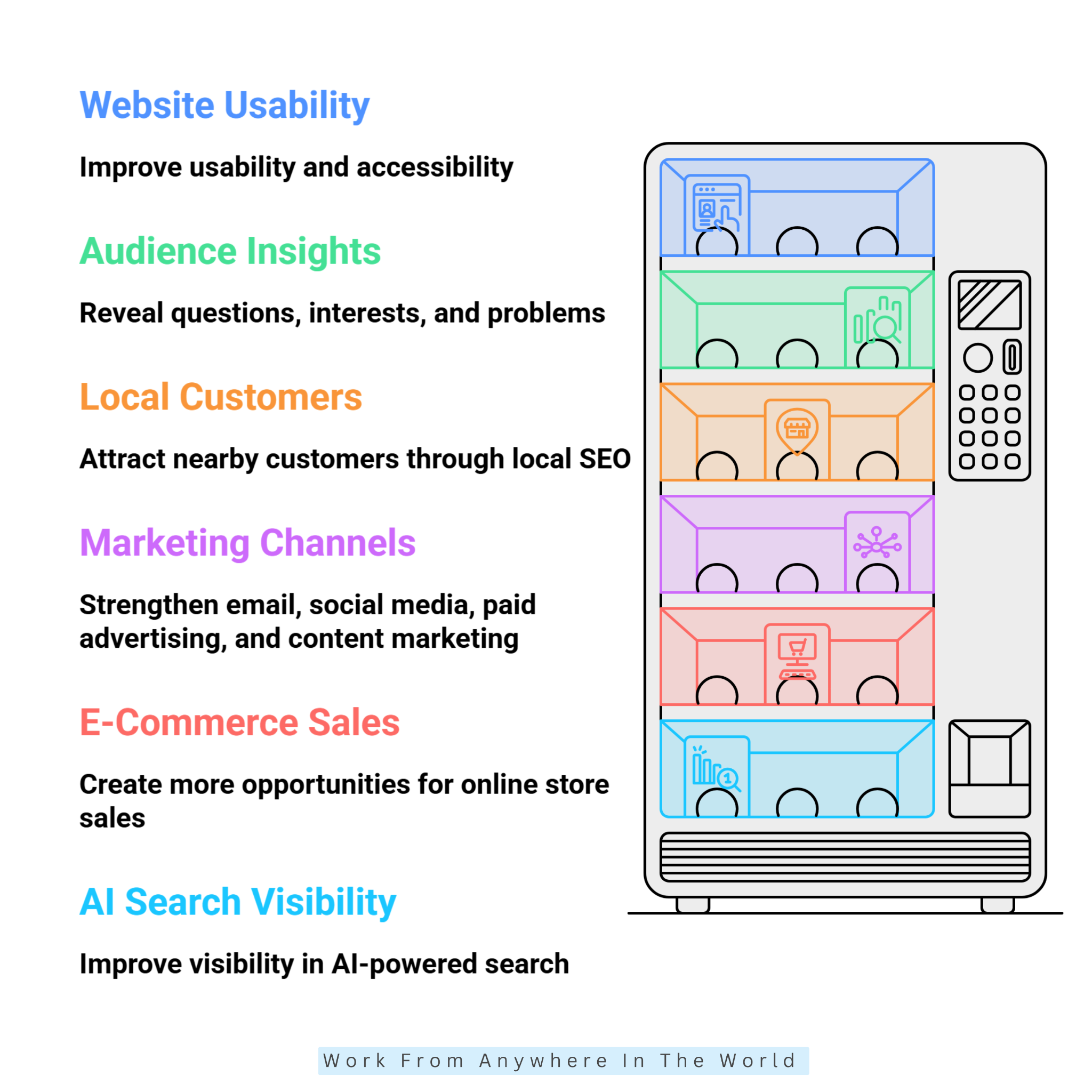
7. SEO Improves Website Usability And Accessibility
Effective SEO encourages website improvements that help visitors navigate content and find information more easily. Clear headings, descriptive links, logical menus, mobile-friendly layouts, and readable text create a smoother browsing experience. Technical improvements also help search engines discover and understand your pages. Website speed matters because slow loading can frustrate visitors, especially on mobile devices. However, speed alone cannot guarantee higher rankings or conversions. Accessibility improvements, such as meaningful alternative text for informative images and properly structured headings, can also make content easier to use. Review your website regularly, identify obstacles on key pages, and prioritize changes that improve usability while supporting search engine crawling and indexing.
8. SEO Reveals Valuable Insights About Your Audience
SEO research provides useful clues about the questions, interests, and problems your audience wants to address. Keyword research reveals the language people use in searches, while Google Search Console shows which queries generate impressions and clicks for your website. These insights can guide content planning and help you identify gaps in existing pages. For example, a gardening website may discover that readers frequently search for solutions to yellowing tomato leaves. That pattern could inspire a practical troubleshooting guide supported by reliable horticultural information. Search data does not explain every customer motivation, so combine it with feedback and analytics. This approach helps you create more relevant content and make better-informed marketing decisions.
9. SEO Helps Local Businesses Attract Nearby Customers
Local SEO helps businesses improve their visibility when people search for relevant services in a particular area. It can be valuable for cleaning companies, restaurants, salons, repair services, and physical stores that depend on local customers. An accurate Google Business Profile, relevant service pages, consistent business information, and genuine customer reviews can support local visibility. For example, a cleaning company serving several neighbourhoods can clearly explain its services and coverage on its website. Local search rankings also depend on factors such as relevance, distance, and prominence, so no single optimization guarantees a top position. Keep your business details current, describe your services accurately, and focus on the locations you genuinely serve.
10. SEO Strengthens Your Other Marketing Channels
SEO can complement email marketing, social media, paid advertising, and content marketing by providing useful information about customer interests and search behaviour. A helpful article that attracts organic visitors may also become a valuable newsletter resource or inspire several social media posts. Search query data can reveal the questions customers ask, helping you create more relevant advertising messages and educational content. However, success in one channel does not automatically guarantee results in another. Each platform has different audiences, formats, and performance factors. Use SEO insights to inform your wider marketing strategy, repurpose valuable content where appropriate, and evaluate each channel based on its contribution to your business goals.
11. SEO Creates More Opportunities For E-Commerce Sales
SEO helps online stores connect with shoppers searching for particular products, features, and buying advice. Optimized category pages make product collections easier to discover, while detailed product pages help customers understand what they are considering. For example, a pet store can optimize a cat toy category for relevant product searches and publish a separate guide on choosing toys for indoor cats. These pages address different stages of the buying journey. Accurate descriptions, useful images, clear navigation, and current availability information can improve the shopping experience. Technical issues, including duplicate URLs and incorrect canonical tags, can affect search visibility. Regularly review key product pages and measure organic sales alongside traffic.
12. SEO Can Improve Visibility In AI-Powered Search
AI-powered search experiences create additional ways for people to discover information, businesses, and products. Generative Engine Optimization (GEO) focuses on improving how generative AI responses represent brands and content. Although GEO and traditional SEO overlap, no specific technique guarantees that an AI system will mention or recommend a website. Clear explanations, accurate information, descriptive headings, credible references, and accessible website content can help people and automated systems understand your material. A consistent brand presence across trustworthy sources may also improve discoverability. Instead of relying on shortcuts, answer relevant questions thoroughly, demonstrate genuine expertise, and keep information up to date. Where reliable measurement is available, monitor AI visibility alongside organic traffic and conversions.
When Is SEO Worth The Investment?
SEO becomes a valuable investment when your marketing goals, audience behaviour, and available resources align. The following situations explain when search engine optimization can create meaningful opportunities for your website or business.
1. When Your Audience Actively Uses Search Engines
Consider SEO when potential customers use search engines to find answers, compare products, or discover services. These searches reveal what people need and how they describe their problems. For example, a gardening website can attract relevant readers by publishing practical guides about growing vegetables, managing pests, or improving soil quality. A business can use keyword research to identify these opportunities and create content that matches search intent. However, search volume alone does not guarantee valuable traffic. Focus on relevant queries that connect naturally with your expertise or offerings. When your content answers genuine questions, it can introduce your brand to people already interested in your subject.
2. When You Want Long-Term Marketing Value
SEO can be a worthwhile investment when you want your website to attract visitors beyond the initial publication of your content. A well-researched article or optimized service page can keep generating organic traffic for months or years if it stays relevant and competitive. For example, an evergreen guide on improving website speed can attract readers long after publication. Unlike paid advertising, organic search doesn’t charge you per click, but maintaining visibility still takes ongoing resources. Competitors, changing search behaviour, and algorithm updates can affect performance. Investing in accurate information, useful content, and regular maintenance helps key pages retain value over time.
3. When Your Business Needs Qualified Leads
SEO can help service-based businesses attract potential customers who are actively researching specific solutions. Instead of relying entirely on broad advertising, you can optimize service pages and educational articles around the questions your ideal customers ask. For example, an office cleaning company could target searches for commercial cleaning services in the areas it serves. Visitors who find the right information may become more willing to request a quotation or consultation. Higher rankings are most valuable when your website converts relevant visitors into qualified leads. Your website also needs clear service details, credible information, and easy ways to contact you. Measure inquiries, lead quality, and conversion rates to see whether SEO supports your business objectives.
4. When You Can Invest Consistently
SEO generally requires consistent effort rather than a single optimization task. Keyword research, content development, technical improvements, internal linking, and performance analysis all contribute to a well-managed strategy. Businesses that can allocate resources regularly have more opportunities to identify problems, improve existing pages, and respond to changing customer needs. However, consistency does not mean publishing articles every day or making unnecessary website changes. A focused plan can work even on a limited budget. For example, a small business might begin by improving its most important service pages before expanding into supporting content. Prioritize activities based on their likely impact, available resources, and measurable contribution to your marketing goals.
5. When Your Industry Has Meaningful Search Demand
SEO can create opportunities when people regularly search for topics, products, or services connected to your industry. Keyword research helps you understand estimated search demand, competition, and the intent behind specific queries. For instance, an online pet store may find relevant searches for interactive cat toys, puppy feeding guides, or indoor-pet products. These insights can inform product categories, buying guides, and educational articles. However, high search volume doesn’t always translate into sales, and low-volume keywords can still attract valuable visitors. Evaluate each opportunity according to relevance, ranking difficulty, and potential business value. This helps you invest in topics that serve your audience and support realistic growth opportunities.
6. When You Want To Reduce Dependence On Paid Advertising
SEO can diversify your marketing strategy by creating an additional source of website traffic and customer acquisition. Paid advertising can generate exposure while a campaign runs, while organic search visibility can continue after the initial optimization work. For example, an e-commerce business could use paid ads to promote a seasonal offer while improving category pages to attract relevant organic searches over time. These channels serve different purposes, and neither guarantees profitable results. SEO also requires investment in content, technical maintenance, and expertise. Rather than abandoning paid advertising, consider how both channels can support your objectives. Monitor acquisition costs, conversion rates, and revenue to understand how each channel contributes to sustainable business growth.
Frequently Asked Questions
Q1: Is SEO Beneficial For Small Businesses?
Yes, SEO can help small businesses reach relevant customers, improve online visibility, and generate qualified leads. Focusing on specific keywords, local searches, and useful content can create opportunities without competing for every broad search term.
Q2: How Long Does SEO Take To Show Results?
SEO results vary depending on competition, website condition, content quality, and the work involved. SEO timelines vary with website history, competition, technical condition, and the scope of optimization. Meaningful improvements can take several months or longer.
Q3: Is SEO Better Than Paid Advertising?
SEO and paid advertising serve different purposes. SEO can build long-term organic visibility, while paid advertising can generate exposure faster. The right approach depends on your budget, business goals, audience, and expected timeline.
Q4: Can I Do SEO Without Hiring An Expert?
Yes, beginners can handle many SEO tasks themselves, including keyword research, content optimization, internal linking, and basic performance tracking. As your website grows, more complex technical issues may require professional help.
Conclusion
Is SEO worth it? For businesses, bloggers, and website owners seeking sustainable online growth, SEO can be a valuable investment when supported by a clear strategy and realistic expectations. It connects your website with people searching for relevant information, products, and services while building credibility and attracting qualified visitors. Focus on audience needs, publish genuinely useful content, and track measurable results. Start with achievable goals, improve your most important pages, and refine your strategy as you learn what works. With consistent effort, SEO can become a meaningful part of your long-term digital marketing success.
I trust you enjoyed this Is SEO Worth It? Please stay tuned for more insightful blogs on affiliate marketing, online business, and working from anywhere in the world.
Take care!
— JeannetteZ 🌍✨
💬 Your Opinion Is Important To Me
Do you have thoughts, ideas, or questions? I’d love to hear from you. Please leave your comments below or email me directly at Jeannette@WorkFromAnywhereInTheWorld.com.
📚 More Work From Anywhere Reads
🚀 Ready to Build a Business You Can Run from Home
Or from Anywhere in the World?
Imagine earning income on your terms — from home, a cozy café, or wherever life takes you.
With the right tools, training, and community support, it’s entirely possible.
Start your own online business for free — no credit card needed.
Disclosure
This post may contain affiliate links. As an Amazon Associate and participant in other affiliate programs, I earn from qualifying purchases at no extra cost to you. Please read my full affiliate disclosure.