

Rank Math vs Ahrefs: Which SEO Tool Is Better For You?
Rank Math vs Ahrefs is a common comparison for website owners looking to improve their SEO. Both tools can improve your website’s search visibility, but they serve different purposes.
Rank Math simplifies on-page SEO and technical settings for WordPress websites. Ahrefs focuses on keyword research, backlink analysis, and competitor insights.
In this guide, we’ll compare both SEO tools, explore their key features, and examine their advantages and disadvantages. By the end, you’ll have a clearer idea of which tool best suits your website, goals, and experience level.
What Is Rank Math?
Rank Math is a WordPress SEO plugin that helps website owners optimize their content for search engines like Google. It offers a free version and paid plans with additional features.
Like other WordPress SEO plugins, Rank Math helps you edit SEO titles and meta descriptions, create XML sitemaps, and add schema markup. You can also check your content for common SEO issues before publishing.
Depending on your plan and settings, Rank Math offers additional tools, including internal linking suggestions, redirect management, and Google Search Console integration.
For example, if you’re building a blog as a gardening influencer, Rank Math can help you optimize your article titles, descriptions, and other important SEO elements.
Its beginner-friendly interface makes everyday SEO tasks easier, even without advanced technical knowledge. Clear instructions and helpful recommendations help beginners optimize their content with more confidence.
However, a high Rank Math SEO score doesn’t guarantee better Google rankings. Content quality, search intent, and website performance also play important roles.
What Is Ahrefs?
Ahrefs is an SEO toolset that helps website owners, bloggers, and marketers improve their search visibility. Its features include keyword research, competitor analysis, backlink tracking, and website audits.
It helps you discover what people search for, analyze competing websites, and identify opportunities to increase organic traffic. These insights can guide your content strategy and help you make informed SEO decisions.
For example, if you run a gardening blog, Ahrefs can help you discover relevant keywords and explore popular competitor articles. You can also identify websites linking to similar content and uncover potential backlink opportunities.
Its Site Explorer provides insights into estimated organic traffic and backlink profiles. Meanwhile, Keywords Explorer helps you evaluate search volume, keyword difficulty, and potential opportunities for your content.
If you’re new to keyword research, our Ahrefs beginner’s guide explains how to get started. You can also explore how to do keyword research with Ahrefs to develop a more focused content strategy.
Ahrefs also offers Site Audit to identify technical SEO issues and Rank Tracker to monitor keyword positions. Free SEO tools are available, while paid plans provide broader capabilities and higher usage allowances.
Although Ahrefs provides valuable research data, its traffic estimates and keyword metrics aren’t exact figures. Understanding these limitations helps beginners and experienced SEO professionals use its insights more effectively.
Wealthy Affiliate – Mini Review
If you’ve ever thought about turning your blog, passion, or niche into an online business,
Wealthy Affiliate (WA) is one of the most beginner-friendly platforms I’ve used.
It combines step-by-step training, website hosting, AI-powered tools,
keyword research, and an active community all in one place.
What I like most is that you can start for free (no credit card needed), explore the platform,
test the tools, and connect with other entrepreneurs before upgrading.
WA isn’t a “get rich quick” scheme — success comes from consistent effort
and applying what you learn over time.
Pros & Cons Of Rank Math
Rank Math offers several advantages for WordPress users, particularly bloggers, freelancers, and small business owners. Its built-in optimization tools make everyday SEO tasks easier to manage without requiring extensive technical knowledge.
However, like any SEO plugin, Rank Math has limitations. Some advanced features require paid subscriptions, and its recommendations don’t always reflect how Google evaluates content.
Understanding both its strengths and weaknesses can help you decide whether Rank Math is the right choice for your website. Let’s explore what it does well and where it may fall short.
Pros Of Rank Math
Rank Math combines several useful SEO features within the WordPress dashboard. From on-page optimization to technical settings, these tools can help beginners and experienced bloggers manage their websites more efficiently.
Here are five advantages worth considering before choosing Rank Math as your SEO plugin.
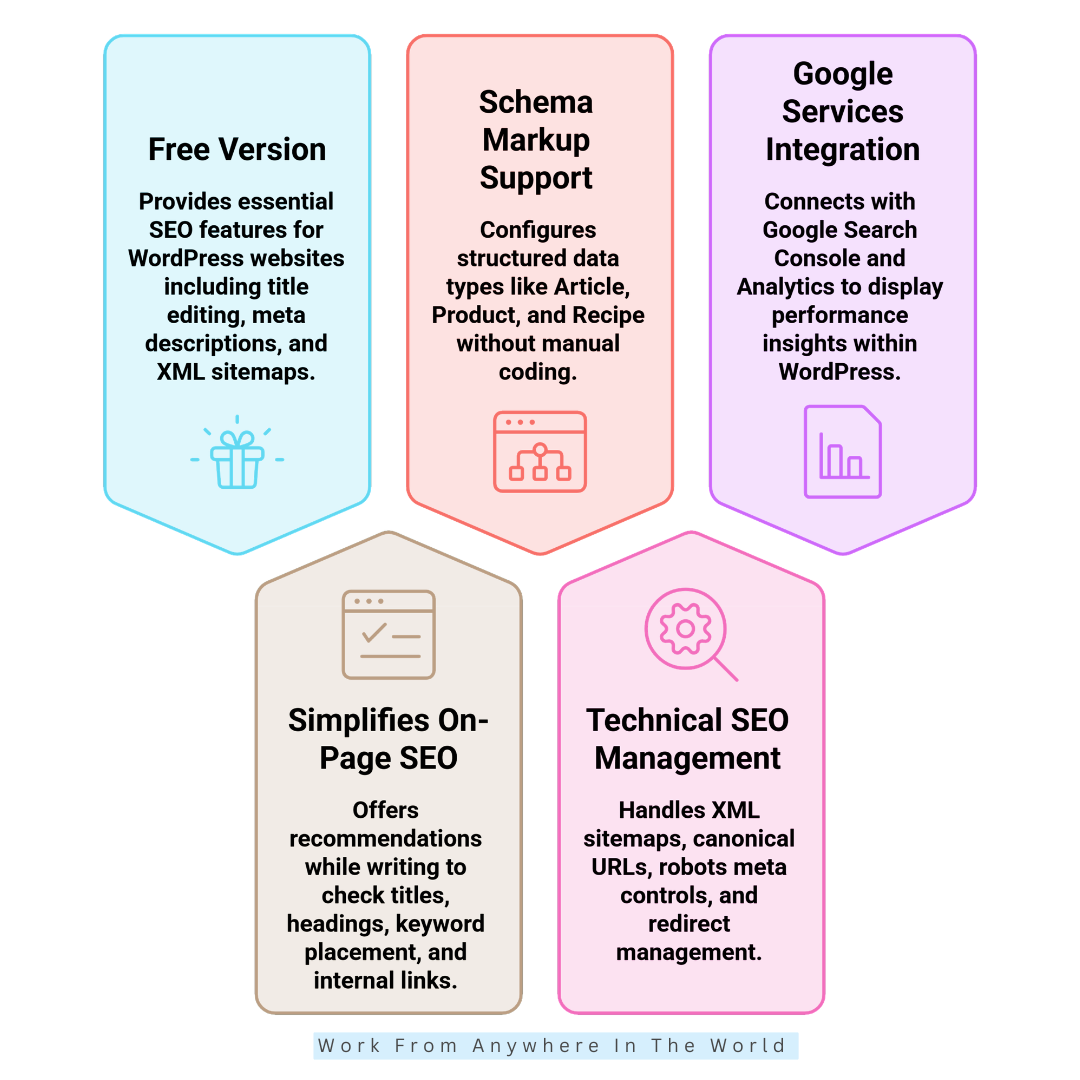
1. Offers a Free Version With Essential SEO Features
One of Rank Math’s biggest advantages is its free version, which includes useful SEO features for WordPress websites. You can edit SEO titles, meta descriptions, canonical URLs, and XML sitemaps.
Its on-page analysis tools also help beginners identify common optimization issues. These features make it easier to manage essential SEO tasks without immediately purchasing a premium subscription.
For example, a new blogger can optimize article metadata and configure basic settings directly from WordPress. Our WordPress tutorial for beginners offers additional guidance for getting started.
Paid plans provide more advanced capabilities, so compare their features with your website’s requirements before upgrading. For many beginners, the free version is a practical starting point.
2. Simplifies On-Page SEO for Beginners
Rank Math simplifies on-page SEO by providing recommendations while you write or edit WordPress content. It checks titles, meta descriptions, headings, keyword placement, and internal links.
These suggestions help beginners identify common issues before publishing. They also complement established techniques for writing SEO-friendly content.
For example, when writing about indoor gardening, Rank Math can remind you to review your title, description, and relevant links. Its scoring system provides a quick overview of selected optimization checks.
However, achieving a high SEO score doesn’t guarantee better search rankings. Creating helpful content that satisfies search intent remains essential.
3. Includes Built-In Schema Markup Features
Rank Math supports schema markup, which helps search engines understand structured information about webpages. Depending on your content and subscription, you can configure Article, Product, Recipe, and other supported schema types.
This feature is particularly useful for bloggers, publishers, and online stores. It allows website owners to manage structured data without manually writing every line of code.
For example, a recipe blogger can add Recipe schema to describe ingredients, preparation times, and cooking instructions. This gives search engines structured information about the recipe.
However, implementing schema markup doesn’t guarantee rich results in Google Search. Following Google’s structured data guidelines and reviewing your markup can help prevent configuration mistakes.
4. Helps Manage Important Technical SEO Settings
Rank Math includes technical SEO features such as XML sitemaps, canonical URL settings, robots meta controls, and redirect management. These tools help website owners handle routine optimization tasks from WordPress.
For example, when you change a blog post’s URL, a properly configured redirect can guide visitors and search engines to its new location. XML sitemaps also help search engines discover important pages.
These features complement other SEO optimization techniques that support a well-organized website. Some advanced options may depend on your subscription and configuration.
However, technical settings require careful attention. Incorrect noindex directives, canonical URLs, or redirects can interfere with search engine indexing.
5. Integrates With Useful Google Services
Rank Math supports integration with Google Search Console and Google Analytics, depending on your configuration and subscription.
These connections can display selected performance insights within WordPress. Search Console provides information about search impressions and clicks, while Analytics helps you understand visitor behaviour.
For example, bloggers can review selected performance metrics without constantly switching between dashboards. This makes routine website monitoring more convenient.
However, Rank Math doesn’t replace Google’s original reporting platforms. Checking first-party data directly remains important when evaluating your website’s performance and planning future improvements.
Cons Of Rank Math
Although Rank Math simplifies many SEO tasks, it isn’t without limitations. Its scoring system, premium features, and technical settings can sometimes create challenges, particularly for beginners.
Understanding these drawbacks can help you avoid common mistakes and set realistic expectations. Here are five disadvantages to consider before relying on Rank Math for your website’s SEO.
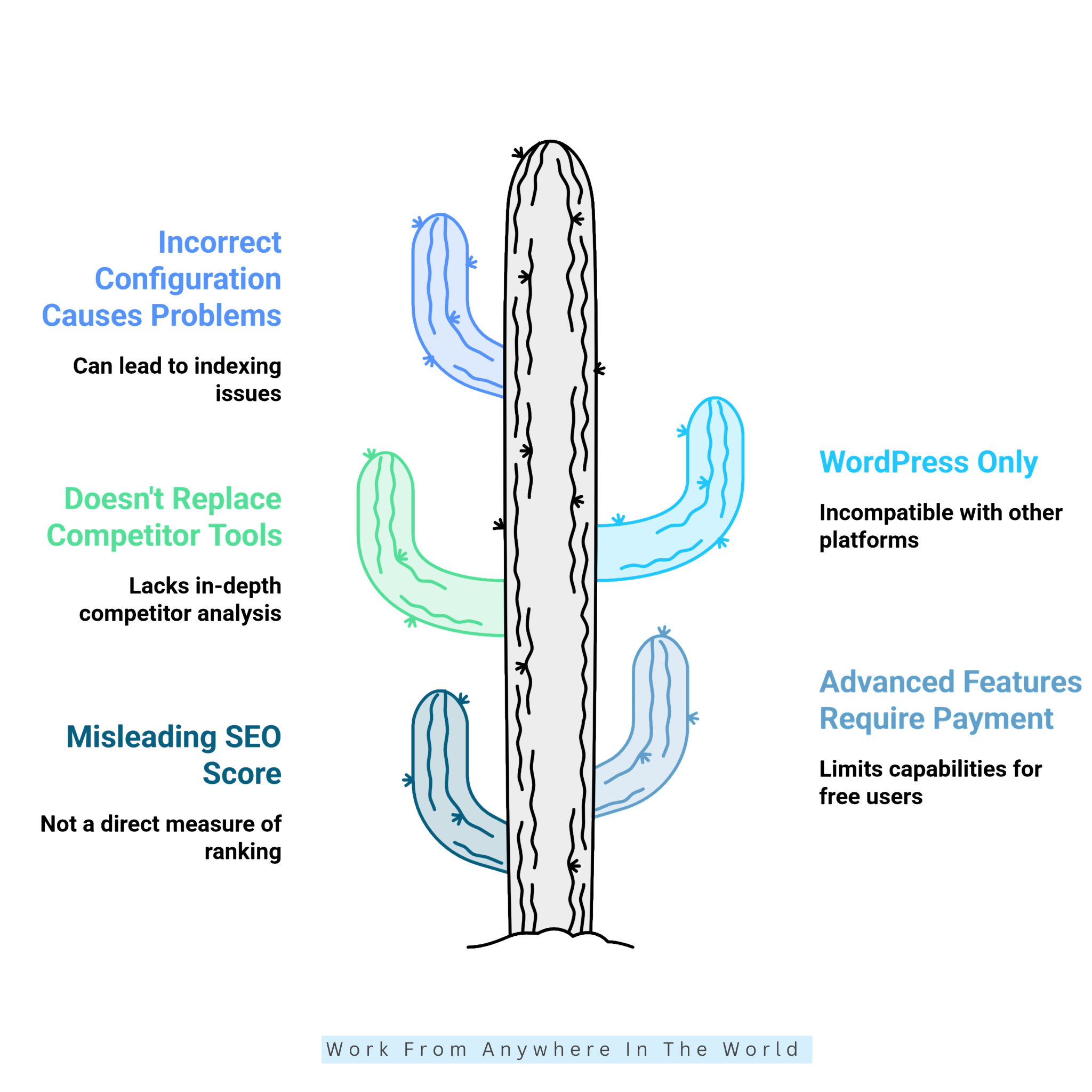
1. The SEO Score Can Be Misleading
Rank Math calculates an SEO score using its own optimization checks, but this score doesn’t directly represent Google’s ranking algorithm. A high score doesn’t guarantee better search rankings or increased organic traffic.
For example, an article may receive an excellent score but struggle to rank because competitors provide more comprehensive information. Meanwhile, a lower-scoring article may perform well if it satisfies readers’ search intent.
From personal experience, I’ve noticed that Rank Math can deduct approximately five points when I don’t use its paid Content AI features. This can be frustrating when I prefer to optimize my articles manually.
Beginners may spend too much time chasing a perfect score instead of improving their content. Following effective SEO techniques and focusing on readers’ needs are more important than achieving 100 points.
Treat Rank Math’s recommendations as a helpful checklist rather than a guarantee of Google rankings.
2. Advanced Features Require A Paid Plan
Although Rank Math offers a free version, several advanced features require a paid subscription. Depending on the plan, these may include expanded keyword tracking, advanced schema options, and additional SEO reporting.
These limitations can become more noticeable as your website grows. Bloggers managing multiple websites may eventually need more detailed search performance information.
Before upgrading, compare the available features on the official Rank Math pricing page. Subscription options and feature limits can change, so it’s worth reviewing the current information.
For beginners, the free version may provide everything needed for essential SEO tasks. Upgrading makes more sense when specific premium features support your website’s goals.
3. It Doesn’t Replace Dedicated Competitor Research Tools
Rank Math helps website owners manage SEO within WordPress. It offers content analysis and optimization suggestions, but it doesn’t replace dedicated competitor research tools.
For example, Ahrefs can reveal which websites link to a competing gardening blog. It also identifies keywords that attract visitors to competing websites.
Our guide to SEO competitive analysis explains how studying competitors can strengthen your content strategy. These insights help you discover content gaps and new opportunities for organic traffic.
Dedicated research tools can uncover valuable keyword opportunities. Our guide to the best long-tail keyword finder tools explores options for finding targeted search terms and less competitive topics.
You can also explore link-building strategies to understand how relevant backlinks support SEO. Ahrefs helps analyze backlink profiles and identify opportunities to earn links from reputable websites.
Combining Rank Math with a dedicated research platform provides a broader view of your SEO opportunities. Rank Math handles on-page optimization, while specialized tools reveal competitor strategies and opportunities for long-term growth.
4. It Works Only With WordPress Websites
Rank Math is designed specifically for WordPress, so you cannot install it as a native SEO plugin on other website platforms. This limits its usefulness for website owners who manage content across different publishing systems.
For example, Shopify and Squarespace have their own SEO settings and compatible integrations. Website owners using these platforms must follow different optimization workflows.
This limitation can affect freelancers and agencies managing websites for multiple clients. Each platform may require different SEO tools and publishing procedures.
However, Rank Math’s close integration with WordPress is also a strength. Users can manage many important SEO settings directly within their publishing dashboard.
5. Incorrect Configuration Can Cause SEO Problems
Rank Math simplifies technical SEO management, but incorrect settings can still cause problems. Beginners may accidentally change important indexing, canonical URL, or redirect configurations.
For example, applying a noindex directive to an important article can prevent it from appearing in search results. Incorrect canonical URLs may also confuse search engines about which version of a page to prioritize.
Redirect mistakes can create broken links or unnecessary redirect chains. These problems can affect visitors’ experience and make website maintenance more difficult.
These problems aren’t unique to Rank Math. Similar mistakes can happen with other SEO plugins or manual website configurations. Reviewing your settings regularly can help prevent these issues and keep your website running smoothly.
Before applying sitewide changes, review your settings carefully. Google Search Console can help you identify indexing problems and monitor important pages.
Pros & Cons Of Ahrefs
Ahrefs offers powerful tools for researching keywords, analyzing competitors, and monitoring website performance. Its extensive SEO data can help bloggers and businesses discover opportunities they might otherwise overlook.
However, Ahrefs also has limitations, particularly regarding subscription costs, learning requirements, and estimated search metrics. Understanding its advantages and disadvantages can help you decide whether it meets your website’s needs.
Pros Of Ahrefs
Ahrefs provides several research and monitoring tools that support a well-planned SEO strategy. These features can help website owners identify valuable keywords, investigate backlinks, and improve technical website performance.
Here are five advantages that make Ahrefs worth considering for your SEO workflow.
1. Provides Detailed Keyword Research
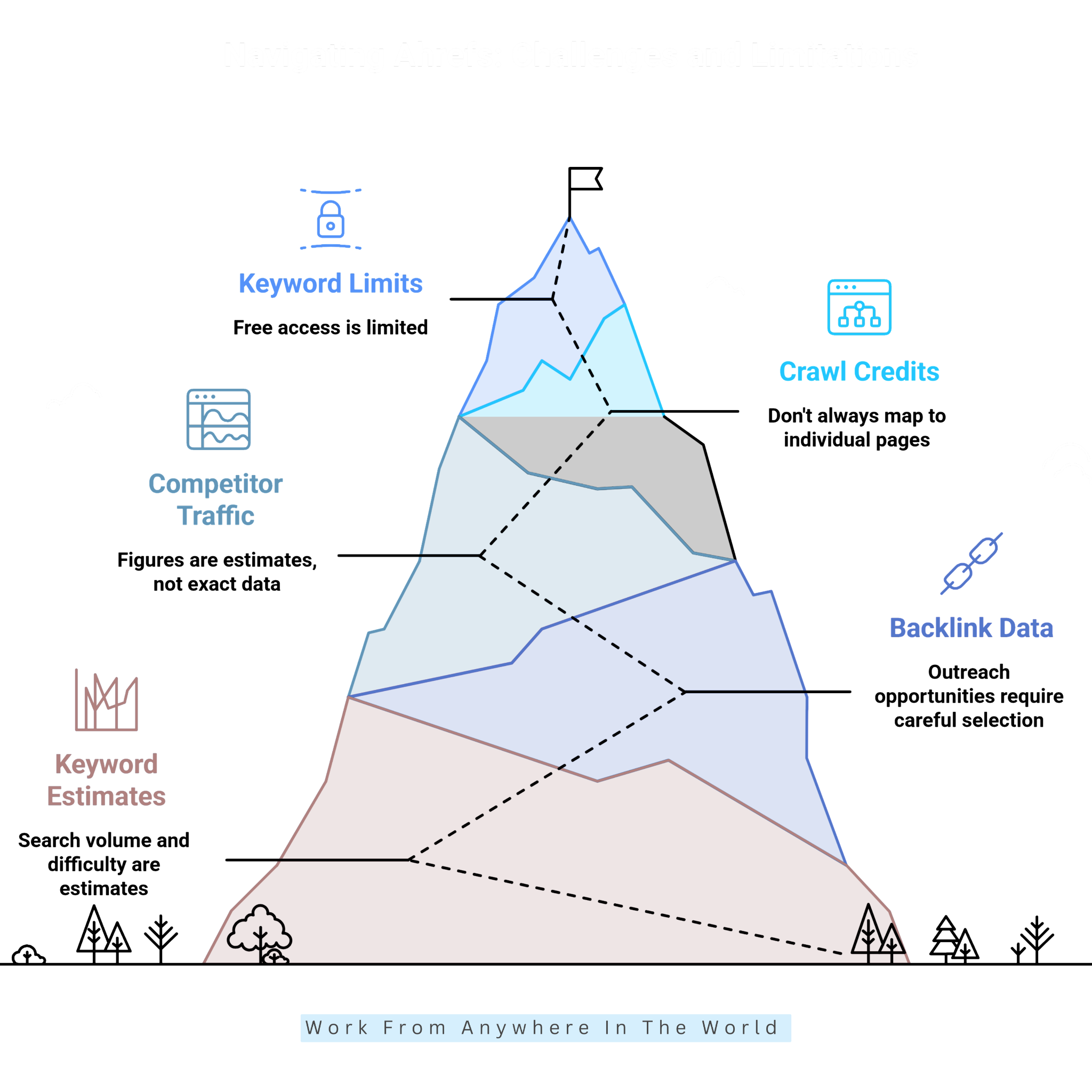
Ahrefs offers Keywords Explorer to help you discover keyword ideas and evaluate search opportunities. It provides estimated search volume, keyword difficulty, and related search terms.
These insights help you compare keywords before choosing a topic. Our guide on how to choose keywords for blog posts offers practical tips for selecting search terms that match your audience’s interests.
For example, bloggers can research specific questions their audience frequently searches for. Our guide to Ahrefs vs Google Keyword Planner explores two approaches to keyword research.
Ahrefs can also help you investigate long-tail keywords and related search phrases. These insights are useful when planning articles around specific audience needs.
However, keyword metrics are estimates rather than guaranteed results. Always consider content quality, competition, and search intent before selecting your target keywords.
2. Offers Powerful Backlink Analysis
Ahrefs also provides reports about lost and broken backlinks, depending on the available features. Our guide to getting backlinks for free explores ways to attract relevant links without relying on paid placements.
For example, a gardening blogger can examine backlinks pointing to a popular indoor-plants article. This may reveal relevant websites interested in linking to similar educational content.
Ahrefs also provides reports about lost and broken backlinks, depending on the available features. These insights can help you identify problems and discover potential outreach opportunities.
Backlink research supports a broader SEO strategy by revealing how websites earn external references. Focusing on relevant, trustworthy links is more valuable than simply increasing your backlink count.
3. Helps Analyze Competitors’ Organic Search Performance
Ahrefs Site Explorer helps you investigate competitors’ estimated organic traffic, ranking keywords, and top-performing pages. It also provides backlink information that can reveal opportunities within your niche.
For example, a competing website might attract visitors through several articles about vegan gardening. You can examine those topics and identify related questions your website could answer more thoroughly.
These insights are particularly useful when comparing websites that target similar audiences. Learning how to beat your competition at blogging can help you turn competitor research into practical content improvements.
However, Ahrefs doesn’t have direct access to competitors’ private Google Analytics accounts. Its traffic estimates should guide your research rather than be treated as exact visitor counts.
4. Identifies Technical SEO Issues Through Site Audit
Ahrefs Site Audit crawls your website to identify technical and on-page SEO issues. It can highlight broken links, missing metadata, redirect problems, and other website health concerns.
For example, a large blog may contain outdated links or pages with missing descriptions. Site Audit helps identify these issues so you can prioritize improvements.
For online stores, technical SEO checks are especially important. Our eCommerce SEO audit checklist explores additional areas worth reviewing to keep a shopping website search-friendly.
Ahrefs offers Site Audit capabilities through its free and paid options, with different crawl limits. Check the official documentation for current allowances and available features.
However, automated reports still require careful interpretation. Not every warning represents a serious problem, and some recommendations may not apply to your website.
5. Provides Rank Tracking and Flexible Research Options
Ahrefs includes Rank Tracker to monitor selected keywords and review ranking changes over time. This helps website owners evaluate their visibility for important search terms.
For example, a blogger can monitor keywords associated with recently updated articles. Tracking changes over several months can reveal patterns worth investigating.
Ahrefs also provides free SEO tools and paid subscriptions with different research capabilities. Keyword tracking allowances and reporting features depend on the selected plan.
If you’re exploring alternatives before investing in a paid subscription, our guide to the best free keyword research tools introduces other options worth considering.
Comparing different tools can help you find a practical balance between research features, ease of use, and your website’s needs.
Before subscribing, review the official Ahrefs pricing page for current features and usage limits. Choose a plan that matches your research requirements rather than paying for tools you rarely use.
Although free access is limited, Ahrefs offers several ways to explore SEO opportunities. Its value depends on how frequently you use its research, auditing, and tracking features.
Cons Of Ahrefs
Although Ahrefs offers powerful SEO research tools, it also has limitations. Its subscription costs, detailed reports, and usage restrictions may create challenges for beginners and smaller businesses.
Understanding these disadvantages can help you decide whether Ahrefs fits your budget and experience level. Here are five drawbacks worth considering before subscribing.
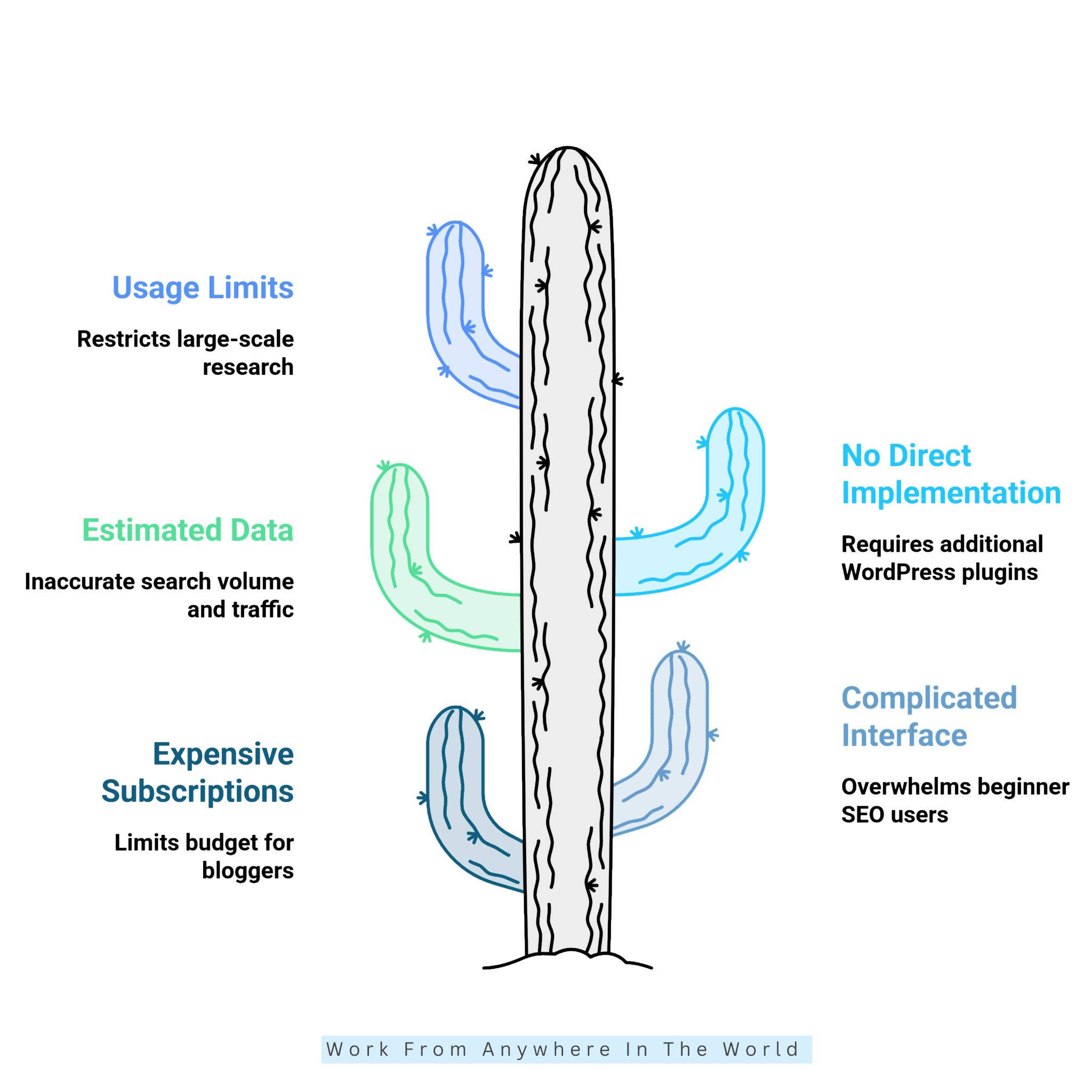
1. Paid Subscriptions Can Be Expensive
One of Ahrefs’ main disadvantages is the cost of its advanced features. Paid subscriptions can become expensive, especially for bloggers managing smaller websites.
Ahrefs offers several subscription options, including Starter, Lite, Standard, and Advanced plans. Features and monthly allowances vary depending on the selected package.
For current subscription costs, visit the official Ahrefs pricing page. Prices are listed in US dollars and may change over time.
For bloggers building their first website, a paid subscription can consume a significant portion of their marketing budget. This makes choosing the right SEO tools particularly important.
Beginners can explore our guide to the best blogging tools before investing in expensive software. Choosing essential tools first can help control expenses while building your website.
2. Beginners May Find The Interface Complicated
Ahrefs offers several research tools, including Site Explorer, Keywords Explorer, Site Audit, and Rank Tracker. Although these features are valuable, beginners may initially find the interface overwhelming.
Metrics such as keyword difficulty, referring domains, organic traffic, and URL ratings measure different aspects of SEO. Learning how to interpret these figures takes time and practice.
For example, a keyword with a low difficulty score may appear attractive. However, it might not generate useful traffic if your article doesn’t match the search intent.
Our guide to how to identify long-tail keywords explains how to research more specific search phrases. Understanding keyword selection can make advanced SEO tools easier to use.
You can also explore short-tail keywords to understand how broader search terms differ from more specific phrases. This knowledge helps you evaluate keyword opportunities more confidently.
Beginners can benefit from exploring one Ahrefs feature at a time. Comparing research data with actual Google search results also helps develop better judgment.
3. Search Volume And Traffic Figures Are Estimates
Ahrefs provides valuable SEO insights, but its research metrics aren’t exact measurements. Keyword search volumes and competitor traffic figures are calculated using available data and estimation methods.
Actual search demand and website traffic may differ from these figures. A keyword showing substantial monthly searches doesn’t guarantee that your article will receive many visitors.
For example, competing search results may answer a question directly. Visitors might also prefer different content formats than those offered by your website.
Google Search Console provides first-party search performance data for your verified website. You can review impressions, clicks, and search queries to understand how your pages perform.
Combining Ahrefs estimates with your own website data provides a more balanced perspective. Our guide to Google Analytics website metrics explores additional measurements that can help you evaluate visitor behaviour.
You can also explore SEO strategies for organic traffic to understand other factors that influence search visibility. This helps you look beyond estimated traffic figures when planning improvements.
4. It Doesn’t Directly Implement Every WordPress SEO Setting
Ahrefs helps identify SEO opportunities and technical problems, but it doesn’t replace a WordPress SEO plugin. Tools like Rank Math handle many optimization settings directly within WordPress.
For example, Ahrefs may identify missing metadata during a website audit. However, you’ll generally need to update the affected pages through WordPress or another publishing platform.
The same applies to schema markup, canonical URLs, and other technical settings. These changes usually require access to your website’s configuration or publishing tools.
Our on-page SEO guide explores optimization practices that website owners can implement directly. Understanding these techniques makes it easier to act on Ahrefs’ recommendations.
Our guide to setting up Google Analytics in WordPress covers another important aspect of website performance management. Connecting reporting tools correctly helps you gather useful information for future improvements.
Combining Ahrefs for research with Rank Math for implementation can create an effective SEO workflow. However, managing multiple tools may increase costs and require additional learning.
5. Usage Limits Can Restrict Research
Ahrefs subscriptions include different limits for tracked keywords, crawl credits, historical data, and reporting capabilities. These restrictions can affect how extensively you research or monitor websites.
For example, bloggers managing several websites may need to track hundreds of keywords. Agencies handling multiple clients may require higher crawl allowances and more extensive reporting.
Some advanced features, exports, and historical reports are also restricted by subscription level. These differences matter as your research needs grow.
Before subscribing, estimate how many websites, keywords, and reports you’ll regularly manage. Reviewing the current Ahrefs subscription options can help you avoid paying for capacity you don’t need.
Choosing a suitable subscription allows you to focus on the features you actually need. You can always reconsider your plan as your website grows and your SEO requirements change.
Frequently Asked Questions
Q1: Is Rank Math Better Than Ahrefs?
Rank Math is better for managing SEO settings directly within WordPress. Ahrefs offers more extensive keyword research, backlink analysis, and competitor insights.
Neither tool is automatically better for everyone. Rank Math suits bloggers focused on WordPress optimization, while Ahrefs benefits those who need detailed SEO research.
Q2: Is Rank Math Free?
Yes, Rank Math offers a free WordPress SEO plugin with essential optimization features. These include SEO titles, meta descriptions, XML sitemaps, and content analysis.
Paid subscriptions provide additional capabilities for growing websites. You can compare the available options on the official Rank Math pricing page.
Q3: Is Ahrefs Free To Use?
Ahrefs offers selected free SEO tools and limited features for eligible website owners. However, extensive research and reporting generally require a paid subscription.
Beginners can explore Google Keyword Planner as another research option. It can help you discover relevant search terms without purchasing an Ahrefs subscription.
Q4: Which Tool Is Better For Keyword Research?
Ahrefs is generally better for detailed keyword research. It provides estimated search volume, keyword difficulty, related search terms, and competitor insights.
Rank Math focuses more on optimizing WordPress content. Our guide to choosing keywords for blog posts explains how to select suitable search terms for your articles.
Q5: Can I Use Rank Math And Ahrefs Together?
Yes, Rank Math and Ahrefs can complement each other within the same SEO workflow. Ahrefs helps you research keywords, analyze competitors, and identify technical issues.
You can then use Rank Math to optimize your WordPress content and manage important SEO settings. This combination supports both research and implementation.
Q6: Is Ahrefs Worth The Money?
Ahrefs can be worth the investment for website owners who regularly conduct keyword research, backlink analysis, and competitor research. Its detailed reports can support more informed SEO decisions.
However, beginners may prefer less expensive tools initially. Our Semrush tutorial introduces another SEO research platform worth comparing before subscribing.
Conclusion
Rank Math vs Ahrefs comes down to your website’s needs and SEO goals. Both tools offer valuable features, but they serve different purposes.
Rank Math simplifies WordPress optimization through content analysis, technical settings, and practical SEO recommendations. Its free version makes it an accessible starting point for beginners.
Ahrefs provides deeper insights into keyword opportunities, competitor strategies, and backlink profiles. These features are particularly useful for bloggers and businesses developing a more comprehensive SEO strategy.
For many WordPress website owners, combining both tools offers a practical solution. Ahrefs supports research and planning, while Rank Math helps implement improvements directly within WordPress.
Ultimately, the best SEO tools match your experience, budget, and long-term goals. Start with what you need today and expand your toolkit as your website grows.
I trust you enjoyed this article on Rank Math vs Ahrefs: Which SEO Tool Is Better For You? Please stay tuned for more helpful guides on affiliate marketing, online business, and working from anywhere in the world.
Take care!
— JeannetteZ 🌍✨
💬 Your Opinion Is Important To Me
Do you have thoughts, ideas, or questions? I’d love to hear from you. Please leave your comments below or email me directly at Jeannette@WorkFromAnywhereInTheWorld.com.
📚 More Work From Anywhere Reads
🚀 Ready to Build a Business You Can Run from Home
Or from Anywhere in the World?
Imagine earning income on your terms — from home, a cozy café, or wherever life takes you.
With the right tools, training, and community support, it’s entirely possible.
Start your own online business for free — no credit card needed.
Disclosure
This post may contain affiliate links. As an Amazon Associate and participant in other affiliate programs, I earn from qualifying purchases at no extra cost to you. Please read my full affiliate disclosure.




I really liked this entry blog_title ! I visit your blog fairly often and you’re always coming out with fantastic content. I spread this on my FB, Instagram and my audience enjoyed it ! Maintain the good work 🙂 !
Thank you so much for your continued support! I’m happy to hear that you and your audience are enjoying the content. It means a lot that you’ve shared it on your FB and Instagram — that kind of encouragement keeps me motivated to keep delivering great content. I truly appreciate it! 😊 Keep an eye out for more exciting posts soon!
Take care
Jeannette