

What Are Short-Tail Keywords? 10 Proven SEO Tips
What are short-tail keywords, and why are they important for search engine optimization (SEO)? These broad search terms typically contain one or two words and describe a general topic, product, service, or interest.
Examples include “gardening,” “digital marketing,” and “running shoes.” These searches attract people with different interests and intentions, making it challenging to determine exactly what each visitor wants.
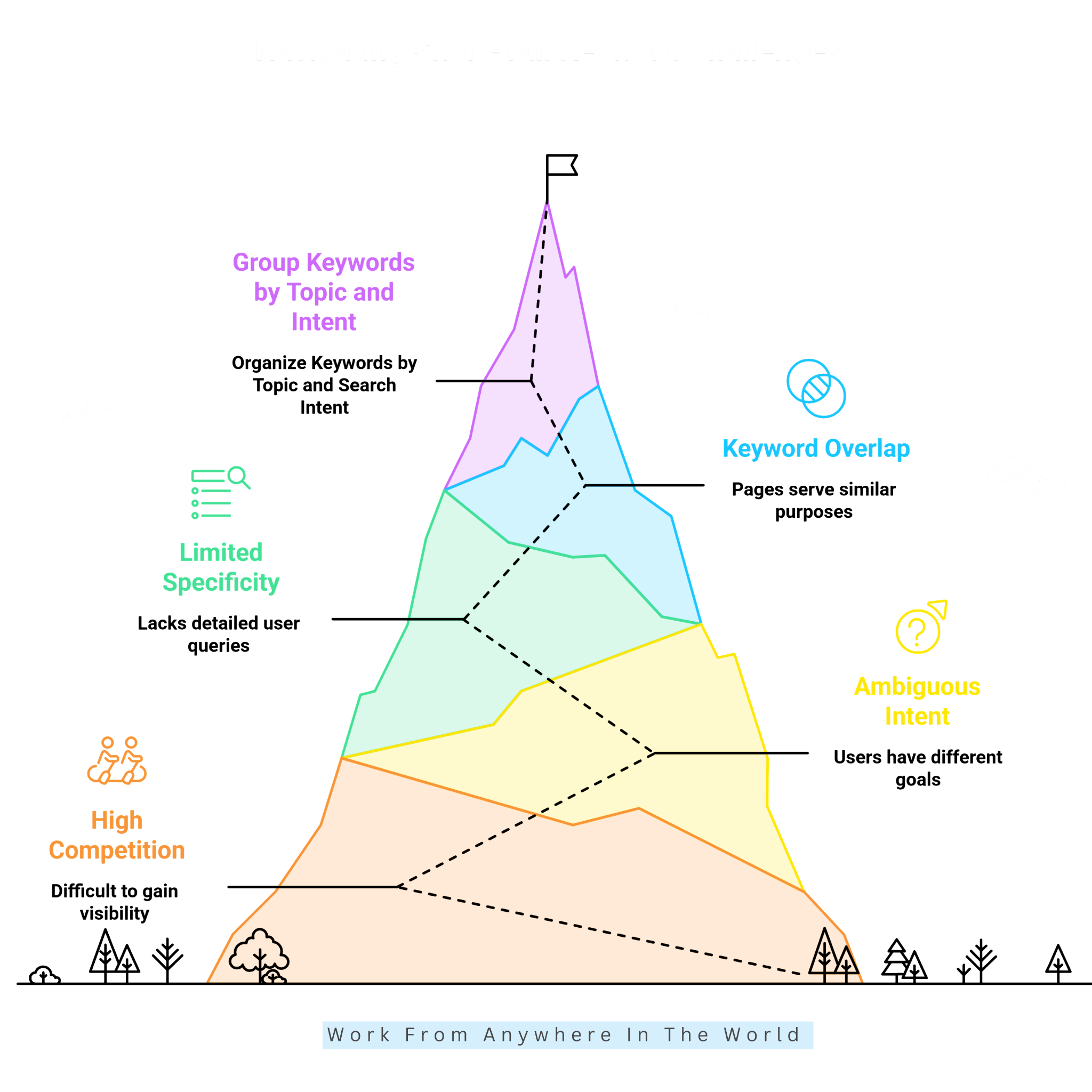
Although short-tail keywords often have high search volumes, they also tend to face strong competition. Established websites frequently dominate the search results, making it harder for smaller businesses and newer blogs to rank.
Understanding how short-tail keywords work helps you identify broader topics, organize related content, and develop a more effective keyword strategy. They also provide a useful starting point for discovering specific long-tail keywords.
In this guide, we’ll explore the benefits of short-tail keywords, their limitations, and practical ways to use them in your SEO strategy. You’ll learn how to balance broad search terms with more targeted keywords to attract relevant visitors.
Benefits Of Short-Tail Keywords
Short-tail keywords play an important role in SEO by identifying broad topics, revealing audience interests, and guiding content planning. They help establish the foundation for a well-organized website and a more focused content strategy.
When combined with long-tail keywords, these broader terms help connect related articles, strengthen topical relevance, and create opportunities for organic visibility.
Understanding their benefits makes it easier to use them strategically instead of focusing only on search volume. This balanced approach also helps attract visitors whose interests align more closely with your content.
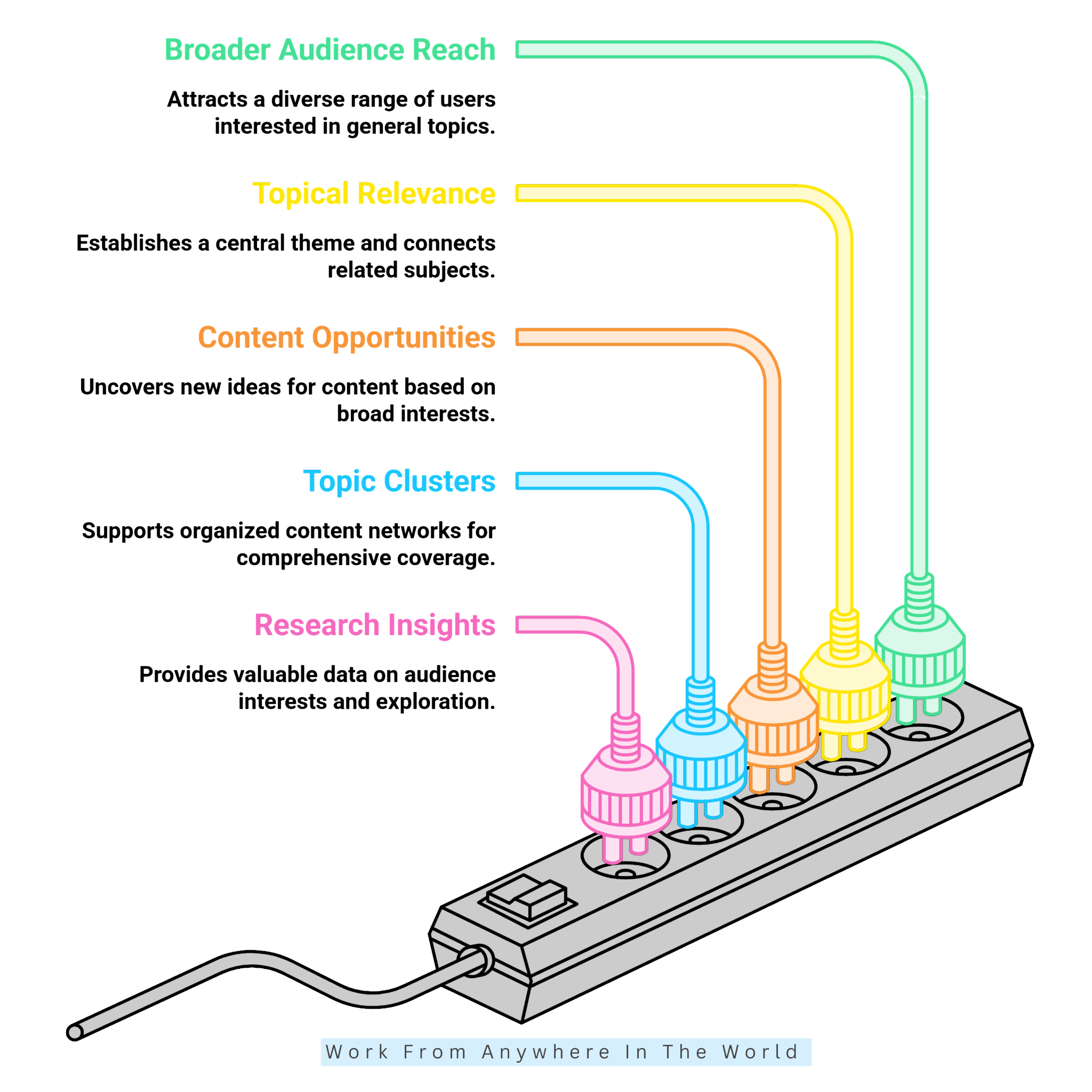
1. Reach A Broader Audience
Short-tail keywords can expose your content to a broader audience because they represent widely searched topics. A term such as “digital marketing” attracts people interested in SEO, social media marketing, advertising, analytics, and content strategy.
This wider visibility introduces your website to visitors who are still exploring their needs. Understanding your target audience creates opportunities to connect with people at different stages of their search journey.
When focused content supports broad keyword targeting, visitors can move from general discovery to more specific information. This guides them toward relevant products, services, or resources.
2. Build Strong Topical Relevance
A well-selected short-tail keyword helps establish a page’s central subject and connect it to related topics. For example, “gardening” naturally leads to content about composting, vegetables, houseplants, pruning, soil, and garden design.
Covering these connected subjects creates a more organized content ecosystem. Instead of publishing isolated articles, you can build meaningful relationships between pages through internal linking.
This broader topical structure demonstrates the depth of your content and helps visitors explore related information. It also gives search engines clearer signals about how your website’s subjects connect.
3. Discover Valuable Content Opportunities
Short-tail keywords can become powerful starting points for discovering new content ideas. A broad term such as “pet care” can reveal opportunities around nutrition, grooming, enrichment, training, hygiene, and age-specific needs.
Related searches and keyword research can uncover questions that deserve dedicated pages. This turns one broad keyword into a complete content roadmap.
Instead of focusing on a single phrase, you can use it to map the broader information ecosystem around your audience’s interests. This helps you create resources that answer those needs more precisely.
4. Support Topic Cluster Strategies
Short-tail keywords can serve as the central themes of effective topic clusters. For example, “SEO” can connect supporting pages about keyword research, technical SEO, internal linking, content optimization, and local SEO.
More specialized subjects, such as Amazon keyword research tools, can also become supporting topics within a broader keyword research cluster. Each page explores a specific area while strengthening its connection to the broader subject.
This structure creates a logical network instead of disconnected articles. A well-developed topic cluster can improve navigation, strengthen internal linking, and demonstrate comprehensive coverage without requiring every page to target the same keyword.
5. Provide Valuable Keyword Research Insights
Short-tail keyword research reveals far more than search volume. Related searches, SERP features, and SEO competitive analysis reveal how people explore a particular subject and which websites compete for their attention.
For example, researching “home office” may uncover strong interest in home office lighting, furniture, organization, ergonomics, and productivity. These insights help shape future articles, landing pages, and content campaigns.
A broad keyword therefore serves as a valuable research starting point. It helps you understand audience interests and identify promising opportunities before investing time and resources in content production.
6. Strengthen Brand Visibility
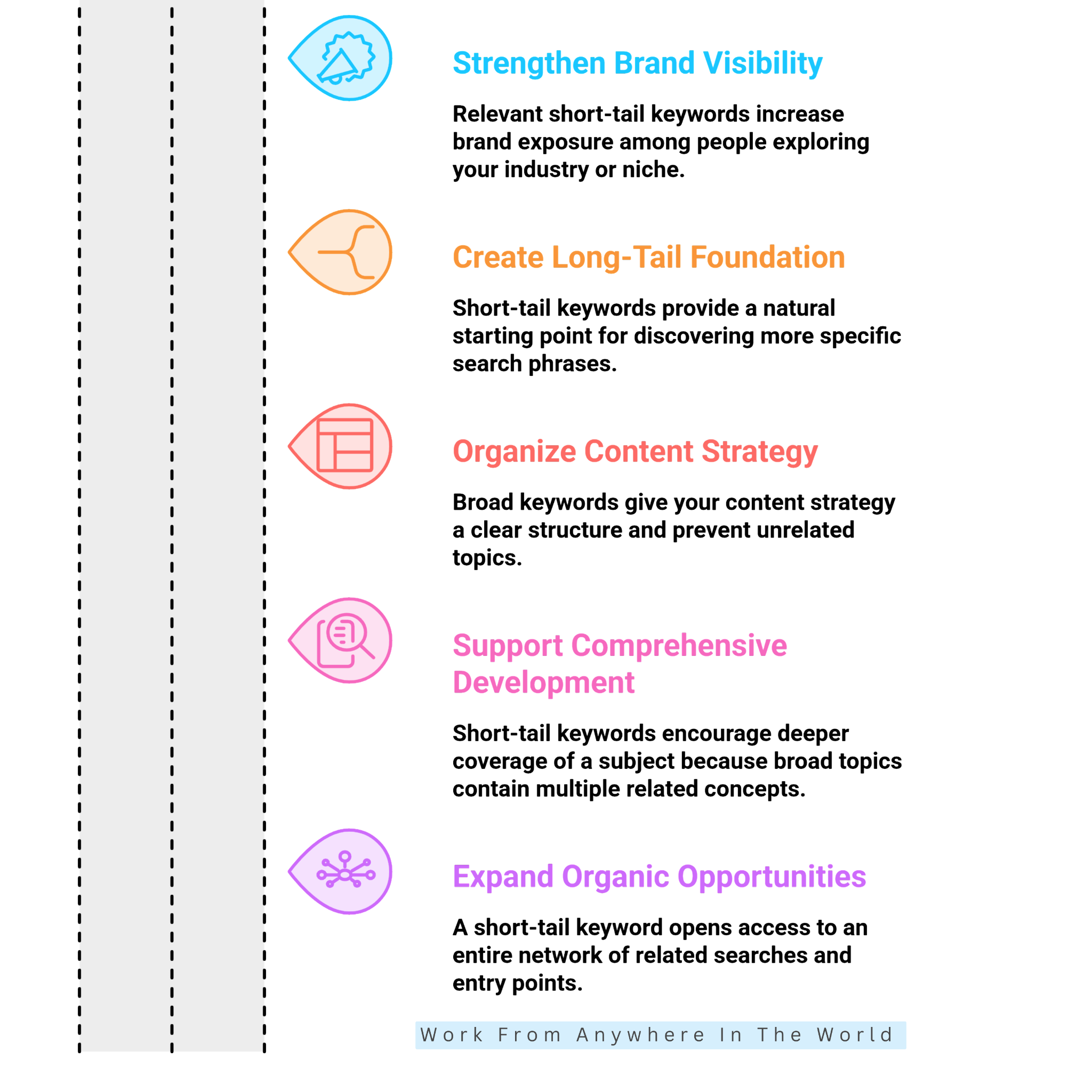
Relevant short-tail keywords help increase brand exposure among people exploring your industry or niche. A website that consistently publishes useful resources around “content marketing” builds visibility across related searches involving strategy, creation, promotion, and measurement.
Broader visibility places your brand in front of potential customers earlier in their research journey. Exploring brand positioning examples helps businesses understand how to distinguish themselves in a competitive market.
Rankings alone do not guarantee conversions, but consistent exposure and valuable content strengthen brand recognition. Learning from examples of personal branding also provides inspiration for communicating your expertise and building a recognizable identity.
7. Create A Foundation For Long-Tail Keywords
Short-tail keywords provide a natural starting point for discovering more specific search phrases. For example, “running shoes” can lead to searches such as “best running shoes for beginners” or “running shoes for wide feet.”
These longer variations reveal clearer needs and create focused content opportunities. The broad keyword defines the category, while long-tail phrases address specific problems, interests, or preferences.
This connection allows your SEO strategy to reach people at different stages of their search journey. It supports everything from general exploration and detailed research to informed purchase decisions.
8. Help Organize Your Content Strategy
Broad keywords give your content strategy a clear structure and prevent your publishing plan from becoming a collection of unrelated topics. For example, “vegan recipes” can support content around breakfast, dinner, desserts, meal preparation, high-protein meals, and quick recipes.
These connected themes provide a logical editorial framework for planning future articles. Each topic offers opportunities to explore more specific interests while keeping your content focused on a central subject.
Mapping broad subjects to specific content opportunities helps you plan articles more strategically. It also strengthens internal connections and creates a more coherent topical structure.
9. Support Comprehensive Content Development
Short-tail keywords encourage deeper coverage because broad topics naturally include multiple related concepts. An article targeting “digital marketing” could explore SEO, social media, email marketing, content creation, paid advertising, and Google Analytics website metrics.
This broader perspective makes a resource more valuable to readers who are still learning about the topic. It also creates opportunities to connect related ideas and guide visitors towards more detailed resources.
When useful depth supports breadth, broad keyword targeting contributes to stronger, more informative content. A well-organized collection of articles also helps readers explore individual subjects in greater detail.
10. Expand Your Organic Search Opportunities
A short-tail keyword opens access to an entire network of related searches. For example, “SEO tools” leads to topics involving keyword research, rank tracking, backlink analysis, technical audits, and competitor research.
Each related search represents a separate opportunity to attract relevant organic traffic. By mapping these connected terms into useful pages, you create multiple entry points across your website.
The broad keyword establishes the category, while specific variations expand your reach. This approach helps attract visitors with different interests and search intentions.
How To Use Short-Tail Keywords In Your SEO Strategy
Building a successful short-tail keyword strategy requires more than collecting broad phrases with impressive search volumes. An effective approach connects these keywords with audience needs, search intent, competition, and relevant content opportunities.
The goal is to use broad keywords as a foundation for a well-organized SEO strategy, not to target them in isolation. The following ten steps will help you identify suitable keywords, evaluate their potential, and turn them into a practical SEO roadmap.
1. Identify Your Core Topics
Begin with the subjects that define your website, business, products, or expertise. These broad subjects become your starting points for discovering relevant short-tail keywords.
For example, a gardening website might focus on gardening, plants, compost, vegetables, and houseplants. A marketing website could focus on SEO, content marketing, social media, and email marketing.
Choose topics that genuinely add value for your audience rather than popular terms selected only for their search volumes. A strong core topic should also have enough depth to support multiple related pages.
When your primary topics closely match your website’s purpose, your keyword strategy becomes more focused. Your content becomes easier to organize, and your SEO efforts gain a clearer direction.
2. Research Search Volume And Competition
Search volume reveals how frequently people search for a topic, while competition indicates how challenging it may be to earn visibility. Examine both metrics together rather than treating high search volume as an automatic opportunity.
A keyword such as “SEO” may attract enormous interest but also face competition from highly established websites. Keyword research tools help you compare search volume, keyword difficulty, related terms, and search trends.
It is also useful to examine the current search results manually. Look at the types of pages ranking, the authority of competing websites, and the depth of their content.
Combining keyword data with search engine results page (SERP) analysis provides a more realistic picture of each keyword’s potential. These insights help you decide which short-tail keywords deserve a place in your SEO strategy.
Wealthy Affiliate – Mini Review
If you’ve ever thought about turning your blog, passion, or niche into an online business,
Wealthy Affiliate (WA) is one of the most beginner-friendly platforms I’ve used.
It combines step-by-step training, website hosting, AI-powered tools,
keyword research, and an active community all in one place.
What I like most is that you can start for free (no credit card needed), explore the platform,
test the tools, and connect with other entrepreneurs before upgrading.
WA isn’t a “get rich quick” scheme — success comes from consistent effort
and applying what you learn over time.
3. Analyze Search Intent
Search intent reveals what users are trying to accomplish when they enter a keyword into a search engine. This matters especially with short-tail keywords because their broad wording can represent several different needs.
For example, someone searching for “digital marketing” might want a definition, a strategy guide, a course, an agency, or a software recommendation. These different goals influence which content type will best satisfy the search.
Review the top search results to identify the query’s dominant intent. If educational guides appear most frequently, informational content may be the strongest match.
If product pages dominate, the keyword may have commercial or transactional intent. Matching your content with search intent creates a stronger connection between the query, your page, and the user’s goal.
4. Expand Broad Keywords Into Related Terms
A short-tail keyword becomes far more useful when you explore the specific searches connected to it. Start with a broad term such as “gardening” and expand it into related concepts like “vegetable gardening,” “indoor gardening,” “organic gardening,” “container gardening,” and “gardening for beginners.”
Continue exploring these subjects to uncover detailed questions and long-tail variations. This process transforms one broad keyword into an entire content ecosystem.
Related searches also reveal gaps that competitors may have overlooked, creating opportunities to develop more focused resources. These discoveries help you identify topics that deserve individual articles.
Instead of treating the short-tail keyword as a standalone target, use it as the central topic from which your broader content strategy can grow. This approach connects related subjects while keeping your content focused on your audience’s interests.
5. Group Keywords By Topic And Intent
Keyword grouping helps transform a large research list into a practical content structure. Place closely related keywords into clusters based on their subject, meaning, and search intent.
For example, “SEO,” “SEO strategy,” “SEO techniques,” and “SEO basics” may belong to a broader optimization cluster. More specific terms can then support individual articles that explore particular aspects of the subject.
Search intent matters just as much as wording. Two keywords may look similar but require different pages if one seeks information and the other signals a purchase decision.
Organizing keywords this way reduces unnecessary overlap and gives each page a distinct purpose. It also creates a logical framework for pillar content, supporting articles, and internal links.
6. Evaluate The Value Behind Each Keyword
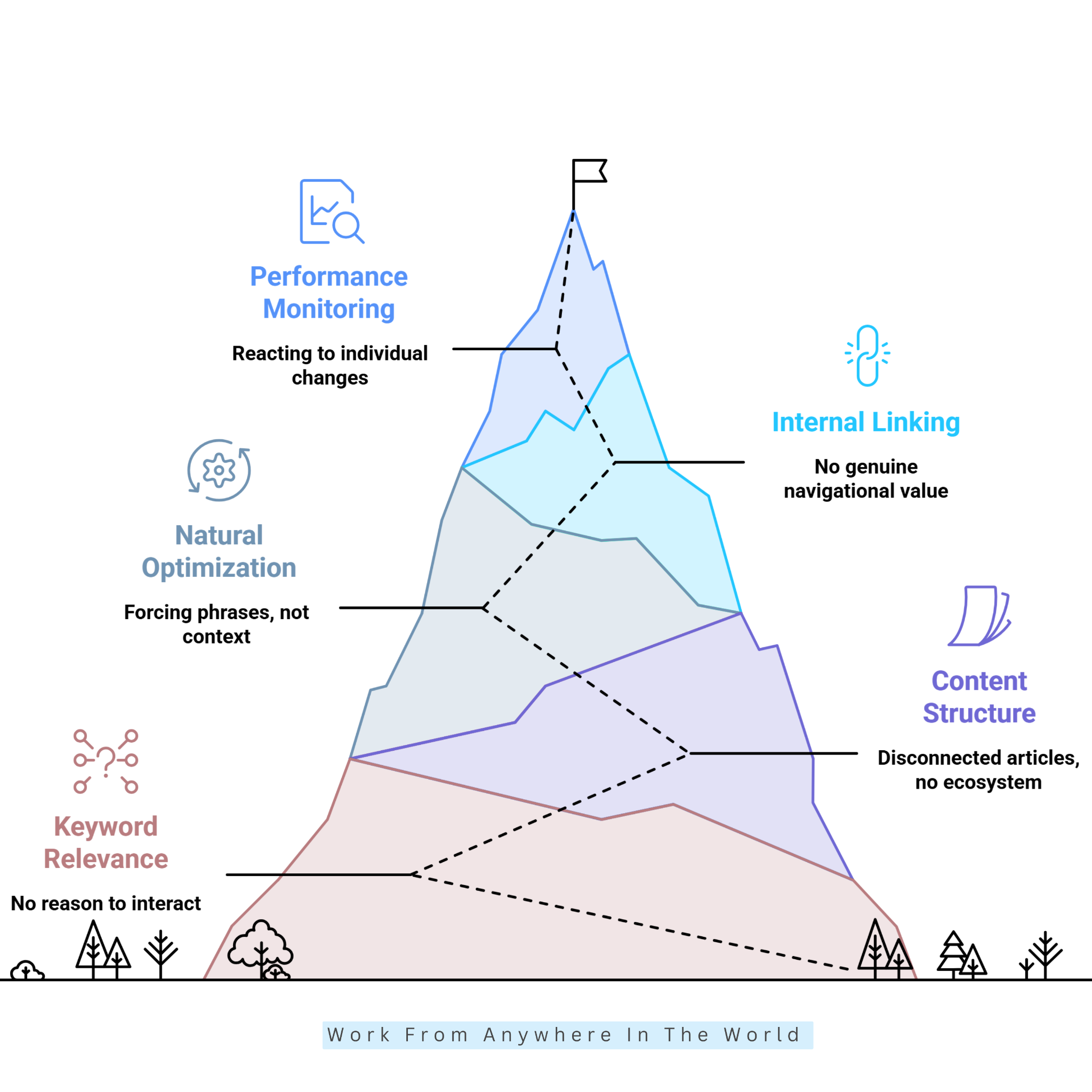
Not every high-volume keyword deserves a place at the centre of your SEO strategy. Consider how closely each keyword connects with your audience, business goals, content expertise, and potential outcomes.
A keyword may attract thousands of searches yet produce little meaningful engagement if visitors have no reason to explore your website. For example, a software company may gain more strategic value from “SEO software” than from the much broader “SEO.”
Evaluate relevance, search intent, competition, traffic potential, and conversion opportunities together. These factors help determine whether a keyword attracts visitors who are likely to benefit from your content, products, or services.
This broader evaluation helps you prioritize keywords that contribute to sustainable growth. Rather than chasing impressive search volumes, you focus on opportunities that deliver meaningful value to your audience and business.
7. Create A Strong Pillar Page And Supporting Content
A strong short-tail keyword strategy starts with a comprehensive pillar page supported by focused articles. For example, a page targeting “content marketing” can cover its definition, benefits, strategies, formats, distribution, measurement, and challenges.
Supporting articles then target narrower searches involving content calendars, promotion, and audience research. Similarly, a “pet care” pillar page can connect to articles about puppy care, senior pets, grooming, nutrition, and enrichment.
This structure creates meaningful internal links between related pages, helping search engines understand your topical coverage. It also guides readers towards more detailed information that addresses their particular interests.
Instead of creating disconnected articles, you build an organized content ecosystem that demonstrates both breadth and depth. Each supporting article contributes to a larger collection of useful, closely related resources.
8. Optimize Content Naturally
Once you have selected your keywords, integrate them naturally into useful content rather than forcing exact-match phrases into every section. A short-tail keyword belongs in a relevant title, introduction, heading, URL, or body section when it fits the context.
Related terminology adds topical depth without making the writing repetitive. For example, an article targeting “home office” might naturally discuss small home office ideas, office organization, Feng Shui for a home office, and ergonomic desk setups.
These related phrases help explain the subject more thoroughly without repeating “home office” unnecessarily. Each should add value rather than just increase keyword frequency.
Effective optimization should feel natural to the reader, not distracting. Clear, engaging writing provides useful context for search engines while keeping the audience’s needs at the centre.
9. Strengthen Internal Linking
Internal links connect related pages and help visitors discover more detailed information throughout your website. They also establish clear relationships between pillar content and supporting articles.
For example, a comprehensive “SEO” guide could link naturally to dedicated pages about keyword research, technical SEO, internal linking, and types of SEO optimization. Each supporting page explores a specific subject while contributing to the broader topic.
Use descriptive anchor text that tells readers what they can expect after clicking. Avoid adding links simply to increase their number, as every connection should provide genuine navigational value.
A well-planned internal linking structure helps distribute link authority across relevant pages and improves content discovery. It also strengthens your website’s topical organization and makes related resources easier to find.
10. Monitor Performance And Refine Your Strategy
SEO performance changes as search behaviour, competition, content quality, and search engine systems evolve. Track impressions, clicks, and rankings to measure your visibility in search results.
Monitor organic traffic, engagement, and conversions to evaluate your website’s performance. Tools such as Ahrefs help you track keyword rankings and organic search trends.
A page may initially target a broad keyword but gradually gain visibility for several related searches. These emerging queries reveal opportunities for additional sections, supporting articles, or content updates.
Review your strongest and weakest pages regularly to identify meaningful patterns. Focus on longer-term trends rather than reacting to individual ranking changes that may be temporary.
A flexible strategy helps you strengthen successful topics, address content gaps, and improve underperforming pages. These ongoing adjustments support smarter SEO decisions based on actual search performance rather than assumptions.
Frequently Asked Questions
Q1: Are Short-Tail Keywords Difficult To Rank For?
Short-tail keywords are often challenging to rank for because they attract substantial competition from established websites. Popular terms frequently appear in searches across multiple industries, making the results highly competitive.
However, keyword difficulty varies depending on the topic, competing websites, and search intent. Building relevant supporting content and strengthening your website’s authority can improve your opportunities over time.
Q2: Are Short-Tail Keywords Better Than Long-Tail Keywords?
Neither keyword type is automatically better because they serve different purposes. Short-tail keywords establish broad topics, while long-tail keywords target more specific searches and often reveal clearer intentions.
A balanced SEO strategy uses both types to connect general subjects with detailed information. This approach helps you reach visitors at different stages of their research journey.
Q3: Do Short-Tail Keywords Have High Search Volume?
Many short-tail keywords attract high search volumes because they describe popular subjects, products, or services. However, not every broad keyword receives substantial traffic, and demand varies between industries.
Search volume alone does not determine whether a keyword is worth targeting. Relevance, competition, search intent, and potential engagement are equally important when evaluating opportunities.
Q4: Should Beginners Target Short-Tail Keywords?
Beginners should include short-tail keywords in their research because these terms help identify important topics within their niche. They also provide a starting point for discovering related searches and planning supporting articles.
However, newer websites may find more realistic ranking opportunities with specific long-tail keywords. Building useful content around these narrower subjects can gradually strengthen broader topical coverage.
Q5: How Many Words Are In A Short-Tail Keyword?
Short-tail keywords commonly contain one or two words, such as “gardening” or “running shoes.” These terms usually describe broad subjects without specifying exactly what the searcher wants.
There is no universal word-count rule separating short-tail and long-tail keywords. Search specificity and intent matter more than a phrase’s word count.
Q6: Can I Use Short-Tail And Long-Tail Keywords On The Same Page?
Yes, short-tail and long-tail keywords often work well together when they relate to the same topic and search intent. A broad keyword can establish the main subject, while specific variations help explain individual aspects in greater detail.
Use these phrases naturally in headings, paragraphs, and supporting explanations where appropriate. Avoid forcing every variation into the text, and create separate articles when a keyword deserves more focused coverage.
Conclusion
Understanding short-tail keywords and how they work provides a strong foundation for effective SEO. These broad search terms help define important topics, discover related opportunities, and organize your website’s content.
Although popular short-tail keywords often face strong competition, they still play an important role in building topical relevance. Combining them with specific, intent-focused phrases creates a more balanced keyword strategy.
Successful SEO involves more than attracting visitors through popular search terms. By understanding your audience, creating useful content, and monitoring performance, you can strengthen organic visibility and attract more relevant traffic.
Short-tail keywords work best when they support a thoughtful, long-term content strategy. Use them to connect related topics, guide readers to valuable information, and build a website that keeps growing.
I trust you enjoyed this article on What Are Short-Tail Keywords? 10 Proven SEO Tips. Please stay tuned for more insightful blogs on affiliate marketing, online business, and working from anywhere in the world.
Take care!
— JeannetteZ 🌍✨
💬 Your Opinion Is Important To Me
Do you have thoughts, ideas, or questions? I’d love to hear from you. Please leave your comments below or email me directly at Jeannette@WorkFromAnywhereInTheWorld.com.
📚 More Work From Anywhere Reads
🚀 Ready to Build a Business You Can Run from Home
Or from Anywhere in the World?
Imagine creating income on your terms — from home, a cozy café, or wherever life takes you.
With the right tools, training, and community support, it’s entirely possible.
Start your own online business for free — no credit card needed.
Disclosure
This post may contain affiliate links. As an Amazon Associate and participant in other affiliate programs, I earn from qualifying purchases at no extra cost to you. Please read my full affiliate disclosure.