

How To Choose Keywords For Blog Posts: 15 Powerful Tips
Knowing how to choose keywords for blog posts is key to creating content that reaches the right audience. The keywords you select help connect your articles with people searching for information, answers, or practical solutions.
Choosing suitable keywords involves more than finding popular search terms. You also need to understand what readers want, how competitive a topic is, and whether it fits your website’s content.
For beginners, keyword research might seem complicated at first. However, a few practical tools and a clear process can help you find relevant topics without guessing.
In this guide, you’ll learn how to research keywords, understand search intent, evaluate competition, and select promising opportunities for your blog. You’ll also discover what makes a keyword worth targeting and how to use your findings to plan helpful content.
What Are Keywords In Blog Posts?
Keywords are the words and phrases people enter into search engines to find information, answers, products, or solutions. They help search engines understand what an article covers and how it relates to someone’s search.
For example, someone searching for “how to grow tomatoes at home” wants practical gardening advice. A blog post that answers this question clearly is more likely to attract readers interested in growing their own tomatoes.
Some keywords are broad, such as “SEO tips,” while others are more specific, such as “how to choose keywords for blog posts.” Broad keywords cover broader topics, while specific phrases often reveal exactly what someone wants to learn.
These longer, more focused phrases are commonly called long-tail keywords. Our guide to identifying long-tail keywords explains how to find phrases that match your audience’s interests and questions.
When selecting keywords, consider their relevance to your topic, search intent, competition, and estimated search demand. A keyword is only valuable when your article can provide useful information that matches what readers are looking for.
Remember that effective keyword use isn’t about repeating the same phrase throughout your article. Focus on answering readers’ questions naturally, covering related concepts, and creating content that provides genuine value.
A thoughtful keyword strategy helps you plan more focused articles and attract visitors who are interested in your content. Over time, this approach also makes your blog more organized and useful.
How To Choose Keywords For Blog Posts
Start by understanding your audience and what they’re searching for. A successful keyword strategy connects relevant search terms with content that genuinely answers readers’ questions.
Google encourages website creators to focus on helpful, reliable, people-first content rather than producing articles primarily to manipulate search rankings. This principle is worth remembering throughout your keyword research.
Instead of choosing keywords simply because they attract large search volumes, consider whether they match your blog’s purpose. A smaller, more specific keyword may bring visitors who are genuinely interested in your content.
Keyword research also involves examining search intent, competition, and the types of articles already appearing in search results. These details help you decide which topics are worth pursuing and how to approach them.
The following 15 steps will guide you through the process of finding, evaluating, and selecting suitable keywords. You can apply these techniques to new articles or use them to improve your existing blog content.
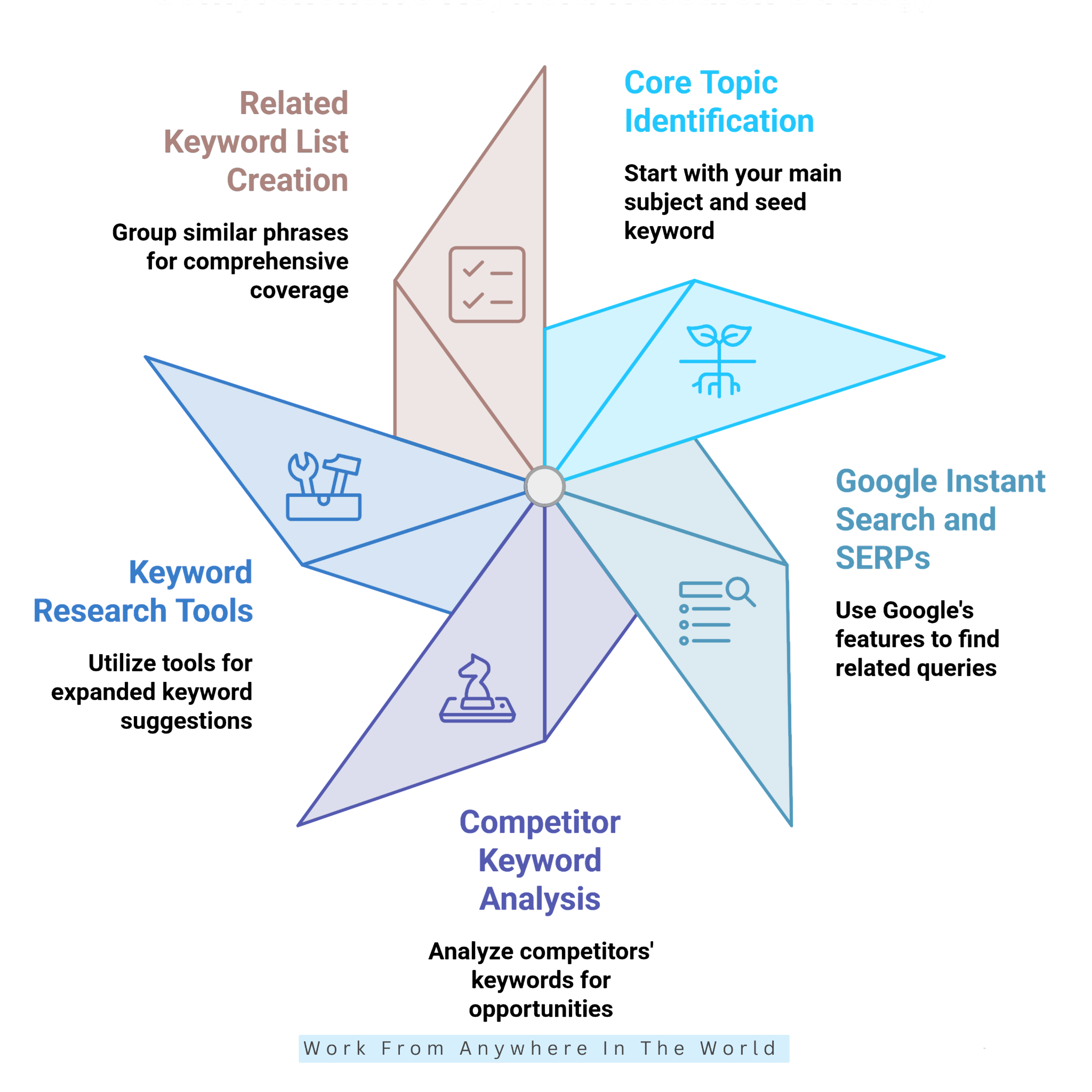
1. Start With Your Core Topic
Begin by identifying the main subject you want to write about. Think about your audience, the questions they might have, and the information your article will provide.
Next, turn your subject into a broad starting phrase, often called a seed keyword. This gives you a foundation for discovering more specific keywords related to your topic.
For example, if you’re writing about growing tomatoes, your seed keywords might include “growing tomatoes,” “tomato gardening,” or “tomato plant care.” Each phrase provides a slightly different starting point for your research.
Before exploring keyword tools, write down the main question your article should answer. Consider whether readers need beginner instructions, practical solutions, product comparisons, or detailed explanations.
You can then explore related searches using Google Trends, Google Search Console, or a keyword research platform. Our guide on using the Google Keyword Planner offers another way to discover keyword ideas.
At this stage, concentrate on gathering relevant possibilities rather than choosing your final keyword. You’ll evaluate search demand, competition, and search intent in the following steps.
Starting with your audience’s needs gives your keyword research a clear direction. It helps you develop useful content ideas instead of choosing phrases simply because their search metrics look attractive.
2. Research Google Autocomplete And Search Results
Google provides useful keyword ideas through its search suggestions and results pages. These features help you discover how people phrase their questions and which topics commonly relate to your main keyword.
Begin typing your seed keyword into Google’s search bar without pressing Enter. Review the Autocomplete suggestions that appear and write down relevant phrases that could become potential blog topics.
For example, typing “tomato gardening” might reveal searches about growing tomatoes in containers, caring for tomato plants, or solving common gardening problems. The actual suggestions will vary depending on current search activity and other factors.
Next, search your main keyword and examine the results page, often called the Search Engine Results Page (SERP). Look for features like People Also Ask, related searches, and featured snippets when available.
These sections can reveal questions your audience wants answered and introduce additional keyword variations. Pay attention to recurring subjects that could help you create a more comprehensive article.
Review the titles and descriptions of several top-ranking pages to understand how other websites approach the topic. Notice whether the results feature beginner tutorials, detailed guides, product comparisons, or other types of content.
Search promising keyword variations separately to see whether they produce similar results. This helps you understand the intent behind each phrase before deciding which keywords deserve further research.
Finally, compare your findings with the keyword ideas you’ve already collected. Google’s search features provide valuable clues about real search language, although they don’t replace keyword tools for evaluating search volume and competition.
3. Research Your Competitors’ Keywords
Researching your competitors’ keywords helps you discover topics that already attract search traffic to similar websites. It also reveals opportunities you might overlook when brainstorming keywords on your own.
Start by searching your main topic on Google and identifying several websites that appear in the organic results. Look for blogs that cover similar subjects and serve an audience comparable to yours.
Next, explore their keyword rankings using tools such as Semrush, Ahrefs, or Ubersuggest. These platforms provide insights into ranking keywords, popular pages, estimated search traffic, and keyword competition.
Pay particular attention to keywords that appear across several competing websites. Repeated topics might indicate strong audience interest, although you’ll still need to evaluate their relevance and ranking difficulty.
Look for keyword gaps where competitors rank for useful topics that your blog hasn’t covered. Our guide to SEO competitive analysis explains how to examine competing websites and identify opportunities to improve your content strategy.
Compare promising keywords with your existing list and prioritize those that match your audience’s interests. Don’t choose topics just because a competitor ranks well for them.
Finally, search your strongest candidates directly on Google to examine the current results. Check whether readers expect tutorials, informational guides, comparisons, or other content formats.
Use your findings to create articles that offer something valuable beyond existing results. Clearer explanations, practical examples, and answers to overlooked questions can help your content stand out.
4. Use Keyword Research Tools For More Keyword Suggestions
Keyword research tools help you discover relevant search terms beyond your original ideas. They provide suggestions based on your main topic, including related phrases, longer keywords, and questions people search for online.
Begin by entering your seed keyword into a platform such as Semrush, Ahrefs, Ubersuggest, Google Keyword Planner, or Moz Keyword Explorer. Each tool offers different features for exploring potential keywords and understanding search demand.
If you’d like more detailed instructions, our guide on how to do keyword research with Ahrefs walks you through the research process. You can also explore our Semrush tutorial to learn more about its keyword research and SEO features.
If you’re just getting started, our guide to the 12 best free keyword research tools offers useful options for finding keyword ideas without investing in expensive software right away.
If you’re considering a paid platform, our Semrush review explores its features and helps you decide whether it’s a suitable investment for your blogging needs.
Review the suggested keywords and concentrate on phrases that match your blog’s subject and audience. Look for questions, common problems, and specific topics that could form the basis of a helpful article.
Next, compare search volume, keyword difficulty, and search intent where these metrics are available. Remember that search estimates vary between platforms, so use them as guidance rather than exact measurements.
You might also discover several closely related phrases that belong together in one article. Grouping these keywords by topic helps you plan more comprehensive content without creating separate posts for every variation.
Before making your final selections, search the most promising keywords directly on Google. Examine the current results to see what readers expect and whether your planned article would offer something useful.
Combining keyword tools with your own research gives you a stronger list of potential topics. It also helps you make informed decisions instead of relying entirely on automated suggestions.
5. Create A List Of Related Keywords
Once you’ve gathered keyword suggestions, organize them into a list of closely related search phrases. This helps you see how different keywords connect to your main topic and which ones belong together.
For example, if your seed keyword is “growing tomatoes,” you might find phrases like “how to grow tomatoes at home,” “growing tomatoes in containers,” and “how often to water tomato plants.”
Although these keywords share a common subject, they don’t necessarily serve the same purpose. Some readers want general growing instructions, while others need advice about containers, watering, or specific gardening problems.
Group keywords according to the questions they answer and the information readers expect to find. Closely related phrases with similar search intent may fit naturally into different sections of one comprehensive article.
Other keywords might deserve their own blog posts, particularly when they address a detailed subject that requires a separate explanation. For instance, our guide to companion plants for tomatoes explores a related gardening topic that deserves its own article.
Keep your keyword groups in a spreadsheet or simple document so you can review them as your research progresses. Include the main topic, related phrases, and any useful observations about search intent or competition.
Different keyword research tools may suggest different phrases for the same topic. If you’re deciding which platform to use, our Ahrefs vs Google Keyword Planner comparison explores how these tools differ and what each offers for keyword research.
An organized keyword list makes content planning easier and helps you recognize opportunities for supporting articles. Our guide to target audience analysis offers useful insights into choosing topics that match your readers’ interests.
As your collection of related articles grows, connect them through relevant links. Our guide on how to build internal links for SEO explains how to create meaningful connections between your blog posts.
6. Check The Search Intent
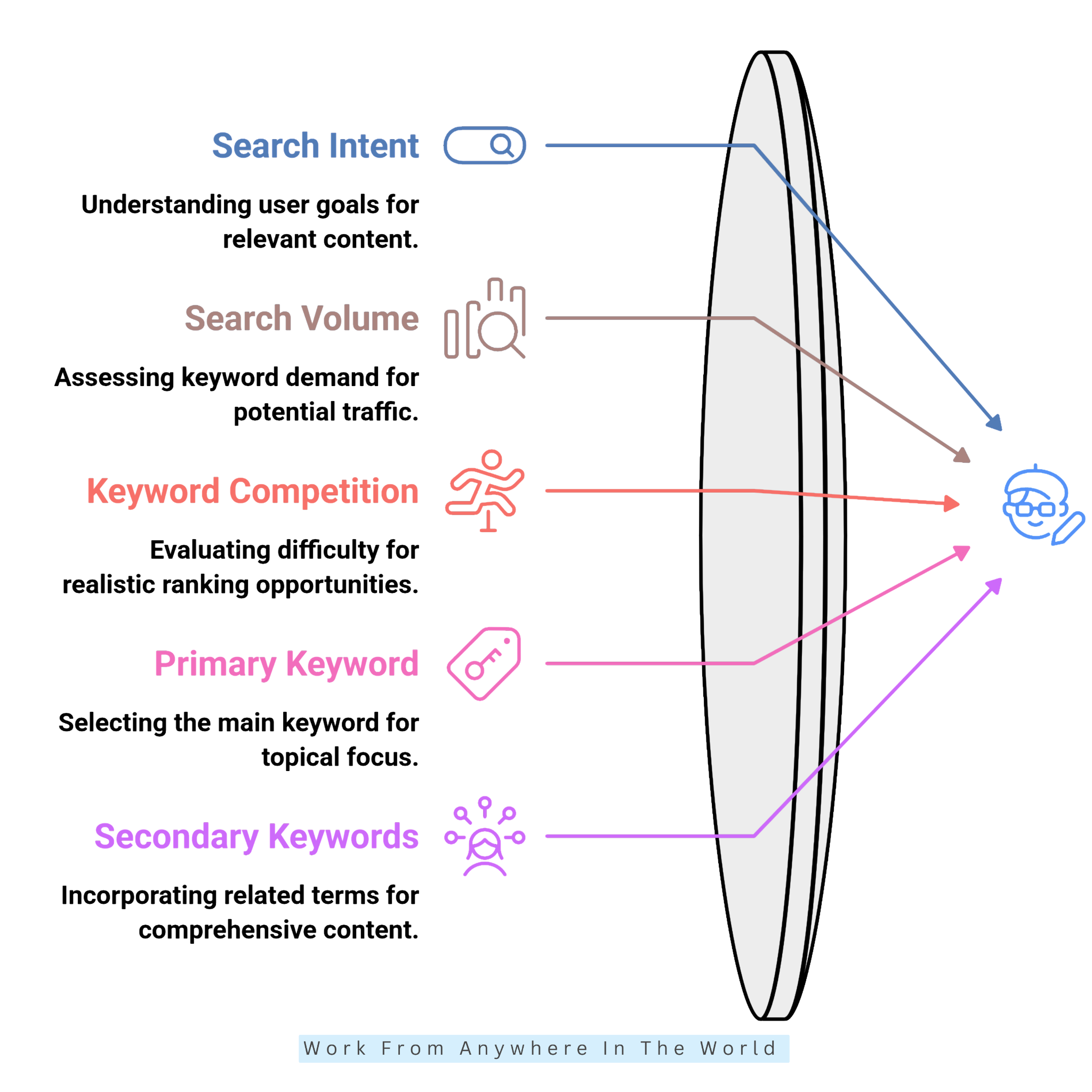
Search intent describes what someone wants to accomplish when entering a keyword into a search engine. Understanding that purpose helps you create articles that answer the right questions and meet readers’ expectations.
Before selecting a keyword, search it on Google and examine the top-ranking results. Look at the types of pages appearing and consider what information someone using that phrase is likely to need.
For example, a search for “how to choose keywords for blog posts” suggests that the reader wants instructions. A search for “best keyword research tools” is more likely to attract people comparing different platforms.
Search intent generally falls into four main categories:
- Informational: The reader wants to learn something, solve a problem, or find an answer.
- Navigational: The reader wants to reach a particular website, brand, or online service.
- Commercial: The reader is researching products or services before making a decision.
- Transactional: The reader is ready to complete an action, such as making a purchase or signing up.
Our tomato examples illustrate why these differences matter. Someone searching for “growing tomatoes in containers” wants gardening advice, while a reader looking for vegan tomato sauce recipes expects cooking instructions.
Even closely related searches can lead to different content needs. For example, someone interested in vegan recipes using tomatoes may want several meal ideas rather than instructions for preparing tomato sauce alone.
When examining search results, notice whether Google displays tutorials, recipes, product comparisons, online stores, or other content formats. These patterns provide useful clues about the type of article readers expect.
Choose keywords that match the purpose of your planned content. A well-written article is more useful when it answers the question behind the search rather than simply including a popular keyword.
7. Evaluate Search Volume
Search volume estimates how often people search for a particular keyword during a given period, usually one month. It helps you understand whether a topic attracts regular interest and how its demand compares with similar keywords.
Use a keyword research platform to check the estimated search volume of your strongest candidates. Compare several related phrases rather than choosing a keyword simply because it has the highest number of searches.
For example, a keyword receiving an estimated 10,000 monthly searches isn’t automatically better than one receiving 800. The smaller keyword might attract readers whose needs closely match the information your article provides.
Remember that search volume figures are estimates, not guaranteed website visits. Different tools use different data sources and calculation methods, so their reported numbers may vary.
Consider where your intended readers live when evaluating search demand. A keyword might attract substantial interest worldwide but relatively few searches in the country or region your article targets.
Seasonal changes also influence keyword popularity. Gardening topics, for example, often attract more interest during planting season, while searches for certain holiday recipes may increase around specific celebrations.
You can explore these patterns with Google Trends, which shows how relative search interest changes over time. This helps you distinguish consistently popular subjects from topics that experience occasional increases in attention.
Finally, balance search volume with relevance, search intent, and competition. A keyword with modest demand may offer a better opportunity when it closely matches your audience and allows you to provide a genuinely helpful answer.
8. Analyze Keyword Competition
Keyword competition helps you understand how challenging it might be to rank for a particular search term. Some keywords attract strong competition from established websites, while others offer more realistic opportunities for smaller blogs.
Many SEO platforms provide a Keyword Difficulty (KD) score to estimate ranking competition. These scores are useful for comparing keywords, but they aren’t official Google measurements or guarantees of ranking success.
Start by reviewing the difficulty scores of your shortlisted keywords. Compare several related phrases to identify those that offer a reasonable balance between search demand and ranking competition.
Next, search each promising keyword directly on Google and examine the top-ranking pages. Look at the websites appearing in the results and consider how closely their content matches the searcher’s needs.
Pay attention to the quality, relevance, and depth of competing articles. Notice whether they provide detailed explanations, practical examples, useful images, or answers to questions your planned article could address.
You should also consider the strength of competing websites, including their established reputation and relevant backlinks. However, don’t assume that a large website will automatically outrank every smaller competitor.
Long-tail keywords sometimes offer more achievable opportunities because they address narrower questions. For example, “growing vegetables” is a broad topic, while “growing potatoes in containers” targets a more specific gardening problem.
A related search such as “vegan recipes using potatoes” serves a different audience. Comparing these topics shows why keyword relevance and search intent matter as much as competition scores.
Look for opportunities where you can provide clearer instructions, more useful examples, or information that existing pages haven’t covered thoroughly. These improvements give readers a reason to choose your article.
Finally, evaluate competition alongside search volume, relevance, and search intent. The goal is to find keywords that offer a realistic opportunity to reach readers while matching the information your website provides.
9. Choose A Primary Keyword
After researching potential keywords, select one primary keyword that best represents your article’s main subject. This phrase should clearly describe what readers can expect to learn when they visit your page.
Consider everything you’ve discovered about search intent, search volume, competition, and audience relevance. The most popular keyword isn’t necessarily the best choice if it doesn’t accurately reflect your content.
For example, suppose you’re creating a beginner’s guide to finding suitable SEO keywords. The phrase “how to choose keywords for blog posts” would be a logical primary keyword because it describes the article’s purpose.
Once you’ve selected your primary keyword, use it naturally in important places throughout your article. These typically include the SEO title, main heading, introduction, and URL when appropriate.
You can also incorporate the phrase into relevant subheadings and body paragraphs where it fits naturally. However, avoid repeating it unnecessarily or changing sentences simply to increase keyword frequency.
Your primary keyword should guide the article’s overall direction without limiting the information you provide. Related phrases, practical examples, and answers to common questions help create a more complete resource.
Remember that search engines evaluate much more than exact keyword matches. Clear explanations, useful information, and content that satisfies readers’ needs remain essential.
Choosing a well-matched primary keyword gives your article a clear focus and makes it easier to organize your supporting content. It also provides a foundation for selecting the secondary keywords we’ll discuss in the next step.
10. Add Closely Related Secondary Keywords
Once you’ve selected your primary keyword, identify related phrases that support the same subject. These secondary keywords help you cover important aspects of your topic and answer additional questions readers might have.
Secondary keywords can include synonyms, related concepts, specific questions, and longer search phrases. They don’t have to repeat your primary keyword exactly, but they should contribute meaningfully to the article.
For example, an article targeting “how to choose keywords for blog posts” might include secondary terms such as “search intent,” “keyword difficulty,” “search volume,” “long-tail keywords,” and “keyword competition.”
Each phrase represents an important part of the keyword selection process. Including these concepts helps readers understand the subject more thoroughly without creating separate articles for every related search.
Use secondary keywords naturally in headings, paragraphs, and frequently asked questions where they improve the explanation. Avoid adding phrases that don’t fit the topic simply because a keyword tool recommends them.
You can also use related terms in descriptive image alt text when they accurately describe an image. Our on-page SEO guide explains how different elements of a webpage contribute to search optimization.
Remember that secondary keywords are not a checklist of phrases you must repeat. Google’s emphasis on helpful, people-first content encourages website creators to focus on useful information rather than writing primarily to influence rankings.
The goal is to create a complete, well-organized article that satisfies the reader’s needs. When you cover the subject thoroughly, many relevant secondary keywords will appear naturally throughout your writing.
11. Examine The Top-Ranking Pages
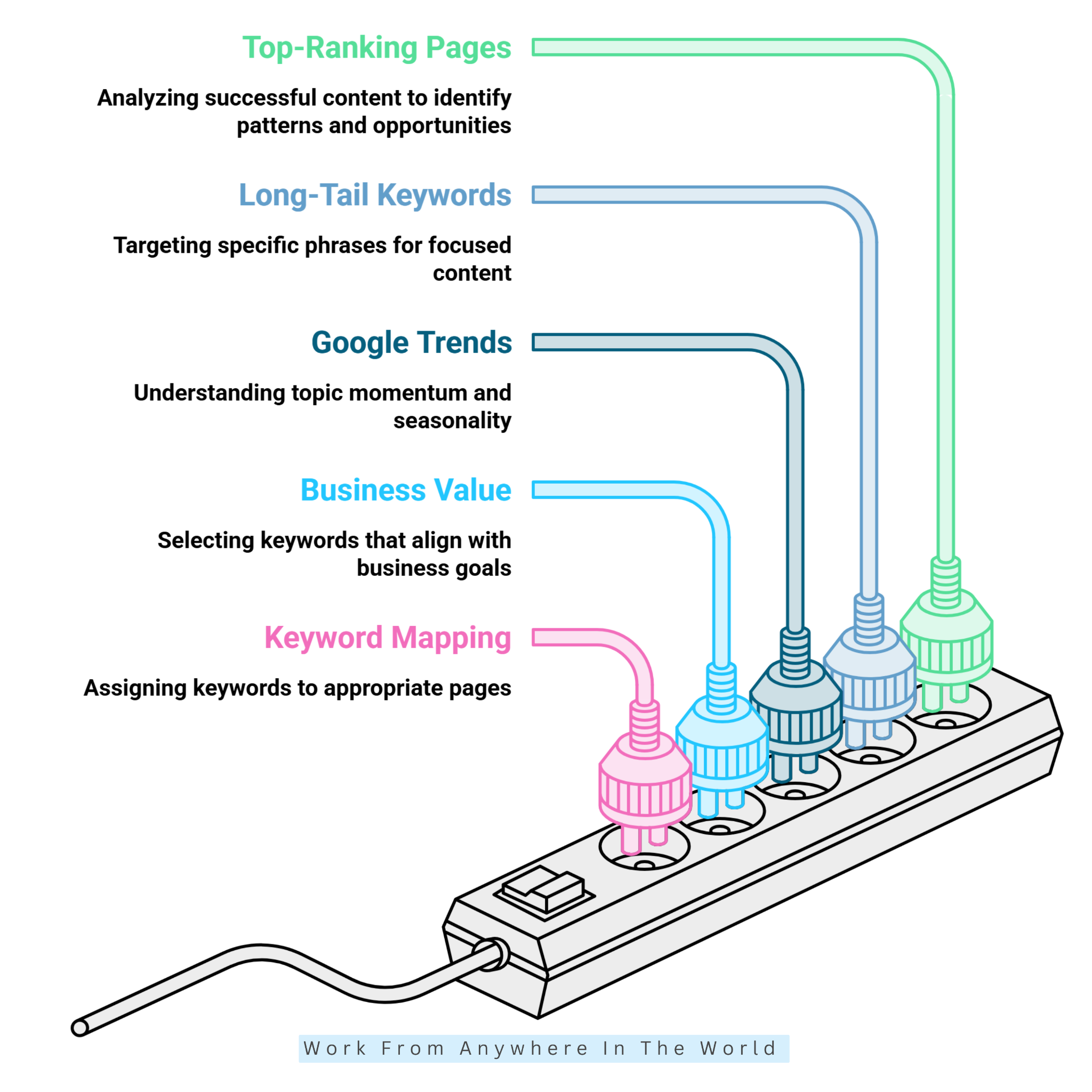
Before finalizing your article, examine several pages that currently rank well for your chosen keyword. These results offer valuable insights into what readers expect and how competing websites approach the subject.
Start by opening five to ten relevant results and reviewing their overall structure. Look at the main headings, supporting sections, explanations, examples, and questions addressed throughout each article.
Look for patterns across several pages rather than focusing on one competitor. If most results contain beginner tutorials, readers probably expect practical instructions they can follow.
Similarly, if the leading pages focus on advanced techniques, a short introductory article might not provide enough information. Your content should match the reader’s expectations while offering something useful of its own.
Examine how competing articles present their information. Some might use numbered instructions, comparison charts, illustrations, screenshots, or practical demonstrations to make complicated subjects easier to understand.
Next, look for information that could be explained more clearly or covered in greater detail. An article may assume readers already understand technical terminology or leave important beginner questions unanswered.
Consider whether you can contribute original examples, personal experience, updated information, or clearer instructions. Our guide on how to write SEO-friendly content offers practical advice for creating articles that serve readers while following good SEO practices.
You should also review how competing pages organize their headings and supporting topics. Use these observations to improve your own structure without copying another writer’s wording or arrangement.
Finally, remember that ranking pages are useful research references, not templates you must reproduce. Your goal is to create an accurate, helpful article that satisfies the searcher’s needs and offers readers a worthwhile experience.
12. Find Long-Tail Keyword Opportunities
Long-tail keywords are specific search queries that usually attract fewer searches individually than broad, popular keywords. They often reveal exactly what someone wants to learn, making them useful for creating focused blog content.
For example, “keyword research” covers a broad subject, while “how to find low-competition keywords for blog posts” addresses a more specific problem. The second phrase gives you a clearer understanding of the information readers expect.
Another example is “how to choose SEO keywords for a new blog.” Someone using this search likely wants beginner-friendly instructions rather than an advanced discussion of keyword research techniques.
You can discover long-tail opportunities by exploring Google Autocomplete, related searches, and keyword research platforms. Our guide to long-tail keyword finder tools also includes resources for finding more specific search phrases.
Look for questions and problems that relate closely to your main topic. These searches may reveal useful sections to include in an existing article or subjects that deserve separate supporting posts.
Long-tail keywords sometimes face less competition than broader terms, though this isn’t always true. Check the current search results before assuming that a specific phrase will be easier to rank for.
Avoid creating separate articles for every small keyword variation. When several phrases express the same underlying question, a single comprehensive article may serve readers more effectively.
Use your chosen phrases naturally in headings and paragraphs where they fit the discussion. Focus on providing clear answers rather than repeating exact keyword combinations throughout your content.
A thoughtful long-tail keyword strategy helps you address specific reader needs and develop a collection of closely related articles. Over time, these focused topics can build a stronger, more useful blog.
13. Check Google Trends For Topic Momentum
Google Trends helps you understand how interest in a search topic changes over time. It is particularly useful for identifying seasonal patterns, emerging subjects, and keywords that maintain consistent interest throughout the year.
Begin by visiting Google Trends and entering one of your shortlisted keywords. Choose the country, time period, and search category that best match your intended audience.
Examine the interest graph to see whether searches remain relatively stable, increase during certain months, or change noticeably over time. These patterns provide useful clues about when readers are most interested in a topic.
You can also compare several related search terms to understand their relative popularity. This helps when deciding between keywords that appear equally promising in your initial research.
For example, searches about growing vegetables outdoors may increase in spring, while interest in winter gardening tips may grow as colder weather approaches. Comparing these seasonal patterns helps you plan content around changing reader interests.
Recipe searches can follow different patterns. For example, interest in vegan holiday recipes may increase as major celebrations approach, while everyday meal ideas may receive more consistent attention throughout the year.
Seasonal search patterns also matter for businesses. Interest in holiday promotions, gift guides, and festive campaigns may increase as celebrations approach. Our article on holiday marketing ideas for small businesses provides a practical example of content aimed at a seasonal audience.
Remember that Google Trends uses a relative interest scale from 0 to 100. A value of 100 represents peak search interest within the selected comparison, location, and period, not a specific number of searches.
Use these findings alongside estimated search volume, competition, and search intent. A keyword showing increasing interest isn’t automatically a better choice if it doesn’t match your audience or content goals.
For evergreen articles, look for subjects that maintain useful levels of interest over time. Seasonal topics can also be valuable if you publish or update them before readers start searching more often.
By combining trend information with your other keyword research, you can make better decisions about which topics to cover and when to publish them.
Wealthy Affiliate – Mini Review
If you’ve ever thought about turning your blog, passion, or niche into an online business,
Wealthy Affiliate (WA) is one of the most beginner-friendly platforms I’ve used.
It combines step-by-step training, website hosting, AI-powered tools,
keyword research, and an active community all in one place.
What I like most is that you can start for free (no credit card needed), explore the platform,
test the tools, and connect with other entrepreneurs before upgrading.
WA isn’t a “get rich quick” scheme — success comes from consistent effort
and applying what you learn over time.
14. Select Keywords Based On Business Value
Attracting visitors matters, but traffic alone doesn’t determine a keyword’s value. You also need to consider how the people searching for that topic connect with your website’s goals.
A keyword might attract thousands of monthly searches without bringing visitors who are genuinely interested in your content, products, or services. A more specific keyword with lower search volume could attract a smaller but more relevant audience.
For example, someone interested in building a sustainable online business may still be exploring possibilities. A person searching for the best email marketing tools for beginners may be closer to comparing services and choosing one for their business.
Both searches have value, but they serve different purposes. Understanding what readers want helps you choose keywords that match the content and opportunities your website offers.
For bloggers, business value can take several forms. An informative article might generate ad revenue, introduce readers to related content, or encourage newsletter subscriptions. Our guide to monetizing a blog explores different ways website content can support income opportunities.
Other keywords may support affiliate marketing, digital products, online courses, or professional services. Building a relevant audience also creates opportunities to monetize a newsletter through suitable strategies.
Consider how each keyword fits into your broader content strategy. A useful article might introduce beginners to a subject and naturally guide them towards a more detailed tutorial or relevant product comparison.
Also consider long-term value. Some articles build trust and help establish you as a leader in your niche, even when they don’t generate immediate income.
Avoid choosing keywords solely because they appear profitable. Your content must still satisfy the reader’s search intent and provide information that genuinely helps them.
The strongest opportunities combine audience relevance, realistic ranking potential, meaningful search demand, and a clear purpose. This approach helps you build a blog that serves readers while supporting your long-term goals.
15. Map The Keyword To The Right Page
Before writing a new article, decide whether your chosen keyword deserves its own page or fits naturally into existing content. Search your website for related articles and compare the topics they already cover.
For example, a vegan food blog might already have an article featuring vegan carrot recipes. A new keyword about preparing carrots for children could fit naturally into that existing collection.
However, vegan carrot fries recipes may deserve a separate article because readers are looking for a specific type of dish rather than general carrot recipes.
Similarly, a gardening website might publish a dedicated guide about growing carrots in containers. Although all three articles involve carrots, they answer different questions and serve different audiences.
The same principle applies to pet wellness websites. A broad article about dog energy healing covers general wellness practices, while a guide to Reiki for puppies adjusting to a new home addresses a specific situation. Both topics are related, but readers arrive with different questions and needs.
Creating several articles that answer nearly identical questions can make your website harder to organize. It may also cause those pages to compete for similar searches instead of giving readers one comprehensive resource.
Keyword mapping helps you decide which topics belong together and which deserve separate articles. Each important keyword then has a logical place within your website’s content structure.
Once you’ve organized your pages, connect related articles using relevant internal links. Our guide on how to build internal links for SEO explains practical ways to strengthen these connections and help readers discover more useful content.
5 Signs Of A Strong Keyword Opportunity
Finding a keyword with a high search volume doesn’t automatically make it a good choice for your blog. A successful keyword needs to match your content, attract the right readers, and offer a realistic opportunity to compete.
Some keywords look promising in research tools but turn out to be poor matches for your audience. Others have modest search volumes yet attract visitors who are genuinely interested in what your website offers.
The key is to evaluate several factors together rather than relying on a single number. Relevance, search intent, demand, competition, and content value all influence whether a keyword deserves your attention.
A strong keyword opportunity also gives you a clear direction for creating useful content. When you understand what readers need, you can develop an article that answers their questions and fits naturally into your website.
These five signs will help you spot promising keywords and make more confident decisions before you write your next blog post. Together, they provide a practical checklist for choosing topics that serve your readers and support your website’s long-term growth.
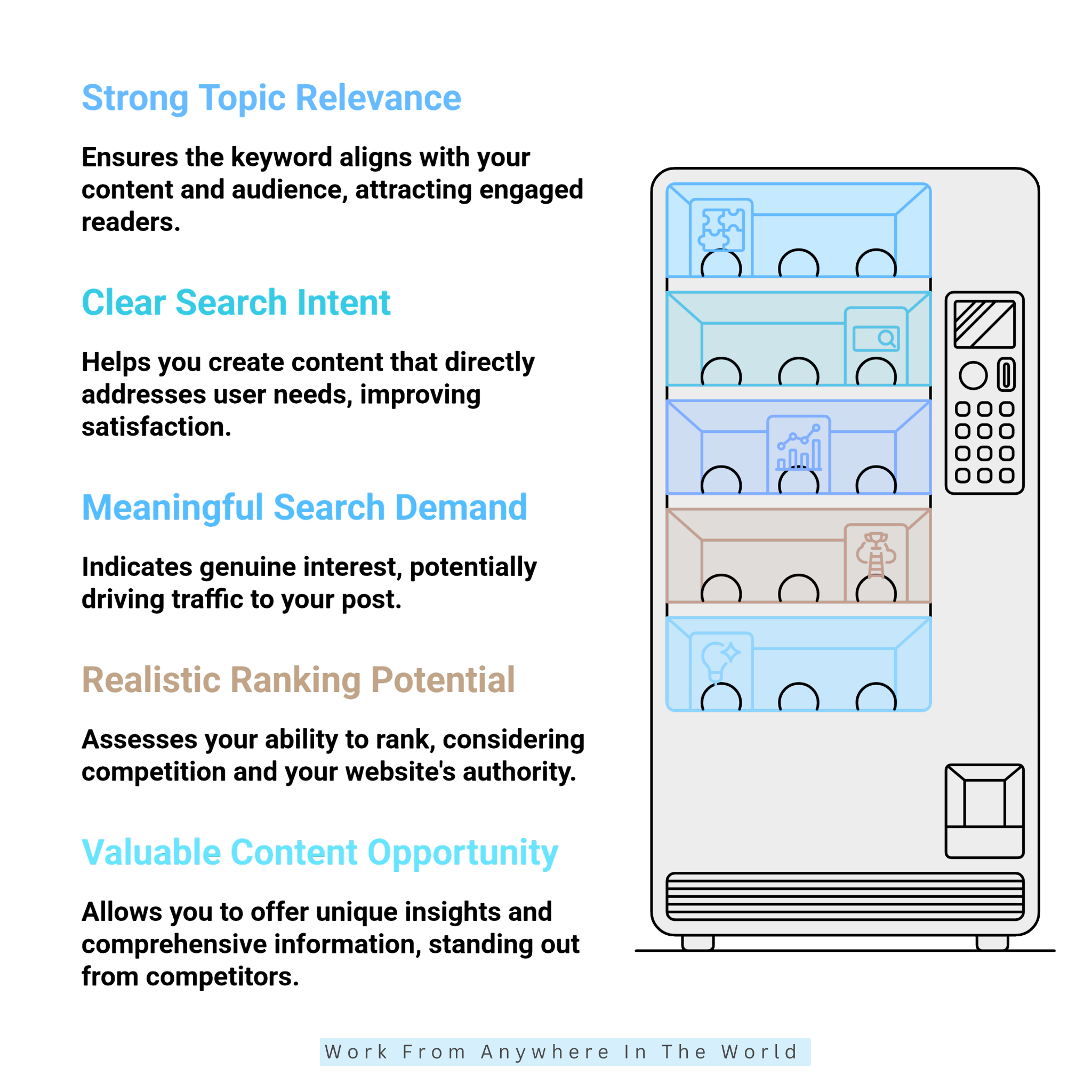
1. Strong Topic Relevance
A valuable keyword should closely match your article, website niche, and target audience. It should reflect a topic your readers care about and a question your content can answer.
For example, a blog about working from home might target keywords related to freelance jobs, remote work, or online business opportunities. These subjects fit naturally within the website’s focus and attract readers looking for practical guidance.
Before choosing a keyword, consider what visitors expect to find when they search for it. If your article cannot provide that information, the keyword may attract impressions without bringing meaningful engagement.
Relevant keywords also make it easier to develop supporting sections and connect related articles through internal links. Each section should add useful information rather than introduce unrelated topics just to include more keywords.
When your keyword, content, and audience align, your article has a stronger foundation for attracting interested readers. This relevance also helps you build a more consistent collection of articles around your website’s main topics.
2. Clear Search Intent
Search intent describes what people hope to find when they enter a keyword into Google. Understanding their expectations helps you create content that answers the right questions and provides useful information.
Start by searching your chosen keyword and examining the results. Look at page titles, descriptions, headings, and Google’s People Also Ask questions to understand what readers want.
For example, someone searching for “how to find online freelance jobs” probably wants practical instructions and reliable places to look for opportunities. Our guide to finding online freelance jobs addresses that informational need.
However, someone searching for “best freelance platforms” may want comparisons, features, and recommendations before choosing a service. Although both searches involve freelancing, they require different types of content.
Google’s search results also provide valuable clues. If most top-ranking pages are tutorials, comparison articles, or product pages, consider why that format suits the searcher’s needs.
Choose keywords that match the purpose of your planned article. When your content meets the reader’s expectations, it’s more likely to attract interested visitors and encourage them to explore your website.
3. Meaningful Search Demand
A promising keyword should show evidence that people are genuinely interested in the topic. Search demand helps you understand whether enough readers are looking for the information you plan to provide.
Start by using keyword research tools to examine estimated monthly searches. Compare several closely related phrases rather than choosing a keyword simply because it has the highest search volume.
For example, “online business ideas” may attract more searches than “online business ideas for beginners.” However, the more specific phrase may be better if your article focuses on helping newcomers explore realistic opportunities.
Google Trends provides another useful perspective by showing how search interest changes over time. You can identify seasonal patterns, growing topics, and subjects that have maintained steady interest over longer periods.
Remember that search volume is an estimate, not a guarantee of website traffic. A highly relevant keyword with moderate demand may attract more interested readers than a broad phrase that brings visitors with little connection to your content.
4. Realistic Ranking Potential
A keyword’s ranking potential depends on more than the difficulty score displayed in an SEO tool. You also need to examine the websites already appearing in Google’s search results and consider whether your content could compete.
Start by reviewing the top-ranking articles for your chosen keyword. Look at their relevance, quality, depth, and usefulness. Notice whether they answer readers’ questions thoroughly or leave important information unexplained.
For example, a new food blog may struggle to rank for a broad keyword such as “Asian food.” A focused collection of 30-minute vegan Thai recipes gives readers something more specific: plant-based Thai dishes they can prepare without spending hours in the kitchen.
A broader article about plant-based eating across Asia serves a different purpose. It covers a broader topic, showing why keyword selection should reflect both competition and reader expectations.
Your website’s existing articles also matter. If you’ve already published several useful guides on a related subject, you may have a stronger foundation for developing another article within that topic.
A difficult keyword may still deserve attention as part of your long-term content strategy. Focus on topics where you can satisfy search intent, provide valuable information, and give readers a meaningful reason to choose your article.
5. Valuable Content Opportunity
A promising keyword should give you an opportunity to create content that readers will genuinely appreciate. Beyond search volume and competition, consider whether you can offer something useful that existing articles are missing.
Examine the top-ranking pages and look for unanswered questions, outdated information, unclear instructions, or topics that receive little attention. These gaps may reveal opportunities to create a more helpful resource.
For example, an article about starting an online business might explain the basic steps but overlook common beginner mistakes. Adding realistic examples, practical solutions, and clear explanations could make your guide more valuable to someone just getting started.
However, creating better content doesn’t necessarily mean writing a longer article. A concise tutorial with clear instructions may serve readers better than an extensive guide filled with repetitive information.
Choose keywords that allow you to contribute meaningful insights, answer important questions, or explain complicated subjects more clearly. When your article offers genuine value, readers have a stronger reason to visit your website and explore your other content.
Frequently Asked Questions
Q1: Are Long-Tail Keywords Good For Blog Posts?
Yes, long-tail keywords are often excellent choices because they reflect specific questions or needs. They help you create focused articles that address what readers are actively searching for.
Although individual long-tail keywords may attract fewer searches, they can bring visitors with clearer intentions. This makes them particularly useful for newer blogs and websites targeting specialized audiences.
Q2: Should I Use The Exact Keyword Throughout My Article?
Include your primary keyword naturally in important places, such as the title, introduction, and relevant headings. However, avoid repeating the same phrase simply to increase its frequency.
Use related terms and natural language to explain your topic thoroughly. Clear, helpful writing is more valuable to readers than forcing an exact keyword into every paragraph.
Q3: How Many Keywords Should I Target In One Blog Post?
Most blog posts benefit from one clear primary keyword supported by several closely related terms. These additional phrases should fit naturally within the article’s main topic.
You don’t need a separate section for every keyword variation. Focus on answering the reader’s questions thoroughly while maintaining a consistent subject throughout the post.
Q4: Can I Choose Keywords With Low Search Volume?
Yes, keywords with low search volume can still be worthwhile when they closely match your audience’s interests. Some specialized topics attract fewer searches but bring highly relevant visitors.
Consider the keyword’s purpose, competition, and potential value rather than relying entirely on monthly search estimates. Several focused articles can contribute meaningful traffic over time.
Q5: How Often Should I Review My Blog Keywords?
Review important keywords periodically, especially when updating older articles or noticing changes in search performance. Search trends, competing content, and reader interests can change over time.
Google Search Console can help you identify queries that already bring impressions and clicks. These insights may reveal opportunities to improve existing content or develop related articles.
Q6: Should I Create A New Blog Post For Every Keyword?
No, closely related keywords often belong in the same article when they address a similar question or search intent. Creating separate pages for every variation can lead to unnecessary overlap.
Publish a new article when the topic deserves its own detailed explanation or serves a distinctly different reader need. This approach helps you build an organized website with useful, clearly differentiated content.
Conclusion
Choosing the right keywords involves more than finding phrases with impressive search volumes. The goal is to identify topics that match your audience’s interests and offer opportunities to create genuinely helpful content.
Relevance, search intent, competition, and search demand all contribute to a good keyword decision. When you consider these factors together, you can choose topics that fit your website and support your long-term SEO goals.
Remember that keyword research is an ongoing process. As your website grows, you’ll discover new questions, changing interests, and opportunities to improve articles you’ve already published.
The most successful approach is to treat keywords as a connection between what people want to know and the information you can provide.
Focus on creating valuable content that answers real questions, builds reader trust, and encourages visitors to explore more of your website.
I trust you enjoyed this guide on How to Choose Keywords for Blog Posts. Please stay tuned for more helpful articles on affiliate marketing, online business, blogging, and working from anywhere in the world.
Take care!
— JeannetteZ 🌍✨
💬 Your Opinion Is Important To Me
Do you have thoughts, ideas, or questions? I’d love to hear from you. Please leave your comments below or email me directly at Jeannette@WorkFromAnywhereInTheWorld.com.
📚 More Work From Anywhere Reads
🚀 Ready to Build a Business You Can Run from Home
Or from Anywhere in the World?
Imagine earning income on your terms—from home, a cozy café, or wherever life takes you.
With the right tools, training, and community support, it’s entirely possible.
Start your own online business for free — no credit card needed.
Disclosure
This post may contain affiliate links. As an Amazon Associate and participant in other affiliate programs, I earn from qualifying purchases at no extra cost to you. Please read my full affiliate disclosure.