
How To Start A Catering Business At Home: 14 Essential Steps
Learning how to start a catering business at home begins with understanding what is involved before serving your first customer. From local regulations to menu planning, several decisions need to be made before you begin.
A home catering business can help you turn your cooking skills into an income stream without immediately renting commercial space. However, operating from home still requires careful planning and organization.
You will need to consider your catering niche, startup expenses, equipment, pricing, and how you will reach potential customers. Food preparation and business requirements also vary depending on where you live.
This guide covers the main steps involved in starting a home catering business. You will find equipment considerations, budgeting guidance, and practical ideas for gradually building the business.
14 Steps To Start A Catering Business At Home
Starting a home catering business involves more than preparing great food. You also need to think about legal requirements, expenses, equipment, pricing, and how you will attract customers.
Breaking the process into manageable steps can make the planning feel less overwhelming. Each decision helps create the foundation for how your catering business will operate.
You do not need to have every detail perfected before you begin planning. What matters is understanding the requirements in your area and making thoughtful decisions that fit your goals and available resources.
The following 14 steps cover the main areas to consider when turning your cooking skills into a home catering business. They can help you organize the process and prepare for the practical responsibilities involved in serving customers from home.
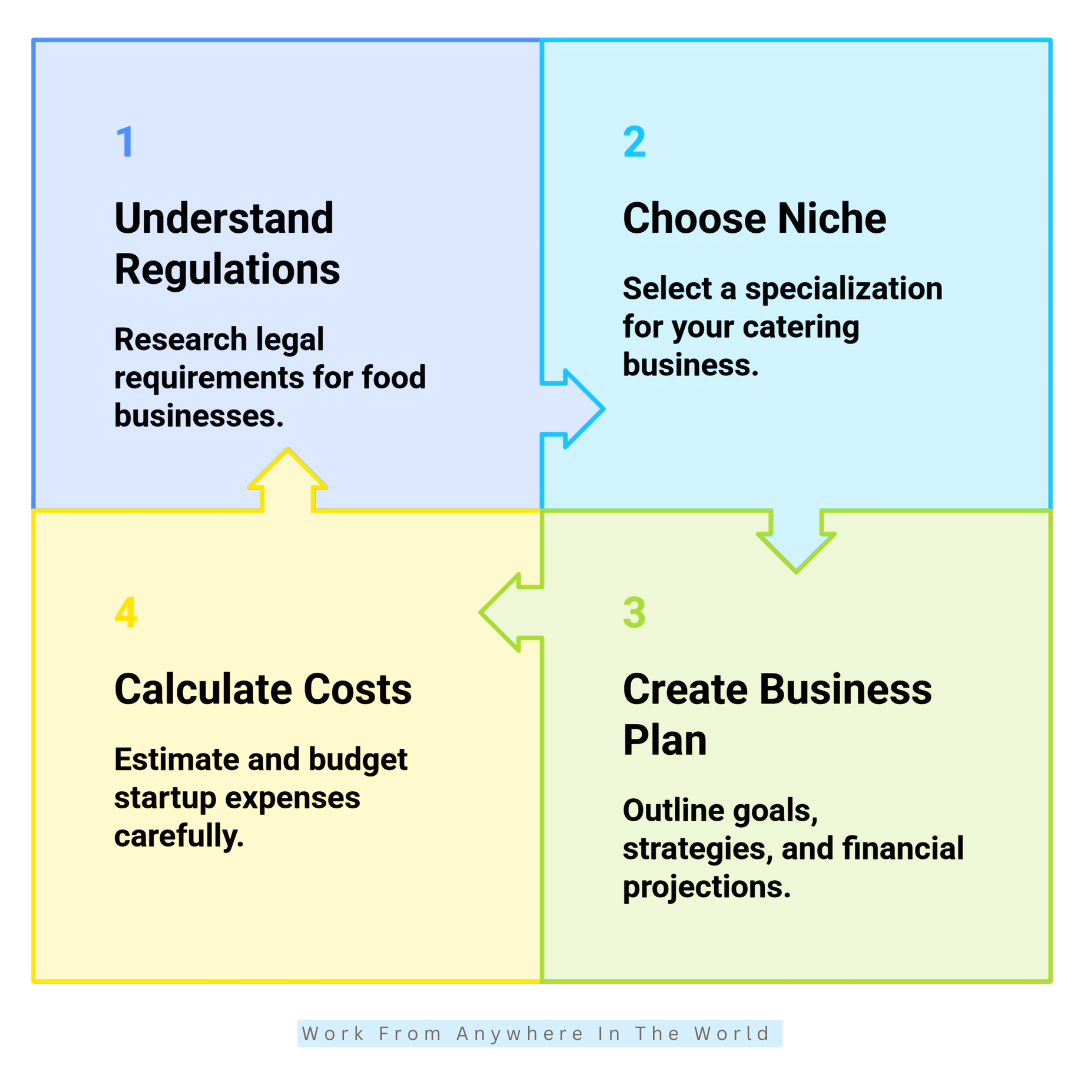
1. Understand Local Food Business Regulations
Before preparing food for paying customers, find out which rules apply to home-based catering businesses in your area. Requirements can vary considerably depending on your location and the types of food you plan to prepare.
Some jurisdictions allow certain foods to be prepared in a home kitchen, while others place additional restrictions on catering activities. You may need access to an approved commercial kitchen for particular foods or services.
Check whether you need a business licence, food-handler certification, health inspection, insurance, or other approvals. Your local public health authority and municipal business office are good places to confirm the requirements that apply to you.
It is also important to understand any rules covering food storage, preparation, transportation, labelling, and allergen information. These requirements can influence your menu and how you operate the business.
Researching the regulations before investing heavily in equipment or marketing can prevent expensive changes later. Once you know what is permitted, you can build your home catering business around those requirements.
2. Choose A Profitable Catering Niche
Trying to serve every type of customer can make it difficult to develop a recognizable catering business. Choosing a niche gives you a more focused starting point for your menu, marketing, pricing, and overall brand.
Think about the food you prepare particularly well and the type of catering you would enjoy providing. Weddings, corporate lunches, private parties, meal preparation, vegan catering, and cultural cuisine are just a few possibilities.
Your interests should also be balanced with local demand. Research other caterers in your area, the services they provide, and whether any customer needs appear underserved.
Consider the practical side of each niche as well. Some catering services require more equipment, transportation, staff, preparation space, or upfront expenses than others.
A well-chosen catering niche can make your business easier to market because potential customers quickly understand what you offer. You can always expand your services later as your experience, resources, and customer base grow.
3. Create A Detailed Business Plan
A business plan gives your catering idea structure before you begin investing significant time or money. It can help you define what you want to offer, who you want to serve, and how the business will operate.
Start with the essentials, including your catering niche, target customers, menu, pricing approach, and expected startup expenses. Consider how much you can realistically prepare from home and whether you will need additional help for larger events.
Include a marketing plan that explains how potential customers will discover your catering services. Your website, social media, local networking, referrals, and partnerships with event professionals could all play a role.
Think about your financial goals and the number of catering jobs you may need to reach them. Estimating food, packaging, transportation, labour, and other expenses can give you a more realistic picture of each event’s profitability.
Your business plan does not have to remain unchanged. Review it as you gain experience and learn more about your customers, expenses, and workload so it continues to reflect the business you are building.
4. Calculate Startup Costs Carefully
Starting from home can reduce some catering expenses, but there are still upfront costs to consider. Knowing what you may need before taking orders can help you avoid buying equipment or supplies you are not ready to use.
Begin with the requirements that allow you to operate safely and legally. Depending on your location, these may include permits, licences, insurance, food-safety training, or kitchen upgrades.
Next, consider the practical items your menu and catering style require. Cooking equipment, food storage, serving supplies, packaging, transportation containers, and ingredients can quickly add to your initial investment.
Separate essential purchases from items that can wait until the business generates income. Renting equipment for occasional larger events may also make more sense than purchasing everything immediately.
Create a startup budget based on your actual plans, not a generic catering checklist. Understanding these costs can help you decide how much money you need to begin and set prices that reflect the true cost of providing your service.
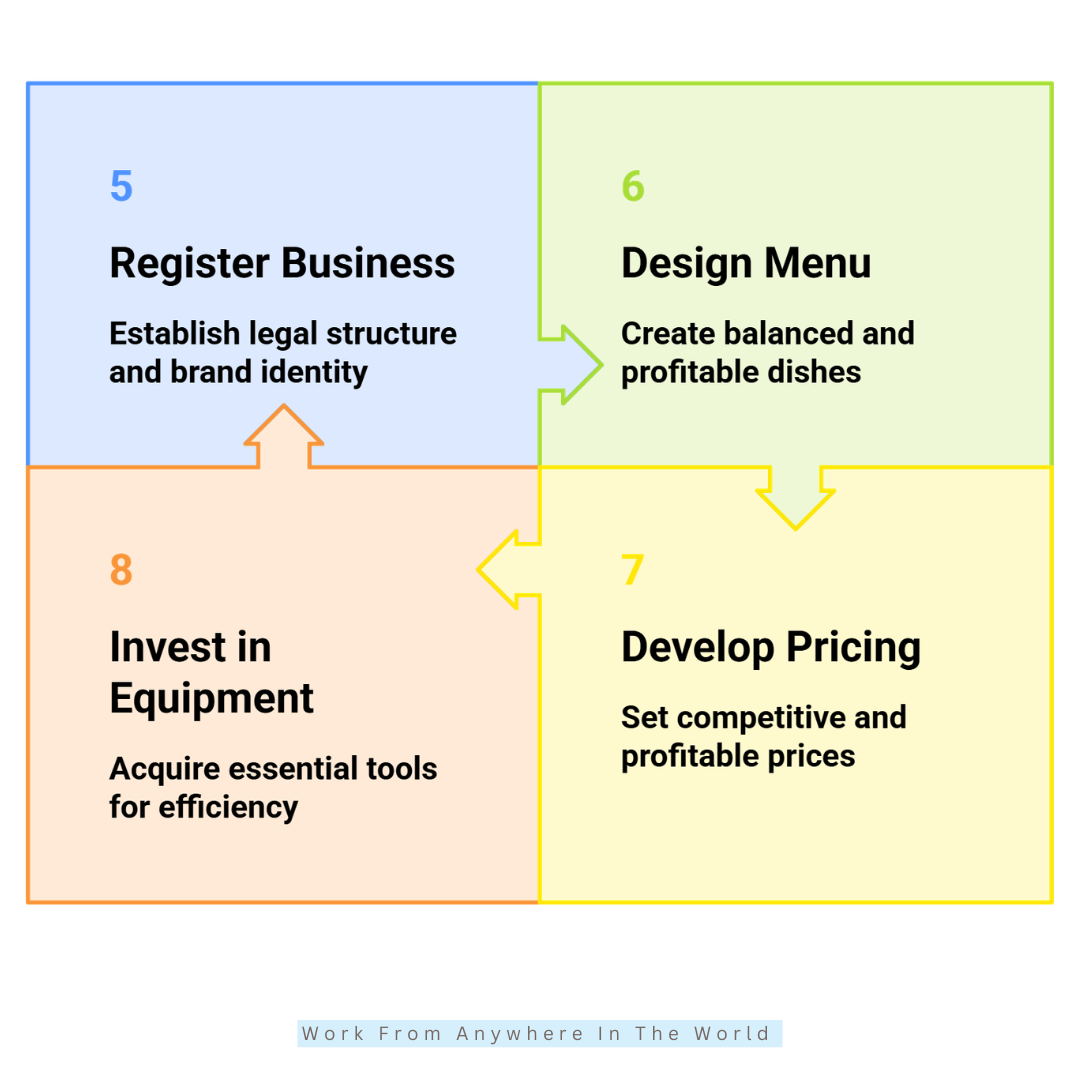
5. Register And Structure Your Business
Before taking on customers, decide how your catering business will be legally structured. The options available will depend on where you live and can affect taxes, paperwork, liability, and other responsibilities.
Some home-based businesses begin as sole proprietorships, while others choose structures that provide different legal or financial arrangements. Research the options available in your jurisdiction before deciding which one suits your situation.
You may also need to register your business name and obtain identification or registration numbers for tax purposes. Requirements can differ between municipalities, provinces, states, and countries.
Keep your business registration documents, permits, insurance information, and financial records organized from the beginning. Having everything in one place can make renewals, tax preparation, and other administrative tasks easier to manage.
Taking care of these details early gives your catering business a proper foundation. If you are unsure which structure is appropriate, consider getting advice from a qualified business or tax professional.
6. Design A Menu That Balances Quality And Profit
Your catering menu needs to appeal to customers while remaining practical and profitable to prepare. A smaller, carefully selected menu can often work better than offering too many choices.
Focus on dishes you can prepare consistently and efficiently for groups of different sizes. Consider preparation time, available kitchen space, transportation, serving requirements, and how well each dish holds after cooking.
Calculate the ingredient cost of every menu item rather than estimating. Remember to account for garnishes, sauces, packaging, and other smaller ingredients that can increase the actual cost of preparing each dish.
Depending on your niche, you may also offer options for different dietary preferences and requirements. Vegetarian, vegan, gluten-free, or other choices should only be included when you can prepare them safely and confidently.
Review your menu periodically as you learn which dishes customers enjoy and which are worthwhile to produce. Removing poor performers and refining popular options can help reduce food waste while keeping your catering menu manageable and profitable.
7. Develop An Effective Pricing Strategy
Setting catering prices involves more than adding a markup to your ingredient costs. Your prices need to cover everything required to prepare, deliver, and serve the food while leaving room for profit.
Calculate the full cost of each menu item or package. Include ingredients, preparation time, labour, packaging, transportation, equipment, setup, and any other expenses connected with fulfilling the order.
Consider how you want to charge for different types of catering. Depending on your services, you might use per-person pricing, fixed packages, minimum order amounts, or customized quotes for larger events.
Research what comparable caterers in your area offer, but avoid copying their prices without understanding their costs. Their expenses, portions, services, and business model may be very different from yours.
Review your pricing as ingredient costs and other expenses change. A sustainable catering pricing strategy should reflect the true cost of your service while providing enough profit to make each order worthwhile.
8. Invest In Essential Catering Equipment
The equipment you need will depend on your menu, the number of people you serve, and whether food is prepared entirely at home or finished at an event location.
Start with items needed for safe food preparation, storage, transportation, and serving. Depending on your catering style, this could include larger cookware, insulated carriers, coolers, storage containers, serving utensils, and chafing dishes.
Avoid buying equipment simply because it appears on a general catering checklist. Prioritize items you will use regularly and make sure you have enough storage space for everything you purchase.
For equipment needed only occasionally, renting may be more practical than buying. This can help you handle larger or unusual events without investing in items that spend most of their time in storage.
Expand your catering equipment as bookings and menu needs develop. Purchasing gradually can help control startup expenses while ensuring each new item has a practical purpose in your business.
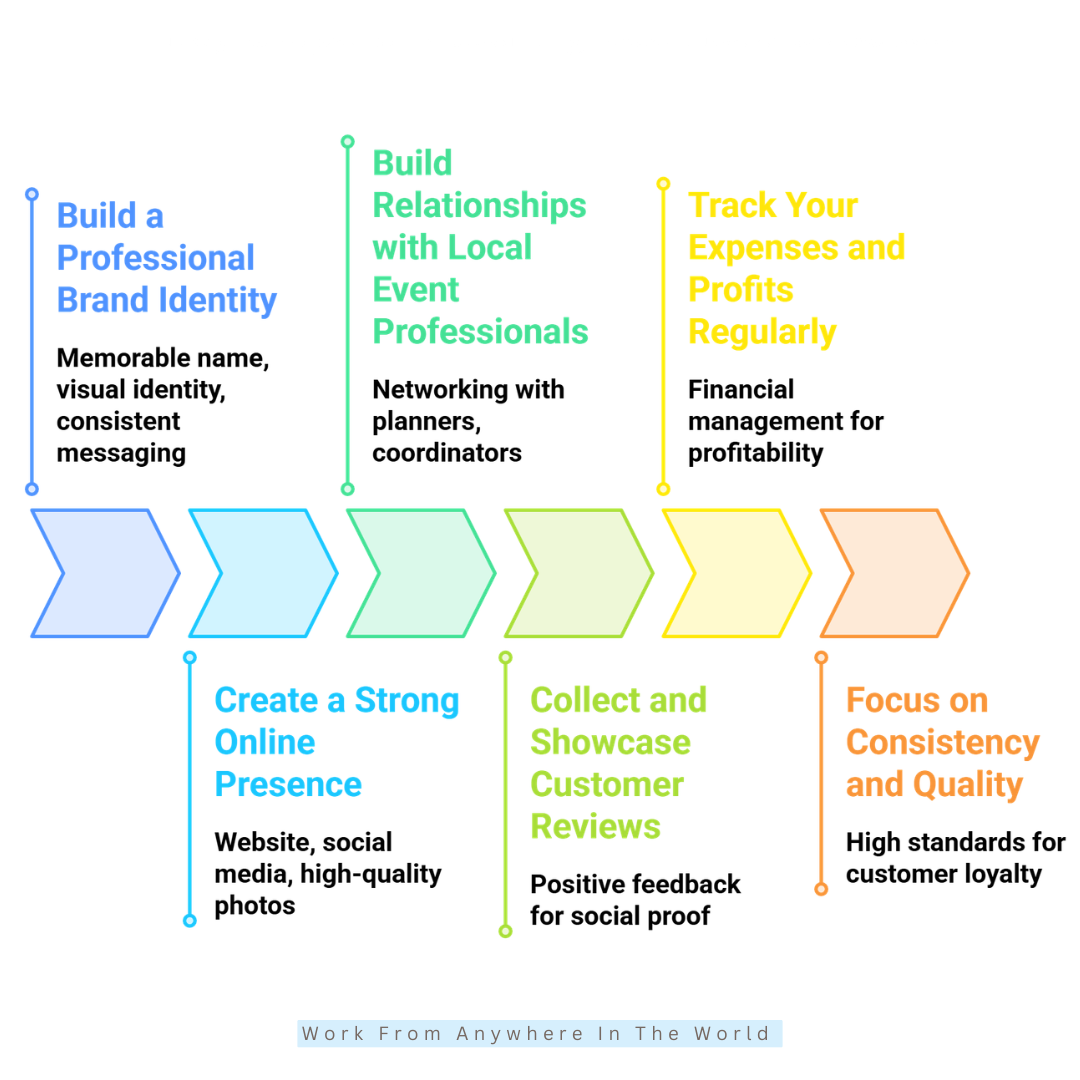
9. Build A Professional Brand Identity
Your catering brand should give potential customers an idea of what they can expect from your business. The name, visual style, messaging, food presentation, and customer experience all contribute to that impression.
Think about how you want people to describe your catering service. It might be elegant, relaxed, family-focused, creative, health-conscious, or centred around a particular cuisine or type of event.
Your brand positioning can help distinguish your catering business from competitors serving the same area. Your niche, menu, presentation, values, or approach to customer service may all contribute to what makes the business recognizable.
Carry that identity across your website, social media profiles, menus, packaging, and other marketing materials. Using recognizable elements can help customers connect these different touchpoints with the same business.
As your catering business develops, your branding can evolve with it. The goal is to create an identity that reflects what you offer and makes your business easier for customers to recognize and remember.
10. Create A Strong Online Presence
Potential customers often look online before contacting a catering business. Your website and social media profiles give them an opportunity to learn about your food, services, and catering style before making an enquiry.
Your website does not need to be complicated. Include your menu or catering options, service area, contact information, and appealing photographs that accurately represent the food you provide.
Online marketing can help more people discover your catering business. Social media, event photos, menu ideas, customer testimonials, and seasonal offerings can all introduce your services to potential customers.
Make it easy for people to take the next step once they find you. Contact forms, enquiry details, booking information, and other relevant instructions should be easy to locate on both desktop and mobile devices.
Over time, your website and social profiles can work together to strengthen your online presence. Keeping them current gives potential customers reliable information and several ways to discover and contact your catering business.
11. Build Relationships With Local Event Professionals
Other businesses in the event industry can become valuable connections for a home catering business. Event planners, wedding coordinators, venues, photographers, and rental companies often work with people who also need catering.
Start by introducing yourself to professionals whose services complement yours. Learn about their businesses before discussing referrals so the relationship feels mutually beneficial rather than purely promotional.
Local networking events, business groups, community gatherings, and industry events can provide opportunities to make these connections. You can also reach out directly when you discover a business that serves a similar audience.
Local SEO for small businesses can also help nearby customers and event professionals discover your catering services online.
Stay in contact with the people you connect with, rather than approaching them only when you need something. Referring suitable customers to their businesses can also help create a genuine two-way relationship.
Building a reliable professional network takes time, but strong connections can lead to referrals, collaborations, and new opportunities. As people become familiar with your catering services, they may be more comfortable recommending you to their own clients.
12. Collect And Showcase Customer Reviews
Customer reviews give potential clients a glimpse of what it is like to work with your catering business. Feedback about the food, presentation, reliability, and overall experience can provide reassurance before someone contacts you.
After completing an event, invite satisfied customers to leave an honest review. Make the process easy by directing them to the platform where reviews are most useful for your business.
You can also feature selected testimonials on your website and social media. Pairing them with photographs from the relevant event can give potential customers additional context about the services you provided.
Pay attention to recurring comments in your reviews. They may reveal what customers appreciate most about your catering or highlight areas where the experience could be improved.
Over time, genuine customer reviews can strengthen your reputation and provide useful social proof. Rather than simply telling people what makes your catering business different, you allow previous customers to share their experiences in their own words.
13. Track Your Expenses And Profits Regularly
Keeping accurate financial records helps you understand whether your catering business is earning what you expect. Sales alone do not show how much money remains after all the expenses connected with each order.
Track ingredient costs, packaging, transportation, equipment, marketing, insurance, and other business expenses. Smaller purchases can add up quickly, so include them rather than focusing only on your highest costs.
Review the profitability of individual menu items and catering packages as well. A popular dish may generate plenty of sales but still be less profitable if ingredients or preparation time are particularly expensive.
Accounting software or a spreadsheet can make ongoing recordkeeping easier. Choose a method you can maintain consistently rather than allowing receipts and transactions to accumulate until the end of the year.
Regular financial reviews can help you identify rising expenses and decide when pricing needs attention. Understanding your business expenses and profits also gives you better information when planning future purchases or deciding how much you can reinvest.
14. Focus On Consistency And Quality
Customers should know what to expect each time they order from your catering business. Consistent food, presentation, communication, and service can make customers more comfortable booking you again.
Use the same recipes, portion guidelines, and preparation methods whenever possible. This can help maintain flavour and presentation even when you are preparing larger quantities for an event.
Quality also extends beyond the food itself. Packaging, punctuality, cleanliness, presentation, and communication all contribute to the experience customers associate with your business.
Before each order leaves your kitchen, take a moment to check the details. Confirm quantities, special requests, serving supplies, delivery information, and anything else promised to the customer.
Consistency builds confidence because customers receive the experience they were expecting. Maintaining those standards as your catering business grows can strengthen your reputation and encourage repeat customers and referrals.
Essential Catering Equipment And Supplies To Consider
The equipment you need will depend on your menu, catering style, and the size of the events you plan to serve. Starting with the essentials can help you control expenses while still preparing and transporting food safely.
Think about the entire process, from preparing ingredients at home to delivering and serving the finished food. Each stage may require different tools, containers, or supplies to keep your work organized.
You do not need to purchase every piece of professional catering equipment immediately. Items used frequently may be worth buying, while specialized equipment for occasional events could be rented when needed.
Storage space should also influence what you purchase. Large serving equipment and transport containers can take up considerable room, especially when you are operating the business from home.
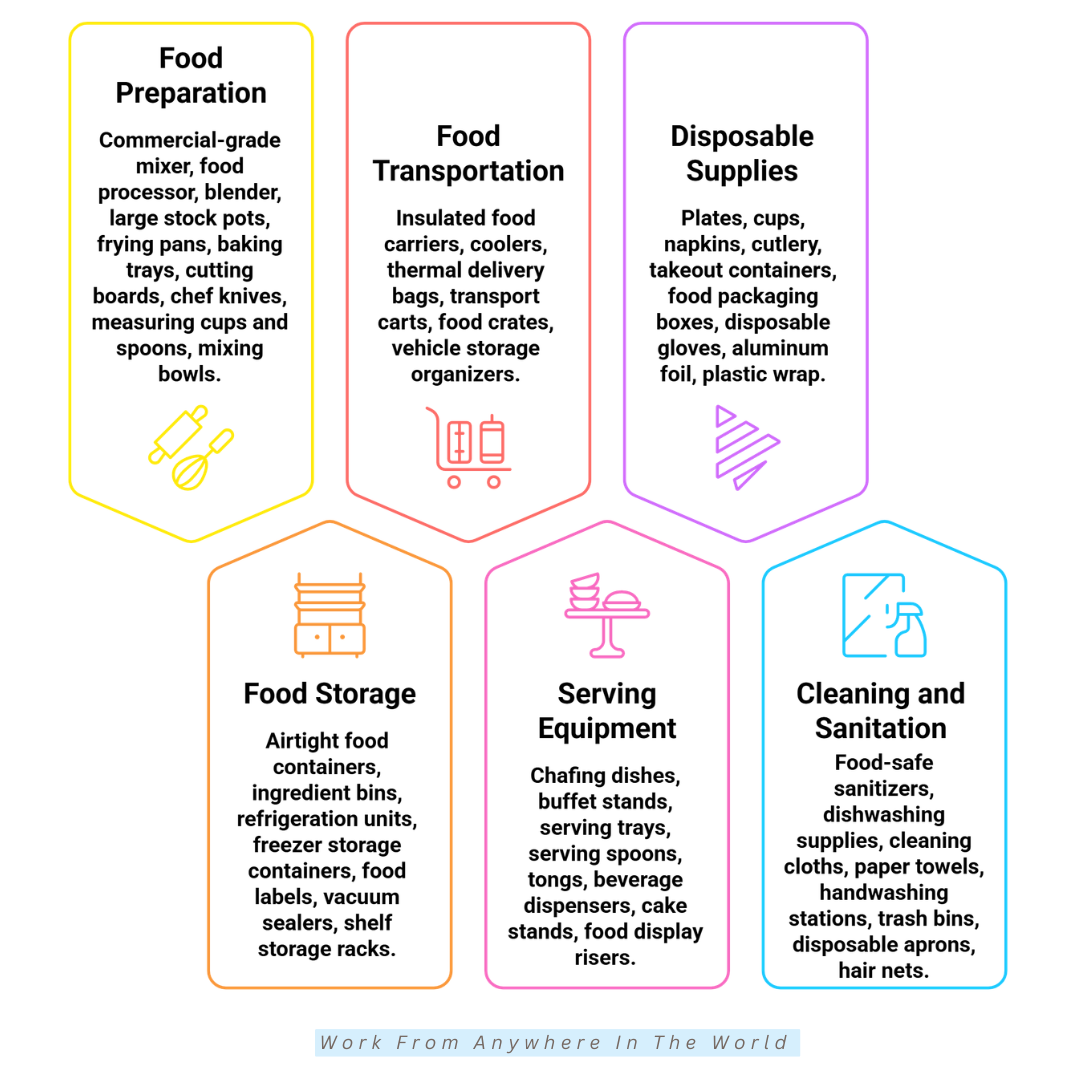
The following equipment and supplies cover the main areas involved in preparing, transporting, and serving catered food. You can gradually expand your collection as your menu, bookings, and event sizes grow.
1. Food Preparation Equipment
Food preparation equipment can make everyday catering work more efficient and manageable. The tools you need will depend largely on your menu, preparation methods, and the number of people you typically serve.
Start with equipment you expect to use regularly rather than filling your kitchen with specialized tools. Reliable cookware, knives, mixing equipment, and food processors can handle many common catering tasks.
Useful Food Preparation Equipment
- Commercial-grade mixer
- Food processor
- Blender
- Large stock pots
- Frying pans
- Baking trays
- Cutting boards
- Chef knives
- Measuring cups and spoons
- Mixing bowls
Choose equipment that suits your available kitchen and storage space. Larger or commercial-grade items may not be practical for every home-based catering operation.
As your bookings increase, you can upgrade frequently used equipment or add specialized tools when there is a genuine need. Buying gradually can help you control expenses while building a kitchen that supports your catering menu.
2. Food Storage Supplies
Proper food storage helps protect ingredients, maintain freshness, and keep your catering kitchen organized. Your storage setup should also meet the food safety requirements in your area.
Consider how ingredients will be stored before preparation as well as how prepared food will be kept until delivery or service. An organized system can make ingredients easier to find and help prevent unnecessary waste.
Useful Food Storage Supplies
- Airtight food containers
- Ingredient bins
- Refrigeration units
- Freezer storage containers
- Food labels
- Vacuum sealers
- Shelf storage racks
Label containers so that ingredients and prepared foods can be easily identified. Dating items can also help you monitor inventory and determine what should be used first.
Choose storage supplies that fit your available space and the amount of food you normally handle. As order sizes increase, you can expand your storage capacity to meet your catering business’s needs.
3. Food Transportation Equipment
Transporting food safely is an important part of catering because meals may spend considerable time away from the kitchen. The right equipment can help protect food during loading, travel, and unloading.
Consider temperature control and stability during transportation. Hot and cold foods may require different containers, while delicate dishes need protection from movement, spills, or damaged presentation.
Useful Food Transportation Equipment
- Insulated food carriers
- Coolers
- Thermal delivery bags
- Transport carts
- Food crates
- Vehicle storage organizers
Organize containers so they remain secure while the vehicle is moving. Clearly separating hot foods, cold foods, beverages, and serving supplies can also make unloading easier at the destination.
Choose transportation equipment based on the types and sizes of events you serve. As bookings grow, you can add carriers, carts, or other supplies when larger orders make them necessary.
4. Serving Equipment
Serving equipment affects both presentation and how easily guests can access the food. The items you need will depend on whether you offer buffet service, plated meals, desserts, beverages, or another catering style.
Choose pieces that suit the food you serve and are practical to transport, set up, and clean. You do not need elaborate displays for every event, but an organized presentation can make the serving area more inviting.
Useful Serving Equipment
- Chafing dishes
- Buffet stands
- Serving trays
- Serving spoons
- Tongs
- Beverage dispensers
- Cake stands
- Food display risers
Consider how each item will function during an event rather than focusing only on appearance. Serving equipment should make it easy to replenish food and keep the buffet or serving area organized.
Build your collection gradually as you learn which pieces you use most often. Specialty stands, displays, and other decorative items can be added later when particular events or menu options require them.
5. Disposable Catering Supplies
Disposable supplies can make serving, packaging, and cleanup easier, particularly for casual events, deliveries, and drop-off catering. The items you need will depend on your menu and the type of service you provide.
Choose supplies that are sturdy enough for the food being served. Hot meals, sauces, desserts, and takeaway orders may all require different types of containers or packaging.
Useful Disposable Catering Supplies
- Plates
- Cups
- Napkins
- Cutlery
- Takeout containers
- Food packaging boxes
- Disposable gloves
- Aluminum foil
- Plastic wrap
Keep track of frequently used supplies so you can reorder them before they run low. Buying commonly used items in larger quantities may also be practical when you have enough storage space.
Consider both presentation and convenience when choosing disposable products. Packaging that suits your catering style can help food arrive neatly while giving customers a consistent experience.
6. Cleaning And Sanitation Supplies
Clean food preparation and serving areas are essential when operating a catering business. Your cleaning routine should cover the kitchen, equipment, storage areas, transportation containers, and anything else that comes into contact with food.
Keep appropriate cleaning and sanitation products readily available while you work. The exact products and procedures you need should follow the food-safety requirements that apply to catering businesses in your area.
Useful Cleaning And Sanitation Supplies
- Food-safe sanitizers
- Dishwashing supplies
- Cleaning cloths
- Paper towels
- Handwashing supplies
- Trash bins
- Disposable aprons
- Hair nets
Store cleaning products separately from food and food-contact items. Establishing regular cleaning routines can also make it easier to keep work areas organized throughout preparation and cleanup.
Replace worn or depleted supplies before they become a problem during a catering job. Keeping an adequate inventory helps you maintain your sanitation routine without last-minute interruptions.
Frequently Asked Questions
Q1: Can I Start A Catering Business From Home?
Yes, but the rules for preparing and selling food from home vary by location. Some areas permit certain home-based food businesses, while others have additional requirements for catering operations.
Check with your local health authority and municipal or regional business office before accepting orders. Confirm which licences, permits, inspections, insurance, and food-safety requirements apply to your business.
Q2: How Much Money Do I Need To Start A Home Catering Business?
There is no standard amount because startup costs depend on your menu, existing kitchen equipment, local requirements, and the types of events you plan to serve.
Begin by identifying essential expenses and equipment you already own. You can purchase additional serving, storage, transportation, and preparation equipment gradually as your catering business develops.
Q3: Can I Run A Catering Business By Myself?
Yes. A small home catering business can often begin as a one-person operation, especially when you accept manageable orders and keep your menu focused.
As bookings become larger or more frequent, you may need help with food preparation, deliveries, setup, serving, or cleanup. Expanding gradually allows you to add support when the workload genuinely requires it.
Q4: How Do I Find My First Catering Clients?
Begin with people and organizations that can introduce your business to potential customers. Personal referrals, local networking, community connections, social media, and relationships with event professionals can all help generate early enquiries.
Make it easy for interested people to see what you offer. Good food photographs, menu information, contact details, and genuine customer reviews can help potential clients decide whether your service suits their event.
Q5: Should I Create A Website For My Catering Business?
A website can give potential customers one place to learn about your catering services. You can showcase your menu, food photographs, service area, testimonials, and contact or enquiry information.
It also gives you an online destination to share through social media, local listings, and other marketing channels. Keep the information up to date so customers know which services you currently offer.
Q6: Can A Home Catering Business Become A Full-Time Business?
It can, but growth will depend on factors such as demand, pricing, available kitchen space, workload, and local regulations. Increasing bookings may eventually require additional equipment, staff, preparation space, or a different business setup.
There is no need to expand before the business is ready. Growing gradually can give you time to understand your costs, refine your services, and decide what direction you want the catering business to take.
Conclusion
Learning how to start a catering business at home involves more than preparing food for customers. Planning your services, understanding local requirements, and managing the business side are equally important.
Begin with a catering niche and menu that suit your skills, available space, and resources. Careful pricing and expense tracking can help you understand whether each order is worthwhile.
Building relationships with customers and local event professionals can also create new opportunities. A professional online presence and genuine reviews can make it easier for potential clients to discover your services.
You do not need to build a large catering operation immediately. Starting with manageable orders allows you to gain experience, refine your systems, and invest in additional equipment when the business needs it.
With thoughtful planning and consistent quality, a home catering business can develop gradually. Focus on creating a service that works for you and provides customers with food and an experience they are happy to recommend.
I trust you enjoyed this article on How To Start A Catering Business At Home: 14 Essential Steps. Please stay tuned for more insightful blogs on affiliate marketing, online business, and working from anywhere in the world.
Take care!
— JeannetteZ 🌍✨
💬 Your Opinion Is Important To Me
Do you have thoughts, ideas, or questions? I’d love to hear from you. Please leave your comments below or email me directly at Jeannette@WorkFromAnywhereInTheWorld.com.
📚 More Work From Anywhere Reads
🚀 Ready to Build a Business You Can Run from Home
Or from Anywhere in the World?
Imagine creating income on your terms — from home, a cozy café, or wherever life takes you.
With the right tools, training, and community support, it’s entirely possible.
Start your own online business for free — no credit card needed.
Disclosure
This post may contain affiliate links. As an Amazon Associate and participant in other affiliate programs, I earn from qualifying purchases at no extra cost to you. Please read my full affiliate disclosure.