

How To Become A Consultant: 15 Essential Steps
Learning how to become a consultant starts with understanding how your existing knowledge and experience can help other people or businesses solve specific problems.
Consultants work across many fields, including marketing, finance, technology, management, and human resources. Their work may involve providing advice, developing strategies, improving processes, or helping clients reach defined goals.
Building a consulting business requires more than expertise in a particular field. You also need to understand your target clients, communicate your value clearly, develop suitable services, and build professional credibility.
As your business develops, skills such as networking, marketing, client management, and problem-solving can become increasingly important. A thoughtful approach can help you create services that address genuine client needs.
This guide explores how to become a consultant, from choosing your niche and developing your services to finding clients, setting rates, and building a sustainable consulting business.
What Is A Consultant?
A consultant is a professional who provides specialized advice, guidance, and solutions within a particular field. Businesses and individuals may hire consultants when they need specialized expertise, an outside perspective, or help addressing a specific challenge.
Consultants work across many industries and may help clients with areas such as:
- Business growth
- Marketing strategies
- Financial planning
- Operations improvement
- Technology implementation
- Human resources management
- Career development
Unlike regular employees, consultants typically work with clients for a particular project, objective, or period. Their role may involve identifying problems, recommending solutions, developing strategies, or helping clients improve specific areas of their business or professional life.
How To Become A Consultant: 15 Practical Steps To Get Started
Building a consulting career begins with understanding the expertise you can offer and the clients who may benefit from it. A clear direction can make the early stages much easier to navigate.
You will also need to define your services, establish credibility, and determine how you will reach potential clients. These foundations help turn professional knowledge into a structured consulting business.
As you develop your business, decisions about pricing, marketing, networking, and client relationships become increasingly important. Each area contributes to how effectively you can deliver your services.
The following 15 practical steps will help you understand how to get started and build a consulting business around your skills, experience, and professional goals.
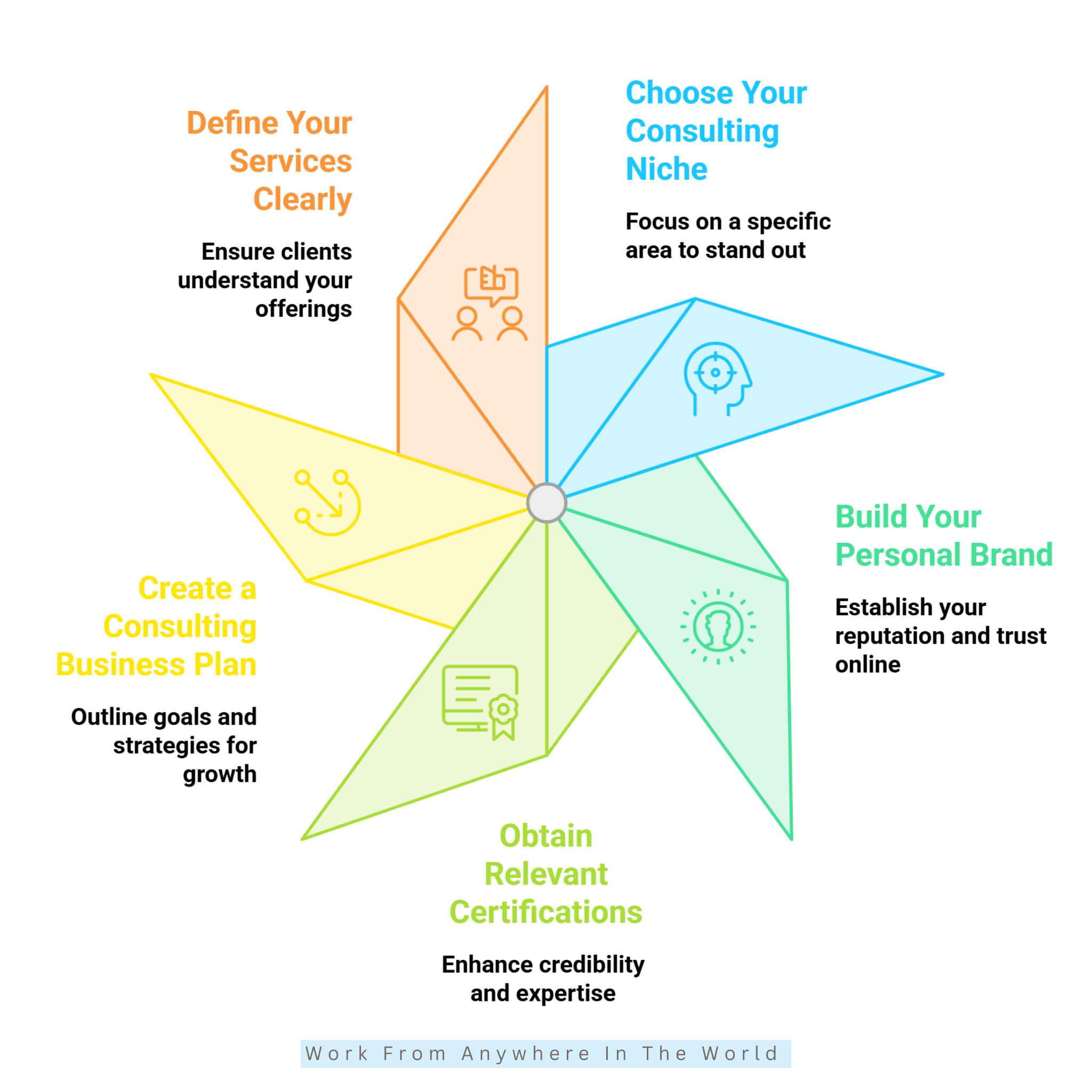
1. Choose Your Consulting Niche
Choosing a consulting niche can help you establish a clear position and reach clients who need your particular expertise. Rather than trying to serve everyone, focus on a specific target audience, industry, or type of service.
Your niche might be digital marketing for small businesses, leadership consulting for startups, or operational consulting for healthcare organizations. Ideally, it should connect your existing knowledge with a genuine client need.
A focused niche can also make it easier to develop relevant services and communicate what you offer. Potential clients can quickly understand whether your expertise matches what they are looking for.
As you gain experience, your niche can evolve based on the clients you enjoy working with and the services that generate the most interest. You do not need to define every aspect of your consulting business from the beginning.
2. Build Your Personal Brand
Your personal brand reflects your professional identity, expertise, and the value you can provide to clients. A clear and consistent presence can help potential clients understand who you are and what you specialize in.
A professional website, LinkedIn profile, and other relevant online channels can help establish your presence. Keep your messaging consistent so that your niche and consulting services are easy to recognize.
Sharing useful content is another way to demonstrate your knowledge. Articles, videos, case studies, or practical insights can show how you approach topics and challenges within your field.
Personal branding is not simply about promoting yourself. It is about demonstrating your expertise, communicating your value, and giving potential clients reasons to feel confident considering your services.
3. Obtain Relevant Certifications
Relevant certifications can strengthen your professional profile and add credibility to your consulting services. While they are not necessary in every field, they can demonstrate specialized knowledge and a commitment to professional development.
The right certification will depend on your consulting niche. Options may include qualifications in project management, marketing, finance, technology, human resources, or other areas related to the services you provide.
Certification programs can also help you stay informed about industry practices and developments. Some provide access to professional communities, events, and networking opportunities that can support your consulting career.
Practical experience remains equally important. When relevant qualifications are combined with proven skills and experience, they can help potential clients feel more confident in your ability to meet their needs.
4. Create A Consulting Business Plan
A consulting business plan provides direction for your business and helps turn your ideas into clear, achievable goals. It can define your target clients, services, marketing approach, and plans for future growth.
Your plan does not need to be complicated. Focus on the areas that will guide your decisions, such as your pricing strategy, marketing methods, financial goals, and the resources needed to operate your business.
A clear plan can also help you evaluate opportunities and decide where to focus your time and resources. As your consulting business develops, you can adjust it to reflect new services, clients, or priorities.
Reviewing your plan periodically keeps it relevant as your goals change. This flexibility allows your business strategy to develop alongside your experience and the needs of your clients.
5. Define Your Services Clearly
Potential clients should be able to understand what you offer and how your services may help them. Clear service descriptions make your expertise easier to communicate and can reduce uncertainty during initial conversations.
Rather than describing your services too broadly, focus on the specific areas where you provide support. For example, business consulting might include customer retention strategies, sales process improvements, or operational assessments.
Explain what each service involves, who it is designed for, and the type of challenge it addresses. This information can help potential clients determine whether your expertise matches their needs.
Clear services also strengthen your website, proposals, and other marketing materials. As your consulting experience develops, you can refine your offerings based on client needs and the work you most want to pursue.
6. Set Competitive Pricing
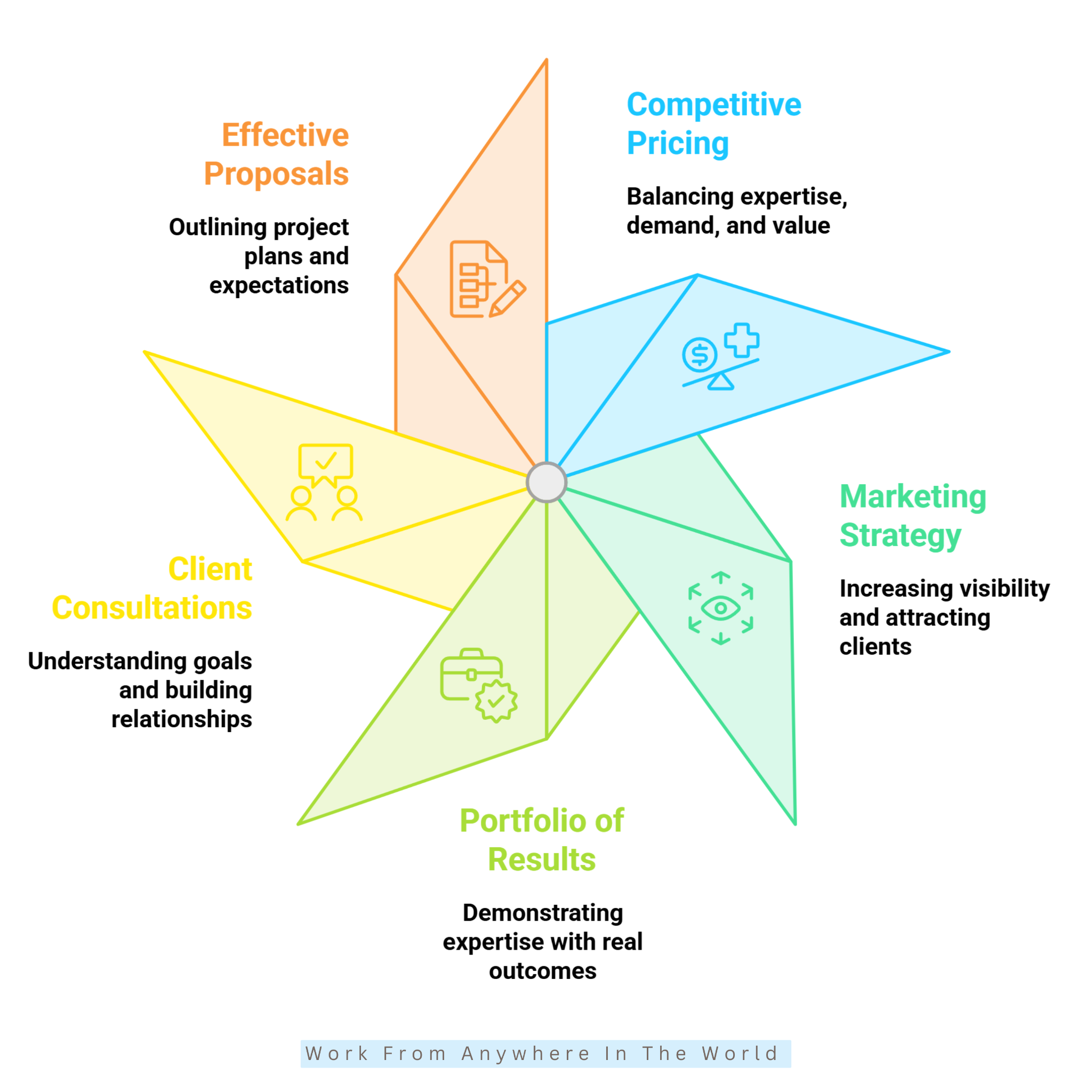
Setting your consulting rates requires considering your expertise, experience, operating costs, and the type of services you provide. Researching comparable consulting services can also give you a useful starting point.
Consultants may charge by the hour, by project, or on a retainer, depending on the nature of the work. Each approach has advantages, so choose a pricing structure that fits your services and client relationships.
Consider the scope and complexity of each project when preparing your rates. Clearly explaining what is included can also help clients understand what they are paying for and reduce misunderstandings later.
Your pricing does not need to remain fixed as your consulting business develops. Review it periodically as your experience, services, costs, and client needs change.
7. Develop A Strong Marketing Strategy
A strong marketing strategy helps potential clients discover your consulting services and understand the expertise you provide. Even experienced consultants need visibility to connect with people and businesses that may need their support.
Your marketing strategy might include content marketing, networking, social media, email marketing, and referrals. Choose methods that make sense for your niche and where your potential clients are most likely to spend their time.
Sharing useful content can demonstrate your knowledge before a potential client contacts you. Articles, videos, case studies, or professional insights can also help answer common questions within your field.
Networking and professional communities can help you develop relationships with potential clients and other professionals. Referrals may also become increasingly valuable as you complete projects and build your reputation.
Marketing usually works best as an ongoing activity rather than something you do only when you need a new client. A consistent approach can help maintain visibility and support the gradual development of your consulting business.
8. Build A Portfolio Of Results
A strong portfolio demonstrates your experience and gives potential clients examples of what you can do. It can help turn your professional background and previous work into tangible evidence of your capabilities.
Include relevant case studies, project summaries, testimonials, performance data, or examples of completed work. Whenever appropriate, highlight measurable results such as improved efficiency, increased website traffic, stronger customer retention, or reduced operating costs.
If you are new to consulting, your portfolio does not have to contain consulting projects exclusively. Relevant freelance work, previous professional achievements, volunteer projects, or your own business experience may also demonstrate valuable skills.
Keep your portfolio organized and focused on the type of consulting services you want to provide. As you complete new projects, update it with stronger examples that reflect your developing expertise and the clients you hope to attract.
9. Learn How To Conduct Client Consultations
Client consultations are an opportunity to understand a potential client's goals, challenges, and expectations. They can also help both parties determine whether the consulting relationship is a suitable fit.
Focus on listening carefully and asking relevant questions rather than immediately promoting your services. Understanding the client's situation can help you identify their priorities and determine where your expertise may be useful.
Ask about the challenges they are facing, what they hope to accomplish, and any previous approaches they have tried. These details can provide valuable context before you recommend possible solutions.
A thoughtful consultation also sets expectations for communication, responsibilities, and next steps. Showing genuine interest in the client's needs can help establish trust and create a stronger foundation for a productive working relationship.
10. Create Effective Proposals
A professional proposal turns your discussions with a potential client into a clear plan for the project. It should explain the work you will provide, expected outcomes, timelines, pricing, and responsibilities.
Tailor each proposal to the client's specific needs rather than relying entirely on a generic template. Show how your services address the challenges and priorities identified during your initial consultation.
Include clear deliverables, project milestones, and any relevant goals or measures of progress. This information helps both parties understand what the project includes and what they can expect throughout the engagement.
A well-structured proposal can also reduce misunderstandings by establishing expectations before work begins. As you gain consulting experience, you can refine your proposal process based on the projects and clients you work with.
11. Deliver Exceptional Client Experiences
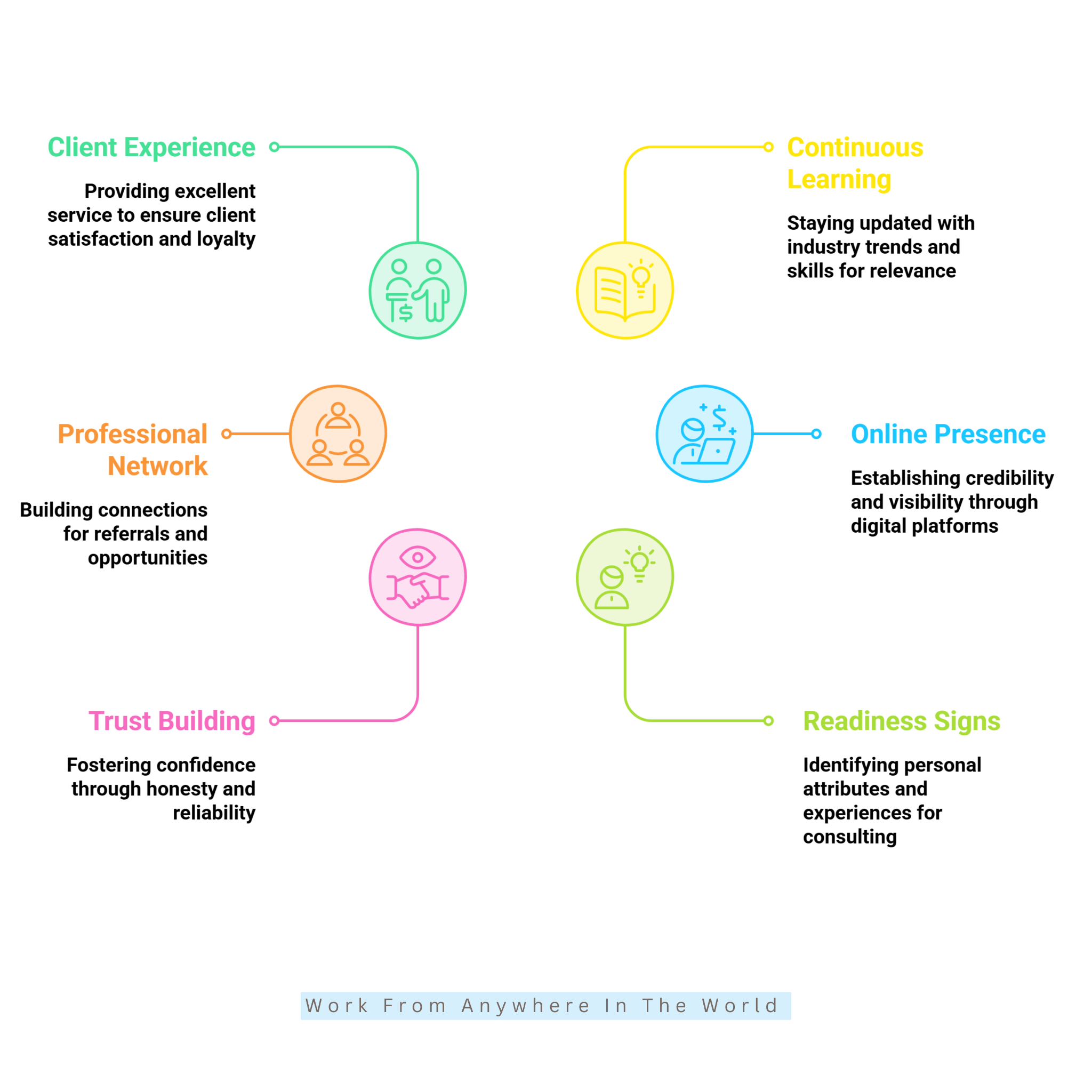
Providing a positive client experience can strengthen professional relationships and support the long-term growth of your consulting business. The way you communicate and manage a project can be just as important as the work you deliver.
Keep clients informed about progress, respond to questions within a reasonable timeframe, and communicate clearly when plans or timelines change. Consistent communication helps clients understand what is happening throughout the project.
Reliability also matters. Meeting agreed deadlines, following through on commitments, and addressing concerns professionally can help establish trust and demonstrate that clients can depend on you.
Satisfied clients may return for additional services or recommend you to others. Strong client relationships can therefore contribute to repeat business, referrals, and a positive professional reputation.
12. Continue Learning And Improving
Consulting fields change as new technologies, business practices, regulations, and customer expectations emerge. Continuing to learn can help you keep your knowledge relevant and provide clients with informed guidance.
Choose learning opportunities that relate directly to your niche and the services you provide. Professional courses, certifications, industry publications, webinars, podcasts, and conferences can all help you develop your knowledge.
Your client work can also provide valuable learning opportunities. Each project may expose you to different challenges, industries, tools, and approaches that strengthen your practical experience.
Pay attention to areas where your knowledge could improve and seek additional training when appropriate. Ongoing professional development can help you adapt your services as your industry and clients' needs evolve.
13. Build A Strong Professional Network
A strong professional network can help you develop relationships with potential clients, referral partners, industry specialists, and other consultants. These connections may lead to opportunities that are difficult to find through marketing alone.
Professional networking can take place online through professional platforms and communities or in person at conferences, workshops, and business events. Focus on places where people connected to your consulting niche are likely to participate.
Effective networking is about developing genuine professional relationships rather than simply promoting your services. Participate in discussions, share useful insights, ask thoughtful questions, and look for opportunities to support others.
Professional relationships usually develop gradually. Staying in contact with relevant connections can support referrals, collaboration, knowledge sharing, and new opportunities as your consulting business develops.
14. Establish Your Online Presence
A professional online presence makes it easier for potential clients to find your consulting services and learn about your expertise. It also gives you a place to explain what you offer and who you help.
Start with a professional website that clearly presents your services, experience, and contact information. A well-developed LinkedIn profile can complement your website and help you connect with people in your industry.
Publishing useful content can further demonstrate your knowledge. Articles, case studies, videos, or insights about relevant industry topics can show potential clients how you approach problems within your field.
Keep your information and messaging consistent across the platforms you use. As your experience grows, update your website and professional profiles to reflect new services, accomplishments, and areas of expertise.
15. Focus On Building Trust
Trust is essential in consulting because clients may share confidential information and rely on your guidance when making important decisions. Building that trust begins with honesty, professionalism, and clear communication.
Be transparent about what your services include and avoid promising outcomes you cannot guarantee. Setting realistic expectations from the beginning can help prevent misunderstandings and strengthen the working relationship.
Reliability and confidentiality are equally important. Follow through on commitments, respect agreed deadlines, communicate when circumstances change, and handle client information responsibly.
Trust develops through consistent actions throughout the consulting relationship. When clients feel respected and confident in your work, they may be more likely to return for additional services or recommend you to others.
6 Signs You Are Ready To Become A Consultant
There is no single point when everyone is ready to begin consulting. However, certain signs can indicate that your knowledge, experience, and professional skills could translate well into consulting services.
Readiness is not necessarily about having a particular job title or reaching a certain stage in your career. What matters more is whether you have useful expertise and can apply it to problems other people or businesses need help solving.
Your communication skills, practical experience, and ability to understand different situations are also important. Consulting requires you to turn what you know into guidance that clients can understand and use.
The following 6 signs can help you determine whether consulting might be a suitable next step for your skills, experience, and professional goals.
1. People Regularly Ask For Your Advice
If colleagues, clients, or other professionals frequently turn to you for guidance, they may already recognize your knowledge in a particular area. Pay attention to the subjects and problems they consistently ask you about.
Recurring questions can reveal areas where your experience is particularly valuable. They may also help you identify problems that businesses or individuals are willing to seek outside help solving.
Consider whether you enjoy answering these questions and helping people work through their challenges. Consulting requires both expertise and an interest in applying that knowledge to other people's situations.
These conversations may even provide clues about a potential consulting niche. Look for patterns in the people seeking your advice and the type of support they need.
2. You Have Practical Experience
Consulting relies on more than theoretical knowledge. Practical experience can help you understand the challenges clients face and provide recommendations based on situations you have encountered yourself.
Your experience might come from employment, running a business, freelance projects, volunteer work, or other professional activities. What matters is whether it relates to the services you plan to provide.
Think about the problems you have solved, projects you have completed, and responsibilities you have handled. These experiences can help you identify where your strongest consulting skills lie.
You do not need experience in every aspect of your field. A focused area of expertise may be enough to develop consulting services for a particular problem or client type.
3. You Can Solve Specific Problems
Consultants are generally hired because clients need help addressing particular challenges. Being able to identify problems, evaluate possible solutions, and recommend practical next steps is therefore an important consulting skill.
Consider the types of problems you already know how to address. They might involve marketing, operations, technology, finances, productivity, management, or another area related to your experience.
Effective problem-solving also involves understanding that every client is different. A solution that worked in one situation may need to be adapted to another client's circumstances and goals.
Clearly defining the problems you can help solve can also make your consulting services easier to explain. Potential clients should be able to understand where your expertise may benefit them.
4. You Communicate Clearly
Consultants need to communicate ideas, recommendations, and sometimes complex information in ways clients can understand. Strong communication involves both explaining your ideas and listening carefully to others.
Asking thoughtful questions can help you understand a client's situation before recommending solutions. Listening also reduces the risk of making assumptions about what the client needs.
Written communication is important as well. Emails, proposals, reports, presentations, and project updates should clearly explain relevant information and expectations.
Good communication does not mean having all the answers immediately. Being transparent when you need additional information or research can also contribute to a professional consulting relationship.
5. You Enjoy Helping Others
Consulting involves working with people who may have different priorities, personalities, and approaches to problems. An interest in understanding and helping others can make these relationships easier to develop.
The work is not simply about demonstrating what you know. Your expertise becomes valuable when you can apply it to a client's individual circumstances and goals.
Patience can also be important, particularly when a client needs time to understand or implement your recommendations. Progress may happen gradually rather than immediately.
If you enjoy sharing knowledge, solving problems, and seeing others make progress, consulting may provide a satisfying way to use your professional experience.
6. You Are Willing To Keep Learning
Consultants do not need to know everything about their field. However, they should be willing to continue learning as industries, technologies, regulations, and client expectations change.
Professional development might include courses, certifications, industry publications, conferences, webinars, or conversations with other professionals. Client projects themselves can also provide valuable learning experiences.
Being open to feedback is another part of professional growth. Feedback from clients and colleagues can help you identify strengths as well as areas where your services could improve.
A willingness to adapt can help keep your knowledge and consulting services relevant. It can also help you recognize new opportunities as your experience and industry develop.
Wealthy Affiliate – Mini Review
If you’ve ever thought about turning your blog, passion, or niche into an online business,
Wealthy Affiliate (WA) is one of the most beginner-friendly platforms I’ve used.
It combines step-by-step training, website hosting, AI-powered tools,
keyword research, and an active community all in one place.
What I like most is that you can start free (no credit card needed), explore the platform,
test the tools, and connect with other entrepreneurs before upgrading.
WA isn’t a “get rich quick” scheme — success comes from consistent effort
and applying what you learn over time.
8 Common Challenges New Consultants Face And How To Overcome Them
Starting a consulting business can bring challenges that are difficult to anticipate before working with clients. Recognizing them early can make it easier to prepare and respond when they arise.
New consultants may need to build credibility, find clients, establish suitable pricing, and manage several business responsibilities at once. These areas often become easier as experience and professional relationships develop.
Some challenges involve running the business, while others relate to communication, confidence, or keeping professional knowledge current. Developing practical systems can help you manage these different responsibilities.
The following eight common challenges highlight issues new consultants may encounter and practical ways to address them as their consulting business develops.
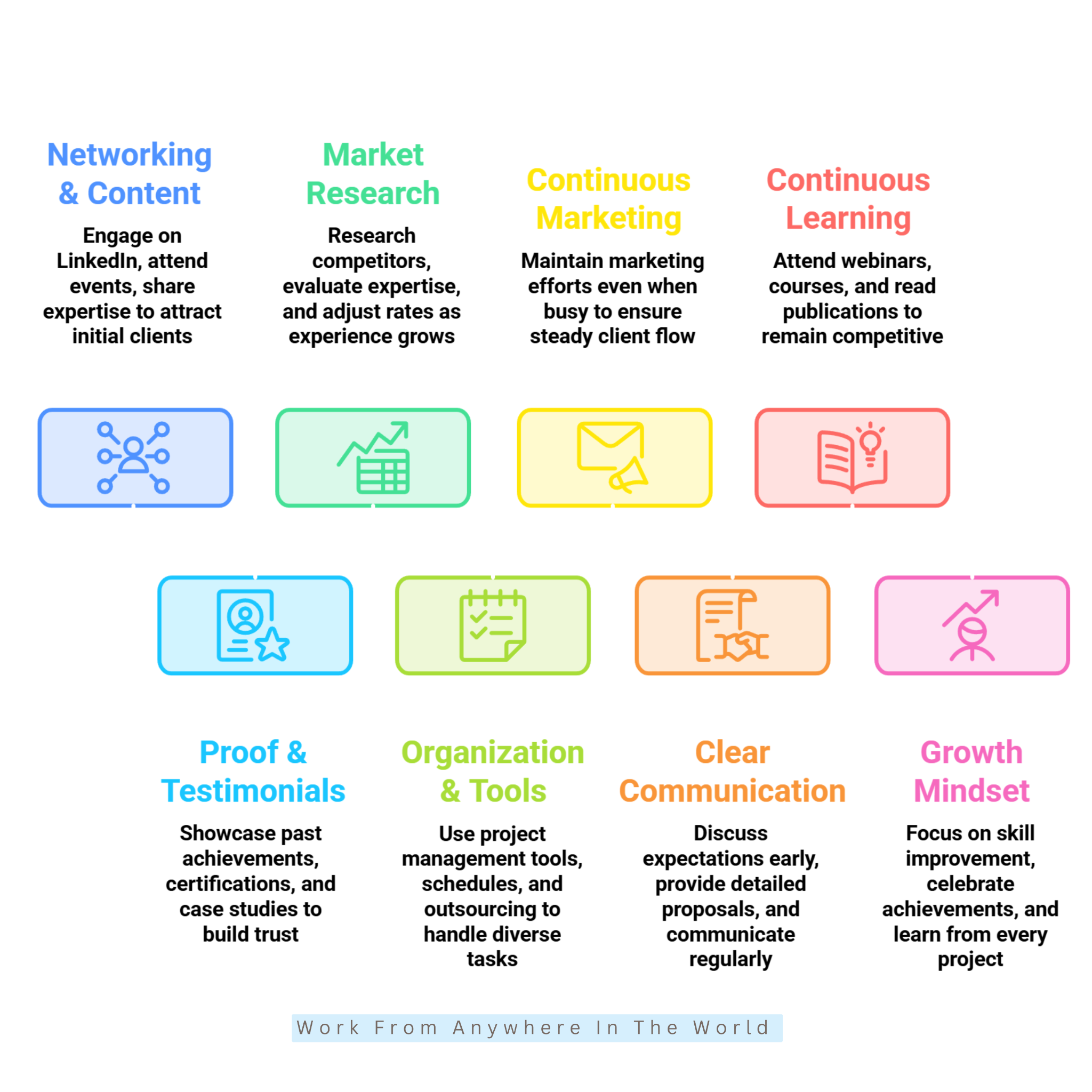
1. Finding The First Clients
Finding your first consulting clients can be challenging when you have limited visibility, few referrals, and no established consulting track record. Start by looking at professional relationships you have already developed.
Former colleagues, business contacts, and people within your professional network may know someone who needs your expertise. Letting relevant contacts know about your consulting services can create opportunities without relying entirely on cold outreach.
Networking, LinkedIn, professional communities, and industry events can also help you meet potential clients. Focus on developing genuine relationships rather than approaching every conversation as a sales opportunity.
Sharing useful content related to your niche can further demonstrate your knowledge. As you complete your first projects, testimonials and referrals can gradually make attracting future clients easier.
2. Establishing Credibility
Potential clients need reasons to feel confident that you understand the problems they want help solving. When you are new to consulting, you may not yet have testimonials or consulting case studies to demonstrate that experience.
Start with relevant accomplishments from your existing professional background. Previous projects, measurable results, specialized experience, and appropriate certifications can all help demonstrate your capabilities.
You can also build credibility by publishing educational content or sharing thoughtful insights within your field. This allows potential clients to see how you approach topics and problems before deciding whether to contact you.
As you complete consulting projects, add relevant testimonials, case studies, or results to your portfolio. Your credibility can then develop alongside your consulting experience.
3. Setting The Right Pricing
Setting consulting rates can be difficult when you have little experience pricing your own services. Charging too little may make the business difficult to sustain, while rates that do not match your market or experience can make attracting clients harder.
Research comparable consulting services and consider your expertise, operating expenses, project complexity, and the amount of work involved. Different services may also require different pricing structures.
Hourly, project-based, and retainer pricing can each be appropriate in different circumstances. Clearly defining what is included in your rate is just as important as deciding what to charge.
Review your pricing as your experience and services develop. Your initial rates do not need to become permanent rates for your consulting business.
4. Managing Multiple Responsibilities
Independent consultants often manage more than client projects. Marketing, sales, invoicing, scheduling, administration, and professional development may all compete for your attention.
Creating a structured schedule can help separate client work from other business responsibilities. Prioritize tasks based on deadlines and importance rather than trying to handle everything at once.
Project management, scheduling, and invoicing tools can also reduce repetitive administrative work. Choose tools that solve genuine problems rather than creating an unnecessarily complicated system.
As your workload grows, consider whether certain tasks can be automated or outsourced. This can free up more time for activities that require your particular expertise.
5. Building A Consistent Client Pipeline
Consulting workloads can fluctuate, particularly when you depend on a small number of projects or clients. A busy period can quickly be followed by fewer opportunities if marketing stops completely.
Continue maintaining visibility even when you have active projects. This might include networking, publishing content, staying connected with previous clients, or asking satisfied clients for referrals.
Keeping track of potential clients and previous conversations can also make follow-up easier. Not every prospective client will be ready to hire a consultant when you first meet them.
A consistent pipeline does not guarantee a constant workload, but ongoing marketing and relationship building can reduce your dependence on finding new clients only when existing projects end.
6. Handling Client Expectations
Problems can arise when clients and consultants have different understandings of project scope, responsibilities, timelines, or expected outcomes. Clear expectations should therefore be established before work begins.
Discuss the client's goals and clarify what your services will and will not include. A detailed proposal or agreement can document deliverables, timelines, responsibilities, and other important project details.
Communication should continue after the project begins. Provide appropriate updates and address changes or concerns before they develop into larger misunderstandings.
If a client requests work beyond the original scope, discuss how the change will affect the project before proceeding. Clear boundaries can protect both the consultant and the client.
7. Staying Current With Industry Changes
Consultants need relevant knowledge to provide useful guidance. Changes in technology, regulations, business practices, or customer behaviour can affect the recommendations appropriate for your clients.
Choose reliable sources within your field and make professional learning part of your regular routine. Industry publications, courses, webinars, conferences, and appropriate certifications can all contribute to ongoing development.
You do not need to follow every new trend. Concentrate on developments that affect your niche, services, and the challenges your clients are facing.
Continuing to develop your knowledge can also reveal opportunities to improve or expand your services. The goal is to remain useful and informed rather than simply keeping up with every industry change.
8. Maintaining Confidence During Growth
Confidence can be difficult when you are making decisions independently and encountering unfamiliar situations. New consultants may question their pricing, recommendations, or ability to handle more complex projects.
Focus on the areas where you have genuine knowledge and experience rather than expecting yourself to know everything. Recognizing the limits of your expertise is part of working professionally.
Review completed projects, client feedback, and skills you have developed when evaluating your progress. These provide more useful evidence of your abilities than comparing your business with consultants at a different stage.
When you encounter something outside your expertise, research it, seek appropriate professional input, or be transparent with the client. Confidence in consulting can develop gradually through preparation, experience, and sound professional judgement.
Frequently Asked Questions
Q1: What Does A Consultant Do?
A consultant provides specialized advice and guidance to businesses or individuals facing particular challenges. Their work may involve analyzing problems, developing strategies, improving processes, or recommending solutions.
The exact role depends on the consultant's field and the client's needs. Consultants may work on individual projects, provide ongoing support, or advise clients during periods of change.
Q2: Do I Need A Degree To Become A Consultant?
Not always. Requirements vary considerably depending on the consulting field, and some areas may require particular qualifications, licences, or professional credentials.
In other fields, relevant experience, specialized knowledge, professional certifications, and demonstrated skills may be more important. Research the expectations and requirements within your particular consulting niche.
Q3: Can I Become A Consultant Without Consulting Experience?
You do not necessarily need previous experience working specifically as a consultant. Professional experience in the field you plan to advise clients on can provide an important foundation.
Freelance projects, previous employment, volunteer work, or business experience may also demonstrate relevant skills. What matters is whether you have sufficient knowledge and experience to provide useful guidance within your chosen area.
Q4: What Skills Are Important For Consultants?
Useful consulting skills include communication, problem-solving, analytical thinking, organization, relationship building, and time management. Strong knowledge of your particular field is also important.
Consultants also need to listen carefully and adapt their approach to different clients and situations. Business skills such as marketing, networking, and project management can become valuable when working independently.
Q5: How Do Consultants Find Clients?
Consultants can find clients through professional networking, referrals, content marketing, social media, industry communities, and their own websites. The most suitable methods depend on the consulting niche and target audience.
Building relationships and demonstrating your expertise can support these efforts. As your client base develops, previous clients and professional contacts may also become valuable sources of referrals.
Q6: Should I Create A Website For My Consulting Business?
A website can provide a central place to explain your services, expertise, experience, and contact information. It can also help potential clients learn more about your consulting business before contacting you.
Your website might include service descriptions, case studies, testimonials, educational content, or examples of previous work. Keep the information up to date and make it easy for potential clients to contact you.
Conclusion
Becoming a consultant is a process that develops through experience, preparation, and strong professional relationships. You do not need to have every aspect of your consulting business established before taking the first steps.
Start with a clear niche and services that reflect your existing strengths. From there, you can develop your pricing, marketing, client processes, and professional presence as you learn what works for your business.
Working with clients will provide opportunities to refine your approach and strengthen your skills. Each project can help you better understand the types of clients, challenges, and services that suit your consulting goals.
Continue building your knowledge, maintaining professional standards, and adapting your services when necessary. A thoughtful and consistent approach can help you develop a consulting business that reflects your expertise and the kind of work you want to pursue.
I trust you enjoyed this article on How To Become A Consultant. Please stay tuned for more insightful blogs on affiliate marketing, online business, and working from anywhere in the world.
Take care!
— JeannetteZ 🌍✨
💬 Your Opinion Is Important To Me
Do you have thoughts, ideas, or questions? I’d love to hear from you. Please leave your comments below or email me directly at Jeannette@WorkFromAnywhereInTheWorld.com.
📚 More Work From Anywhere Reads
🚀 Ready to Build a Business You Can Run from Home
Or from Anywhere in the World?
Imagine creating income on your terms — from home, a cozy café, or wherever life takes you.
With the right tools, training, and community support, it’s entirely possible.
Start your own online business for free — no credit card needed.
Disclosure
This post may contain affiliate links. As an Amazon Associate and participant in other affiliate programs, I earn from qualifying purchases at no extra cost to you. Please read my full affiliate disclosure.