

How To Write A Winning Business Plan: 13 Essential Steps
Learning how to write a winning business plan can give your business a clearer sense of direction. A strong plan turns your ideas into an organized roadmap for moving forward.
Whether you’re launching a startup, expanding an existing company, or seeking funding, a business plan helps organize your priorities. It brings your goals, target market, operations, and financial expectations together in one place.
A thoughtful plan can also help you evaluate opportunities, anticipate challenges, and make more informed decisions. When circumstances change, you have a foundation you can review and adjust.
This guide walks you through the essential steps to create a business plan that is practical, professional, and designed to support long-term growth.
What Is A Business Plan?
A business plan is a written document that explains how a business will operate, grow, and work toward its goals. It brings important information about the business together in one organized place.
It typically covers areas such as market research, financial planning, operations, and marketing. These details can help business owners evaluate their ideas and determine what resources they may need.
Lenders and investors may also use a business plan to assess a company’s potential before making financial decisions. A clear plan helps communicate how the business intends to generate revenue and develop over time.
A business plan is also useful as an internal guide. Business owners can use it to monitor progress, adjust strategies, and keep their decisions aligned with their long-term objectives.
Types Of Business Plans
Business plans can serve different purposes depending on a company’s stage, size, and goals. A new business may need a different type of plan than an established company preparing for expansion.
Some plans provide a detailed overview of the entire business, while others focus on a specific goal or growth period. Choosing the right format helps ensure the plan contains the information its intended readers need.
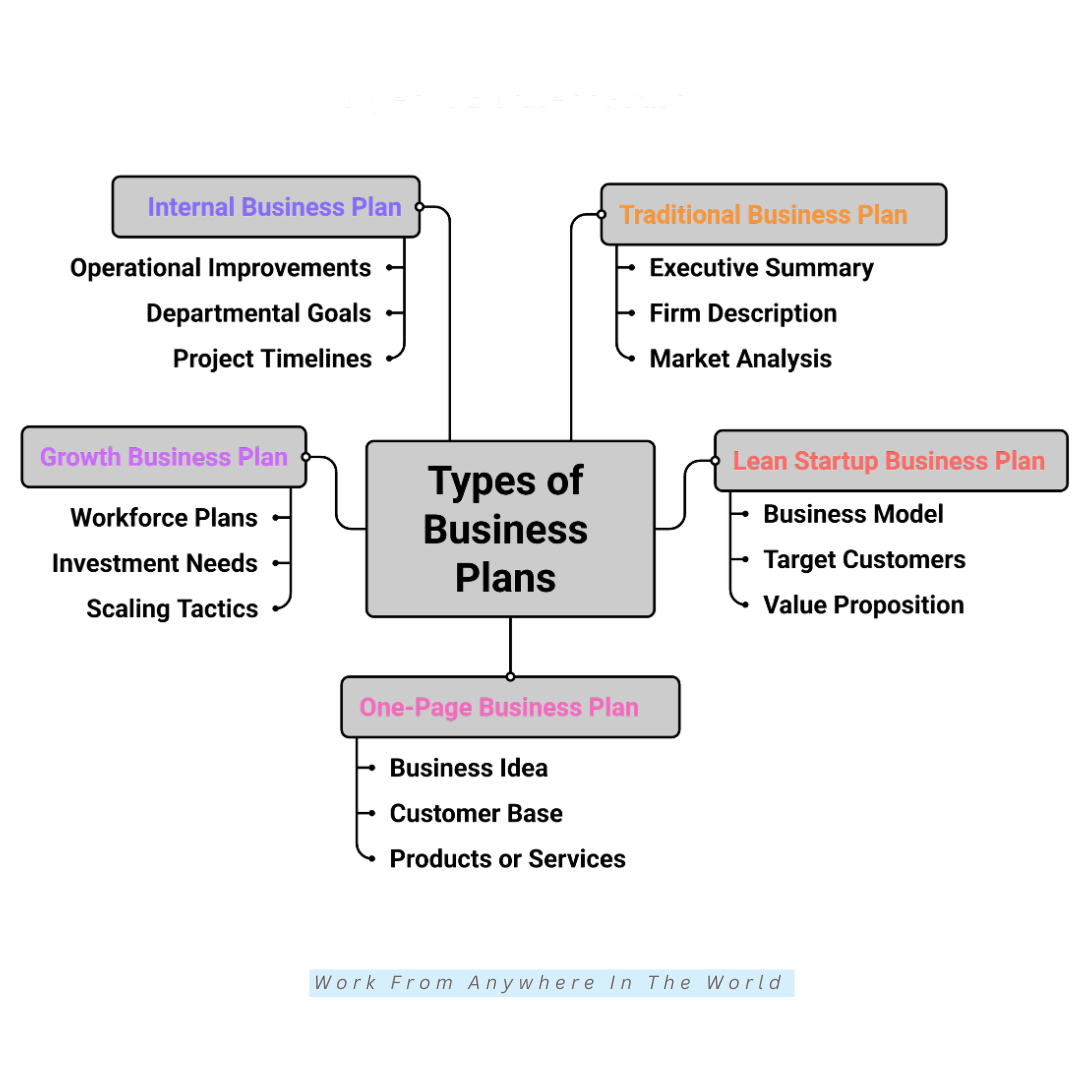
Understanding the main types of business plans can help you decide which approach best suits your situation. The following options are among the most commonly used.
1. Traditional Business Plan
A traditional business plan is a detailed format that covers the major areas of a business. It is commonly prepared when seeking financing or presenting a business opportunity to potential investors.
The plan typically includes an executive summary, company description, market analysis, marketing strategy, operations, management structure, and financial projections. Together, these sections provide a comprehensive picture of how the business intends to operate and grow.
This format is also useful for long-term business planning because it provides a detailed reference point. The plan can be reviewed and updated as business goals, financial performance, or market conditions change.
2. Lean Startup Business Plan
A lean startup business plan focuses on the most important elements of a business rather than providing extensive detail. It is designed to be concise, flexible, and easy to update as the business develops.
The plan typically covers the business model, target audience, value proposition, key activities, revenue streams, and growth strategy. This provides a useful framework without requiring a lengthy traditional business plan.
This format can work particularly well for startups that expect to refine their ideas based on customer feedback. Changes can be incorporated as the business learns more about its market and audience.
A lean plan can also support quicker decision-making during the early stages of a business. As the company becomes established, the plan can be expanded with additional details when needed.
3. One-Page Business Plan
A one-page business plan summarizes the most important elements of a business in a compact format. It provides a quick overview without the detail required in a traditional business plan.
The plan may include the business idea, target customers, products or services, marketing approach, financial goals, and key objectives. Each area is kept brief so the entire plan remains easy to review.
This format can be useful when presenting an idea to potential partners, preparing for networking opportunities, or discussing plans internally. It allows the main points to be communicated without requiring readers to review a lengthy document.
A one-page plan can also work well for small businesses that want a straightforward planning tool. It can be updated as priorities, goals, or business circumstances change.
4. Growth Business Plan
A growth business plan is designed for established businesses preparing to expand. Growth may involve increasing operations, introducing new products or services, reaching new customers, or entering additional markets.
This type of plan typically examines the resources required to support expansion. It may cover staffing needs, funding requirements, operational changes, scaling strategies, and expected revenue growth.
Updated market research and financial projections can also help business owners evaluate whether their expansion plans are realistic. These details provide a clearer picture of the opportunities, costs, and challenges involved.
A growth business plan can be reviewed throughout the expansion process as circumstances change. This allows the business to adjust its strategy while keeping its long-term growth goals in focus.
5. Internal Business Plan
An internal business plan is created for company leaders and employees rather than outside investors or lenders. It focuses on the information teams need to organize their work and support broader business objectives.
The plan may include operational improvements, departmental goals, project timelines, budgets, and performance targets. Because it is intended for internal use, it can also contain details that would not normally appear in a document shared publicly.
Businesses can use this type of plan to coordinate teams, allocate resources, and monitor progress. Clear responsibilities and measurable objectives can help different departments work toward the same priorities.
The plan can be reviewed periodically as projects, budgets, or company goals change. Updating it as needed helps keep day-to-day activities aligned with the business’s direction.
Step-By-Step Guide On How To Write A Winning Business Plan
Writing a business plan becomes much easier when you break the process into manageable steps. Each section has a specific purpose and contributes to the overall picture of your business.
The process begins with a clear overview of your company and gradually moves into your market, operations, marketing, and finances. Working through each area carefully can also reveal gaps or questions that need further research.
A strong plan should be based on realistic information rather than assumptions. The following steps will help you organize your ideas and create a business plan that is clear, useful, and ready to evolve with your company.
1. Write An Executive Summary
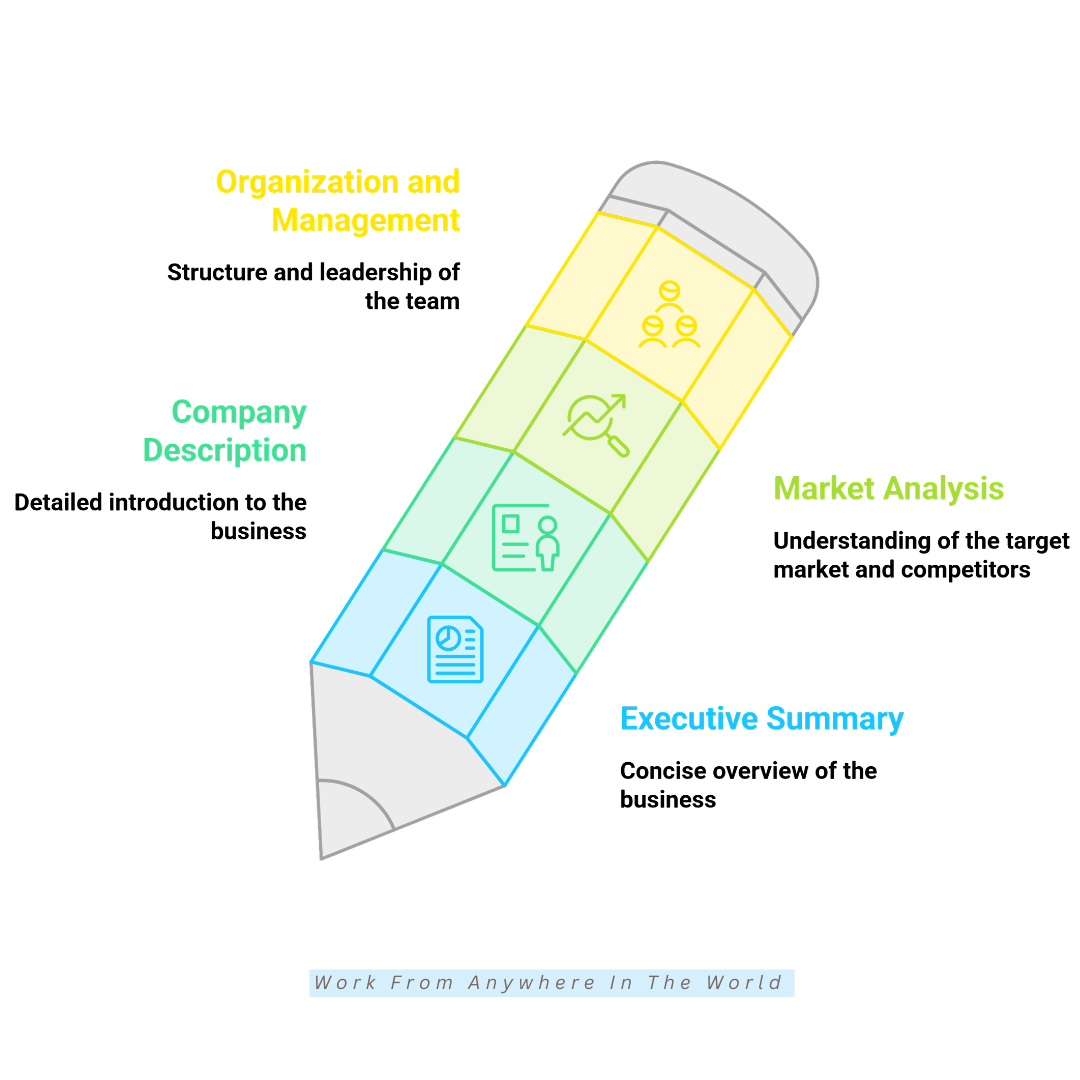
The executive summary is the first section readers see, although it is often easier to write after completing the rest of the business plan. It provides a concise overview of the business and highlights the most important information.
Include your business concept, products or services, target audience, goals, and key financial information. If you are seeking funding, briefly explain how much you need and how the funds will support the business.
A clear executive summary should give readers enough information to understand the business without overwhelming them with details. It should also encourage them to continue reading the complete plan.
Key Information
- Business name
- Mission statement
- Business concept
- Products or services
- Target audience
- Business goals
- Funding request, if applicable
- Financial highlights
2. Describe Your Company
This section introduces your company in greater detail and explains what the business does. It should give readers a clear understanding of the company’s purpose and the customers it intends to serve.
Describe why the business was created, the industry it operates in, and what distinguishes it from competitors. You can also explain the company’s mission, values, and long-term vision.
Include relevant background information about the business and any important milestones already achieved. These details can help demonstrate how the company has developed and where it intends to go next.
Company Details
- Company overview
- Mission and vision
- Legal structure
- Business location
- Company history
- Core values
- Unique Selling Proposition (USP)
- Short-term and long-term goals
3. Conduct A Market Analysis
A market analysis demonstrates how well you understand your industry, target customers, and competitive environment. It provides the research needed to determine where your business fits within the market.
Research your potential customers, their needs, current market trends, and the businesses competing for their attention. Look for gaps or opportunities your company can address.
Reliable market research can help you make decisions based on evidence rather than assumptions. It can also help potential investors understand the demand for your products or services and the opportunities available to the business.
Research To Cover
- Industry overview
- Market size
- Growth trends
- Target customers
- Customer demographics
- Customer pain points
- Competitor analysis
- Market opportunities
4. Explain Your Organization And Management Structure
Investors may evaluate the people behind a business as carefully as the business idea itself. This section explains who owns the company, who manages it, and how responsibilities are divided.
Describe your ownership structure, leadership team, management roles, and relevant experience. Explain who is responsible for key areas of the business and how those roles contribute to its overall operations.
You can also mention advisors, consultants, or board members who provide expertise or guidance. If you expect the team to grow, include important positions you anticipate adding as the business develops.
Management Details
- Ownership details
- Organizational structure
- Leadership team
- Employee responsibilities
- Management experience
- Advisors or mentors
- Future hiring plans
5. Describe Your Products Or Services
Explain what your business offers and why customers would choose your products or services over other options. Focus on the value they provide rather than simply listing their features.
Your eCommerce business model can influence what you sell, how you reach customers, and how your business generates revenue.
Describe the main features and benefits, pricing approach, production or delivery process, and expected product lifecycle. Explain how the offering addresses a customer need or solves a particular problem.
You can also discuss planned improvements or future additions to your product or service range. Include intellectual property when it contributes to your competitive advantage.
Product Or Service Details
- Product or service description
- Features and benefits
- Customer value
- Pricing strategy
- Production or delivery process
- Product lifecycle
- Intellectual property
- Future development plans
6. Create A Marketing And Sales Plan
Your marketing and sales plan explains how you will attract potential customers and turn their interest into sales. It should identify your target audience and the channels you will use to reach them.
Explain how you plan to position your brand and communicate what makes your business different. Your brand positioning can influence how customers perceive your products, services, and overall business.
Outline the marketing methods you intend to use, such as SEO, content marketing, social media, email marketing, or paid advertising. Choose channels that make sense for your audience rather than trying to use everything at once.
Your plan should also explain how you will guide potential customers through the sales process and encourage existing customers to return. This connects your marketing activities with your broader revenue and growth goals.
Marketing And Sales Elements
- Target audience
- Brand positioning
- Marketing goals
- SEO strategy
- Content marketing
- Social media marketing
- Email marketing
- Paid advertising
- Sales process
- Customer retention strategy
Wealthy Affiliate – Mini Review
If you’ve ever thought about turning your blog, passion, or niche into an online business,
Wealthy Affiliate (WA) is one of the most beginner-friendly platforms I’ve used.
It combines step-by-step training, website hosting, AI-powered tools,
keyword research, and an active community all in one place.
What I like most is that you can start free (no credit card needed), explore the platform,
test the tools, and connect with other entrepreneurs before upgrading.
WA isn’t a “get rich quick” scheme — success comes from consistent effort
and applying what you learn over time.
7. Develop An Operations Plan
The operations plan explains how your business will function from day to day. It covers the processes, resources, and systems needed to deliver your products or services consistently.
Describe your workflow, equipment, technology, suppliers, and inventory requirements where applicable. Readers should understand how products will be produced or how services will be delivered to customers.
Include quality-control procedures that help maintain consistent standards. You can also identify key operational milestones to help you measure progress as the business develops.
A well-organized operations plan can reveal potential gaps before they become problems. It also demonstrates that the practical side of running the business has been carefully considered.
Operational Details
- Daily operations
- Business location
- Equipment and technology
- Suppliers
- Inventory management
- Production process
- Quality assurance
- Business milestones
8. Build A Financial Plan
The financial plan explains how your business expects to generate revenue, manage expenses, and remain financially sustainable. It provides a realistic picture of the company’s current position and future financial needs.
Include startup costs, operating expenses, revenue streams, and your pricing strategy. These figures should be supported by reasonable assumptions rather than overly optimistic projections.
Cash-flow forecasts, profit-and-loss projections, and a break-even analysis can help demonstrate how the business may perform under different circumstances. They can also help you identify potential financial challenges before they become serious.
This section is particularly important when seeking financing or attracting investors. Clear financial information helps readers evaluate whether your plans and growth expectations are realistic.
Financial Information
- Startup costs
- Revenue model
- Operating expenses
- Pricing strategy
- Cash flow
- Profit and loss projections
- Break-even analysis
- Budget planning

9. Add A Funding Request (If Applicable)
If you are seeking external funding, clearly explain how much capital your business needs and how you intend to use it. The amount should be supported by the financial information and projections included in your business plan.
Describe how the funding will support specific priorities, such as business expansion, product development, hiring, marketing, equipment, or operational improvements. Being specific helps potential investors or lenders understand why the funding is necessary.
You should also explain any future funding needs you anticipate. Depending on the type of financing, include relevant information about repayment plans, ownership considerations, or the expected use of invested capital.
Funding Details
- Funding amount
- Purpose of funding
- Investment allocation
- Future funding requirements
- Expected business growth
10. Prepare Financial Projections
Financial projections estimate how your business may perform financially over the next several years. They provide a forward-looking view of expected revenue, expenses, cash flow, and profitability.
Base your projections on realistic assumptions supported by available market research and your existing financial information. Avoid overly optimistic figures that may make the plan appear less credible.
Include different financial forecasts that show how the business expects to develop. Comparing actual results with these projections later can also help you identify where adjustments may be necessary.
Clear projections help investors, lenders, and business owners evaluate financial expectations and determine whether planned growth appears achievable.
Financial Projections
- Sales forecast
- Revenue forecast
- Expense forecast
- Cash flow forecast
- Profit forecast
- Three-year or five-year projections
11. Include An Appendix
The appendix contains supporting information that adds detail without unnecessarily lengthening the main business plan. Readers can refer to these documents for additional information about a particular part of the business.
Depending on your company, the appendix may contain business licences, permits, certifications, product images, résumés, contracts, financial statements, or market research reports. Only include documents that are relevant to the information presented in your plan.
Organize the appendix clearly so readers can easily locate supporting material. Sensitive or confidential documents should only be shared with appropriate readers when necessary.
Supporting Documents
- Business licences
- Permits
- Certifications
- Product images
- Résumés
- Market research reports
- Financial statements
- Legal documents
- Supporting references
12. Review, Edit, And Proofread Your Business Plan
Before sharing your business plan with investors, lenders, or business partners, review every section carefully. Make sure the information is accurate, complete, and consistent throughout the document.
Check that financial figures match across different sections and that your goals support the overall business strategy. Statistics, market information, and other supporting details should also be current and relevant.
Read the plan from the perspective of someone unfamiliar with your business. Asking a trusted colleague, mentor, or advisor for feedback can also help identify unclear explanations or missing information.
Finally, proofread for grammar, spelling, formatting, and readability. A polished document makes your ideas easier to understand and presents your business professionally.
Final Review Checklist
- Grammar and spelling
- Accurate financial data
- Consistent formatting
- Clear and concise language
- Updated statistics
- Feedback from mentors or advisors
13. Present Your Business Plan With Confidence
Once your business plan is complete, prepare to present your business to investors and other interested parties clearly.. Rather than presenting every detail, concentrate on the information your audience needs to understand the business and its potential.
Highlight your market opportunity, competitive advantage, growth strategy, and key financial information. If you are seeking funding, clearly explain how much you need and how the investment will support your plans.
Be prepared to answer questions about your assumptions, financial projections, customers, and competition. Supporting your answers with relevant research and realistic expectations can strengthen your presentation.
A confident presentation comes from understanding the information behind your plan rather than memorizing a script. Knowing your numbers, goals, and strategy will help you respond thoughtfully when questions arise.
Presentation Highlights
- Business overview
- Key financial highlights
- Growth strategy
- Market opportunity
- Competitive advantage
- Funding requirements, if applicable
- Future business goals
- Questions and supporting data

Tips For Writing A Winning Business Plan
Knowing how to write a winning business plan involves more than completing the required sections. Clear explanations, realistic information, and a logical structure make the document easier for readers to understand.
Keep your intended audience in mind as you write. Investors, lenders, potential partners, and your own management team may look for different information when evaluating the plan.
Support important claims with reliable research and realistic financial assumptions. Avoid exaggerating opportunities or minimizing potential challenges simply to make the business appear more attractive.
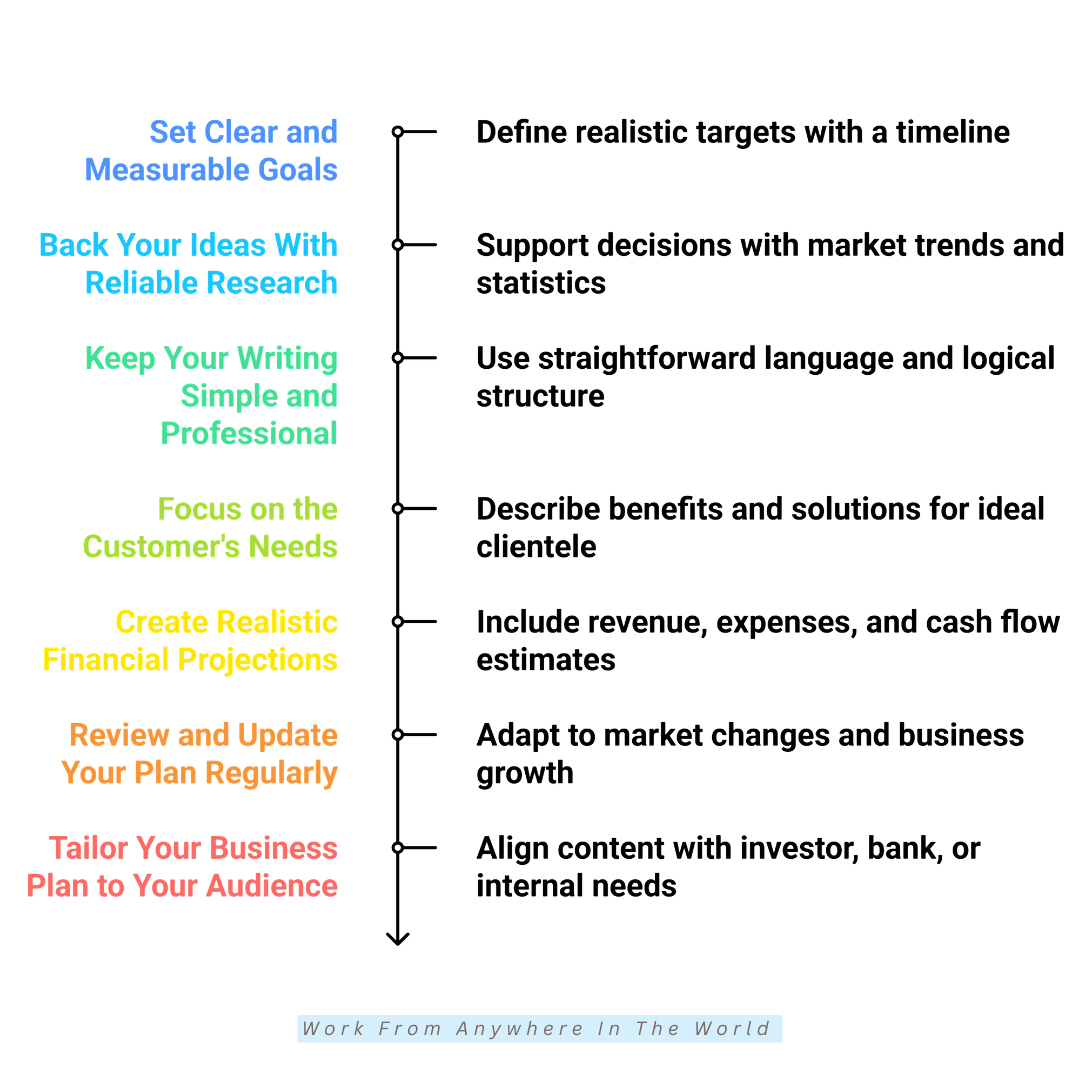
The following tips can help you create a business plan that is practical, credible, and useful long after the first draft is complete. They can also make the planning process easier to manage while keeping the finished document focused and professional.
1. Set Clear And Measurable Goals
Clear and measurable goals give your business plan direction and provide specific outcomes to work toward. Avoid broad objectives that make it difficult to determine whether progress is being made.
Set targets that are realistic, measurable, and connected to a timeframe. For example, instead of simply planning to increase sales, establish a specific revenue goal the business should achieve within a defined period.
Measurable goals can also help you evaluate progress and adjust your strategy when necessary. They give investors, lenders, and other readers a clearer understanding of what the business intends to accomplish.
2. Back Your Ideas With Reliable Research
Reliable research strengthens your business plan by supporting important decisions with evidence. Use relevant market trends, customer insights, industry statistics, and competitor information where they add meaningful context.
Choose trustworthy, up-to-date sources for important facts and figures. This helps demonstrate that your strategy is based on research rather than assumptions about customers or the marketplace.
Research can also reveal potential opportunities, risks, and changes that could affect your plans. Using this information thoughtfully makes your projections and business decisions easier for readers to understand and evaluate.
3. Keep Your Writing Simple And Professional
A business plan should be easy to read and understand from beginning to end. Use straightforward language and explain your ideas clearly without relying on unnecessary technical terms.
Short paragraphs, descriptive headings, and a logical structure can make complex information easier to follow. Consistent formatting also helps readers move through the document and locate important details.
Investors, lenders, and potential business partners should be able to understand your plans without having to decipher complicated language. Clear writing keeps their attention focused on your business opportunity and the information supporting it.
4. Focus On Customer Needs
Every business exists to meet a need, solve a problem, or provide something customers value. Your business plan should clearly identify the people you intend to serve and explain what matters to them.
Describe your target customers, the challenges they face, and how your products or services can help. Focus on the benefits customers receive rather than simply listing product features.
For example, a reusable water bottle is more than a product with particular materials or features. Its benefits might include reducing disposable plastic use, providing everyday convenience, and saving money on bottled water.
A customer-focused approach can strengthen your marketing strategy and help demonstrate that your business is built around genuine customer needs rather than assumptions.
5. Create Realistic Financial Projections
Financial projections should reflect realistic expectations supported by research and available industry data. Include expected revenue, operating expenses, cash flow, and profits for the period covered by your business plan.
Avoid overly optimistic figures simply to make the business appear more attractive. Conservative assumptions can provide a more credible picture of how the company may perform under realistic conditions.
Explain the assumptions behind important calculations whenever possible. This helps investors, lenders, and other readers understand how you arrived at your estimates.
Realistic projections are also useful for your own planning. Comparing actual results with your forecasts can help you identify changes and make better-informed financial decisions.
6. Review And Update Your Plan Regularly
A business plan should evolve as your business changes. Customer preferences, market conditions, financial performance, and company priorities can all affect the assumptions you made when creating the original plan.
Review important sections periodically and update them when circumstances change. You might revise your marketing strategy after introducing a new product or adjust financial projections once you have actual revenue data.
Regular reviews can also help you identify goals that are no longer relevant or opportunities that were not available when the plan was written. This keeps the document connected to what is actually happening within your business.
Treat your business plan as a working document rather than something you create once and forget. Keeping it current can support better decisions throughout different stages of business growth.
7. Tailor Your Business Plan To Your Audience
A business plan is more effective when it reflects the needs of the people who will read it. Different audiences may focus on different aspects of your business when evaluating the plan.
When presenting to investors, emphasize growth potential, financial projections, and how their investment may support the business. Lenders may be more interested in cash flow, financial stability, and your ability to repay financing.
For an internal business plan, concentrate on company goals, operations, responsibilities, and the information employees or managers need to make decisions.
Tailoring the content does not mean changing the facts. It means giving greater attention to the information that is most relevant to each audience while keeping the overall plan accurate and consistent.
Frequently Asked Questions
Q1: What Is The Main Purpose Of A Business Plan?
A business plan explains your goals, strategies, operations, market, and financial expectations in one organized document. It provides a roadmap that can guide important decisions as your business develops.
It can also communicate your plans to lenders, investors, potential partners, and other interested parties. The purpose will vary depending on who will use the plan and why it is being created.
Q2: How Long Should A Business Plan Be?
There is no ideal length for every business plan. The document should be detailed enough to explain your business clearly without including unnecessary information simply to make it longer.
A one-page or lean plan may be sufficient for some purposes, while investors or lenders may expect a more comprehensive document. Focus on including the information your intended audience needs.
Q3: Can I Write A Business Plan Without Previous Experience?
Yes. You do not need previous business-planning experience to create a useful plan. Research, realistic expectations, and a clear understanding of your business are more important than having written one before.
Working through each section individually can make the process easier to manage. You can also revise the document as you learn more about your customers, market, finances, and operations.
Q4: How Often Should A Business Plan Be Updated?
Review your business plan periodically and whenever significant changes affect the company. New products, changing market conditions, financial results, expansion plans, or new goals may all require updates.
Regular reviews help keep the information relevant and allow you to compare your original expectations with what is actually happening in the business.
Q5: What Are The Most Important Sections Of A Business Plan?
Important sections typically include the executive summary, company description, market analysis, products or services, marketing and sales strategy, operations, management structure, and financial information.
The exact structure can vary depending on the plan’s purpose. A document prepared for investors, for example, may require different levels of detail than one created primarily for internal planning.
Q6: Is A Business Plan Necessary For Small Businesses?
A formal business plan is not necessary for every small business, but having a written plan can still be valuable. It can clarify your goals, financial expectations, target customers, and strategy.
Even a relatively short plan can provide direction and create a useful reference as the business develops. More detail can be added later if you seek financing, expand operations, or pursue new opportunities.
Conclusion
Knowing how to write a winning business plan is about more than creating a document for investors or lenders. A well-prepared plan provides a practical framework for organizing ideas, setting priorities, and making informed decisions as your business develops.
Clear goals, reliable research, realistic financial projections, and thoughtful strategies can turn your ideas into an actionable roadmap. Together, these elements help you understand where the business is going and what may be required to get there.
Your business plan can also evolve as your customers, finances, and opportunities change. Reviewing it regularly keeps the information relevant and helps you respond to new challenges or opportunities.
A well-prepared business plan can provide valuable direction whether you’re starting a new company or expanding an established one. It provides a practical reference for decision-making while allowing your strategy to evolve as the business grows.
I trust you enjoyed this article on How To Write A Winning Business Plan: 13 Essential Steps. Please stay tuned for more insightful blogs on affiliate marketing, online business, and working from anywhere in the world.
Take care!
— JeannetteZ 🌍✨
💬 Your Opinion Is Important To Me
Do you have thoughts, ideas, or questions? I’d love to hear from you. Please leave your comments below or email me directly at Jeannette@WorkFromAnywhereInTheWorld.com.
📚 More Work From Anywhere Reads
🚀 Ready to Build a Business You Can Run from Home
Or from Anywhere in the World?
Imagine creating income on your terms — from home, a cozy café, or wherever life takes you.
With the right tools, training, and community support, it’s entirely possible.
Start your own online business for free — no credit card needed.
Disclosure
This post may contain affiliate links. As an Amazon Associate and participant in other affiliate programs, I earn from qualifying purchases at no extra cost to you. Please read my full affiliate disclosure.