

12 Best Home-Based Business Ideas To Explore
Finding the best home-based business ideas can open the door to flexible ways to earn income using your existing skills, interests, and experience.
Some businesses can be run entirely online, while others allow you to provide products or services from home. The right choice depends on your abilities, available resources, and long-term goals.
Many home-based businesses can also begin on a relatively small scale. You can test an idea, develop your skills, and expand gradually as you learn what works for you.
In this guide, you’ll explore practical home-based business ideas, what each one involves, and the skills and tools that may help you get started.
What Is A Home-Based Business?
A home-based business is one operated primarily from the owner’s home rather than a separate commercial location. It can provide products, services, or a combination of both.
Some home-based businesses operate entirely online, while others serve customers locally or ship physical products. Examples include freelance services, consulting, online stores, tutoring, and creative businesses.
Running a business from home can reduce the need for commercial office or retail space. However, startup costs and ongoing expenses vary considerably depending on the type of business.
Home-based business owners may also need to consider licences, insurance, taxes, zoning requirements, and other local regulations. These requirements can differ depending on the business and location.
A home-based business can begin as a small side venture or develop into a larger operation. The right structure depends on your goals, available resources, skills, and the customers you want to serve.
12 Best Home-Based Business Ideas
Home-based businesses can take many forms, from providing professional services to selling physical or digital products. The right option depends on your skills, interests, resources, and preferred way of working.
Some ideas can be started using knowledge or equipment you already have. Others may require additional training, specialized tools, inventory, or licences before you can begin.
Consider how much time you can dedicate to the business and whether you want to work with clients, teach others, create products, or build an online audience. These factors can help narrow your choices.
It is also important to research customer demand and competition before committing to an idea. Starting on a smaller scale can give you an opportunity to test your concept and learn what your customers need.
The following 12 home-based business ideas cover a variety of skills and business models to help you explore which opportunities may suit your goals.
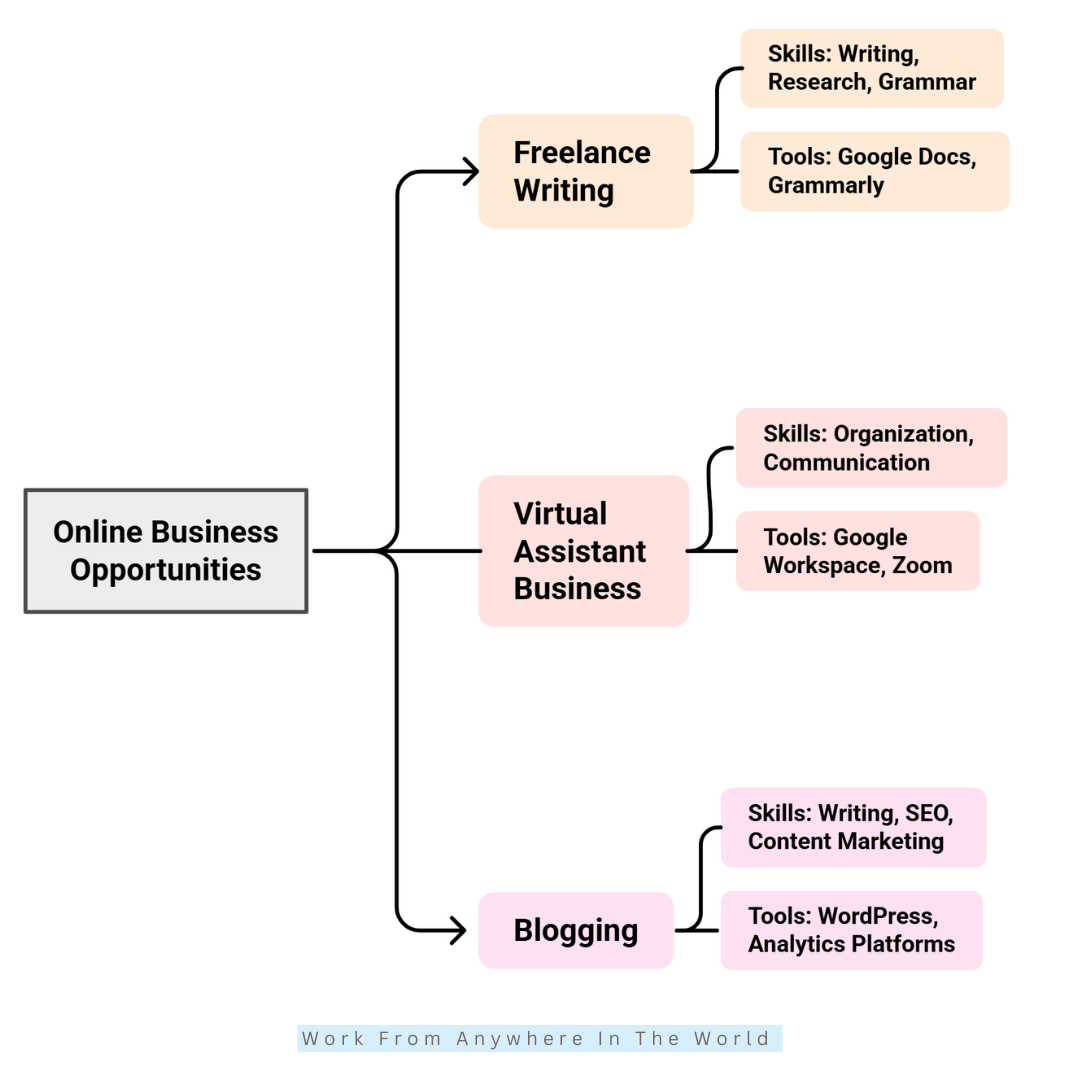
1. Freelance Writing
Freelance writing is a flexible home-based business for people who enjoy researching topics and communicating ideas clearly. Writers can provide content for businesses, publications, organizations, and individual clients.
Services may include blog posts, website copy, newsletters, product descriptions, case studies, or other written materials. Choosing a particular niche can help you develop specialized knowledge and attract relevant clients.
You can begin with a small portfolio that demonstrates your writing abilities. Samples can cover topics you understand well, even if you have not yet completed paid projects for clients.
As your experience develops, you can refine your services and decide which types of writing and clients suit you best. Building reliable client relationships may also lead to repeat assignments and referrals.
What Is Freelance Writing?
Freelance writing involves creating written content for clients while working independently rather than as an employee. Businesses, websites, publications, and online stores may hire freelance writers for specific projects or ongoing work.
Assignments can include articles, blog posts, website copy, product descriptions, newsletters, and other marketing content. Writers may work with several clients and choose projects that match their knowledge and interests.
Some writers specialize in a particular industry or type of content, while others cover a broader range of topics. Developing a clear area of expertise can help you build credibility and strengthen your portfolio.
How To Start A Freelance Writing Business
Choose a writing niche based on your knowledge, experience, or interests. Focusing on a particular area can help you develop expertise and make it easier to identify potential clients.
Create several strong writing samples and organize them into a simple portfolio. Your samples should demonstrate the type of content and topics you would like to write for clients.
You can look for online freelance jobs through freelance platforms or approach businesses directly. Building professional relationships and delivering reliable work can lead to repeat assignments and referrals.
Learning basic SEO writing techniques can also make your services more valuable. Understanding keywords, search intent, headings, and readable content can help you create articles designed for both readers and search engines.
Skills And Tools You May Need
Strong writing, research, grammar, and communication skills are essential for producing clear and useful content. Being able to adapt your writing style to different audiences can also help you work with a wider range of clients.
Helpful tools may include Google Docs, Grammarly, keyword research tools, and project management software. These can support writing, editing, research, organization, and communication throughout each project.
Basic knowledge of SEO can also strengthen your freelance writing services. Understanding search intent, keywords, headings, and content structure can help you create articles that are useful to readers and easier for search engines to understand.
Growth Potential And Scaling Opportunities
As you gain experience, you can refine your services and specialize in industries that match your knowledge and interests. Building expertise can also help you take on more advanced writing projects.
Many freelance writers expand into copywriting, editing, content strategy, or related services. This can broaden the types of clients and projects they can pursue.
You can also create digital products, courses, or other resources based on your expertise. Some writers eventually collaborate with other professionals or develop a small content agency.
2. Virtual Assistant Business
A virtual assistant business provides remote support to entrepreneurs, small businesses, and other professionals. The services you offer can depend on your skills, experience, and the type of clients you want to work with.
Common services include email management, appointment scheduling, data entry, customer support, research, and social media assistance. Some virtual assistants specialize in areas such as bookkeeping, content management, or eCommerce support.
You can begin by choosing a small group of services that match your strengths. Clearly defining what you offer can make it easier for potential clients to understand how you can support their businesses.
As you gain experience, you can refine your services or specialize in a particular industry. A virtual assistant business can also expand by working with additional remote professionals as the client base develops.
What Is A Virtual Assistant Business?
A virtual assistant business provides remote administrative and business support to clients. Services can be delivered from home using email, communication platforms, and other online tools.
Tasks may include managing emails, scheduling appointments, organizing files, conducting research, entering data, and providing customer support. The exact responsibilities depend on the services offered and each client’s needs.
Some virtual assistants provide general administrative support, while others specialize in areas such as social media, bookkeeping, eCommerce, or content management. Specialization can develop as you gain experience and discover which services suit your skills best.
How To Start A Virtual Assistant Business
Start by identifying the services you can confidently provide based on your existing skills and experience. Grouping related services can also make it easier for potential clients to understand what you offer.
Create a professional online presence where you can explain your services, experience, and areas of expertise. This could include a simple website, LinkedIn profile, or online portfolio.
Networking with entrepreneurs and small business owners can help you make connections and learn what types of support they need. Freelance platforms may also provide opportunities to find initial clients.
Beginning with a manageable number of clients gives you time to develop efficient systems and gain experience. Positive feedback and referrals can help you build credibility as the business develops.
Skills And Tools You May Need
Strong organizational, communication, time-management, and problem-solving skills can help you manage client responsibilities effectively. Attention to detail is also important when handling schedules, documents, and administrative tasks.
Common tools include Google Workspace, Zoom, Trello, Asana, and Microsoft Office. The platforms you need will depend on the services you provide and the systems your clients already use.
Familiarity with scheduling, communication, and project management tools can make daily tasks easier to organize. Learning new platforms may also be necessary when working with different clients.
Growth Potential And Scaling Opportunities
As you gain experience, you can specialize in areas such as project management, marketing support, eCommerce, or executive assistance. Specialization can help you develop deeper expertise and attract clients looking for particular skills.
You can also expand the range of services you provide or focus on a specific type of client. Clear systems and processes become increasingly important as the number of projects grows.
Some virtual assistants eventually build agencies or manage a virtual team of additional assistants. This can allow the business to support more clients while distributing responsibilities among team members.
3. Blogging
Blogging can be a flexible home-based business for people who enjoy writing, researching, and sharing useful information. It allows you to build content around a specific topic while developing an audience over time.
A blog can focus on almost any subject with a clear audience, from business and travel to gardening, technology, or personal finance. The strongest topics usually combine your knowledge or interest with questions people are actively searching for.
As the website grows, blogging can support several income streams, including affiliate marketing, digital products, advertising, sponsored content, or services.
The business can also develop gradually. You can begin with a small number of articles, learn what resonates with readers, and expand your content and monetization methods as your experience grows.
What Is Blogging?
Blogging involves creating and publishing useful content on a website around a particular niche or subject. Topics can include business, travel, health, gardening, technology, personal finance, and many others.
A blog gives you a platform for sharing information, answering questions, and building an audience around topics you understand or want to explore.
As the website develops, blogging can support different income streams. These may include affiliate marketing, advertising, sponsored content, digital products, services, or other relevant offers.
How To Start A Blogging Business
Start by choosing a niche that interests you and has an identifiable audience. Researching the questions people ask can help you plan content that addresses genuine needs and interests.
Create a website and begin publishing helpful, well-organized articles. Learning the basics of SEO can help you understand how search engines discover and interpret your content.
Consistency is important, but quality should remain the priority. Continue improving existing articles as your knowledge develops, and you learn more about what readers are looking for.
Skills And Tools You May Need
Writing, research, SEO, and content marketing skills can all support a blogging business. Learning how to organize information clearly can also make articles easier for readers to understand.
Useful tools may include WordPress, keyword research software, analytics platforms, and email marketing systems. These can help you create, optimize, promote, and evaluate your content.
You do not need to master every tool before starting. Begin with the essentials and add new tools when they provide a clear benefit to your blogging workflow.
Growth Potential And Scaling Opportunities
A blog can expand in several directions as its audience and content library develop. Opportunities may include affiliate marketing, digital products, online courses, memberships, consulting, or eCommerce.
Diversifying can reduce reliance on a single income source, but each addition should make sense for your audience. Expanding gradually can also make new activities easier to manage.
Older content can continue to attract readers, while new articles broaden the website’s coverage. Regular updates can help maintain the usefulness and relevance of your existing content.
4. Affiliate Marketing
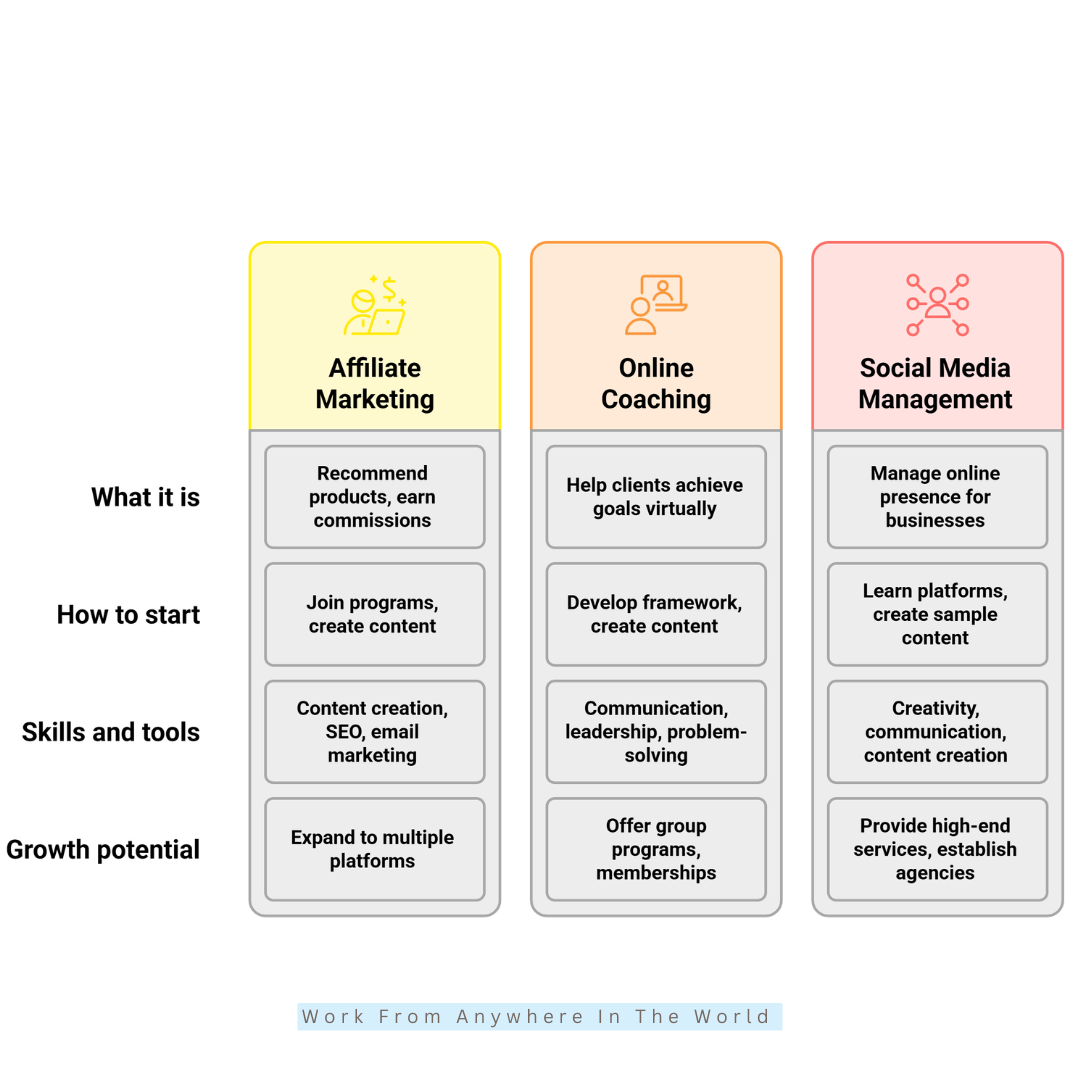
Affiliate marketing is a home-based business model that allows you to recommend products or services that are relevant to a particular audience. It can work alongside a blog, YouTube channel, email newsletter, or other online platform.
You do not need to manufacture products, manage inventory, or handle customer orders yourself. Instead, your role is to create useful content that helps people learn about products and make informed purchasing decisions.
Choosing a focused niche can make it easier to understand your audience and select suitable affiliate programs. Trust is particularly important because recommendations can influence purchasing decisions.
As your content and audience develop, you can explore different affiliate programs and traffic sources. Building the business gradually also gives you time to learn which content and recommendations are most useful to your audience.
What Is Affiliate Marketing?
Affiliate marketing is a performance-based marketing model in which you promote another company’s products or services. When someone completes a qualifying action through your affiliate link, you may receive a commission.
Affiliate programs have different terms, commission structures, tracking periods, and requirements. Reviewing these details can help you decide whether a program is appropriate for your content and audience.
Clear affiliate disclosures are also important. Readers should be able to understand when you may receive compensation from a recommendation or purchase.
How To Start An Affiliate Marketing Business
Begin by choosing a niche and identifying the audience you want to serve. Exploring the best niches for affiliate marketing can help you compare different opportunities before deciding where to focus. Then research affiliate programs offering products or services that genuinely relate to that audience.
Create useful content such as product reviews, comparisons, tutorials, and educational articles. Focus on helping readers understand their options rather than simply encouraging them to purchase something.
As you publish more content, monitor which topics attract visitors and generate engagement. These insights can help you refine your content strategy and choose future topics more effectively.
Skills And Tools You May Need
Content creation, SEO, email marketing, and audience-building skills can all support an affiliate marketing business. Clear communication is particularly important when explaining product features, benefits, and limitations.
Useful tools may include a website platform, keyword research software, analytics tools, and email marketing systems. The tools you need will depend on the channels you use to reach your audience.
Understanding basic analytics can help you evaluate traffic, clicks, and content performance. This information can guide future decisions without relying solely on assumptions.
Growth Potential And Scaling Opportunities
An affiliate marketing business can expand through additional content, email newsletters, video, or other relevant channels. Using more than one traffic source can also reduce dependence on a single platform.
As your experience develops, you may explore additional affiliate programs or related topics within your niche. Any expansion should remain relevant to the audience you have built.
Some affiliate marketers eventually operate several websites or content channels. However, strengthening one platform before expanding can make the business easier to manage.
5. Online Coaching
Online coaching allows you to use your knowledge and experience to help clients work toward specific personal or professional goals. Sessions can be delivered virtually, making this a flexible business to operate from home.
Coaching can focus on areas such as business, career development, productivity, fitness, or personal growth. Choosing a clear specialty can help potential clients understand the type of support you provide.
Your services can include individual sessions, structured programs, workshops, or group coaching. The format you choose will depend on your expertise and the needs of your clients.
As the business develops, you can create additional resources or programs that complement your coaching services. This provides opportunities to serve clients in different ways without relying entirely on individual sessions.
What Is Online Coaching?
Online coaching involves providing guidance, support, and accountability through virtual sessions. Coaches typically focus on a particular area where they have relevant knowledge, training, or professional experience.
Sessions may take place through video calls, phone calls, or other communication platforms. This allows coaches and clients to work together without needing to be in the same location.
The role of a coach varies depending on the specialty. Clearly defining the scope of your services helps clients understand what they can expect from the coaching relationship.
How To Start An Online Coaching Business
Start by identifying an area where you have relevant expertise and determining who could benefit from your services. Develop a clear coaching framework that outlines how you will work with clients.
Create content that demonstrates your knowledge and addresses questions your potential clients may have. A website or professional social media presence can also provide information about your services and approach.
You can begin with individual clients while refining your processes and gathering feedback. Testimonials from satisfied clients may help demonstrate your experience and build credibility.
Skills And Tools You May Need
Strong communication, listening, organization, and problem-solving skills are important for working effectively with clients. Depending on your specialty, additional training or professional qualifications may also be appropriate.
Useful tools can include video conferencing, scheduling software, payment platforms, and client management systems. These tools can simplify appointments, communication, payments, and record-keeping.
Choose tools based on what your business genuinely needs rather than trying to build a complicated system from the beginning. You can add additional technology as your services develop.
Growth Potential And Scaling Opportunities
Online coaching can expand beyond individual sessions through group programs, workshops, memberships, or online courses. These options can allow you to serve more people while offering different levels of support.
Digital resources such as workbooks, templates, or educational materials can also complement your coaching programs. They may provide clients with additional support between sessions.
As your audience grows, you can refine your services around the areas that generate the strongest interest. This can help you develop a more focused and manageable coaching business.
6. Social Media Management
Social media management can be a practical home-based business for people who enjoy creating content, communicating with audiences, and helping businesses strengthen their online presence.
Clients may need support with Facebook, Instagram, LinkedIn, Pinterest, TikTok, or other platforms. The services you offer can depend on your experience and the audiences your clients want to reach.
A social media manager may handle content planning, post creation, scheduling, community engagement, and performance tracking. Some also specialize in particular platforms or industries.
As you gain experience, you can refine your services and develop systems to manage multiple accounts efficiently. This business can also expand into related areas such as content strategy or social media advertising.
What Is Social Media Management?
Social media management involves planning, creating, publishing, and monitoring content for a business or organization’s social media accounts. It can also include responding to comments and helping maintain consistent communication with followers.
Businesses may hire social media managers when they lack the time or expertise to manage their accounts effectively. The exact responsibilities depend on the client’s goals, platforms, and overall marketing strategy.
Some social media managers handle several platforms, while others specialize in one or two. Understanding the audience and purpose of each platform can help you create more appropriate content.
How To Start A Social Media Management Business
Begin by learning how major social media platforms work and how businesses use them to communicate with their audiences. Developing skills in content planning, writing, design, and analytics can provide a useful foundation.
Create sample posts or manage your own accounts to demonstrate your abilities. A portfolio can show potential clients your content style, organizational skills, and understanding of different platforms.
You can approach local businesses, entrepreneurs, or other organizations that may need social media support. Networking, referrals, and freelance platforms can also help you find potential clients.
Skills And Tools You May Need
Creativity, communication, organization, content creation, and analytical skills are useful for social media management. You should also be comfortable adapting content for different audiences and platforms.
Tools such as Canva, Meta Business Suite, Buffer, and Hootsuite can assist with creating, scheduling, and managing content. Analytics tools can help you evaluate how posts perform and identify areas for improvement.
Following social trends can also help you understand how content formats and audience behaviour are changing. However, strategies should always be adapted to the individual client’s audience and goals.
Growth Potential And Scaling Opportunities
As your client base develops, you can expand into services such as content strategy, social media advertising, brand support, or community management. Specialization can also help you develop expertise in a particular industry or platform.
Creating repeatable processes can make it easier to manage additional accounts while maintaining consistent service. Templates, content calendars, and scheduling systems can help organize recurring tasks.
Some social media managers eventually build an agency and work with additional team members. This can allow the business to support a larger client base and offer a broader range of services.
Wealthy Affiliate – Mini Review
If you’ve ever thought about turning your blog, passion, or niche into an online business,
Wealthy Affiliate (WA) is one of the most beginner-friendly platforms I’ve used.
It combines step-by-step training, website hosting, AI-powered tools,
keyword research, and an active community all in one place.
What I like most is that you can start free (no credit card needed), explore the platform,
test the tools, and connect with other entrepreneurs before upgrading.
WA isn’t a “get rich quick” scheme — success comes from consistent effort
and applying what you learn over time.
7. Print-On-Demand Business
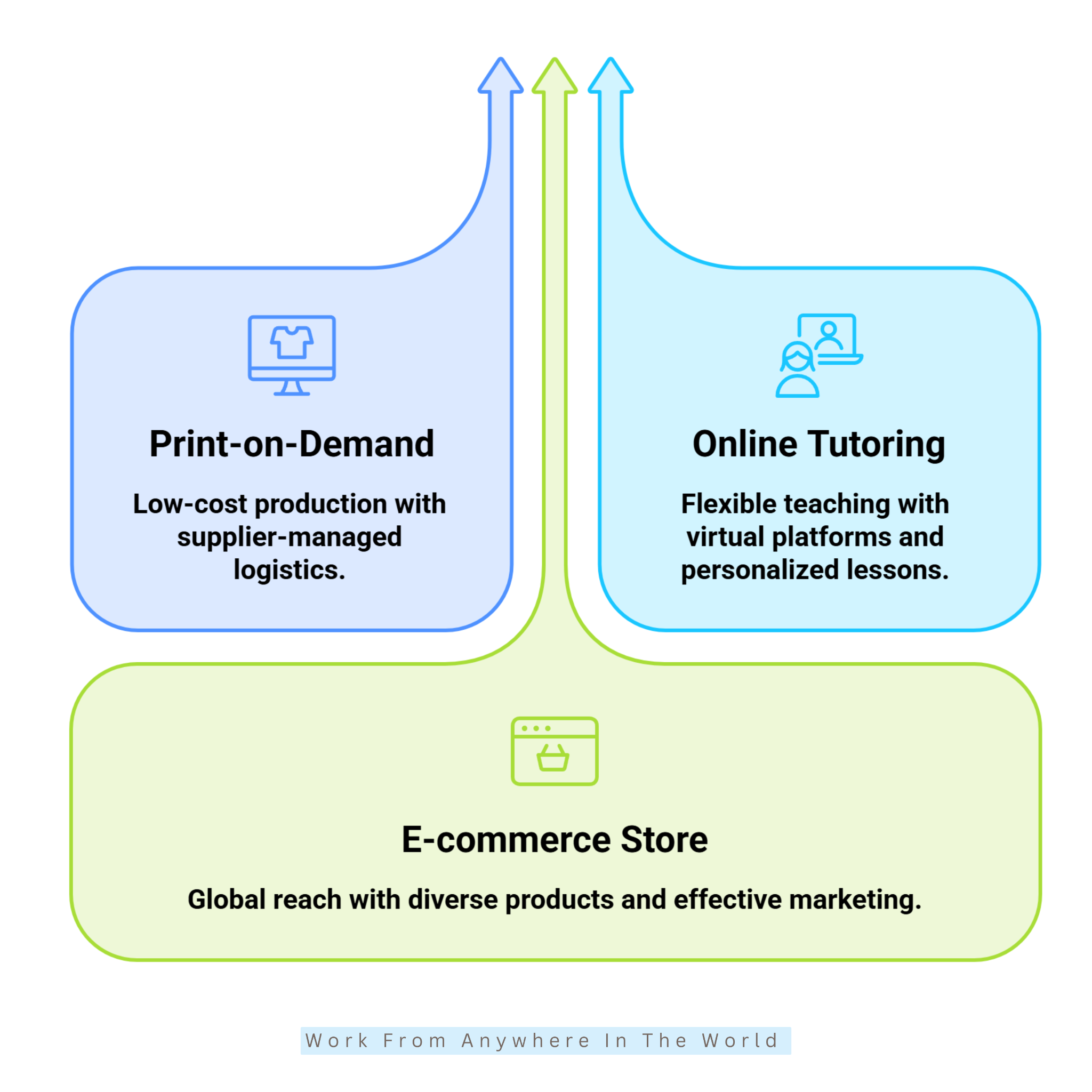
A print-on-demand business allows you to sell customized products without keeping finished inventory at home. Products are created by a supplier after a customer places an order.
Common products include T-shirts, mugs, tote bags, hoodies, posters, and phone cases. You can create designs around a particular niche, interest, hobby, or audience.
Because production and shipping are generally handled by the print-on-demand provider, you can focus on product ideas, branding, customer experience, and marketing.
The business can begin with a small collection of designs and expand gradually. Testing different products and designs can help you learn what appeals to your target audience.
What Is A Print-On-Demand Business?
Print-on-demand is one of several eCommerce business models that allow entrepreneurs to sell products online. Products are produced after customers place their orders, reducing the need to purchase and store large quantities of finished inventory in advance.
The seller creates or supplies the designs, while a print-on-demand company typically handles printing, packaging, and shipping. The exact services and responsibilities vary between providers.
Products can range from clothing and accessories to home décor, stationery, and other customizable items. Choosing a focused niche can make it easier to create a consistent product collection.
How To Start A Print-On-Demand Business
Begin by identifying a niche and researching the types of products your potential customers might want. Then create original designs that fit the audience and products you plan to sell.
Choose a print-on-demand provider and connect it to your online store or selling platform. Before launching, review product quality, shipping options, costs, and the provider’s policies.
Once your products are available, use SEO, content, email, or social media marketing to reach potential customers. Testing different designs can help you understand which ideas generate the most interest.
Skills And Tools You May Need
Basic design, branding, marketing, and product research skills can all be useful. Understanding your target audience can also help you create designs that are relevant to their interests.
Design tools such as Canva or Photoshop can help you create product artwork and mockups. You may also need an eCommerce platform and a compatible print-on-demand service to manage products and orders.
You do not need an extensive product catalogue when you begin. A smaller, focused collection can be easier to manage while you learn how the business works.
Growth Potential And Scaling Opportunities
A print-on-demand business can expand by adding new designs, product types, or collections based on customer interest. Existing designs may also work across several suitable products.
Developing consistent branding can help customers recognize your store and understand what makes its products distinctive. Customer feedback and sales data can guide decisions about future designs.
As the business develops, you can explore additional sales channels or related product categories. Expansion should remain manageable and relevant to the audience you are building.
8. Online Tutoring
Online tutoring can turn subject knowledge and teaching skills into a flexible home-based business. Tutors can work with students individually or teach small groups through virtual platforms.
Subjects can include mathematics, science, languages, music, writing, or test preparation. Your services can focus on a particular subject, age group, or type of learner.
Working online removes many geographical limitations and allows tutors to connect with students in different locations. Scheduling can also be adapted around the tutor’s and students’ availability.
As you gain experience, you can refine your lessons and develop additional learning materials. These resources can support students while making your tutoring services more organized and consistent.
What Is Online Tutoring?
Online tutoring involves teaching or supporting students through virtual learning platforms. Tutors help learners understand subjects, strengthen specific skills, prepare for tests, or work through areas they find challenging.
Sessions may be delivered individually or in small groups using video conferencing and other digital learning tools. The format can be adapted to the subject and individual student’s needs.
Tutors may work independently or through online tutoring platforms. Qualifications and requirements can vary depending on the subject, students, and services being offered.
How To Start An Online Tutoring Business
Begin by identifying the subjects you are qualified and comfortable teaching. Decide which students you want to work with and create tutoring services that address their particular learning needs.
Choose the technology you will use for lessons and establish a professional online presence. Clearly explain your subjects, teaching approach, availability, and how prospective students can contact you.
You can begin with a small number of students while developing your lesson plans and teaching processes. Positive feedback and referrals can help you gradually build your client base.
Skills And Tools You May Need
Subject knowledge, communication, patience, organization, and teaching skills are important for online tutoring. The ability to explain concepts in different ways can also help you work with students who have different learning styles.
Useful tools include video conferencing platforms, presentation software, digital whiteboards, and scheduling systems. The tools you need will depend largely on the subjects and age groups you teach.
Organized lesson plans and learning materials can help sessions run smoothly. Keeping appropriate records can also make it easier to monitor student progress and prepare future lessons.
Growth Potential And Scaling Opportunities
Online tutors can expand their services through group classes, workshops, recorded lessons, or educational resources. These options can complement individual tutoring while allowing you to reach additional students.
Some tutors develop courses or downloadable learning materials based on subjects they regularly teach. Others specialize further and build their reputation around a particular subject or student group.
As demand grows, a tutoring business may also expand by working with additional qualified instructors. This can increase capacity without requiring the original tutor to personally deliver every session.
9. eCommerce Store
Running an eCommerce store allows you to sell physical products from home while reaching customers beyond your local area. Your store can focus on a specific niche or offer a broader selection of related products.
Products may include handmade goods, private-label products, specialty merchandise, or inventory sourced from suppliers. The right approach depends on your interests, available resources, and target customers.
Unlike some home-based businesses, an online store may involve inventory, order fulfilment, shipping, and customer service. Planning these areas carefully can make daily operations easier to manage.
As the business develops, you can expand your product selection and improve your marketing strategies. Building a recognizable brand can also encourage repeat purchases and customer loyalty.
What Is an eCommerce Store?
An eCommerce store is an online business that sells products directly to customers through a website or selling platform. Customers can browse products, place orders, and make payments online.
Stores can sell handmade products, private-label goods, specialty items, or products obtained from suppliers. Some businesses keep their own inventory, while others use fulfilment services or different supply models.
An eCommerce store can serve customers locally, nationally, or internationally. The potential market will depend on your products, shipping options, and overall business strategy.
How To Start An eCommerce Business
Begin by researching potential products and identifying the customers you want to serve. If you’re interested in fashion, learning how to start an online apparel store can be a practical way to build an eCommerce business around a specific product niche.
Choose an eCommerce platform and build your online store. Create clear product pages with useful descriptions, quality images, shipping information, and other details customers need before purchasing.
Once your store is ready, use SEO, content marketing, email campaigns, or social media to attract potential customers. Monitor which strategies bring visitors and sales so you can refine your marketing efforts.
Skills And Tools You May Need
Product research, marketing, customer service, and basic inventory management skills can help you operate an eCommerce store. Branding and content creation skills can also support your marketing efforts.
Useful tools may include Shopify, WooCommerce, email marketing platforms, analytics software, and graphic design tools. Your particular technology needs will depend on how and where you sell your products.
Understanding your customers is especially important. Their questions, reviews, and purchasing behaviour can help you improve your products, website, and overall shopping experience.
Growth Potential And Scaling Opportunities
An eCommerce business can grow by adding complementary products, reaching new customer groups, or expanding into additional sales channels. Decisions about expansion should be based on demand rather than simply increasing the size of your catalogue.
Automation can help streamline repetitive tasks such as emails, inventory updates, and order processing. Some business owners also outsource specific activities as their order volume increases.
Over time, consistent branding, reliable service, and a strong product selection can help develop customer loyalty. These elements can support sustainable growth without requiring the business to expand too quickly.
10. Selling Digital Products
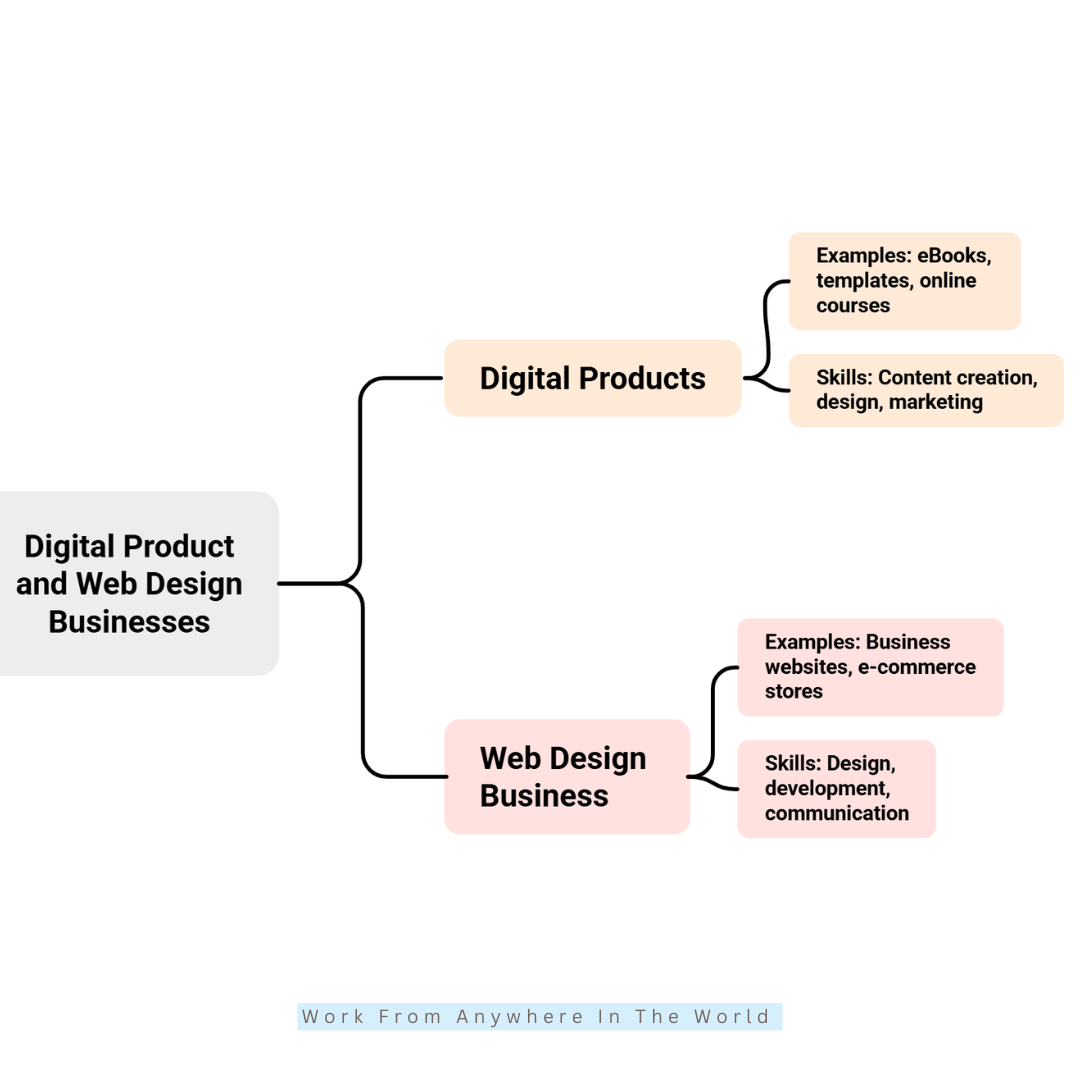
Selling digital products can be an attractive home-based business because the same product can generally be sold repeatedly without storing or shipping physical inventory.
Products can include eBooks, templates, printables, planners, spreadsheets, stock photos, design assets, and online courses. This gives creators many ways to turn their knowledge or creative skills into products.
A successful digital product should provide useful information, solve a problem, save customers time, or help them accomplish a particular task.
You can begin with one focused product and expand your collection based on customer interest. Related products can later be combined into bundles or developed into larger offers.
What Are Digital Products?
Digital products are resources customers purchase and receive electronically. Unlike physical products, they do not normally require packaging, inventory storage, or traditional shipping.
There are many types of digital products to sell, including eBooks, templates, worksheets, planners, printables, online courses, stock photography, and design resources. The type of product you create should match your skills and the needs of your target audience.
Once created, many digital products can be sold repeatedly without producing a new physical item for every customer. However, they may still require updates, customer support, and ongoing marketing.
How To Start A Digital Product Business
Begin by identifying a problem, question, or need within your niche. Research your audience to determine whether a digital resource could provide a useful solution.
Create the product using tools suited to the format you have chosen. Then prepare a sales page that clearly explains what the product includes, who it is designed for, and how it can help.
Content marketing, email marketing, SEO, and social media can help potential customers discover your product. Customer questions and feedback can also provide ideas for improvements or future products.
Skills And Tools You May Need
Content creation, design, marketing, and audience-building skills can be valuable when selling digital products. The particular skills you need will depend on whether you create written, visual, educational, or other resources.
Tools may include Canva, Google Docs, graphic design software, course platforms, and email marketing systems. You may also need an eCommerce or payment platform to process purchases and deliver products.
Quality and usability are especially important. Clear instructions, professional presentation, and a straightforward purchasing experience can improve customer satisfaction.
Growth Potential And Scaling Opportunities
Digital products can be expanded into related collections, bundles, premium resources, memberships, or courses. This allows you to develop additional offers around topics that already interest your audience.
Existing products can also be updated or improved as you receive customer feedback. This can help keep your resources useful without continually creating entirely new products.
As your audience grows, you can introduce complementary products and develop a broader digital product library. This creates several potential revenue sources within the same niche.
11. Web Design Business
A web design business can be a good fit for people who enjoy combining creativity with technology. You can work from home while helping businesses establish or improve their online presence.
Clients may need business websites, eCommerce stores, blogs, portfolios, or landing pages. Projects can range from creating a new website to redesigning an existing one.
You do not necessarily need to build every website from scratch. Modern website platforms and page builders allow designers to create professional sites while focusing on layout, usability, branding, and functionality.
As your skills develop, you can specialize in particular industries or types of websites. This can help you create a more focused service and attract clients looking for specific expertise.
What Is A Web Design Business?
A web design business creates and improves websites for individuals, entrepreneurs, and organizations. The work typically combines visual design with usability and basic website functionality.
Projects may include business websites, eCommerce stores, portfolios, blogs, and landing pages. The exact services you provide will depend on your skills and the needs of your clients.
Good web design should make information easy to find while providing a positive experience across different devices. The website should also reflect the client’s brand and support its business goals.
How To Start A Web Design Business
Begin by learning one or more website-building platforms such as WordPress, Shopify, Wix, or Webflow. Developing strong skills with a smaller number of platforms may be more manageable than trying to master everything at once.
Create several sample websites or projects that demonstrate your abilities. A portfolio gives prospective clients examples of your design style and the types of websites you can create.
You can begin by approaching small businesses, entrepreneurs, or organizations that need website support. Freelance platforms, networking, and referrals can also help you find potential clients.
Skills And Tools You May Need
Design, communication, organization, and problem-solving skills are useful for running a web design business. Understanding the differences between mobile websites vs desktop websites can also help you create better experiences across different devices.
Tools may include WordPress, Elementor, Figma, Canva, Shopify, and web hosting platforms. The particular tools you need will depend on the types of websites and services you offer.
You should also understand basic website maintenance, security, and performance. These skills can help you provide more complete services and communicate effectively with clients.
Growth Potential And Scaling Opportunities
As your experience develops, you can expand into website maintenance, SEO, conversion optimization, or branding services. Recurring maintenance packages can also provide ongoing work after a website project is completed.
Specializing in a particular type of website or industry can help differentiate your business. You may also develop standardized processes that make projects easier to organize and manage.
Some web designers eventually work with other designers, developers, or specialists to handle larger projects. This can allow the business to expand without requiring one person to complete every part of each website.
12. Start A Home-Based Catering Business
A home-based catering business can turn cooking skills into a service for people hosting events, celebrations, meetings, or other gatherings. It also adds variety to a list that otherwise focuses heavily on online businesses.
You can specialize in a particular type of food, event, or customer. Options might include small celebrations, corporate lunches, baked goods, specialty menus, or prepared meals.
Starting on a smaller scale can help you develop your menu, understand food costs, and establish reliable preparation and ordering systems. Customer feedback can also help you refine what you offer.
Food businesses are subject to local health, licensing, zoning, and food-safety requirements. Research the rules that apply in your area before preparing or selling food from home.
What Is A Home-Based Catering Business?
A home-based catering business prepares food for customers from an approved home-based operation. Services may include meals, appetizers, baked goods, or other foods for private and business events.
Caterers can specialize in particular cuisines, dietary preferences, event types, or menu styles. A focused offering can make planning, purchasing ingredients, and communicating your services easier.
The type of food you can prepare and sell from home may depend on local regulations. Some foods or catering activities may require a commercial kitchen or additional permits.
How To Start A Home-Based Catering Business
Begin by researching local food-business requirements and deciding what type of catering service you want to provide. Then develop a manageable menu based on your skills, equipment, and intended customers.
Learning how to start a catering business at home can help you understand the planning involved, from defining your services to preparing for your first customers.
Test your recipes, calculate your costs, and establish systems for ordering, preparation, storage, and delivery. Starting with smaller events can help you gain experience before accepting larger bookings.
Skills And Tools You May Need
Cooking, organization, time management, communication, and food-safety knowledge are important for a catering business. You also need to plan quantities carefully and manage several tasks within specific deadlines.
Equipment requirements depend on your menu and local regulations. You may need suitable cooking and storage equipment, food containers, transportation supplies, invoicing tools, and an organized ordering system.
Reliable record-keeping can help you track ingredients, orders, expenses, and customer requirements. Clear communication is particularly important when handling allergies or special dietary requests.
Growth Potential And Scaling Opportunities
A catering business can develop by expanding its menu, serving different types of events, or offering complementary services. Growth should remain manageable within your available facilities, equipment, and regulatory requirements.
Repeat customers and referrals can help build a steady client base. You may also develop relationships with local businesses, event planners, venues, or other professionals who serve similar customers.
As demand increases, you can consider additional equipment, staff, or suitable commercial facilities. Any expansion should reflect customer demand and the business’s capacity.
Frequently Asked Questions
Q1: Do I Need A Large Investment To Start A Home-Based Business?
Not necessarily. Some home-based businesses can begin with relatively limited resources, particularly service-based businesses that rely mainly on your existing skills and equipment.
Startup costs vary depending on the business. Consider expenses such as equipment, software, insurance, inventory, marketing, and any other resources you may need.
Q2: How Long Does It Take For A Home-Based Business To Become Profitable?
There is no standard timeline for a home-based business to become profitable. It depends on factors such as startup costs, pricing, customer demand, competition, and ongoing expenses.
Some businesses may begin generating revenue relatively early, while others need more time to develop an audience or customer base. Tracking income and expenses can help you evaluate your progress.
Q3: Can I Run A Home-Based Business While Working Full-Time?
Yes. Some home-based businesses can be started alongside a full-time job, particularly when you can control your workload and choose when to complete business tasks.
Consider how much time you can realistically dedicate each week. Starting with a manageable workload can help you develop the business without taking on more than your schedule allows.
Q4: What Are The Advantages Of Running A Business From Home?
A home-based business can provide greater flexibility and eliminate the need for a separate commercial workspace. Depending on the business, this may also help keep certain operating expenses manageable.
Working from home can also reduce commuting and give you more control over your schedule. However, the advantages will vary depending on your business model and personal circumstances.
Q5: How Do I Choose The Right Home-Based Business Idea?
Start by considering your skills, interests, experience, available resources, and the amount of time you can dedicate to the business. Then explore ideas that match those factors.
Research potential customers and existing competition before making a decision. Testing an idea on a small scale can also help you determine whether it is practical before committing additional resources.
Q6: Can A Home-Based Business Grow Into A Full-Time Business?
Yes. Some home-based businesses can develop into full-time operations as their customer base, services, or product offerings grow.
Growth does not need to happen quickly. Expanding gradually can give you time to improve your systems, understand customer needs, and decide how large you want the business to become.
Conclusion
Starting a home-based business can provide a flexible way to turn your skills, knowledge, or interests into an income opportunity. The right business will depend on your goals, resources, experience, and preferred way of working.
Some ideas can begin with relatively few resources, while others require equipment, inventory, specialized skills, or additional preparation. Understanding these requirements can help you choose an option that suits your circumstances.
Research your potential customers and competition before committing significant resources. Starting small can also give you time to test your idea, gather feedback, and improve your products or services.
Building a home-based business takes planning, consistency, and patience. Developing useful skills and reliable systems can make the day-to-day operation easier to manage as the business grows.
The best home-based business ideas are ultimately those that fit your abilities while addressing a genuine customer need. Choose an idea you can realistically develop and allow the business to grow at a pace that works for you.
I trust you enjoyed this article on the 12 Best Home-Based Business Ideas To Explore. Please stay tuned for more insightful blogs on affiliate marketing, online business, and working from anywhere in the world.
Take care!
— JeannetteZ 🌍✨
💬 Your Opinion Is Important To Me
Do you have thoughts, ideas, or questions? I’d love to hear from you. Please leave your comments below or email me directly at Jeannette@WorkFromAnywhereInTheWorld.com.
📚 More Work From Anywhere Reads
🚀 Ready to Build a Business You Can Run from Home
Or from Anywhere in the World?
Imagine creating income on your terms — from home, a cozy café, or wherever life takes you.
With the right tools, training, and community support, it’s entirely possible.
Start your own online business for free — no credit card needed.
Disclosure
This post may contain affiliate links. As an Amazon Associate and participant in other affiliate programs, I earn from qualifying purchases at no extra cost to you. Please read my full affiliate disclosure.