Examples Of Personal Branding: 15 Inspiring Ideas
Personal branding helps people stand out in today’s competitive digital world. Whether you’re a freelancer, entrepreneur, job seeker, or content creator, a strong personal brand can open new opportunities.
Looking at real examples of personal branding is one of the best ways to understand what makes a memorable and trustworthy online presence. Successful personal brands are built through consistency, authenticity, and clear communication.
From social media profiles to personal websites and thought leadership, every interaction shapes how others see you. A well-developed personal brand can help you attract clients, employers, and valuable professional connections.
This article explores practical examples of personal branding and explains how you can build a strong, authentic identity that supports your long-term career and business goals.
What Is Personal Branding?
Personal branding is how you present yourself to the world. It’s the clear and consistent image people form of you based on your skills, personality, values, and online presence.
In simple terms, it’s what people think of when they hear your name or discover you online. Today, personal branding matters more than ever. Before hiring you, working with you, or buying from you, many people search for information about you online.
What they find—your website, social media profiles, blog posts, videos, or portfolio—often shapes their first impression and influences whether they choose to trust you.
Think of personal branding as your digital reputation. It includes what you say, how you communicate, the content you create, and how consistently you show up across different platforms.
Whether you publish articles, create videos, share social media updates, or comment in online communities, every interaction contributes to your personal brand.
You don’t need to be famous to build a successful personal brand. You simply need to be intentional about what you want to be known for.
Sharing valuable knowledge, demonstrating your expertise, and showing your authentic personality help build credibility and make you more memorable over time.
In today’s competitive world, technical skills alone are rarely enough. A strong personal brand gives those skills greater visibility, helps you stand out from the competition, and attracts the right audience.
Whether you’re a student, freelancer, entrepreneur, or business owner, investing in your personal brand can create valuable opportunities throughout your career.
15 Types Of Personal Branding
There isn’t just one way to build a successful personal brand. The most effective approach depends on your personality, strengths, goals, and the audience you want to reach.
Some people become known for sharing expert knowledge, while others build their reputation through storytelling, creativity, or inspiring others. Every personal brand has its own unique style and purpose.
The following examples highlight some of the most common types of personal branding. Understanding these different approaches can help you identify the style that best reflects your skills and long-term goals.
Remember that you don’t have to fit into only one category. Many successful professionals combine elements from several branding styles to create an authentic and memorable personal brand.
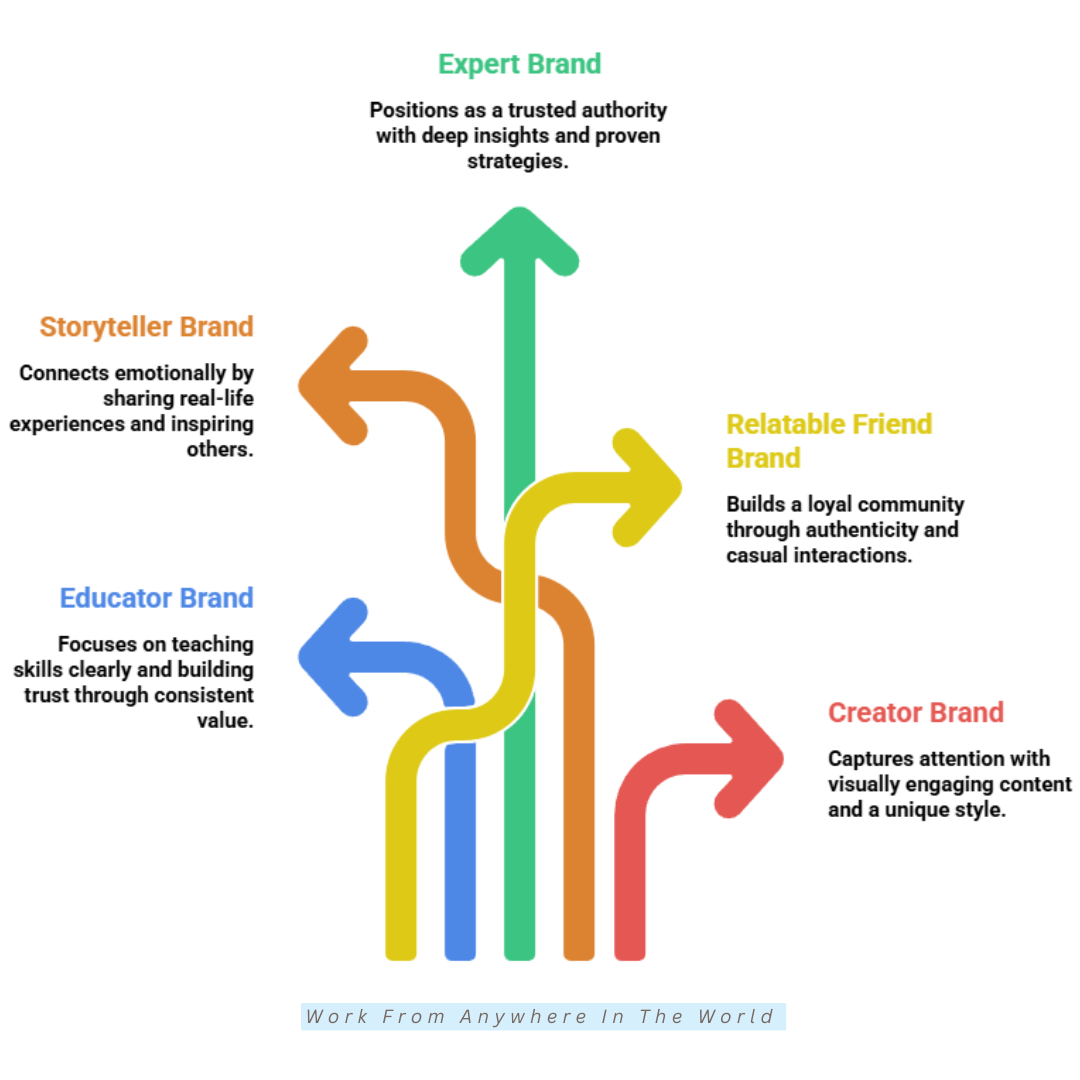
1. The Educator Brand
The Educator Brand focuses on teaching valuable skills in a simple and easy-to-understand way. Instead of overwhelming people with technical information, you break complex topics into practical steps that anyone can follow.
You can share your knowledge through blog posts, tutorials, videos, podcasts, online courses, or social media content. Every piece of content is designed to help your audience solve problems, learn new skills, and achieve better results.
People return because they know your content is practical, reliable, and easy to understand. As you consistently provide value, your audience begins to see you as a trusted source of knowledge and advice.
This encourages them to return whenever they want to learn something new. This personal branding style works well if you enjoy teaching and have expertise in a particular field.
It is ideal for educators, coaches, consultants, trainers, and industry professionals who enjoy sharing their knowledge. Over time, it can help you build authority, grow a loyal audience, and create new career or business opportunities.
Examples To Explore
- Neil Patel (SEO and digital marketing)
- Khan Academy (free educational content)
- Ali Abdaal (productivity and learning)
Why It Works
- Builds trust by consistently providing value.
- Establishes you as a knowledgeable and reliable authority.
- Attracts learners who are genuinely interested in your expertise.
- Creates a loyal audience that returns for practical advice and guidance.
2. The Storyteller Brand
The Storyteller Brand focuses on sharing real-life experiences that connect with people on an emotional level. Instead of simply giving advice, you share your journey, including your challenges, lessons, successes, and personal growth.
Stories can be shared through blog posts, videos, podcasts, social media, or public speaking. Honest experiences and authentic language make your content more relatable, memorable, and engaging.
People often see parts of their own lives reflected in your experiences. This emotional connection builds trust and strengthens relationships. It also encourages your audience to return for more of your content.
This personal branding style works best if you enjoy expressing yourself and inspiring others through genuine storytelling. It is ideal for writers, speakers, entrepreneurs, coaches, and creators who connect with people through authentic experiences.
Over time, authentic stories can help you build a loyal community that connects with both you and your message. They also make your personal brand more memorable and easier for people to relate to.
Examples To Explore
- Gary Vaynerchuk (shares personal experiences and business lessons)
- Humans of New York (real-life human stories)
- Jay Shetty (life lessons through storytelling)
Why It Works
- Creates a strong emotional connection with your audience.
- Makes your content more memorable and relatable.
- Builds trust through authentic experiences.
- Encourages deeper engagement and long-term loyalty.
3. The Expert Brand
The Expert Brand focuses on positioning yourself as a trusted authority in a specific field. You share in-depth knowledge, proven strategies, and practical insights that reflect your experience and expertise.
Your content is often supported by research, case studies, data, or professional experience. Instead of offering basic tips, you explain topics in greater detail and provide practical solutions that help your audience make informed decisions.
As you consistently share valuable expertise, people begin to recognize you as a reliable source of information. They gain confidence in your knowledge and are more likely to seek your advice, products, or services.
This trust can lead to referrals, partnerships, and new professional opportunities. It also helps establish your reputation as a respected expert in your field.
This personal branding style works best if you have specialized skills and significant experience in your industry. It is ideal for consultants, coaches, business owners, and professionals who want to establish long-term credibility.
Over time, your expertise can help you attract high-value clients, speaking opportunities, media interviews, and sustainable business growth. It also strengthens your professional reputation and sets you apart from competitors.
Examples To Explore
- Simon Sinek (leadership insights and frameworks)
- Seth Godin (marketing and business strategy)
- Marie Forleo (business and entrepreneurial education)
Why It Works
- Demonstrates authority through specialized knowledge.
- Attracts high-value clients and professional opportunities.
- Builds long-term credibility and trust.
- Helps you stand out from more general content creators.
4. The Relatable Friend Brand
The Relatable Friend Brand focuses on being genuine, approachable, and easy to connect with. You communicate in a simple, conversational tone and openly share your thoughts, experiences, successes, and everyday challenges.
Your content feels like a friendly conversation rather than a formal presentation. You might share daily life updates, practical tips, personal opinions, or behind-the-scenes moments.
By showing your personality, you make your content feel authentic and welcoming. People follow you because they feel they know and trust you.
This personal connection encourages regular engagement and meaningful conversations. Over time, it helps build a loyal community that values both your content and your authenticity.
This personal branding style works best if you enjoy being yourself and creating genuine relationships with your audience. It is especially effective for creators, coaches, influencers, and small business owners.
Building trust before promoting products or services creates stronger connections with your audience. Your honesty and consistency can strengthen your reputation and encourage long-term loyalty.
Examples To Explore
- Emma Chamberlain (casual and authentic lifestyle content)
- MrBeast (engaging and relatable personality)
- Lilly Singh (humour and everyday relatability)
Why It Works
- Feels genuine and easy to trust.
- Builds a strong emotional connection with your audience.
- Encourages engagement through authenticity and relatability.
- Creates a loyal and active community.
5. The Creator Brand
The Creator Brand focuses on producing visually engaging and creative content that captures attention. Instead of relying only on information, you use strong visuals, storytelling, and creative presentation to make your content memorable.
You express your ideas through videos, graphics, photography, illustrations, or short-form content. Your editing style, design choices, and overall presentation become an important part of your personal brand.
As people become familiar with your creative style, they begin to recognize your content even before they see your name. This consistency helps strengthen your brand identity and encourages people to return for future content.
This personal branding style works best if you enjoy creating visual content and experimenting with different formats. It is ideal for photographers, filmmakers, designers, artists, and content creators who want their creativity to become part of their personal brand.
Whether you use YouTube, Instagram, TikTok, or other platforms, creativity and consistency can help you build a loyal and engaged audience. A distinctive visual style also makes your content easier to recognize and remember.
Examples To Explore
- Casey Neistat (creative storytelling and filmmaking)
- Zach King (creative visual effects and short-form videos)
- Peter McKinnon (photography, filmmaking, and visual creativity)
Why It Works
- Captures attention through engaging visuals.
- Builds recognition with a distinctive creative style.
- Encourages sharing across multiple platforms.
- Helps your content stand out in a crowded digital space.
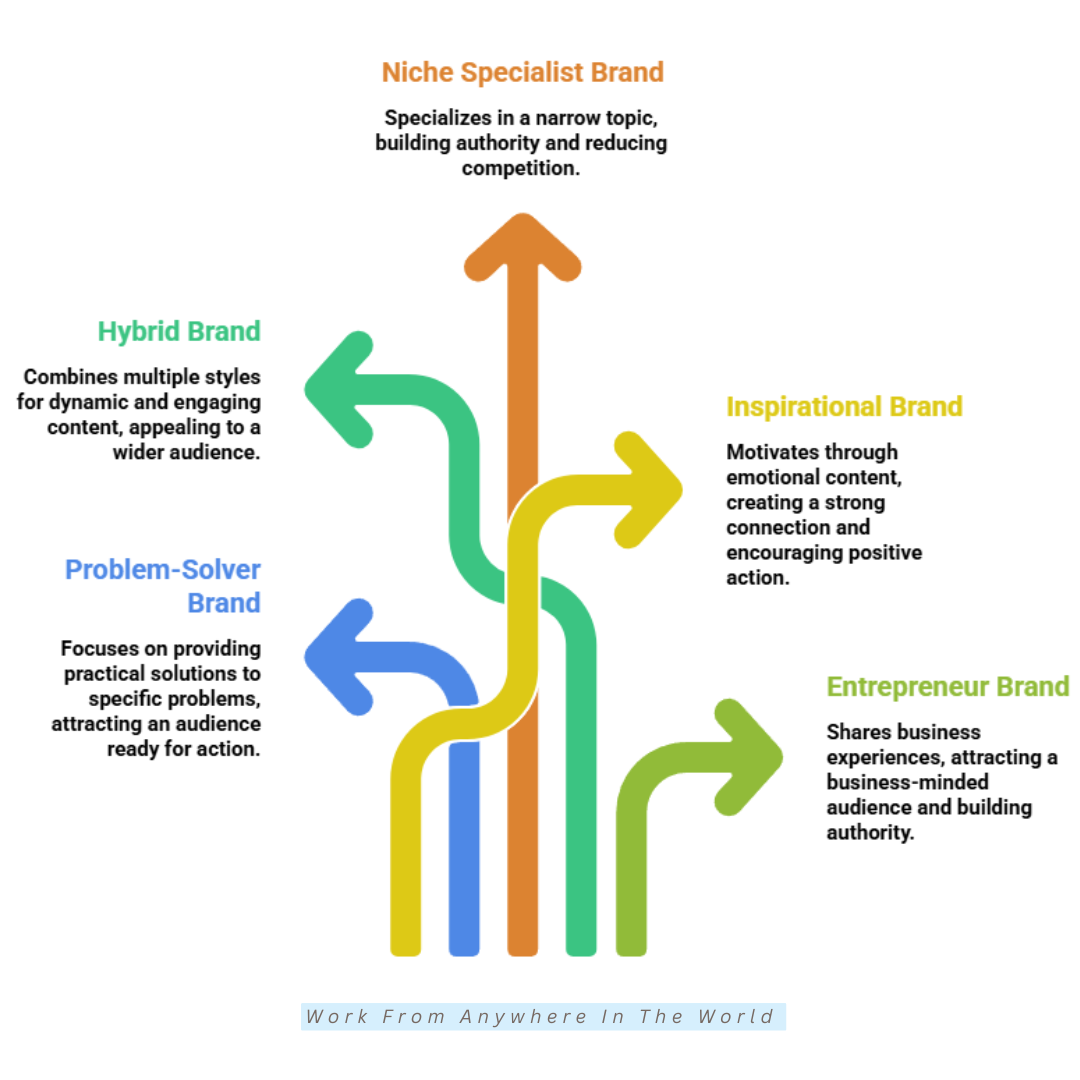
6. The Problem-Solver Brand
The Problem-Solver Brand focuses on helping people solve specific, real-world problems. Your content is practical, direct, and solution-driven.
Instead of offering general advice, you answer the questions your audience is already asking. Every piece of content should help readers achieve a clear result.
You may create step-by-step tutorials, troubleshooting guides, checklists, case studies, or practical tips. Your goal is to make complex topics easier to understand and apply.
By providing clear guidance, you help your audience save time and avoid common mistakes. You also help them achieve better results with confidence.
People return because they know they’ll find useful answers instead of vague opinions. As you consistently solve problems, your audience begins to trust your recommendations and expertise.
Over time, you become recognized as a dependable resource that delivers real value. Your practical advice also encourages people to recommend your content to others.
This personal branding style works best if you understand your audience’s challenges. It is especially effective for professionals, consultants, educators, and business owners.
By consistently helping people overcome obstacles, you can build authority and strengthen your credibility. It also helps you attract loyal followers and long-term business opportunities.
Examples To Explore
- Brian Dean (actionable SEO strategies)
- Pat Flynn (practical online business advice)
- HubSpot (problem-solving content and marketing guides)
Why It Works
- Solves real problems your audience faces.
- Delivers practical solutions people can apply immediately.
- Builds trust through consistent, valuable content.
- Attracts an audience that is ready to take action.
7. The Hybrid Brand
The Hybrid Brand combines several personal branding styles into one balanced and authentic approach. Instead of focusing on just one style, you blend different approaches to match your strengths and your audience’s interests.
For example, a website dedicated to connecting people with nature might combine gardening advice, wildlife photography, outdoor experiences, and seasonal inspiration. This variety keeps the content fresh while appealing to people with different interests.
A hybrid approach also lets you show different sides of your personality. You can be an expert in your field while remaining approachable, relatable, and authentic.
Over time, your audience connects with both your knowledge and your unique perspective. This creates stronger relationships and encourages long-term engagement.
This personal branding style works best if you enjoy variety and flexibility. It is ideal for creators, entrepreneurs, educators, and professionals who use different types of content.
It also helps you adapt your content to different platforms without losing your unique voice. As your brand grows, people begin to recognize your style wherever they discover your content.
Examples To Explore
- Gary Vaynerchuk (education, storytelling, and motivation)
- Alex Hormozi (data-driven insights with personal experience)
- Mel Robbins (storytelling, advice, and actionable tips)
Why It Works
- Combines the strengths of multiple branding styles.
- Keeps content fresh, varied, and engaging.
- Appeals to a broader range of audience interests.
- Builds a flexible and well-rounded personal brand.
8. The Niche Specialist Brand
The Niche Specialist Brand focuses on becoming known for one specific area of expertise rather than trying to cover every topic. By narrowing your focus, you create content that speaks directly to a clearly defined audience.
Your content is practical, highly targeted, and designed to solve specific problems. For example, a website dedicated to pet Reiki can focus entirely on holistic healing for pets, allowing readers to quickly recognize its area of expertise.
This consistency makes it easier for people to understand exactly what you offer. It also helps your audience remember your brand and recommend it to others.
As your reputation grows, people begin to see you as a trusted source of reliable information. This trust can lead to greater credibility, stronger relationships, and new opportunities.
A specialized focus can also help you build authority more quickly. It attracts people who are actively searching for the knowledge and solutions you provide.
This personal branding style works particularly well in competitive industries where standing out can be difficult. It is ideal for professionals, consultants, coaches, and creators who want to become recognized experts before expanding into related topics.
Examples To Explore
- Graham Stephan (personal finance and investing)
- Mike Israetel (fitness and exercise science)
- Mark Rober (engineering and science experiments)
Why It Works
- Builds authority within a clearly defined niche.
- Attracts a highly targeted and engaged audience.
- Reduces direct competition through specialization.
- Makes your expertise easy to recognize and remember.
9. The Inspirational Brand
The Inspirational Brand focuses on motivating people through uplifting, encouraging, and meaningful content. You create messages that help others believe in themselves, overcome obstacles, and take positive action.
Your content may include motivational stories, life lessons, personal experiences, inspiring quotes, or messages of hope and resilience. Rather than simply sharing information, you encourage people to think differently and move forward with confidence.
As your audience connects with your message, they begin to see you as a positive influence they can rely on. Your encouragement helps build trust and creates lasting emotional connections.
By consistently sharing authentic and empowering content, you can build a loyal community. Many people will return whenever they need motivation, guidance, or a fresh perspective.
This personal branding style works best if you genuinely enjoy encouraging others and making a positive difference. It is ideal for coaches, speakers, leaders, mentors, and creators who want to inspire positive change.
Whether you focus on personal growth, leadership, business, health, or mindset, your ability to inspire can set your brand apart. Over time, your positive influence becomes one of your greatest strengths.
Examples To Explore
- Tony Robbins (personal development and motivation)
- Les Brown (inspirational speaking)
- Jay Shetty (mindset and life lessons)
Why It Works
- Creates a strong emotional connection with your audience.
- Builds a loyal and engaged community.
- Encourages positive action and personal growth.
- Inspires highly shareable content across multiple platforms.
10. The Entrepreneur Brand
The Entrepreneur Brand focuses on building, growing, and sharing business experiences. You document your journey as you create income, launch ventures, or scale existing projects.
Your content often includes business strategies, lessons learned, successes, and setbacks. By sharing real experiences, you give your audience practical insights they can apply to their own goals.
This approach is practical and often supported by real-world examples, data, or case studies. People appreciate seeing both the achievements and the challenges behind building a successful business.
As your audience follows your journey, they begin to see you as a credible source of business knowledge. Your openness and experience help build trust over time.
This personal branding style attracts people who are interested in entrepreneurship, financial growth, and independence. It is ideal for founders, freelancers, consultants, and business owners who enjoy sharing what they learn.
By consistently documenting your progress and sharing valuable insights, you can build a loyal audience and create new opportunities for partnerships, products, and services.
Examples To Explore
- Elon Musk (innovation and business leadership)
- Grant Cardone (business and sales strategies)
- Mark Cuban (startup and business insights)
Why It Works
- Attracts a business-minded audience.
- Builds authority in entrepreneurship.
- Demonstrates real growth and experience.
- Creates monetization opportunities.
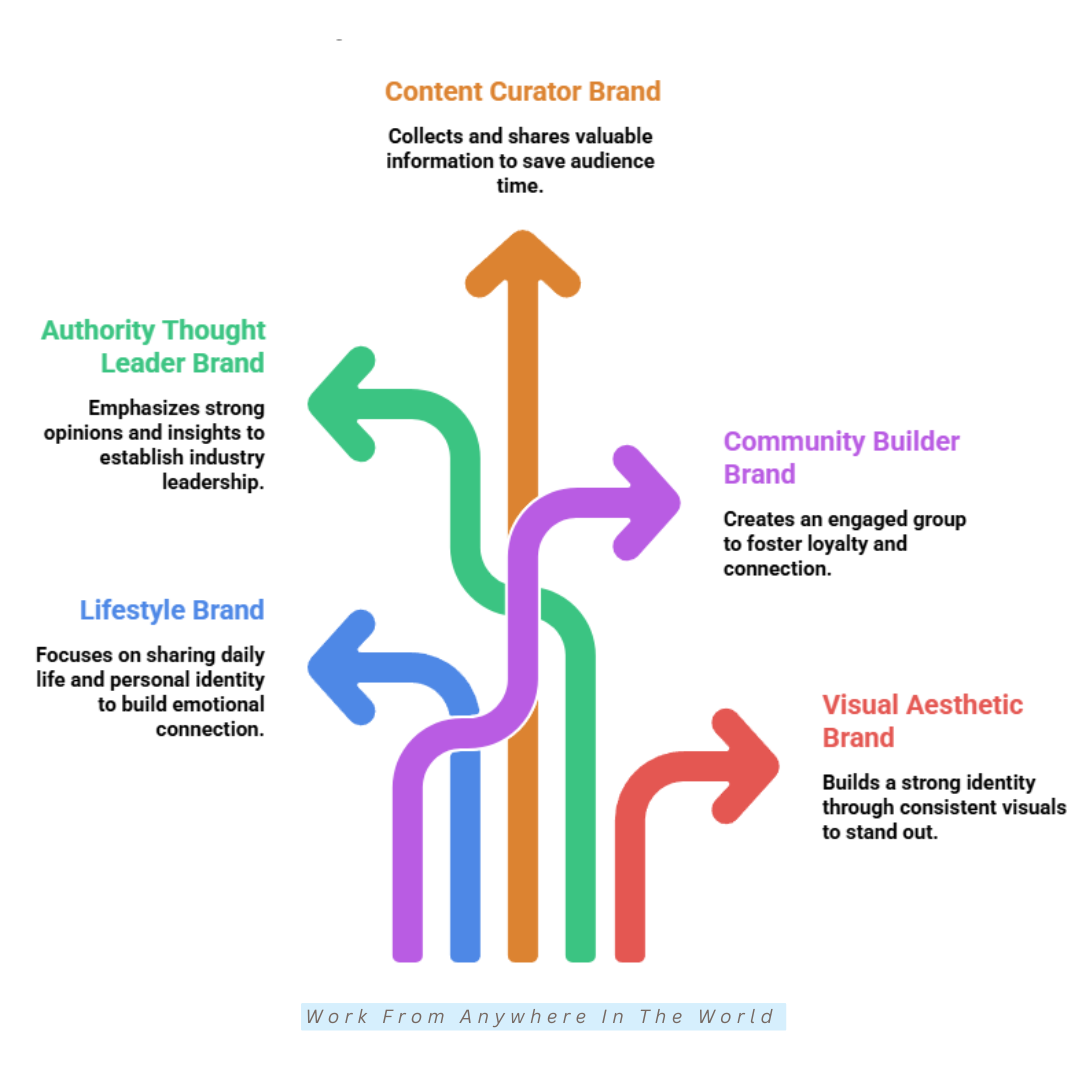
11. The Lifestyle Brand
The Lifestyle Brand focuses on sharing your daily life, habits, routines, and personal identity in a visually appealing way. Instead of teaching or selling directly, you give people a glimpse into how you live.
This may include your work routine, travel, fashion, food, hobbies, and personal interests. Lifestyle websites that focus on topics such as vegan living, travel, or wellness are excellent examples of how consistent content can attract a loyal audience over time.
The goal is to help your audience feel connected to your personality, values, and everyday experiences. People often follow lifestyle creators because they relate to their way of living.
This personal branding style relies heavily on authentic storytelling through photos, videos, and social media. Consistency helps your audience become familiar with your unique style and perspective.
Over time, your audience begins to trust your recommendations and enjoy following your journey. This can lead to stronger engagement and long-term loyalty.
The Lifestyle Brand works best for creators who enjoy documenting their experiences and inspiring others through everyday life. It is especially effective on visual platforms where engaging content helps build meaningful connections.
Examples To Explore
- Emma Chamberlain (daily life and personality-driven content)
- Chiara Ferragni (fashion and lifestyle branding)
- David Dobrik (vlog-style personal life content)
Why It Works
- Builds a strong personal connection.
- Creates highly engaging visual content.
- Encourages long-term audience loyalty.
- Performs well across visual social platforms.
12. The Authority Thought Leader Brand
The Authority Thought Leader Brand focuses on sharing well-informed perspectives, insights, and advanced ideas within a specific industry or field. Rather than covering only the basics, you encourage people to think more deeply about important topics.
Your content often includes expert analysis, industry trends, predictions, and thoughtful commentary based on research or real-world experience. The goal is to help your audience better understand complex ideas and emerging developments.
As you consistently share valuable insights, people begin to trust your judgment and expertise. They look to you for guidance, informed opinions, and fresh perspectives on important issues.
This approach also encourages meaningful discussions within your industry. By sharing original ideas and challenging conventional thinking, you can influence how others view your area of expertise.
This personal branding style works best for professionals, executives, consultants, researchers, and experienced creators who enjoy critical thinking and sharing their knowledge. It is especially effective for those who want to shape conversations and inspire new ideas.
Over time, your reputation grows beyond simply providing information. You become recognized as a respected voice whose opinions help influence trends, decisions, and industry discussions.
Examples To Explore
- Simon Sinek (leadership and motivation ideas)
- Seth Godin (marketing and business thinking)
- Naval Ravikant (startup and philosophy insights)
Why It Works
- Builds strong authority and trust.
- Positions you as an industry leader.
- Attracts a highly engaged professional audience.
- Differentiates your brand through original thinking.
13. The Content Curator Brand
The Content Curator Brand focuses on collecting, organizing, and sharing the most useful and relevant information from different sources. Instead of creating everything yourself, you help your audience discover valuable content in one convenient place.
Your role is to filter out unnecessary information and highlight what truly matters. By simplifying complex topics, you save your audience time and help them stay informed.
Content curators often share industry news, research, trends, useful tools, and expert opinions. Rather than overwhelming readers with information, they present it in a clear and organized way.
As people consistently find valuable resources through your content, they begin to trust your recommendations. Over time, your brand becomes a reliable source for useful updates and practical insights.
This personal branding style works best for individuals who enjoy research, analysis, and discovering valuable information. It is ideal for bloggers, newsletter creators, industry analysts, and professionals who enjoy helping others stay informed.
By consistently sharing high-quality resources, you can build credibility and encourage your audience to return whenever they need trusted information. This strengthens your reputation and helps grow a loyal following.
Examples To Explore
- Matt Navarra (social media insights and trends)
- Tim Ferriss (curated productivity and ideas)
- Ben Thompson (tech industry analysis)
Why It Works
- Saves your audience time and effort.
- Builds trust through careful content selection.
- Positions you as a reliable source of industry insights.
- Makes it easier to create consistent, valuable content.
14. The Community Builder Brand
The Community Builder Brand focuses on creating a strong, engaged group of people around shared interests, goals, or values. Instead of simply publishing content, you encourage conversations and meaningful interactions.
Your audience becomes active participants rather than passive viewers. People share ideas, ask questions, support one another, and contribute to the community.
This sense of belonging helps build stronger relationships and long-term trust. Members feel connected not only to your brand but also to others who share similar interests.
As your community grows, you become a trusted leader who brings people together. Your role is to encourage discussions, celebrate successes, and create an environment where everyone feels welcome.
This personal branding style works best for coaches, educators, business owners, creators, and community leaders who enjoy engaging with others. It is especially effective for those who value collaboration and long-term relationships over simply growing follower numbers.
By consistently creating opportunities for people to connect and participate, you build a loyal community that continues to grow through shared experiences. This creates a personal brand that people genuinely enjoy being part of.
Examples To Explore
- Gary Vaynerchuk (community engagement and entrepreneurship)
- Reddit (community-driven platform model)
- Marie Forleo (business coaching and community building)
Why It Works
- Builds strong audience loyalty.
- Encourages active participation.
- Creates long-term engagement.
- Strengthens trust and meaningful connections.
15. The Visual Aesthetic Brand
The Visual Aesthetic Brand focuses on building a strong identity through consistent design, style, and visual presentation. Your content is carefully crafted to be visually appealing and instantly recognizable.
Instead of relying heavily on text, you communicate through images, videos, colours, typography, and creative design elements. Every piece of content reflects your unique style and reinforces your brand identity.
Consistency plays a key role in this branding style. When people repeatedly see the same visual style, they begin to recognize your content before they even read your name.
This strong visual identity helps your brand stand out across websites, social media platforms, and marketing materials. It also creates a more professional and memorable impression.
This personal branding style works best for photographers, designers, artists, fashion creators, videographers, and other creative professionals. It is ideal for anyone who enjoys expressing ideas through visual storytelling.
By maintaining a consistent aesthetic, you create a brand that people quickly recognize and remember. Over time, your distinctive style becomes one of your greatest competitive advantages.
Examples To Explore
- Chiara Ferragni (fashion and lifestyle aesthetics)
- Peter McKinnon (photography and cinematic visuals)
- Zach King (creative visual storytelling)
Why It Works
- Builds a strong visual identity.
- Creates instant brand recognition.
- Produces highly engaging and shareable content.
- Helps your brand stand out across multiple platforms.
Frequently Asked Questions
Q1: How Do I Choose The Right Personal Branding Style?
Choose a personal branding style that reflects your personality, skills, and long-term goals. You can also combine different styles to create a unique brand that feels authentic and resonates with your target audience.
Q2: Why Is Personal Branding Important?
A strong personal brand can open doors to new career opportunities, business partnerships, and loyal customers. It also helps people understand what makes you unique and why they should choose you over someone else.
Q3: Can I Combine Different Personal Branding Styles?
Yes. Many successful entrepreneurs combine several branding styles to create a brand that reflects their personality and goals. For example, you might be an educator, storyteller, and expert at the same time.
Q4: How Long Does It Take To Build A Personal Brand?
Building a personal brand takes time and consistency. Regularly creating valuable content, engaging with your audience, and staying authentic will help your reputation grow over the long term.
Q5: Which Personal Branding Style Is Best For Beginners?
The best branding style is the one that feels natural to you. Start by focusing on your strengths, interests, and experience, then develop a consistent message that connects with your target audience.
Q6: Can Personal Branding Help You Make Money Online?
Yes. A strong personal brand can help you attract clients, grow a blog or YouTube channel, promote affiliate products, sell digital products, or build a successful online business over time.
Conclusion
Personal branding is about how you present yourself and what people remember about you. It is not about being perfect. It is about being clear, consistent, and authentic.
Whether you choose to become an educator, storyteller, entrepreneur, or combine several approaches into a hybrid brand, the key is to provide value and remain true to yourself. Over time, your reputation becomes one of your greatest professional assets.
In today’s digital world, a strong personal brand can open the door to new opportunities, meaningful connections, and long-term growth. Start small, stay consistent, and continue building trust with your audience.
I trust you enjoyed this article on Examples Of Personal Branding: 15 Inspiring Ideas. If you’re ready to grow your online presence, be sure to explore our guides on affiliate marketing, online business skills, and how digital nomads make money.
Take care!
— JeannetteZ 🌍✨
💬 Your Opinion Is Important To Me
Do you have thoughts, ideas, or questions? I’d love to hear from you. Please leave your comments below or email me directly at Jeannette@WorkFromAnywhereInTheWorld.com.
📚 More Work From Anywhere Reads
🚀 Ready to Build a Business You Can Run from Home
Or from Anywhere in the World?
Imagine creating income on your terms — from home, a cozy café, or wherever life takes you.
With the right tools, training, and community support, it’s entirely possible.
Start your own online business for free — no credit card needed.
Disclosure
This post may contain affiliate links. As an Amazon Associate and participant in other affiliate programs, I earn from qualifying purchases at no extra cost to you. Please read my full affiliate disclosure.