Lingotek Translation Review: 10 Powerful Features
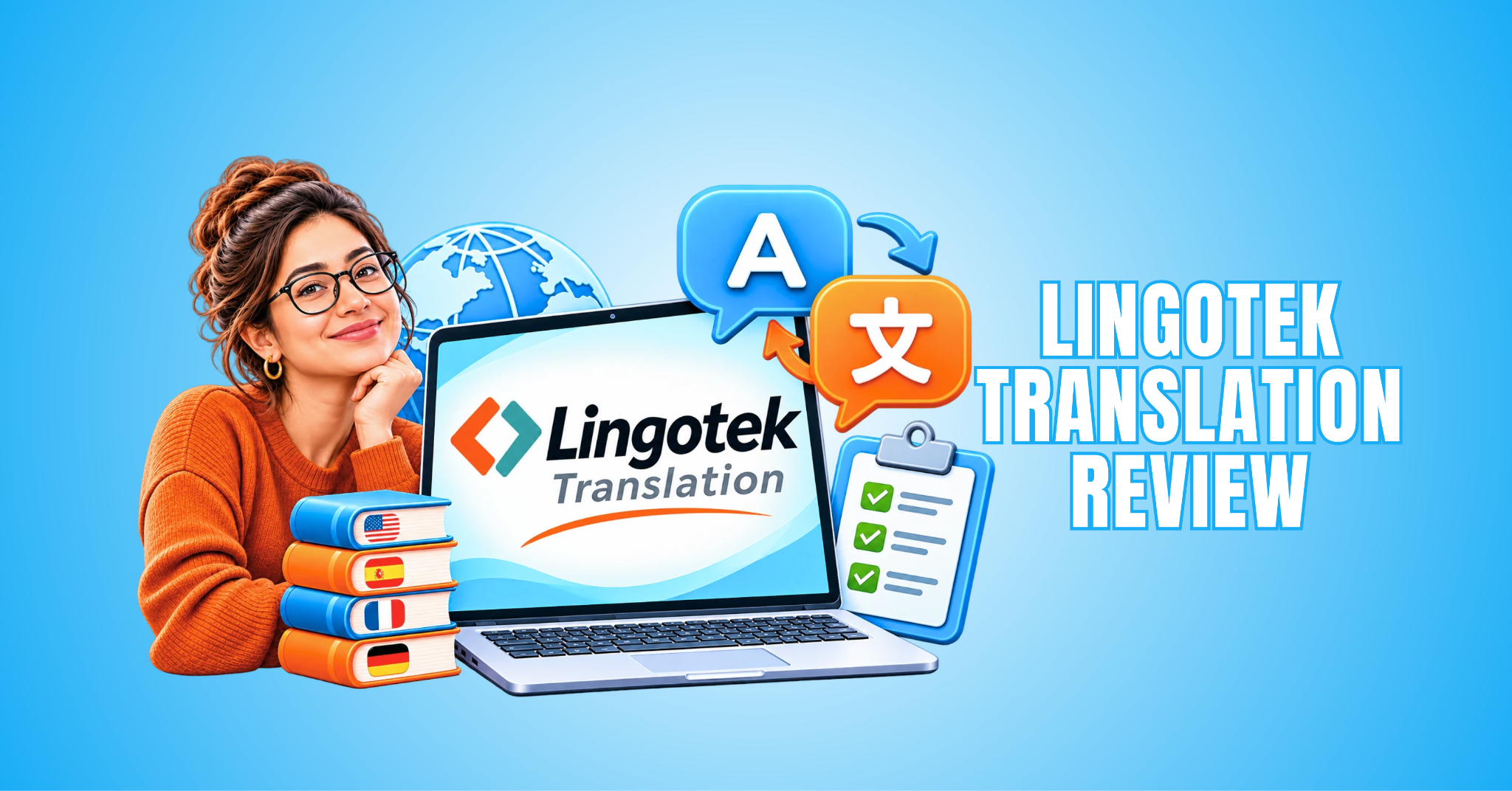
Lingotek Translation Review: Managing multilingual content can become challenging as businesses expand into international markets. Translating websites, product catalogues, and customer support materials requires more than simply converting words from one language into another.
Lingotek offers translation management tools designed to help businesses organize multilingual projects, coordinate workflows, and maintain consistency across different languages.
Its platform combines translation technology, automation, and collaboration tools to support organizations working with multilingual content.
In this Lingotek Translation Review, we’ll explore the platform’s main features, advantages, limitations, and pricing considerations. You’ll learn whether Lingotek is a good fit for your website, business, or translation projects.
What Is Lingotek Translation?
Lingotek Translation is a cloud-based translation management system (TMS) that helps businesses organize and manage multilingual content. It brings translation, editing, project coordination, and quality checks into one connected workflow.
Unlike basic translation tools, Lingotek supports the broader localization process. Businesses can prepare translation projects, coordinate language professionals, review translated content, and manage updates through a central platform.
Lingotek combines machine translation, professional human translation, and human review. Its Translation Workbench provides tools such as translation memories, terminology management, and quality checks to help maintain consistency.
The platform can be particularly useful for businesses that regularly publish content in several languages. For example, an international company may need to translate website pages, product descriptions, marketing materials, and customer support documents.
Lingotek also offers integrations with content management systems and business applications. These connections can reduce manual work and help teams maintain a more organized translation process.
For organizations expanding into international markets, Lingotek provides a structured approach to managing multilingual projects while supporting collaboration between translators, editors, and content teams.
Key Features Of Lingotek Translation
Lingotek offers translation management tools that help businesses organize multilingual content, coordinate translators, and maintain consistency across languages.
Let’s explore 10 important Lingotek features and how they support international businesses and website localization projects.
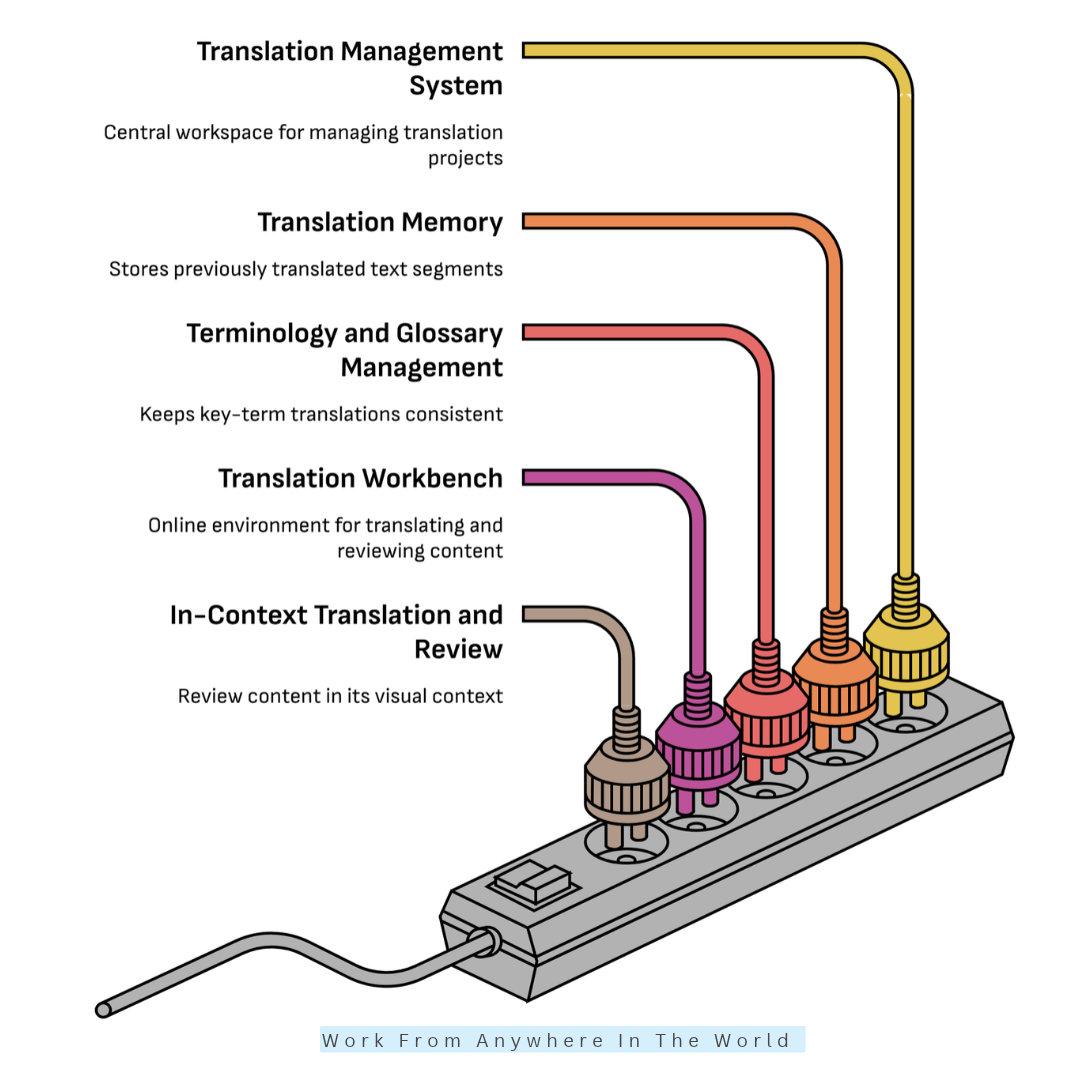
1. Translation Management System
Lingotek provides a centralized workspace for organizing and managing translation projects. Teams can coordinate translators, assign tasks, and monitor progress without relying entirely on spreadsheets and emails.
This approach is particularly useful when several departments need translated content. For example, a marketing team may submit website pages while a product team prepares technical documents.
A shared workflow helps both departments follow consistent procedures and keep projects organized. Businesses managing several languages can also track their translation activities more efficiently.
For independent professionals handling multiple client projects, our guide to freelancer project management software explores additional tools for organizing assignments and deadlines.
2. Translation Memory
Lingotek’s translation memory stores previously translated text segments for future use. When similar content appears again, translators can review existing translations instead of starting from scratch.
This feature is particularly useful for businesses that regularly update product descriptions, website pages, and customer support documents.
For example, an online store may use similar shipping information across several product pages. Translation memory can help maintain consistent wording while reducing repetitive work.
However, previously translated material still requires review. Context, meaning, and customer expectations may differ between projects.
3. Terminology And Glossary Management
Lingotek provides terminology management tools that help businesses maintain consistent language across translation projects. Companies can establish preferred translations for product names, technical expressions, and brand-specific terminology.
Shared glossaries are particularly valuable when several translators work on the same project. They help everyone follow established language guidelines and reduce inconsistencies.
For example, a software company may use specific terminology for its products and features. A shared glossary helps maintain those terms across websites, manuals, and customer support materials.
Consistent terminology also supports brand recognition. Our article on examples of personal branding explores how a recognizable identity can be developed across different communication channels.
4. Translation Workbench
Lingotek’s Translation Workbench provides an online environment where translators can work with multilingual content. It brings translation memories, terminology resources, machine translation, formatting tools, and quality checks into one workspace.
This integration reduces the need to switch between several applications while completing translation assignments. For example, someone translating a product manual can consult previous translations and check approved terminology without leaving the Workbench.
The platform also supports task management and progress tracking, helping translation teams organize their assignments and maintain consistent workflows.
5. In-Context Translation And Review
Lingotek’s In-Context Workbench helps translators review content within its intended visual environment. This can be particularly useful when translating websites and other digital materials.
For example, a translated navigation label may be longer than the original text. Without reviewing the page layout, the change could affect menus, buttons, or other design elements.
In-context review helps teams identify these problems before publishing translated content. It also supports collaboration between translators, editors, and website designers.
This is particularly important for online stores serving international customers. Our guide to eCommerce website best practices explores additional ways to create clear, user-friendly shopping experiences.
6. Intelligent Workflow Automation
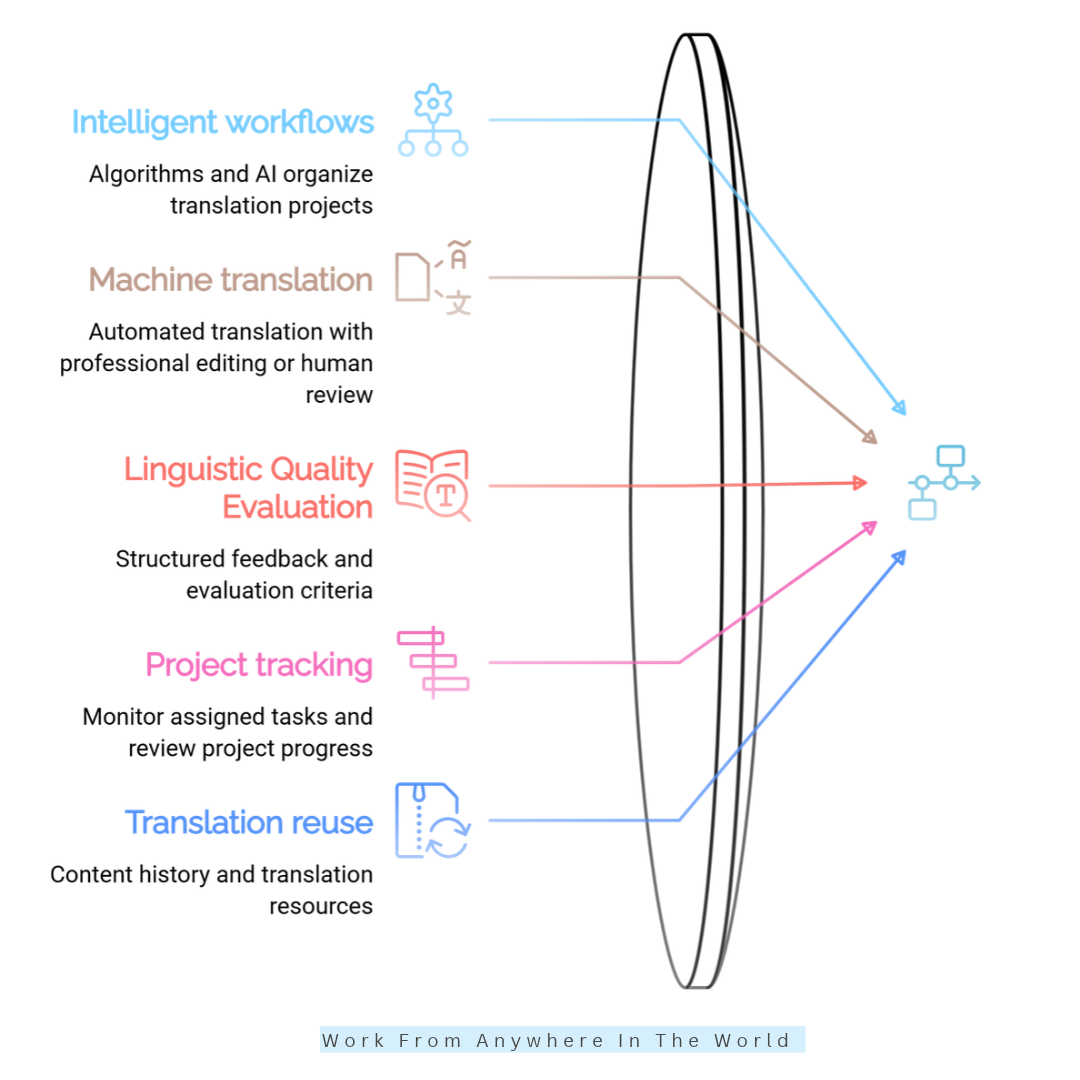
Lingotek’s Intelligent Workflows use algorithms and AI-assisted processes to organize translation projects. According to the provider, these workflows can consider deadlines, word counts, available translators, and other project requirements.
This automation helps businesses coordinate multilingual projects without manually organizing every assignment. It can be especially useful when several teams work across different countries and time zones.
For example, a company launching products internationally may need separate translation and review schedules for each market. Automated workflows can help coordinate these activities and keep projects moving.
However, businesses must still establish clear procedures and monitor important assignments. Human oversight remains essential to maintain translation quality and meet project requirements.
7. Machine Translation And Human Review
Lingotek combines machine translation with professional human translation and editing services. This lets businesses choose different approaches based on their content and accuracy requirements.
Machine translation can quickly prepare initial drafts, particularly for internal documents or large volumes of repetitive content. Human reviewers can then check terminology, meaning, and readability.
For customer-facing materials, professional review is particularly important. Marketing messages, product descriptions, and support documents must communicate clearly across different languages.
Lingotek also supports machine translation post-editing, allowing translators to refine automatically generated content. The appropriate workflow depends on the audience, subject matter, and importance of accuracy.
Wealthy Affiliate – Mini Review
If you’ve ever thought about turning your blog, passion, or niche into an online business,
Wealthy Affiliate (WA) is one of the most beginner-friendly platforms I’ve used.
It combines step-by-step training, website hosting, AI-powered tools,
keyword research, and an active community all in one place.
What I like most is that you can start for free (no credit card needed), explore the platform,
test the tools, and connect with other entrepreneurs before upgrading.
WA isn’t a “get rich quick” scheme — success comes from consistent effort
and applying what you learn over time.
8. Linguistic Quality Evaluation
Lingotek provides Linguistic Quality Evaluation (LQE) tools to help organizations assess the accuracy and consistency of translated content.
Rather than relying entirely on informal feedback, reviewers can evaluate translations using established criteria and documented quality assessments.
For example, a reviewer may identify inconsistent terminology or unclear wording in a translated product description. Recording these issues helps teams communicate corrections and improve future projects.
Lingotek supports structured evaluation processes that can be adapted to different business requirements. These tools are particularly useful for organizations managing ongoing localization projects.
9. Translation Project Tracking And Progress Monitoring
Lingotek provides centralized project tracking tools that help businesses monitor translation assignments across different languages and teams.
Project managers can review progress, identify outstanding tasks, and coordinate deadlines through a shared workspace. This visibility can reduce confusion when several translators work on related projects.
For example, a business launching a multilingual website can monitor translation progress for each language before publishing the completed pages.
Organized tracking helps teams manage responsibilities and maintain more predictable workflows. It is especially useful for businesses handling frequent content updates or international campaigns.
10. Content History And Translation Reuse
Lingotek’s Translation Workbench provides access to content history and translation resources that support recurring localization projects.
Teams can consult earlier translations when updating existing documents or preparing similar materials. This helps maintain consistent terminology and reduces unnecessary repetition.
For example, a company updating a product manual can review previous translations before introducing revised instructions. Translators can preserve established language choices while adapting the content to new requirements.
Content history is particularly valuable for businesses that regularly update websites, product catalogues, and technical documentation. It supports continuity and makes multilingual content easier to maintain.
Pros Of Lingotek Translation
Lingotek offers several advantages for businesses managing multilingual content. Its combination of translation technology, workflow automation, and collaboration tools can simplify complex localization projects.
These capabilities are particularly useful for organizations expanding into international markets. Let’s explore five benefits that make Lingotek worth considering.
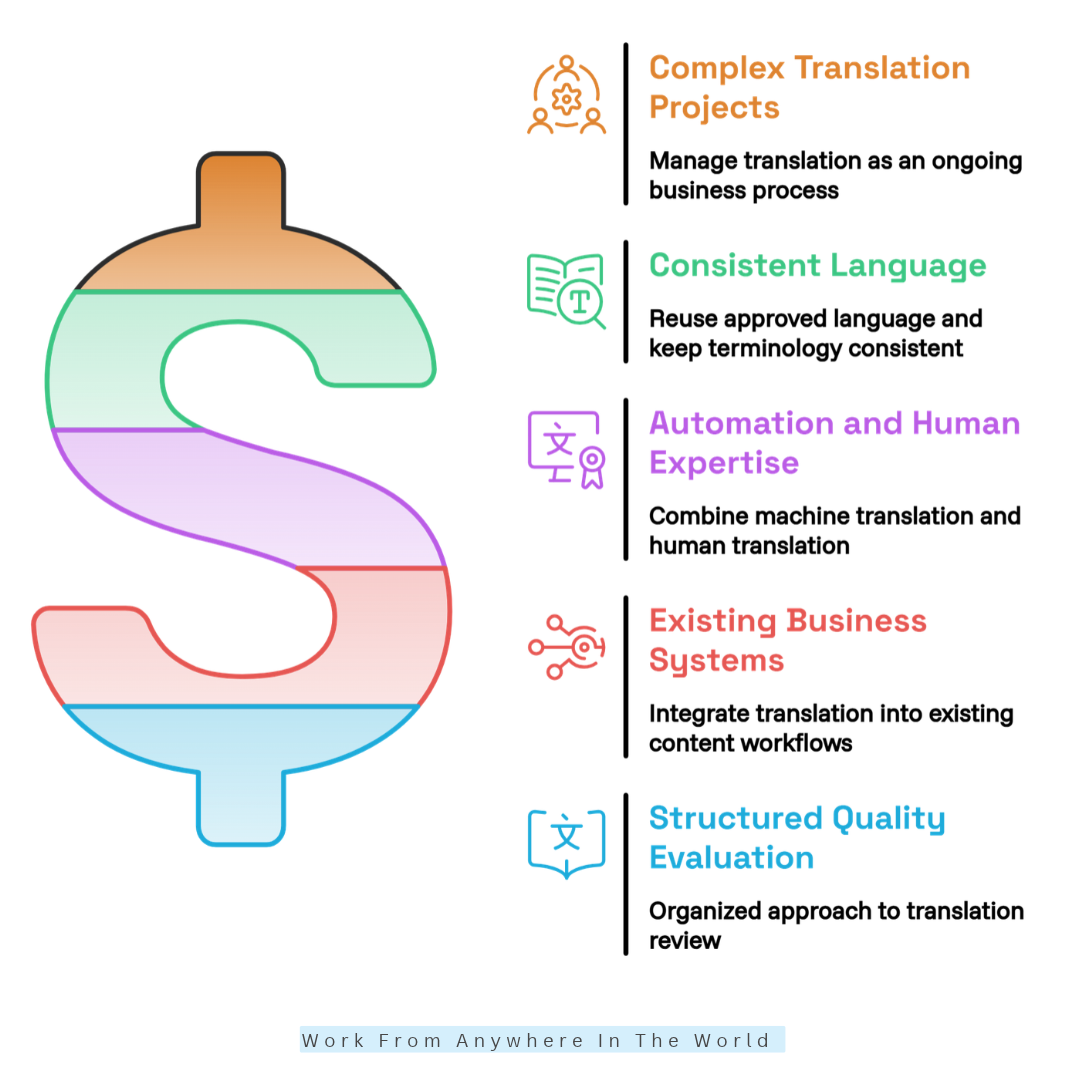
1. Supports Complex Translation Projects
Lingotek helps businesses coordinate translation projects involving multiple languages, departments, and content types. Its centralized platform reduces the need to manage assignments through separate applications.
This is particularly valuable for international businesses preparing product launches, marketing campaigns, or multilingual websites. Teams can organize their responsibilities while following consistent procedures and maintaining clear communication.
For example, a company launching products in several countries can coordinate translation schedules, assign reviewers, and monitor progress within one system. This supports more organized project delivery and reduces confusion between departments.
As businesses expand internationally, communication and coordination become increasingly important. Our article about globalization explores how international connections influence modern businesses and create new opportunities across borders.
2. Encourages Consistent Language
Lingotek’s translation memory and terminology tools help businesses maintain consistent wording across languages and communication channels. This reduces the risk of using different translations for the same products, services, or technical terms.
This is particularly important for companies with specialized products, established brand guidelines, or detailed technical documentation. Consistent terminology helps customers recognize products and understand information more easily.
For example, a software company can maintain approved translations for product features across websites, user guides, and support materials. Translators can refer to established terminology instead of making separate wording decisions for every project.
Maintaining a recognizable brand identity is equally important when communicating internationally. Our guide to brand positioning examples explores how businesses establish a distinctive identity and communicate their value in competitive markets.
3. Combines Automation With Human Expertise
Lingotek allows businesses to combine automated translation with professional human review. This flexibility helps organizations select suitable workflows based on content complexity, intended audiences, and quality requirements.
For example, internal documents may benefit from faster machine-assisted translation, while public marketing materials often require professional editing. Businesses can adjust their approach rather than applying the same translation process to every document.
Combining these methods can help organizations manage large translation workloads while maintaining appropriate quality standards. Automated processes handle repetitive tasks, allowing language professionals to focus on content that requires closer attention.
Human expertise remains particularly important for technical, legal, or culturally sensitive material. Professional reviewers can identify meaning, terminology, and context issues that automated systems may overlook, helping businesses communicate more accurately.
4. Connects With Existing Business Systems
Lingotek offers integrations that can connect translation activities with existing content management systems and business applications. This allows organizations to incorporate translation workflows into their established digital operations.
These connections may reduce repetitive tasks such as manually exporting documents, sending files between departments, and uploading translated content. Employees can spend less time transferring information between different platforms.
For example, a company managing a multilingual website may benefit from a connected workflow that supports ongoing content updates. This can improve coordination between content creators, translators, and website administrators while reducing unnecessary administrative work.
Businesses using several digital platforms may benefit from integrating translation activities into their existing processes. Our guide to online business tools explores additional resources that help organizations manage everyday operations more efficiently.
However, integration capabilities depend on the applications and configurations involved. Businesses should confirm that Lingotek supports their existing systems before choosing the platform.
5. Provides Structured Quality Evaluation
Lingotek supports structured translation reviews that help businesses identify language problems and maintain consistent quality standards. This is particularly helpful when several translators contribute to the same project.
Instead of relying entirely on informal feedback, organizations can document issues, apply evaluation criteria, and monitor recurring problems. This creates a more organized approach to reviewing multilingual content.
For example, a reviewer may identify inconsistent product terminology across several translated documents. Recording these findings helps teams make corrections and improve future translations rather than repeatedly encountering the same issues.
This approach is particularly valuable for businesses working with multiple translators or external language service providers. Clear review procedures make it easier to communicate expectations and evaluate completed work.
Effective results still depend on qualified reviewers and well-defined evaluation standards. Regular quality assessments can help businesses maintain reliable multilingual communication and improve translation processes over time.
Cons Of Lingotek Translation
Although Lingotek offers valuable features for managing multilingual content, it also has limitations worth considering. Its comprehensive approach may require more planning, technical preparation, and resources than some businesses expect.
Understanding these potential drawbacks can help organizations choose a translation solution that matches their needs. Let’s examine five considerations before investing in Lingotek.
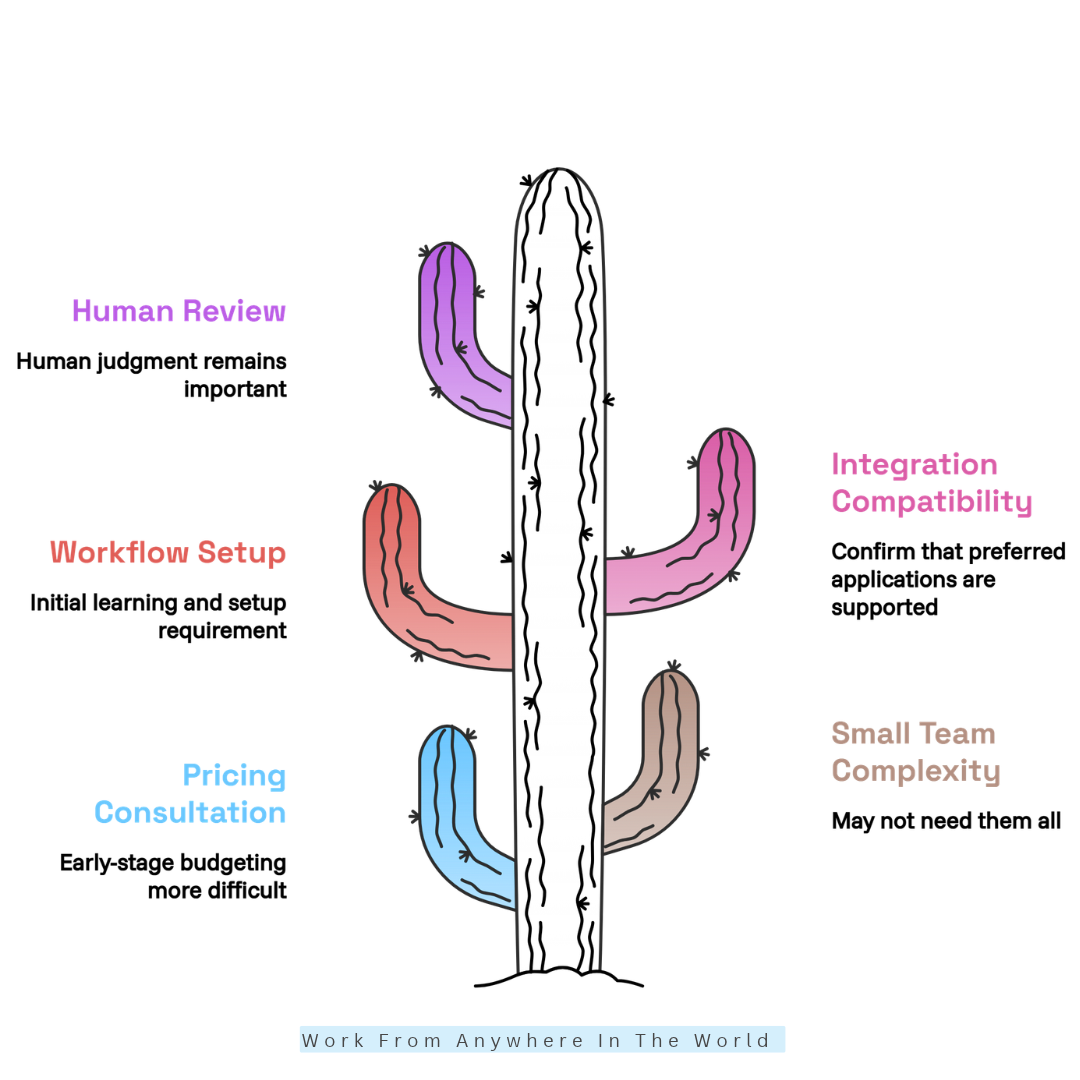
1. Pricing Requires Direct Consultation
Lingotek does not provide a straightforward public pricing table for its translation management system. Businesses generally need to contact the company to discuss their requirements and obtain pricing information.
This can make early-stage budgeting more difficult, particularly for smaller organizations comparing several translation platforms. Without published subscription rates, estimating the total investment may take additional time.
For example, a small business evaluating different translation tools may prefer to compare subscription costs immediately. With Lingotek, the evaluation process may involve a sales consultation before meaningful pricing comparisons are possible.
Before committing to Lingotek, requesting a detailed quote can clarify setup costs, recurring charges, usage limits, and additional services. Understanding these expenses is essential for effective cost budgeting and helps prevent unexpected financial commitments.
2. May Be Too Complex For Small Teams
Lingotek provides a broad range of translation management capabilities designed to support multilingual operations. However, smaller businesses may not need every feature available through the platform.
A company translating only a few documents each month might find a simpler translation solution easier to manage. Advanced workflow automation, terminology management, and project analytics may offer limited value for occasional translation tasks.
For example, a small blog owner may only need help translating selected articles or website pages. Implementing a comprehensive translation management system could introduce unnecessary administrative responsibilities.
Choosing a platform that matches actual translation needs is often more practical than investing in advanced features that rarely get used. This consideration is especially important when starting a small business from home, where simplicity and careful resource management can make everyday operations easier.
3. Requires Workflow Setup
A translation management system needs appropriate configuration to operate effectively. Businesses may need to establish language requirements, review procedures, project responsibilities, and translation resources before beginning regular operations.
This preparation can introduce an initial learning curve, particularly for organizations unfamiliar with centralized translation management. Employees may also need time to understand their responsibilities within the new workflow.
For example, a company moving from email-based translation requests to a centralized platform may need to redesign its approval process. Translators, content managers, and reviewers must understand how assignments move between different stages.
The initial effort may provide long-term benefits for businesses handling frequent translation projects. However, organizations should allow sufficient time for implementation, employee training, and workflow adjustments.
Although the initial setup may take time, well-organized workflows can provide lasting benefits for recurring translation projects. Clarifying available onboarding support and training requirements beforehand can make the transition considerably smoother.
4. Integrations Need Compatibility Checks
Lingotek offers connectors for business applications and content management systems, but compatibility can vary depending on the software involved. Organizations should confirm that their preferred applications and configurations are supported.
This is especially important for businesses using customized websites, specialized software, or complex publishing environments. An available integration does not necessarily guarantee that every required feature will function as expected.
For example, a company operating a heavily customized website may need additional technical evaluation before connecting its content to Lingotek. Existing plugins, workflows, and system configurations could affect implementation.
Testing essential workflows before implementation can reveal compatibility issues that might otherwise cause delays. Understanding concepts such as EDI integration also highlights the importance of reliable connections between business systems.
5. Human Review Remains Important
Lingotek can support machine translation and quality evaluation, but these capabilities do not eliminate the need for human judgment. Translation accuracy depends on the source material, target language, subject matter, and intended audience.
Automated translations may communicate basic information effectively while overlooking subtle differences in meaning or cultural context. This becomes particularly important when businesses publish content intended to influence customer decisions.
For example, a translated marketing message may be grammatically correct but fail to communicate the intended emotion or cultural meaning. A professional reviewer can identify these weaknesses and suggest more appropriate wording.
Establishing clear review procedures helps maintain the quality of important multilingual content. Legal documents, technical instructions, and customer-facing materials may require qualified linguistic professionals to verify accuracy, clarity, and appropriate terminology.
Machine translation can improve efficiency, especially when handling large amounts of content. However, it works best alongside professional expertise to ensure subtle language differences, cultural meaning, and important details are not overlooked.
Lingotek Translation Pricing And Plans
Lingotek uses customized pricing for its translation management system rather than offering a straightforward public subscription table. Organizations can contact Lingotek directly to request a personalized quote based on their translation requirements.
The overall cost may depend on content volume, language pairs, workflow complexity, integrations, and additional services. Implementation, onboarding, employee training, and ongoing technical support may also influence the final quotation.
Lingotek supports different translation approaches, including machine translation with post-editing, professional human translation, and human translation with additional review. Each approach may involve different costs depending on the project’s complexity and quality expectations.
Because pricing is tailored to individual requirements, there is no single confirmed public rate that applies to every customer. Third-party software listings also indicate that interested organizations must contact the vendor for pricing details.
The availability of a free version or trial should not be assumed without direct confirmation. Asking about evaluation options can help potential customers determine whether the platform suits their requirements before making a financial commitment.
Preparing for a pricing consultation can make the process more productive. Estimating monthly translation volume, identifying required language pairs, and listing essential integrations will help clarify the services needed.
It is equally important to ask about recurring charges, additional translation services, contract terms, and potential usage restrictions. A detailed quotation makes it easier to compare Lingotek with other translation management solutions.
Customized pricing may appeal to organizations that regularly manage large multilingual projects and require specialized workflows. Smaller teams, however, may find that simpler translation tools offer a more practical balance between functionality and overall cost.
Frequently Asked Questions
Q1: Can Lingotek Translate Websites?
Yes, Lingotek supports website localization through integrations with compatible content management systems. This allows organizations to manage translated website content more efficiently.
However, compatibility depends on the website platform and its configuration. Checking available integrations beforehand helps prevent technical difficulties during implementation.
Q2: Is Lingotek Better Than A Basic Translation Tool?
Lingotek offers advanced translation management, team collaboration, and multilingual content workflows. These capabilities make it particularly useful for organizations handling ongoing translation projects.
Basic translation tools may be more practical for occasional documents or simple language conversions. The better choice depends on translation volume, available resources, and business requirements.
Q3: Does Lingotek Support Machine Translation?
Yes, Lingotek supports machine translation as part of its translation management workflows. Automated translation can help organizations process large amounts of multilingual content more efficiently.
Human editing and professional review can further improve translation quality. This combination is especially valuable when accuracy, specialized terminology, and cultural context are important.
Q4: Is Lingotek Suitable For Small Businesses?
Lingotek may suit small businesses that regularly manage multilingual websites, documents, or customer communications. Its centralized tools can help organize translation activities as operations expand.
However, companies with occasional translation needs may find its advanced capabilities unnecessary. Comparing available features and overall costs can help determine whether the platform is a practical investment.
Q5: Can Multiple Translators Work On Lingotek Projects?
Yes, Lingotek supports collaborative workflows involving translators, reviewers, and project managers. Team members can coordinate assignments and monitor progress throughout different translation stages.
Centralized terminology resources and review procedures also help maintain consistency. This is particularly beneficial when several language professionals contribute to the same multilingual project.
Q6: Does Lingotek Offer A Free Trial?
The availability of a free trial or free version is not clearly confirmed through publicly available pricing information. Lingotek generally encourages potential customers to discuss their requirements directly.
Contacting the provider can help clarify current demonstration opportunities, trial availability, and evaluation options. This allows organizations to explore the platform before making a financial commitment.
Conclusion
Lingotek offers a comprehensive solution for organizations managing multilingual content across different markets. Its translation memory, workflow automation, terminology management, and business integrations can simplify complex localization projects.
By combining automated processes with human expertise, the platform helps teams coordinate translations while maintaining consistent language and quality standards. These capabilities can be especially valuable for businesses with ongoing international communication needs.
However, Lingotek’s customized pricing, implementation requirements, and extensive features may not suit every organization. Smaller businesses with occasional translation needs might find simpler alternatives more practical and affordable.
Choosing the right translation platform ultimately depends on your content volume, available resources, and long-term goals. For organizations managing regular multilingual projects, Lingotek is worth exploring as a potential translation management solution.
I trust you enjoyed this Lingotek Translation Review: 10 Powerful Features. Please stay tuned for more insightful articles about affiliate marketing, online business, and working from anywhere in the world.
Take care!
— JeannetteZ 🌍✨
💬 Your Opinion Is Important To Me
Do you have thoughts, ideas, or questions? I’d love to hear from you. Please leave your comments below or email me directly at Jeannette@WorkFromAnywhereInTheWorld.com.
📚 More Work From Anywhere Reads
🚀 Ready to Build a Business You Can Run from Home
Or from Anywhere in the World?
Imagine earning income on your terms — from home, a cozy café, or wherever life takes you.
With the right tools, training, and community support, it’s entirely possible.
Start your own online business for free — no credit card needed.
Disclosure
This post may contain affiliate links. As an Amazon Associate and participant in other affiliate programs, I earn from qualifying purchases at no extra cost to you. Please read my full affiliate disclosure.