How To Become An Online Instructor: A Step-by-Step Guide
Do you want to become an online instructor but aren’t sure where to begin? Online teaching has opened the door for professionals, educators, creators, and skilled individuals to turn their knowledge into meaningful learning experiences.
You don’t need a traditional classroom or years of teaching experience to get started. With the right subject, clear lessons, useful technology, and a student-focused approach, you can build an online teaching path that grows with your skills and audience.
What Skills Do You Need To Become An Online Instructor?
Becoming an effective online instructor requires more than knowing a subject well. You also need to translate your knowledge into lessons that students can understand, practice, and remember.
The strongest instructors combine subject expertise with communication, technology, organization, and learner-focused thinking. These skills work together to create a smoother educational experience and help students feel confident as they progress.
1. Strong Subject Knowledge
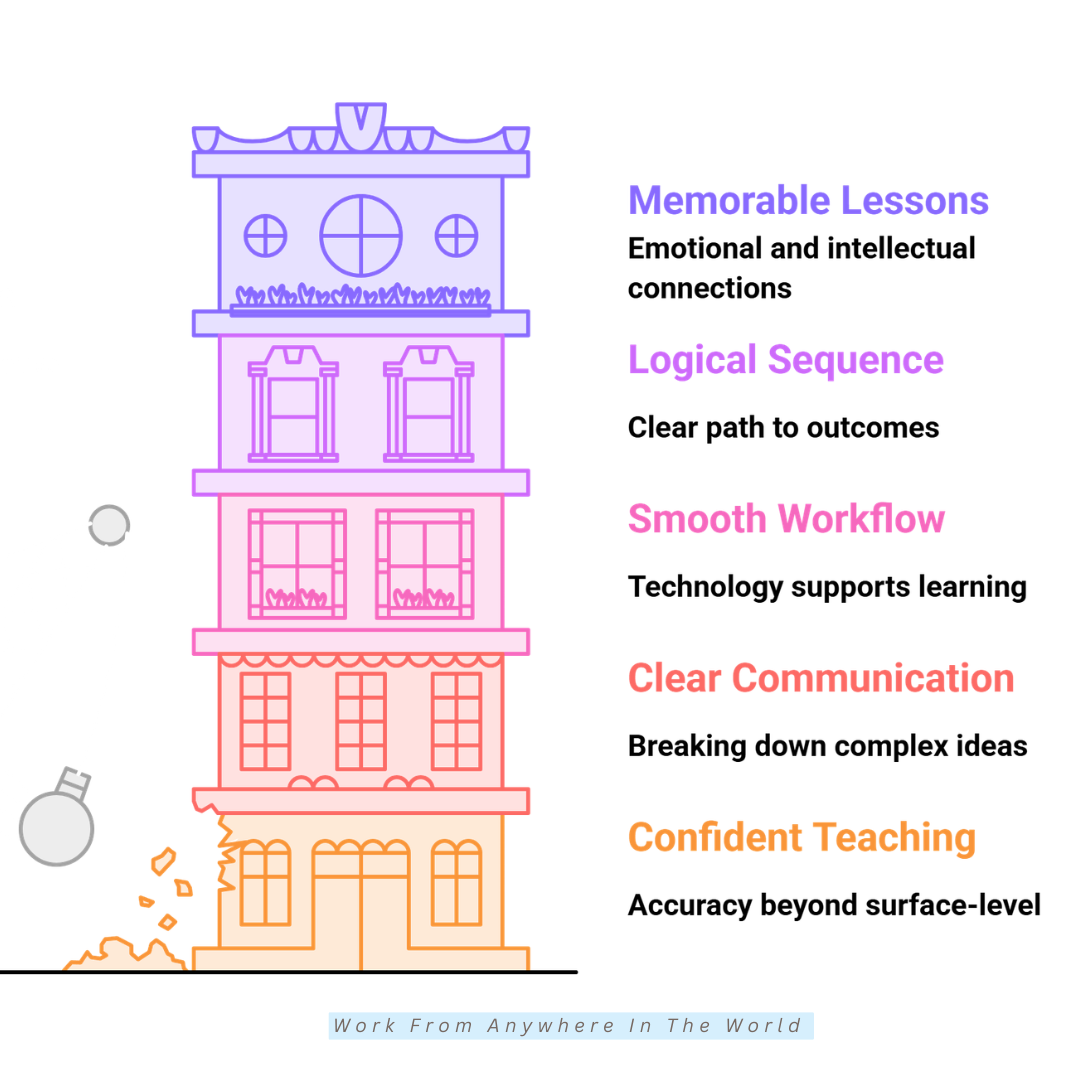
Deep subject knowledge gives you the foundation to teach with confidence and accuracy. Students often notice when an instructor understands a topic beyond surface-level definitions.
Your expertise allows you to explain not only what something means, but also why it matters, when to use it, and how it works in real situations. Practical experience makes this even stronger because you can share realistic examples and lessons learned from actual projects.
You don’t need to know every possible detail before teaching, but you should understand the core concepts thoroughly. Keep learning within your field and explore ways to improve your online teaching presence. This helps your lessons remain accurate, useful, and relevant as your industry evolves.
2. Clear Communication Skills
Online learners cannot rely on classroom body language or quick face-to-face clarification in the same way. Your explanations need to carry the lesson clearly through your voice, visuals, examples, and written materials.
Strong communication means breaking complex ideas into manageable pieces without oversimplifying the subject. Use familiar language, practical comparisons, and logical transitions to help students follow your reasoning.
Your ability to anticipate confusion is also valuable. When you know which parts of a topic usually create questions, you can address them proactively.
Clear communication turns your expertise into understandable instruction and helps students move through challenging concepts with greater confidence. Developing effective communication skills can help you become a more confident and engaging online instructor.
3. Digital And Technology Skills
Technology becomes part of your classroom when you teach online. You should feel comfortable with the interactive online teaching tools required to record lessons, conduct live sessions, share resources, manage assignments, and communicate with students.
Basic skills in screen recording, presentation software, video conferencing, file management, and course platforms can make your workflow much smoother.
You don’t need an advanced technical background. What matters is knowing how to use technology to support learning rather than allowing it to distract from the lesson.
As you gain experience, you can explore interactive quizzes, learning management systems, digital whiteboards, analytics, and other digital education tools that make online education more engaging and measurable.
4. Course Planning And Organization
A well-organized course gives students a clear path from their starting point to their desired outcome. Strong organizational skills help you arrange lessons logically and prepare resources in advance.
They also help you manage deadlines and keep learning objectives aligned across modules. Begin by identifying the final skill or result students should achieve. Then, build lessons that gradually develop the knowledge required to reach that goal.
Organization also matters behind the scenes. Consistent file names, lesson outlines, resource folders, assignment instructions, and communication schedules can save significant time later.
When your course structure feels intentional, students spend more energy learning and less time figuring out where to go next. Learning how to create an online course that sells can also help you connect thoughtful course planning with your students’ needs.
5. Presentation And Storytelling Skills
Good presentation skills can transform a technically correct lesson into an experience students actually remember. Instead of presenting information as a long list of facts, use examples, scenarios, demonstrations, and short stories to give concepts context.
Storytelling is particularly useful when explaining why a particular strategy works or how a mistake can lead to a better decision. Your delivery should feel natural rather than overly rehearsed. Developing your skills as a content creator can also help you communicate ideas more effectively.
Vary your pace, emphasize important ideas, and use pauses when a concept deserves attention. Visual clues are another way to reaffirm your point. Learning to create presentations with Canva can help you develop engaging visual materials.
Effective presentation creates emotional and intellectual connections that help students understand not only the information, but also its practical significance.
6. Empathy And Learner Awareness
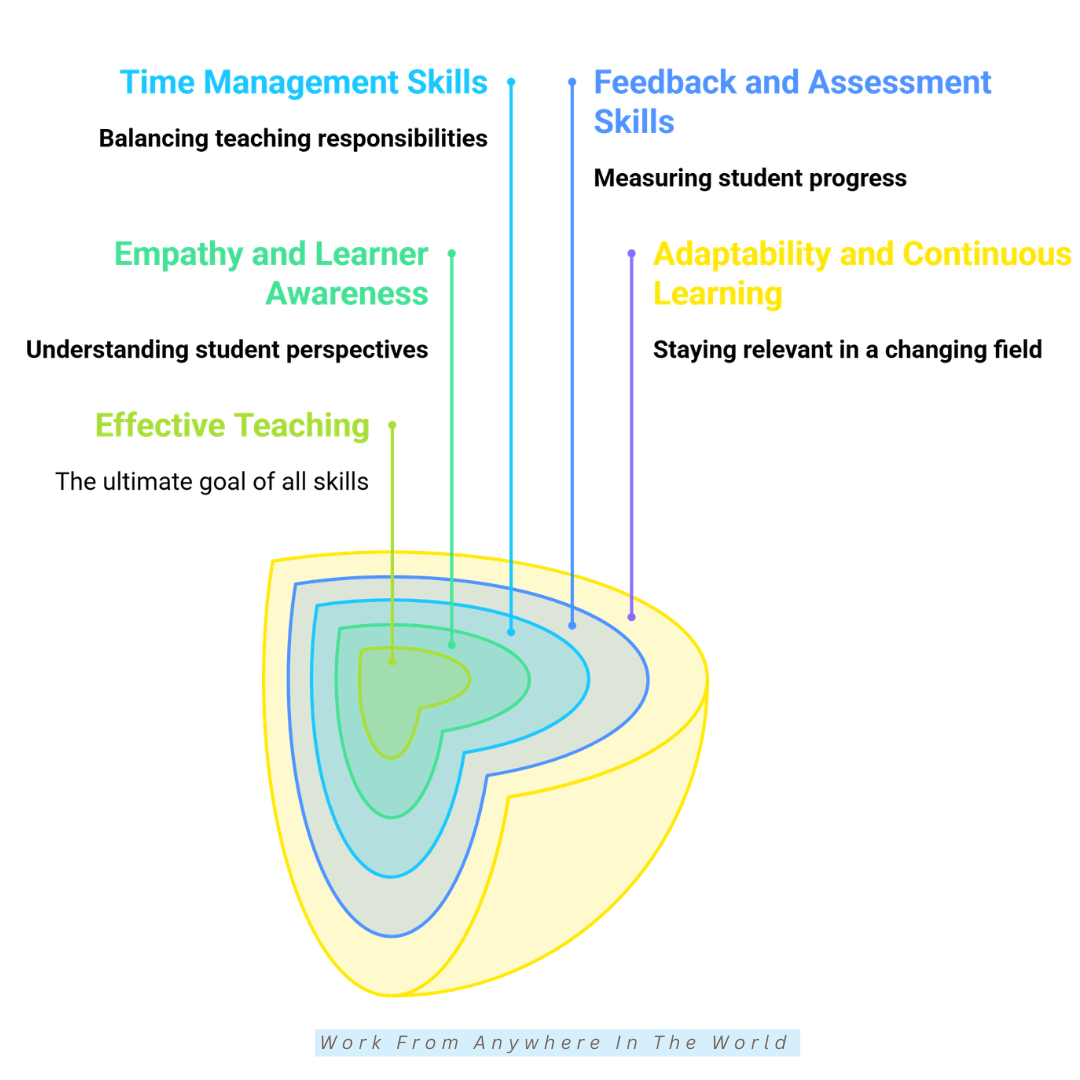
Teaching becomes more effective when you understand learning from the student’s perspective. Beginners may hesitate to ask questions or struggle with unfamiliar terminology.
Some students need additional examples before a concept becomes clear. An empathetic instructor anticipates these challenges and designs lessons with different levels of explanation.
Consider where students might lose confidence or which instructions could confuse them. Think about what background knowledge you may be assuming. Encouraging language can make the learning environment feel safer and more welcoming.
Empathy also helps you interpret feedback constructively. Instead of viewing student difficulties as shortcomings, treat them as useful information. Their struggles may reveal where your course needs clearer guidance or additional support.
7. Time Management Skills
Online teaching involves more than recording videos or hosting live classes. You may need to plan lessons, answer questions, and review assignments.
Other responsibilities include updating resources, communicating with students, creating promotional content, and managing your teaching platform.
Without a practical schedule, these responsibilities can quickly compete for your attention. Create dedicated periods for lesson development, student communication, administrative work, and course improvement.
Batch similar tasks when possible so you can maintain focus. Using a time management matrix can help you prioritize responsibilities. Predictable deadlines and response patterns also create a more reliable learning experience for students.
A well-managed instructor can devote more attention to meaningful teaching instead of constantly reacting to unfinished administrative tasks. Exploring time management activities for a productive day can help you build more balanced daily routines.
8. Feedback And Assessment Skills
Effective assessment shows whether students are actually developing the skills your course promises to teach. This can include quizzes, practical assignments, projects, discussions, short reflections, or demonstrations. The best assessment method depends on the subject.
Cornell University’s guide to measuring student learning offers useful guidance on choosing assessment methods and using feedback to support progress.
A design course may benefit from project-based evaluation, while a language course might use speaking exercises and written practice. Feedback should help students understand what they did well. It should also show them where they can improve.
Rather than simply marking an answer as correct or incorrect, explain the reasoning behind the result when appropriate. Thoughtful feedback turns assessment into another learning opportunity rather than merely a measurement tool.
9. Adaptability And Continuous Learning
Online education changes quickly as technology, student expectations, platforms, and industries evolve. An instructor who remains open to learning can keep the educational experience relevant over time.
This might involve updating examples, refreshing outdated lessons, testing new teaching formats, or learning new software to improve course delivery.
UNESCO’s resources on digital education offer additional perspectives on technology and evolving teaching practices. Adaptability also matters when students respond differently than expected.
Perhaps a lesson that seemed straightforward generates repeated questions, or students perform better after seeing a demonstration. These signals can guide future improvements.
You don’t need to rebuild your entire course whenever something changes. Small, thoughtful adjustments can steadily improve the learning experience and keep your expertise valuable.
10. Marketing And Personal Branding Skills
Even an excellent course needs visibility before students can discover it. Basic digital marketing skills can help you communicate your expertise and connect with people who genuinely need what you teach.
Learn how to create useful educational content, write clear course descriptions, optimize relevant web pages, and communicate your unique teaching value. Understanding content marketing can help you turn these activities into a more effective promotional strategy.
Personal branding supports this process by creating a recognizable identity around your expertise. Your website, social profiles, videos, articles, and course materials should communicate a consistent message about what you teach and who you help.
When marketing is built around genuinely useful information, promotion becomes an extension of your teaching rather than a separate activity. Learning how to sell an online course can help you connect your marketing efforts with your students’ learning goals.
How To Become An Online Instructor In 9 Practical Steps
Learning how to become an online instructor is easier when you follow a clear plan. From choosing a profitable niche with low competition to creating engaging lessons, each step helps you build a strong foundation.
These nine practical steps will guide you through planning, launching, and improving your online teaching journey. Exploring different online learning platforms can also help you choose the right environment for your students.
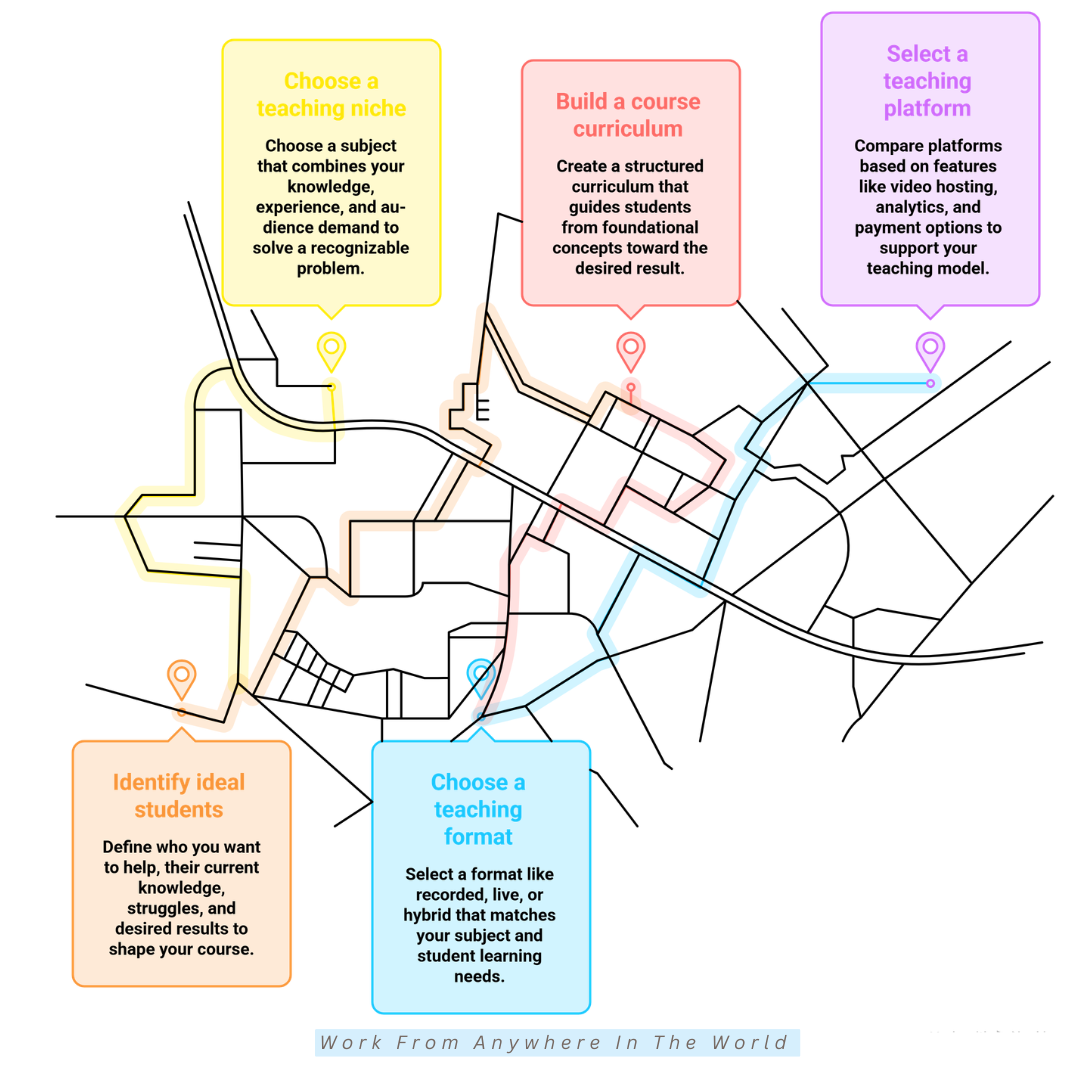
Step 1: Choose A Profitable And Valuable Teaching Niche
The first step toward becoming an online instructor is choosing a subject that aligns with your knowledge, experience, and audience demand.
A strong niche should solve a recognizable problem rather than simply describe a broad area of interest. For example, “digital marketing” is wide, while “Pinterest marketing for small businesses” gives potential students a much clearer reason to pay attention.
Research the questions people ask, the skills employers value, and the problems beginners repeatedly struggle with. Target audience analysis can help you identify specific learning needs. Your personal experience can become a major advantage here.
When you teach from practical knowledge, your examples feel authentic, your explanations become stronger, and students can see how the skill applies beyond theory.
Step 2: Identify Your Ideal Students
Understanding your students before creating lessons can dramatically improve your course’s quality. Start by defining who you want to help and what they already know. Identify their struggles and the results they hope to achieve.
A beginner exploring SEO optimization has very different needs from an experienced marketer looking for advanced technical strategies.
Consider their skill level, available learning time, preferred format, and motivation. You can also examine online communities, search questions, reviews, and discussions to discover recurring problems.
These insights can shape your examples, lesson difficulty, terminology, assignments, and course structure. Learning how to connect with your audience can also help you create a more personalized learning experience.
Wealthy Affiliate – Mini Review
If you’ve ever thought about turning your blog, passion, or niche into an online business,
Wealthy Affiliate (WA) is one of the most beginner-friendly platforms I’ve used.
It combines step-by-step training, website hosting, AI-powered tools,
keyword research, and an active community all in one place.
What I like most is that you can start for free (no credit card needed), explore the platform,
test the tools, and connect with other entrepreneurs before upgrading.
WA isn’t a “get rich quick” scheme — success comes from consistent effort
and applying what you learn over time.
Step 3: Build A Practical Course Curriculum
Once your learning outcome is clear, turn it into a structured curriculum that guides students from their current skill level toward the desired result. Learning how to create an online course that sells can help you plan lessons with clear goals.
Start with foundational concepts, then gradually introduce more advanced techniques and practical applications. Each module should have a specific purpose, while every lesson should answer an important question or develop a useful skill.
Avoid creating modules simply because you have information available. Strong curriculum design is selective. Include explanations, demonstrations, exercises, examples, and projects where they genuinely improve understanding.
A logical progression also reduces cognitive overload. Students should feel that each lesson unlocks the next stage instead of encountering disconnected information.
Step 4: Choose The Right Teaching Format
Your teaching format should align with both the subject and your students’ learning needs. Recorded courses are useful when learners benefit from flexibility, repetition, and self-paced study.
Live classes work particularly well when discussion, immediate feedback, demonstrations, or interaction are important. A hybrid model can combine recorded lessons with live Q&A sessions, workshops, or project reviews.
Consider the complexity of your subject before deciding. A software tutorial may benefit from detailed screen recordings, while communication training might become stronger through live practice.
Choosing the right format can improve completion rates because the learning experience feels naturally suited to the skill being taught. Exploring the best online teaching platforms can help you find one that supports your preferred teaching format.
Step 5: Select An Online Teaching Platform
Your chosen platform affects everything from student enrollment to course delivery and payment processing. Instead of selecting a popular platform, compare the features that matter most for your teaching approach.
Look at video hosting, quizzes, assignments, student communication, analytics, payment options, branding, integrations, and pricing.
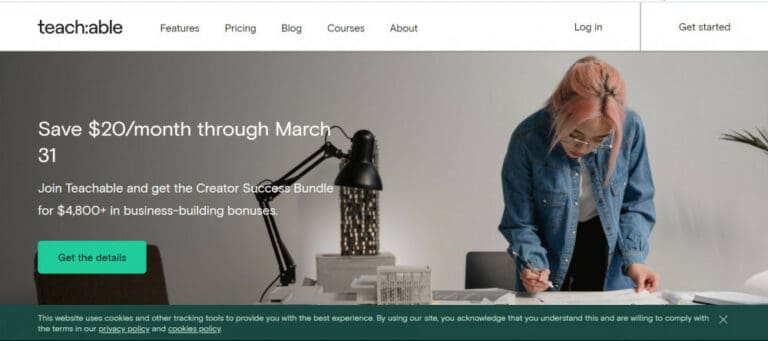
Course marketplaces such as Udemy and Skillshare can provide access to an existing audience. Independent course platforms such as Teachable and Thinkific may offer greater control over branding and customer relationships.
Before committing, think about your long-term plans. A platform that works for your first course should ideally support future growth, additional courses, larger audiences, and more sophisticated learning experiences.
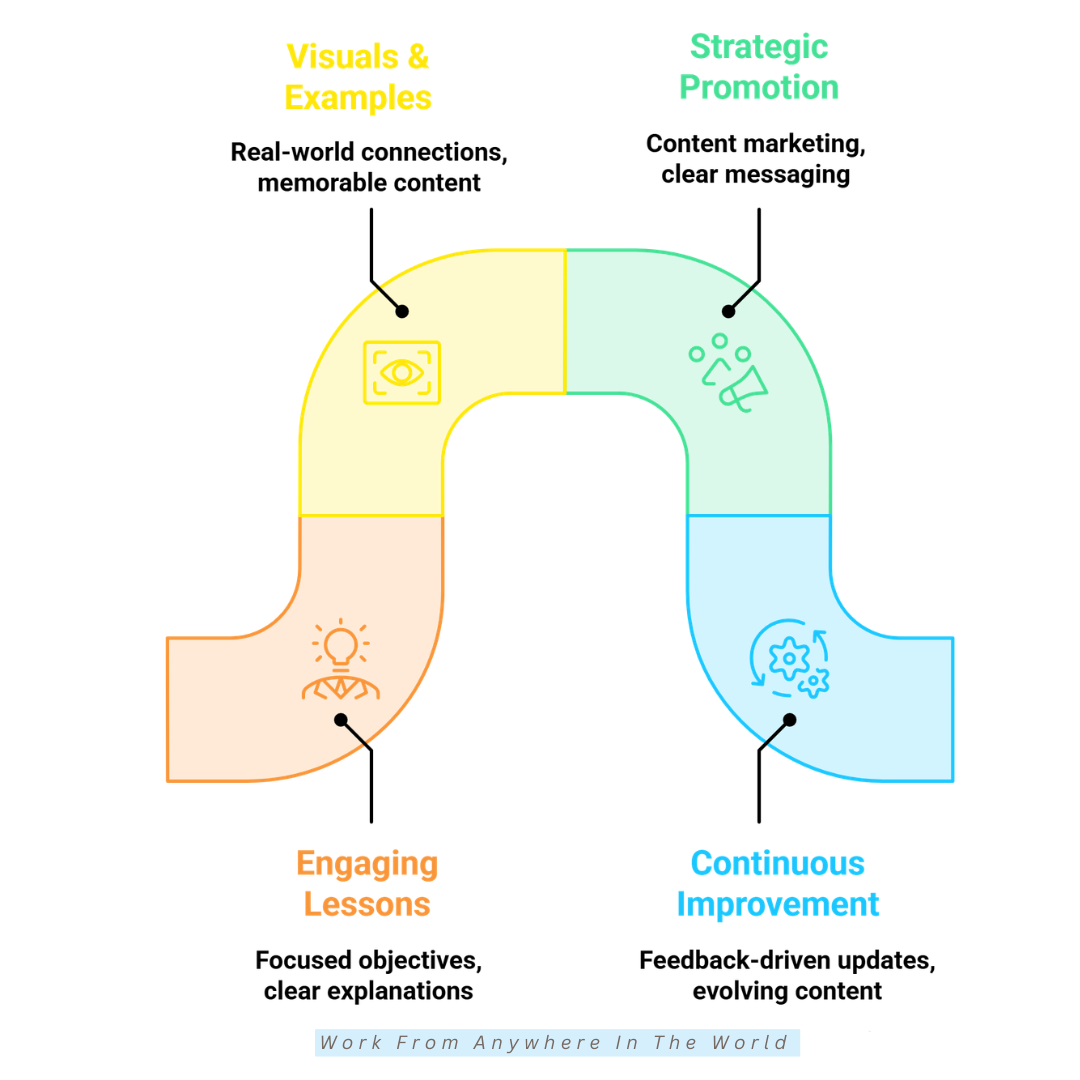
Step 6: Create Engaging And Focused Lessons
Great online instruction turns complicated information into a sequence of understandable ideas. Instead of presenting a long stream of facts, design each lesson around one meaningful learning objective.
Introduce the concept and explain why it matters. Show how it works, then let students apply what they’ve learned. This gives each lesson a clear purpose and helps students follow the learning process.
Real examples can make abstract ideas immediately more useful. Screen recordings, demonstrations, case studies, diagrams, and practical scenarios can add depth without making lessons unnecessarily complicated.
Keep explanations focused and conversational. Students should finish each lesson knowing what they learned and why it matters. They should also understand how to apply that knowledge in real-world situations.
Step 7: Use Visuals And Real-World Examples
Visual content can transform an ordinary explanation into an experience students remember. Instead of relying entirely on text-heavy slides, use screenshots, demonstrations, diagrams, charts, and screen recordings. Learning how to create infographics can also help you present information visually.
Real-world examples are particularly powerful because they connect theory with practical decision-making. If you teach graphic design, show how a design changes during the editing process. Exploring free computer graphic design software can help you find useful tools for these demonstrations.
If you teach SEO, demonstrate how you analyze an actual webpage. For example, use an on-page SEO guide to explain how headings, keywords, and content structure influence optimization.
If you teach business, walk through a realistic scenario. Before-and-after examples can illustrate how decisions affect the final result. Students gain more confidence when they see the reasoning behind a process rather than simply hearing the final answer.
Step 8: Promote Your Online Course Strategically
Creating an excellent course is only half of the process; potential students need a clear path to discover it. Begin with content that addresses the questions your target audience already searches for. Learning how to get started with content marketing can help you build that foundation.
Blog posts, videos, social media tutorials, email newsletters, webinars, and free resources can introduce people to your teaching style. Exploring video marketing trends can help you use educational videos more effectively.
Search-friendly content can bring long-term visibility, while social media can create faster engagement. Understanding social media marketing essentials can help you connect with potential students.
Your promotional message should focus on the learner’s desired outcome rather than simply listing course features. Explain what problem the course solves, what students can learn, and why the learning experience is practical.
Clear positioning makes promotion feel more useful and less like a sales pitch. An email marketing guide for beginners can also help you stay in touch with interested learners.
Step 9: Collect Feedback And Continuously Improve
Your first course version is the beginning of the teaching process, not the final destination. Student questions, completion patterns, reviews, assignments, and feedback can reveal where your course succeeds. They also show where learners need additional support.
Pay attention to lessons that generate repeated questions, as they may need clearer explanations or stronger examples. You can also identify sections that feel unnecessarily long or topics students want explored further.
Update your content as your industry changes and your teaching skills develop. Successful online instructors treat their courses as evolving educational products.
Each improvement can create a clearer learning experience, stronger student satisfaction, and greater long-term value. Regular updates also help keep your course relevant as learner needs change.
Frequently Asked Questions
Q1: How Much Does It Cost To Start Online Teaching?
The cost can range from very little to a significant investment. You can begin with a computer, microphone, basic recording software, and an appropriate teaching platform.
You don’t need expensive equipment to create useful lessons. Start with what you have and invest in more sophisticated tools as your student audience grows.
Q2: Is Online Teaching Profitable?
Online teaching can be profitable, but income is not guaranteed. Your earnings depend on your subject, audience size, pricing, course quality, marketing strategy, platform, and business model.
Some instructors focus on selling courses, while others combine teaching with coaching, memberships, workshops, and digital products. Diversifying your offerings can create additional income opportunities.
Q3: How Long Should An Online Course Be?
There is no universal ideal course length. A better approach is to include enough content to deliver the promised learning outcome without adding unnecessary material.
A focused two-hour course can be more valuable than a lengthy course filled with repetition. Prioritize clear explanations, practical exercises, and meaningful progress over the number of lessons.
Q4: How Can I Attract My First Students?
Start by sharing useful educational content with the audience you want to teach. Your website, social media channels, professional network, and email list can help you reach potential students.
Participating in relevant online communities can also introduce people to your expertise. Focus on answering questions, demonstrating your teaching style, and building trust before promoting your course.
Q5: Do I Need Teaching Qualifications To Become An Online Instructor?
You don’t always need formal teaching qualifications to become an online instructor. Many independent course creators teach subjects based on their professional experience, practical skills, and specialized knowledge.
However, certain subjects, institutions, and accredited programs may require specific qualifications or certifications. Check the requirements for your chosen field, and build credibility through accurate, engaging lessons.
Q6: What Is The Best Online Teaching Platform For Beginners?
The best platform depends on your subject, teaching format, budget, and business goals. Beginners often explore platforms such as Udemy, Skillshare, Teachable, and Thinkific because they offer different approaches to course creation and delivery.
Consider ease of use, student access, course management, and available features before choosing. Start with a platform that meets your current needs while allowing room for future growth.
Conclusion
Learning how to become an online instructor isn’t about having perfect equipment or creating a huge course on your first attempt. It’s about combining useful expertise with clear teaching and thoughtful course design. Understanding your students’ needs is equally important.
Start with one focused topic and create a practical learning experience. Choose a suitable platform and use student feedback to improve your lessons. With consistency and a learner-first mindset, you can build an educational brand that reaches people far beyond your local classroom.
I trust you enjoyed this guide on How to Become an Online Instructor. Please stay tuned for more insightful articles about affiliate marketing, online business, and working from anywhere in the world.
Take care!
— JeannetteZ 🌍✨
💬 Your Opinion Is Important To Me
Do you have thoughts, ideas, or questions? I’d love to hear from you. Please leave your comments below or email me directly at Jeannette@WorkFromAnywhereInTheWorld.com.
📚 More Work From Anywhere Reads
🚀 Ready to Build a Business You Can Run from Home
Or from Anywhere in the World?
Imagine earning income on your terms — from home, a cozy café, or wherever life takes you.
With the right tools, training, and community support, it’s entirely possible.
Start your own online business for free — no credit card needed.
Disclosure
This post may contain affiliate links. As an Amazon Associate and participant in other affiliate programs, I earn from qualifying purchases at no extra cost to you. Please read my full affiliate disclosure.