

Profitable Niches With Low Competition
Finding profitable niches with low competition is key to standing out in today’s crowded market. Whether launching a blog, an eCommerce store, or a digital service, targeting underserved niches helps you attract loyal audiences and accelerate revenue growth.
This article will explore how to identify these hidden gems and highlight some of the most promising low-competition niches. Ready to carve your space in a profitable market with minimal competition? Let’s dive in.
How To Identify Low-Competition Niches
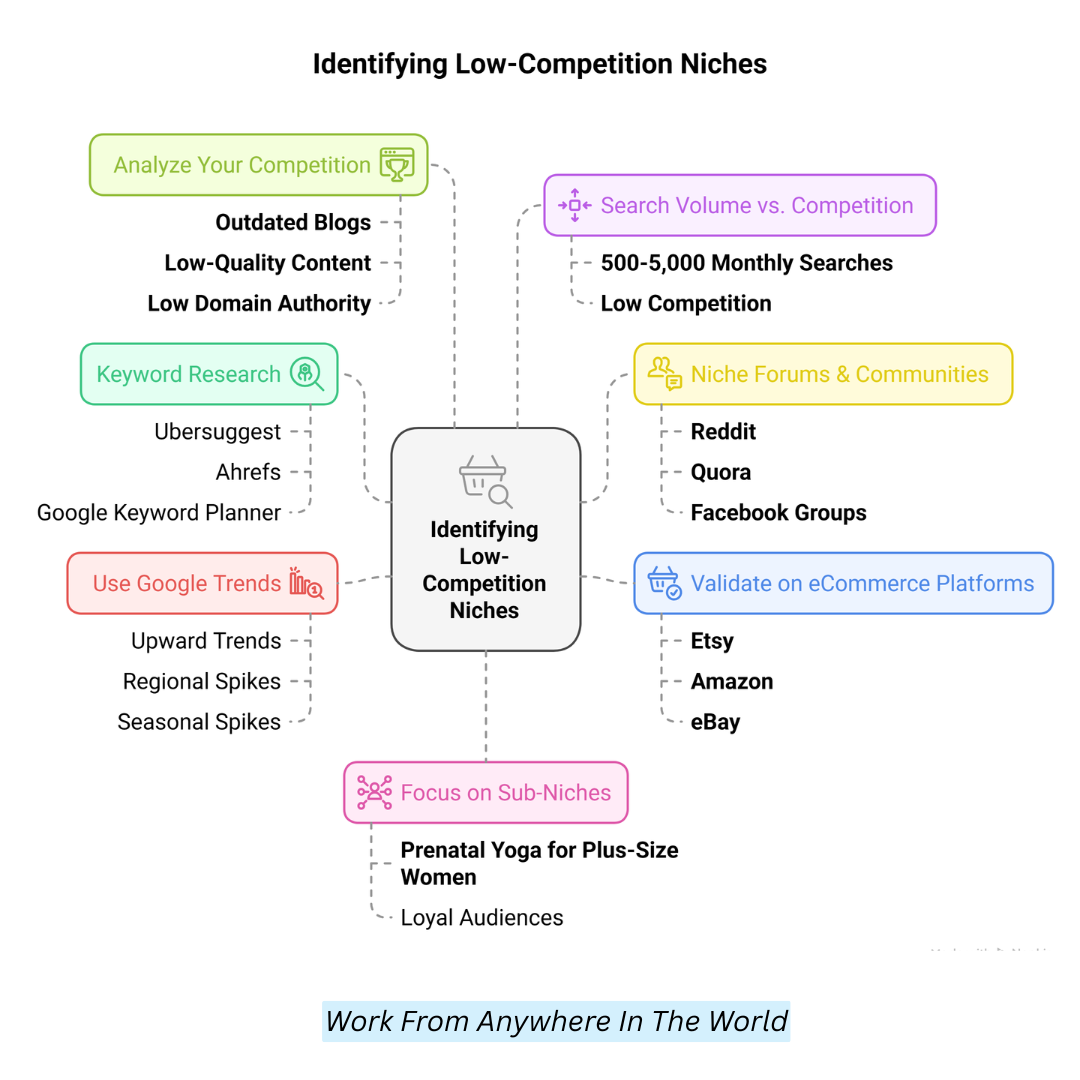
Identifying low-competition niches is key to standing out in any crowded market. Here’s how to find them:
1. Start With Keyword Research
Use tools like Ubersuggest, Ahrefs, or Google Keyword Planner to uncover hidden gems. Look for long-tail keywords with low SEO difficulty and minimal PPC competition.
These keywords indicate topics with demand but fewer players, making it easier for new businesses or websites to gain traction quickly.
2. Check Search Volume vs Competition
Don’t just go for high search volume; look for a balance. Keywords with 500–5,000 monthly searches and low competition often signal untapped markets.
This range offers solid traffic potential while allowing you to rank higher and build authority without competing directly with large competitors.
3. Explore Niche Forums & Communities
Dive into platforms like Reddit, Quora, and Facebook groups related to your interests. Look for recurring questions, frustrations, or product suggestions.
These organic conversations reveal what people need and what’s missing from the market, helping you discover overlooked niches with real engagement and low business saturation.
4. Validate on Etsy, Amazon, or eBay
Use eCommerce platforms to spot low-competition niches. Search for products with high reviews but few sellers. This indicates demand but limited supply.
Handmade or custom categories are especially good for discovering unique, low-competition products you can enter with minimal investment and a good chance to stand out.
5. Use Google Trends
Google Trends helps you determine if a niche is growing, stable, or declining. A niche that’s gaining interest but hasn’t exploded yet is ideal.
Look for upward trends in specific searches, especially those with regional or seasonal spikes, which can provide early entry into a profitable market segment.
6. Analyze Your Competition
Google your target keyword and evaluate the top results. If you find outdated blogs, low-quality content, or websites with low domain authority, that’s a sign of low competition. You can create better, fresher content and quickly increase search rankings.
7. Focus On Sub-Niches
Instead of choosing broad markets like “fitness,” narrow down to a sub-niche like “prenatal yoga for plus-size women.” These specific niches attract loyal audiences and face fewer competitors.
Sub-niches allow you to tailor your content, products, and marketing to a well-defined, often underserved, and highly engaged community.
Profitable Niches With Low Competition
1. Eco-Friendly Pet Products
Why It’s Profitable
The global pet industry surpassed $261 billion in 2022, and eco-conscious consumers are driving a surge in sustainable alternatives.
People are willing to pay more for environmentally safe products for their furry companions. Items like biodegradable poop bags and hemp collars can offer profit margins of 30–60%.
With the correct branding, a store selling these products can easily generate $5,000–$20,000/month through dropshipping, private labelling, or curated subscription boxes.
Potential Products Or Services
Offer a variety of sustainable pet care essentials like organic treats, compostable litter, and biodegradable waste bags. Add stylish hemp-based collars, leashes, and eco-friendly grooming tools.
Expand your catalogue with refillable pet shampoo dispensers and toys made from recycled materials. You can even curate green pet starter kits.
Include educational materials on eco-pet parenting and partner with sustainable manufacturers to ensure product integrity. Customized bundles for different pet types add convenience and personalization that modern pet owners value.
Monetization Strategies
Launch an eCommerce store using dropshipping to reduce overhead and test product demand. Introduce a private-label line of exclusive eco-pet products.
Offer themed subscription boxes (e.g., zero-waste monthly kits). Incorporate affiliate links to related eco-brands via blogs and reviews.
Use SEO content marketing and YouTube to educate and convert traffic. Collaborate with influencers for product demos.
Implement loyalty rewards or referral programs. Eventually, consider launching a mobile app to streamline ordering and enhance community engagement.
Wealthy Affiliate – Mini Review
If you’ve ever thought about turning your blog, passion, or niche into an online business,
Wealthy Affiliate (WA) is one of the most beginner-friendly platforms I’ve used.
It combines step-by-step training, website hosting, AI-powered tools,
keyword research, and an active community all in one place.
What I like most is that you can start free (no credit card needed), explore the platform,
test the tools, and connect with other entrepreneurs before upgrading.
WA isn’t a “get rich quick” scheme — success comes from consistent effort
and applying what you learn over time.
2. Remote Work Wellness
Why It’s Profitable
As remote work becomes the norm, professionals invest in wellness to combat burnout. Wellness tools such as ergonomic desks and meditation apps are booming, with ergonomic accessories alone projected to reach $13 billion by 2027.
Digital wellness courses or kits can have 70 %+ margins. With a practical eCommerce or course model, businesses can earn $3,000–$15,000/month, especially with upsells and affiliate links from wellness brands.
Potential Products Or Services
Curate and sell ergonomic home office accessories like laptop stands, lumbar cushions, and desk organizers. Develop wellness bundles featuring aromatherapy diffusers, posture trainers, and blue-light glasses.
Launch a digital product suite with guided meditation apps, desk yoga routines, and productivity planners. Create “work-from-home reset” kits for mental and physical rejuvenation.
Provide services like digital coaching for remote workers or downloadable eBooks on maintaining work-life balance and optimizing home office environments.
Monetization Strategies
Build an online store focused on wellness tools and kits. Sell digital products like audio meditations, webinars, and eBooks. Create subscription-based access to wellness video libraries or remote wellness coaching.
Monetize with affiliate marketing by reviewing high-demand wellness items.—Partner with corporate wellness programs to bundle and sell services in bulk.
Launch a YouTube or TikTok channel offering productivity tips and tools with sponsorships. Add a blog to drive SEO traffic and convert leads via email funnels.
3. Niche Home Decor (e.g., Boho Gothic, Japandi)
Why It’s Profitable
Home decor substyles like Japandi and Boho Gothic are great examples of profitable niches with low competition, offering high-margin opportunities through handmade goods, Etsy shops, or influencer marketing.
Handmade items or small-batch products can sell at up to 200% markup. A niche Etsy store or decor blog can earn $2,000–$12,000/month, while influencers monetizing through affiliate links and YouTube could generate even more from brand partnerships.
Potential Products Or Services
Design and sell handcrafted items that embody specific decor styles, such as Boho Gothic candle holders or Japandi-style furniture.
Offer digital mood boards, interior styling eBooks, and consultation packages. Collaborate with artisans to provide exclusive decor lines. Offer “room in a box” packages for style makeovers.
Expand into wallpapers, lighting, and textiles that reflect niche tastes. Tutorials on decorating in these styles can be sold as PDFs or video courses for DIY-minded consumers.
Monetization Strategies
Open an Etsy or Shopify store targeting niche decor fans. Launch an affiliate blog recommending decor products from Amazon, Wayfair, or small indie brands.
Monetize via a YouTube home makeover series or interior styling tutorials. Offer Pinterest-based design guides as downloadable products.
Sell virtual design consultations via Zoom. Create sponsored content for decor brands: Upsell styling services or exclusive digital products like room layout templates. Build a mailing list to promote seasonal decor drops or sales.

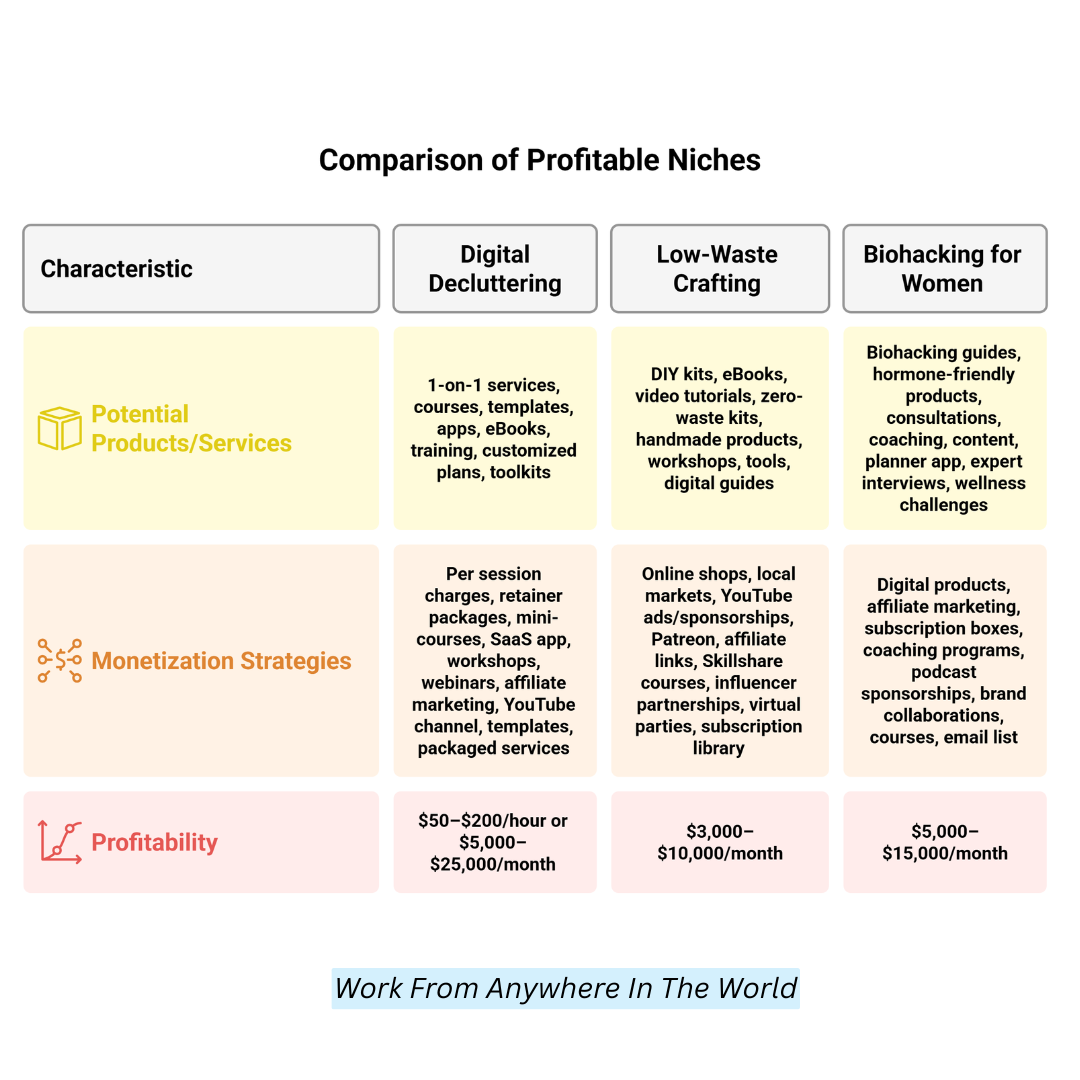
4. Digital Decluttering
Why It’s Profitable
Digital decluttering services are a profitable niche with low competition, offering high hourly rates, low startup costs, and scalable revenue through online courses and productivity tools.
As a service, digital decluttering requires low overhead and can command $50–$200/hour or more. Courses and SaaS tools can scale income to $5,000–$25,000/month. With minimal startup cost and growing awareness, this niche is an ideal mix of demand and profit potential.
Potential Products Or Services
Offer 1-on-1 digital decluttering services targeting individuals, freelancers, and small teams. Design courses on digital minimalism or cloud file organization.
Create Excel templates or checklists to help people sort through their digital assets. Develop a decluttering app with weekly check-ins.
Write an eBook on organizing digital life. Provide email management or inbox-zero training. Customize plans for cloud backup and file system optimization. Build a toolkit of recommended apps and systems to streamline workflows.
Monetization Strategies
Charge per session for consulting or offer retainer-based packages. Build and sell mini-courses on platforms like Gumroad or Teachable.
Create a SaaS app that automates file sorting and digital cleanup. Offer workshops or webinars with tiered pricing. Monetize through a blog with affiliate links to digital tools like Dropbox, Trello, or Clean Email.
Use a YouTube channel to demo decluttering strategies. Sell templates or checklists—package services for remote workers, digital nomads, or students.
5. Low-Waste Crafting
Why It’s Profitable
Eco-conscious consumers are turning hobbies into mindful habits. Low-waste crafting appeals to this group by combining creativity and sustainability.
With handmade upcycled products selling at a 3–5x markup, plus revenue from kits and tutorials, sellers can earn $3,000–$10,000/month through Etsy, YouTube, and Patreon.
This niche also opens doors for collaborations with eco brands and offers long-term growth through community building and exclusive content.
Potential Products or Services
Eco-friendly crafting kits and tutorials are excellent examples of profitable niches with low competition, blending sustainability with creativity to meet the rising demand for conscious, hands-on hobbies.
Curate “zero-waste craft kits” for beginners and kids. Sell your own handmade low-waste products on Etsy or Shopify. Develop an upcycled home decor series.
Teach workshops on sustainable crafting techniques. Include tools and supplies that align with eco-principles, and create a digital guide for sourcing sustainable craft materials.
Monetization Strategies
Sell eco-craft kits through online shops or local markets. Use YouTube to publish crafting tutorials and monetize via ads and sponsorships.
Offer exclusive monthly craft patterns and tutorials through Patreon. Monetize a blog with affiliate links to eco-suppliers.
Create premium digital courses on platforms like Skillshare.—Partner with sustainable lifestyle influencers to expand reach.
Host virtual crafting parties or challenges. Develop a digital library of project ideas and supply lists available via subscription.
6. Biohacking For Women
Why It’s Profitable
Biohacking is growing rapidly, projected to reach $64 billion by 2028, yet much of the market targets men. Women seek customized solutions for hormonal health, energy, and focus.
Nootropic supplements, coaching, and content tailored for women can see high engagement and recurring income.
By offering memberships, guides, and affiliate products, creators in this space can earn $5,000–$15,000/month, especially with a strong community and educational focus.
Potential Products Or Services
Develop biohacking guides and hormone-friendly product lines for women. Sell supplements on energy, focus, and sleep, tailored to female biology.
Offer consultations or coaching services that cover nutrition, sleep optimization, and fitness routines. Create content on cycle-syncing, productivity hacks, and stress management.
Launch a branded planner or tracker app. Offer access to expert interviews, member forums, or a podcast discussing biohacking trends. Include female-focused wellness challenges and guided journaling prompts.
Monetization Strategies
Sell digital products like eBooks, journals, and membership access to a premium community. Use affiliate marketing to promote biohacking supplements and wearables.
Launch subscription boxes with monthly wellness tools or supplements. Offer paid coaching programs or small group mentorship.
Monetize a podcast or YouTube channel via sponsorships. Collaborate with fitness and wellness brands to co-create content. Offer courses and workshops on lifestyle optimization. Build an email list to promote launches and affiliate deals.
7. Microgreen Growing At Home
Why It’s Profitable
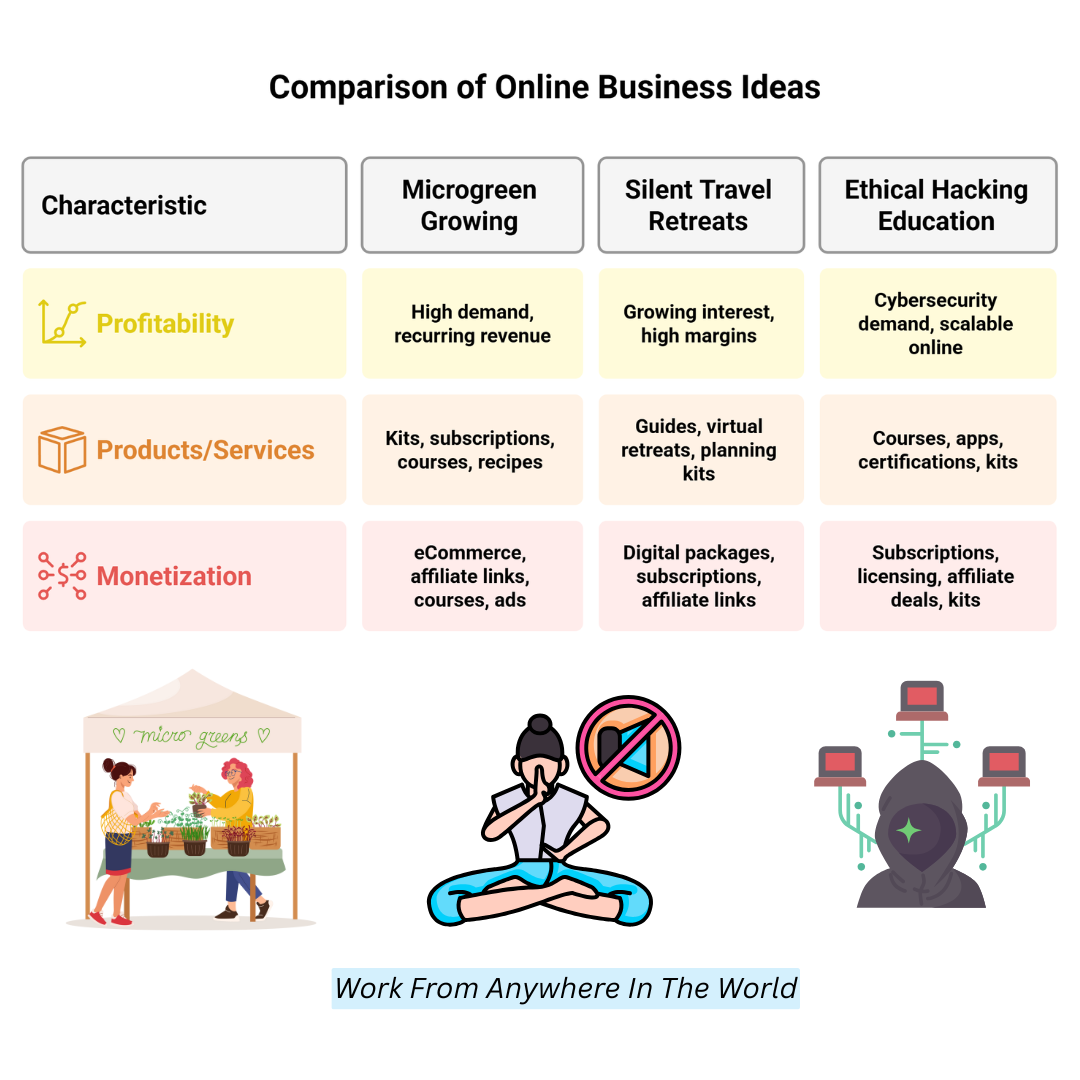
The microgreens market is one of the most profitable niches, with low competition and high margins, offering scalable revenue streams through DIY kits, subscriptions, and educational content.
DIY grow kits can be sold at a 2–4x markup, and seed subscriptions create recurring income. Online courses and YouTube content enhance monetization potential.
With consistent traffic and high-quality offerings, a brand in this niche can generate $3,000–$10,000/month, especially by leveraging affiliate sales and direct-to-consumer kits.
Potential Products Or Services
Sell home-growing kits with trays, seeds, and soil tailored to beginners. Offer “starter packs” with guides for specific microgreens like broccoli or pea shoots.
Provide monthly seed subscription boxes. Launch a digital course on how to grow and harvest microgreens at home. Include recipe cards to use microgreens in smoothies and partner with local farmers to expand offerings. Create a digital tracker for plant growth stages and provide troubleshooting tips via blog or app.
Monetization Strategies
Build a branded eCommerce site to sell kits and subscriptions. Offer free content on YouTube to funnel viewers into paid courses.
Monetize through affiliate links to gardening tools, grow lights, and seeds. Launch a digital magazine or newsletter with exclusive tips.
Host paid online workshops or live Q&A sessions. Sell your educational content through platforms like Udemy—partner with influencers in health and gardening. Use Instagram to grow a loyal, engaged customer base.
8. Silent Travel Retreats
Why It’s Profitable
Silence is becoming a sought-after luxury in the chaotic digital age. Silent retreats are trending among wellness seekers, and interest is rising in virtual and micro-retreat options.
Online packages can include guided meditations, schedules, and journaling prompts. Digital products and Zoom-based retreats offer high margins and scalability.
Retreat planners or digital hosts can earn $4,000–$20,000/month, especially when partnering with wellness influencers and retreat venues.
Potential Products Or Services
Create digital retreat guides with meditation schedules, breathwork videos, and mindfulness journals. Offer live or pre-recorded virtual silent retreats via Zoom.
Develop silent retreat planning kits for hosts. Provide one-on-one consulting for people wanting to organize local retreats. Include silence-themed music playlists, retreat gear, and downloadable trackers.
Build an app that helps people unplug and follow a digital silence schedule—partner with retreat centers to create hybrid packages combining physical and online components.
Monetization Strategies
Sell digital retreat packages on your website. Host virtual retreats with tiered pricing options (basic vs. premium)—Monetize content via YouTube or a podcast exploring silence and mindfulness.
Offer affiliate links for retreat gear and books. Build a retreat planning course for coaches or yoga instructors. Create a silent living membership site with monthly themes.
Collaborate with mindfulness brands for sponsorships. Develop a licensing program so others can replicate your retreat model in new locations.
9. Ethical Hacking Education For Teens
Why It’s Profitable
Cybersecurity education for teens stands out as one of the most profitable niches with low competition, offering scalable opportunities through gamified courses, licensed curricula, and subscription models in a rapidly growing market.
Online bootcamps, tutorials, and apps tailored to younger audiences can scale quickly. Subscription-based models or school partnerships can bring in $5,000–$25,000/month, especially if gamified or offered as a licensed curriculum to educational institutions.
Potential Products Or Services
Develop beginner-friendly ethical hacking courses for teens using interactive tools and games. Launch a gamified app with challenges that teach core skills.
Create a secure online sandbox for hands-on practice. Offer digital certifications for completing lessons. Provide eBooks and parent/teacher guides for support.
Build a community platform for student collaboration. Host summer bootcamps or weekend hackathons. Bundle learning kits with Raspberry Pi or Arduino tools for offline hands-on exploration.
Monetization Strategies
Offer monthly or annual subscriptions to your learning platform. License your curriculum to schools and after-school programs.
Launch a YouTube channel with free lessons and upsell deeper content. Create affiliate deals with tech tools and learning gear.
Sell branded kits and certification bundles—partner with tech brands for sponsorships. Run online competitions with entry fees. Use crowdfunding platforms to fund new content, offering exclusive perks and early access to supporters.
Conclusion
Exploring profitable niches with low competition is a smart strategy for building a sustainable and successful business. By focusing on underserved markets, you can stand out, attract targeted audiences, and reduce marketing costs.
Whether you're starting an online store, blog, or service, these niches offer real potential for growth with less risk. Stay proactive, research trends, and refine your niche to stay ahead. With the right approach, low-competition niches can turn into highly profitable opportunities.
I trust you enjoyed this article on the Profitable Niches With Low Competition. Please stay tuned for more insightful blogs on affiliate marketing, online business, and working from anywhere in the world.
Take care!
— JeannetteZ 🌍✨
💬 Your Opinion Is Important To Me
Do you have thoughts, ideas, or questions? I’d love to hear from you. Please leave your comments below or email me directly at Jeannette@WorkFromAnywhereInTheWorld.com.
📚 More Work From Anywhere Reads
🚀 Ready to Build a Business You Can Run from Home
Or from Anywhere in the World?
Imagine creating income on your terms — from home, a cozy café, or wherever life takes you.
With the right tools, training, and community support, it’s entirely possible.
Start your own online business for free — no credit card needed.
Disclosure
This post may contain affiliate links. As an Amazon Associate and participant in other affiliate programs, I earn from qualifying purchases at no extra cost to you. Please read my full affiliate disclosure.