

How To Get Scholarships In Canada: 10 Smart Steps
How To Get Scholarships In Canada is an important topic for students hoping to reduce the cost of studying abroad. Canada offers internationally recognized degrees, diverse educational opportunities, and a welcoming learning environment.
However, tuition fees and living expenses can make studying in Canada expensive. Scholarships offer financial assistance to eligible Canadian and international students.
Understanding scholarship types, eligibility requirements, and application procedures will help you find suitable opportunities. Careful preparation also improves your chances of submitting a competitive application.
This guide explores Canadian scholarships, where to find them, and how to apply successfully. You’ll also learn practical tips to avoid common application mistakes.
Types Of Scholarships Available In Canada
Canada offers a wide range of scholarships to help students manage tuition fees, living expenses, and other educational costs. These opportunities are available to Canadian students and eligible international applicants.
Some scholarships recognize academic achievement, while others reward leadership, community involvement, athletic talent, or financial need. Universities, government agencies, private organizations, and charitable foundations offer different funding options.
Understanding the various types of scholarships will help you identify opportunities that match your qualifications and educational goals. Each scholarship has its own eligibility requirements, application process, and selection criteria.
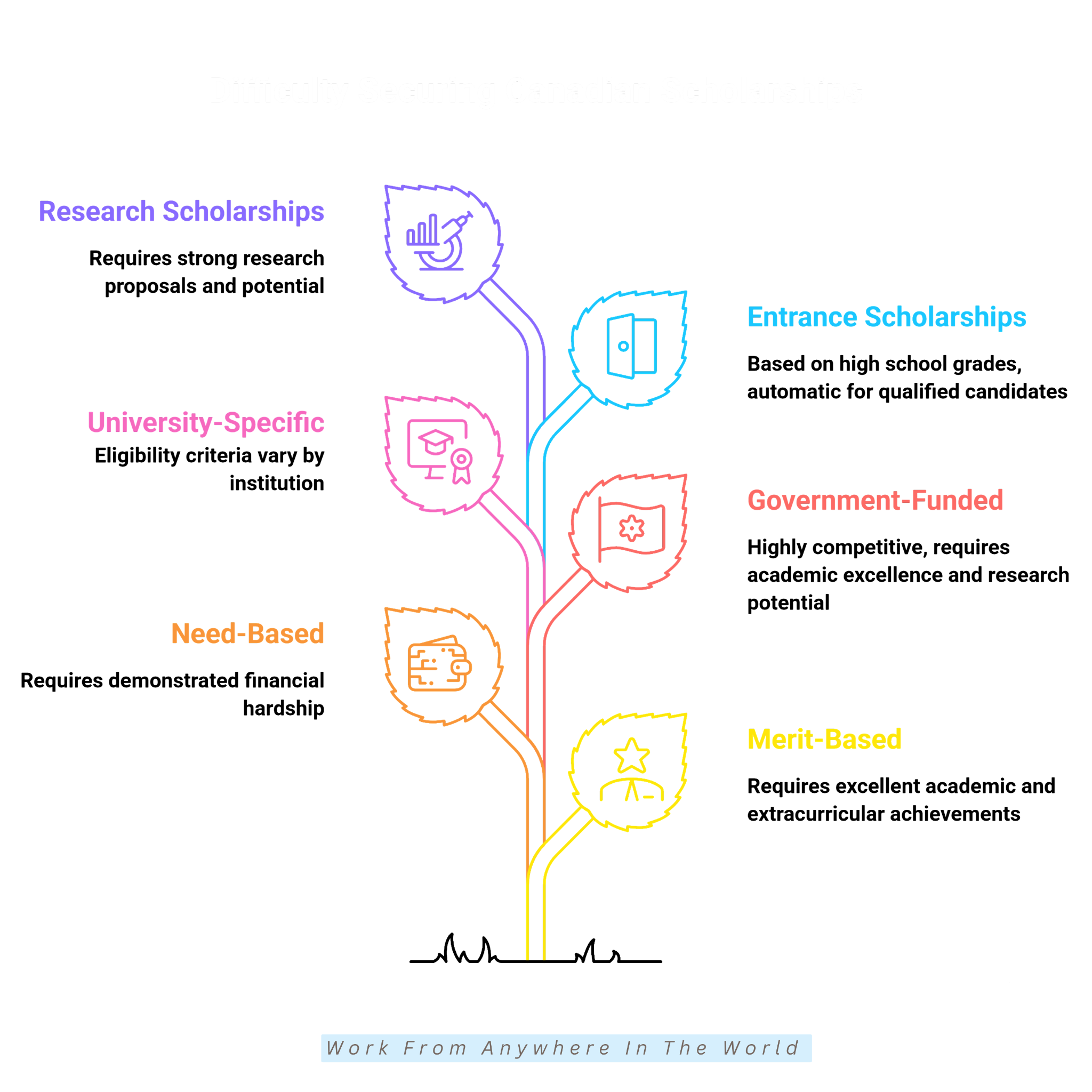
1. Merit-Based Scholarships
Merit-based scholarships reward students for academic excellence, leadership skills, extracurricular activities, or exceptional talents. Canadian universities often consider high school grades or previous academic achievements when selecting recipients.
Volunteer work, research accomplishments, and academic awards may also strengthen an application. Many universities automatically consider eligible students for entrance scholarships, while other awards require separate applications.
Depending on the institution and scholarship, financial assistance may cover part or all of tuition. Some scholarships also provide additional funding for living expenses.
Best for: Students with excellent academic records and strong extracurricular achievements.
2. Need-Based Scholarships
Need-based scholarships provide financial assistance to students who face challenges paying for higher education. These awards focus primarily on financial circumstances rather than academic excellence.
Applicants may need to provide household income details or other documents to demonstrate financial need. Some Canadian universities also consider academic performance when selecting scholarship recipients.
Depending on the institution or funding organization, financial assistance may cover tuition fees, textbooks, accommodation, or other educational expenses. Award amounts and eligibility requirements vary between programs.
Best for: Students who demonstrate financial need alongside satisfactory academic performance.
3. Government-Funded Scholarships
Government-funded scholarships support eligible students pursuing higher education and research in Canada. Federal and provincial governments offer these opportunities to encourage academic excellence and strengthen international educational partnerships.
Many scholarships focus on master’s, doctoral, and postdoctoral studies. However, some programs also support undergraduate students and short-term academic exchanges.
Selection criteria often include academic achievements, research potential, and leadership experience. These scholarships are highly competitive, so applicants should carefully review eligibility requirements and prepare their applications early.
Depending on the program, funding may cover tuition fees, research expenses, travel, or living costs. The amount and duration of financial assistance vary between scholarships.
Best for: High-achieving students pursuing undergraduate, graduate, or research-focused programs.
4. University-Specific Scholarships
University-specific scholarships help Canadian colleges and universities attract talented domestic and international students. Each institution establishes its own eligibility requirements, award amounts, and application procedures.
Some universities automatically consider students for entrance scholarships based on academic performance. Other awards require separate applications, personal essays, recommendation letters, or portfolios.
Depending on the institution, scholarships may cover part or all of the tuition fees, accommodation, meal plans, or living expenses. Funding varies by scholarship and the student’s qualifications.
Many universities also offer renewable scholarships that provide financial assistance throughout a student’s degree program. Recipients must usually maintain satisfactory academic standing and meet specific renewal requirements.
Best for: Students applying to specific Canadian universities with strong academic or leadership profiles.
5. Entrance Scholarships
Entrance scholarships recognize students who demonstrate strong academic achievements before beginning their studies at a Canadian university or college. These awards typically consider high school grades or previous academic performance.
Many institutions automatically evaluate eligible students for entrance scholarships during admission. However, some competitive awards require separate applications, personal statements, or supporting documents.
Students with higher academic averages may qualify for larger scholarships, depending on the institution. Award amounts and eligibility requirements vary between universities and programs.
Some entrance scholarships are also renewable, providing financial assistance throughout a student’s studies. Recipients usually need to maintain a specified grade point average (GPA) to continue receiving funding.
Best for: First-year undergraduate students with outstanding academic records.
6. Research Scholarships
Research scholarships provide financial assistance to students pursuing advanced academic and scientific research. These opportunities support graduate studies in fields such as engineering, technology, environmental sciences, business, and the humanities.
Canadian universities, government agencies, and research organizations offer funding for master’s and doctoral students. Some programs also support postdoctoral researchers.
Depending on the scholarship, funding may cover tuition fees, research expenses, and living costs. Certain awards also provide stipends to help students concentrate on their research projects.
Selection committees often consider academic achievements, research proposals, publications, and recommendation letters. Strong research experience and a well-prepared proposal may improve an applicant’s chances of receiving funding.
Best for: Graduate students planning to conduct advanced academic or scientific research.
7. Athletic Scholarships
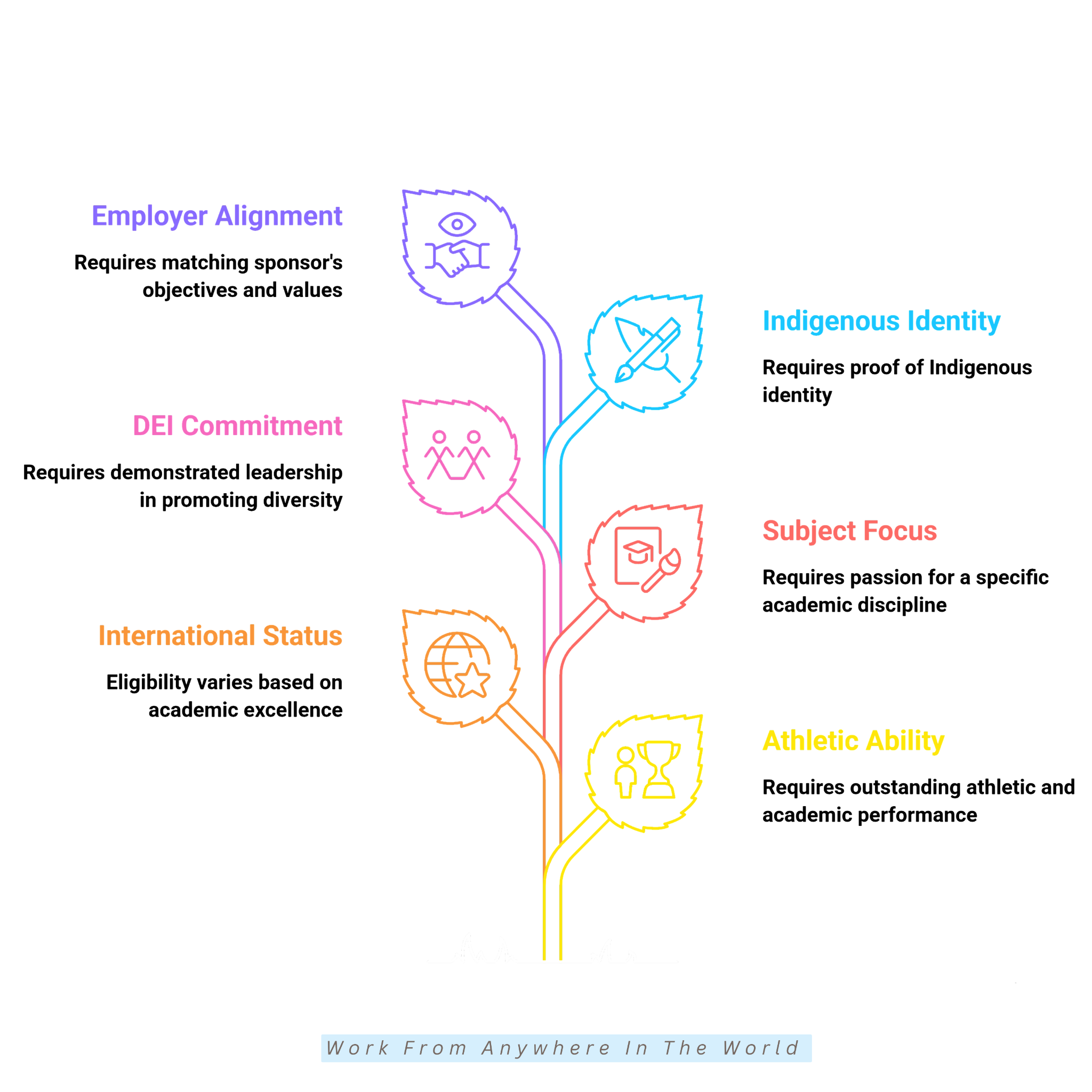
Athletic scholarships provide financial assistance to talented student-athletes who demonstrate strong sporting abilities and meet academic requirements. Canadian universities offer these awards through varsity athletic programs to support students competing in university sports.
Scholarships may help cover tuition fees and other education-related expenses. Award amounts and eligibility requirements vary by institution, athletic program, and applicable regulations.
Selection committees and university coaches consider athletic achievements, competition records, and academic performance. Students may also need to show they can contribute to a university sports team.
Some athletic scholarships are renewable throughout a student’s studies. Recipients must generally maintain academic eligibility and meet the requirements of their university’s athletic program.
Best for: Students with outstanding athletic ability and strong academic performance.
8. Scholarships For International Students
Scholarships for international students provide financial assistance to students from around the world who wish to study in Canada. Universities, government agencies, private organizations, and international partnerships offer a range of funding opportunities.
Depending on the scholarship, financial assistance may cover tuition fees, accommodation, living expenses, travel costs, or health insurance. Award amounts and eligibility requirements vary between programs.
Selection committees often consider academic achievements, leadership potential, extracurricular activities, and future career goals. Some scholarships also have specific nationality, residency, or academic program requirements.
Many Canadian universities offer entrance scholarships specifically for international applicants. Students should review admission requirements and scholarship deadlines carefully to avoid missing valuable opportunities.
Best for: International students seeking financial support to study in Canada.
9. Subject-Specific Scholarships
Subject-specific scholarships provide financial assistance to students pursuing degrees in particular academic disciplines. Universities, industry associations, and professional organizations offer these awards to encourage students to develop specialized skills.
Popular fields include engineering, computer science, healthcare, business, education, environmental science, agriculture, and the arts. Scholarship opportunities and funding amounts vary depending on the chosen discipline.
Selection committees often consider academic achievements, research interests, and career aspirations. Some scholarships also require applicants to submit project proposals or demonstrate involvement in activities related to their field.
These awards help students manage educational expenses while developing knowledge and skills for their future careers. Students should explore opportunities offered by universities and professional associations within their chosen disciplines.
Best for: Students dedicated to a specific field of study.
10. Diversity, Equity, And Inclusion (DEI) Scholarships
Diversity, Equity, and Inclusion (DEI) scholarships help students from underrepresented communities access higher education in Canada. Universities, charitable foundations, and private organizations offer these awards to reduce financial barriers and encourage inclusive learning environments.
Some scholarships recognize leadership, community service, advocacy, and contributions to diversity and inclusion. Others support students facing financial, social, or educational barriers.
Eligibility requirements vary by institution and funding organization. Selection committees may consider academic achievements, personal experiences, community involvement, and demonstrated leadership.
These scholarships provide financial assistance while encouraging greater participation in higher education. Students should review individual scholarship requirements to find opportunities that match their backgrounds, experiences, and educational goals.
Best for: Students from eligible underrepresented communities or those who have demonstrated leadership in promoting diversity and inclusion.
11. Indigenous Scholarships
Indigenous scholarships provide financial assistance to First Nations, Inuit, and Métis students pursuing higher education in Canada. Governments, universities, Indigenous organizations, and private foundations offer these awards to encourage academic achievement and community leadership.
Depending on the scholarship, funding may cover tuition fees, textbooks, accommodation, travel, or living expenses. Some programs also offer mentorship, cultural support, and professional development opportunities.
Eligibility requirements vary by scholarship provider and educational program. Applicants may need to provide documentation confirming Indigenous identity and meet specific academic or program requirements.
These scholarships reduce financial barriers while supporting education and career development. Students should explore funding options through universities, Indigenous organizations, and dedicated scholarship programs.
Best for: Eligible First Nations, Inuit, and Métis students studying in Canada.
12. Employer And Private Organization Scholarships
Employer and private organization scholarships provide financial assistance to students through corporations, charitable foundations, nonprofit organizations, and industry associations. These organizations invest in education to encourage academic achievement and develop future talent.
Many scholarships recognize leadership skills, innovation, volunteer work, and career potential. Some organizations also support students pursuing degrees related to specific industries or professional fields.
Depending on the sponsor, scholarships may include financial assistance, internships, mentorship programs, or networking opportunities. These additional benefits offer students valuable experience and professional connections before graduation.
Eligibility requirements vary between organizations, so students should research each opportunity carefully. Tailoring applications to the sponsor’s goals and selection criteria may improve their chances of receiving funding.
Best for: Students seeking funding from companies, foundations, and professional organizations.
Eligibility Requirements For Scholarships In Canada
Understanding the eligibility requirements for scholarships in Canada is essential before submitting an application. Each scholarship has specific criteria based on academic performance, educational background, and the applicant’s qualifications.
Some scholarships focus on excellent grades, while others consider leadership, financial need, or research experience. International students may also need to meet additional admission and language requirements.
Reviewing these conditions early helps students identify suitable opportunities and prepare the necessary documents. The following requirements are among the most common.
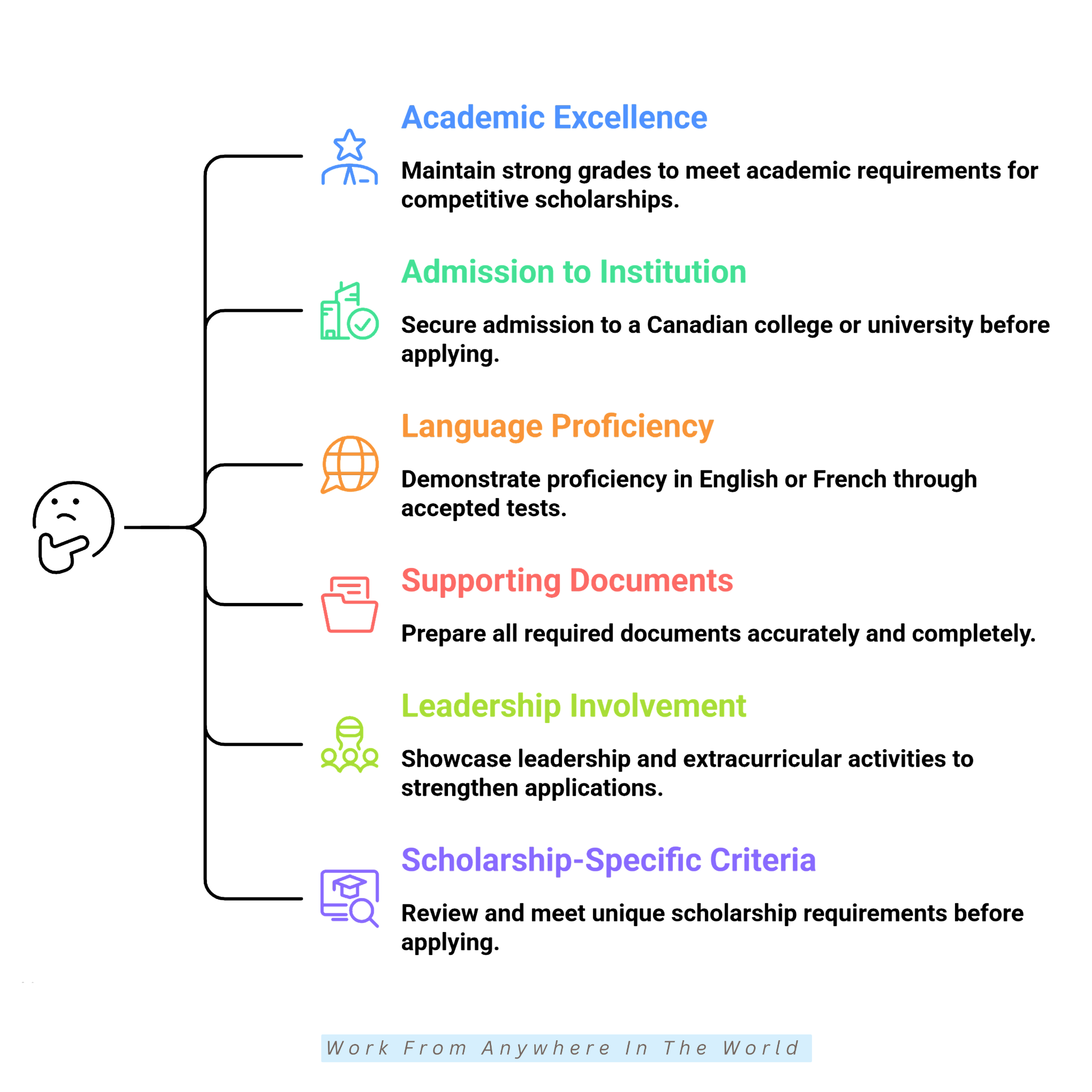
1. Meet The Academic Requirements
Academic performance is an important factor when applying for scholarships in Canada. Many programs require strong grades from high school or previous university studies.
Merit-based and research scholarships often emphasize academic excellence. Other programs may also consider leadership experience, volunteer work, and community involvement.
Before applying, review the minimum grade point average (GPA) or academic percentage required. Missing a mandatory academic requirement may make an applicant ineligible, regardless of other achievements.
2. Secure Admission To A Canadian Institution
Many scholarships require students to secure admission to a recognized Canadian college or university. However, some awards allow students to apply before receiving an admission offer.
Certain universities automatically consider eligible applicants for entrance scholarships. Others require a separate application after admission or enrollment.
Students should confirm whether the scholarship requires conditional admission, unconditional acceptance, or enrollment in a particular program. Understanding these requirements helps avoid unnecessary applications and missed opportunities.
3. Demonstrate English Or French Language Proficiency
Canadian universities may require international students to demonstrate proficiency in English or French. Requirements depend on the institution, academic program, and language of instruction.
Common English-language tests include IELTS Academic, TOEFL iBT, PTE Academic, and the Duolingo English Test. French-language programs may require approved French proficiency examinations.
Some students qualify for language-test exemptions based on their previous education. Always check the university’s official admission requirements and accepted test scores before applying.
4. Prepare All Required Supporting Documents
Scholarship applications often require several documents to confirm academic achievements and personal qualifications. Preparing these materials early helps students meet application deadlines.
Common requirements include academic transcripts, certificates, recommendation letters, a résumé or CV, and a personal statement. International applicants may also need identification documents and language test results.
Research scholarships may require a detailed research proposal, while creative programs sometimes request portfolios. Carefully review each scholarship’s document checklist to avoid incomplete submissions.
5. Demonstrate Leadership And Extracurricular Involvement
Many Canadian scholarship providers consider achievements beyond academic performance. Leadership experience, volunteer work, and extracurricular activities may strengthen an application.
Relevant activities include student organizations, community projects, sports, entrepreneurship, and research initiatives. These experiences demonstrate teamwork, responsibility, communication skills, and personal initiative.
Applicants should provide specific examples of their contributions and accomplishments. Explaining the results of a project or leadership role often creates a stronger impression than listing activities alone.
6. Satisfy Scholarship-Specific Eligibility Criteria
Every scholarship has its own eligibility requirements, making careful research essential. Some programs support undergraduate students, while others focus on master’s, doctoral, or postdoctoral studies.
Certain awards target specific academic disciplines, research interests, citizenship categories, or international exchange programs. Others have enrollment conditions, age restrictions, or limitations on receiving additional funding.
Students should read the official scholarship guidelines before preparing an application. Confirming every requirement helps them concentrate on opportunities that match their qualifications and educational goals.
Step-By-Step Process To Get Scholarships In Canada
Finding the right scholarship in Canada requires research, preparation, and careful planning. Understanding the application process helps students identify suitable funding opportunities and avoid common mistakes.
Each scholarship has different eligibility requirements, deadlines, and selection criteria. Preparing early gives applicants more time to gather documents, write compelling essays, and request recommendation letters.
The following 10 steps will guide you through the scholarship application process, from choosing your study program to submitting your applications.
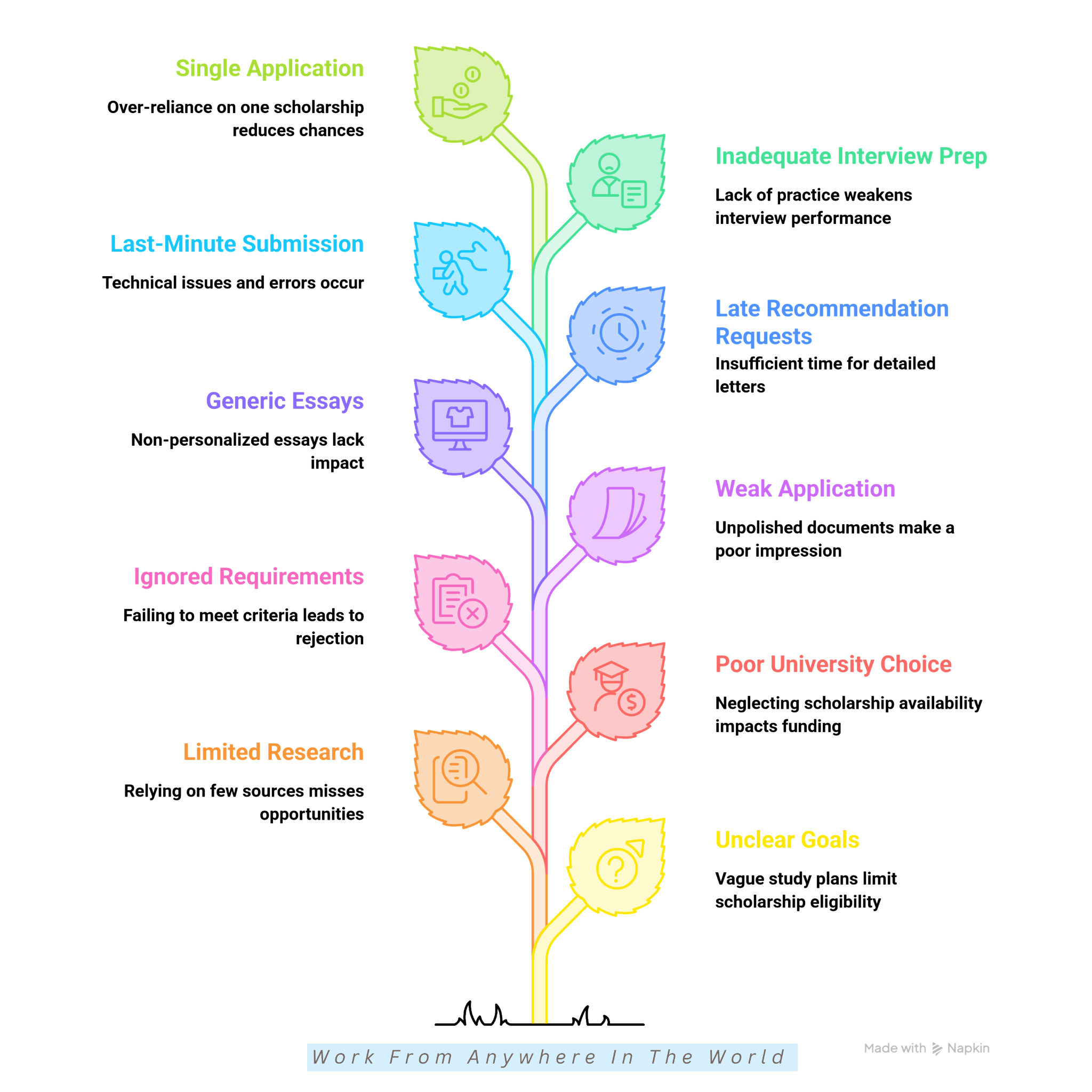
Step 1: Define Your Study Goals Before Searching For Scholarships
Start by identifying your preferred field of study, degree level, and Canadian universities. Clear educational goals make it easier to find suitable scholarship opportunities.
Many scholarships target specific academic programs, research fields, or degree levels. Understanding these requirements helps you focus on awards that match your qualifications.
Create a list of universities and programs that interest you. Before making your final choices, consider your academic background, career aspirations, and available funding opportunities.
Step 2: Research Scholarships From Multiple Trusted Sources
Explore several reliable sources when searching for Canadian scholarships. University websites, provincial government resources, and EduCanada provide information about available funding opportunities.
Reputable scholarship directories may also help you discover additional awards. However, always verify eligibility requirements and application deadlines through the official scholarship provider.
Create a spreadsheet to organize scholarship names, award amounts, deadlines, required documents, and application links. This approach helps you track opportunities and avoid missing important dates.
Prioritize scholarships that match your academic achievements, leadership experience, and educational goals.
Step 3: Choose Universities That Offer Strong Scholarship Opportunities
Canadian universities offer different scholarship programs and financial assistance packages. Some institutions offer entrance scholarships, while others focus on graduate research funding or awards for international students.
Compare scholarship availability alongside tuition fees, academic programs, research facilities, and living expenses. These factors shape your education’s overall affordability.
A university offering substantial financial assistance may offer better value than a higher-ranked institution with limited funding.
Step 4: Review Every Scholarship Requirement Carefully
Before applying, read the scholarship’s official eligibility requirements and application instructions. Pay particular attention to academic qualifications, citizenship restrictions, deadlines, and required documents.
Some scholarships also specify essay topics, formatting guidelines, word limits, or additional supporting materials. Missing these details may result in an incomplete application.
Check whether the scholarship has renewal conditions or restrictions on receiving other financial awards. Understanding these requirements helps you avoid unnecessary mistakes.
Step 5: Build A Strong Scholarship Application Package
Prepare a complete application package that highlights your academic achievements, leadership experience, and educational goals. Organizing your documents early reduces stress as deadlines approach.
Common requirements include academic transcripts, a customized résumé, personal statements, recommendation letters, and scholarship essays. Certain programs may also request research proposals or portfolios.
Review every document for accuracy, consistency, and grammatical errors. A well-organized application demonstrates professionalism and attention to detail.
Step 6: Write A Personalized Scholarship Essay
A compelling scholarship essay explains your educational goals, achievements, and motivation for applying. It should also demonstrate how the scholarship aligns with your future plans.
Avoid submitting identical essays to multiple scholarship providers. Instead, tailor each application to the organization’s objectives and selection criteria.
Include meaningful examples of academic accomplishments, leadership experiences, or challenges you have overcome. Personal stories help selection committees understand your background and aspirations.
Explain how receiving the scholarship would support your education, career development, or contributions to your community.
Step 7: Request Strong Letters Of Recommendation Early
Recommendation letters provide valuable insights into your academic abilities, personal qualities, and professional potential. Many competitive scholarships require references from teachers, professors, supervisors, or employers.
Choose individuals who know your work well and can describe your achievements with specific examples. A detailed recommendation is generally more valuable than a generic letter from someone with an impressive title.
Contact your referees several weeks before the application deadline. Provide your résumé, academic achievements, scholarship details, and submission instructions. Giving referees sufficient time helps them prepare thoughtful, personalized recommendations.
Step 8: Submit Your Application Well Before The Deadline
Submitting scholarship applications early helps reduce the risk of technical problems or missing documents. Some online application systems become difficult to access near major deadlines.
Before submitting, review your personal information, uploaded documents, and scholarship essays. Confirm that all mandatory sections are complete and meet the application requirements.
Check deadlines carefully, including the scholarship provider’s time zone. International applicants should account for differences between their local time and Canadian time zones. Save confirmation emails or application reference numbers for future correspondence.
Step 9: Prepare For Scholarship Interviews (If Required)
Some competitive scholarships require interviews to evaluate applicants beyond their written submissions. These interviews may focus on academic achievements, leadership experience, research interests, and career goals.
Prepare by reviewing your scholarship application and researching the funding organization’s objectives. Practice answering common interview questions using clear examples from your experiences.
Interviewers may also ask why you chose Canada or how your education will contribute to your future career. Speak confidently, remain professional, and answer questions thoughtfully. Genuine enthusiasm and clear communication help create a positive impression.
Step 10: Apply To Multiple Scholarships Instead Of Depending On One
Scholarship applications are often competitive, even for students with excellent academic records. Applying to several suitable programs increases your chances of receiving financial assistance.
Consider university scholarships, government-funded programs, research grants, and awards from private organizations. Focus on opportunities that match your qualifications rather than applying indiscriminately.
Track application deadlines, submission requirements, and responses from scholarship providers. An organized approach helps you manage multiple applications efficiently.
Remember to check whether receiving one scholarship affects your eligibility for another. Some funding programs restrict the combination of awards.
Frequently Asked Questions
Q1: Can International Students Get Scholarships In Canada?
Yes, international students have access to various scholarship opportunities in Canada. Universities, government programs, private organizations, and research institutions offer financial assistance to eligible applicants.
Some scholarships recognize academic excellence, while others focus on leadership, research achievements, or financial need. Eligibility requirements, award amounts, and application procedures vary between programs.
Q2: Is IELTS Mandatory For Canadian Scholarships?
No, IELTS is not mandatory for every Canadian scholarship. Language proficiency requirements generally depend on the university, academic program, and scholarship provider.
Some institutions accept alternative tests, including TOEFL, PTE Academic, or the Duolingo English Test. Eligible students may also receive exemptions based on their previous education or language of instruction.
Q3: Are Fully Funded Scholarships Available In Canada?
Yes, Canada offers fully funded scholarships, particularly for graduate students and researchers. These competitive awards may cover tuition fees, living expenses, research costs, and other approved educational expenses.
Funding amounts and benefits depend on the scholarship program and institution. Students should review the official scholarship details carefully to understand what expenses are covered and whether they need additional funding.
Q4: When Should I Apply For Scholarships In Canada?
Students should begin researching Canadian scholarships at least 6–12 months before their intended study program begins. Many universities set scholarship deadlines before or around their admission application deadlines.
Starting early provides enough time to prepare documents, request recommendation letters, and write scholarship essays. Always check official deadlines because application periods vary by institution and funding program.
Q5: Can I Apply For Multiple Scholarships In Canada?
Yes, students may apply for multiple scholarships in Canada, provided they meet each program’s eligibility requirements. Applying to several suitable opportunities increases the chances of receiving financial assistance.
However, some scholarships restrict recipients from holding other awards simultaneously. Students should review the funding conditions carefully before accepting multiple scholarships.
Q6: Do I Need A High GPA To Get A Scholarship In Canada?
Not every Canadian scholarship requires an exceptionally high grade point average (GPA). While merit-based scholarships often reward academic excellence, other programs consider financial need, leadership experience, community involvement, or athletic achievements.
Students with average grades may still qualify for scholarships that recognize personal achievements or specific circumstances. Reviewing different scholarship categories helps applicants find opportunities that match their strengths and qualifications.
Conclusion
Learning how to get scholarships in Canada opens the door to valuable educational opportunities. With careful research, early preparation, and a strong application, students can improve their chances of receiving financial assistance.
Whether you’re pursuing undergraduate studies, graduate education, or advanced research, choosing scholarships that match your qualifications is essential. Understanding eligibility requirements and preparing the necessary documents will help you avoid common mistakes.
Remember that scholarship applications often require patience and persistence. Applying to several suitable programs, meeting deadlines, and highlighting your achievements will strengthen your overall approach.
With determination and thoughtful planning, you can take meaningful steps toward achieving your educational goals in Canada. Every well-prepared application brings you closer to finding the financial support you need.
I trust you enjoyed this article on How to Get Scholarships in Canada: 10 Smart Steps. Please stay tuned for more insightful blogs on affiliate marketing, online business, and working from anywhere in the world.
Take care!
— JeannetteZ 🌍✨
💬 Your Opinion Is Important To Me
Do you have thoughts, ideas, or questions? I’d love to hear from you. Please leave your comments below or email me directly at Jeannette@WorkFromAnywhereInTheWorld.com.
📚 More Work From Anywhere Reads
🚀 Ready to Build a Business You Can Run from Home
Or from Anywhere in the World?
Imagine creating income on your terms — from home, a cozy café, or wherever life takes you.
With the right tools, training, and community support, it’s entirely possible.
Start your own online business for free — no credit card needed.
Disclosure
This post may contain affiliate links. As an Amazon Associate and participant in other affiliate programs, I earn from qualifying purchases at no extra cost to you. Please read my full affiliate disclosure.