
Guide For Growing Blog Traffic: 15 Proven Steps
This guide for growing blog traffic can help you attract more readers, improve search visibility, and build a loyal audience. Publishing quality articles matters, but getting them discovered requires a thoughtful strategy.
Whether you’re a new blogger or have been publishing for years, increasing traffic takes patience and consistent effort. Understanding your audience and creating helpful content are essential starting points.
This guide explores 15 practical steps to improve your blog’s visibility and attract relevant visitors. You’ll discover how keyword research, search engine optimization, and content planning can work together to support sustainable growth.
We’ll also explore advanced strategies to strengthen your blog’s authority and encourage readers to return. With the right approach, you can build a valuable resource that continues attracting visitors over time.
Step-By-Step Guide For Growing Blog Traffic
Growing a successful blog requires more than publishing articles and hoping readers discover them. A structured approach helps you understand your audience, identify valuable opportunities, and improve your content’s visibility.
This step-by-step guide for growing blog traffic begins with analyzing your existing website and researching what readers want to find. These early decisions help you focus your efforts on topics with genuine potential.
The following 15 steps combine search engine optimization, keyword research, content planning, and practical promotion techniques. Each step builds on the previous one to support consistent, sustainable blog growth.
You don’t need to do everything at once. Start with the foundations, measure your progress, and gradually strengthen your strategy as your blog develops.
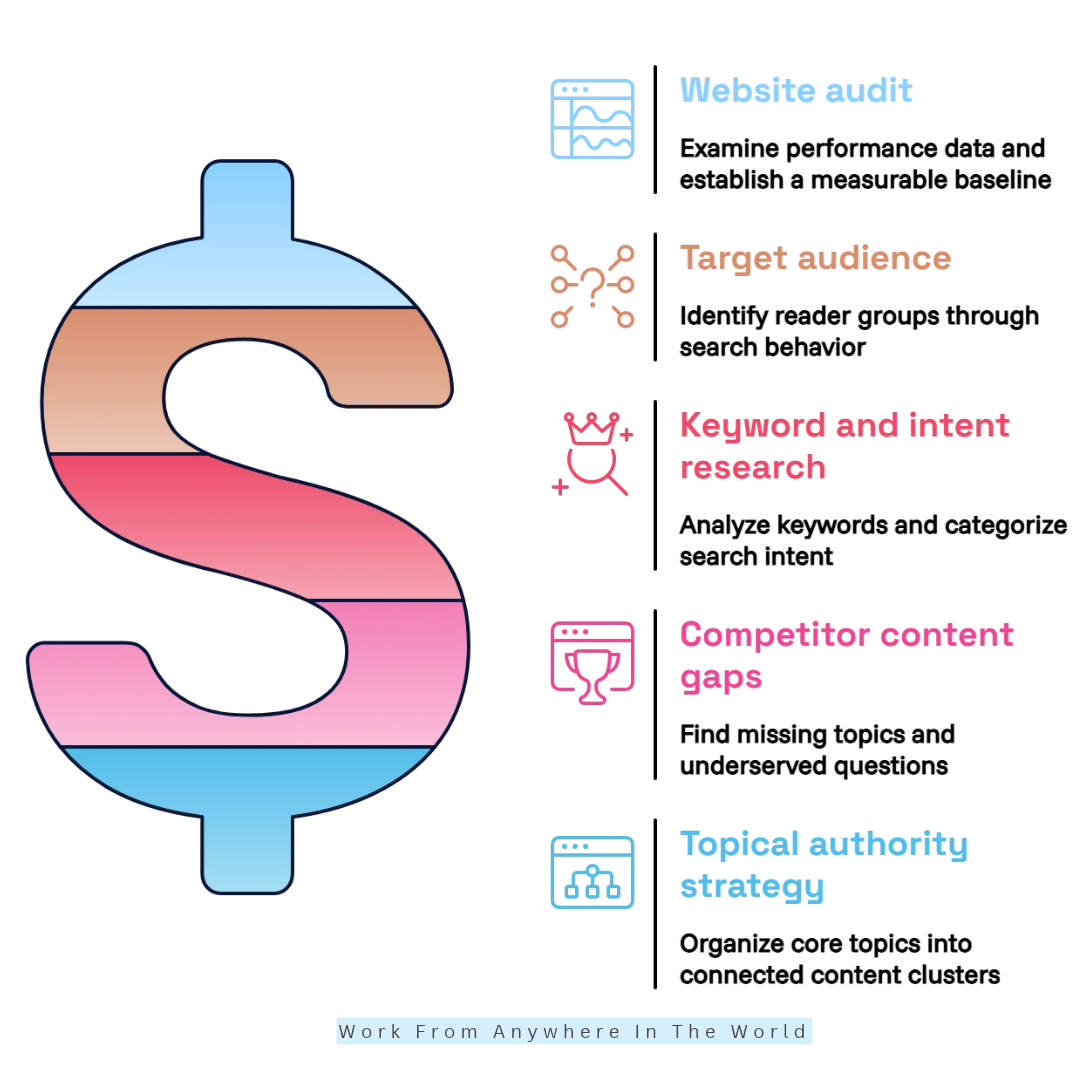
Step 1: Audit Your Website Before Planning Traffic Growth
Successful blog traffic strategies begin with understanding your website’s current performance. Before publishing additional articles, identify which pages already attract visitors and where opportunities for improvement exist.
Start by connecting Google Search Console and Google Analytics 4. Our guide on setting up Google Analytics in WordPress explains how to begin tracking key visitor activity.
Export approximately three to six months of performance data. Examine organic clicks, search impressions, landing pages, visitor engagement, and conversions to establish a measurable starting point.
Look for articles with declining clicks, high impressions but low click-through rates, and relevant keywords ranking between positions 5 and 20. These pages may offer opportunities for targeted improvements.
Our article on Google Analytics website metrics explores measurements that help website owners understand visitor behaviour and evaluate content performance.
Next, review technical issues that may affect visibility or usability. Check indexing, crawlability, mobile navigation, loading performance, and Google’s Core Web Vitals.
You can also use Google PageSpeed Insights to identify performance problems. Prioritize issues that affect important pages rather than attempting to fix every minor diagnostic warning.
A thorough website audit helps you identify existing strengths and weaknesses. It also prevents unnecessary content production when improving older articles could deliver greater value.
Step 2: Identify Your Target Audience Through Search Behaviour
Understanding your target audience helps you create articles that attract readers genuinely interested in your content. Instead of trying to reach everyone within your niche, identify specific groups and their information needs.
Consider their experience levels, challenges, purchasing interests, and common questions. These details can help you develop content that matches what different readers are searching for.
Explore Google Search Console queries, competitor discussions, Reddit, industry forums, and reader feedback. Look for recurring questions and problems that your existing articles haven’t answered thoroughly.
AI tools such as ChatGPT can help organize these findings into audience segments and potential content topics. However, verify AI-generated suggestions against genuine audience discussions and search data.
For example, a remote-work blog might attract beginners looking for entry-level opportunities, experienced professionals exploring international careers, and freelancers seeking flexible projects.
Our guide to remote jobs provides an example of content that can introduce readers to different remote employment opportunities.
Each audience group has different expectations and search intentions. Beginners may need introductory explanations, while experienced professionals often prefer comparisons, advanced techniques, and detailed resources.
Use these insights to develop articles that address specific needs rather than producing generic content for everyone. Relevant information encourages visitors to explore additional resources and return when they need further guidance.
Step 3: Conduct AI-Powered Keyword And Search Intent Research
Keyword research helps you understand which topics people search for and how difficult they may be to rank for. AI-assisted analysis can make this process more efficient by organizing related queries and identifying search-intent patterns.
Begin with seed keywords that represent your website’s main topics. Expand these terms into related questions, long-tail keywords, and subjects that match your audience’s interests.
Our guide to the best free keyword research tools introduces resources that can help bloggers discover relevant search opportunities without relying entirely on expensive subscriptions.
For more detailed analysis, tools such as Semrush, Ahrefs, and Ubersuggest can provide keyword suggestions, search volume estimates, competition indicators, and information about competing pages.
Our Semrush tutorial explains how to use the platform for keyword research and SEO planning. You can also explore our Ahrefs keyword research guide for another approach.
Once you’ve collected potential keywords, use AI to organize them according to search intent. Common categories include informational, commercial, transactional, and navigational searches.
For example, someone searching for “best remote job websites” may want to compare available platforms. A search for “how to find remote jobs without experience” suggests a need for beginner-friendly instructions.
These differences matter because articles should satisfy the purpose behind each search. A detailed tutorial may be more appropriate for an informational query than a product-focused comparison.
Always validate AI-generated keyword suggestions using actual search data and relevant Google results. AI can organize research efficiently, but it cannot guarantee accurate search volumes or ranking opportunities.
Prioritize keywords based on audience demand, business relevance, competition, and realistic ranking potential. This approach helps you develop content that serves readers while supporting long-term organic traffic growth.
Step 4: Analyze Competitors And Find Content Gaps
Competitor research helps you discover valuable topics your website hasn’t covered effectively. It also reveals how other publishers organize their content and address your audience’s questions.
Start by identifying three to five websites competing for your target readers. Focus on websites covering similar subjects rather than simply choosing the largest businesses in your industry.
Use tools such as Ahrefs, Semrush, or Ubersuggest to examine their ranking keywords, popular articles, referring domains, and topical coverage. Look for subjects that consistently attract relevant search traffic.
Our guide on how to use Semrush for blogging explores ways bloggers can use SEO research to identify opportunities and strengthen their content strategies.
Next, conduct a keyword gap analysis to identify relevant searches for which competitors rank but your website does not. These gaps may reveal opportunities for new articles or improvements to existing content.
AI tools can help organize your findings into missing topics, outdated explanations, and unanswered audience questions. However, review the original sources before deciding which opportunities deserve attention.
For example, a competing blog may explain how to start freelancing but overlook practical advice about finding first clients. An original guide addressing that challenge could provide additional value.
Avoid copying competitors’ articles or reproducing their content structure without adding meaningful improvements. Instead, contribute first-hand experiences, practical demonstrations, original research, and clearer explanations.
Our article on how to write SEO-friendly content explores ways to create useful articles that address readers’ needs while supporting search visibility.
Competitor research should inspire better content rather than imitation. Focus on filling genuine information gaps and offering resources that make your blog more useful to its audience.
Step 5: Build A Topical Authority And Content Cluster Strategy
Organizing articles into related topic clusters helps readers explore subjects in greater depth. It also creates a logical website structure that makes important content easier to discover.
Start by choosing three to five core subjects that closely match your blog’s niche. These topics should reflect your expertise, audience interests, and long-term content goals.
Create a comprehensive pillar page for each main subject. Then develop supporting articles that answer specific questions or explore individual aspects of the broader topic.
For example, a digital marketing blog could publish an SEO pillar supported by articles about keyword research, technical optimization, link building, content creation, and website analytics.
Keyword clustering tools and AI can help group related searches into logical subjects. However, each article should address a distinct search intention rather than unnecessarily duplicating information.
Map related keywords to the right pages, and review your existing articles before creating new ones. Sometimes an older article can be expanded instead of publishing another post covering similar information.
Our guide on building internal links for SEO explores practical methods for connecting related articles and strengthening website navigation.
Use descriptive anchor text to connect supporting articles with their pillar pages. Include relevant links between supporting posts whenever they help readers explore additional information.
For example, someone reading about keyword research may also benefit from a guide explaining how to optimize an article. Linking these resources creates a useful path through your content.
A well-organized topic cluster can strengthen your blog’s subject coverage and improve the browsing experience. It also provides a foundation for expanding your content library without publishing unrelated articles.
Step 6: Prioritize Keywords Using Business Value And Ranking Potential
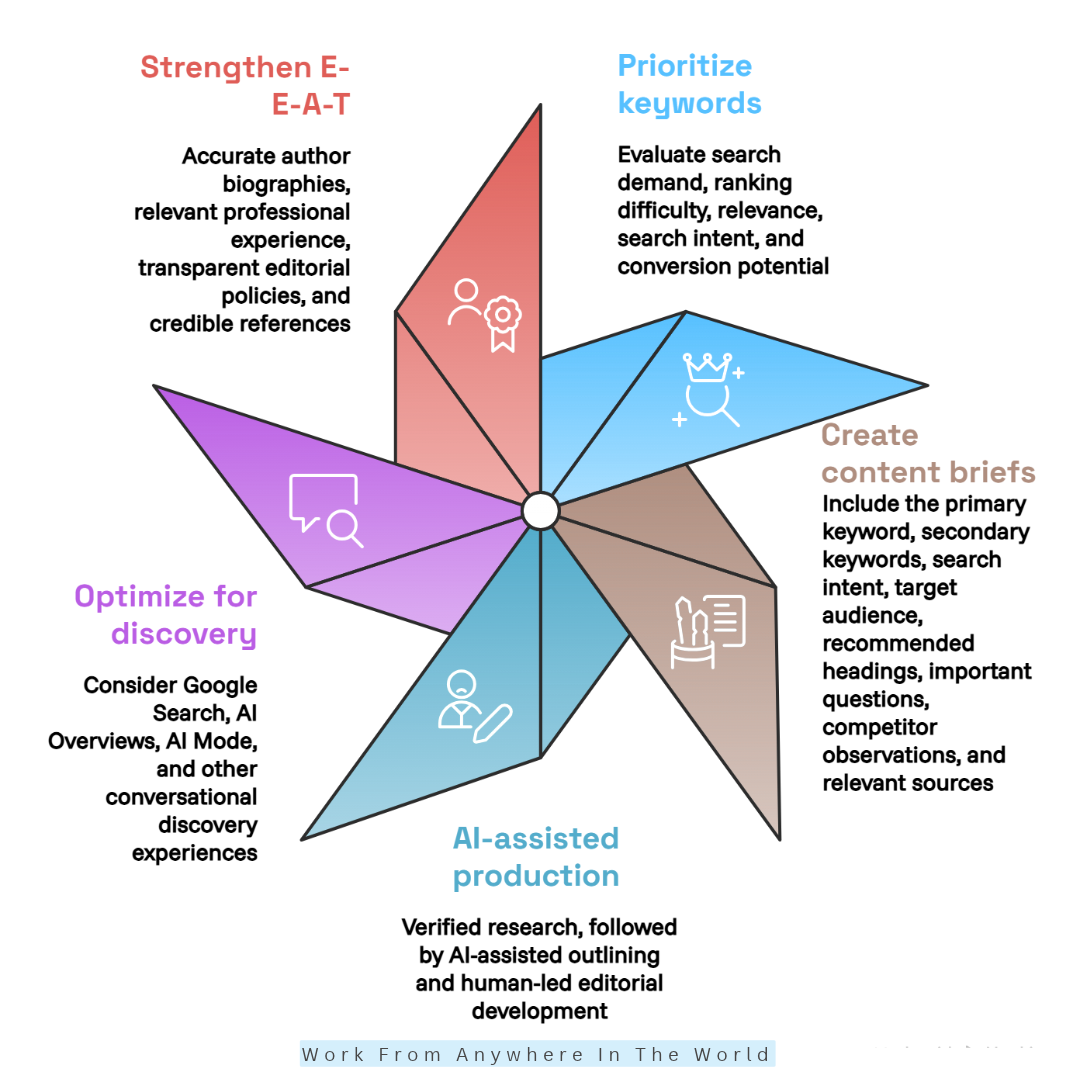
A keyword with high search volume isn’t necessarily the best opportunity for growing blog traffic. Successful bloggers consider search demand, competition, audience relevance, search intent, and potential business value.
For example, a keyword receiving 500 monthly searches may attract more valuable visitors than one receiving 20,000 searches. The smaller keyword might reach people who are more interested in your products or services.
Our guide on how to choose keywords for blog posts explores practical ways to identify search terms that match your content and audience.
Start by creating a spreadsheet to organize potential keywords. Include estimated search volume, keyword difficulty, search intent, business relevance, and your website’s existing ranking position where available.
Assign priority levels to each opportunity based on its potential value. Consider whether the keyword addresses an important audience question or supports a specific business objective.
For example, a pet Reiki practitioner might target searches about starting an animal Reiki business rather than competing for broad wellness keywords. Our PawReiki guide on how to market a pet Reiki business explores ways to reach an interested audience.
Your website’s existing authority and the quality of competing pages also influence ranking potential. A newer blog may find it easier to compete for specific, less competitive searches.
Our article on how to identify long-tail keywords explains how detailed search phrases can help bloggers reach audiences with more specific information needs.
Use keyword research tools to collect initial data, but always examine actual Google search results before finalizing your priorities. Look at competing articles, their usefulness, and whether your content could provide something better.
The goal is to choose keywords that offer realistic ranking opportunities while attracting visitors who genuinely benefit from your blog.
Step 7: Create Research-Backed Content Briefs Before Writing
A detailed content brief turns keyword research into a practical publishing plan. It helps bloggers organize their ideas, identify important information, and maintain a consistent approach to content creation.
Begin by recording your primary keyword, supporting keywords, search intent, and target audience. Include proposed headings, important questions, relevant sources, and observations about competing articles.
Our guide on how to write high-quality blog posts explores ways to create informative articles that provide genuine value to readers.
Research the subject using Google Search results, People Also Ask questions, industry reports, and authoritative publications. Identify the information readers expect and any important details that existing articles overlook.
AI tools can help organize research findings, suggest supporting topics, and develop an initial outline. However, every important claim should be verified before it becomes part of your published content.
For example, a gardening blogger preparing an article about container gardening could outline suitable plants, soil requirements, watering schedules, and seasonal maintenance. Original photographs and growing experiences would make the guide more useful.
Our article on the best steps to write better content offers additional ideas for improving clarity, structure, and the overall reading experience.
Your content brief should also identify relevant internal links, useful external references, and potential cross-site connections. Planning these elements early creates a more helpful reading experience.
Consider the article’s purpose and any appropriate conversion opportunity. A tutorial might encourage readers to explore a related guide, while a product comparison could direct them toward more detailed reviews.
Finally, choose a suitable content format, such as a tutorial, checklist, comparison, or comprehensive guide. A well-prepared brief reduces unnecessary revisions and helps maintain consistent editorial quality.
Step 8: Use AI-Assisted Content Production With Human Expertise
Artificial intelligence has changed how bloggers and marketing teams research, organize, and produce online content. Tools such as ChatGPT, Claude, and Gemini can assist with outlining, summarizing information, and improving readability.
However, AI works best as a supporting tool rather than a replacement for genuine knowledge and editorial judgment. Successful content still depends on accurate information, original insights, and an understanding of readers’ needs.
Start with verified research from trustworthy sources. Use AI to organize your findings, identify related subjects, and suggest a logical article structure before developing the content.
Our guide on how to write blog posts faster explores practical ways to improve the writing process while maintaining useful content.
Human expertise becomes especially valuable when adding first-hand experiences, original photographs, screenshots, product comparisons, and practical demonstrations. These elements help distinguish your blog from generic information available elsewhere.
For example, a gardening blogger could document actual planting results, while a software reviewer might include screenshots from testing a platform. Such details provide information that automated summaries cannot independently verify.
AI-assisted content can also support creative business opportunities. Our article on AI content creation side hustles explores ways people can use these tools for online projects.
Before publishing, verify statistics, product features, quotations, and important factual claims against reliable sources. AI-generated information may contain errors or references that do not exist.
Google’s people-first content guidance emphasizes useful, reliable information created primarily for readers rather than manipulating search rankings.
Remember that publishing large amounts of AI-generated text doesn’t automatically create a competitive advantage. Combining efficient tools with genuine expertise and careful editing produces more valuable resources.
Step 9: Optimize Content For Traditional Search And AI Discovery
Modern content optimization involves helping readers discover useful information through traditional search engines and AI-powered search experiences. Google Search, AI Overviews, AI Mode, and conversational tools may present information in different ways.
Start by answering the reader’s main question clearly. Then expand your explanation with relevant examples, supporting evidence, practical instructions, and answers to related questions.
Our guide on how to write SEO-friendly content explores ways to organize articles that help readers while supporting search visibility.
Use descriptive headings, accurate terminology, and a logical content structure. These elements help visitors navigate your articles and make important information easier to understand.
Original statistics, expert observations, and first-hand experiences can strengthen your explanations. When presenting important claims, include trustworthy references so readers can evaluate the information.
For complex comparisons, consider using tables, lists, or step-by-step instructions. These formats can make detailed information easier to follow without sacrificing accuracy.
Our article on the ultimate on-page SEO guide explains additional techniques for improving headings, page elements, and content organization.
AI search optimization also requires realistic expectations. Clear, original content may improve discoverability, but no technique guarantees that an AI system will cite or recommend your website.
Google’s official AI search documentation confirms that established SEO fundamentals remain relevant. There are no special GEO markup requirements for appearing in AI Overviews or AI Mode.
Continue improving content quality, technical accessibility, and the overall reading experience. These practices support traditional search visibility while helping your blog adapt to evolving discovery methods.
Step 10: Strengthen E-E-A-T Through Experience And Trust Signals
Building trust is an important part of growing a successful blog. Readers want accurate information from sources that demonstrate genuine knowledge, practical experience, and transparency.
Google’s quality guidance discusses Experience, Expertise, Authoritativeness, and Trustworthiness, commonly called E-E-A-T. These concepts help explain what makes information useful and credible.
Start by providing clear author biographies that describe relevant experience and qualifications. Readers should understand who created the content and why that person is knowledgeable about the subject.
Our guide on the best WordPress author box plugins introduces tools that can help bloggers display author information alongside their articles.
Product reviews should demonstrate genuine product knowledge whenever possible. Include original screenshots, practical observations, relevant comparisons, and explanations of advantages and limitations.
Tutorials also benefit from first-hand demonstrations. Showing how a process works can provide greater value than simply repeating instructions available on other websites.
For sensitive subjects involving health, finances, or safety, accurate information and authoritative references become particularly important. Seek qualified expert input when the topic requires specialized knowledge.
Make your About and Contact pages easy to find. Clear editorial policies, appropriate disclosures, and accessible contact information can help readers understand how your website operates.
Our article on how to increase website authority explores additional strategies for building a stronger, more credible online presence.
Remember that E-E-A-T isn’t a single numerical ranking score. Focus on demonstrating genuine expertise, providing trustworthy information, and creating a positive experience for readers.
Over time, consistently publishing reliable, experience-based content can strengthen your blog’s reputation and encourage visitors to return.
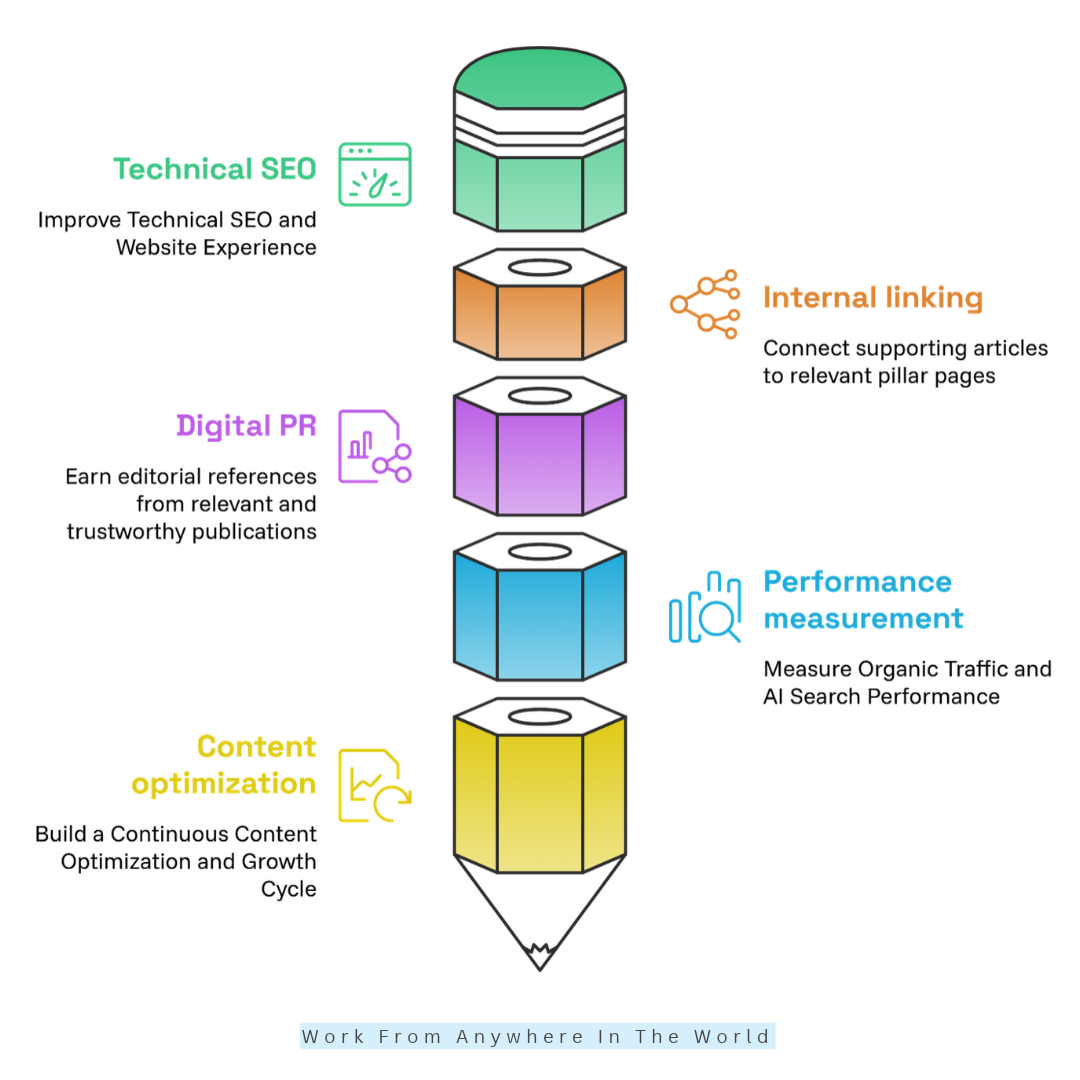
Step 11: Improve Technical SEO And Website Experience
Technical SEO helps search engines access, understand, and index your blog’s important content. Even well-researched articles may struggle to attract visitors when technical problems interfere with discovery or usability.
Begin by reviewing Google Search Console’s indexing reports, your XML sitemap, robots.txt file, canonical tags, and HTTP status codes. These elements help you identify pages that search engines cannot access or index properly.
Our guide on types of SEO optimization explores the different approaches that contribute to stronger search visibility, including technical improvements.
Next, examine your website’s loading performance and mobile experience. Use Google PageSpeed Insights to test important landing pages and identify potential problems.
Pay particular attention to Google’s Core Web Vitals: Largest Contentful Paint, Interaction to Next Paint, and Cumulative Layout Shift. These measurements help evaluate loading performance, responsiveness, and visual stability.
Large images, unnecessary JavaScript, inefficient caching, and slow hosting can affect the browsing experience. Our guide on improving website speed explores practical ways to reduce loading delays.
Consider using a suitable content delivery network (CDN) when it benefits your website. A CDN can help deliver resources from servers closer to visitors, potentially improving loading performance.
Image optimization is another important consideration, particularly for blogs featuring photographs, tutorials, and recipes. Our article on WordPress image optimizer plugins introduces tools for reducing image file sizes.
Review your navigation menus, broken links, and accessibility features. Readers should be able to find information easily, understand your content, and interact with important website elements.
Structured data can help search engines interpret eligible page information when implemented correctly. Make sure your markup accurately represents visible content and follows Google’s relevant guidelines.
A technically reliable website provides a stronger foundation for organic search and AI-powered discovery. Regular maintenance helps prevent avoidable problems as your blog grows.
Step 12: Develop A Strategic Internal Linking And Content Distribution System
Internal linking helps readers discover related information while creating a logical structure throughout your blog. Rather than adding links randomly, organize them around your main topics and supporting articles.
Connect relevant supporting posts to their pillar pages using descriptive anchor text. Include links between related articles when they provide useful explanations or additional resources.
Our guide on driving traffic to a website explores complementary strategies for attracting visitors through search, social platforms, email marketing, and other channels.
Review important pages that receive few internal links. Adding relevant contextual connections can make these resources easier for visitors and search engines to discover.
Once your internal linking structure is organized, develop a distribution plan for each new article. Publishing should be the start of your promotional process, not the final step.
Our guide on how to share content on social media explores ways to introduce your articles to audiences across different platforms.
Transform important article insights into LinkedIn posts, Pinterest graphics, short videos, newsletters, and helpful community contributions. Adapt your message to each platform instead of publishing identical promotional content everywhere.
For example, a gardening blogger might create a Pinterest graphic highlighting seasonal planting tips, while a pet wellness blogger could share a short educational video about creating a peaceful environment for animals.
Our article on content repurposing strategies explores ways to adapt existing information into different formats without starting every project from scratch.
Remember to direct interested visitors toward relevant resources rather than automatically linking to your homepage. A focused article gives readers a clearer reason to continue exploring.
Combining thoughtful internal linking with consistent content distribution can strengthen your website’s structure and introduce valuable resources to audiences across multiple channels.
Step 13: Earn Relevant Backlinks Through Digital PR And Original Research
Earning backlinks from credible websites can help strengthen your blog’s online reputation and introduce your content to new audiences. Effective digital PR focuses on relevant editorial mentions rather than indiscriminately collecting links.
Start by identifying information gaps within your industry. Look for subjects where original research, expert observations, or useful comparisons could provide something valuable to other publishers.
Consider creating surveys, industry statistics, comparison studies, expert roundups, or downloadable resources. These materials may encourage journalists, bloggers, and industry publications to reference your work.
Our guide on backlinking strategies explores different approaches to earning links and strengthening your website’s visibility.
For example, a gardening website could publish original observations comparing different container-growing methods. Photographs, practical results, and clearly documented findings may make the resource useful to other gardening publishers.
Once you’ve developed a valuable resource, identify relevant journalists, industry websites, and bloggers who cover similar subjects. Personalize your outreach and explain why your information would interest their audiences.
Guest contributions can also create opportunities to share expertise and reach new readers. Our article on guest posting best practices explores ways to contribute useful content to relevant publications.
You can also use Ahrefs or Semrush to examine competitor referring domains and discover potential outreach opportunities. Evaluate each website’s editorial quality, topical relevance, and audience before contacting its publisher.
Our guide on how to get backlinks for free introduces additional methods for earning relevant links without purchasing placements.
Avoid manipulative link exchanges, automated link schemes, and low-quality guest posting networks. Focus on genuine editorial relationships and resources that deserve recognition.
Strong digital PR can support referral traffic, brand recognition, and long-term website authority. Our guide to brand positioning examples explores how businesses can develop a distinctive identity and stand out from competitors.
The most valuable links connect your content with genuinely interested audiences while helping strengthen your brand’s credibility and visibility.
Step 14: Measure Organic Traffic And AI Search Performance
Measuring blog traffic helps you understand which strategies attract visitors and which areas need improvement. Regular performance reviews make it easier to identify useful opportunities rather than relying on assumptions.
Start with Google Search Console to examine organic clicks, impressions, click-through rates, average positions, and individual search queries. These measurements reveal how your articles perform in Google Search.
Next, use Google Analytics 4 to review organic landing pages, engaged sessions, conversions, and traffic acquisition. Comparing these reports helps you understand what visitors do after discovering your website.
Our guide on the benefits of Google Analytics explores how visitor data can support better content and marketing decisions.
Compare performance across meaningful periods, such as the previous 28 or 90 days. Consider seasonal patterns, website changes, and search demand when interpreting increases or decreases.
For example, a gardening article about spring planting may receive more visitors during the growing season. A temporary decline during winter doesn’t necessarily indicate a content problem.
AI-powered discovery also deserves attention. Where referral information is available, review visits from conversational AI platforms and examine how those visitors engage with your content.
Third-party AI visibility tools may provide estimates of brand mentions and citations. However, treat these measurements as directional indicators rather than verified Google ranking metrics.
Our guide on social media report analysis explores complementary ways to evaluate promotional performance across social platforms.
Use your findings to identify successful topics, underperforming pages, and new keyword opportunities. Prioritize improvements that could attract relevant readers or encourage meaningful engagement.
Remember that visitor numbers alone don’t tell the complete story. A smaller audience that regularly explores your content may provide greater long-term value than a large number of uninterested visitors.
Step 15: Build A Continuous Content Optimization And Growth Cycle
Sustainable blog growth requires ongoing content improvements rather than occasional publishing campaigns. Combining research, publishing, promotion, and performance analysis creates a repeatable process for attracting readers.
Begin by establishing a monthly content review schedule. Identify articles with declining clicks, increasing impressions, weak engagement, or relevant keywords that haven’t reached their potential.
Review these pages to determine whether their information remains accurate and useful. Update outdated instructions, replace broken links, strengthen explanations, and add practical examples when appropriate.
Our guide on ways to make your content better explores additional techniques for improving existing articles and creating more valuable resources.
Pay attention to articles receiving many search impressions but relatively few clicks. Clearer titles and accurate meta descriptions may help communicate their value more effectively.
However, avoid changing successful titles simply to increase keyword frequency. Every adjustment should improve relevance, clarity, or the reader’s understanding of the article.
Expand successful topic clusters by identifying related questions your audience keeps asking. Create supporting articles when they address distinct needs and provide meaningful additional information.
Our guide on content marketing strategies explores how thoughtful planning can connect individual articles with broader marketing objectives.
AI tools can help organize performance reports, identify recurring patterns, and suggest potential improvements. Human editorial judgment remains essential for evaluating recommendations and verifying information.
Keep a record of important updates and monitor their results over time. This makes it easier to understand which changes improve search visibility, engagement, and conversions.
A consistent optimization cycle transforms blogging into a more measurable, manageable process. By improving existing resources and responding to changing audience needs, you can support sustainable traffic growth.
8 Advanced Blog Traffic Growth Strategies Used By Leading Companies
Successful companies rarely depend on a single method to attract website visitors. They combine content marketing, search optimization, audience engagement, and strategic promotion to build a stronger online presence.
These advanced blog traffic growth strategies show how businesses connect different marketing channels, develop original resources, and expand their visibility beyond traditional search results.
Although larger organizations may have dedicated marketing teams, independent bloggers can adapt many of these approaches. The key is choosing techniques that match your audience, available resources, and long-term goals.
Explore the following eight strategies to discover how a coordinated approach can support sustainable traffic growth and help your blog reach new audiences.
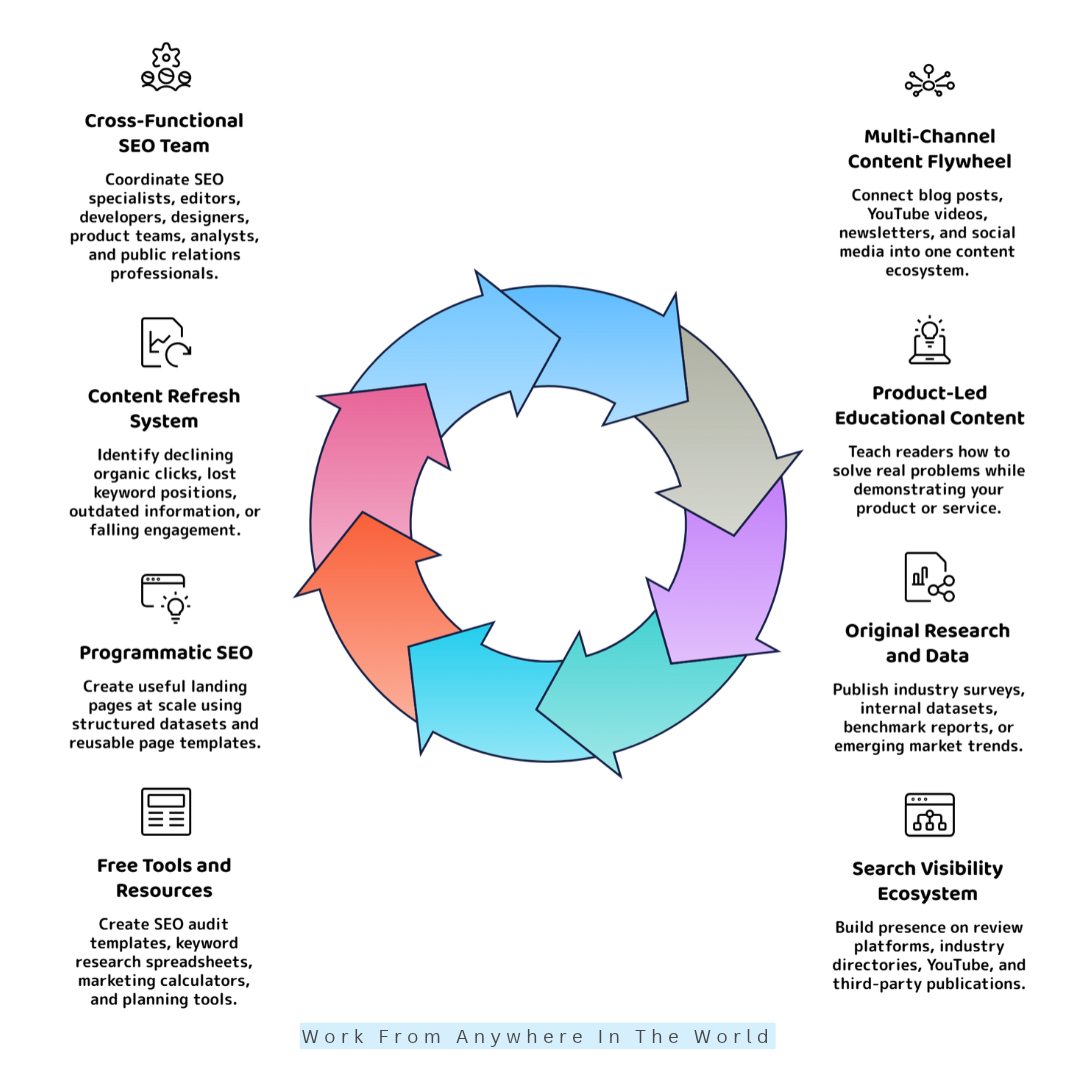
1. Build A Multi-Channel Content Flywheel
A content flywheel connects blog articles, YouTube videos, podcasts, newsletters, and social media into one coordinated marketing system. Instead of treating each channel separately, you use them to support and strengthen one another.
For example, HubSpot has described how its media channels work together. Video discussions can become podcasts, podcast conversations can inspire articles, and blog content can spark social media posts.
Independent bloggers can apply a similar approach by starting with one detailed article. Our guide on content repurposing strategies explores ways to adapt existing material into different formats.
A comprehensive tutorial could become a YouTube demonstration, a series of short social media posts, and an email newsletter. Each format introduces the same subject to audiences with different content preferences.
Our article on how to turn blog posts into YouTube videos explains how written resources can become engaging visual content without researching an entirely new topic.
Podcasts offer another opportunity to share knowledge through interviews, discussions, and educational episodes. Our guide on how to make your first podcast introduces the process of creating audio content.
Connect these channels by embedding relevant videos in articles and sharing useful links through newsletters. Social media posts can highlight important insights and encourage interested readers to explore the complete resource.
The goal isn’t to publish identical content everywhere. Adapt each format to its audience while maintaining a consistent message and providing genuine value.
Over time, a connected content system can create repeated opportunities for discovery. It also helps you make better use of your research, creative effort, and existing website resources.
2. Create Product-Led Educational Content
Product-led educational content teaches readers how to solve practical problems while demonstrating the usefulness of a relevant product or service. This approach combines helpful instruction with natural product discovery.
Instead of beginning with a promotional message, identify challenges your target audience regularly experiences. Develop detailed tutorials that explain the problem and demonstrate possible solutions.
For example, Ahrefs publishes educational resources about keyword research, competitor analysis, and SEO performance. These tutorials can demonstrate how its tools help users complete specific tasks.
Our Ahrefs keyword research guide provides a relevant example of educational content focused on a practical SEO activity.
A software company might create a tutorial explaining how to identify low-competition keywords. Screenshots and demonstrations could show readers how to complete the research using its platform.
The same principle applies to smaller businesses and independent bloggers. A gardening equipment company could demonstrate how to use a container watering system while explaining proper watering techniques.
For additional gardening context, our Nature guide on container gardening tips explores practical considerations for growing plants successfully in containers.
Product-led tutorials should remain useful even when readers aren’t ready to purchase. Explain relevant limitations, alternative approaches, and situations where a particular product may not be necessary.
Our guide on content marketing strategies explores how educational resources can support broader marketing goals and help businesses connect with potential customers.
When readers receive genuine value, they’re more likely to trust your recommendations. Helpful demonstrations can attract informational search traffic while introducing products through practical examples.
3. Develop Original Research And Proprietary Data Assets
Original research helps your blog stand out by providing information that competing websites cannot easily reproduce. Instead of summarizing existing articles, you contribute new observations, findings, or useful comparisons.
Large marketing teams may analyze customer datasets, conduct industry surveys, or publish benchmark reports. Independent bloggers can apply the same principle through smaller research projects.
Start by identifying unanswered questions within your niche. Look for opportunities to collect meaningful information through surveys, interviews, practical experiments, or documented experiences.
For example, a gardening blogger could compare plant growth in different container materials. Recording watering frequency, plant development, and seasonal results would create useful first-hand information.
Our Nature article on gardening influencers explores how gardening creators share their knowledge and experiences with interested audiences.
Original findings can become detailed articles, charts, comparison tables, downloadable reports, and educational videos. Present your methodology clearly so readers understand how you collected the information.
Our guide on writing high-quality blog posts explores ways to strengthen articles with useful explanations, practical examples, and reliable information.
Once you’ve published your research, share relevant findings with journalists, bloggers, and industry publications. Original statistics and well-documented observations may attract editorial mentions and backlinks.
AI-powered search systems may also discover and reference distinctive information, although citations are never guaranteed. Accuracy, accessibility, and clear sourcing remain essential.
Remember that original research doesn’t need to involve thousands of participants. A carefully documented experiment or small, transparent survey can still provide valuable insights when its limitations are explained.
4. Build A Search Visibility Ecosystem Beyond Your Website
Your blog’s online visibility extends beyond its own pages. Potential readers may discover your expertise through YouTube, review platforms, industry directories, community discussions, and third-party publications.
Leading brands recognize that people use multiple sources when researching products, services, and information. Developing a credible presence across these channels creates additional opportunities for discovery.
HubSpot’s enterprise search approach includes organic content, review websites, directories, and other search-result features. Smaller businesses can adapt this principle by identifying platforms relevant to their audiences.
Start by searching for your important keywords and examining which websites appear in the results. Look for industry publications, discussion communities, video platforms, and directories that attract your target readers.
Our guide to social media search engines explores how people discover information through platforms beyond traditional web search.
For example, a pet wellness blogger might publish educational articles on their website, share practical animal-care tips on YouTube, and participate in relevant pet communities.
Our PawReiki guide on marketing a pet Reiki business explores ways to connect a specialized pet wellness service with interested audiences.
Participating in relevant online communities can also strengthen brand recognition. Our article on building an online community explores strategies for developing relationships around shared interests.
Make sure your business information and branding remain consistent across platforms. Accurate profiles, helpful contributions, and trustworthy resources make it easier for people to recognize your website.
Avoid creating accounts on every available platform simply to increase your presence. Focus on channels where your audience actively searches, participates, and discovers useful information.
A coordinated search visibility ecosystem can support referral traffic, brand recognition, and audience trust. It also reduces your dependence on a single discovery channel.
Wealthy Affiliate – Mini Review
If you’ve ever thought about turning your blog, passion, or niche into an online business,
Wealthy Affiliate (WA) is one of the most beginner-friendly platforms I’ve used.
It combines step-by-step training, website hosting, AI-powered tools,
keyword research, and an active community all in one place.
What I like most is that you can start for free (no credit card needed), explore the platform,
test the tools, and connect with other entrepreneurs before upgrading.
WA isn’t a “get rich quick” scheme — success comes from consistent effort
and applying what you learn over time.
5. Build Free Tools, Templates, And Interactive Resources
Free tools and downloadable resources can attract visitors who are searching for practical solutions. Unlike traditional blog articles, these resources often encourage repeat visits because readers can use them whenever needed.
Examples include SEO audit checklists, keyword research spreadsheets, marketing calculators, content brief templates, and social media planning tools. Each resource should address a specific problem your audience regularly encounters.
Start by identifying repetitive tasks within your niche. Consider which activities readers find confusing, time-consuming, or difficult to organize without additional guidance.
Our guide to the best free content marketing tools introduces resources that can help bloggers organize their marketing activities and improve efficiency.
For example, a blogging website could offer a downloadable keyword research spreadsheet. Readers could use it to record search volume, competition, search intent, and content priorities.
A personal finance blog might provide budgeting worksheets or savings calculators. Our article on the best budgeting templates explores resources that help people organize financial information.
The same approach works for specialized niches. A vegan food blogger could offer a weekly meal-planning template, grocery checklist, or printable recipe organizer.
Our Vegan guide on how to start a vegan blog provides an example of a specialized blogging niche where practical resources could complement educational articles.
Support each tool or template with a helpful article explaining its purpose and how to use it. Include examples, clear instructions, and answers to common questions.
Useful resources may also attract backlinks when other publishers recommend them. Focus on accuracy, accessibility, and genuine usefulness rather than creating downloads solely to collect email addresses.
Over time, a small collection of well-designed resources can become a valuable part of your blog. These tools provide additional search entry points while giving visitors reasons to return.
6. Use Programmatic SEO Where Genuine Value Exists
Programmatic SEO uses structured datasets and reusable page templates to create useful pages for related search queries. This approach can help websites organize large collections of information without manually designing every page.
Companies such as Canva demonstrate how extensive collections of templates and design-related pages can support different search needs. Their resources help users discover specific designs, formats, and creative solutions.
Our Canva review explores the platform’s features and provides additional context about its design tools and capabilities.
Programmatic SEO can also work for websites offering location-based services, product comparisons, software integrations, or categorized resources. The essential requirement is that each page provides distinct information.
Begin by identifying search patterns involving repeatable user needs. For example, a travel website might organize destination guides using consistent categories such as transportation, attractions, and accommodation.
Develop a reliable dataset containing information that genuinely differs between pages. Then create templates that present the information clearly while allowing room for unique explanations and useful details.
A website publishing hundreds of nearly identical pages with only minor keyword changes may create content-quality and indexing problems. Search engines need a reason to consider each page useful.
Our guide to Rank Math SEO tools explores features that can support WordPress optimization, although an SEO plugin alone cannot make automatically generated pages valuable.
Quality control should include checking factual accuracy, page uniqueness, internal linking, accessibility, and indexing. Review sample pages carefully before expanding the system.
Independent bloggers don’t need to adopt programmatic SEO simply because large companies use it. This approach is most appropriate when structured information creates genuine value at scale.
If your website doesn’t have a suitable dataset, publishing fewer, carefully researched articles may be a better strategy.
7. Create A Content Refresh And Decay Detection System
Content performance can change as search trends evolve, competitors publish new information, and older articles become outdated. A content refresh system helps you identify these changes before they become larger problems.
Rather than checking every article manually, develop a monitoring process that highlights pages experiencing declining organic clicks, lost keyword positions, or reduced visitor engagement.
Combine Google Search Console data with website analytics and keyword tracking reports. These sources can help identify which articles may need additional attention.
Our guide to Mangools Rank Tracker explores a tool for monitoring keyword positions and identifying changes in search visibility.
Create a spreadsheet or dashboard containing important pages, their target keywords, recent performance, and the date of their last substantial update.
Compare performance over appropriate periods and account for seasonal demand. A decline in traffic doesn’t automatically mean that an article has become less useful.
For example, a vegan recipe blog may experience seasonal interest in holiday meals, summer desserts, or warming winter dishes. These fluctuations should be considered before changing successful content.
Our Vegan article on top vegan bloggers highlights a niche where creators can build substantial collections of content that benefit from ongoing editorial attention.
When a page loses traffic, investigate possible causes. Search intent may have changed, competitors may offer stronger information, or technical problems may be affecting visibility.
Prioritize updates based on potential audience value and business impact. Refresh outdated facts, improve explanations, add original examples, and strengthen relevant internal links.
Our guide to the best blogging tools introduces resources that can help bloggers manage different aspects of content creation and website maintenance.
A structured refresh system makes content maintenance more manageable. It also helps ensure that valuable older articles continue serving readers instead of gradually becoming outdated.
8. Develop A Cross-Functional SEO Growth Team
At larger companies, successful organic growth usually involves several areas of expertise. SEO specialists, writers, editors, developers, designers, analysts, and public relations professionals contribute to different stages of the process.
Shopify’s enterprise SEO guidance emphasizes coordinated workflows, clear responsibilities, and collaboration between teams. These principles can also benefit independent bloggers and smaller businesses.
Start by identifying the activities required to maintain and grow your website. Common responsibilities include keyword research, article writing, editing, technical optimization, image creation, promotion, and performance reporting.
Our guide to freelancer project management software explores tools that can help coordinate tasks, deadlines, and responsibilities.
Small teams don’t need a separate employee for every activity. One person may handle research and editing, while another manages images, videos, or social media promotion.
For example, a blogger could focus on content strategy and editorial quality while a virtual assistant prepares visual resources and schedules promotional posts.
Our article on productivity tips for working from home explores practical ways to organize responsibilities and maintain focus.
Document your publishing workflow so everyone understands what happens before and after an article goes live. Include research, drafting, editing, image optimization, internal linking, publishing, and promotion.
A shared spreadsheet or project management dashboard can help track article status, deadlines, assigned responsibilities, and important performance indicators.
Review priorities regularly and identify tasks that need additional attention. This helps prevent missed deadlines, duplicated work, and inconsistencies between team members.
The goal isn’t to create a complicated corporate structure. It’s to establish a reliable system in which each activity contributes to the same long-term blogging objectives.
Even a small, well-organized team can achieve meaningful progress when responsibilities are clear, and everyone understands the overall strategy.
Frequently Asked Questions
Q1: How Does AI Help Grow Blog Traffic?
AI helps bloggers discover keywords, analyze competitors, identify content opportunities, and organize their publishing schedules. It can also simplify research and highlight patterns in website performance.
However, human expertise remains essential for checking facts, adding original experiences, and making strategic decisions. AI works best when it supports thoughtful content creation rather than replacing it.
Q2: What Is The Difference Between SEO And GEO?
Search Engine Optimization (SEO) focuses on improving website visibility in traditional search results. Generative Engine Optimization (GEO) focuses on making content useful and discoverable in AI-powered search experiences.
Both approaches benefit from original information, trustworthy sources, clear headings, and technically accessible pages. Strong SEO fundamentals also provide a valuable foundation for AI discovery.
Q3: How Often Should Bloggers Update Existing Content?
Review important blog articles approximately every three months or whenever significant information changes. Prioritize pages experiencing declining traffic, outdated information, or reduced search visibility.
Update statistics, improve explanations, replace broken links, and add relevant examples when necessary. Regular maintenance helps keep your content accurate, useful, and competitive.
Q4: How Long Does It Take To Grow Blog Traffic?
Growing blog traffic often takes several months of consistent effort, particularly for newer websites. Results depend on competition, content quality, website history, and your promotional strategy.
Focus on publishing useful articles, improving existing content, and monitoring search performance. Sustainable growth usually develops gradually rather than through immediate traffic increases.
Q5: Can You Grow Blog Traffic Without Paid Advertising?
Yes, bloggers can attract visitors through organic search, social media, email newsletters, and relevant online communities. These approaches require consistent effort but don’t necessarily involve advertising expenses.
Start with helpful, search-optimized articles and promote them through channels your audience already uses. Internal linking and content repurposing can also help visitors discover more of your resources.
Q6: What Is The Most Important Factor In Growing Blog Traffic?
Understanding your target audience is one of the most important foundations for sustainable blog traffic. Your content should answer genuine questions, address specific problems, and match readers’ search intentions.
Combine audience research with useful content, technical SEO, and consistent promotion. Monitor your results regularly so you can strengthen successful strategies and improve underperforming articles.
Conclusion
Building a successful blog takes patience, planning, and consistent effort. This guide for growing blog traffic demonstrates how keyword research, SEO, valuable content, and strategic promotion work together to attract the right audience.
Start by reviewing your existing articles and identifying opportunities for improvement. Focus on understanding your readers, answering their questions, and creating resources that provide genuine value.
Combine traditional search optimization with newer approaches to AI discovery and content distribution. Connecting your blog with social media, videos, and newsletters can help you share your expertise with a wider audience.
Remember that sustainable growth rarely happens overnight. Monitor your results, refresh older content, and gradually expand your strategy as you discover what works best for your website.
With consistent improvements and a reader-focused approach, you can increase blog traffic, strengthen your online presence, and build a valuable resource that continues attracting visitors over time.
I trust you enjoyed this Guide for Growing Blog Traffic: 15 Proven Steps. Please stay tuned for more insightful blogs on affiliate marketing, online business, and working from anywhere in the world.
Take care!
— JeannetteZ 🌍✨
💬 Your Opinion Is Important To Me
Do you have thoughts, ideas, or questions? I’d love to hear from you. Please leave your comments below or email me directly at Jeannette@WorkFromAnywhereInTheWorld.com.
📚 More Work From Anywhere Reads
🚀 Ready to Build a Business You Can Run from Home
Or from Anywhere in the World?
Imagine earning income on your terms — from home, a cozy café, or wherever life takes you.
With the right tools, training, and community support, it’s entirely possible.
Start your own online business for free — no credit card needed.
Disclosure
This post may contain affiliate links. As an Amazon Associate and participant in other affiliate programs, I earn from qualifying purchases at no extra cost to you. Please read my full affiliate disclosure.