
Should I Quit My Job And Start A Business? 15 Key Questions
If you’ve been asking yourself, “Should I quit my job and start a business?” you’re far from alone. Many professionals dream of becoming their own bosses, achieving financial freedom, and creating a more flexible lifestyle.
Entrepreneurship can offer exciting opportunities when approached with the right strategy, careful planning, and realistic expectations. However, leaving a stable job requires thoughtful consideration of both the benefits and risks.
This guide explores 15 important questions to help you assess your readiness, address your concerns, and make an informed decision based on practical considerations rather than emotions.
Should I Quit My Job And Start A Business? 15 Questions To Ask Yourself
Leaving a stable job to pursue entrepreneurship is a significant decision that requires careful consideration. Asking yourself the right questions can help you determine whether you’re ready to make this transition.
The following 15 questions will help you evaluate your business idea, financial preparedness, professional skills, and personal circumstances before committing to full-time entrepreneurship.
1. Are You Solving A Real Problem?
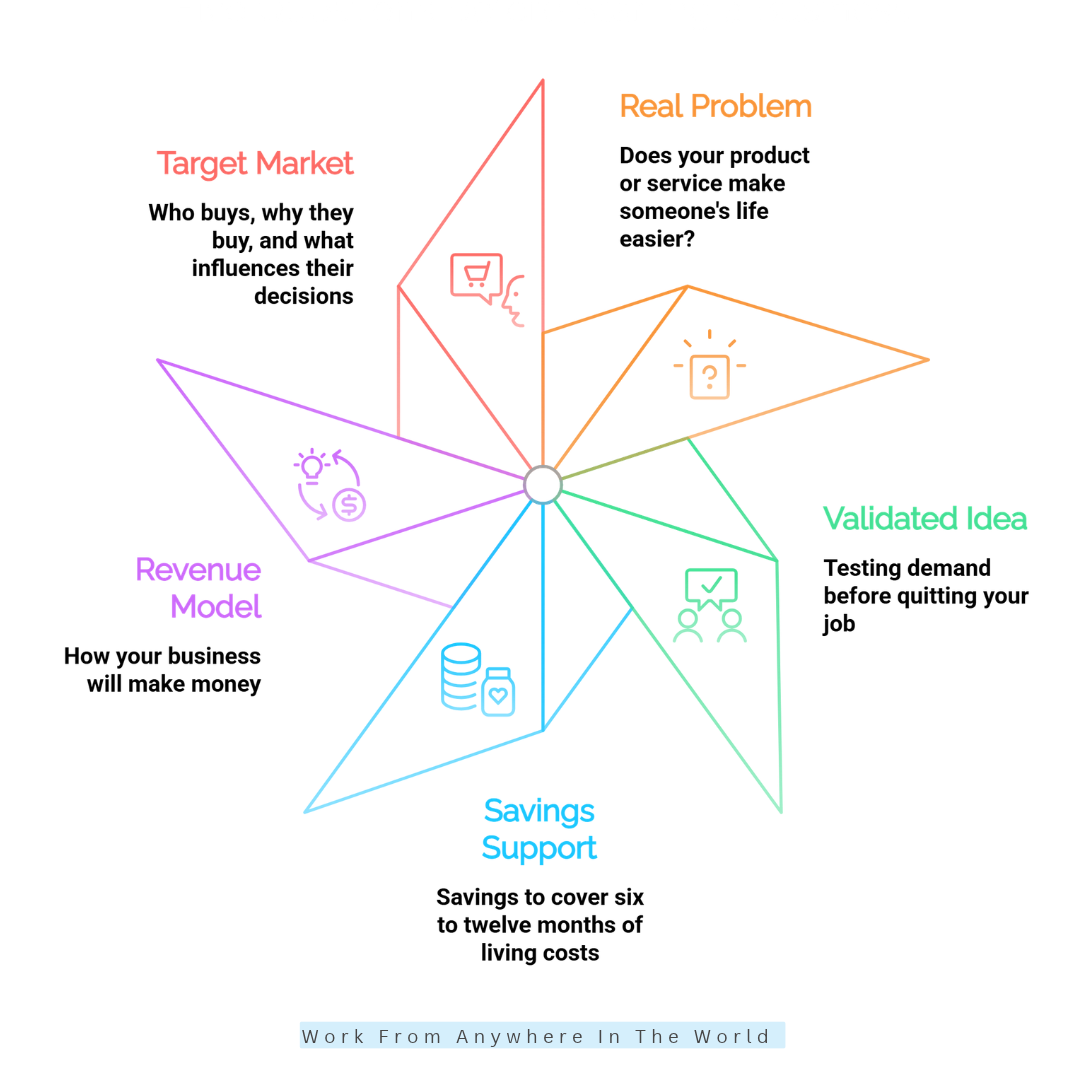
Every successful business begins by solving a problem that people genuinely care about. Understanding how to find a business idea that addresses real customer needs is essential before handing in your resignation.
Does your product or service make someone’s life easier, save time, reduce costs, or deliver a better experience than existing options? Businesses built around genuine customer needs have greater growth potential.
For example, a virtual bookkeeping service solves a common challenge for busy small business owners who prefer outsourcing to hiring full-time staff rather than managing their finances themselves.
When your business creates measurable value, marketing becomes easier because satisfied customers are more likely to recommend it to others, helping you attract new customers.
A great idea is exciting, but finding a solution people are willing to pay for is an essential step towards building a successful and sustainable business.
2. Have You Validated Your Business Idea?
An idea can sound brilliant on paper yet struggle in the marketplace. That’s why testing demand before quitting your job is one of the smartest investments you can make.
Try selling your service to a few customers, launching a simple website, or offering a pilot version of your product. Real feedback is worth far more than assumptions because it reveals what customers truly want.
Exploring different ways to make money online without investment allows you to test your business idea without committing substantial financial resources or giving up your regular income.
Imagine a freelance graphic designer who secures ten paying clients while still employed. This early success provides confidence, practical experience, and evidence that the business has genuine earning potential before becoming a full-time commitment.
3. Can Your Savings Support You During The Transition?
Building a profitable business usually takes longer than expected, even when everything goes well. Having a financial safety net allows you to concentrate on growth rather than worrying about monthly expenses.
Many entrepreneurs feel more confident when they have enough savings to cover six to twelve months of living costs. Knowing how to build a personal budget can help you determine how much you need.
This financial breathing room creates the flexibility to improve products, attract customers, and make thoughtful decisions rather than chasing quick income. It can also help you reduce financial stress during the transition.
Think of savings as an investment in your peace of mind. The stronger your financial foundation and financial literacy, the easier it becomes to navigate the early stages of entrepreneurship with confidence.
4. Does Your Business Have A Clear Revenue Model?
Passion is a powerful starting point, but sustainable businesses need to generate consistent income. Before leaving your job, identify exactly how your business will make money.
Will you sell products, offer services, create subscriptions, earn commissions, or combine multiple revenue streams? Exploring different online small business ideas can help you identify a suitable revenue model.
Understanding your pricing, expected profit margins, and customer lifetime value helps you estimate realistic earnings. These financial considerations are also essential when writing a winning business plan.
For instance, a digital marketing consultant charging monthly retainers may build a more predictable recurring income than someone relying solely on one-time projects.
A clear revenue model transforms a great idea into a practical business with measurable financial goals. It also helps you evaluate whether your business can eventually support your living expenses.
5. Have You Researched Your Target Market?
Knowing your customers is just as important as developing your product. Successful entrepreneurs understand who buys, why they buy, and what influences their purchasing decisions.
Conducting a thorough target audience analysis involves studying your ideal audience’s age, income, interests, challenges, and purchasing habits. Explore online communities, customer reviews, and industry reports to discover gaps competitors may have overlooked.
Suppose you’re planning an online fitness coaching business. Learning that your audience prefers personalized meal plans over generic workout videos allows you to develop a more valuable service.
The better you understand your customers, the easier it becomes to create products and services they genuinely appreciate and are willing to pay for.
6. Are You Financially Ready For Variable Income?
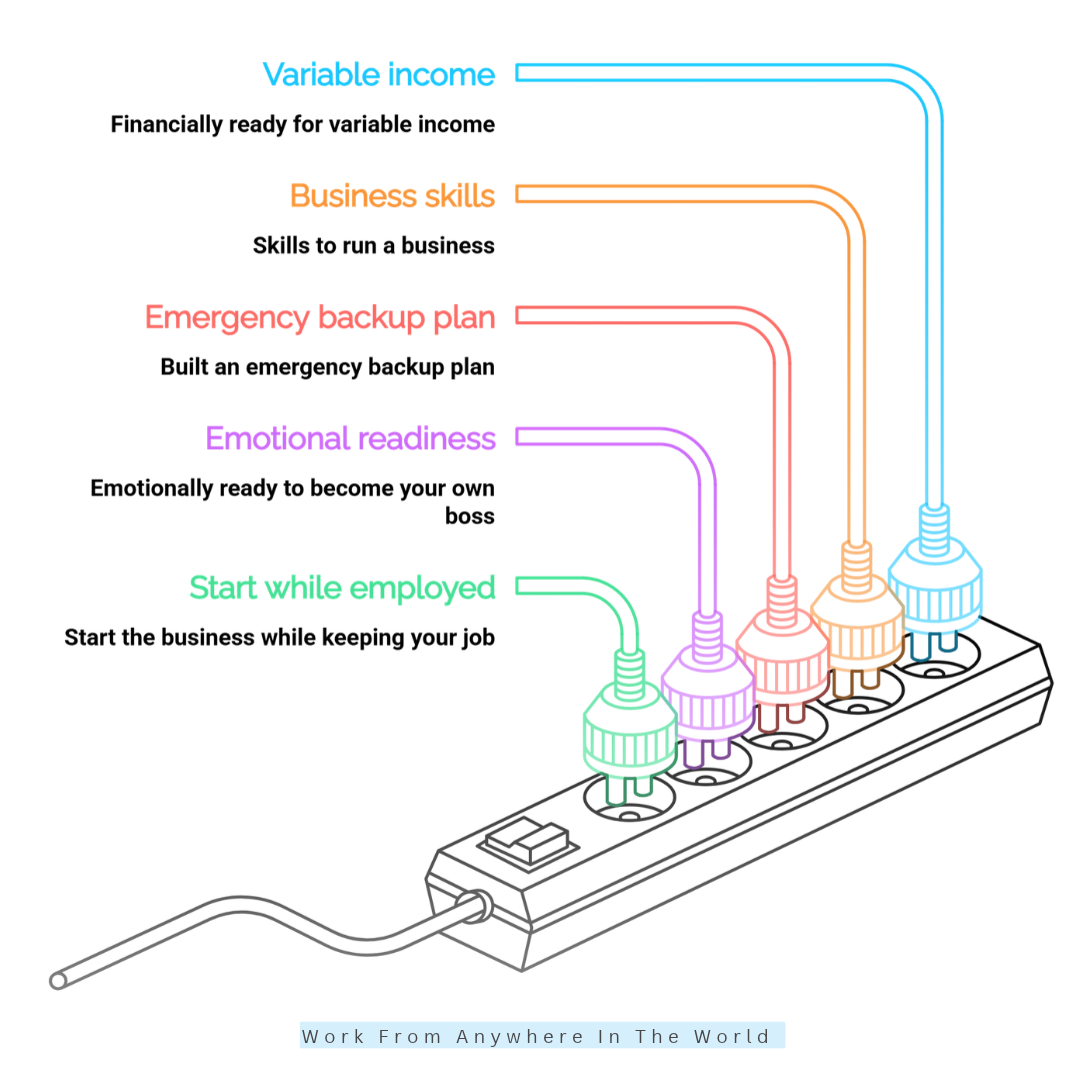
A regular paycheck offers stability, while business income often changes from month to month, especially during the first year. Consider whether you’re comfortable managing periods of slower sales alongside months of strong growth.
Creating a realistic budget, reducing unnecessary expenses, and tracking cash flow can make this transition much smoother. Many successful business owners experience uneven revenue before reaching consistent profitability.
Rather than responding emotionally to short-term financial ups and downs, learning how to manage business stress can help you stay focused on long-term success and recognize that temporary fluctuations are part of entrepreneurship.
7. Do You Have The Skills To Run A Business?
Running a business involves much more than delivering a product or service. You’ll likely spend time learning marketing, customer service, sales, bookkeeping, negotiation, and strategic planning.
The encouraging news is that every skill can be developed through practice, courses, and mentorship. Becoming familiar with different online business tools can also help you manage your daily operations more efficiently.
A talented baker, for example, may also need to understand branding and develop effective marketing campaigns to attract a consistent customer base.
Expanding your business knowledge before resigning increases your confidence and helps you make smarter decisions as your company grows.
8. Have You Built An Emergency Backup Plan?
Even promising businesses can face unexpected challenges, including economic shifts, supply delays, or slower-than-expected customer growth. Having a backup plan creates flexibility rather than fear.
You might maintain freelance work, develop multiple income streams, or keep professional certifications up to date. Exploring the benefits of making money online can help you identify additional income opportunities.
This safety net lets you adapt if circumstances change while continuing to move toward your entrepreneurial goals. Preparation doesn’t reduce ambition—it strengthens it by giving you options when unexpected opportunities or obstacles appear.
9. Are You Emotionally Ready To Become Your Own Boss?
Entrepreneurship offers freedom, but it also requires resilience, patience, and self-discipline. Some days bring exciting wins, while others involve solving unexpected problems.
Ask yourself whether you’re comfortable making independent decisions and staying motivated without a manager providing direction. Successful entrepreneurs frequently see obstacles as opportunities to grow rather than reasons to give up.
Developing a growth mindset and maintaining healthy work habits help you stay focused on progress rather than perfection, making the entrepreneurial journey far more rewarding over time.
10. Can You Start The Business While Keeping Your Job?
Many thriving companies began as evening or weekend projects before becoming full-time businesses. Exploring different ways to make money online allows you to start earning while maintaining financial stability.
Starting part-time allows you to gain customers, improve your product, and generate income. This gradual transition also gives you valuable insight into whether you genuinely enjoy running the business every day.
For example, many successful consultants, online store owners, and software developers built profitable side businesses before confidently leaving traditional employment.
Testing your business in real market conditions often leads to better decisions and stronger long-term success. Gradually learning how to earn a living online can help you prepare for full-time entrepreneurship.
11. Does Your Family Support Your Decision?
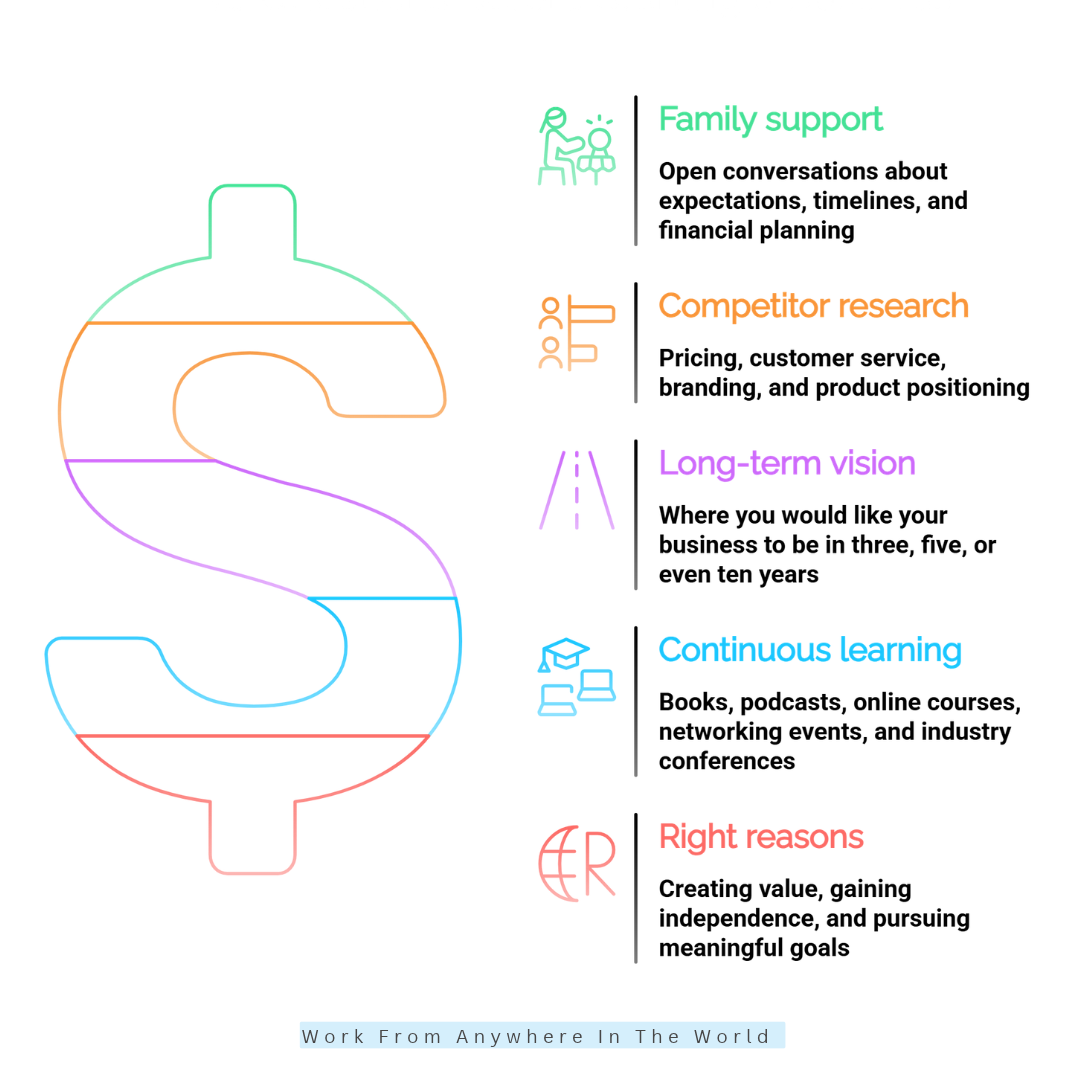
Entrepreneurship often affects more than one person, particularly if you share financial responsibilities with your family. Having open conversations about expectations, timelines, and financial planning creates understanding and reduces future stress.
Family support can be one of your greatest strengths during challenging periods. Encouragement from loved ones helps you maintain motivation and overcome setbacks.
When everyone understands the plan and shares the long-term vision, it becomes easier to stay committed to building a successful business together.
12. Have You Studied Your Competitors Carefully?
Competitors can teach valuable lessons about pricing, customer service, branding, and product positioning. Instead of viewing them as obstacles, see them as a source of market intelligence.
Conducting an SEO competitive analysis can help you identify what competitors do exceptionally well and where opportunities exist. Pay attention to customer feedback and unmet needs.
For example, if competing agencies offer slow customer support, responding quickly could become your strongest competitive advantage. Those gaps often become your greatest opportunities.
Learning from successful businesses helps you improve faster while creating a unique position in your industry and developing products or services that stand out.
13. Do You Have A Long-Term Vision?
Building a successful company involves thinking beyond the first sale. Consider where you would like your business to be in three, five, or even ten years.
Perhaps you envision hiring employees, expanding internationally, launching digital products, or creating multiple income streams. A clear long-term vision guides daily decisions because every small action contributes towards a larger goal.
Applying proven small business success strategies can help you turn your long-term vision into achievable goals. Businesses with a defined direction often adapt more effectively while maintaining consistent growth.
14. Are You Prepared To Invest In Continuous Learning?
Markets, technology, and customer expectations continue evolving every year. Successful entrepreneurs remain curious and actively improve their knowledge through books, podcasts, and online courses.
Attending industry conferences and building professional connections through networking also provide valuable learning opportunities. Investing in education can yield significant returns because stronger skills lead to better decisions.
Whether you’re learning artificial intelligence tools, digital marketing strategies, or leadership techniques, exploring different digital education tools can support your continuous professional development and create new growth opportunities.
15. Are You Quitting For The Right Reasons?
One of the most important questions is understanding why you want to leave your current job. Consider whether entrepreneurship genuinely aligns with your interests, values, and professional goals.
Building a business because you’re excited about creating value, gaining independence, and pursuing meaningful goals usually provides stronger motivation than simply escaping workplace frustrations.
Every entrepreneur encounters challenges, so having a purpose that genuinely inspires you becomes a powerful source of resilience.
When your decision is driven by opportunity, passion, and careful planning, you’re more likely to stay committed and build a business that thrives for years to come.
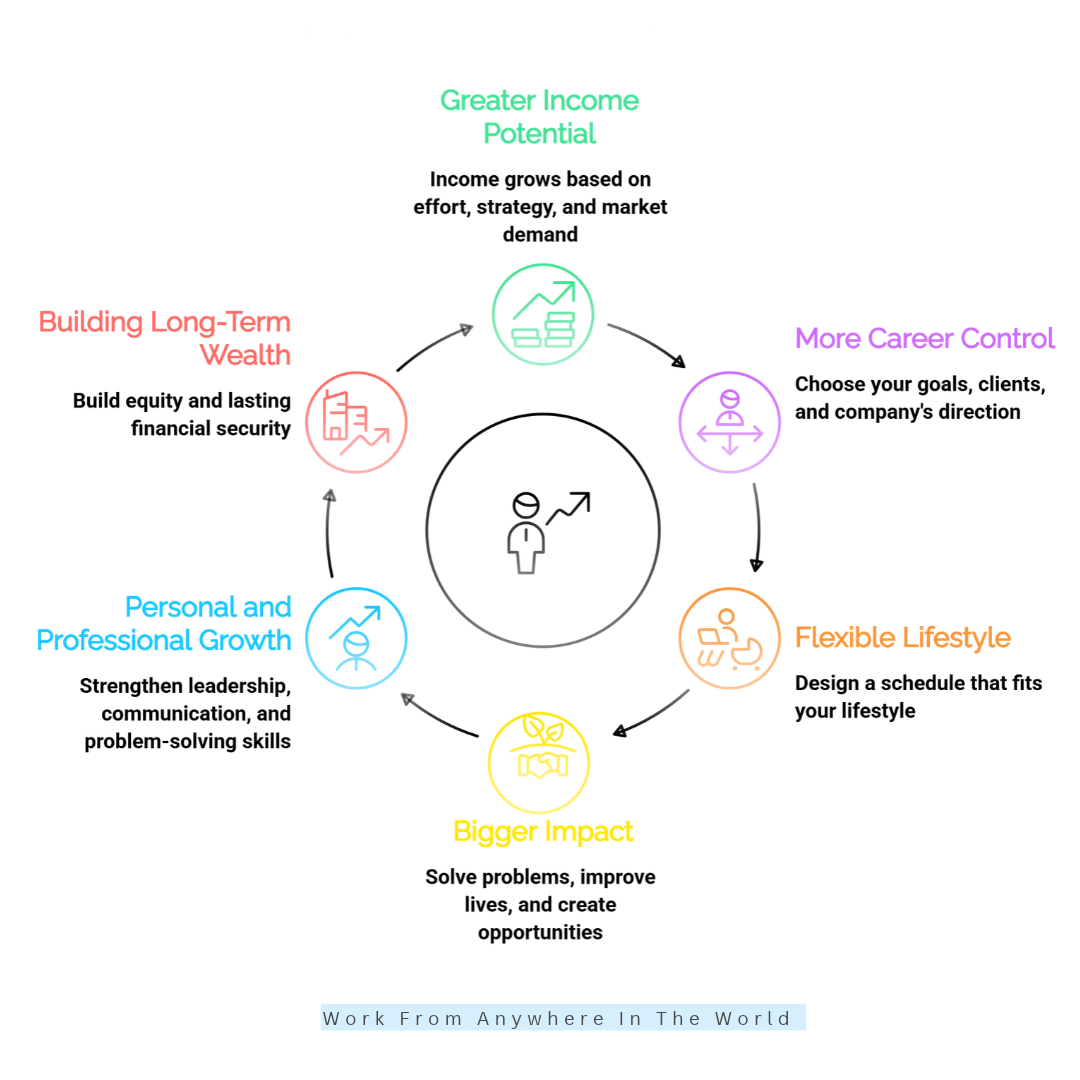
Benefits Of Starting A Business
Starting a business is about more than earning money. It allows you to build something meaningful, create long-term wealth, and shape a career around your passions and strengths.
While every entrepreneurial journey is unique, the following benefits explain why many people choose to become business owners and pursue greater professional and financial independence.
1. Greater Income Potential
A traditional job usually comes with a fixed salary and occasional raises. A business, on the other hand, allows your income to grow based on your effort, strategy, and market demand.
As your customer base expands, so does your earning potential. Many entrepreneurs also create multiple revenue streams through products, services, memberships, or digital assets.
Exploring different passive income opportunities can help entrepreneurs diversify their earnings and gradually build sustainable long-term wealth.
2. More Control Over Your Career
Owning a business gives you the freedom to make important decisions without relying on promotions or corporate policies. You choose your goals, the clients you work with, and your company’s direction.
This level of control can lead to greater job satisfaction because you’re building something that reflects your vision and values rather than someone else’s objectives.
3. Flexible Lifestyle
One of the biggest attractions of entrepreneurship is flexibility. While building a business often requires dedication, you also have the opportunity to design a schedule that fits your lifestyle.
Many business owners appreciate the ability to work remotely, spend more time with family, or organize their day around peak productivity instead of fixed office hours.
Developing effective work-from-home productivity habits can help you make the most of this flexibility while balancing your professional and personal responsibilities.
4. Opportunity To Make A Bigger Impact
Businesses solve problems, improve lives, and create opportunities for others. Whether you offer professional services, develop innovative products, or support local communities, your work can positively influence customers and employees alike.
Knowing that your business creates real value often becomes one of the most rewarding parts of entrepreneurship. It gives your professional efforts a greater sense of purpose.
5. Personal And Professional Growth
Running a business encourages continuous learning. You’ll strengthen leadership, communication, negotiation, financial management, and problem-solving skills while gaining confidence through real-world experience.
Every challenge becomes an opportunity to improve. Developing these skills and learning how to succeed in life can contribute to both personal and professional growth.
6. Building Long-Term Wealth
Unlike earning only a salary, a successful business can become an asset that increases in value over time. It may generate recurring income, attract investors, or even be sold in the future.
Building equity creates financial opportunities that extend well beyond monthly earnings. With careful financial planning and sustainable business growth, these opportunities can contribute to long-term financial security.
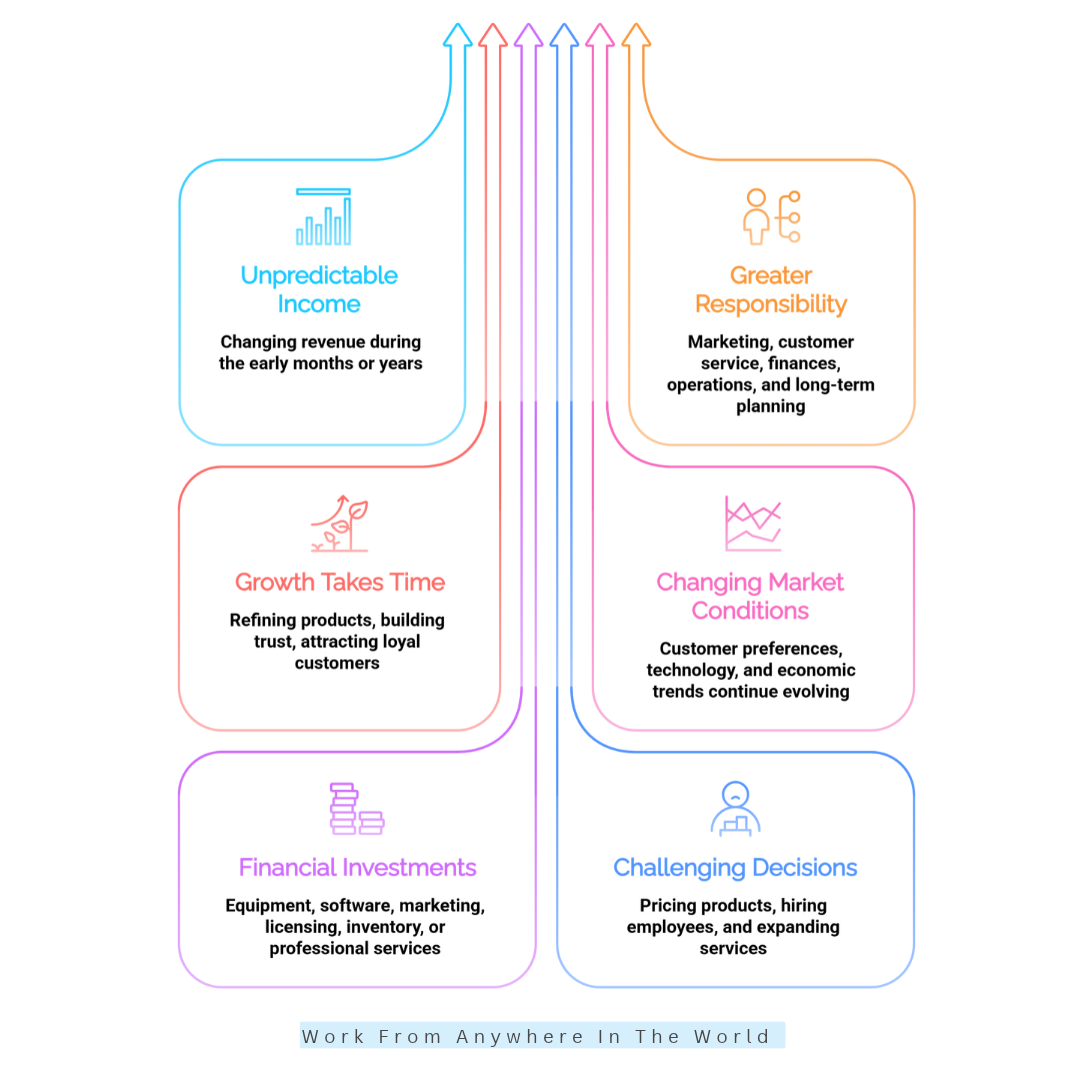
Risks You Should Understand
Every successful entrepreneur recognizes that business ownership comes with challenges as well as rewards. Understanding these risks before leaving your job helps you develop realistic solutions and make informed rather than emotional decisions.
1. Income May Be Unpredictable
New businesses often experience fluctuating revenue during the early months or years. Some periods bring excellent sales, while others may be quieter, making financial stability more challenging.
Creating a detailed financial plan and maintaining emergency savings can make these fluctuations much easier to manage while your business grows.
2. Greater Responsibility
As a business owner, you’ll oversee marketing, customer service, finances, operations, and long-term planning. Although this responsibility can feel exciting, it also requires strong organizational and time management skills.
Building systems, setting SMART goals for time management, and gradually outsourcing tasks can help you maintain balance as your company expands.
3. Business Growth Takes Time
Many successful companies spend months refining products, building trust, and attracting loyal customers. Sustainable growth rarely happens overnight, regardless of how promising your business idea may be.
Setting realistic expectations and developing effective customer retention strategies help you remain patient and focused while consistently improving your business and strengthening your reputation.
4. Market Conditions Can Change
Customer preferences, technology, and economic trends continue evolving. Businesses that stay informed and adapt quickly are often better positioned to remain competitive over time.
Regular market research, continuous learning, and reviewing your marketing principles and strategies allow you to respond confidently to changing opportunities and customer needs.
5. Financial Investments Are Often Required
Launching a business may involve spending on equipment, software, marketing, licensing, inventory, or professional services. These expenses vary considerably depending on your chosen business model.
Understanding how to start a business without money can help you identify affordable alternatives, avoid unnecessary financial pressure, and invest strategically in areas that support long-term growth.
6. Decision-Making Can Feel Challenging
Entrepreneurs make important decisions every day, from pricing products to hiring employees and expanding services. Making these decisions independently can sometimes feel overwhelming, particularly for new business owners.
Gathering reliable information, seeking advice from experienced mentors, and reviewing data carefully can increase confidence while reducing uncertainty.
Frequently Asked Questions
Q1: How Much Money Should I Save Before Quitting My Job?
A common recommendation is to save enough to cover six to twelve months of essential living expenses. This provides a financial cushion while you establish your business.
The ideal amount depends on your monthly costs, business model, expected startup expenses, and personal financial responsibilities. Remember to budget for business expenses separately.
Q2: What Are The Signs I’m Ready To Start A Business?
You’re likely ready when you’ve validated your idea, understand your target audience, have a financial plan, and possess essential business skills.
Being committed to solving customer problems, adapting to challenges, and maintaining a long-term growth mindset are also important indicators of entrepreneurial readiness.
Q3: Is Starting A Business Riskier Than Staying Employed?
Both options involve different types of risk. Employment generally offers a more predictable income, while entrepreneurship provides greater independence and potentially higher earning opportunities.
Careful planning, adequate savings, and market validation can significantly reduce business-related uncertainty. However, neither employment nor business ownership guarantees long-term financial security.
Q4: Can I Run A Business While Working Full-Time?
Yes. Many successful companies began as side businesses. Learning how to start a small business from home allows you to gain valuable experience while maintaining your regular income.
Managing your business in the evenings or on weekends helps you build your customer base and generate revenue before deciding whether to transition to full-time entrepreneurship.
Q5: Should Passion Or Profit Matter More When Choosing A Business?
The strongest businesses combine both. Passion helps maintain motivation during challenges, while profitability ensures your business has the financial resources to remain sustainable.
When exploring different home-based business ideas, choose one that matches your interests and solves real customer problems to create a strong foundation for lasting success.
Q6: How Do I Know If Entrepreneurship Is The Right Career For Me?
Entrepreneurship may suit you if you enjoy solving problems, making independent decisions, learning new skills, adapting to change, and working towards long-term goals.
Understanding how to be successful in business and honestly evaluating your strengths, financial circumstances, and personal commitments will help you make a confident and informed decision.
Conclusion
If you’re wondering, “Should I quit my job and start a business?” the answer depends on preparation as much as motivation. A profitable business is built through careful planning, financial stability, market research, and consistent action.
When you validate your idea, understand the risks, and develop a realistic strategy, you’ll be in a much stronger position to transition confidently. Success often comes from thoughtful decisions made one step at a time.
I trust you enjoyed this article on Should I Quit My Job And Start A Business? 15 Key Questions. Please stay tuned for more insightful blogs on affiliate marketing, online business, and working from anywhere in the world.
Take care!
— JeannetteZ 🌍✨
💬 Your Opinion Is Important To Me
Do you have thoughts, ideas, or questions? I’d love to hear from you. Please leave your comments below or email me directly at Jeannette@WorkFromAnywhereInTheWorld.com.
📚 More Work From Anywhere Reads
🚀 Ready to Build a Business You Can Run from Home
Or from Anywhere in the World?
Imagine earning income on your terms — from home, a cozy café, or wherever life takes you.
With the right tools, training, and community support, it’s entirely possible.
Start your own online business for free — no credit card needed.
Disclosure
This post may contain affiliate links. As an Amazon Associate and participant in other affiliate programs, I earn from qualifying purchases at no extra cost to you. Please read my full affiliate disclosure.