

How To Start A Small Business From Home: 14 Essential Steps
Learning how to start a small business from home can provide a flexible way to earn income while building something around your skills, interests, and goals.
Whether you are considering a side business or a full-time venture, working from home gives you the opportunity to develop a business that fits your experience and circumstances.
Getting started requires more than choosing a good idea. You will also need to understand your market, plan your finances, establish your workspace, and decide how you will reach potential customers.
This guide covers the essential steps for starting a home-based business, managing common challenges, and creating a strong foundation for future growth.
How To Start A Small Business From Home: Key Benefits
Starting a home-based business can offer flexibility while allowing you to build around your existing skills, interests, and resources. Without a separate commercial workspace, you may also be able to keep some operating expenses more manageable.
Working from home can give you greater control over how you organize your schedule and business activities. This flexibility can be particularly useful when starting alongside other work, family responsibilities, or existing commitments.
A home-based setup can also provide room to test and refine a business idea gradually. You can learn more about your customers, adjust your services or products, and develop practical systems as the business takes shape.
Digital tools and eCommerce business models can help home-based businesses reach customers beyond their local area. Depending on the business model, you may be able to sell products, provide services, communicate with customers, and manage many daily operations online.
As the business develops, you can decide when additional tools, services, or resources are worthwhile. This allows growth to follow the business’s needs rather than trying to establish everything at once.
14 Ideas To Start A Small Business From Home
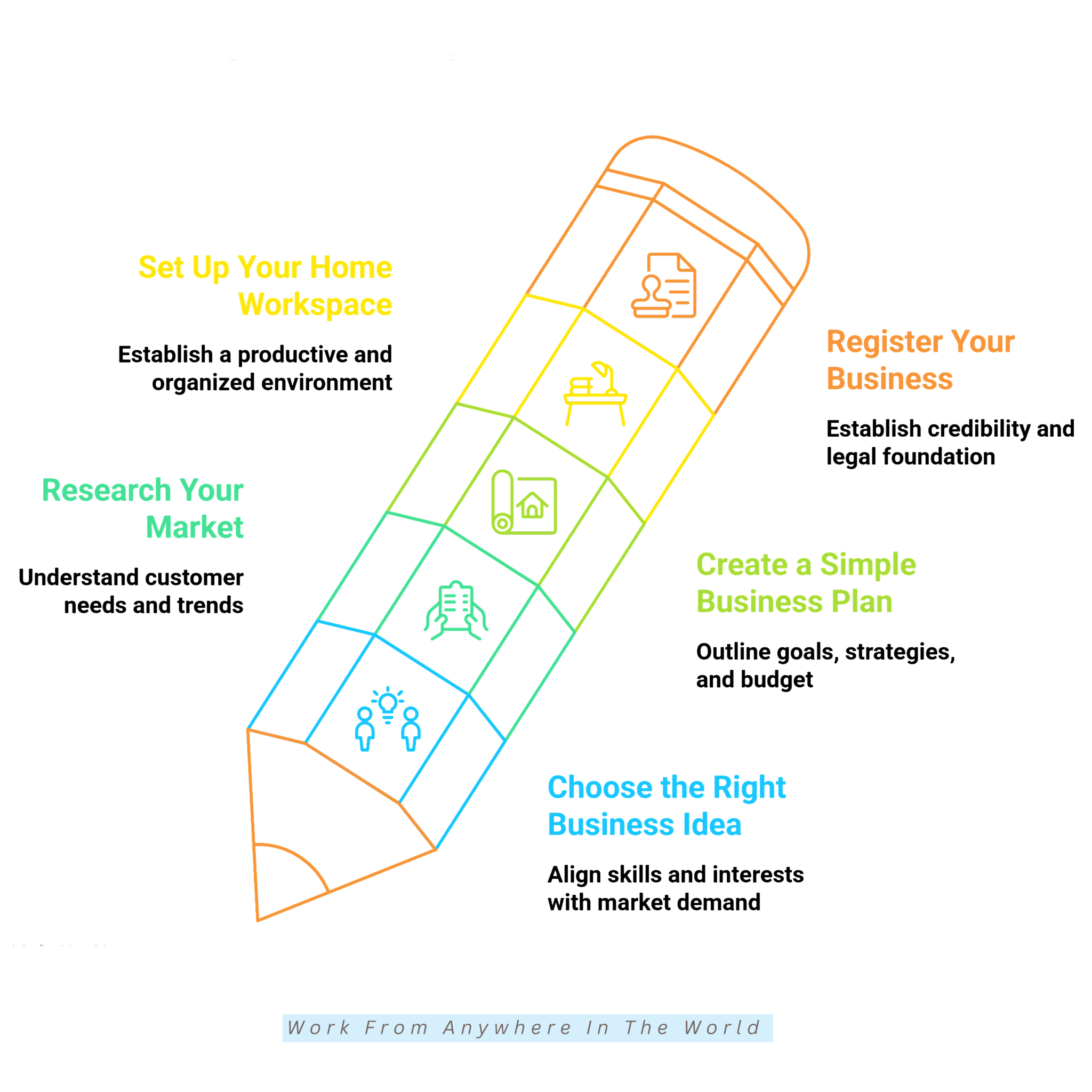
Choosing the right business idea starts with considering your skills, interests, experience, and available resources. A business that suits your circumstances can be easier to develop and manage from home.
Some home-based businesses rely primarily on professional skills, while others involve selling products or providing specialized services. The amount of equipment, space, and preparation required will vary considerably between ideas.
Think about the type of work you enjoy and the customers you would like to serve. It is also helpful to consider whether there is genuine demand for the product or service before committing significant time or resources.
The following 14 ideas provide different ways to start a small business from home, whether you want to use existing skills, develop new ones, or build an online business.
1. Choosing The Right Business Idea
Choosing the right business idea starts with considering your skills, interests, experience, and market demand. Look for something that suits your abilities while addressing a genuine need or problem.
Consider the knowledge and strengths you already have. If you enjoy writing, for example, freelance writing or content creation could be worth exploring. Creative skills might lead to handmade products, digital designs, or other home-based opportunities.
Research potential customers before committing significant time or money to an idea. Understanding what people need, what they currently buy, and which alternatives already exist can help you evaluate an opportunity more realistically.
You do not have to find a completely original idea. A familiar product or service can still become a viable business when it serves a particular audience or solves a problem effectively.
2. Researching Your Market
Before launching a home-based business, take time to understand the people you hope to serve. Market research can reveal customer needs, buying habits, preferences, and common challenges within your niche.
Start by exploring competitor websites, social media discussions, customer reviews, and relevant online communities. Look for recurring questions, complaints, and preferences that may reveal opportunities within the market.
If you plan to sell handmade candles, for example, examine what customers value about existing products and where their expectations are not being met. This research can help you identify ways to differentiate your products or services.
A clear understanding of your target market can guide decisions about products, pricing, branding, and marketing. It can also help you create messages that speak more directly to the customers you want to reach.
3. Creating A Business Plan
A business plan provides direction and helps turn your ideas into a practical framework. It does not need to be lengthy or complicated, especially during the early stages of a home-based business.
Outline your goals, target customers, products or services, expected expenses, and marketing approach. These details can help you understand what the business needs and where to focus your efforts.
For an online tutoring business, for example, your plan might include the subjects you will teach, how you will deliver lessons, pricing options, promotional methods, and financial goals.
Reviewing your plan as the business develops can help you measure progress and identify areas that need attention. It can also help you prepare for potential challenges and adjust your direction when circumstances change.
4. Setting Up Your Home Workspace
A dedicated workspace can make it easier to stay organized and separate business activities from the rest of your home. You do not need a large office to create a comfortable and practical place to work.
Consider your available space and the type of business you plan to operate. Small home office design ideas can help you make good use of a spare room, quiet corner, or other suitable area.
Your equipment will depend on the work you do. A freelance writer may need a computer, reliable internet connection, suitable lighting, and a comfortable chair, while an online seller may also require storage space for products and supplies.
Keep frequently used materials and equipment within easy reach and reduce unnecessary distractions where possible. An organized workspace can support your daily routine and make managing a home-based business more efficient.
5. Registering Your Business
Business registration requirements vary depending on your location, business structure, and the type of business you operate. Some home-based businesses may require registration, while others may not require it.
Before taking any action, research the business registration requirements that apply to your particular circumstances. Your business name, structure, location, and activities can all affect which rules apply.
Depending on where you live, you may also need to consider licences, permits, zoning requirements, or tax obligations. Certain industries can have additional requirements that home-based business owners need to follow.
Check official government or local authority resources for current information rather than assuming registration is necessary. Requirements can also change as your business grows or the way you operate develops.
6. Managing Your Finances Wisely
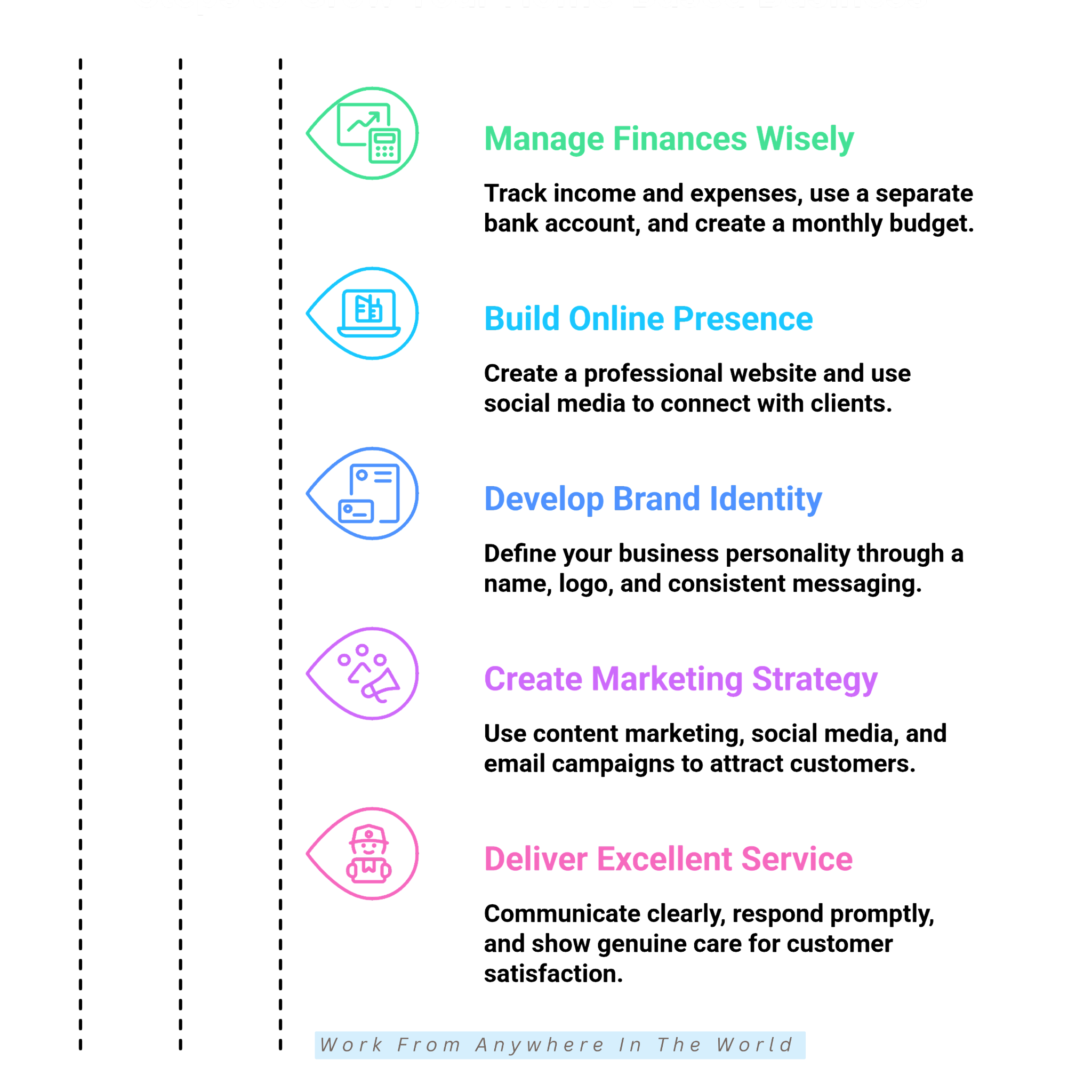
Managing your finances carefully can help you understand how your home-based business is performing. Start by keeping accurate records of your income and expenses from the beginning.
Keeping business and personal transactions organized separately can make recordkeeping easier. Depending on your circumstances, you may also decide that a separate business bank account is useful for managing business-related transactions.
Track expenses related to operating your business, such as materials, software, marketing, shipping, or professional services. For a handmade jewellery business, for example, understanding material and shipping costs can help you evaluate profitability.
Creating a monthly budget can also help you plan expenses and decide when the business can support additional investments. Regularly reviewing your financial records gives you better information for making decisions as the business develops.
7. Building Your Online Presence
Building an online presence can make it easier for potential customers to discover your home-based business and understand what you offer. A professional website can provide a central place for your services, products, contact details, and other important information.
Social media can complement your website by helping you connect with potential customers and build relationships. Developing useful social media content can help small businesses stay visible and give their audience reasons to engage. Choose platforms that suit your audience rather than trying to maintain a presence everywhere.
A home-based fitness coach, for example, might share workout tips, educational content, and client success stories. Providing useful content consistently can demonstrate expertise while giving people a reason to follow the business.
Your online presence can develop gradually as your business grows. Focus on providing useful information, communicating consistently, and making it easy for potential customers to learn more about your products or services.
8. Developing A Strong Brand Identity
A strong brand identity helps customers recognize your home-based business and understand what it represents. It includes elements such as your business name, logo, visual style, messaging, and the experience you provide to customers.
Consistency across your website, social media, packaging, and other marketing materials can make your business easier to recognize. Your colours, imagery, language, and overall presentation should reflect the personality and values of your brand.
An eco-friendly business, for example, might use natural colours, sustainability-focused messaging, and environmentally responsible packaging. These elements can work together to communicate what matters to the business and the customers it hopes to attract.
Developing a consistent brand identity can help your business become more memorable and distinguish it from competitors. As your business grows, your branding can evolve while maintaining the elements customers have come to recognize.
Wealthy Affiliate – Mini Review
If you’ve ever thought about turning your blog, passion, or niche into an online business,
Wealthy Affiliate (WA) is one of the most beginner-friendly platforms I’ve used.
It combines step-by-step training, website hosting, AI-powered tools,
keyword research, and an active community all in one place.
What I like most is that you can start free (no credit card needed), explore the platform,
test the tools, and connect with other entrepreneurs before upgrading.
WA isn’t a “get rich quick” scheme — success comes from consistent effort
and applying what you learn over time.
9. Creating A Marketing Strategy
A marketing strategy helps you decide how to reach potential customers and encourage interest in your products or services. The most effective approach will depend on your audience, business goals, and available resources.
Content marketing, social media, email marketing, and search engine optimization can all play a role. Rather than trying every method at once, focus on the channels that are most relevant to your target customers.
A home-based bakery, for example, might share recipe tips, product photos, and customer stories on social media. Email marketing automation can complement these efforts by helping the business stay connected with customers and share product updates or useful content.
Marketing does not necessarily require a large budget. Consistently providing useful information and maintaining relationships with your audience can support visibility, trust, and long-term business growth.
10. Delivering Excellent Customer Service
Excellent customer service can help a home-based business build stronger relationships with its customers. Clear communication, timely responses, and genuine attention to customer needs can all contribute to a positive experience.
Customers who have a good experience may be more likely to make repeat purchases or recommend the business to others. Even small interactions can influence how customers perceive your brand.
An online clothing seller, for example, can build trust by answering questions about sizing, shipping, or products clearly and promptly. Personalized recommendations, thank-you messages, and appropriate follow-up emails can also make customers feel valued.
Consistently providing helpful and reliable service can strengthen your reputation and encourage customer retention. Over time, these relationships can contribute to repeat business, referrals, and sustainable growth.
11. Using Technology To Improve Efficiency
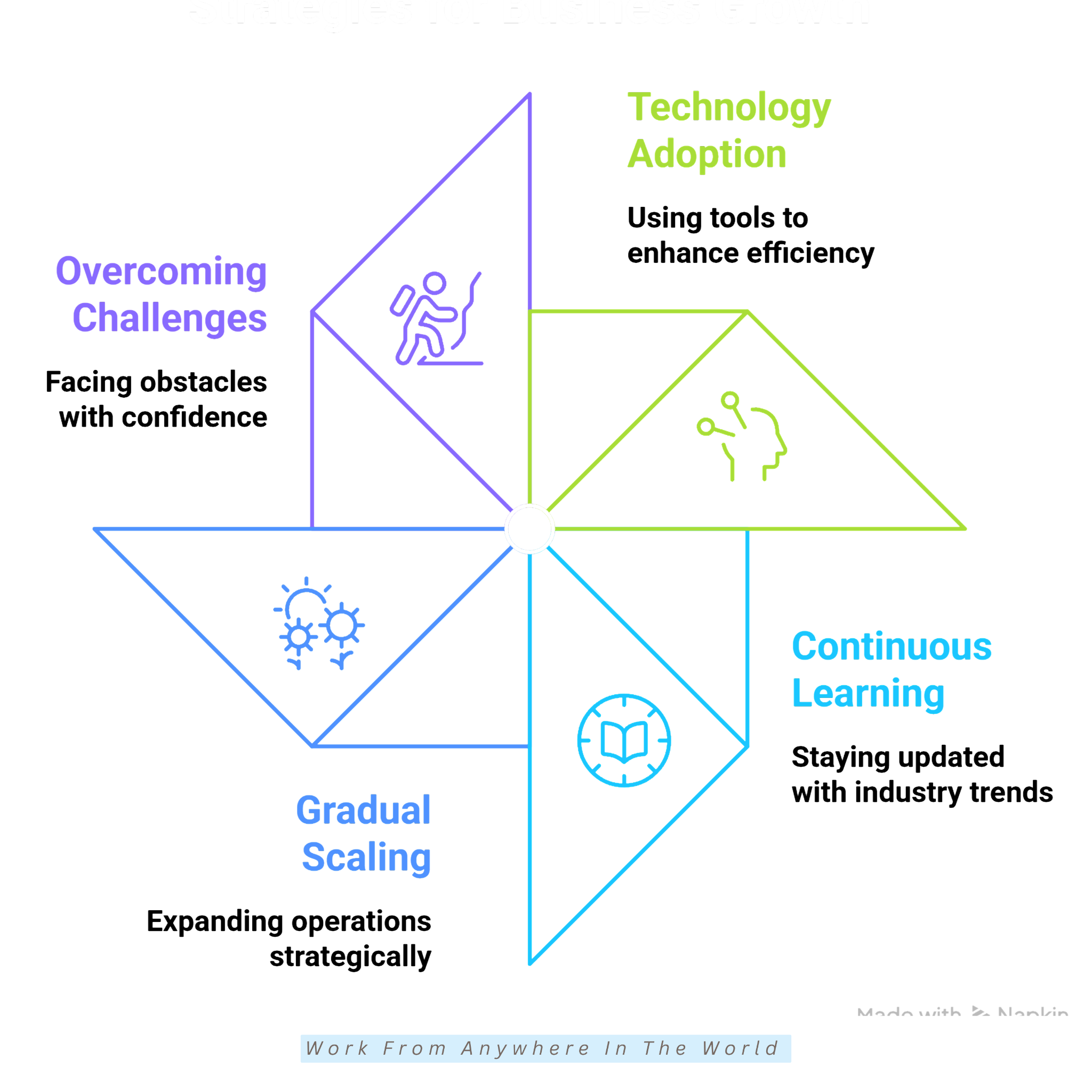
Technology can simplify many of the tasks involved in running a home-based business. The right tools can help you manage projects, organize finances, automate social media tasks, and communicate with customers.
Choose technology based on your business’s needs rather than using tools simply because they are popular. An online consultant, for example, might use video conferencing for meetings, accounting software for bookkeeping, and scheduling tools for appointments.
Business automation tools can also reduce repetitive administrative tasks and free up time for activities that require your attention. This can become increasingly useful as your workload and customer base grow.
You do not necessarily need an expensive collection of software to work efficiently. Start with tools that solve specific problems, then add or replace them as your business needs change.
12. Focusing On Continuous Learning
Continuous learning can help you adapt as technologies, marketing methods, customer expectations, and business practices change. Staying informed can also help you recognize which developments are relevant to your home-based business.
Focus your learning on areas that support your current goals and responsibilities. A home-based business serving customers in its area, for example, might develop its local SEO knowledge to improve visibility in relevant local searches.
Industry publications, webinars, podcasts, online courses, and professional communities can all provide useful learning opportunities. Choose reliable sources and concentrate on information that you can apply to your business.
You do not need to follow every new trend or master every business skill. Developing your knowledge gradually can help you make more informed decisions and adjust your approach as your business grows
13. Scaling Your Business Gradually
As your home-based business grows, you may begin exploring ways to increase capacity, reach more customers, or introduce additional sources of revenue. Growing gradually can make it easier to maintain quality while managing the additional demands on your business.
Expansion might involve introducing new products or services, reaching new markets, or adding new sales channels. A home-based candle maker, for example, might begin with local customers before expanding to online marketplaces or wholesale opportunities.
Growth can also involve outsourcing certain tasks, adding support, or using automation to manage repetitive work. The right approach will depend on which activities are taking the most time and where additional resources could make the greatest difference.
Before expanding, consider whether your finances, systems, and workload can support the change. A gradual approach allows you to evaluate each step and build a stronger foundation for business growth.
14. Overcoming Common Challenges With Confidence
Challenges are a normal part of developing a home-based business, particularly during the early stages. Finding customers, managing your time, maintaining motivation, and handling finances can all require adjustment.
Some challenges become easier as you gain experience and develop better systems. A freelance designer, for example, may initially struggle to attract clients but gradually build a portfolio, strengthen professional relationships, and gain referrals.
Creating routines, setting realistic goals, and tracking your progress can help you stay focused when things do not go as planned. Breaking larger problems into manageable steps can also make them easier to address.
Challenges can provide useful information about what needs to change or improve. Learning from setbacks and adjusting your approach can help you develop greater confidence and make more informed business decisions.
Common Challenges And Solutions
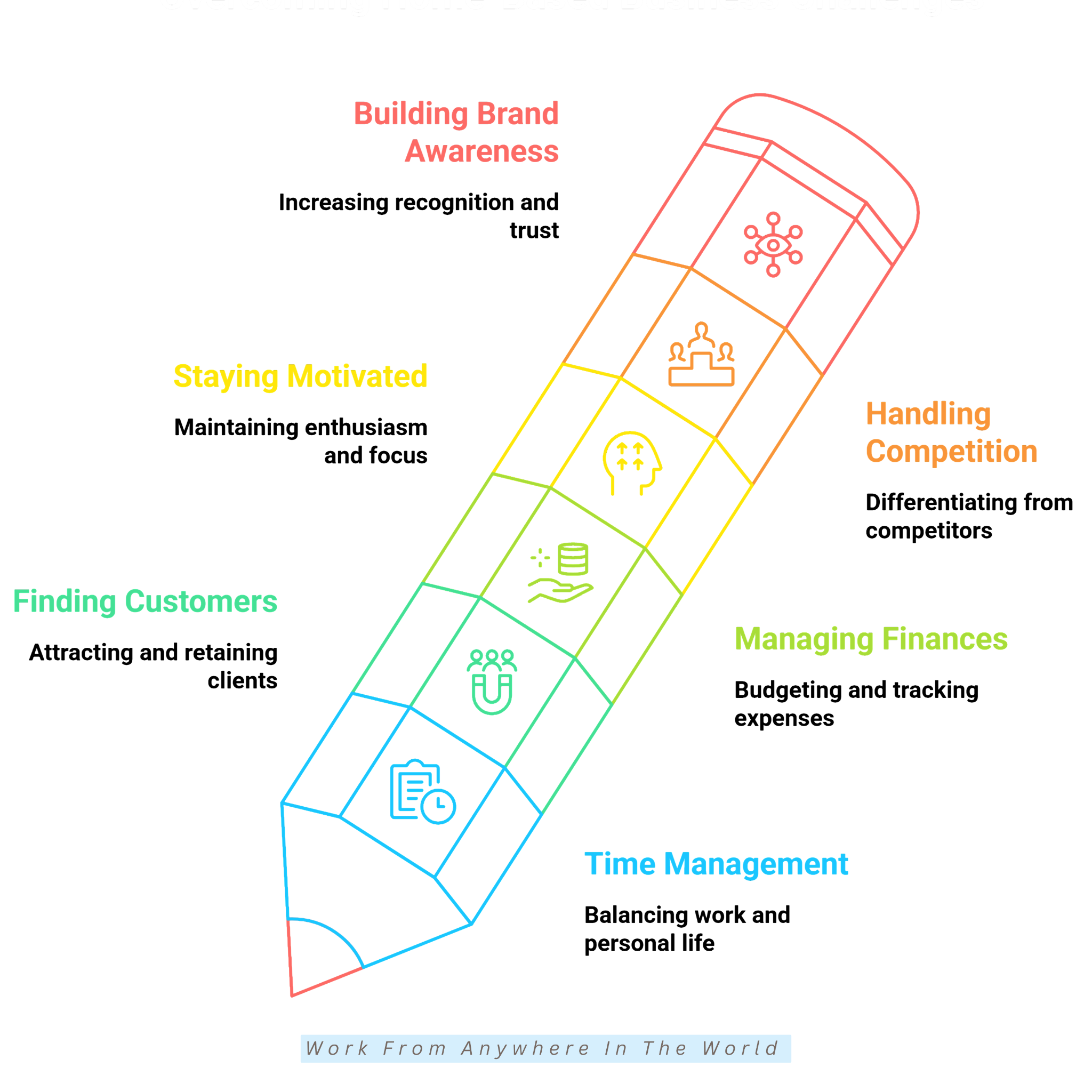
Running a home-based business can bring challenges that are not always obvious when you first get started. Recognizing potential problems early can make them easier to manage.
Some challenges involve attracting customers or managing finances, while others relate to productivity, organization, or balancing different responsibilities. The difficulties you encounter will depend on your business model and circumstances.
Developing practical systems and adjusting your approach can help you address problems as they arise. Experience can also make it easier to recognize what is working and where changes may be needed.
The following common challenges highlight issues home-based business owners may encounter and practical ways to address them. Understanding your options can help you respond thoughtfully and keep your business moving forward.
1. Time Management
Time management can be challenging when your home and workplace share the same space. Business responsibilities may compete with household tasks, family commitments, and other activities throughout the day.
Creating a daily or weekly schedule can help you organize your workload. Consider setting aside specific periods for customer communication, marketing, administrative work, and other important business activities.
Task management tools can also help you organize priorities, deadlines, and recurring responsibilities. Choose a system that is easy to maintain rather than creating additional work simply to manage your schedule.
Consistent routines and good productivity habits when working from home can make it easier to complete important tasks while maintaining boundaries between work and personal time. Review your schedule periodically and adjust it when your workload or responsibilities change.
2. Finding Customers
Finding customers can be challenging when your home-based business is new and has limited visibility. Building awareness and earning trust usually takes consistent effort rather than relying on a single marketing method.
Creating useful content, participating on social media, and networking within your industry can help potential customers discover your business. Focus on the channels where your target audience is most likely to spend time.
A home-based baker, for example, might share product photos, baking tips, and customer testimonials online. Helpful content can demonstrate expertise while giving potential customers a reason to learn more about the business.
Providing a positive customer experience can also encourage recommendations and referrals. Combining consistent marketing with genuine engagement can gradually help you reach more people and develop a stronger customer base.
3. Managing Finances
Managing finances carefully can help you maintain a stable home-based business and understand its performance. Budgeting, tracking expenses, and setting appropriate prices can be challenging when you are managing a business for the first time.
Keeping accurate financial records makes it easier to monitor income, expenses, and other important business costs. Reviewing these records regularly can also help you identify areas where spending may need to be adjusted.
Accounting software can simplify recordkeeping and make financial information easier to organize. Creating a business budget can also help you plan for recurring expenses, future investments, and unexpected costs.
Developing consistent financial habits can give you better information for making business decisions. As your business grows, regularly reviewing your finances can help you determine what it can realistically support.
4. Staying Motivated
Staying motivated can be difficult when progress is slower than expected or your business goes through a quiet period. Focusing only on major results can sometimes make smaller signs of progress easy to overlook.
Setting realistic goals and tracking your achievements can help you see how far the business has developed. Reaching a monthly sales target, gaining a new customer, or completing an important project can all represent meaningful progress.
Connecting with other entrepreneurs through online communities can also provide encouragement, practical ideas, and opportunities to learn from people facing similar challenges. Choose communities that are relevant to your business or industry.
Motivation will naturally fluctuate, so consistent habits can be more reliable than waiting until you feel inspired. Keeping your long-term goals in mind while concentrating on manageable daily tasks can help you continue moving forward.
5. Handling Competition
Competition is a natural part of running a business, but it can also help you identify opportunities to improve. Rather than simply copying competitors, consider what makes your home-based business different and valuable to customers.
Your strengths might include personalized service, specialized products, particular expertise, or a distinctive customer experience. Understanding these differences can help you develop a clearer value proposition for your business.
It can also be useful to observe competitors to understand how they position their products or services. Look for gaps in the market, customer needs that are not being addressed, or areas where your business could offer something different.
You do not need to compete with every business in your market. Focusing on your strengths, providing consistent quality, and developing strong customer relationships can help your business establish its own position.
6. Building Brand Awareness
Building brand awareness can take time when your home-based business is new and relatively unknown. Consistent visibility can help potential customers become familiar with your business and understand what you offer.
Sharing useful content, maintaining an active online presence, and encouraging customer reviews can all help increase visibility. Focus on channels that are relevant to your target audience rather than trying to maintain a presence everywhere.
A freelance writer, for example, might publish helpful articles that demonstrate knowledge and address questions potential clients are already asking. This type of content can build recognition while giving people a reason to return.
As more people encounter your business and become familiar with your brand, trust can gradually develop. Consistent branding and a clear brand position can support greater recognition and create more opportunities to connect with potential customers.
Frequently Asked Questions
Q1: How Much Money Do I Need To Start A Small Business From Home?
Startup costs depend on the type of business you choose and the equipment, software, materials, or services you need. Some service-based businesses can be started with resources you already have.
Before spending money, identify your essential expenses and separate them from things you can add later. Starting with the basics can help you manage costs while you test and develop your business.
Q2: What Types Of Small Businesses Can I Start From Home?
Many businesses can be operated from home, including freelance writing, virtual assistance, consulting, tutoring, online selling, and other service-based or digital businesses.
The best choice depends on your skills, interests, available resources, and potential customers. Consider choosing an idea that solves a specific problem or meets an identifiable need.
Q3: Can I Start A Home-Based Business While Working Full-Time?
Yes. Many people begin developing a home-based business while continuing to work at their regular job. This approach can provide time to test an idea and gain experience before making larger changes.
Consider how much time you can realistically dedicate to the business each week. A manageable schedule can help you balance your existing responsibilities while gradually developing your new venture.
Q4: Do I Need A Business License To Operate From Home?
Licensing and registration requirements vary depending on your location, business activities, and business structure. Some home-based businesses may also be affected by local zoning, permits, or industry-specific requirements.
Check with the appropriate government authorities in your area before beginning operations. This can help you understand which requirements apply specifically to your business.
Q5: How Can I Find Customers For My Home-Based Business?
Start by identifying your target audience and the places where potential customers are most likely to look for information. Your website, social media, networking, content marketing, and referrals can all help increase visibility.
Focus on building relationships and demonstrating how your products or services can help customers. Consistent marketing generally works better than relying on occasional promotional efforts.
Q6: How Long Does It Take For A Home-Based Business To Become Profitable?
There is no standard timeframe for profitability. The amount of time required depends on factors such as startup costs, pricing, demand, operating expenses, marketing, and the type of business you are building.
Tracking your income and expenses can help you determine whether the business is moving toward profitability. Regular financial reviews can also show where you may need to adjust your spending, pricing, or strategy.
Conclusion
Building a home-based business can create opportunities to earn income, use your existing skills, and develop something that reflects your personal and professional goals.
Success usually develops gradually. Choosing a suitable business idea, understanding your audience, managing your finances, and creating a strong online presence can provide a solid foundation.
Consistent marketing, good customer service, and a willingness to adapt can help your business develop as you gain experience. You can adjust your strategies as you learn what works best for your customers and circumstances.
Starting small does not limit where your business can eventually go. With thoughtful planning, consistent effort, and patience, you can create a business that continues to develop alongside your goals
I trust you enjoyed this article on How To Start A Small Business From Home: 14 Essential Steps. Please stay tuned for more insightful blogs on affiliate marketing, online business, and working from anywhere in the world.
Take care!
— JeannetteZ 🌍✨
💬 Your Opinion Is Important To Me
Do you have thoughts, ideas, or questions? I’d love to hear from you. Please leave your comments below or email me directly at Jeannette@WorkFromAnywhereInTheWorld.com.
📚 More Work From Anywhere Reads
🚀 Ready to Build a Business You Can Run from Home
Or from Anywhere in the World?
Imagine creating income on your terms — from home, a cozy café, or wherever life takes you.
With the right tools, training, and community support, it’s entirely possible.
Start your own online business for free — no credit card needed.
Disclosure
This post may contain affiliate links. As an Amazon Associate and participant in other affiliate programs, I earn from qualifying purchases at no extra cost to you. Please read my full affiliate disclosure.