

Small Business Success Secrets: 15 Practical Strategies
Small Business Success Secrets can help entrepreneurs make thoughtful decisions as they grow their businesses. Success often depends on combining careful planning with consistent action and a willingness to adapt.
Running a small business involves many responsibilities, from attracting customers to managing daily operations. Knowing where to focus your time and resources can make these responsibilities easier to manage.
Strong businesses also pay attention to their customers, finances, marketing, and overall performance. Small improvements in these areas can contribute to steady business growth and greater efficiency.
The strategies that work best will vary depending on your industry, audience, goals, and stage of development. Rather than trying everything at once, you can concentrate on approaches that make sense for your particular business.
In this guide, we’ll explore practical small business strategies for attracting customers, improving efficiency, strengthening your online presence, and building a sustainable business for the future.
15 Proven Strategies For Small Business Success
Building a successful small business requires more than having a good product or service. The decisions you make about customers, finances, marketing, and daily operations can all influence your progress.
Clear priorities can help you use your time and resources more effectively. They also make it easier to identify which areas deserve attention as your business develops.
Understanding your customers is equally important. Their needs, preferences, and feedback can guide your products, services, marketing efforts, and customer experience.
Technology and automation can also reduce repetitive work and improve efficiency. When combined with careful financial management, these tools can help create a stronger foundation for small-business growth.
The following 15 strategies cover practical areas that can help you strengthen your business, improve everyday operations, and work toward sustainable success.
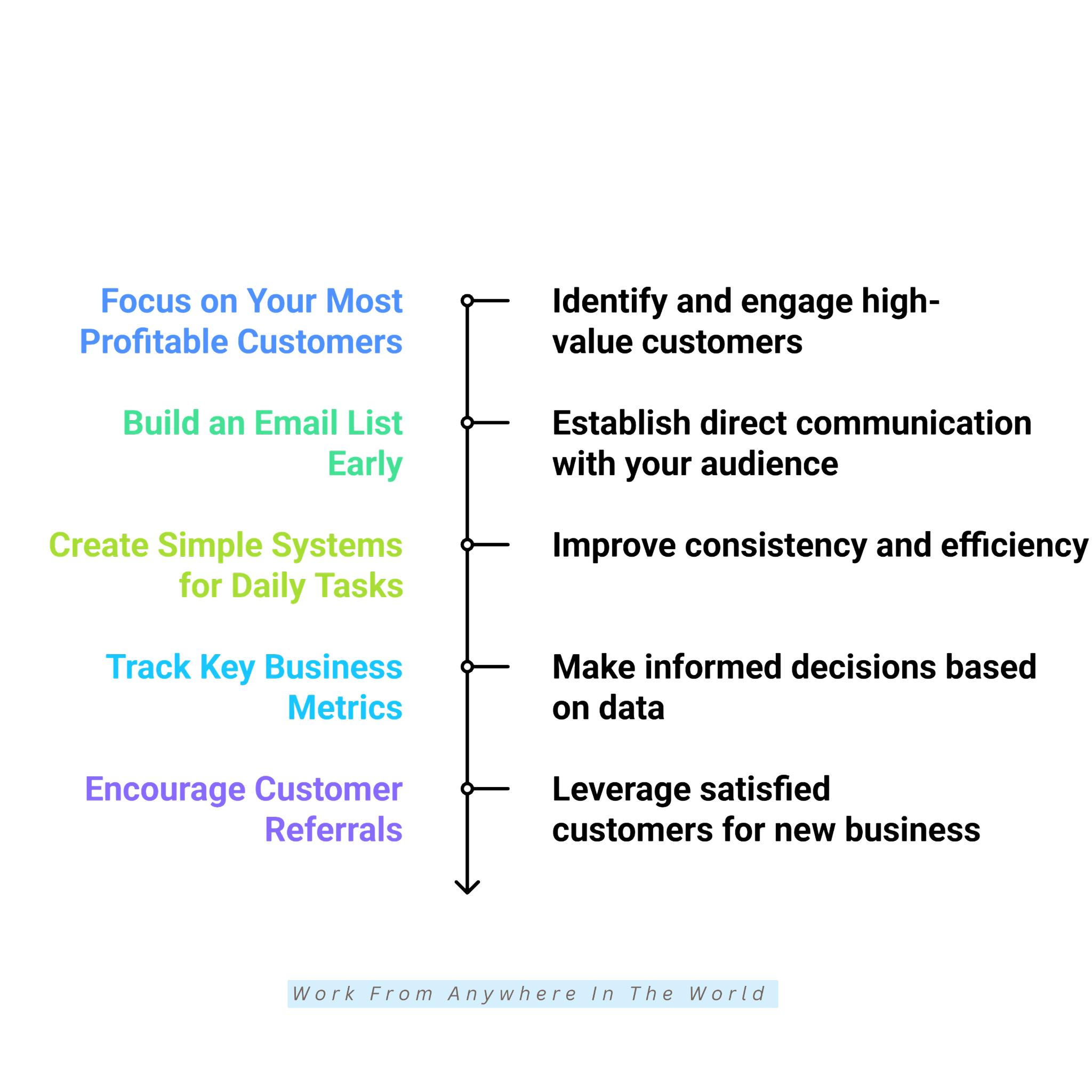
1. Focus On Your Most Profitable Customers
Business growth does not always depend on finding more customers. Understanding which existing customers bring the most value can help you focus your time and marketing resources more effectively.
Look beyond individual purchases when identifying your best customers. Consider repeat purchases, average order value, referrals, loyalty, and how long someone continues doing business with you.
Customer lifetime value can provide a clearer picture of these relationships. It estimates the value a customer contributes over the course of their relationship with your business, rather than judging them by a single transaction.
Once you identify valuable customer groups, consider what keeps them coming back. Personalized communication, loyalty programs, early access, helpful follow-ups, or relevant recommendations can strengthen customer retention.
These insights can also guide future marketing decisions. Understanding your strongest customer relationships can help you attract similar customers while continuing to nurture the people who already contribute significantly to your business.
2. Build An Email List Early
Learning the best ways to build an email list gives your business a direct communication channel with people who have chosen to hear from you. Unlike social media audiences, your ability to reach subscribers is not primarily controlled by changing platform algorithms.
Give visitors a meaningful reason to subscribe. Free guides, checklists, exclusive resources, useful updates, or other relevant incentives can help turn interested website visitors into email subscribers.
Once people join, concentrate on developing the relationship rather than immediately filling their inboxes with promotions. Educational content, practical advice, industry insights, and useful resources can establish expectations for the value your emails provide.
You can also segment subscribers according to their interests, purchases, or interactions with your business. Email segmentation allows you to send more relevant messages rather than treating everyone on your list as a single audience.
As the list develops, monitor clicks, conversions, unsubscribes, and other useful performance indicators. These insights can help you refine your approach and turn email into a dependable channel for customer engagement and retention.
3. Create Systems For Daily Tasks
Routine tasks can consume a surprising amount of time when you have to decide how to handle them each day. Creating repeatable systems can make everyday business activities more organized and predictable.
Start by identifying tasks you perform regularly, such as invoicing, scheduling appointments, responding to customers, publishing content, or tracking inventory. Then establish a consistent process for completing each one.
Checklists, templates, and clear routines can help reduce missed steps and keep everyday tasks consistent. They are also valuable when you eventually delegate tasks or train someone to help with your business.
Learning how to organize your day can complement these systems by helping you decide when different tasks deserve your attention. Planning around priorities can reduce unnecessary switching between activities and make your available time easier to manage.
Digital tools and automation can handle some repetitive work, but not every task needs to be automated. The goal is to create practical systems that save time, reduce mistakes, and continue working effectively as your business grows.
4. Track Key Business Metrics
Business decisions become easier when you know what the numbers are telling you. Tracking the right data can show where your business is performing well and where changes may be needed.
The metrics and KPIs you monitor for business growth will depend on your goals and business model. Revenue, profit margin, conversion rate, customer acquisition cost, repeat purchases, and customer retention are useful starting points for many businesses.
Avoid tracking numbers simply because they are available. Choose metrics that help answer practical questions about sales, customers, marketing performance, expenses, and the overall health of your business.
Look at patterns rather than judging performance from a single day or week. Changes over time can reveal rising costs, declining conversions, improved customer retention, or opportunities that might otherwise be overlooked.
Regularly reviewing meaningful data can help you adjust priorities and use your resources more effectively. The goal is not to collect endless statistics but to turn useful information into better business decisions.
5. Encourage Customer Referrals
Satisfied customers can become valuable advocates for your business. A recommendation from someone they trust can introduce potential customers to your products or services before they have encountered your brand elsewhere.
A referral program gives existing customers an additional reason to recommend your business. Depending on what you offer, rewards might include discounts, credits, exclusive benefits, upgrades, or other incentives that appeal to your audience.
However, referrals do not always require a formal reward. Providing a positive customer experience can naturally encourage people to tell friends, family members, or colleagues about a business they appreciate.
Make it convenient to recommend your business by providing shareable links, referral codes, or other easy ways to pass information along. Avoid making customers complete unnecessary steps before they can participate.
Customer referrals can complement your other marketing efforts while bringing in people who already have some familiarity with your business. Strong customer retention strategies can also help turn these relationships into longer-lasting connections.
6. Improve Your Online Presence
Your online presence shapes how potential customers discover and learn about your business. For many people, your website or social media profile may be their first introduction to what you offer.
Make sure your website explains your products or services and provides essential contact information. Easy navigation, a mobile-friendly design, useful FAQs, and customer testimonials can help visitors find what they need.
Your business information should also remain consistent across search engines, directories, social media profiles, and other online platforms. Accurate details can make your business easier to find and reduce confusion for potential customers.
Publishing helpful content gives people another way to discover your business. Blog posts, videos, guides, and other resources can answer common questions, support search engine visibility, and demonstrate your knowledge.
A strong online presence develops through consistency rather than a single website update. Keeping your information, content, and profiles current can strengthen credibility and give potential customers more opportunities to connect with your business.
7. Automate Repetitive Tasks
Repetitive tasks can take up valuable time without necessarily requiring your personal attention. Automation can handle some of this routine work while allowing you to focus on customers, planning, and other business priorities.
Start by looking for activities you perform repeatedly. Email follow-ups, appointment reminders, invoicing, social media scheduling, data entry, and customer notifications are common tasks that may benefit from automation.
You do not need to automate everything at once. Begin with one or two time-consuming tasks, then evaluate whether the new process is genuinely making your work easier.
Automation can also improve consistency by ensuring routine actions happen when they are supposed to. Email marketing automation and social media scheduling tools, for example, can keep communication moving without requiring you to manage every action manually.
As your business develops, you can gradually automate additional processes where it makes sense. The goal is to reduce repetitive work while keeping the personal attention that customers and important business decisions still require.
8. Use Customer Feedback Effectively
Customer feedback gives you information that sales figures and website statistics cannot always provide. It can reveal why people choose your business, what frustrates them, and what they wish you offered.
Give customers different ways to share their experiences. Short surveys, reviews, emails, comments, and conversations can all provide useful information without requiring a complicated feedback system.
Pay particular attention when the same themes appear repeatedly. One complaint may reflect an individual preference, while similar comments from several people could point to a product, service, or communication issue worth investigating.
Feedback can also reveal why customers choose you instead of another business. These insights can support target audience analysis by showing which benefits, features, or experiences matter most to the people you serve.
Most importantly, use worthwhile feedback rather than simply collecting it. Small changes based on genuine customer experiences can improve your business while showing customers that their opinions have a practical purpose.
9. Create Valuable Content Consistently
Useful content gives potential customers a reason to discover your business and come back. Instead of creating content simply to stay visible, focus on topics that answer questions, solve problems, or help your audience make decisions.
Start with the questions people are already asking. Search terms, customer emails, comments, online discussions, and frequently asked questions can reveal subjects worth turning into blog posts, videos, guides, or podcasts.
A strong content marketing strategy does not require publishing something new every day. Choose a schedule that fits your available time and allows you to maintain the quality of your work.
Think about the purpose of each piece of content as well. One article might attract new visitors, while another builds trust, introduces a service, supports an affiliate recommendation, or encourages readers to join your email list.
Your existing content can continue working for your business long after publication. Refreshing older articles, expanding useful resources, and repurposing strong ideas into different formats can help you get more value from work you have already done.
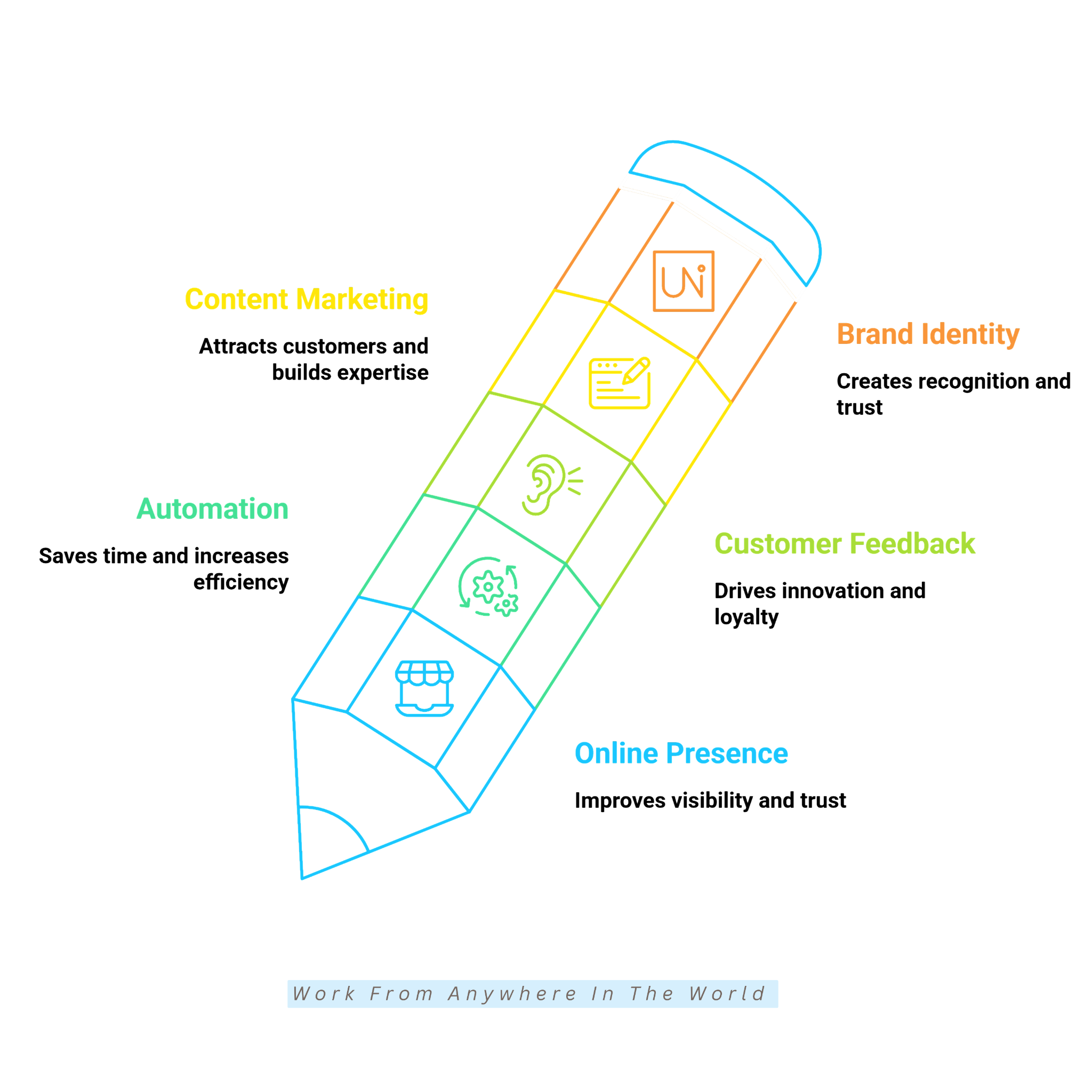
10. Strengthen Your Brand Identity
A strong brand gives people something recognizable to associate with your business. Your logo and colours contribute to that identity, but so do your writing style, values, visual choices, and the experience people have when interacting with you.
Decide how you want your business to be perceived and carry that personality across your website, emails, social media, and other channels. Familiar elements can help people recognize your content even before they see your business name.
Your brand positioning should also communicate what makes you different from businesses offering something similar. This could come from your expertise, approach, values, audience, products, or the particular problems you help solve.
Give people opportunities to understand the story behind the business. Sharing why you started, lessons you have learned, or the thinking behind a product or service can make your brand feel more personal and memorable.
Your brand does not have to remain unchanged as your business develops. You can refine its appearance and message while preserving the characteristics your audience has come to recognize and trust.
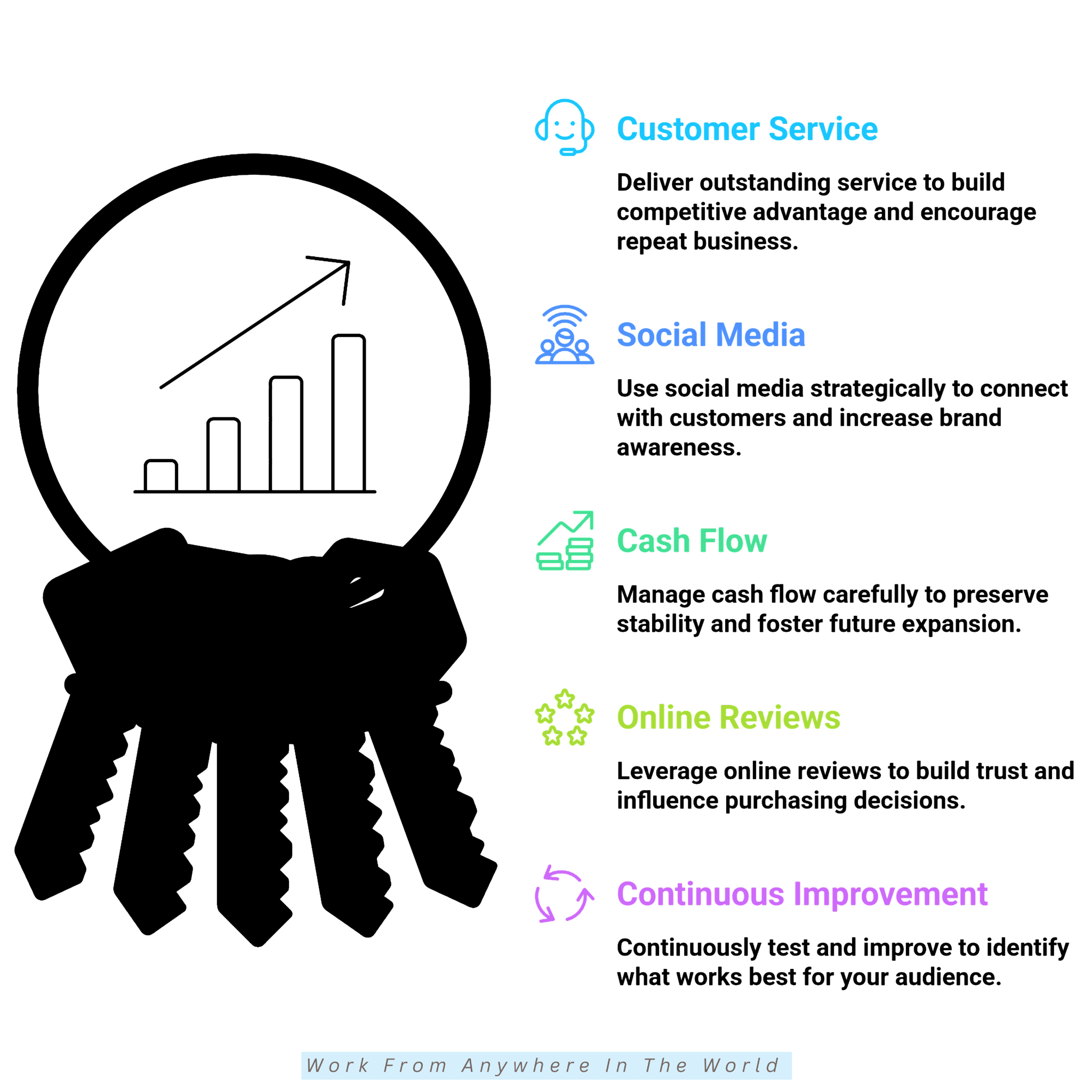
11. Provide A Positive Audience Experience
Every interaction shapes how people feel about your business. A useful article, a thoughtful email response, an easy-to-navigate website, or a helpful answer to a question can influence whether someone chooses to return.
For online businesses, building a positive experience often begins before a purchase takes place. Readers may spend weeks or months exploring your content, watching videos, or receiving emails before deciding whether they trust your recommendations.
Affiliate marketers have another responsibility because readers rely on them to provide useful information about products they may purchase elsewhere. Discussing both strengths and limitations can make product recommendations more helpful and credible.
Businesses selling their own products or services can strengthen relationships through responsive communication and thoughtful follow-up. Paying attention to questions and concerns also provides insight into areas where the overall experience could be improved.
Think about the entire relationship rather than a single transaction or website visit. When people consistently find your business helpful, reliable, and easy to interact with, they have more reasons to return and recommend it to others.
12. Use Social Media Strategically
Social media can help your business reach new people and maintain relationships with existing followers. Focus on platforms that suit your audience instead of trying to maintain a presence everywhere.
Exploring different social media content ideas can add variety to what you share. Educational posts, videos, questions, helpful tips, and behind-the-scenes content can all encourage interaction.
Think about what you want social media to accomplish for your business. You might use it to raise awareness, drive visitors to your website, promote your content, or start conversations with potential customers.
Interaction is just as important as publishing. Responding to comments and questions can make your account feel more approachable and help you develop stronger relationships with followers.
Review your analytics to see which topics and formats generate meaningful interest. Use those insights to refine future content and spend more time on the approaches that work for your audience.
13. Manage Cash Flow Carefully
Cash flow affects your ability to pay expenses, invest in your business, and handle unexpected costs. Even a profitable business can face difficulties when cash flow does not arrive when needed.
Monitor both the amount of money coming in and when you expect to receive it. Comparing this with upcoming expenses can help you identify possible shortfalls before they create problems.
Send invoices promptly and follow up on overdue payments when necessary. Review recurring expenses as well, including subscriptions and services that may no longer provide enough value.
Building a financial reserve can give your business more flexibility during slower periods. It can also help you manage unexpected expenses without immediately disrupting other business plans.
Looking ahead can prepare you for seasonal changes, larger purchases, and future investments. Understanding your business cash flow can help you make financial decisions based on what your business can realistically afford.
14. Leverage Online Reviews
Online reviews can help potential customers evaluate your business before they decide to buy. Seeing others’ experiences can reassure you that your business is established and trustworthy.
Encourage satisfied customers to leave honest reviews on platforms that are relevant to your business. A brief request after a purchase or completed service can remind customers without pressuring them.
Keep your review profiles active by responding professionally when appropriate. Thoughtful responses show prospective customers that there are real people behind the business who care about their online reputation.
Positive reviews can also provide valuable social proof. With permission, selected comments or testimonials can be featured on your website, landing pages, or other marketing materials.
Treat your reviews as part of your broader online reputation rather than something to collect and forget. A well-maintained review presence can help new customers feel more confident when considering your business.
15. Continuously Test And Improve
Running a small business means making decisions without always knowing exactly how they will turn out. What worked when you started may no longer be the best approach as your customers, competitors, and business needs change.
Take time occasionally to look at how the business is operating as a whole. Setting SMART goals for your business can also give you something specific to work toward while you evaluate what needs more attention.
Improvements do not always require major changes. Adjusting a process, dropping an unnecessary task, improving a customer touchpoint, or changing how you spend your time can make everyday operations run more smoothly.
Be willing to let go of methods that no longer serve the business. Continuing something simply because “we have always done it this way” can prevent you from recognizing better opportunities.
A business that remains willing to learn and adapt is better prepared for change. Regular reflection can help you make thoughtful improvements while keeping the business moving in a direction that supports your goals.
5 Small Business Tools That Save Time
The right tools can reduce the amount of time spent on repetitive administrative work. They can also make everyday tasks easier to organize without adding unnecessary complexity.
Small businesses do not need dozens of apps to work efficiently. A few well-chosen tools can help with communication, marketing, project management, bookkeeping, and other routine responsibilities.
The best choice depends on how your business operates and which tasks take up the most time. Look for tools that solve a genuine need rather than adding another system you have to manage.
The following five tools can support different areas of a small business while giving you more time to focus on work that requires your attention.
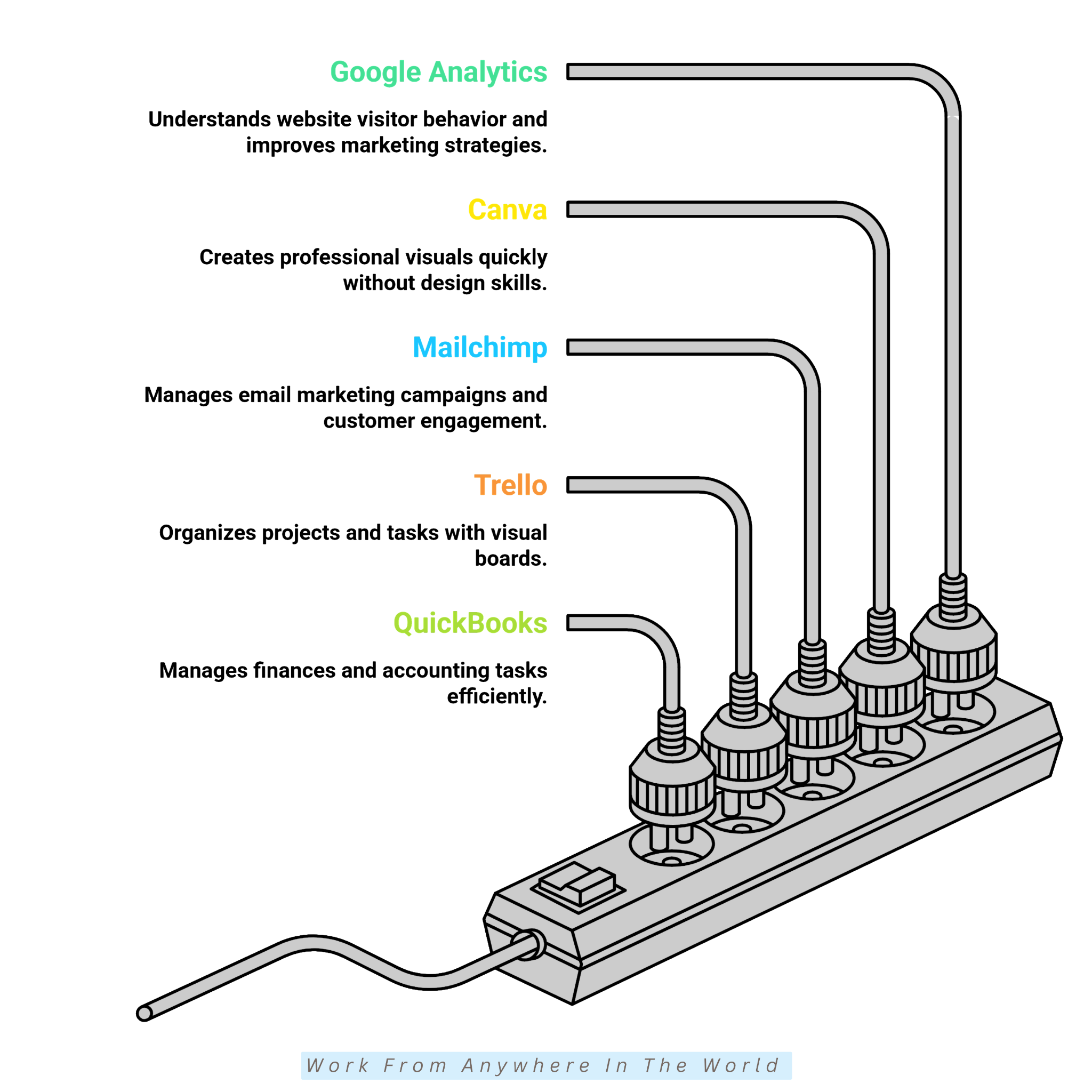
1. Google Analytics
Google Analytics can help you understand what happens after people arrive on your website. Instead of guessing which pages attract attention, you can use actual visitor data to see how your site is performing.
You can examine where your traffic comes from, including search engines, social media, email, and other websites. This can help you determine which marketing activities are bringing people to your content.
The platform also provides information on popular pages and how visitors navigate your website. You can use these insights to identify content that performs well and pages that may need improvement.
Tracking important actions can provide an even deeper understanding of visitor behaviour. Depending on your business, these might include purchases, form submissions, downloads, or other meaningful interactions.
Regularly reviewing your website analytics can help you make better decisions about content and marketing. Rather than spending time on strategies that produce little value, you can concentrate on areas that are contributing to your business goals.
2. Canva
Canva helps small businesses create professional-looking visual content without requiring advanced graphic design experience. It can be used for social media graphics, presentations, flyers, website images, infographics, and other marketing materials.
The platform provides customizable templates that give you a starting point, so you don’t have to design everything from scratch. You can adjust text, images, fonts, layouts, and other elements to suit your business.
Canva also includes stock images, graphics, icons, and other design elements within the platform. Keeping these resources together can reduce the time spent searching for individual visual assets elsewhere.
Branding features can help maintain a recognizable look across different types of content. Using consistent fonts, colours, logos, and design elements makes it easier to create materials that reflect your brand identity.
For a small business producing content regularly, Canva can make everyday design tasks more manageable. Templates can also be reused and adapted for future projects, saving time while maintaining a consistent visual style.
3. Mailchimp
Mailchimp is an email marketing platform that helps small businesses communicate with subscribers and manage campaigns from one place. It can be used to create newsletters, promotional emails, welcome messages, and other customer communications.
The platform includes tools for building emails, organizing contacts, and segmenting subscribers based on different criteria. Segmentation can help businesses deliver more relevant content rather than the same message to everyone.
Automation features can handle recurring communication, such as welcoming new subscribers or following up after particular actions. This can reduce manual work while keeping important messages moving.
Mailchimp also provides reporting tools for monitoring opens, clicks, and other campaign activity. Reviewing this information can help you understand which messages generate interest and where your email marketing campaigns could be improved.
For small businesses building an email list, Mailchimp combines several useful features into a single platform. Using these features effectively can save time while helping you maintain regular communication with your audience.
4. Trello
Trello is a visual project management tool that helps small businesses organize tasks and keep track of ongoing work. Its boards, lists, and cards make it easy to see what needs attention and what has already been completed.
You can create separate boards for projects, clients, content schedules, or recurring business activities. Individual cards can contain due dates, checklists, attachments, comments, and other information related to a task.
For teams, Trello provides a single place to assign responsibilities and track progress. This can reduce the need to search through emails or messages for updates on a particular project.
Solo business owners can also benefit from the visual structure. Trello can be used for content planning, weekly priorities, website projects, marketing activities, or any workflow involving several steps.
Keeping tasks and project information organized in one location can reduce unnecessary back-and-forth. As priorities change, cards can be moved or updated so the board continues to reflect the work that needs attention.
5. QuickBooks
QuickBooks helps small businesses keep financial information organized in one place. It can be used to manage income, expenses, invoices, payments, and other everyday bookkeeping activities.
The software can connect with financial accounts and help categorize transactions. This reduces some of the manual work involved in recording business activity and keeping financial records up to date.
Invoicing tools allow businesses to create and send invoices while tracking outstanding payments. Having this information together can make it easier to see which invoices have been paid and which still require attention.
QuickBooks also provides financial reports that can help you understand how your business is performing. These reports can be useful when reviewing expenses, preparing budgets, planning for taxes, or discussing finances with an accountant.
Automating routine bookkeeping tasks can save time while giving you a better overview of your finances. Regularly reviewing this information can help you spot changes and make more informed decisions about how you manage your business.
Frequently Asked Questions
Q1: What Helps A Small Business Grow Long Term?
Long-term growth usually comes from several strategies working together. Keeping existing customers, attracting new ones, managing finances carefully, and adapting as the business changes can all contribute.
Customer retention is particularly valuable because satisfied customers may make repeat purchases and recommend your business to others. This can support more consistent revenue without relying entirely on finding new customers.
Q2: How Can A Small Business Attract Customers On A Limited Budget?
You do not necessarily need a large advertising budget to reach potential customers. Content marketing, email marketing, referrals, social media, and networking can all provide affordable ways to increase visibility.
Choose a few methods that suit your audience and the time you have available. Concentrating your efforts is usually more manageable than trying to use every marketing channel at once.
Q3: Why Is Email Marketing Useful For Small Businesses?
Email marketing gives businesses a direct way to communicate with people who have chosen to hear from them. You can share useful content, company updates, product information, promotions, and other relevant messages.
It can also support longer-term relationships with customers and subscribers. Unlike social media, your communication does not depend entirely on whether an algorithm decides to show your content.
Q4: How Often Should A Small Business Post On Social Media?
There is no single posting schedule that works for every small business. The right frequency depends on the platform, your audience, the type of content you create, and how much time you can realistically dedicate to it.
Choose a schedule you can maintain without sacrificing quality. Paying attention to engagement and other meaningful results can help you determine whether your posting frequency needs adjusting.
Q5: Which Metrics Should Small Business Owners Monitor?
The most useful metrics depend on your business model and goals. Revenue, expenses, profit margins, cash flow, website conversions, customer acquisition costs, and retention rates are useful starting points for many businesses.
Avoid tracking numbers simply because they are available. Focus on the metrics that help you understand performance and make better decisions about where to spend your time and resources.
Q6: How Can Automation Save A Small Business Time?
Automation can handle recurring tasks that would otherwise require manual attention. Email sequences, appointment reminders, invoicing, social media scheduling, and routine follow-ups are common examples.
Start by automating tasks that consume time but require little personal judgement. This can free up more of your day for customers, creative work, planning, and other activities that benefit from your direct involvement.
Conclusion
Growing a small business rarely depends on one big decision. Progress usually comes from making thoughtful choices, learning what works, and improving different parts of the business as you go.
Strong customer relationships, organized systems, useful marketing, and careful financial management can all contribute to a healthier business. You do not need to tackle every area at the same time.
Start with the small business success secrets most relevant to your current needs. Once those become part of your routine, you can gradually introduce other strategies that support your goals.
Pay attention to what is working and remain willing to change what is not. Small improvements can add up, helping you build a business that is easier to manage and better prepared for future opportunities.
I trust you enjoyed this article on the Small Business Success Secrets: 15 Practical Strategies. Please stay tuned for more insightful blogs on affiliate marketing, online business, and working from anywhere in the world.
Take care!
— JeannetteZ 🌍✨
💬 Your Opinion Is Important To Me
Do you have thoughts, ideas, or questions? I’d love to hear from you. Please leave your comments below or email me directly at Jeannette@WorkFromAnywhereInTheWorld.com.
📚 More Work From Anywhere Reads
🚀 Ready to Build a Business You Can Run from Home
Or from Anywhere in the World?
Imagine creating income on your terms — from home, a cozy café, or wherever life takes you.
With the right tools, training, and community support, it’s entirely possible.
Start your own online business for free — no credit card needed.
Disclosure
This post may contain affiliate links. As an Amazon Associate and participant in other affiliate programs, I earn from qualifying purchases at no extra cost to you. Please read my full affiliate disclosure.