How To Sell Any Product: 15 Practical Tips
Learning how to sell any product starts with understanding what your customers need and explaining how your product solves their problem. People are more likely to buy when they clearly see the value you're offering.
Successful selling isn't just about making a sale. It's about building trust, answering questions honestly, and helping customers make informed decisions.
Selling techniques can improve your results regardless of what you're selling. Learning how customers make buying decisions will help you communicate your product's value more effectively.
The following tips explain practical selling strategies that can help you attract customers, increase sales, and build stronger relationships.
15 Proven Tips To Sell Any Product
Selling is a skill that improves with practice and continuous learning. The most successful salespeople focus on understanding their customers instead of simply promoting a product.
Every customer has different needs, questions, and expectations. Learning how to communicate clearly and provide helpful solutions can make the buying process much smoother.
You don't need complicated sales techniques to achieve good results. Small improvements in the way you present your product and interact with customers often make the biggest difference.
The following proven tips will help you build trust, increase sales, and create a better experience for your customers. Each one focuses on practical techniques you can apply in almost any selling situation.
Tip No. 1 – Knowing Your Product
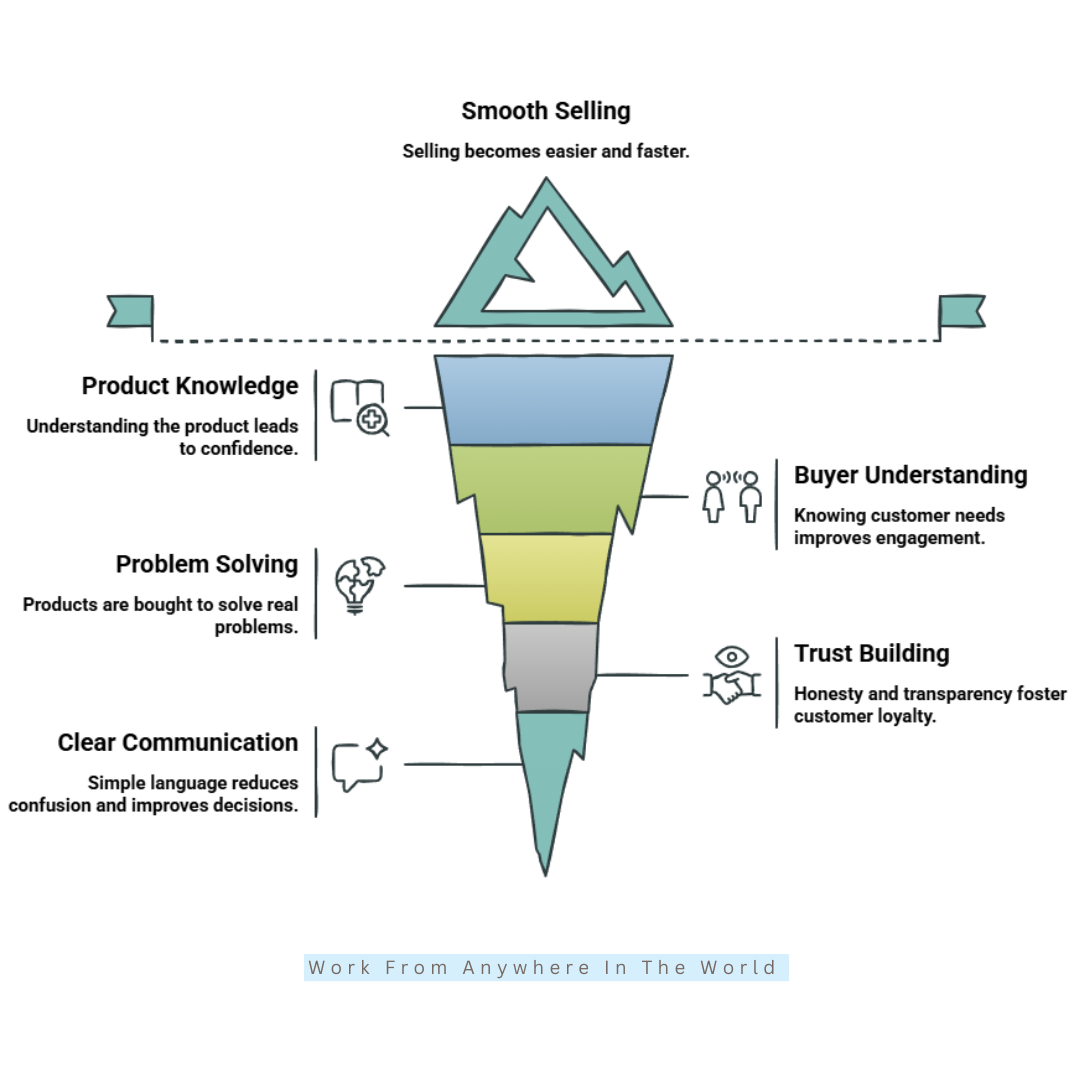
Before selling any product, take the time to understand exactly what you're offering. Customers often have questions before making a purchase, and confident answers help build credibility.
Learn the key features, benefits, pricing, and the problems your product solves. The better you understand it, the easier it becomes to explain its value naturally.
People trust someone who speaks with confidence instead of relying on a memorized sales pitch. Whenever possible, use the product yourself so you can share genuine insights.
Rather than listing technical specifications, explain how the product can solve everyday problems or improve your customer's life. Strong product knowledge helps you answer questions, overcome objections, and build customer confidence.
Key Points
- Learning the key features and benefits.
- Using the product whenever possible.
- Explaining how it solves customer problems.
- Preparing for common customer questions.
Tip No. 2 – Understanding Buyers
Successful selling starts with understanding the people you want to reach. Every customer has different priorities, budgets, and reasons for making a purchase.
A student may focus on affordability, while a business owner may place greater value on quality, reliability, or results. Knowing what matters most to your audience helps you present your product more effectively.
Customers respond positively when they feel their needs are understood. Reading reviews, following discussions on social media, and paying attention to customer feedback can reveal valuable insights.
When your message reflects your audience's interests and challenges, people are more likely to pay attention. A deeper understanding of your customers strengthens trust, encourages engagement, and supports stronger sales results.
Key Points
- Researching your audience's interests.
- Learning common buying behaviours.
- Identifying customer challenges and priorities.
- Adapting your message to your audience.
Tip No. 3 – Solving Problems
Customers often make a purchase because they're looking for a solution to a specific challenge. Rather than describing what your product is, explain how it improves everyday life.
Think about the value it provides. It might save time, reduce effort, lower costs, increase productivity, or make a task more enjoyable.
Customers respond more positively when they see how an item fits their needs. Real-life examples are often more persuasive than a long list of features or technical specifications.
When people understand how your product can improve a situation, they're more likely to buy. Showing the value you offer is often more persuasive than simply describing what you sell.
Key Points
- Identifying your customers' biggest challenges.
- Showing how your product provides a solution.
- Emphasizing benefits instead of features.
- Using examples that relate to everyday situations.
Tip No. 4 – Building Trust
Building trust is one of the most important parts of making a sale. People are far more likely to buy from someone they believe is honest, reliable, and knowledgeable.
Be truthful in your communication and avoid making promises you can't keep. Honest explanations inspire far more confidence than exaggerated claims.
You can strengthen customer confidence by sharing genuine reviews, providing accurate product information, and answering questions politely. These actions show that you value your customers and stand behind what you sell.
Customer confidence isn't built in a single conversation. It grows through honest communication, consistent service, and positive customer experiences that encourage repeat business.
Key Points
- Sharing accurate product information.
- Including genuine customer reviews.
- Answering questions politely and professionally.
- Avoiding exaggerated claims.
Tip No. 5 – Choosing The Right Words
The words you choose can influence how customers respond to your message. When your explanation is straightforward, people are more likely to stay interested and ask questions.
Avoid technical terms or industry jargon unless your audience is familiar with them. Use everyday language that helps customers understand the value of what you're offering.
Shorter sentences and straightforward explanations often lead to better conversations. They also help customers compare options and make informed decisions.
Good communication reduces confusion, builds confidence, and helps customers decide whether your product is the right choice for their needs.
Key Points
- Using everyday language.
- Keeping your message focused.
- Avoiding unnecessary technical terms.
- Explaining the benefits in plain language.
Tip No. 6 – Improving Communication
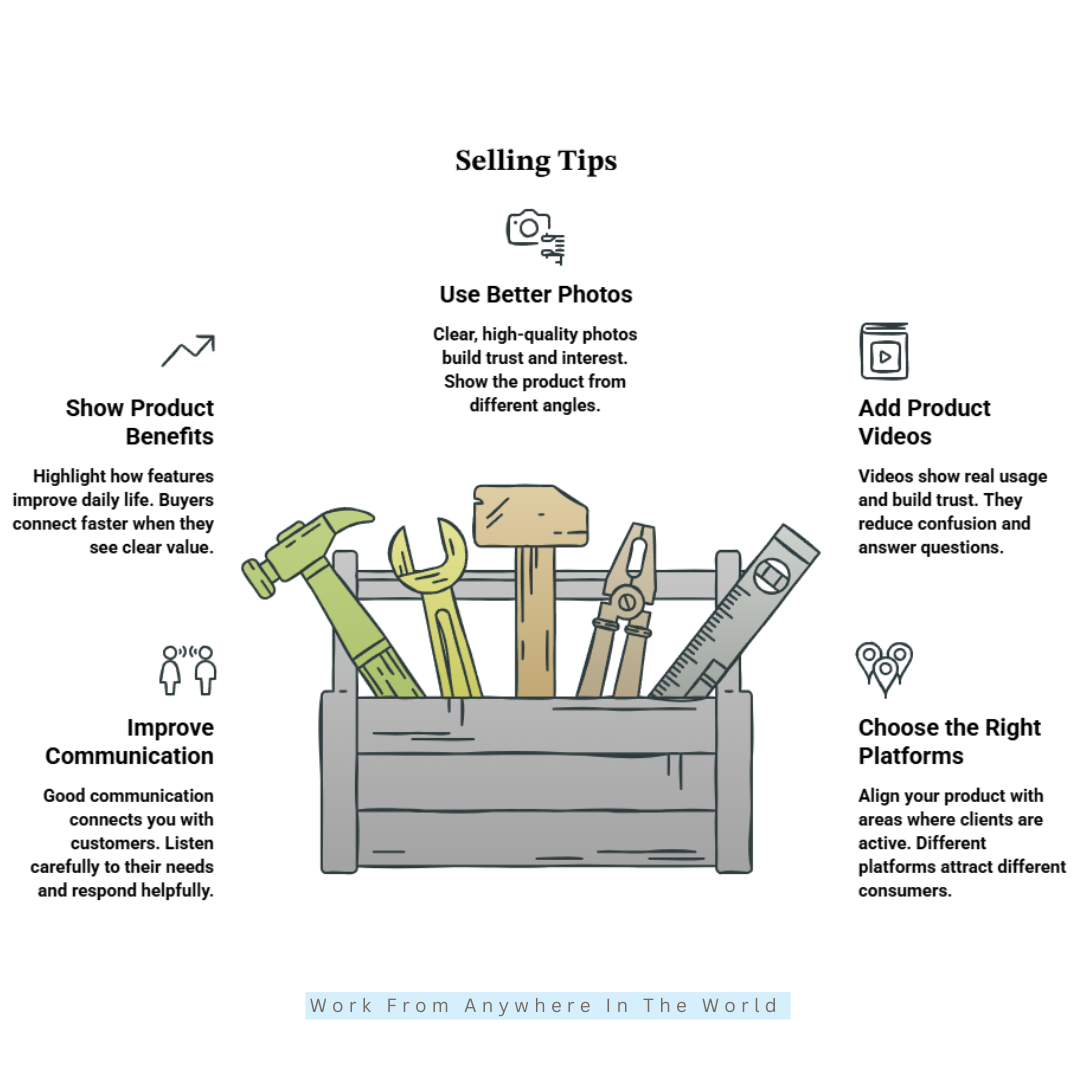
Good communication helps you build stronger relationships with your customers. It involves more than speaking or writing well. Listening carefully is just as valuable as explaining your product.
Pay attention to your customers' questions, concerns, and expectations. The better you understand their needs, the better prepared you'll be to answer their questions and recommend the right solution.
Customers appreciate polite, patient, and respectful communication. Staying calm, even when someone has questions or feels uncertain, creates a more positive buying experience.
A friendly conversation encourages trust and helps customers feel comfortable throughout the buying process. Strong communication builds confidence in both you and the product you're selling.
Key Points
- Listening to your customers' needs.
- Responding politely and patiently.
- Maintaining a friendly, professional tone.
- Asking thoughtful questions.
Tip No. 7 – Showing Product Benefits
Customers are often more interested in what a product can do for them than in a list of technical features. That's why customers respond best when they understand how your product improves everyday life.
Rather than listing specifications, describe how each feature solves a problem or makes a task easier. Customers are more engaged when they understand the value behind what you're offering.
You might explain how your product saves time, increases comfort, reduces costs, or improves convenience. Real-life examples help customers picture themselves using the product.
When customers understand the benefits, they feel more confident making a purchase. Focusing on outcomes rather than features helps turn interest into sales.
Key Points
- Highlighting everyday benefits.
- Turning features into customer benefits.
- Showing how your product saves time or effort.
- Using relatable examples.
Tip No. 8 – Using High-Quality Photos
High-quality photos can have a significant impact on buying decisions. When customers can't examine a product in person, images often create the first impression.
Show your product from several angles so customers can see its features and appearance. Well-lit photos with uncluttered backgrounds help keep the attention on the product.
Natural lighting often produces the most appealing results. Lifestyle photos can also show how the product is used in everyday situations, making it easier for customers to picture themselves using it.
Professional-looking images build customer confidence and answer many questions before they're asked. Strong visuals reduce uncertainty and encourage customers to make a purchase.
Key Points
- Using high-resolution images.
- Showing your product from multiple angles.
- Taking advantage of natural lighting.
- Including lifestyle or real-life photos.
Tip No. 9 – Adding Product Videos
Product videos give customers a closer look at what you're selling. Seeing a product in use often provides more confidence than reading a written description alone.
A short video can demonstrate key features, explain the benefits, and show how the product performs in everyday situations. Product videos often answer common customer questions before a purchase is made.
You don't need expensive equipment to create useful product videos. A well-planned recording with good lighting and steady camera work can present your product professionally.
When customers can see a product in action, they have a better understanding of what to expect. This added confidence often encourages them to move forward with a purchase.
Key Points
- Creating short product videos.
- Demonstrating real product usage.
- Highlighting key benefits visually.
- Recording with good lighting and steady camera work.
Tip No. 10 – Choosing The Right Platforms
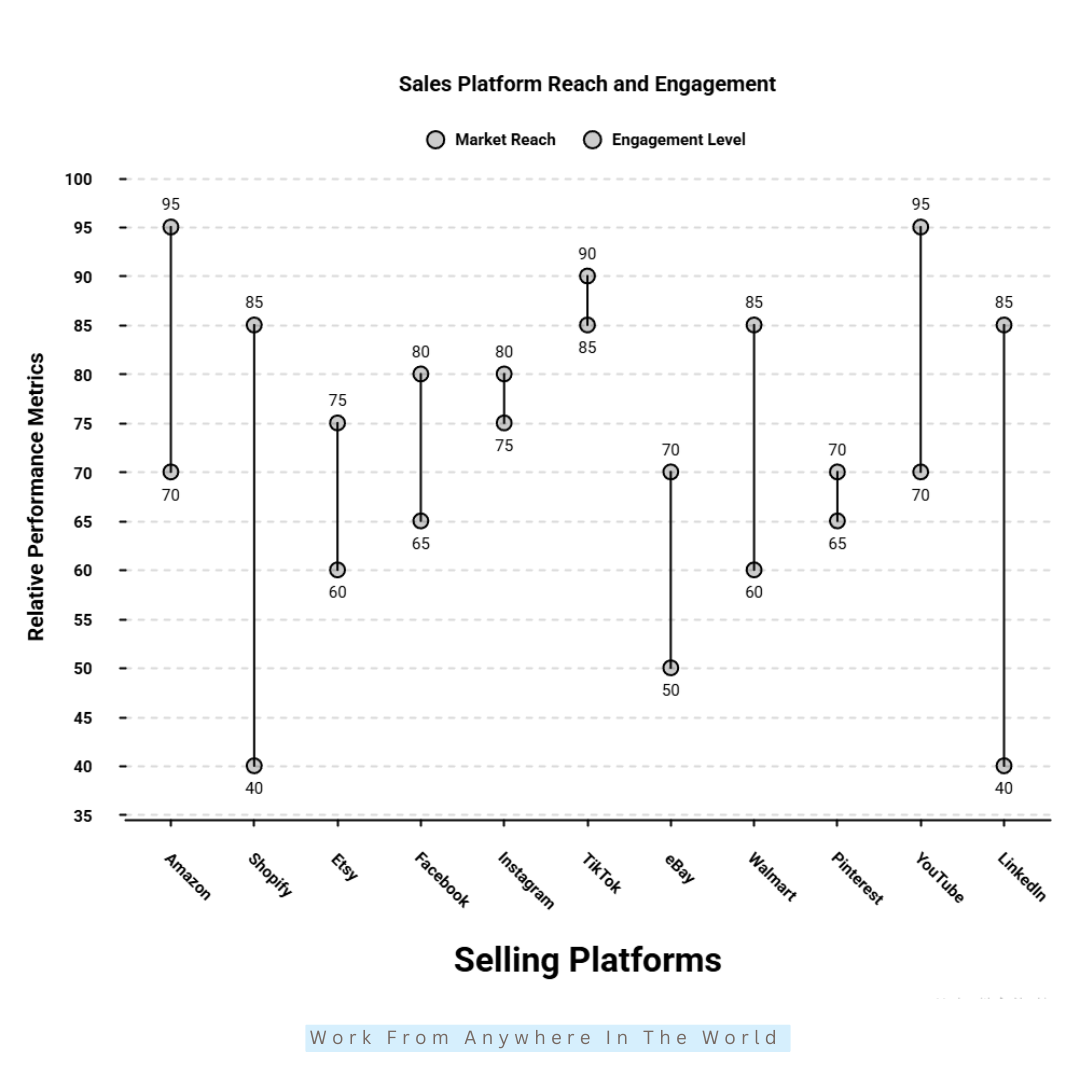
Choosing the right platform can make a significant difference in your sales results. Different platforms attract different audiences. Selecting one that matches your products helps you reach the customers most likely to buy.
Fashion products may perform well on social media, while electronics often attract buyers on established online marketplaces. Before choosing a platform, consider where your audience prefers to browse and shop.
Some customers enjoy shopping through mobile apps, while others prefer buying directly from websites or trusted marketplaces. Selecting the right platform helps your product reach the people most likely to buy it.
Greater visibility increases the opportunity to attract interested customers and generate more sales. Matching your product to the right platform strengthens your overall selling strategy.
Key Points
- Choosing platforms that match your audience.
- Researching where your customers shop.
- Using trusted online marketplaces.
- Focusing on platforms with strong customer traffic.
Tip No. 11 – Studying Competitors
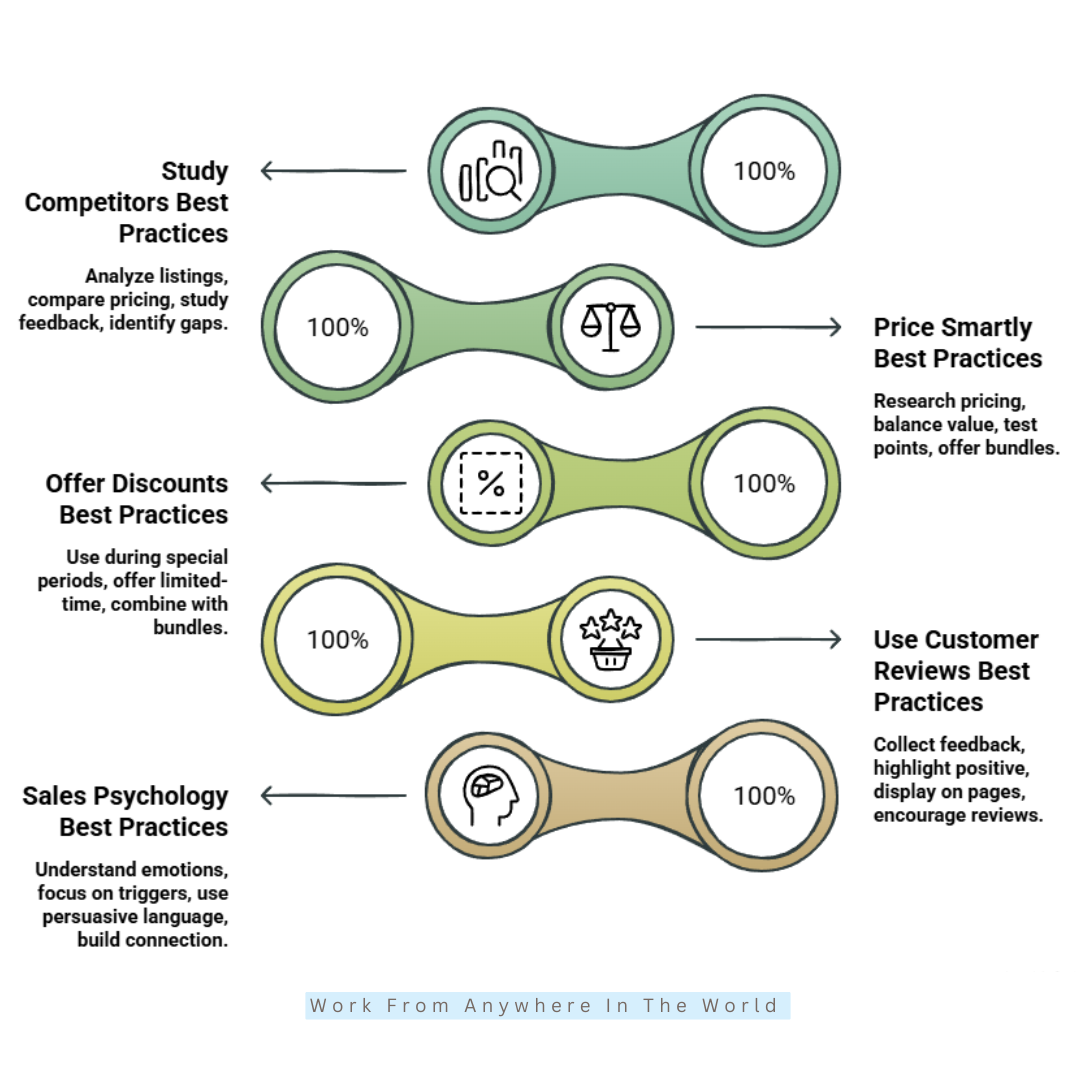
Studying your competitors can help you strengthen your own selling strategy. It shows you what is already working in the market and what attracts your target audience.
Observing competitors isn't about copying what they do. It's about learning from their strengths, identifying weaknesses, and finding opportunities to stand out.
Review their pricing, product presentation, marketing approach, and customer feedback. This information can reveal gaps in the market that your product or service is well positioned to fill.
Understanding your competition helps you position your product more effectively and make informed business decisions. Careful research often leads to stronger sales results.
Key Points
- Analyzing competitor product listings.
- Comparing pricing and offers.
- Reviewing customer feedback.
- Identifying opportunities in the market.
Tip No. 12 – Pricing Smartly
Pricing has a major influence on buying decisions. A price that's too high may discourage potential customers, while one that's too low can make people question the product's quality.
Aim for a price that reflects the value of your product while remaining competitive. Research similar products and consider customer demand before setting your prices.
Many customers compare prices before making a purchase. Testing different price points and reviewing the results can help you find an approach that works for both your business and your customers.
Adding value through product bundles, discounts, or special offers can make your pricing more appealing. When customers believe they're receiving good value, they're more likely to complete a purchase.
Key Points
- Researching competitor pricing.
- Balancing value with affordability.
- Testing different price points.
- Offering product bundles or special offers.
Tip No. 13 – Offering Discounts
Discounts can attract attention and encourage customers to make a purchase. A well-timed promotion often gives people an extra reason to buy.
Use discounts strategically instead of offering them all the time. Limited-time promotions and seasonal offers can create interest without reducing the perceived value of your product.
You can also combine discounts with product bundles or special promotions to give customers additional value. This approach encourages purchases while protecting your pricing strategy.
When used thoughtfully, discounts can increase sales and attract new customers. The goal is to offer genuine value while maintaining confidence in the quality of your product.
Key Points
- Using discounts for special promotions.
- Offering limited-time deals.
- Combining discounts with product bundles.
- Maintaining your product's perceived value.
Tip No. 14 – Using Customer Reviews
Customer reviews help potential buyers feel more confident about a product. Many people place greater trust in the experiences of other customers than in advertising or marketing messages.
Even a small number of genuine reviews can influence buying decisions. Encourage customers to share feedback after their purchase and make it easy for them to leave a review.
Highlight positive reviews on your product pages, website, or social media channels. Authentic feedback shows how your product performs in everyday situations and reassures potential buyers.
Customer reviews build credibility and help reduce uncertainty before a purchase. They also strengthen trust in your product and your business.
Key Points
- Collecting honest customer feedback.
- Highlighting positive customer experiences.
- Displaying reviews on product pages.
- Encouraging post-purchase reviews.
Tip No. 15 – Understanding Buying Decisions
Understanding why people buy can help you communicate more effectively. Buying decisions are often influenced by emotions, trust, personal needs, and the desire to solve a problem.
Customers don't always make decisions based on facts alone. They also consider how a product might improve their lives, save time, reduce frustration, or help them achieve a goal.
Rather than relying on sales pressure, focus on what matters most to your customers. When your message reflects their priorities and concerns, they're more likely to respond positively.
Successful selling is built on trust, honesty, and a genuine awareness of your customers' needs. Helping people make informed decisions creates a better experience for everyone involved.
How To Write Product Descriptions That Sell
A good product description does more than explain what you're selling. It helps customers understand the benefits, answers common questions, and gives them confidence to make a purchase.
Focus on the value your product provides rather than simply listing its features. Explain how it solves a problem or improves everyday life in a way your target audience can relate to.
Keep your descriptions organized and easy to scan. Short paragraphs, bullet points, and clear headings help customers find the information they're looking for more quickly.
Review your descriptions regularly and update them when products, prices, or customer needs change. Well-written descriptions can improve customer confidence and encourage more sales.
Key Points
- Writing customer-focused descriptions.
- Highlighting benefits before features.
- Organizing information for readability.
- Updating product descriptions regularly.
Building Lasting Customer Relationships
Making a sale is only the beginning of building a successful business. Strong customer relationships encourage repeat purchases, positive reviews, and recommendations to family, friends, and colleagues.
Treat every customer with respect before, during, and after the sale. Respond to questions promptly, provide accurate information, and follow through on your promises whenever possible.
Staying in touch with your customers can also strengthen loyalty. Newsletters, special offers, helpful content, and occasional follow-up messages remind customers about your business without becoming overwhelming.
Customers who have a positive buying experience are more likely to return and recommend your products to others. Building lasting relationships creates a strong foundation for steady business growth.
Key Points
- Providing excellent customer service.
- Responding promptly to customer enquiries.
- Staying connected through helpful communication.
- Encouraging repeat business and referrals.
12 Best Platforms For Selling Products
Choosing the right platform can significantly impact your sales results. Different platforms attract different audiences and are designed for different types of products.
Some platforms specialize in handmade goods, while others focus on digital products, vintage items, or large online marketplaces. Understanding these differences can help you choose the one that best fits your business.
You don't need to sell on every platform to succeed. Focusing on one or two platforms that match your products and target audience often produces better results.
The following platforms offer a variety of selling opportunities, whether you're launching a new business or expanding an existing one.
1. Amazon
Amazon is one of the world's largest online marketplaces, attracting millions of shoppers every day. It supports a wide range of product categories, making it suitable for many types of physical products.
Sellers can create product listings, manage inventory, and use Amazon's fulfilment services to store, pack, and ship orders. These services can simplify order management and improve delivery times.
Many customers already trust Amazon, which can encourage purchasing. At the same time, competition is high, so well-written product descriptions, high-quality photos, and positive customer reviews are essential.
Amazon is an excellent choice for businesses looking to reach a large audience, but success often depends on presenting your products professionally and providing a positive customer experience.
2. Shopify
Shopify is a popular eCommerce platform that allows you to build your own online store instead of selling through a shared marketplace. It gives you complete control over your branding, pricing, store design, and customer experience.
Unlike marketplaces such as Amazon, Shopify doesn't provide a built-in audience. Instead, you'll need to attract visitors through search engine optimization (SEO), content marketing, social media, email marketing, or paid advertising.
The platform includes tools for managing products, inventory, payments, shipping, and customer orders. Thousands of apps and integrations also allow you to customize your store as your business grows.
Shopify is an excellent option for entrepreneurs who want to build a long-term brand rather than rely entirely on third-party marketplaces. While it requires more marketing effort, it also gives you greater control over your business and customer relationships.
3. Etsy
Etsy is a popular online marketplace specializing in handmade, vintage, and creative products. It attracts customers looking for unique items that aren't typically available through large retail stores.
The platform is especially popular with artists, designers, crafters, and small business owners who create personalized or one-of-a-kind products. Buyers often appreciate the story behind the product as much as the product itself.
Creating attractive product listings, using high-quality photos, and writing detailed descriptions can help your products stand out. Offering customization options and providing excellent customer service can also encourage positive reviews and repeat purchases.
Etsy is an excellent choice for sellers who focus on niche markets, handcrafted goods, personalized gifts, artwork, home décor, and other creative products. It offers an established customer base for businesses that value originality and craftsmanship.
4. Facebook Marketplace
Facebook Marketplace helps businesses and individuals sell products to local and online buyers. It also works well alongside Facebook Pages and Groups to reach a wider audience.
The platform is especially popular for used items, household goods, furniture, clothing, and products sold within local communities. Buyers and sellers can communicate directly through Facebook Messenger.
Regular posts, prompt replies, and accurate product descriptions help build customer confidence. High-quality photos also improve visibility and encourage more enquiries.
Facebook Marketplace is a good choice for small businesses and individuals who want to sell locally without paying listing fees. It can also help businesses build relationships with customers through their Facebook presence.
5. Instagram
Instagram is a visual platform that helps businesses showcase products through photos, Reels, Stories, and shopping features. It works particularly well for products that benefit from strong visual presentation.
Fashion, beauty, home décor, food, and lifestyle brands often perform well on Instagram. High-quality images and engaging videos help capture attention and encourage customer interest.
Posting consistently and sharing behind-the-scenes content, customer photos, and product demonstrations can strengthen your brand. Working with relevant influencers can also introduce your products to a wider audience.
Instagram is a great platform for building brand awareness and connecting with potential customers. Consistent engagement and valuable content help encourage long-term customer relationships.
6. TikTok
TikTok is a short-form video platform that allows businesses to showcase products through creative and entertaining content. It gives brands the opportunity to reach large audiences in a relatively short time.
The platform works particularly well for trendy products, household gadgets, beauty items, fashion, and products that solve everyday problems. Demonstrations and before-and-after videos often attract strong interest.
Short, authentic videos showing how a product works can generate significant engagement. Consistent posting and participation in popular trends can also increase visibility.
TikTok is an excellent platform for businesses that enjoy creating video content and interacting with their audience. Creative storytelling often performs better than highly polished advertisements.
7. eBay
eBay is one of the world's longest-running online marketplaces for both new and used products. Sellers can choose between auction-style listings and fixed-price sales, depending on the type of product they offer.
The platform is especially popular for collectibles, electronics, antiques, vintage goods, and other hard-to-find items. Many buyers visit eBay looking for unique products and competitive prices.
Detailed product descriptions, high-quality photos, and competitive pricing can help your listings attract more attention. Positive seller ratings also help build buyer confidence.
eBay is a good choice for individuals and businesses looking to reach both local and international customers. Its flexible selling options make it suitable for sellers offering a wide range of products.
8. Walmart Marketplace
Walmart Marketplace allows approved third-party sellers to list products alongside Walmart's own online inventory. The platform attracts millions of shoppers and benefits from Walmart's well-established reputation.
It is best suited for physical products such as home goods, electronics, health products, toys, and everyday essentials. Customers often visit Walmart looking for competitive prices and trusted brands.
Unlike many online marketplaces, Walmart reviews each seller application before approval. Businesses that meet its requirements gain access to a large customer base and a well-known retail brand.
Walmart Marketplace is a strong option for established businesses looking to expand their online reach. High-quality product listings, competitive pricing, and reliable customer service help businesses succeed on the platform.
9. Pinterest
Pinterest is a visual discovery platform where people search for ideas, inspiration, and products. Unlike most social media platforms, Pinterest functions more like a search engine, helping users discover content over time.
It works especially well for home décor, fashion, crafts, recipes, gardening, DIY projects, and lifestyle products. Attractive images and keyword-rich descriptions can help your Pins appear in search results.
Each Pin can link directly to your website, online store, or product page. This makes Pinterest an excellent platform for driving targeted traffic and introducing new customers to your products.
Pinterest is ideal for businesses that create visually appealing content. Well-optimized Pins can continue attracting visitors and generating traffic long after they are published.
10. YouTube
YouTube is one of the best platforms for demonstrating products and answering customer questions. Videos allow potential buyers to see how a product works before making a purchase.
Tutorials, product reviews, comparisons, and demonstrations can help customers understand a product's features and benefits. This type of content is especially useful for higher-priced or more complex items.
Well-produced videos can continue attracting viewers through YouTube search and Google search long after they are published. This gives businesses an opportunity to reach new customers without relying entirely on paid advertising.
YouTube is an excellent platform for businesses that enjoy creating educational content. Consistent publishing helps increase brand awareness and encourages customers to make informed buying decisions.
11. LinkedIn
LinkedIn is a professional networking platform that helps businesses connect with decision-makers and potential customers. It is particularly useful for companies selling business products, software, consulting services, and other B2B solutions.
Businesses can share industry knowledge, product updates, case studies, and success stories to demonstrate their expertise. Regular posting and meaningful engagement help increase visibility among professional audiences.
LinkedIn also provides opportunities to build relationships with business owners, purchasing managers, and other professionals who influence buying decisions. These connections can lead to valuable business opportunities.
LinkedIn is best suited for businesses that sell to other businesses rather than individual consumers. It works well alongside a company website or online store as part of a broader marketing strategy.
12. WooCommerce
WooCommerce is a WordPress plugin that lets you build a fully customized online store. It gives you complete control over your products, pricing, payments, and customer experience.
The platform is suitable for businesses of all sizes and supports both physical and digital products. Thousands of plugins and themes allow you to expand your store as your business grows.
Because WooCommerce is self-hosted, you'll need your own website and web hosting. This gives you greater flexibility but also requires more involvement in managing your store.
WooCommerce is an excellent choice for WordPress users who want complete ownership of their online business. It combines flexibility, scalability, and powerful selling tools in one platform.
Frequently Asked Questions
Q1: What Is The Best Way To Sell A Product Online?
Focus on understanding your target audience, choosing the right selling platform, creating high-quality product listings, and building customer trust through honest communication and reviews.
Q2: Which Platform Is Best For Selling Products?
The best platform depends on what you're selling. Amazon is suitable for many physical products. Etsy is ideal for handmade goods. Shopify and WooCommerce are excellent for building your own store, and social platforms can help you reach new customers.
Q3: How Can I Increase Product Sales?
Improve your product descriptions, use high-quality photos and videos, choose the right selling platform, encourage customer reviews, and provide excellent customer service.
Q4: Why Is Customer Trust Important In Sales?
Customers are more likely to buy from businesses they trust. Honest product information, positive reviews, and reliable service help build confidence and encourage repeat purchases.
Q5: Should I Sell On More Than One Platform?
Yes. Many businesses use more than one platform to reach different audiences. Start with one or two platforms, then expand as your business grows and your products gain visibility.
Q6: Can Beginners Successfully Sell Products Online?
Absolutely. With the right platform, a well-presented product, and a willingness to learn, beginners can build successful online businesses. Consistency and customer focus often matter more than previous selling experience.
Conclusion
Selling any product starts with understanding your customers and showing how your product meets their needs. Building trust and communicating honestly are essential parts of every sale.
Choosing the right platform, presenting your products professionally, and providing helpful information can all improve your sales results. Small improvements in your approach often have a lasting impact.
Selling is an ongoing learning process. As you gain experience, you'll become more confident and better prepared to meet your customers' expectations.
Use these tips as a guide to strengthen your selling skills, build customer relationships, and grow your business with confidence. Every sale gives you an opportunity to learn, improve your approach, and create a better experience for your customers.
I trust you enjoyed this article on How To Sell Any Product: 15 Practical Tips. Please stay tuned for more insightful blogs on affiliate marketing, online business, and working from anywhere in the world.
Take care!
— JeannetteZ 🌍✨
💬 Your Opinion Is Important To Me
Do you have thoughts, ideas, or questions? I’d love to hear from you. Please leave your comments below or email me directly at Jeannette@WorkFromAnywhereInTheWorld.com.
📚 More Work From Anywhere Reads
🚀 Ready to Build a Business You Can Run from Home
Or from Anywhere in the World?
Imagine creating income on your terms — from home, a cozy café, or wherever life takes you.
With the right tools, training, and community support, it’s entirely possible.
Start your own online business for free — no credit card needed.
Disclosure
This post may contain affiliate links. As an Amazon Associate and participant in other affiliate programs, I earn from qualifying purchases at no extra cost to you. Please read my full affiliate disclosure.