

How To Make Money With Woodworking: 12 Practical Ideas
Exploring how to make money with woodworking is worth it if you enjoy creating useful or decorative items from wood. Your skills may provide opportunities to sell products, offer custom services, or share your woodworking knowledge with others.
Woodworking also offers plenty of flexibility in what you choose to create. Furniture, home décor, personalized gifts, outdoor pieces, and smaller handmade items can appeal to different types of customers.
You are not limited to selling physical products either. Woodworking plans, workshops, custom projects, and online content provide additional ways to turn your knowledge and experience into income.
The direction you choose will depend on your skills, available workspace, equipment, budget, and the amount of time you want to invest. Starting with an area you already know well can make the process more manageable.
This article explores different opportunities for turning woodworking skills into income. It also covers the woodworking market and practical marketing ideas for developing your business.
Why Consider Woodworking As A Business?
Woodworking combines practical skills with creativity and offers several ways to generate income. Depending on your interests, you might create functional products, decorative pieces, custom orders, or specialized services.
Handmade wooden items can also offer something different from mass-produced products. Customers may be looking for particular dimensions, personalized details, distinctive designs, or craftsmanship that suits their individual needs.
Another advantage is the flexibility to choose projects that suit your skills and available workspace. Smaller products may be practical for a home workshop, while larger pieces require more equipment, storage, and working space.
You can also decide how gradually you want to develop the business. Starting with a limited range of products gives you an opportunity to learn what customers want before investing in additional tools or materials.
Woodworking does require careful attention to material costs, production time, pricing, and demand. Understanding these factors can help you decide whether a particular product or service is worthwhile to offer.
Understanding The Woodworking Market
Understanding the woodworking market can help you decide which products or services may suit your skills and potential customers. Different buyers look for woodworking for practical, decorative, personal, or business purposes.
Some customers may want handcrafted furniture or home décor, while others are interested in personalized gifts, outdoor products, or custom pieces. Local demand, available materials, and the time required to complete each project can also influence what makes sense to offer.
Before choosing a direction, consider the types of products people are looking for and what you can produce consistently. Your interests and woodworking skills are equally important when deciding where to focus.
Popular Woodworking Categories
- Custom furniture
- Wooden signs
- Kitchen and serving products
- Home décor
- Outdoor and garden products
- Children’s products
- Pet furniture and accessories
- Seasonal and personalized items
12 Ways To Make Money With Woodworking
Woodworking offers several income opportunities, from selling handmade products to providing specialized services. The best option will depend on your skills, interests, equipment, and available workspace.
Some woodworkers prefer creating smaller items that are easier to produce and ship. Others focus on custom furniture, restoration work, outdoor projects, or pieces designed for individual customers.
There are also opportunities beyond selling finished products. Teaching workshops, creating woodworking plans, or sharing your knowledge online may provide additional income streams.
Before choosing a direction, consider the time, materials, and equipment each option requires. Pricing and customer demand will also influence whether an idea makes sense for your business.
The following 12 ways to make money with woodworking offer different possibilities to explore. You may decide to focus on one area or combine several that complement your skills and resources.
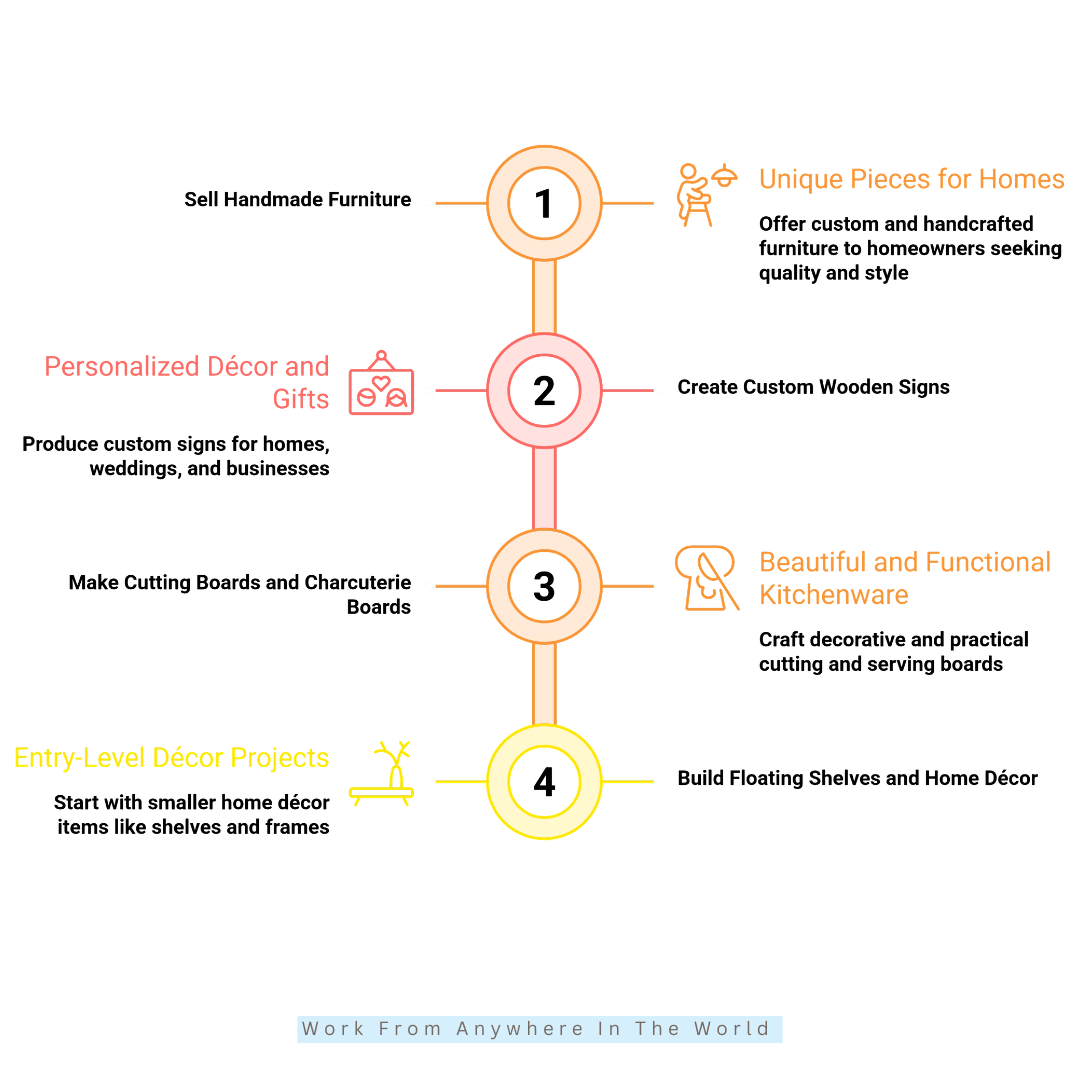
1. Sell Handmade Furniture
Handmade furniture offers an opportunity for woodworkers who enjoy larger and more detailed projects. Tables, benches, bookshelves, desks, and storage pieces are among the many products that could be made for individual customers.
Custom work may be particularly suitable because the piece is created for someone who already wants it. Customers might request particular dimensions, wood types, finishes, storage features, or designs that are difficult to find in standard furniture stores.
Before focusing on furniture, consider the practical side of producing and selling larger pieces. Materials, workshop space, construction time, storage, transportation, and delivery can all affect whether a project is worthwhile.
A portfolio of completed work can help potential customers understand your style and craftsmanship. Clear photographs are especially useful when promoting furniture through your website, social media, local marketplaces, or other sales channels.
Start with furniture that suits your skills and equipment rather than trying to offer every style. Tracking the true cost and time required for each project will help you determine which offerings make sense to continue offering.
2. Create Custom Wooden Signs
Custom wooden signs give woodworkers plenty of room for personalization. Names, house numbers, welcome signs, wedding décor, nursery signs, and business signage can all be adapted for individual customers.
Signs can also suit different skill levels in woodworking. Some designs require basic cutting, sanding, staining, painting, and lettering, while more detailed pieces may involve carving or engraving.
Personalization is one of the main advantages of this type of product. Customers may request particular names, dates, colours, fonts, dimensions, or designs to suit a home, event, gift, or business.
Think about how you will produce each design before accepting custom orders. Templates and a limited selection of sizes or styles can make production more manageable while still giving customers choices.
Wooden signs can be offered through craft fairs, local markets, social media, online marketplaces, or your own website. Smaller designs may also be easier to package and ship than larger woodworking projects.
Choosing the right online marketing strategies can also help potential customers discover your woodworking products.
3. Make Cutting Boards And Charcuterie Boards
Cutting boards and charcuterie boards combine practical use with plenty of opportunities for creative woodworking. They can be made in different shapes, sizes, wood combinations, and designs to appeal to a variety of customers.
These smaller projects may also be more manageable for someone developing a woodworking business. They require less workshop and storage space than furniture and are generally easier to package, transport, or ship.
Wood selection is particularly important for products intended to come into contact with food. Suitable materials and finishes should be chosen with durability, maintenance, and food safety in mind.
Personalization can make boards suitable for weddings, housewarmings, anniversaries, and other occasions. Names, dates, monograms, or custom designs provide additional ways to distinguish your products.
Creating a few repeatable designs may help streamline production while still allowing room for customization. Tracking material costs and production time will also help you determine which styles are worthwhile to offer.
4. Build Floating Shelves And Home Décor
Home décor gives woodworkers many options for creating smaller products with practical or decorative uses. Floating shelves, wall organizers, trays, candle holders, picture frames, and plant stands are just a few possibilities.
These projects generally require less material, workspace, and storage than large furniture. That can make them more manageable when you are working from a home workshop or gradually building your product range.
A consistent style can also help your products become more recognizable. You might focus on particular wood types, finishes, shapes, or designs that complement one another and appeal to a similar customer.
Consider producing some items in small batches rather than making every piece individually. Repeating the same cutting, sanding, assembly, and finishing processes may save time while maintaining consistency.
Home décor can be sold individually or grouped into complementary collections. Offering several related products may also give returning customers more reasons to explore your woodworking range.
5. Offer Custom Woodworking Services
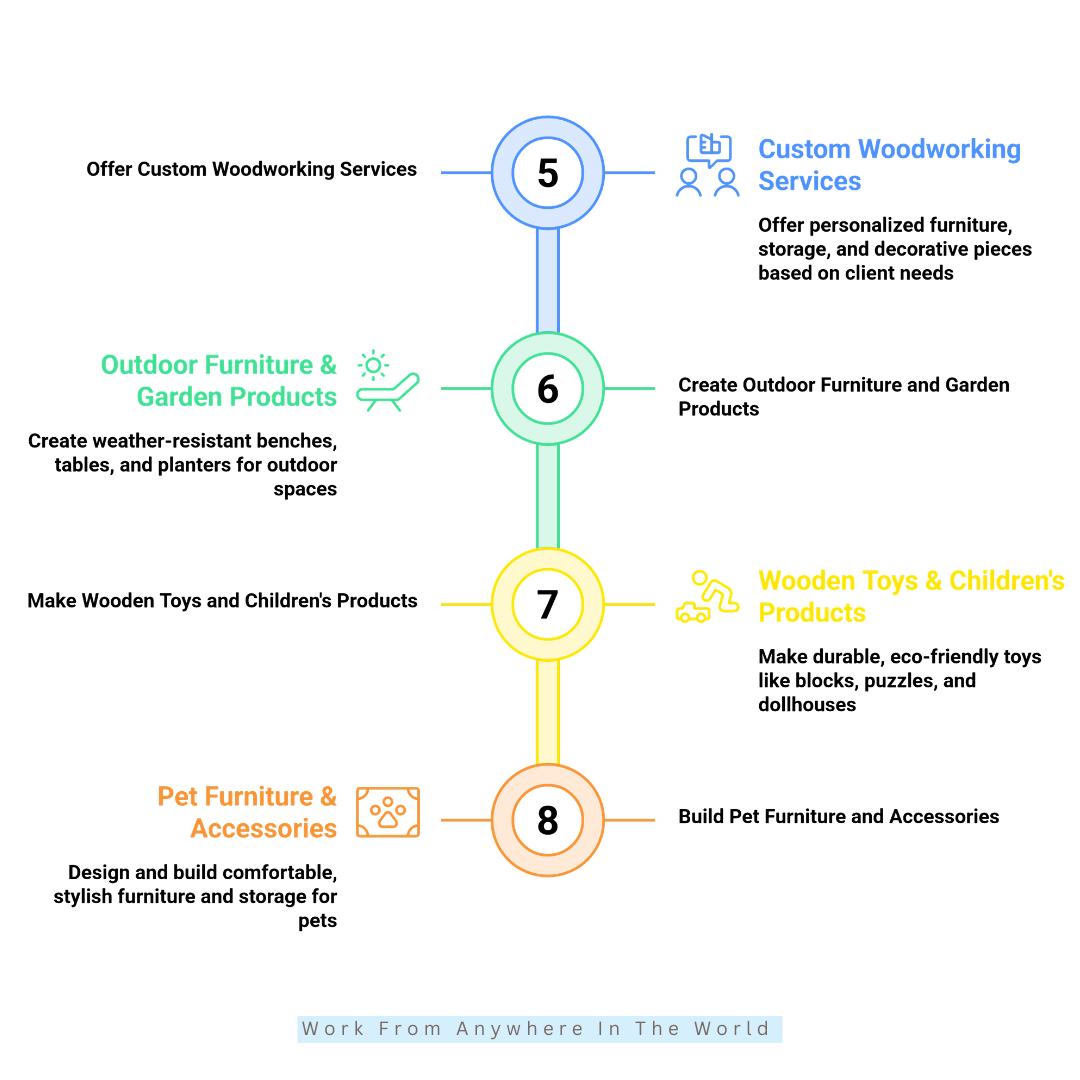
Custom woodworking allows you to create products after a customer has placed an order rather than building inventory in advance. This can reduce the need to store finished pieces while giving customers something designed for their particular needs.
Projects might include shelving, storage solutions, furniture, built-in features, or decorative pieces. The scope can range from relatively small items to larger projects that require detailed planning or installation.
Custom work usually begins with a discussion about the customer’s requirements. Measurements, materials, design preferences, timeframe, and budget should be established before construction begins.
Consider how much customization you are comfortable offering. Setting boundaries around revisions, materials, designs, and project sizes can prevent custom orders from becoming difficult to manage.
Photographs of completed projects and genuine customer reviews can help demonstrate the type of work you provide. As your portfolio develops, it may also become easier for potential customers to decide whether your woodworking style suits their project.
Building professional connections can also help you meet potential customers and develop referral opportunities.
6. Build Outdoor Furniture And Garden Products
Outdoor woodworking provides opportunities to build practical products for patios, decks, gardens, and other exterior spaces. Benches, planter boxes, picnic tables, Adirondack chairs, storage pieces, and garden structures are among the possibilities.
Material selection is especially important for outdoor projects. Wood, hardware, adhesives, and finishes need to suit the conditions the finished product will encounter, including moisture, sunlight, and changing temperatures.
Consider the size and weight of each product before deciding what to offer. Local SEO for small businesses can help nearby customers discover products and services that are better suited to local sales or delivery.
Smaller garden products can provide another option. Planter boxes, raised garden beds, potting accessories, and other practical pieces may be easier to produce, transport, and sell locally.
Outdoor products may also have stronger interest during particular times of the year, depending on your location. Planning production around seasonal demand can help you avoid storing large finished pieces for extended periods.
7. Make Wooden Toys And Children’s Products
Wooden toys and children’s products offer plenty of opportunities for creative woodworking. Puzzles, building blocks, toy vehicles, dollhouses, learning boards, and other play items are among the possibilities.
Products intended for children require additional attention to safety. Designs should avoid sharp edges, loose components, or other potential hazards, particularly when an item is intended for younger children.
Materials and finishes also need careful consideration. Any paints, coatings, adhesives, hardware, or other components should be appropriate for the product and its intended age group.
Before selling children’s products, research the toy safety standards and labelling requirements that apply in your location and wherever you plan to sell. Requirements may differ depending on the product, materials, and age group.
A smaller, carefully planned product range may be easier to manage than offering many different designs. This gives you time to refine construction methods while maintaining consistent quality across each item.
8. Build Pet Furniture And Accessories
Pet furniture and accessories give woodworkers another opportunity to create practical products with room for personalization. Feeding stations, pet beds, storage units, gates, cat shelves, and toy boxes are among the possibilities.
Designs can vary according to the animal’s size and the customer’s available space. Wood types, finishes, colours, names, and storage features may also provide opportunities for customization.
Safety should remain an important consideration when designing products for animals. Smooth surfaces, stable construction, appropriate materials, and secure hardware are particularly important for items pets will use regularly.
Think about practicality from the owner’s perspective as well. Products that are easy to clean, appropriately sized, and suited to the home may be more useful than designs focused primarily on appearance.
Pet furniture and accessories can be promoted through your website, social media, local markets, and relevant online marketplaces. A portfolio showing finished products in use can also help customers understand their size, purpose, and design.
9. Sell Woodworking Plans And Digital Products
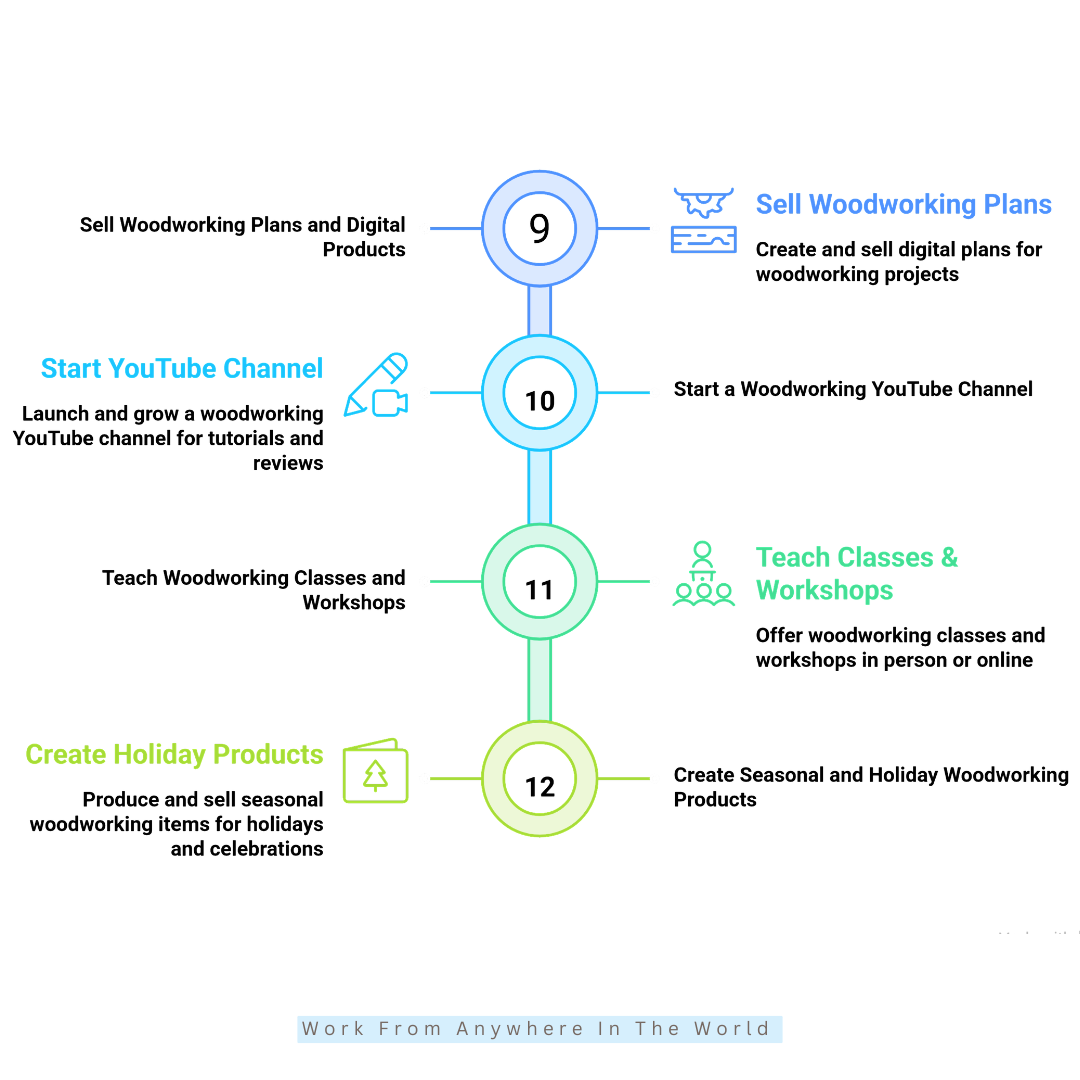
Woodworking plans and other digital products provide a way to earn from your designs without producing and shipping every finished item. The same plan may also be useful to multiple customers.
A detailed woodworking plan might include measurements, material lists, cutting diagrams, assembly instructions, photographs, and finishing suggestions. Clear instructions are especially important when creating plans for people with different skill levels.
Furniture, storage solutions, workbenches, garden projects, and home décor can all be found in downloadable plans. You could also create templates, project bundles, or other resources that complement your designs.
Creating a digital product requires substantial work initially, but there is no physical inventory to store afterward. Updates may still be necessary when you discover unclear instructions or ways to improve the original plan.
Digital products can complement physical woodworking rather than replace it. Offering both allows you to serve customers who want a finished product as well as people who prefer to build the project themselves.
10. Start A Woodworking YouTube Channel
A woodworking YouTube channel provides another way to earn from your skills without relying entirely on finished products. Videos can also introduce your woodworking style and projects to people beyond your local area.
Content might include project tutorials, woodworking tips, workshop organization, tool demonstrations, or behind-the-scenes looks at current builds. Finished projects can also provide material for videos without requiring completely separate content.
Building a channel takes more than recording woodworking projects. Filming, editing, creating thumbnails, writing descriptions, and publishing consistently all require additional time in addition to the woodworking itself.
Income may eventually come from several sources, including advertising, affiliate marketing, sponsorships, digital products, or sales of your own woodworking projects. These opportunities generally depend on developing an audience first.
A YouTube channel can also support other parts of your woodworking business. Viewers who appreciate your work may explore your plans, products, services, or other resources after discovering you through a video.
11. Teach Woodworking Classes And Workshops
Teaching provides another way to earn from woodworking knowledge without relying entirely on product sales. Classes can focus on particular skills, projects, or techniques for people who want hands-on experience.
Topics might include tool safety, measuring, cutting, joinery, sanding, finishing, or completing a small woodworking project. Keeping each class focused can make lessons easier to plan and follow.
Depending on your setup, workshops might take place in a suitable home workspace, community centre, makerspace, or another local venue. Online classes provide another option for sharing instruction without requiring everyone to be in the same location.
Teaching requires preparation beyond woodworking itself. Lesson plans, materials, equipment, workspace, safety procedures, and the number of participants all need to be considered before offering a class.
Classes can also complement other parts of your woodworking business. Students who enjoy your teaching may later be interested in your project plans, online content, workshops, or other woodworking resources.
12. Create Seasonal And Holiday Woodworking Products
Seasonal products give woodworkers an opportunity to create items connected with holidays, celebrations, and changing seasons. Ornaments, decorative signs, centrepieces, outdoor displays, and personalized gifts are among the possibilities.
Many of these products are smaller than furniture or custom installations. This can make them easier to produce in batches, store between sales, and transport to local markets or craft fairs.
Planning ahead is particularly important because the selling period may be relatively short. Preparing designs and materials before the season begins can reduce the pressure of completing multiple orders at once.
Consider creating products that can be adapted for different occasions. A basic sign, ornament, or decorative design might be personalized with different colours, wording, names, or seasonal details.
Seasonal woodworking does not need to become the entire focus of your business. It can complement year-round products and provide opportunities to introduce limited collections at different times.
Wealthy Affiliate – Mini Review
If you’ve ever thought about turning your blog, passion, or niche into an online business,
Wealthy Affiliate (WA) is one of the most beginner-friendly platforms I’ve used.
It combines step-by-step training, website hosting, AI-powered tools,
keyword research, and an active community all in one place.
What I like most is that you can start free (no credit card needed), explore the platform,
test the tools, and connect with other entrepreneurs before upgrading.
WA isn’t a “get rich quick” scheme — success comes from consistent effort
and applying what you learn over time.
Marketing Tips For Your Woodworking Business
Creating quality woodworking products is only part of building a business. Potential customers also need a way to discover your work and understand what makes your products or services different.
Marketing does not have to mean promoting your business everywhere at once. Developing a marketing plan can help you choose suitable channels and focus on people who are genuinely interested in handmade or custom woodworking.
Photographs and videos are particularly useful because woodworking is highly visual. Showing finished pieces, design details, and parts of the creative process can help potential customers appreciate the work involved.
Your website, social media profiles, local markets, and online marketplaces can all provide opportunities to showcase your products. The best combination will depend on what you sell and where your customers are likely to look.
A consistent approach makes it easier to learn which marketing activities are worthwhile. The following tips focus on practical ways to increase visibility and connect with potential customers.
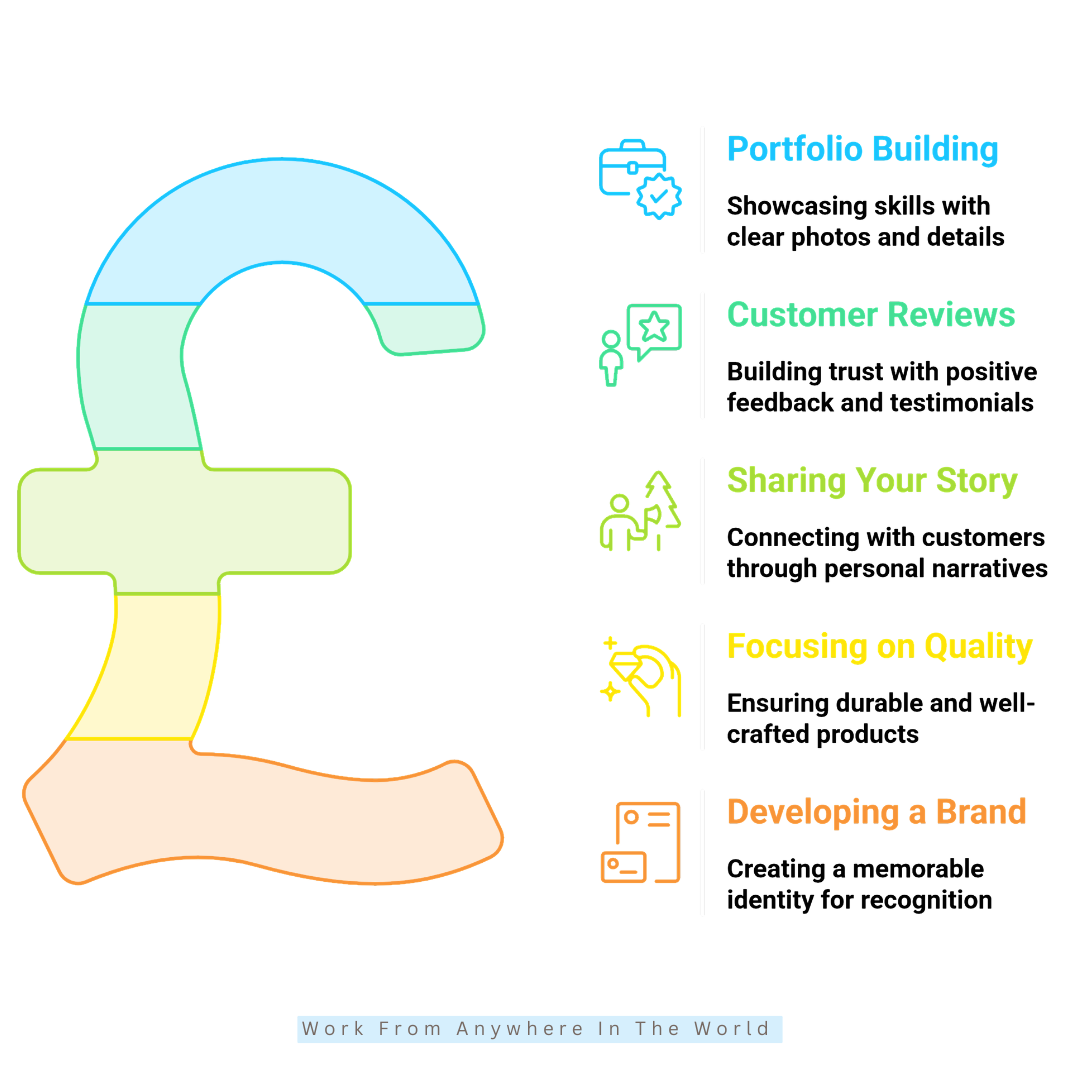
1. Build A Strong Portfolio
A woodworking portfolio gives potential customers an opportunity to see the quality and style of your work. Include a variety of finished projects that represent the products or services you currently offer.
Take clear photographs from several angles and include close-ups when details are important. Natural lighting and uncluttered backgrounds can help keep the attention on the finished piece.
Add useful information such as materials, dimensions, finishes, and available customization options. For custom projects, you might also explain briefly what the customer requested and how the finished design addressed those needs.
Your portfolio can appear on your website, social media profiles, and relevant online marketplaces. Keep it current by replacing older examples as your skills, style, and product range develop.
A well-organized portfolio helps potential customers understand what they can expect from your woodworking. It can also make it easier for them to decide whether your style suits the product or custom project they have in mind.
Key Points
- Showcase a variety of finished projects
- Use clear, high-quality photographs
- Include relevant product details
- Keep your portfolio current
2. Gather Customer Reviews
Customer reviews give potential buyers another perspective on your woodworking products and services. Feedback from previous customers may help someone feel more comfortable placing an order or requesting custom work.
Invite customers to share an honest review after receiving their purchase. If appropriate, they may also be willing to include a photograph showing the finished piece in their home or another setting.
Reviews can appear on your website, social media profiles, and relevant marketplace listings. Keeping them close to your products or portfolio makes them easier for interested customers to find.
Pay attention to the details customers mention repeatedly. Comments about craftsmanship, communication, customization, packaging, or service can show you what people particularly appreciate about your business.
A collection of genuine reviews can strengthen your credibility as your woodworking business develops. They also allow previous customers to describe their experience in their own words.
Key Points
- Invite customers to leave honest reviews
- Encourage photos of finished products
- Display reviews where customers can find them
- Notice recurring themes in customer feedback
3. Share Your Story
The story behind your woodworking business can add a personal element that finished products alone may not provide. Customers may be interested in learning how you developed your skills and what inspired you to begin creating with wood.
You might share how you learned the craft, why you chose particular products, or what influences your designs. Stories about individual projects can also convey the thought and craftsmanship involved in their creation.
Behind-the-scenes content provides another way to tell your story. Photographs or short videos of your workshop, materials, or different stages of a project can give customers a glimpse into the creative process.
Keep the focus on your woodworking rather than sharing personal details simply for the sake of a story. The goal is to help customers understand the person, ideas, and craftsmanship behind the products.
Sharing these details can give your business more personality and make your work easier to remember. Over time, your story may become a recognizable part of your woodworking brand.
Key Points
- Share how your woodworking journey began
- Explain the inspiration behind your designs
- Show parts of your creative process
- Keep stories relevant to your business
4. Focus On Quality
Quality affects how customers experience your woodworking products and how confidently you can stand behind your work. Careful construction, accurate measurements, and thoughtful finishing all contribute to the final result.
Pay attention to details throughout the project rather than relying on finishing work to correct problems later. Material selection, joinery, sanding, assembly, and finishing each influence the quality of the completed piece.
Consistency matters when you sell similar products repeatedly. Customers should receive the same level of craftsmanship whether they purchase your first item or place an order months later.
Efficiency is important when running a business, but rushing production can create mistakes or compromise the finished product. Developing reliable processes can help you work efficiently while maintaining your standards.
Well-made products may also contribute to positive reviews, referrals, and repeat customers. Building a reputation for dependable craftsmanship gives people another reason to choose your woodworking business.
Key Points
- Maintain consistent craftsmanship standards
- Pay attention to construction and finishing
- Develop reliable production processes
- Avoid sacrificing quality for speed
5. Develop A Recognizable Brand
A recognizable brand helps customers distinguish your woodworking business from others. Your business name, visual style, product presentation, and messaging all contribute to the impression people have of your work.
Branding goes beyond choosing a logo. Photography, packaging, website design, social media content, and key marketing principles can all contribute to how your woodworking business is presented.
Your products themselves can become part of your brand identity. Particular materials, finishes, designs, or craftsmanship details may eventually become features that customers associate with your business.
Consistency is more important than making every element look identical. Using a similar approach across different platforms helps customers recognize your business wherever they encounter it.
As your woodworking business develops, your brand may evolve with it. Maintaining the elements customers recognize while refining your presentation can help create a distinctive, professional identity.
Key Points
- Create a consistent visual identity
- Connect your branding across different platforms
- Develop recognizable product characteristics
- Refine your brand as the business grows
Frequently Asked Questions
Q1: Is Woodworking A Good Side Hustle?
Woodworking can be a good side hustle for people who already have the necessary skills, tools, and workspace. Smaller projects can often be completed around another work schedule.
Starting part-time also gives you an opportunity to test different products and learn what customers are interested in before considering a larger commitment.
Q2: How Should I Price My Woodworking Projects?
Consider the cost of materials, labour, equipment use, packaging, and other expenses involved in completing each project. Your pricing should also account for the time and skill required to create the finished product.
Tracking your actual costs makes it easier to determine whether a product is worthwhile to continue making. Customization, delivery, and other additional services should also be considered when appropriate.
Q3: What Woodworking Products Are Easier To Sell Online?
Smaller products such as signs, cutting boards, home décor, and personalized items may be easier to sell online because they are generally simpler to package and ship than furniture.
The best products will depend on your customers, skills, shipping costs, and sales platform. Testing a limited selection can help you learn which items attract the most interest.
Q4: Can I Make Money With Woodworking From Home?
Yes, some woodworking businesses can operate from a home workshop, depending on the products being made and local regulations. Available space, equipment, storage, noise, and safety all need consideration.
Smaller products and digital woodworking plans may be particularly suitable for a home-based setup. Larger projects can require considerably more workshop and storage space.
Q5: Do I Need Expensive Tools To Start A Woodworking Business?
Not necessarily. The tools you need depend largely on the products or services you intend to offer. Smaller or less complicated projects may require considerably less equipment than furniture or custom installations.
Starting with the tools needed for a focused product range can help limit unnecessary purchases. Additional equipment can be considered as your projects and woodworking skills develop.
Q6: Where Can I Sell My Woodworking Products?
Woodworking products can be sold through your own website, online marketplaces, social media, craft fairs, local markets, and selected retail businesses. Custom work may also come through local referrals.
Consider the product’s size and type when choosing where to sell. Smaller items may suit online sales, while furniture and larger projects are often more practical for local customers.
Conclusion
Understanding how to make money with woodworking involves more than creating products you enjoy making. Choosing suitable products or services, understanding your customers, and managing costs all contribute to building a sustainable business.
Woodworking also offers several ways to earn income using the same skills. Physical products, custom projects, digital plans, workshops, and online content help you explore different income streams.
Quality craftsmanship remains important regardless of the direction you choose. Thoughtful pricing, reliable service, and effective marketing can also help customers understand the value behind your work.
You do not need to pursue every opportunity at once. Starting with products or services that suit your skills, equipment, and available workspace can make the business easier to manage.
As you gain experience, you can refine what you offer based on customer interest and the projects you most enjoy creating. This gradual approach allows your woodworking business to develop in a direction that works for you.
I trust you enjoyed this article on How To Make Money With Woodworking: 12 Practical Ideas. Please stay tuned for more insightful blogs on affiliate marketing, online business, and working from anywhere in the world.
Take care!
— JeannetteZ 🌍✨
💬 Your Opinion Is Important To Me
Do you have thoughts, ideas, or questions? I’d love to hear from you. Please leave your comments below or email me directly at Jeannette@WorkFromAnywhereInTheWorld.com.
📚 More Work From Anywhere Reads
🚀 Ready to Build a Business You Can Run from Home
Or from Anywhere in the World?
Imagine creating income on your terms — from home, a cozy café, or wherever life takes you.
With the right tools, training, and community support, it’s entirely possible.
Start your own online business for free — no credit card needed.
Disclosure
This post may contain affiliate links. As an Amazon Associate and participant in other affiliate programs, I earn from qualifying purchases at no extra cost to you. Please read my full affiliate disclosure.