

Top Entrepreneur Skills: 15 Essential Areas To Master
The top entrepreneur skills can make a meaningful difference in how effectively you build and manage a business. A strong idea matters, but turning that idea into something sustainable requires practical abilities as well.
Entrepreneurs regularly make decisions, solve problems, communicate with others, and respond to changing circumstances. Developing these abilities can make everyday business challenges easier to manage.
Skills such as strategic thinking, adaptability, leadership, and financial awareness support different areas of running a business. They can also help entrepreneurs recognize opportunities and make more informed decisions.
No entrepreneur needs to master every skill immediately. Many of these abilities can be strengthened through experience, practice, and continued learning.
The following top entrepreneur skills cover some of the most important areas of business ownership. They provide a practical foundation for developing your online business skills and managing a business with greater confidence.
What Are Entrepreneurial Skills?
Entrepreneurial skills are the abilities that help people start, manage, and develop a business. They cover many areas, from planning and problem-solving to communication and financial management.
These skills also include understanding customers, recognizing opportunities, and making informed decisions. Together, they help entrepreneurs handle the practical responsibilities involved in running a business.
You do not need to own a business to develop entrepreneurial skills. Many of them can be strengthened through practice, experience, education, and learning from challenges.
Communication, leadership, adaptability, and financial literacy are important examples. Digital skills have also become valuable as more business activities take place online.
Understanding marketing, technology, and common online tools can support many aspects of business management. The right combination of skills will depend on your goals, industry, and responsibilities.
What Are The Top Entrepreneur Skills To Develop?
Entrepreneurs rely on a combination of practical, personal, and business skills. Each one can play a different role in managing challenges and recognizing opportunities.
Some skills help with communication and leadership, while others support planning and decision-making. Financial knowledge, adaptability, and problem-solving are also valuable when managing a business.
These abilities do not have to be mastered all at once. They can be developed through practice, experience, and continued learning.
The most useful skills will vary depending on your business, industry, and responsibilities. Building a well-rounded skill set can help you approach different situations with greater confidence.
The following 15 top entrepreneur skills provide a strong foundation for starting, managing, and developing a business. Each one supports an important aspect of entrepreneurship.
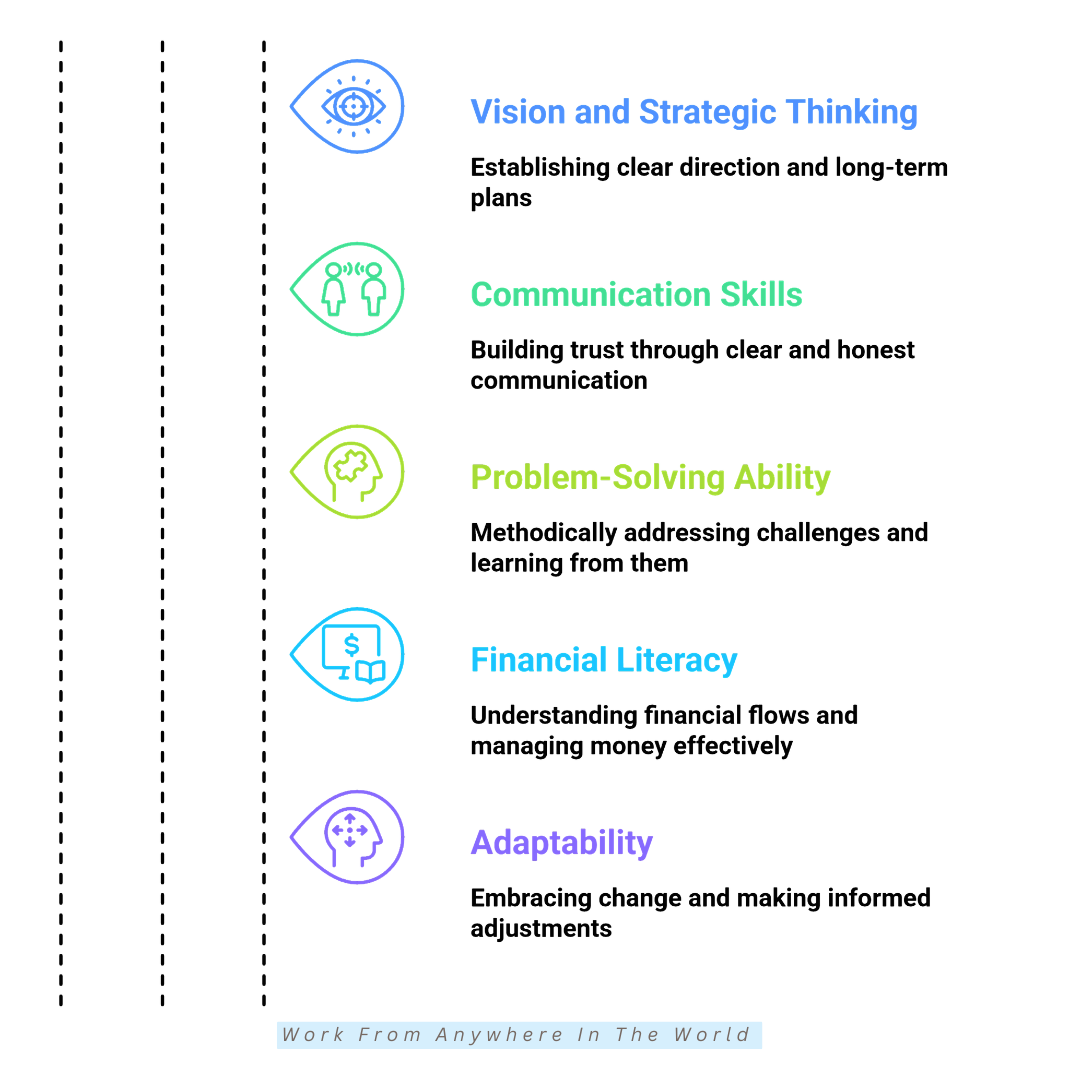
1. Vision And Strategic Thinking
Vision gives entrepreneurs a clear sense of where they want their business to go. Reviewing examples of SMART goals for businesses can help turn that broader vision into clear and manageable objectives.
Strategic thinking turns that broader vision into practical plans. Entrepreneurs can identify the steps, resources, and actions needed to move towards their business goals.
Business conditions do not always develop as expected. Reviewing a strategy regularly allows entrepreneurs to make adjustments while keeping their main objectives in sight.
A clear vision combined with thoughtful planning can help maintain focus and direction. It also makes it easier to evaluate opportunities and decide which ones support the broader business strategy.
2. Communication Skills That Build Trust
Strong communication helps entrepreneurs explain ideas clearly to customers, team members, partners, and investors. The goal is not to sound impressive but to make the message easy to understand.
Clear and straightforward language can prevent confusion and make conversations more productive. It also helps businesses communicate their goals, expectations, and values more consistently.
Listening is an equally important part of communication. Paying attention to questions, concerns, and feedback can provide useful information for making business decisions.
Good communication can support stronger professional relationships and encourage trust. It also makes collaboration easier when everyone understands their responsibilities and shared goals.
3. Problem-Solving Ability
Entrepreneurs regularly face challenges that require practical solutions. Strong problem-solving skills can help them examine a situation carefully before deciding how to respond.
The first solution is not always the best one. Looking at different options can help entrepreneurs understand the possible consequences before choosing a course of action.
Problem-solving also involves identifying the cause of an issue rather than focusing only on the immediate problem. This can help prevent similar difficulties from occurring again.
Challenges can also provide useful lessons for future decisions. Developing a thoughtful approach to problem-solving helps entrepreneurs respond to unexpected situations with greater confidence.
4. Financial Literacy
Financial literacy helps entrepreneurs understand the financial side of running a business. Knowing how income, expenses, profits, and cash flow work can support more informed decisions.
Entrepreneurs also need to understand where their money is going and whether the business can meet its financial obligations. Regularly reviewing financial information can help identify potential concerns.
Budgeting is another important part of financial management. A realistic budget can help entrepreneurs plan expenses, allocate resources, and prepare for changing business needs.
Entrepreneurs do not need to become financial experts. However, understanding basic concepts of financial management can help them communicate with professionals and make better business decisions.
5. Adaptability In Changing Markets
Markets, technology, and customer expectations can change, sometimes with little warning. Adaptability helps entrepreneurs respond to these changes without losing sight of their main business goals.
Being adaptable does not mean constantly changing direction. It involves recognizing when an adjustment is needed and considering how that change may affect the business.
New technologies and digital tools can also influence how businesses operate. Entrepreneurs who remain willing to learn can decide which developments are useful for their particular needs.
Adaptability can also help when strategies do not produce the expected results. Reviewing what happened and making thoughtful adjustments can turn challenges into useful learning experiences.
6. Leadership And Team Building
Leadership involves guiding people towards shared goals while providing clear direction and support. Entrepreneurs may work with employees, freelancers, partners, or other professionals as their businesses develop.
Building an effective team also requires choosing people with suitable skills and experience. Understanding individual strengths can make it easier to assign responsibilities and encourage collaboration.
Trust and communication are important parts of working together. Team members who understand their roles and expectations can contribute more confidently to shared projects and goals.
Strong leadership is not about controlling every decision or task. Providing guidance, listening to ideas, and recognizing contributions can help create a more supportive and productive working environment.
Developing strong leadership skills can also help entrepreneurs become more effective when guiding teams, managing responsibilities, and working with others.
7. Digital And Tech Awareness
Digital awareness helps entrepreneurs understand the tools that support modern business activities. Many businesses rely on technology for communication, marketing, organization, and everyday operations.
Online business tools can include social media platforms, automation systems, AI tools, analytics software, and other digital resources. Entrepreneurs do not need advanced technical skills to understand how these tools may support their business.
Technology can help simplify certain tasks and provide useful information for decision-making. The key is choosing tools that serve a clear purpose rather than adopting every new option available.
Digital tools and platforms continue to develop, so ongoing learning is valuable. Staying familiar with relevant changes can help entrepreneurs decide which technologies are worth incorporating into their business.
8. Customer Understanding
Understanding customers helps entrepreneurs make decisions based on what their audience needs and values. This includes learning about their preferences, challenges, expectations, and buying behaviour.
Customer feedback can provide useful insights into products, services, and the overall customer experience. Entrepreneurs can use this information to identify areas that may need improvement.
Customer understanding also supports more relevant marketing and communication. Conducting an audience analysis can help entrepreneurs better understand who they are trying to reach and what matters to them.
Customer needs can change as markets and circumstances develop. Staying connected with your audience can help you recognize these changes and adjust your approach when necessary.
9. Time Management And Prioritization
Entrepreneurs often manage several responsibilities at the same time. Time management can help organize these tasks and make busy workloads easier to handle.
Prioritization is equally important because not every task requires immediate attention. A time management matrix can help entrepreneurs organize tasks according to their urgency and importance.
Planning the day, setting realistic goals, and organizing tasks can create a more manageable routine. Breaking larger projects into smaller steps can also make them easier to complete.
Effective time management is not simply about working longer hours. Using available time thoughtfully can support productivity while leaving room for planning, learning, and other business responsibilities.
10. Creativity And Innovation
Creativity helps entrepreneurs approach business situations from different perspectives. It can influence areas such as marketing, product development, customer service, and problem-solving.
Being creative does not require artistic ability. It often means questioning familiar approaches, exploring alternatives, and considering different ways to address a business need.
Innovation involves developing new ideas or improving existing products, services, and processes. Even small changes can make a business more useful or relevant to its customers.
Creative thinking can also help entrepreneurs respond when familiar approaches are no longer effective. Combining creativity with practical decision-making can lead to solutions that suit changing business needs.

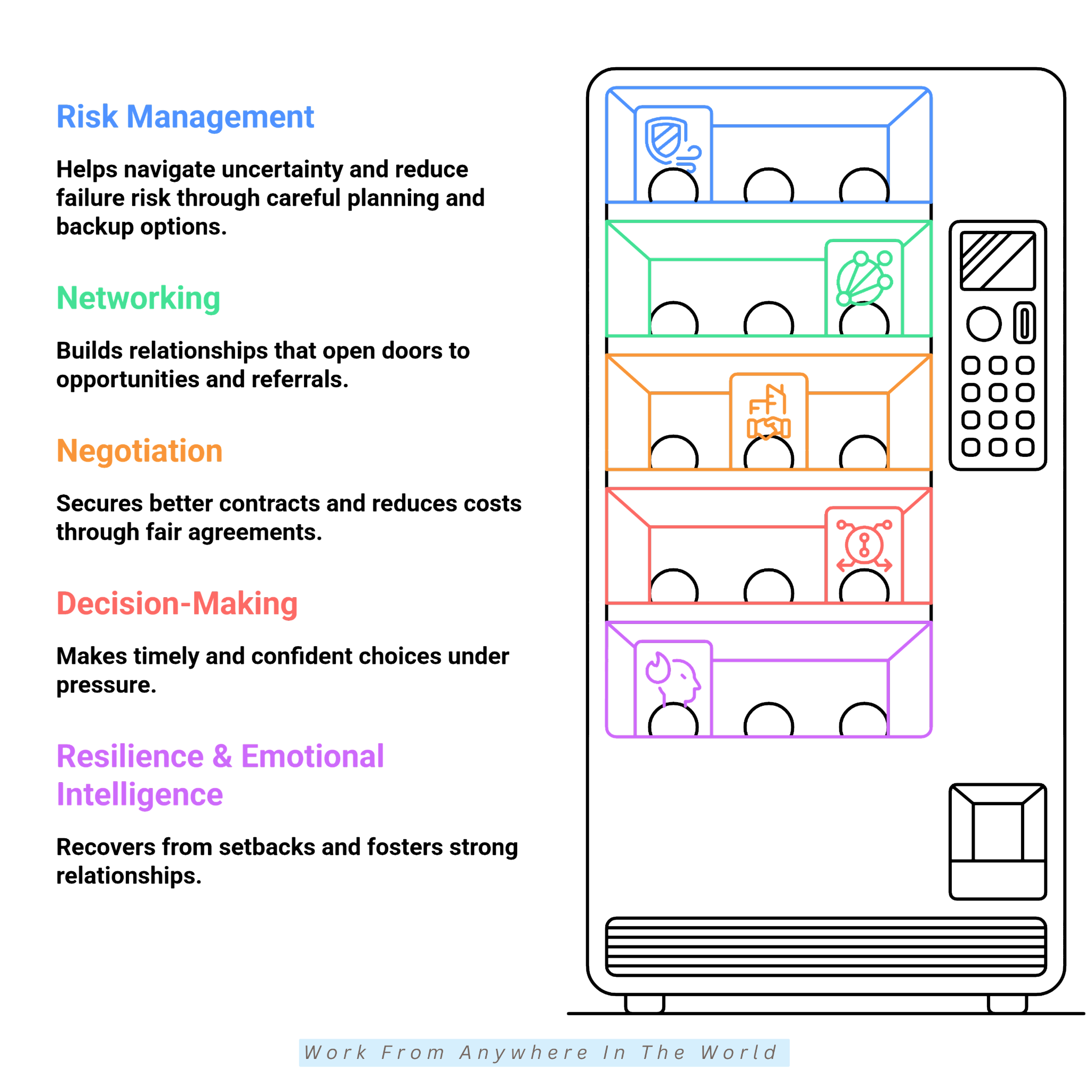
11. Risk Management
Every business involves some level of uncertainty. Risk management helps entrepreneurs identify potential problems and consider their options before making important decisions.
Managing risk does not mean avoiding every uncertain situation. Instead, entrepreneurs can evaluate possible outcomes and decide whether a particular opportunity is worth pursuing.
Testing ideas on a smaller scale can help limit unnecessary commitments. Maintaining financial flexibility and preparing alternative plans can also make unexpected situations easier to manage.
Understanding potential risks can support more informed business decisions. Entrepreneurs can then balance new opportunities with the resources, responsibilities, and challenges involved.
12. Networking And Relationship Building
Networking helps entrepreneurs build professional relationships with people inside and outside their industry. These connections may include customers, other business owners, mentors, partners, and potential collaborators.
Strong professional relationships are built through genuine communication rather than constant promotion. Taking an interest in others and maintaining contact can make networking more meaningful.
Networking can also provide opportunities to exchange ideas and learn from different experiences. Conversations with other professionals may introduce new perspectives, resources, or potential collaborations.
Building relationships takes time and consistent effort. Learning more about networking for beginners can provide practical ideas for starting conversations and developing professional connections.
A strong professional network can provide useful connections, knowledge, and support throughout different stages of entrepreneurship.
13. Negotiation Skills
Entrepreneurs regularly negotiate with clients, suppliers, partners, and other professionals. Strong negotiation skills can help them discuss terms clearly while considering the needs of everyone involved.
Successful negotiation is not simply about getting the best possible deal. The goal is often to reach an agreement that is reasonable and workable for both sides.
Preparation is an important part of the process. Understanding your priorities, listening carefully, and considering the other person’s position can make discussions more productive.
Negotiation skills can also support stronger professional relationships. Clear communication and fair agreements can provide a better foundation for future business interactions.
14. Decision-Making Under Pressure
Entrepreneurs sometimes need to make important decisions with limited time or incomplete information. In these situations, having a clear decision-making process can help maintain focus.
Gathering the available facts is a useful starting point. Entrepreneurs can then consider possible outcomes, identify potential risks, and determine which option best supports their priorities.
Not every decision will produce the expected outcome. Accepting some uncertainty can make it easier to move forward when waiting for complete information is not practical.
Experience can also provide useful lessons for future decisions. Reviewing previous choices helps entrepreneurs understand what worked, what did not, and what they might approach differently next time.
15. Resilience And Emotional Intelligence
Building a business can involve setbacks, uncertainty, and unexpected changes. Resilience helps entrepreneurs recover from difficult situations and continue working towards their goals.
Emotional intelligence involves recognizing and managing your own emotions while understanding those of others. This can be particularly useful when communicating with customers, employees, partners, and clients.
These skills can also help entrepreneurs approach disagreements and challenging conversations more thoughtfully. Understanding different perspectives can make it easier to communicate clearly and resolve problems.
Resilience and emotional intelligence complement each other when managing the demands of entrepreneurship. Together, they can support thoughtful leadership, stronger relationships, and a more balanced response to business challenges.
How To Develop Entrepreneurial Skills
Entrepreneurial skills can be developed through practice, experience, and continued learning. You do not need to strengthen every ability at the same time.
Start by identifying the areas that are most relevant to your current responsibilities. This can make skill development feel more focused and manageable.
Some skills improve through everyday business experience, while others may require additional learning. Courses, books, mentors, and practical projects can all provide useful opportunities to develop your abilities.
It can also help to review situations that did not go as planned. Understanding what happened can reveal skills or knowledge that may need more attention.
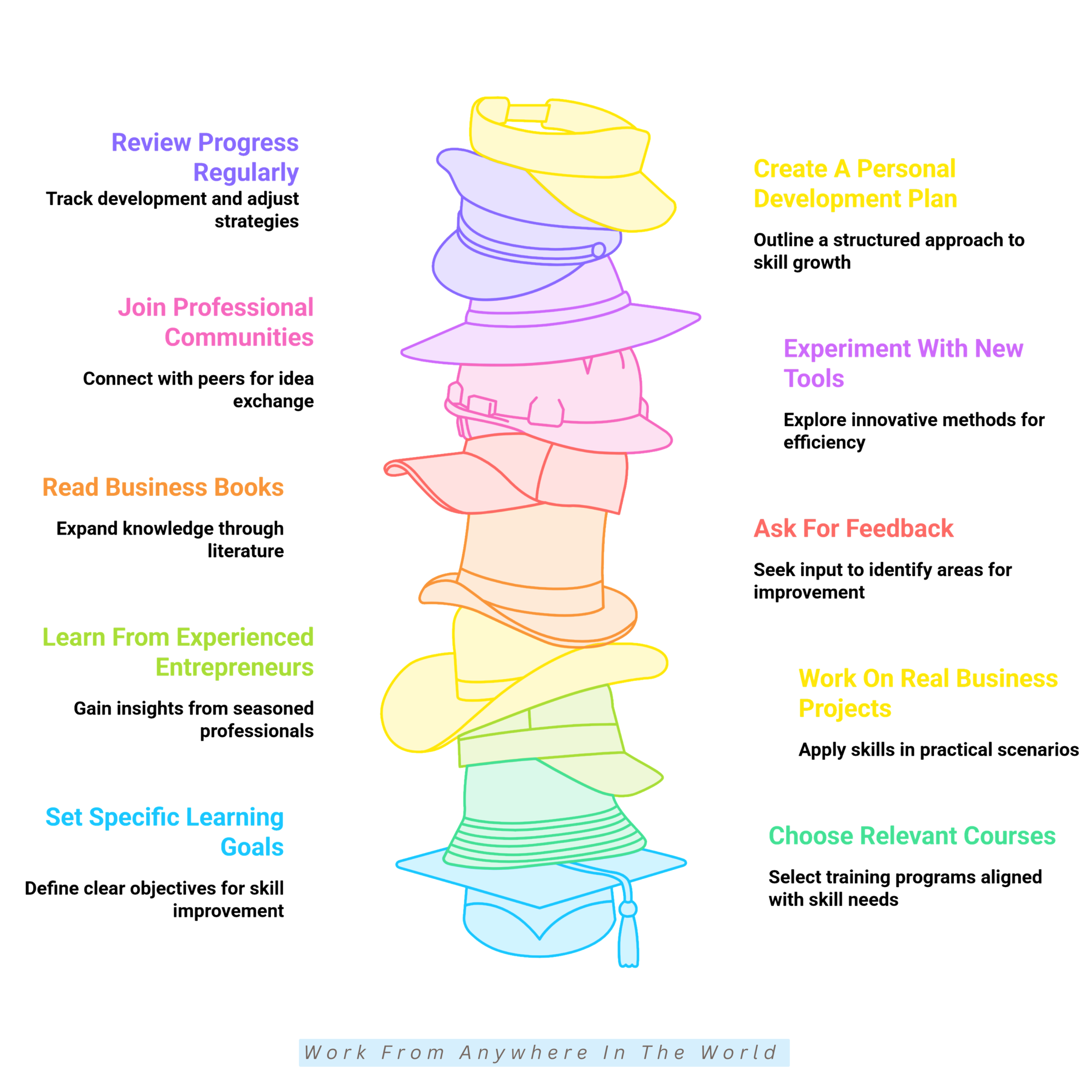
The following 10 practical ways to develop entrepreneurial skills can help you strengthen your abilities and apply what you learn to real business situations.
1. Set Specific Learning Goals
Start by thinking about which skills would be most useful to you right now. Trying to improve everything at once can make it difficult to know where to begin.
Look at the work you already do and notice where you feel less confident or need more knowledge. This could be financial management, communication, leadership, or something completely different.
Once you have chosen an area, give yourself a clear goal. Decide what you want to learn and find practical ways to use that knowledge in your everyday work.
Your priorities may change as your business develops. Check your learning goals occasionally and adjust them when another skill becomes more important.
2. Choose Relevant Courses And Workshops
Courses and workshops can help fill gaps in your knowledge without requiring you to figure everything out on your own. The key is choosing learning opportunities that match the skills you want to improve.
Look at the course content before signing up. Learning platforms such as Coursera offer business and entrepreneurship courses covering a wide range of skills and experience levels.
You do not need to enrol in every course that sounds interesting. Focusing on one useful topic at a time gives you a better chance to absorb what you learn and apply it.
After completing a course or workshop, try using some of the ideas in your own work. Practical application can help turn new information into skills you can continue building.
3. Learn From Experienced Entrepreneurs
Experienced entrepreneurs can offer perspectives that are difficult to gain from books or courses alone. They have often dealt with real situations that can provide useful lessons for others.
You do not necessarily need a formal mentor. Business events, professional groups, podcasts, interviews, and online communities can all provide opportunities to learn from other entrepreneurs.
Pay attention to how they approach decisions, challenges, and new opportunities. Rather than copying their methods, consider which ideas could be useful for your own business and circumstances.
When you have the opportunity to speak with someone directly, ask thoughtful questions and listen carefully. A useful conversation can sometimes introduce an idea or perspective you had not considered before.
4. Work On Real Business Projects
Practical experience gives you a chance to use entrepreneurial skills in real situations. Even a small project can teach you things that are difficult to learn through reading alone.
Choose a project that requires you to plan, make decisions, and solve problems along the way. Starting a freelance business can provide hands-on experience, but you could also launch a small campaign, improve a service, or organize a new business process.
Do not worry about making everything perfect the first time. Pay attention to what works, where you run into difficulties, and what you would change if you approached the project again.
Each project can help you become more comfortable applying what you have learned. It also gives you practical experience that can guide future business decisions.
5. Read Business Books And Case Studies
Books can introduce you to business ideas and experiences that you may not encounter in your everyday work. Choose topics that relate to the skills you are currently trying to strengthen.
Case studies offer a different kind of learning. They show how real businesses approached a challenge, made decisions, and responded to the results.
As you read, think about how the information relates to your own situation. You may find an idea worth adapting, a question worth exploring, or an approach you had not considered before.
You do not need to follow every strategy you come across. Take what is useful, consider whether it fits your circumstances, and use those lessons to develop your own approach.
6. Ask For Feedback
Feedback can help you notice strengths and weaknesses that are difficult to see on your own. The most useful feedback usually comes from people who understand your work or the goals you are trying to reach.
Ask specific questions instead of simply asking whether something is good or bad. You might ask what was clear, what could be improved, or whether another approach would work better.
Customers, colleagues, mentors, and other business owners can all offer different perspectives. You do not have to follow every suggestion, but listening carefully can reveal ideas worth considering.
Take some time to think about the feedback before deciding what to change. Learning how to evaluate and use helpful suggestions can become an important part of developing your entrepreneurial skills.
7. Join Professional Communities
Professional communities can connect you with people who share similar interests, goals, or business experiences. They can also provide opportunities to exchange ideas and learn from others.
Look for groups that relate to your industry, skills, or areas you want to explore. Online communities, local business groups, and professional organizations can all be useful places to start.
Take part in conversations instead of simply joining and observing. Asking questions, sharing experiences, and contributing useful information can make your involvement more meaningful.
The right community can introduce you to new ideas, resources, and professional connections. As your experience grows, you may even decide to build an online community where people can exchange knowledge and ideas.
8. Experiment With New Tools And Methods
Trying new tools and methods can help you discover different ways to handle everyday business tasks. Start with something that relates to a skill or process you already want to improve.
You might test a new planning method, marketing approach, automation tool, or way of organizing your work. Exploring different productivity tools can also help you find practical ways to manage tasks and work more efficiently.
Give yourself enough time to understand how something works before deciding whether to keep using it. A new tool may require some practice before its benefits become clear.
Not every option will suit your business, and that is fine. Exploring different approaches can help you learn what works best for your goals, responsibilities, and working style.
9. Review Your Progress Regularly
Taking time to review your progress can help you see how your skills are developing. It also gives you a chance to notice which areas have become easier and which ones you would still like to strengthen.
Look back at the goals you set and consider what you have learned since then. Think about situations where you used a new skill and how it helped you approach the task.
Progress does not always come from major achievements. Small improvements, such as learning how to connect with your audience or becoming more comfortable with a business tool, can also show that your skills are growing.
Use what you learn from these reviews to decide what to focus on next. You may want to continue developing the same skill or choose a new area that supports your current goals.
10. Create A Personal Development Plan
A personal development plan brings your learning goals together in one place. It can help you decide which skills to focus on and how you want to develop them.
Keep the plan practical and realistic. Choose a few priorities, decide what actions you will take, and give yourself enough time to practise what you learn.
Your plan might include courses, books, business projects, conversations with experienced entrepreneurs, or new tools you want to explore. Different learning methods can help you build skills in ways that suit you.
Review the plan occasionally as your experience and responsibilities change. Updating your priorities can help you continue learning while keeping your skill development relevant to your business goals.
Frequently Asked Questions
Q1: What Are The Most Important Entrepreneur Skills For Beginners?
Communication, problem-solving, financial awareness, and adaptability provide a useful starting point. These skills support many of the everyday responsibilities involved in starting and managing a business.
As experience grows, entrepreneurs can develop additional skills based on their goals and responsibilities. Leadership, networking, and strategic thinking may become increasingly relevant as the business develops.
Q2: Can Entrepreneurial Skills Be Learned?
Yes. Many entrepreneurial skills can be developed through practice, experience, education, and continued learning. Natural strengths may make certain abilities easier to develop, but they are not the only factor.
Practical experience can be particularly valuable because it provides opportunities to apply what you learn. Reviewing both successful and unsuccessful decisions can also help strengthen your skills.
Q3: How Long Does It Take To Develop Entrepreneurial Skills?
There is no standard timeline for developing entrepreneurial skills. The time required depends on the skill, your starting point, and how frequently you have opportunities to practise it.
Some abilities may become more comfortable relatively quickly, while others develop through years of experience. Continued learning and regular practice are more important than following a particular timeline.
Q4: Do Digital Skills Matter For Entrepreneurs?
Yes. Digital skills can help entrepreneurs use online platforms and tools for communication, marketing, research, organization, and other business activities.
You do not need advanced technical knowledge to benefit from these tools. Learning the platforms most relevant to your business can provide a practical starting point.
Q5: Which Entrepreneur Skills Help With Decision-Making?
Problem-solving, strategic thinking, financial literacy, and risk management can all support business decisions. Each skill helps entrepreneurs examine a situation from a different perspective.
Combining these abilities can make it easier to evaluate options and consider possible consequences. Experience can also improve your ability to make decisions when information is limited.
Q6: Why Are Communication Skills Important For Entrepreneurs?
Communication helps entrepreneurs explain ideas, expectations, and goals to customers, employees, partners, and other professionals. It also plays an important role in listening and understanding different perspectives.
Clear communication can support teamwork, negotiation, customer relationships, and networking. These abilities are useful across almost every area of running a business.
Conclusion
The top entrepreneur skills cover many different areas of running a business. Communication, problem-solving, financial awareness, adaptability, and leadership can all support everyday responsibilities and decisions.
These abilities are not fixed. Entrepreneurs can continue developing them through practical experience, education, observation, and regular practice.
You do not need to strengthen every skill at once. Identifying the areas most relevant to your current goals can provide a practical place to begin.
As your responsibilities change, different skills may become more important. Continuing to learn and adapt can help you approach new business challenges with greater knowledge and confidence.
I trust you enjoyed this article on the Top Entrepreneur Skills: 15 Essential Areas To Master. Please stay tuned for more insightful blogs on affiliate marketing, online business, and working from anywhere in the world.
Take care!
— JeannetteZ 🌍✨
💬 Your Opinion Is Important To Me
Do you have thoughts, ideas, or questions? I’d love to hear from you. Please leave your comments below or email me directly at Jeannette@WorkFromAnywhereInTheWorld.com.
📚 More Work From Anywhere Reads
🚀 Ready to Build a Business You Can Run from Home
Or from Anywhere in the World?
Imagine creating income on your terms — from home, a cozy café, or wherever life takes you.
With the right tools, training, and community support, it’s entirely possible.
Start your own online business for free — no credit card needed.
Disclosure
This post may contain affiliate links. As an Amazon Associate and participant in other affiliate programs, I earn from qualifying purchases at no extra cost to you. Please read my full affiliate disclosure.