
10 Best Office Paint Colours To Boost Productivity
Choosing the best office paint colours can influence how your workspace feels throughout the workday. Colour can help create an atmosphere that feels calm, comfortable, bright, or inviting.
A soft blue can create a more peaceful feeling, while a warm neutral may make the room feel more welcoming. Different shades can also change how spacious or bright an office appears.
Paint alone will not make you more productive, but the surrounding environment can affect how comfortable you feel while working. The goal is to choose a colour that complements both the room and the work you do.
Lighting, room size, furniture, and personal preference should all influence your decision. From soothing greens to bright whites and understated greys, there are plenty of options for creating a workspace that feels right.
How To Choose The Right Office Paint Colours
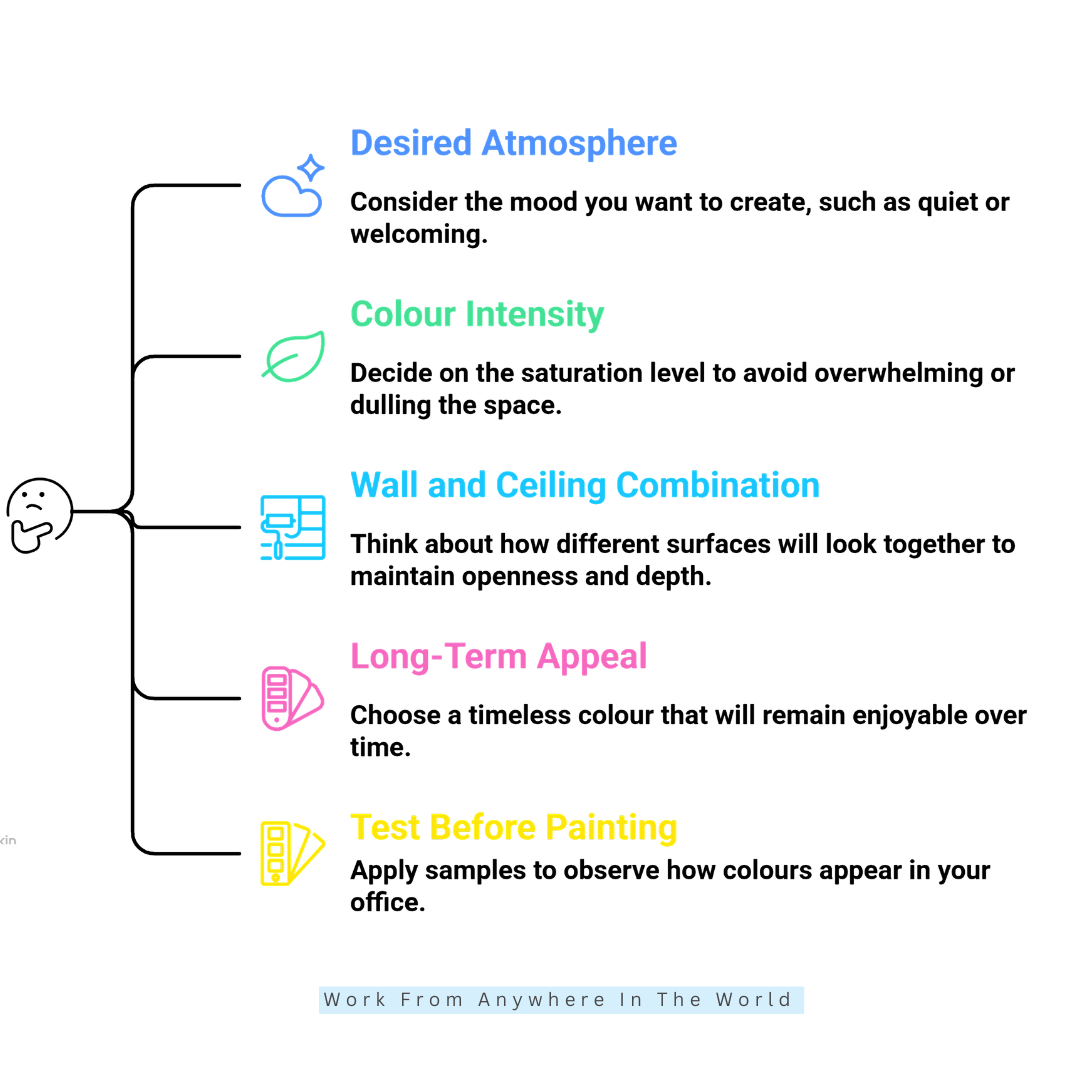
Choosing the right office paint colours involves more than simply selecting a shade you like. The colour should work well with the room, its lighting, and the atmosphere you want to create.
Natural and artificial light can change how a paint colour appears throughout the day. Room size, furniture, flooring, and existing décor can also influence how different shades look in the space.
The type of work you do is another important consideration. A quiet home office may benefit from a different colour scheme than a creative studio or shared workspace.
Practical details such as wall condition, finish, and colour combinations also deserve attention. Considering these factors before painting can help you create a comfortable, coordinated, and functional workspace.
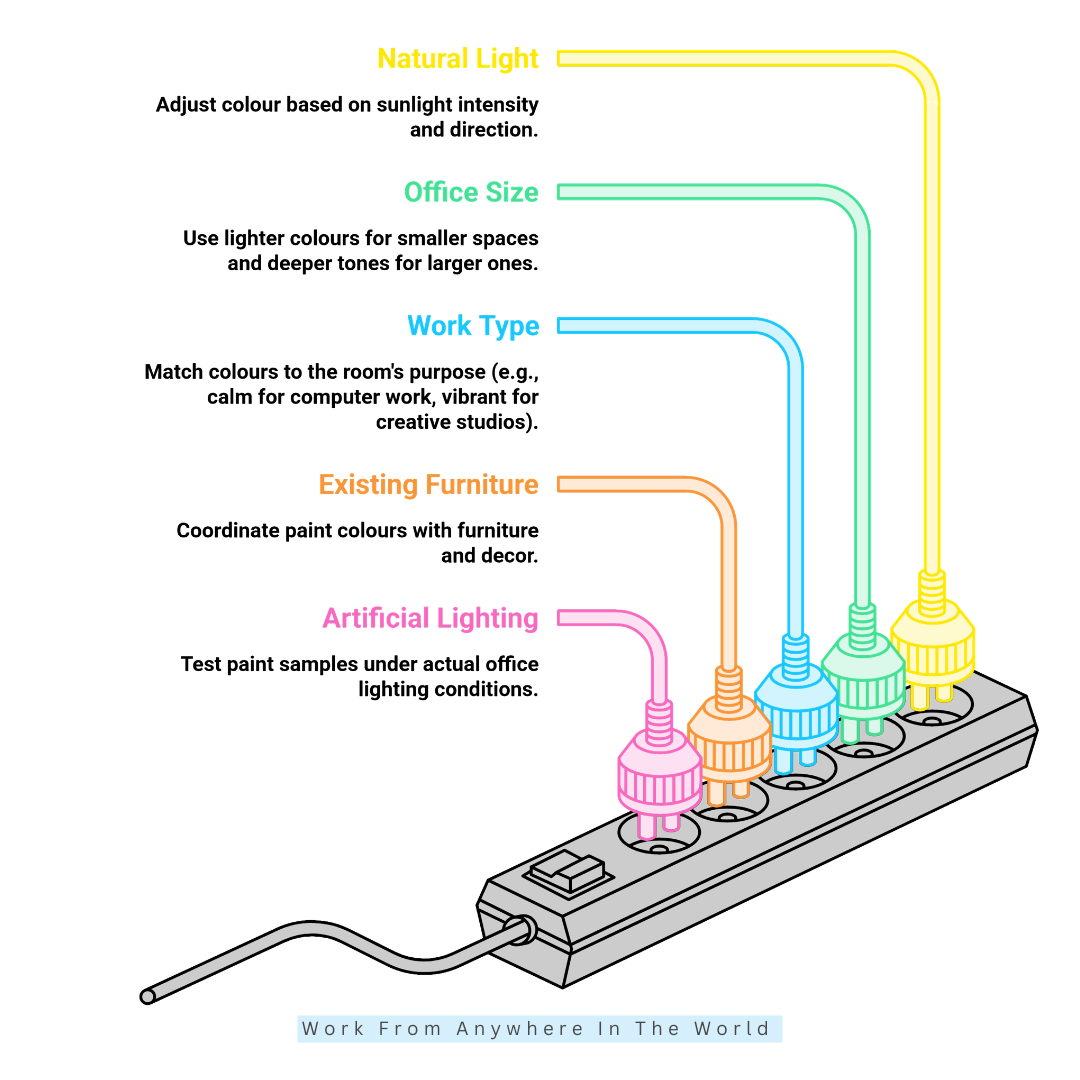
1. Amount Of Natural Light
Consider how much natural light enters the office throughout the day. A bright room can often accommodate deeper shades, while a darker space may benefit from lighter colours.
Morning and afternoon light can also affect how a paint colour appears on the walls. Observe the room at different times of day before deciding on a final shade.
Test paint samples on more than one wall and check them under changing light conditions. This can help you see how the colour will actually look in your office before painting the entire room.
2. Size Of The Office
Room size can influence how a colour feels once it covers the walls. Lighter shades can help smaller offices feel more open and airy, while larger rooms provide more flexibility with deeper tones.
Soft neutrals and pale colours can create visual breathing space in a compact office. They can also help reflect available light, particularly when the room has limited windows.
Larger offices can accommodate richer colours without feeling as enclosed. You can also use a deeper shade on an accent wall to add interest without applying it throughout the entire room.
3. Type Of Work
Consider the type of work you regularly do in the office. A space used for detailed computer work may feel more comfortable with calm, muted colours that create a less visually distracting background.
A creative studio can accommodate more personality through richer colours, accent walls, or contrasting shades. Meeting and collaborative areas may also work well with warmer tones that make the space feel welcoming.
Consider how you want the room to feel during a typical workday. Matching the colour scheme to the space’s purpose can create a more comfortable, cohesive working environment.
4. Existing Furniture
Your desk, chair, shelves, flooring, window coverings, and other office furniture already contribute colour to the office. Consider these elements before choosing a wall paint shade.
Warm wooden furniture can pair beautifully with beige, sage, greige, and other earthy shades. White, black, or grey furniture can work well with blue-grey, soft neutrals, and many cooler colours.
Pay attention to whether your furniture and flooring have warm or cool undertones. Choosing wall colours that complement those undertones can help the entire office feel more coordinated and intentional.
5. Artificial Lighting
Artificial lighting can noticeably change how paint colours appear in an office. Cool LED lighting may make some shades look bluer, while warmer bulbs can emphasize yellow, beige, or red undertones.
Consider the type and colour temperature of the lighting you use throughout the working day. Overhead lights, desk lamps, and task lighting can each affect how the same wall colour appears.
Test paint samples with your normal office lights switched on before making a final decision. Check them during the hours you usually work to see whether the colour remains comfortable and appealing.
6. Desired Atmosphere
Think about how you want the office space to feel when you enter. Soft blue and sage can create a quieter atmosphere, while warm beige and muted yellow can make the space feel more welcoming.
Consider the colour’s intensity as well as the colour itself. Muted shades and other calming elements, such as office plants, can help create a softer, more relaxing environment.
7. Colour Intensity
Colour intensity can influence how strongly a shade stands out in your office. A muted green, for example, can create a very different impression from a rich, highly saturated green.
Softer shades may be easier to live with in rooms where you spend many hours working. They can provide colour and personality without becoming the dominant feature of the space.
Stronger colours can still work beautifully when used selectively. Consider using them on an accent wall, built-in shelving, or smaller architectural details rather than throughout the entire office.
8. Wall And Ceiling Combination
Consider the walls, ceiling, doors, and trim as parts of the same colour scheme. Each surface can influence how the other colours appear and how coordinated the finished office feels.
A lighter ceiling can help maintain a sense of openness, particularly when the walls are painted a deeper shade. Using the same or a similar colour on the walls and ceiling can create a more unified appearance.
Trim and doors can provide subtle contrast or blend with the surrounding walls, depending on the effect you prefer. Test the colours together before painting to make sure the entire combination works well in the space.
9. Long-Term Appeal
An office is usually painted for more than a few months, so consider whether you will still enjoy the colour over time. Trend-driven shades may be appealing now but could feel less suitable as your preferences change.
Timeless neutrals and muted colours can provide a flexible background for different furniture and décor. You can then introduce changing colours through artwork, accessories, plants, and other elements that are easier to replace.
Personal preference should ultimately matter more than current decorating trends. Choose a colour you genuinely enjoy, and that will continue to work with your office as the space evolves.
10. Test Before Painting
Paint samples are worth the extra effort before committing to an entire room. Apply the colour to a large section of the wall, or use a large sample board you can move around the office.
Observe the sample at different times of day and under your normal artificial lighting. Check several walls because the same colour can look different depending on the direction and amount of light.
View the sample alongside your furniture, flooring, and window coverings before deciding. A colour that looks perfect in a store or online may appear quite different in your actual office.
10 Best Office Paint Colours
The best office paint colours can help create a workspace that feels comfortable, coordinated, and appropriate for the work you do. The right choice depends on the atmosphere you want and the room’s features.
Some colours create a soft, understated background, while others bring warmth, depth, or personality to the office. Lighter and darker variations can also produce very different effects within the same colour family.
Natural light, artificial lighting, furniture, flooring, and room size can all influence how a colour appears. This is why the same paint shade may look quite different from one office to another.
The following 10 colours provide options for a variety of office styles and working environments. Use them as inspiration, then test your preferred shades in the actual room before making your final choice.
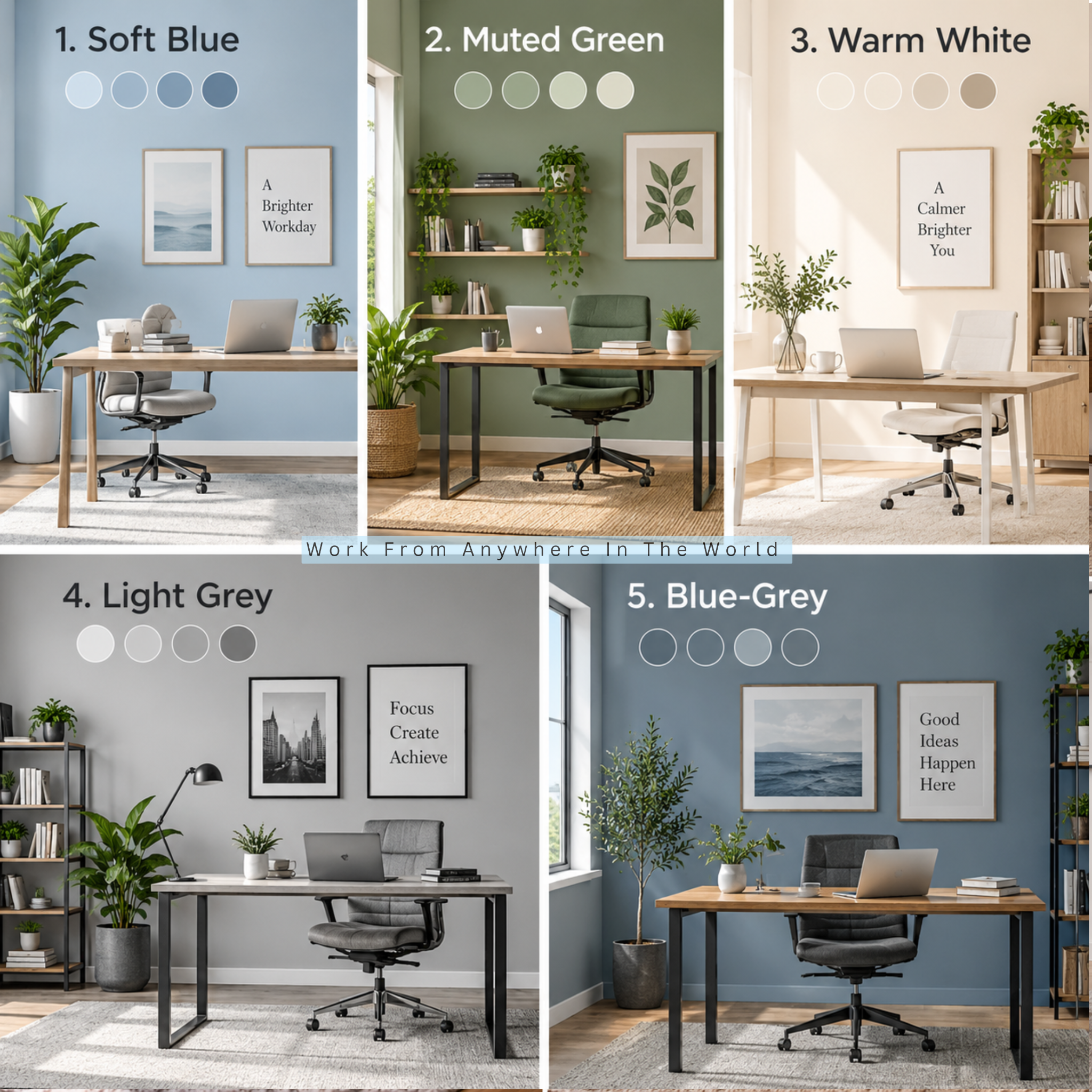
1. Soft Blue
Soft blue can add noticeable colour without dominating the room. Dusty blue, powder blue, pale sky blue, and blue-grey shades can all create a calm, understated background.
It works particularly well with white desks, light wood, grey furniture, and black accents. Soft blue can also complement offices used for reading, writing, planning, administrative tasks, and computer-based work.
Plenty of natural light can help pale blue feel fresh and open, while a very cool blue may feel colder in a darker room. A warmer or slightly greyed blue can provide a softer alternative when natural light is limited.
Best For
- Focused workspaces
- Study areas
- Reading and writing spaces
- Offices with light or neutral furniture
2. Muted Green
Muted green can bring a natural, understated feeling to an office without overwhelming the space. Sage, eucalyptus, soft olive, and grey-green provide noticeable colour while remaining relatively subtle.
These shades pair especially well with plants, natural wood, woven textures, and other nature-inspired elements. Muted green can also be a good alternative when you want more colour than white, beige, or grey provides.
Light levels can significantly affect how these shades appear on the wall. A pale sage may look soft and airy in a bright office but considerably deeper when the room receives less natural light.
Best For
- Nature-inspired offices
- Creative workspaces
- Reading areas
- Offices with plants or natural wood
3. Warm White
Warm white creates a bright backdrop without feeling as stark as some pure whites. Shades with subtle cream, ivory, or beige undertones can keep an office looking clean while adding a little warmth.
It can work particularly well in smaller offices where a light wall colour helps the space feel open and uncluttered. Warm white also provides a flexible background for colourful artwork, plants, dark shelving, and wooden furniture.
Strong daylight can make warm white appear particularly bright, while warm artificial lighting may bring out its creamier undertones. Test the shade under your normal lighting to make sure it creates the effect you want.
Best For
- Small offices
- Minimalist workspaces
- Shared offices
- Rooms with colourful furniture or artwork
4. Light Grey
Light grey provides more depth than white while remaining neutral enough for many office styles. It can create a polished background without making the walls the dominant feature of the room.
Pay attention to undertones because some greys lean blue or green, while warmer versions contain hints of beige. Warm grey can complement wooden furniture and flooring, while cooler grey often pairs well with white, glass, and metal.
Neutral grey walls provide a flexible background for artwork, plants, accessories, and furniture. Test a large paint sample beside these elements to see how the shade works with the rest of the room.
Best For
- Modern offices
- Minimalist interiors
- Meeting rooms
- Workspaces with colourful accents
5. Blue-Grey
Blue-grey combines the softness of blue with the understated character of grey. It can add more personality than a standard neutral without becoming a bold feature colour.
Natural daylight may make the blue tones more noticeable, while warm artificial lighting can make the colour appear softer and more neutral. Testing a sample throughout the day can help you see how much the shade changes.
Blue-grey works with both warm and cool materials, making it practical when you already have office furniture in place. Warm white trim and natural wood can provide contrast while keeping the overall colour scheme coordinated.
Best For
- Contemporary offices
- Focused workspaces
- Meeting rooms
- Offices with mixed warm and cool materials
6. Greige
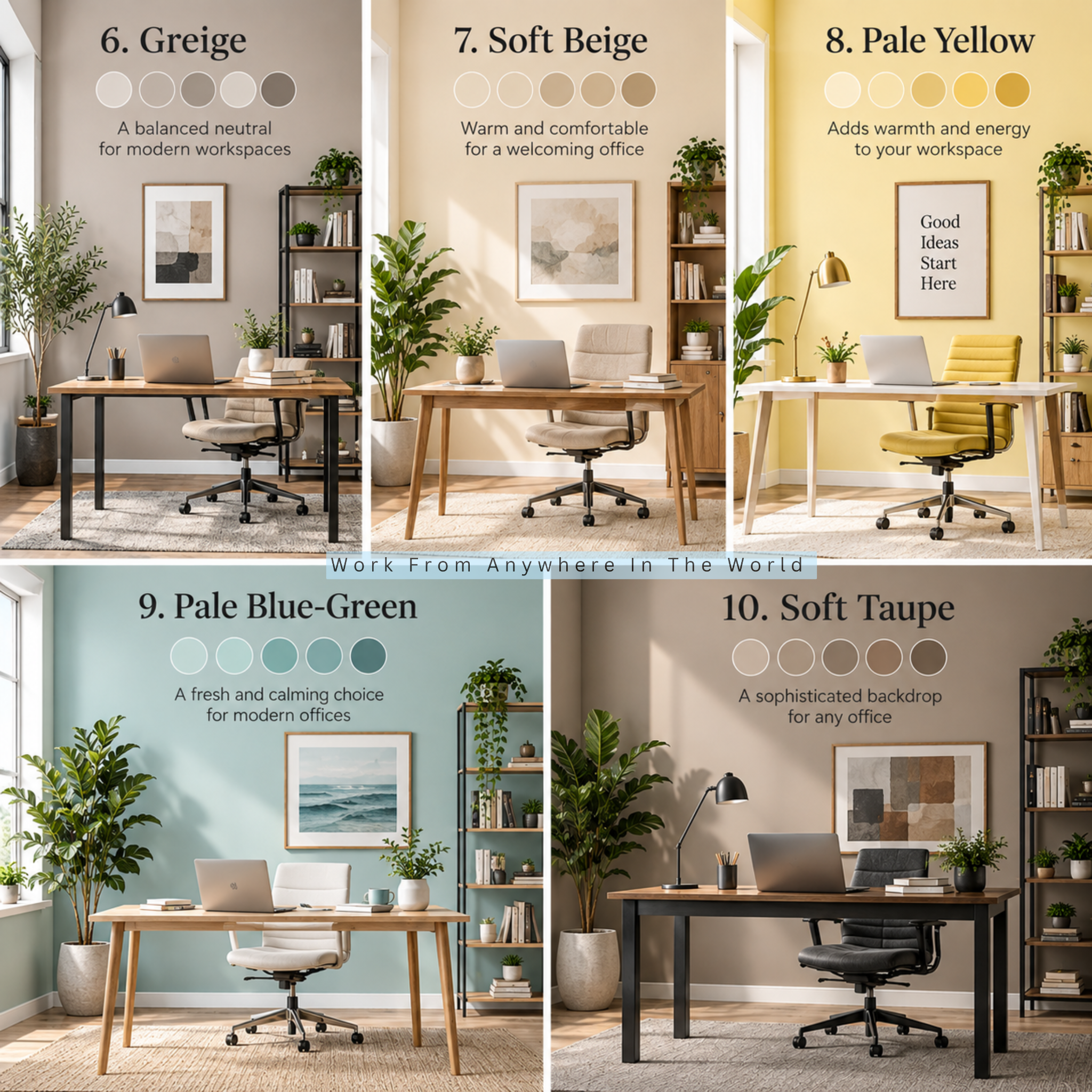
Greige sits between grey and beige, creating a neutral colour that can feel both modern and warm. It can be a good choice when grey feels too cool, but traditional beige feels too warm.
Greige can help bring together furniture and finishes from different colour families. Wood, black shelving, grey furniture, cream window coverings, and metal accents can all work against this adaptable background.
Pay attention to the undertone because some greiges lean warmer and almost mushroom-like, while others appear much closer to grey. Compare samples with your flooring and furniture to determine which variation works best in the room.
Best For
- Offices with mixed furniture finishes
- Modern professional spaces
- Consulting rooms
- Workspaces with warm and cool elements
7. Soft Beige
Soft beige can create a warm, comfortable office without the stronger yellow undertones associated with some traditional beige shades. Consider sand, oatmeal, mushroom, and warm stone as useful variations.
These shades pair particularly well with wooden furniture because they complement its natural warmth rather than compete with it. Soft beige can also make a home office feel more connected to the surrounding living space.
Warm natural light can make some beige shades appear more yellow, so testing samples is especially important. White trim, greenery, black accents, and natural textures can add contrast and prevent the room from feeling too uniform.
Best For
- Offices with wooden furniture
- Warm, inviting workspaces
- Reading and consulting areas
- Rooms with natural textures
Wealthy Affiliate – Mini Review
If you’ve ever thought about turning your blog, passion, or niche into an online business,
Wealthy Affiliate (WA) is one of the most beginner-friendly platforms I’ve used.
It combines step-by-step training, website hosting, AI-powered tools,
keyword research, and an active community all in one place.
What I like most is that you can start for free (no credit card needed), explore the platform,
test the tools, and connect with other entrepreneurs before upgrading.
WA isn’t a “get rich quick” scheme — success comes from consistent effort
and applying what you learn over time.
8. Pale Yellow
Pale yellow can bring warmth and personality to an office without becoming overpowering. Buttery yellow, pale ochre, soft straw, and muted golden shades provide gentler alternatives to bright yellow.
You do not need to use yellow on every wall to make it part of the colour scheme. A feature wall can add interest, while artwork, shelving, furniture, or accessories can introduce smaller touches of the colour.
Natural light can make yellow appear considerably stronger than it does on a paint card or in a store. Test your preferred shade in the room and observe it throughout the day before deciding how extensively to use it.
Best For
- Creative studios
- Warm, welcoming workspaces
- Feature walls
- Offices with neutral furniture
9. Pale Blue-Green
Pale blue-green is a good option when you want something more distinctive than traditional blue or green. Muted sea-glass, soft aqua, and washed-out teal can introduce noticeable colour without becoming overly bold.
These shades pair beautifully with white, pale wood, cream, and natural textures. They can give an office a fresh, contemporary appearance while remaining relatively understated.
Lighting can shift the balance between the blue and green undertones throughout the day. Daylight may emphasize one colour more strongly, while warm artificial lighting can make the shade appear softer and more subdued.
Best For
- Contemporary workspaces
- Creative offices
- Design studios
- Offices with pale wood and natural textures
10. Soft Taupe
Soft taupe can sit between beige, grey, and brown, creating a warm and sophisticated neutral background. It adds more depth than many lighter neutrals without becoming the room’s dominant feature.
Taupe pairs particularly well with darker furniture, natural wood, leather, and black metal. These materials can stand out against the warmer background while still feeling connected to the overall colour scheme.
Larger offices can accommodate deeper taupe shades, while smaller or darker rooms may benefit from lighter variations. Test the colour under your normal lighting to make sure it does not make the space feel smaller or darker than you want.
Best For
- Larger workspaces
- Offices with darker furniture
- Rooms with natural wood or leather
- Warm contemporary interiors
Frequently Asked Questions
Q1: What Colour Is Best For Concentration?
Soft, muted colours can provide a less visually distracting background for focused work. Soft blue, sage, blue-grey, and warm neutrals are popular choices for office spaces.
No single colour will improve concentration for everyone. Lighting, comfort, noise levels, and personal preference can also influence how comfortable you feel while working.
Q2: Is Blue A Good Colour For An Office?
Soft blue can create a calm, understated background without making the office feel colourless. It works particularly well with white, grey, light wood, and other neutral furnishings.
Consider the room’s lighting before choosing a shade. Warmer or slightly greyed blues may work better in offices with limited natural light than very cool blues.
Q3: What Colour Makes A Small Office Look Bigger?
Lighter colours such as warm white, pale blue, light grey, and light greige can help a small office feel brighter and more open. They can also reflect available light around the room.
Furniture placement and lighting can influence the overall effect as well. Keeping the colour scheme relatively coordinated can help prevent a compact workspace from feeling visually crowded.
Q4: Is White Too Boring For An Office?
Warm white can provide a versatile background that works with many different office styles. It also allows furniture, artwork, shelving, and other features to become more noticeable.
Colour can easily be introduced through plants, rugs, artwork, accessories, or an accent wall. This makes it possible to update the room without repainting the entire office.
Q5: Should An Office Have An Accent Wall?
An accent wall can introduce a stronger colour without using it throughout the entire office. It can also highlight a particular area or architectural feature within the room.
The wall behind a desk, shelving unit, or meeting area can be a natural location. Choose a colour that complements the remaining walls, furniture, and flooring rather than treating it separately.
Q6: How Can I Tell If An Office Paint Colour Will Look Good?
Test a paint sample in the actual office before making your final decision. Observe it at different times of day because changing natural light can noticeably affect its appearance.
Check the sample under your normal artificial lighting as well. Compare it with your flooring, furniture, window coverings, and other finishes before committing to the colour.
Conclusion
Choosing the best office paint colours starts with understanding your workspace and how you want it to look and feel. Natural light, artificial lighting, room size, furniture, and flooring can all influence which shades work well.
Soft blues and greens can provide gentle colour, while warm whites, greige, beige, and taupe offer versatile neutral backgrounds. Pale yellow and blue-green can introduce more personality when you want something beyond traditional neutrals.
Always test your preferred colours in the actual office before deciding. With thoughtful planning, you can create a comfortable, coordinated workspace that you will enjoy using every day.
I trust you enjoyed this article on the 10 Best Office Paint Colours To Boost Productivity. Please stay tuned for more insightful blogs on affiliate marketing, online business, and working from anywhere in the world.
Take care!
— JeannetteZ 🌍✨
💬 Your Opinion Is Important To Me
Do you have thoughts, ideas, or questions? I’d love to hear from you. Please leave your comments below or email me directly at Jeannette@WorkFromAnywhereInTheWorld.com.
📚 More Work From Anywhere Reads
🚀 Ready to Build a Business You Can Run from Home
Or from Anywhere in the World?
Imagine creating income on your terms — from home, a cozy café, or wherever life takes you.
With the right tools, training, and community support, it’s entirely possible.
Start your own online business for free — no credit card needed.
Disclosure
This post may contain affiliate links. As an Amazon Associate and participant in other affiliate programs, I earn from qualifying purchases at no extra cost to you. Please read my full affiliate disclosure.