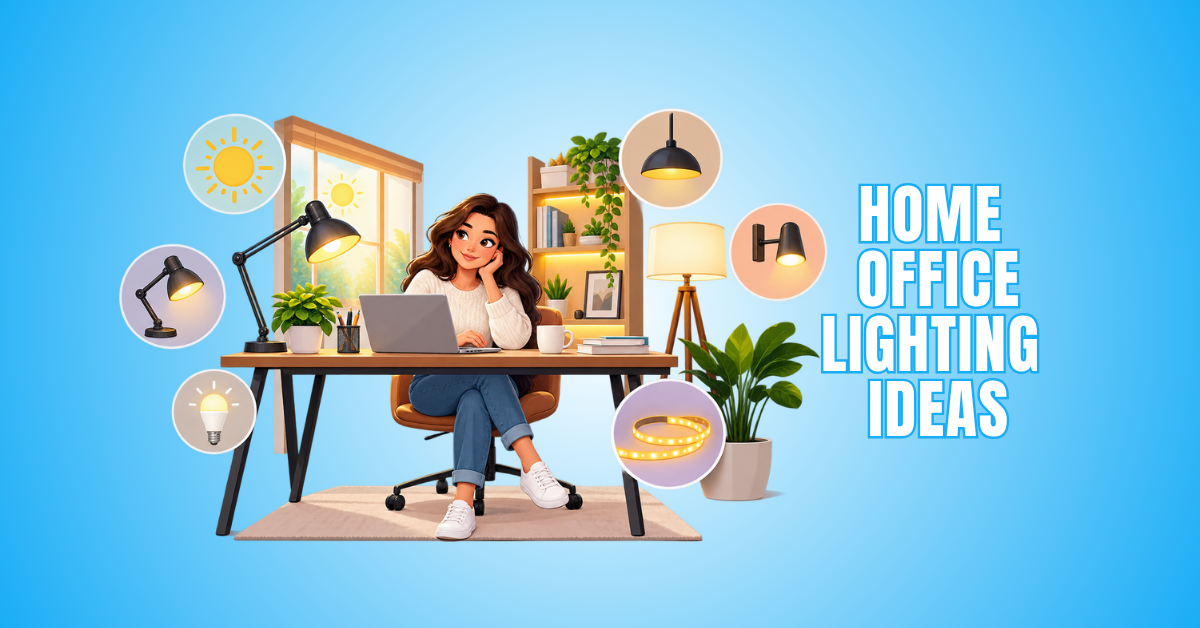
21 Home Office Lighting Ideas For A Brighter Workspace
The best home office lighting ideas combine practical illumination with a comfortable atmosphere. The right lighting can make your workspace more enjoyable and inviting.
A thoughtful mix of natural, task, ambient, and accent lighting can transform an office. Each type contributes to how the room looks, feels, and functions.
Every home office has different lighting needs. A dedicated room may accommodate several fixtures, while a compact corner or multipurpose space requires more creative solutions.
Natural daylight, adjustable desk lamps, wall-mounted fixtures, and layered lighting each serve different purposes. Decorative lighting adds warmth and personality, while focused task lighting provides clearer illumination where you need it most.
A successful setup considers room size, desk position, working habits, and personal style. Thoughtful placement can reduce glare, brighten darker areas, and create better visual balance.
In this guide, we’ll explore 21 home office lighting ideas for different spaces, needs, and styles. From natural daylight to modern and cozy designs, you’ll find practical inspiration for creating a brighter workspace you enjoy using.
Natural Home Office Lighting Ideas
Natural light can make a home office feel brighter, more open, and more connected to the outdoors. Windows provide changing illumination throughout the day without adding another fixture to the workspace.
The amount and direction of daylight vary according to the room, window placement, weather, and time of day. This makes desk positioning particularly important when natural light forms part of your office setup.
Curtains, blinds, and other window treatments provide additional control when sunlight becomes too intense. They let you soften direct rays while continuing to benefit from daylight.
Natural light works best as part of a broader home office lighting setup rather than as the only source of illumination. Combining it with task and ambient lighting keeps the workspace functional as conditions change.
1. Use A Window As A Natural Light Source
Natural daylight is one of the easiest ways to make a home office feel bright and inviting. Position your desk where you can benefit from the daylight without creating excessive glare on your computer screen.
Placing the window beside your desk is often practical because the light reaches your workspace from the side rather than directly behind the monitor. This provides useful illumination while limiting troublesome reflections.
Sheer curtains or adjustable blinds help control strong sunlight during brighter parts of the day. They soften incoming light without requiring you to block the window completely.
As daylight fades, supplement it with a desk lamp or floor lamp. Combining natural and artificial light creates a flexible workspace that adapts as lighting conditions change throughout the day.
2. Combine Natural And Artificial Light
Natural light can provide much of your office illumination during the day, but its intensity changes as the sun moves. Cloudy weather and shorter daylight hours can reduce it even further.
Position your desk near a window, then add a focused desk lamp for cloudy conditions, late afternoons, or darker working areas. This provides dependable task lighting when daylight alone is insufficient.
As natural light decreases, ambient and accent lighting can gradually become more important. Using several types of home office lighting prevents the room from suddenly feeling dark when the sun goes down.
Instead of depending on a single light source, create a layered setup that adapts throughout the day. This provides more consistent illumination from your first working hours through the evening.
3. Control Direct Sunlight With Curtains Or Blinds
Natural light is valuable, but intense sunlight can create uncomfortable brightness and reflections on computer screens. Curtains, blinds, and adjustable shades let you control how much daylight enters the room.
Sheer curtains diffuse strong sunlight while maintaining much of the room’s natural brightness. Adjustable blinds provide more precise control when direct sunlight reaches your desk or monitor.
The goal is not to eliminate natural light but to manage it as conditions change throughout the day. Small adjustments to window coverings can make a noticeable difference without darkening the entire office.
Once intense daylight is softened, desk lamps and ambient lighting can provide more balanced illumination across the workspace. This creates a smoother transition between natural and artificial light.

Home Office Desk Lighting Ideas
Desk lighting provides focused illumination exactly where many home-office tasks take place. It can supplement overhead or natural light without requiring the entire room to be brighter.
The right desk lamp depends on how you use your working surface. Reading, writing, computer work, and creative projects each place slightly different demands on the lighting.
Adjustability is particularly valuable when one desk serves several purposes. A movable arm or lamp head lets you redirect the light instead of rearranging your workspace whenever your activity changes.
Placement matters just as much as the lamp itself. A well-positioned desk light illuminates the working area while limiting shadows, screen reflections, and unnecessary clutter.
1. Keep The Desk Lamp Simple
A simple desk lamp provides focused illumination without overwhelming your workspace. Choose a design that complements your desk, chair, and overall office style while leaving enough room for everyday work.
An adjustable lamp lets you direct light toward notebooks, documents, or your keyboard when needed. Slim metal designs suit minimalist offices, while rounded or fabric-shaded lamps create a softer appearance.
Position the lamp where it illuminates your work without reflecting directly onto your monitor. This becomes particularly important when you spend several hours working at a computer.
Keeping the design simple can help your desk remain organized when you already have a laptop, monitor, stationery, and other essentials. The lamp should support the workspace rather than dominate it.
2. Choose An Adjustable-Arm Desk Lamp
An adjustable-arm desk lamp is particularly practical when your workstation serves several purposes. Move it closer for reading, direct it toward a notebook for writing, or reposition it for computer work.
This flexibility allows one lamp to support several activities without requiring multiple fixtures. Look for a stable base and an arm that remains securely in position after you adjust it.
Consider the lamp’s reach and footprint. It should illuminate the areas you use regularly without interfering with your keyboard, monitor, or other equipment.
For more help comparing features and different lamp styles, our guide to the best home office lighting explores a range of options for different workspaces and needs.
3. Position Your Desk Lamp Correctly
Desk-lamp position affects both visibility and how comfortably the light fits your workspace. Place the lamp where it illuminates the desk without creating distracting reflections on your monitor.
If you write frequently, position the lamp opposite your writing hand to reduce shadows across the page. For computer work, place it slightly to the side to keep direct light away from the screen.
An adjustable lamp makes repositioning easier when you switch between activities. You can change the direction or angle instead of moving the entire fixture around your desk.
Good placement keeps the light useful without making the lamp an obstacle. It should work naturally with your monitor, keyboard, documents, and other frequently used equipment.
Small Home Office Lighting Ideas
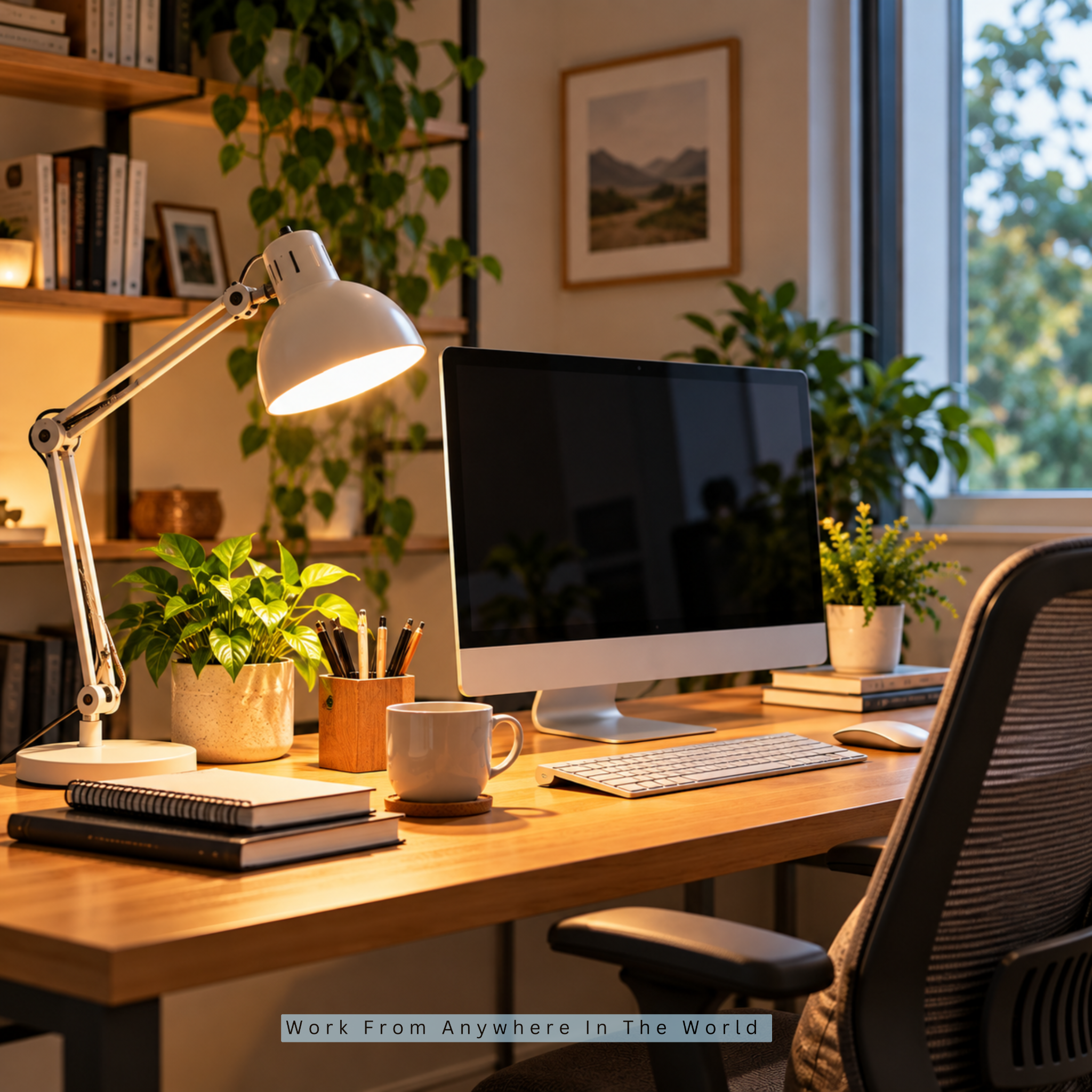
Small home offices benefit from lighting that provides useful illumination without consuming valuable working space. Choosing fixtures with a compact footprint keeps desks and floors more open and organized.
Wall-mounted, slim, and concealed lighting solutions are particularly practical in tighter spaces. They add light where needed without competing with furniture, storage, or computer equipment.
Placement becomes especially important when several functions share a small area. Lighting positioned above, beside, or behind the workstation can make better use of otherwise unused space.
The following small home office lighting ideas combine practical illumination with space-conscious design. Each provides a different way to brighten a compact workspace without making it feel crowded.
1. Use Slim Floor Lamps
A slim floor lamp provides additional illumination without taking up valuable desk space. Place one beside your workstation, behind your chair, or in an unused corner where it will not interfere with movement.
A tall fixture can draw the eye upward and emphasize the vertical space in a compact office. Choose a streamlined design that complements your furniture without visually overwhelming the room.
Modern metal lamps work particularly well with contemporary offices, while fabric or natural-material shades create a softer appearance. The style can reinforce the overall character of the workspace.
Floor lamps are especially useful when you want another layer of light without adding objects to an already crowded desk. They can provide ambient or directed illumination depending on the fixture you choose.
2. Install Wall-Mounted Lighting
Wall-mounted lighting is an effective solution when floor and desk space are limited. An adjustable wall sconce beside or above the workstation provides illumination while keeping the working surface clear.
This arrangement works particularly well with floating desks, narrow workstations, and other creative small home office ideas. Using the wall for lighting leaves more usable space for your computer and everyday work essentials.
Choose a fixture that complements the wall colour, furniture, and overall office design. An adjustable model provides additional flexibility when you need to redirect the light.
Wall-mounted lighting can also become part of the room’s décor. A carefully chosen fixture combines practical illumination with a clean, intentional look without taking up valuable floor space.
3. Try Hidden LED Lighting
Hidden LED lighting adds atmosphere without filling a small office with visible fixtures. LED strips can be positioned behind shelves, cabinets, monitors, or along the back edge of a desk.
The light reflects against nearby surfaces to create a subtle glow while keeping the source largely concealed. This works particularly well in minimalist offices where visual clutter is kept to a minimum.
Hidden lighting can highlight shelving, decorative objects, or architectural details without taking up desk or floor space. It also adds depth and visual interest to a compact room.
Use concealed LEDs as accent lighting rather than the primary light source. Pair them with practical task lighting to keep the workspace functional while adding another layer of light.
Modern Home Office Lighting Ideas
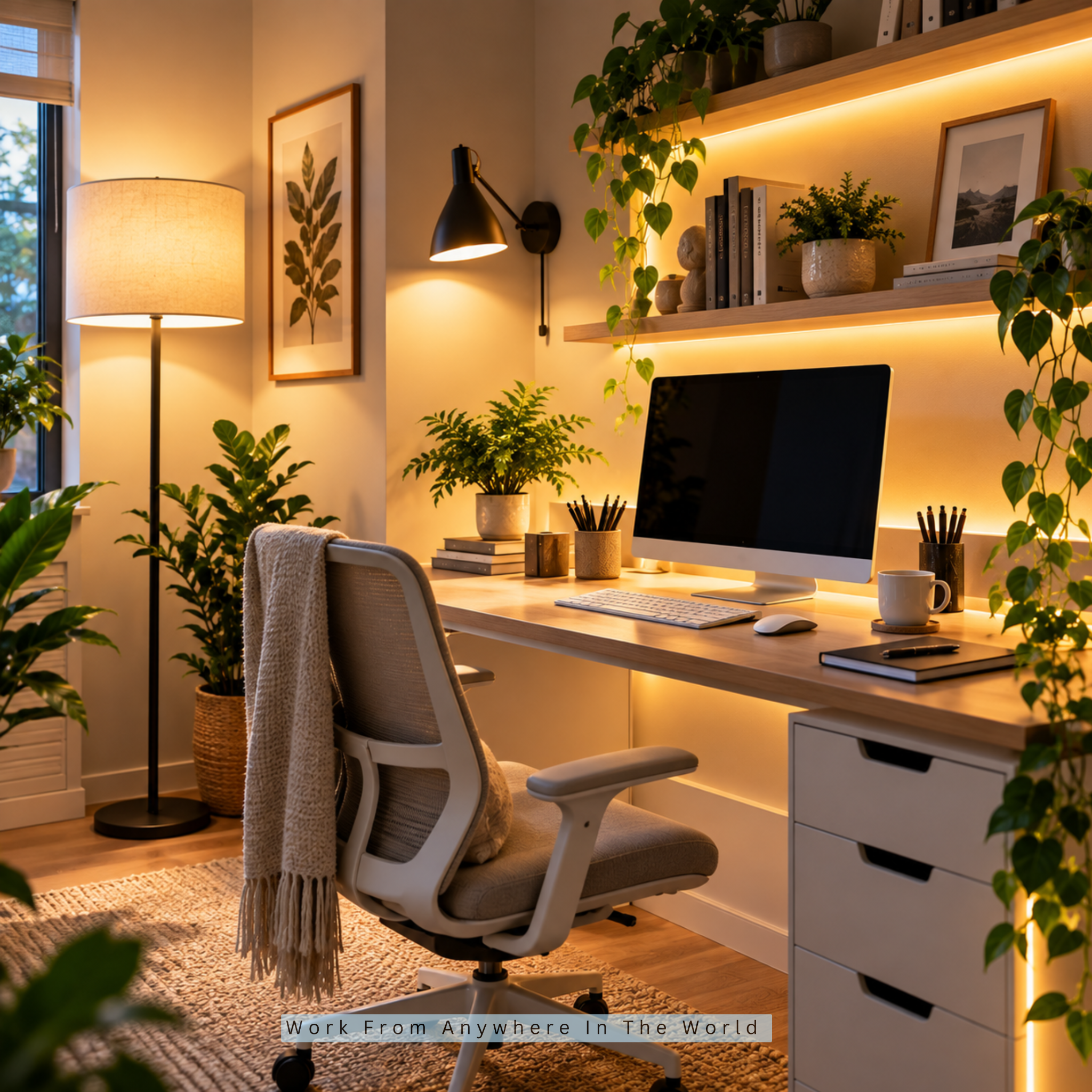
Modern home office lighting combines practical illumination with clean, intentional design. The fixtures themselves often become part of the room’s appearance rather than simply providing light.
Simple lines, concealed LEDs, statement pendants, and coordinated finishes all work well in contemporary spaces. The key is choosing lighting that complements the furniture and technology already in the room.
Modern lighting does not have to mean cold or overly technical. Warm illumination, natural materials, and carefully positioned accent lights can soften a streamlined office while maintaining its contemporary character.
A few thoughtfully chosen fixtures usually create a stronger result than filling the room with competing light sources. The following ideas combine modern style with practical illumination for everyday work.
1. Add A Modern Monitor Glow
A soft glow behind your monitor can give a basic workstation a more polished, contemporary appearance. An LED strip along the back of the display directs light toward the wall rather than toward your eyes.
The reflected light creates depth around the monitor and makes the workstation feel more visually complete. This approach works particularly well with minimalist desks and technology-focused workspaces.
Keep the illumination subtle so it complements the room rather than dominating it. Excessively bright or colourful backlighting can quickly become distracting during everyday computer work.
You can coordinate monitor backlighting with LEDs underneath shelves or along the rear edge of your desk. Repeating the lighting in a few carefully chosen locations creates a more consistent modern look.
2. Make A Pendant Light The Focal Point
A pendant light combines practical illumination with a strong decorative element. In an office with sufficient ceiling height, position one above or slightly behind the workstation.
A distinctive pendant can become the visual focal point while contributing to the room’s general illumination. Choose the size carefully so the fixture remains proportionate to the office and surrounding furniture.
Geometric, minimalist, woven, and natural-material designs all create different effects. The best choice depends on the colours, textures, and overall style already established in your workspace.
When the pendant provides broad illumination, pair it with a desk lamp for focused activities such as reading and writing. This creates layered lighting rather than asking one fixture to do everything.
3. Try A Monochrome Lighting Setup
A monochrome office can look sophisticated when you incorporate lighting into the overall design. Black, white, grey, and neutral furniture provide a simple foundation for streamlined lighting fixtures.
Pair a minimal desk lamp with a simple ceiling fixture and gentle backlighting behind your monitor or shelving. Keeping fixture styles coordinated reinforces the room’s clean appearance.
Because the colour palette is restrained, differences in brightness and direction create noticeable contrast and depth. Lighting prevents an otherwise monochrome workspace from appearing visually flat.
Avoid filling the room with competing fixtures. A few carefully positioned light sources that complement the furniture’s clean lines create a more cohesive modern workspace.
Cozy Home Office Lighting Ideas
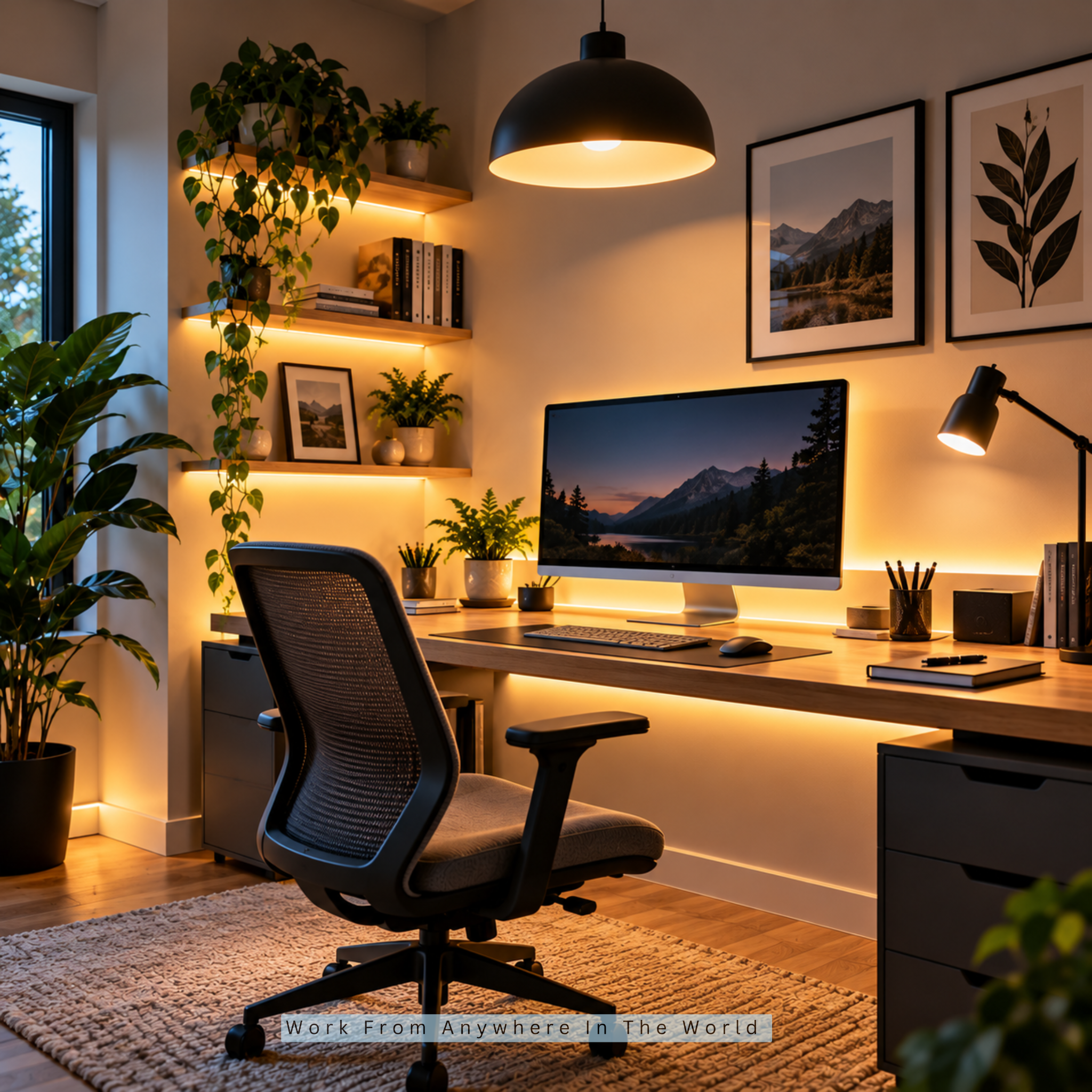
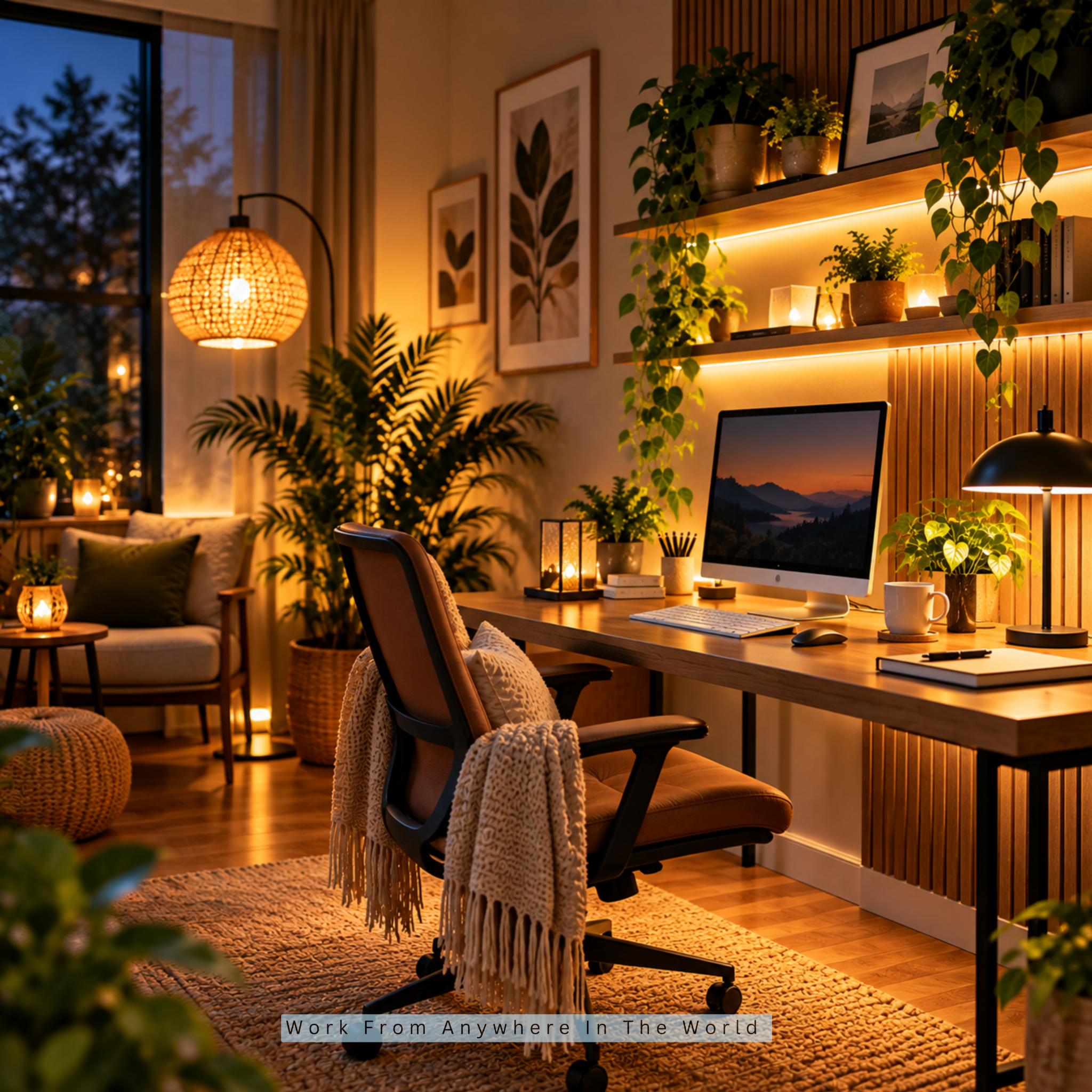
Cozy home office lighting creates a workspace that feels comfortable and inviting without sacrificing practical illumination. Warm ambient light, natural materials, and softer fixtures can change the atmosphere considerably.
The goal isn’t to dim the entire office. Focused task lighting can keep your desk properly lit while warmer light softens the surrounding space.
Materials play an important role as well. Wood, woven textures, plants, and neutral furnishings work naturally with warm illumination and help the office feel connected to the rest of the home.
This approach works particularly well when you use your office during the evening. Layering practical and decorative lighting allows the room to remain functional while creating a more relaxed atmosphere.
1. Add Warm Ambient Lighting
Warm lighting can make a home office feel more comfortable, particularly during the evening. A warm-toned table lamp, floor lamp, or decorative fixture complements wooden furniture, plants, neutral walls, and soft accessories.
Rather than making every light source warm and bright, use warmer illumination primarily for ambient or accent lighting. Your task light can remain focused on the desk where clearer illumination is needed.
This combination provides practical lighting without making the workspace feel overly clinical. Different layers of light also allow you to adjust the atmosphere as daylight conditions change.
Warm ambient lighting works particularly well in offices designed to feel like a comfortable extension of the living space. The result can be welcoming while remaining suitable for everyday work.
2. Combine Wood With Warm Lighting
Wooden desks, shelves, and accessories pair naturally with warm illumination. A warm desk lamp can emphasize the texture of a wooden workstation without requiring additional decorative elements.
Woven pendants and fabric-shaded floor lamps introduce another layer of texture. Plants and neutral-coloured accessories reinforce the workspace’s relaxed, natural look.
The goal is to create harmony between the lighting and materials rather than adding fixtures that feel disconnected from the room. Repeating similar tones and textures helps create a more cohesive design.
Practical task lighting can still provide focused illumination where you work. Warmer decorative lights then create a softer atmosphere throughout the surrounding office.
3. Create A Soft Evening Glow
Your home office does not need to look the same in the evening as it does during daylight hours. As natural light fades, softer artificial lighting can gradually take a more prominent role.
A desk lamp provides focused illumination while a floor lamp, wall sconce, or small accent fixture creates a gentle surrounding glow. Using several sources prevents one bright fixture from dominating the room.
Decorative LEDs provide another option for adding subtle evening illumination. Explore these creative LED light decorating ideas for additional ways to use accent lighting throughout your home.
This layered approach lets the office transition naturally from a daytime workspace into a comfortable evening environment. You still have enough illumination for reading, planning, or lighter work without relying entirely on strong general lighting.
Home Office Wall And Ceiling Lighting Ideas
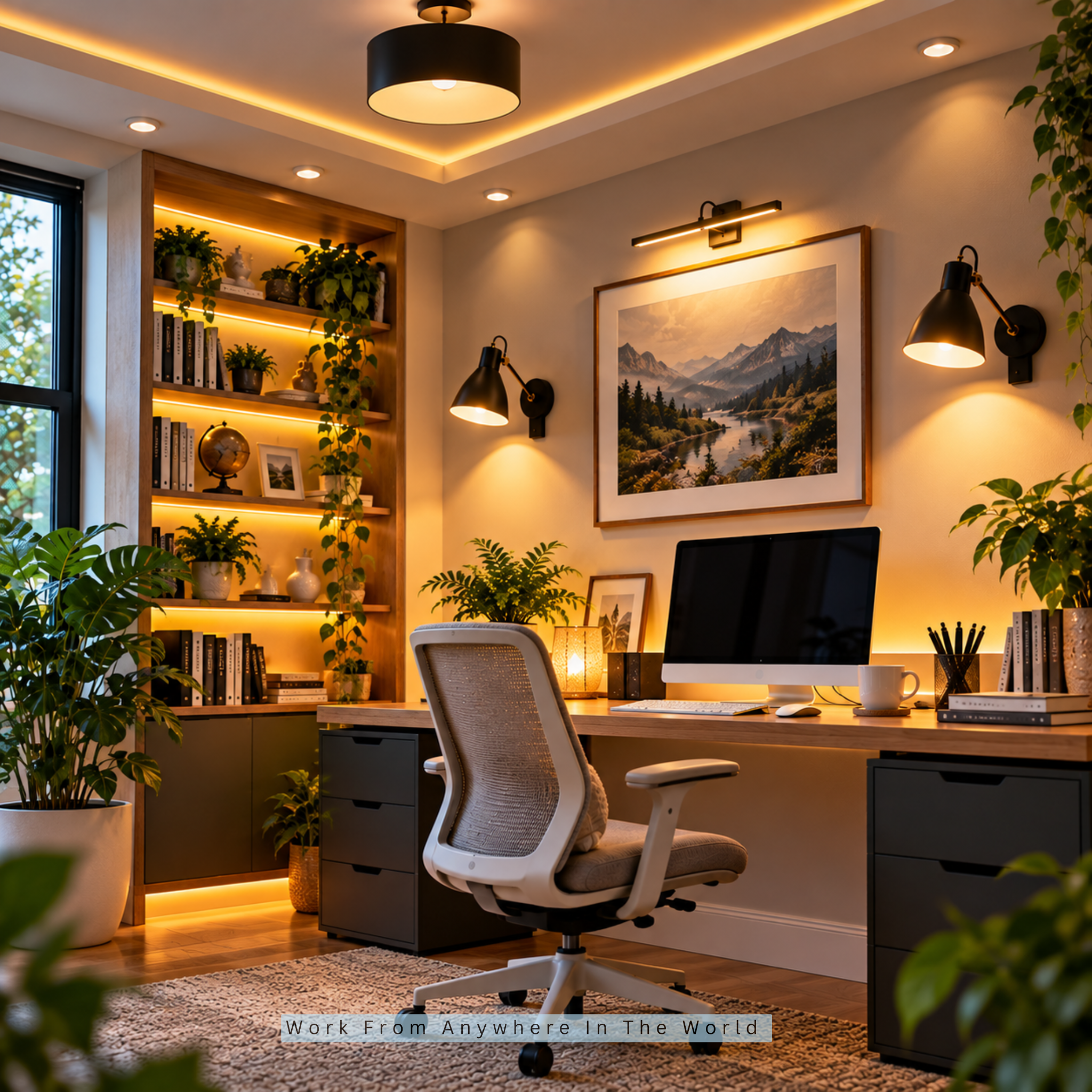
Wall and ceiling lighting can illuminate a home office without occupying valuable desk or floor space. These fixtures are particularly useful when you want to keep the working area open and uncluttered.
Ceiling fixtures generally provide broader illumination, while wall-mounted lights can serve as task or accent lighting. Using both creates different layers without requiring several freestanding lamps.
Walls also provide opportunities to highlight bookshelves, artwork, and other features that give the office personality. Carefully positioned lighting adds visual depth while keeping work areas properly lit.
The best arrangement depends on the room’s size, layout, and existing light sources. Choose fixtures that complement the workspace rather than competing with the desk, furniture, and décor.
1. Use Adjustable Wall Sconces
Adjustable wall sconces provide focused lighting without sacrificing valuable desk space. Install one beside or above the workstation and direct the light toward your work area.
This setup is particularly useful for floating desks and compact offices. Using the wall for lighting leaves more room for your computer, documents, and other everyday essentials.
Choose an adjustable model when you regularly switch between computer work, writing, and reading. Adjusting the light direction lets one fixture support several activities.
Wall sconces can contribute to the overall design. A shape, material, or finish that complements your furniture helps the fixture feel like an intentional part of the office.
2. Illuminate Your Bookshelves
Bookshelves provide excellent opportunities for decorative accent lighting. Small lights underneath shelves can illuminate books, plants, photographs, and decorative objects while adding depth to the room.
A compact lamp placed directly on a shelf creates a softer effect. Shelf lighting works particularly well when the bookcase forms part of the background behind your desk or video-call area.
Keep the illumination subtle so it does not compete with your task lighting. The goal is to highlight selected areas rather than turn the entire bookcase into another major light source.
Combining books, plants, artwork, and gentle lighting makes a simple office feel more personalized. It is an easy way to introduce visual interest without making major changes to the room.
3. Highlight Wall Art
Artwork, photographs, certificates, and decorative prints can become focal points with dedicated lighting. A small directional fixture draws attention to a selected piece without brightening the entire room.
This technique works particularly well when the rest of the office has a simple or minimalist design. Adjustable accent lighting gives you control over exactly where the illumination falls.
For artwork behind glass, position the light carefully to limit distracting reflections. You may need to adjust the fixture angle until the artwork is illuminated without noticeable glare.
A gentle wash of light adds visual depth while giving the workspace a more finished appearance. It can add personality to an otherwise practical wall without cluttering the desk.
Common Home Office Lighting Mistakes To Avoid
Even attractive lighting fixtures can create problems when they are poorly positioned or used for the wrong purpose. A successful setup depends on how the different light sources work together throughout the room.
Common problems include relying on one overhead fixture, creating screen glare, and making the workspace unnecessarily bright. These issues often come from placement rather than the lights themselves.
The size of the office matters as well. A lighting arrangement that works in a large dedicated room may overwhelm a compact desk or small working corner.
Review your lighting from both your desk and the surrounding room. A few simple adjustments can create better balance without requiring you to replace every fixture.
1. Relying On Only One Light Source
Using a single ceiling light for the entire office can create unwanted shadows and leave some areas poorly lit. It also gives you little flexibility when your lighting needs change throughout the day.
Instead, combine ambient, task, and accent lighting. A desk lamp can light your workspace, while a floor lamp or wall light brightens darker parts of the room.
Different light sources do not need to be switched on simultaneously. Using them selectively lets you adapt the room for computer work, reading, video calls, or evening tasks.
A layered approach distributes illumination more evenly throughout the office. It also prevents one fixture from having to provide every type of light you need.
2. Creating Monitor Glare
A bright lamp directly opposite your monitor can create distracting reflections across the screen. Strong sunlight from a poorly positioned window can produce the same problem.
Keep windows and bright light sources to the side of the monitor whenever possible. This lets useful illumination reach your workspace without shining directly toward the screen.
Adjustable curtains and blinds provide extra control when sunlight shifts. An adjustable desk lamp lets you redirect artificial light when reflections become noticeable.
Monitor position matters too, so experiment with the screen angle and the lighting. Small changes in either can significantly reduce distracting glare.
Wealthy Affiliate – Mini Review
If you’ve ever thought about turning your blog, passion, or niche into an online business,
Wealthy Affiliate (WA) is one of the most beginner-friendly platforms I’ve used.
It combines step-by-step training, website hosting, AI-powered tools,
keyword research, and an active community all in one place.
What I like most is that you can start for free (no credit card needed), explore the platform,
test the tools, and connect with other entrepreneurs before upgrading.
WA isn’t a “get rich quick” scheme — success comes from consistent effort
and applying what you learn over time.
3. Making The Workspace Too Bright
More light does not automatically mean better lighting. An excessively bright office can feel harsh, particularly when several strong fixtures illuminate the same area.
Combine moderate ambient illumination with focused task lighting where you actually need more brightness. This provides useful light without making the entire room equally bright.
Dimmers and adjustable lamps make this balance easier to achieve. You can increase illumination for detailed work and reduce it when you need less light.
Use accent lighting selectively as well. Decorative fixtures should contribute atmosphere and visual depth rather than compete with the main lighting around your workstation.
4. Ignoring Dark Corners
A well-lit desk can still feel visually unbalanced when the surrounding room remains very dark. Unlit corners can make a small office appear more enclosed than necessary.
A slim floor lamp, wall fixture, or subtle accent light can brighten these areas without flooding the entire room. Choose the solution according to the available floor and wall space.
Reflecting light from a wall can provide a softer effect than pointing a bright fixture directly into the room. This works particularly well when you want gentle background illumination.
The goal is not to eliminate every shadow. Instead, distribute enough light around the room to create comfortable visual balance between your desk and its surroundings.
5. Crowding A Small Desk With Lamps
Too many lamps on a compact desk quickly reduce the space available for actual work. Large bases and multiple cords can compete with your monitor, keyboard, notebooks, and other essentials.
Consider adjustable lamps with smaller footprints, monitor-mounted lights, wall fixtures, or concealed LEDs. These options provide illumination without taking up as much of the work surface.
Clamp-mounted fixtures are another useful solution when the edge of your desk can accommodate them. They provide directed task lighting while keeping most of the desktop clear.
Keeping the desk visually open makes a compact workspace easier to organize and use. Lighting should support the work area rather than become another obstacle.
Frequently Asked Questions
Q1: Should A Desk Face A Window?
A desk can face a window, but placing it beside your workstation often reduces glare and reflections on your monitor. Side lighting still lets you benefit from natural daylight without placing a bright window directly in your line of sight.
The best position depends on the direction of the sunlight and your room layout. Adjustable blinds or curtains add extra control when direct sunlight gets too strong at certain times of day.
Q2: Is Warm Or Cool Light Better For A Home Office?
Neutral or slightly cooler lighting works well for focused daytime tasks because it provides clear illumination around the workstation. Warmer lighting creates a softer and more relaxed atmosphere.
You do not necessarily have to choose one or the other. Combining different light sources lets you adjust the atmosphere as daylight conditions, activities, and working hours change.
Q3: How Can I Improve Lighting In A Dark Home Office?
Start by combining ambient lighting with focused task lighting rather than relying on one powerful fixture. A desk lamp, floor lamp, or wall-mounted light can brighten specific areas that need extra illumination.
Accent lighting can then brighten shelves, corners, or walls that otherwise remain dark. Several carefully positioned light sources usually create better visual balance than one extremely bright fixture.
Q4: What Is The Best Lighting For Computer Work?
A combination of ambient and task lighting provides flexibility for computer work. Position lamps and other bright light sources to illuminate your workspace without shining directly on your monitor or creating distracting reflections.
Keep the brightness around the screen reasonably balanced with the rest of the room. Adjustable lamps, curtains, and blinds make it easier to respond to changing daylight and different working conditions.
Q5: What Is The Best Lighting For Video Calls?
Soft illumination positioned in front of you or slightly to one side generally produces more balanced facial lighting. Avoid placing a bright window or powerful lamp directly behind you because it can leave your face comparatively dark.
A desk lamp or other adjustable fixture can work well when positioned carefully. Check your camera preview before a call and adjust the light angle until your face appears evenly illuminated without harsh shadows.
Q6: Are LED Lights Good For Home Offices?
Yes. LED lighting works well for desk lamps, ceiling fixtures, accent lighting, monitor backlighting, and illuminated shelving. LEDs are available in many brightness levels, colour temperatures, and fixture styles.
They can therefore serve several different purposes within the same workspace. Readers interested in how LEDs work can explore the science behind LED technology for a more detailed explanation.
Q7: How Do I Make A Small Home Office Look Brighter?
Make the most of natural daylight and choose fixtures that provide illumination without visually crowding the room. Wall-mounted lighting and slim floor lamps are particularly useful when desk and floor space are limited.
Light-coloured surfaces and several moderate light sources can distribute illumination throughout the room. Brightening darker corners can also make a compact workspace feel more open and visually balanced.
Q8: How Do I Make My Home Office Feel Cozy?
Combine warm ambient lighting with practical task lighting so the room remains functional without feeling overly bright. Table lamps, floor lamps, and softly illuminated corners can create a warmer evening atmosphere.
Wooden furniture, plants, textiles, and other natural materials can soften the workspace further. The goal is a comfortable office that still provides enough illumination for everyday work.
Conclusion
The right home office lighting ideas can make your workspace brighter, more comfortable, and visually inviting. Natural daylight, practical desk lamps, wall sconces, pendant fixtures, and accent lighting each contribute something different to the overall design.
Think beyond brightness and consider how each light interacts with your desk, monitor, furniture, and daily routine. Combining several types of lighting gives you greater flexibility as daylight, activities, and working hours change.
Your office does not need to be large or elaborate to benefit from thoughtful lighting. A spacious room, compact corner, or multipurpose workspace can all become more functional with carefully positioned fixtures.
The best lighting setup balances practical illumination with the atmosphere you want to create. With a little planning, your home office can become a comfortable, welcoming workspace that you genuinely enjoy using.
I trust you enjoyed this article on the 21 Home Office Lighting Ideas For A Brighter Workspace. Please stay tuned for more insightful blogs on affiliate marketing, online business, and working from anywhere in the world.
Take care!
— JeannetteZ 🌍✨
💬 Your Opinion Is Important To Me
Do you have thoughts, ideas, or questions? I’d love to hear from you. Please leave your comments below or email me directly at Jeannette@WorkFromAnywhereInTheWorld.com.
📚 More Work From Anywhere Reads
🚀 Ready to Build a Business You Can Run from Home
Or from Anywhere in the World?
Imagine creating income on your terms — from home, a cozy café, or wherever life takes you.
With the right tools, training, and community support, it’s entirely possible.
Start your own online business for free — no credit card needed.
Disclosure
This post may contain affiliate links. As an Amazon Associate and participant in other affiliate programs, I earn from qualifying purchases at no extra cost to you. Please read my full affiliate disclosure.