Link Building For SEO: 10 Proven Strategies
Link building for SEO remains an essential strategy for improving website authority, strengthening search visibility, and attracting relevant visitors. Quality backlinks from trustworthy websites can help search engines discover your content and recognize its relevance.
However, successful link building involves more than collecting links from other websites. It requires valuable content, genuine relationships, and a thoughtful approach that prioritizes quality over quantity.
Whether you manage a personal blog, run an online business, or are just starting your SEO journey, effective link-building techniques can help you build a stronger online presence.
By focusing on proven strategies and avoiding questionable shortcuts, you can gradually earn valuable backlinks, build credibility within your niche, and support sustainable website growth.
What Is Link Building In SEO?
Link building in SEO is the process of earning hyperlinks from other websites that point to your content. These backlinks help search engines discover pages and understand how different websites and resources connect.
When a reputable website links to your content, it can strengthen your credibility and support search visibility. Understanding effective backlinking strategies can help you focus on quality rather than simply collecting links.
Backlinks differ from internal links, which connect pages within your own website. Both contribute to a broader SEO strategy, and learning how to build internal links for SEO helps create a more organized, reader-friendly website.
Effective link building involves publishing original research, contributing guest articles, and developing genuine industry relationships. Creating SEO-friendly content also gives other website owners useful resources worth referencing.
For example, a gardening website might earn backlinks when other bloggers recommend its guide to growing fast-growing vegetables from seeds. Practical tutorials can attract attention from related websites and introduce new readers to specialized content.
However, backlink quality matters more than quantity. Relevant links from trustworthy sources are generally more valuable than numerous links from unrelated or questionable websites.
Rather than using shortcuts to manipulate rankings, explore legitimate ways to get backlinks for free. Combined with helpful content, technical improvements, and genuine relationships, these strategies can support sustainable organic growth.
10 Powerful Link Building Strategies For SEO: How To Implement Them Effectively
Successful link building for SEO requires more than asking other websites for backlinks. It involves understanding your audience, identifying valuable opportunities, and creating content that other website owners genuinely want to recommend.
Before building backlinks, conducting an SEO competitive analysis can reveal where competing websites earn their links. These insights help you discover relevant publications, industry resources, and potential collaboration opportunities.
A strong backlink strategy also supports your broader efforts to increase organic traffic. When combined with effective on-page SEO practices, quality backlinks can strengthen your website’s overall search performance.
The following ten strategies explain how to earn relevant backlinks through valuable content, genuine outreach, and ethical link-building techniques. Each approach includes practical implementation tips to help you build a stronger backlink profile over time.
1. Create High-Quality, Link-Worthy Content
Creating link-worthy content is one of the most sustainable strategies for link building for SEO. Resources offering original insights, practical solutions, or valuable information give other websites meaningful reasons to reference your work.
Comprehensive guides, original research, industry statistics, and detailed case studies can naturally attract editorial backlinks. Learning how to write high-quality blog posts helps you develop informative resources that stand out from competing articles.
A thoughtful content marketing strategy also helps you identify audience needs and create resources worth sharing. When your content answers important questions thoroughly, publishers have stronger reasons to recommend it.
Valuable resources can continue attracting backlinks long after publication, supporting sustainable SEO growth. However, excellent content alone cannot guarantee backlinks or higher rankings, making consistent promotion and relationship-building equally important.
How To Implement It
- Research your niche: Identify unanswered questions, audience challenges, and content gaps. Learning how to choose keywords for blog posts can help uncover topics with genuine search demand.
- Analyze competing articles: Examine existing resources to identify missing information, outdated statistics, or opportunities to provide original insights and more useful examples.
- Create a comprehensive resource: Develop detailed guides supported by credible sources, practical examples, and reliable information. Focus on answering readers’ questions rather than simply increasing word count.
- Add valuable visuals: Include original charts, illustrations, or downloadable resources when appropriate. Learning how to create infographics can help you present complicated information in an engaging, shareable format.
- Promote your content: Introduce your resources to relevant bloggers, publishers, and industry professionals. Explore ways to increase shares of your blog posts to expand your content’s reach and encourage discovery.
Focus on creating resources that provide genuine value rather than simply making articles longer than competing content. Original research, useful examples, and regularly updated information give publishers compelling reasons to reference your website.
Over time, a collection of trustworthy, well-researched articles can establish your website as a useful resource within its niche. This makes your content more appealing to readers and potential linking partners.
2. Use Strategic Guest Posting
Guest posting involves contributing valuable articles to relevant websites to reach new audiences and establish industry credibility. Understanding what guest blogging is can help beginners recognize its benefits beyond simply acquiring backlinks.
When a publisher accepts your contribution, you may earn a relevant backlink through the article or author biography. However, placement depends on editorial guidelines, and the primary goal should always be providing useful information to readers.
Strategic guest posting can generate referral traffic, increase brand recognition, and create valuable professional relationships. Following established guest posting best practices helps ensure your contributions remain relevant, original, and beneficial to the publication’s audience.
Success depends on the publisher’s reputation, readership, editorial standards, and the quality of your article. Avoid large-scale guest posting campaigns designed primarily to manipulate rankings, as these practices can violate Google’s spam policies.
How To Implement It
- Identify relevant websites: Look for established publications that cover topics related to your niche. Choose websites with engaged audiences and content that complements your expertise.
- Review publishing guidelines: Study recent articles, audience interests, and submission requirements. Learning how to start guest blogging can help you understand what publishers expect from contributors.
- Research content opportunities: Identify unanswered questions, outdated information, or subjects that deserve a fresh perspective. Develop an original article idea that provides meaningful value to the publication’s readers.
- Send a personalized pitch: Introduce yourself, explain your proposed topic, and demonstrate why it suits the publication. Building professional networking connections can also help establish genuine relationships with editors and fellow bloggers.
- Write an original contribution: Create a well-researched article that follows editorial requirements and offers practical insights. Explore how to do guest posting for additional guidance on developing and submitting guest contributions.
Prioritize publishers that reach your intended audience rather than selecting websites based solely on authority metrics. A helpful guest article can attract interested readers and strengthen your reputation even when its backlink provides limited direct ranking value.
Approach guest posting as an opportunity to share expertise and develop lasting relationships. Consistent, high-quality contributions can introduce your website to new audiences while supporting a more natural backlink profile.
3. Build Backlinks Through Broken Link Opportunities
Broken link building involves identifying unavailable resources linked from other websites and suggesting relevant replacements. This approach helps website owners repair broken references while creating opportunities to earn valuable backlinks.
Broken links can frustrate readers and reduce an article’s usefulness. Replacing them with accurate, relevant resources improves the visitor experience and supports the broader benefits discussed in Is SEO Worth It? 12 Powerful Benefits.
Successful broken link building requires careful research and a suitable replacement. Your proposed content should closely match the original resource’s subject while offering comparable or greater value to readers.
This strategy combines targeted research with helpful outreach. Learning how to use Semrush for blogging can introduce you to SEO research techniques and tools that support website analysis.
However, results depend on the availability of relevant broken links, the quality of your replacement, and the publisher’s willingness to update the page. Not every broken link represents a realistic backlink opportunity.
How To Implement It
- Identify relevant websites: Research industry publications, educational resources, and helpful articles related to your niche. Prioritize websites whose audiences would genuinely benefit from your content.
- Find broken external links: Use backlink analysis tools or website crawlers to identify unavailable resources. If you’re comparing SEO platforms, our guide to Rank Math vs Ahrefs explores their different purposes and capabilities. You can also explore Ahrefs vs Google Keyword Planner to understand how these tools differ in their research features.
- Investigate the original resource: Examine the broken link’s topic, surrounding text, and intended purpose. Determine what information readers expected to find before suggesting a replacement.
- Review your existing content: Check whether your website already offers a relevant, high-quality resource. If no suitable article exists, consider developing a comprehensive guide that addresses the missing information.
- Contact the publisher: Send a personalized message explaining the broken link and suggesting your replacement. Focus on helping the publisher improve their article rather than simply requesting a backlink.
Keep your outreach concise, respectful, and focused on reader benefits. Avoid suggesting unrelated articles simply because they provide opportunities to obtain backlinks.
Broken link building works best when your replacement genuinely improves the original page. Thoughtful research and relevant recommendations can strengthen professional relationships while creating opportunities for natural backlinks.
4. Reclaim Unlinked Brand Mentions
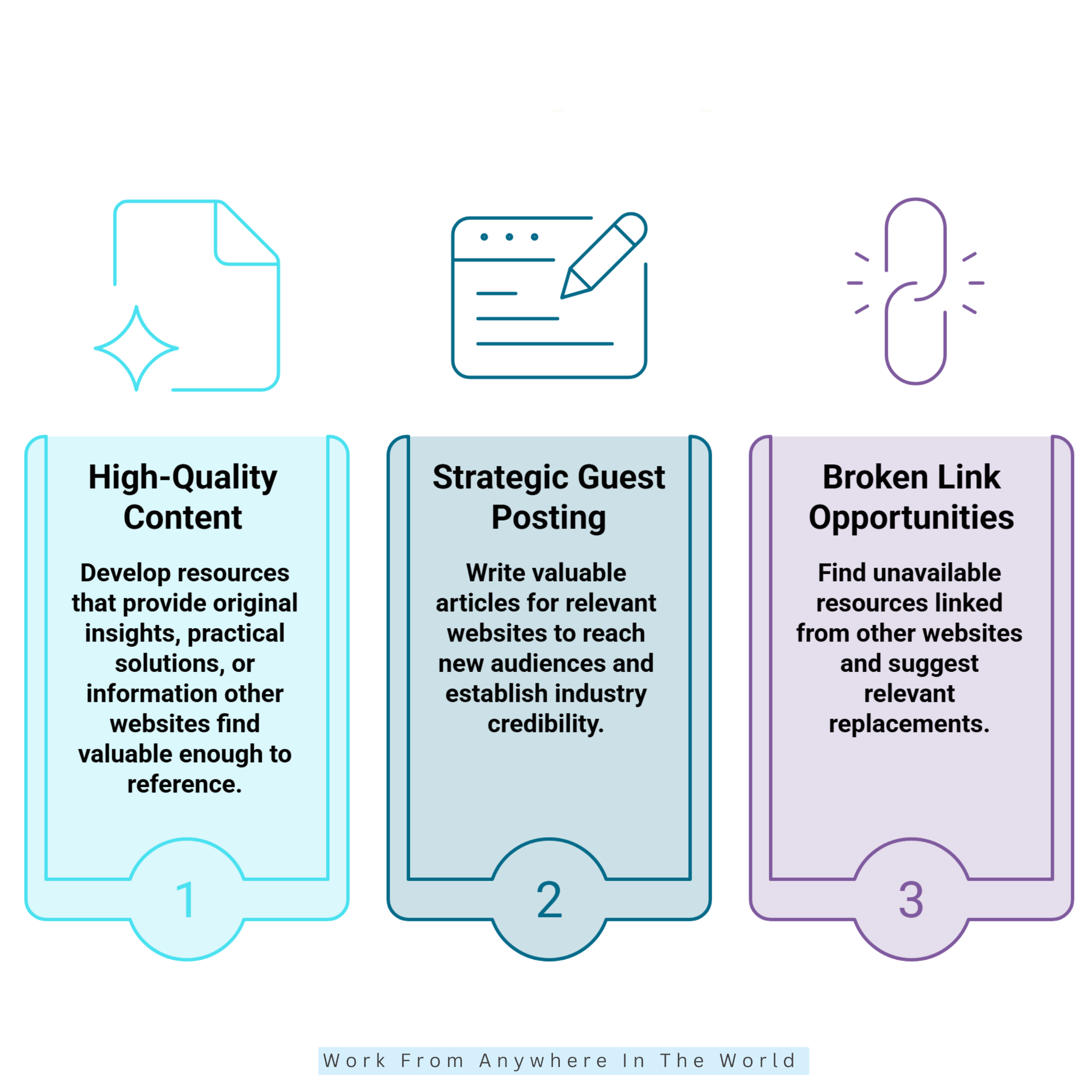
Unlinked brand mentions occur when websites reference your business, products, research, or expertise without linking to your website. These mentions offer valuable outreach opportunities because the publisher has already acknowledged your brand.
Building a recognizable online identity makes it easier for others to discover and reference your work. Exploring examples of personal branding can help you understand how individuals build credibility and gain recognition within their industries.
Reclaiming relevant mentions can generate referral traffic, improve brand visibility, and help readers locate original resources. A clear identity also matters, and understanding different brand positioning examples can help businesses communicate what makes their expertise or services distinctive.
Established brands and websites publishing original research may find more opportunities to reclaim unlinked mentions. However, results depend on the number of genuine references and whether adding a link would benefit readers.
Remember that a brand mention does not automatically justify requesting a backlink. The goal is to improve the existing content by helping visitors access relevant information.
How To Implement It
- Search for brand mentions: Look for your business name, website name, product names, and distinctive research titles. Include common spelling variations to uncover references you might otherwise miss.
- Use monitoring tools: Set up Google Alerts or use brand-monitoring platforms to discover relevant mentions. Understanding social media marketing essentials can also help you recognize opportunities to monitor brand conversations across different platforms.
- Contact the publisher: Send a polite, personalized message explaining how the link could benefit readers. A professional online presence matters, and learning how to make a LinkedIn profile stand out can help establish credibility when connecting with editors and industry professionals.
- Choose a relevant destination: Select the page that best supports the existing reference. This might be your original research, a detailed tutorial, a product explanation, or another informative resource.
- Contact the publisher: Send a polite, personalized message explaining how the link could benefit readers. Strong professional networking connections can also encourage productive conversations and future collaborations.
For example, if a marketing publication discusses your original SEO research, suggest linking to the complete report. This allows readers to examine the findings and explore the supporting information.
Keep your message helpful rather than demanding. When publishers understand the practical value of adding a link, they may be more receptive to your suggestion.
Over time, monitoring brand mentions can reveal opportunities to strengthen your online presence, develop industry relationships, and earn relevant backlinks naturally.
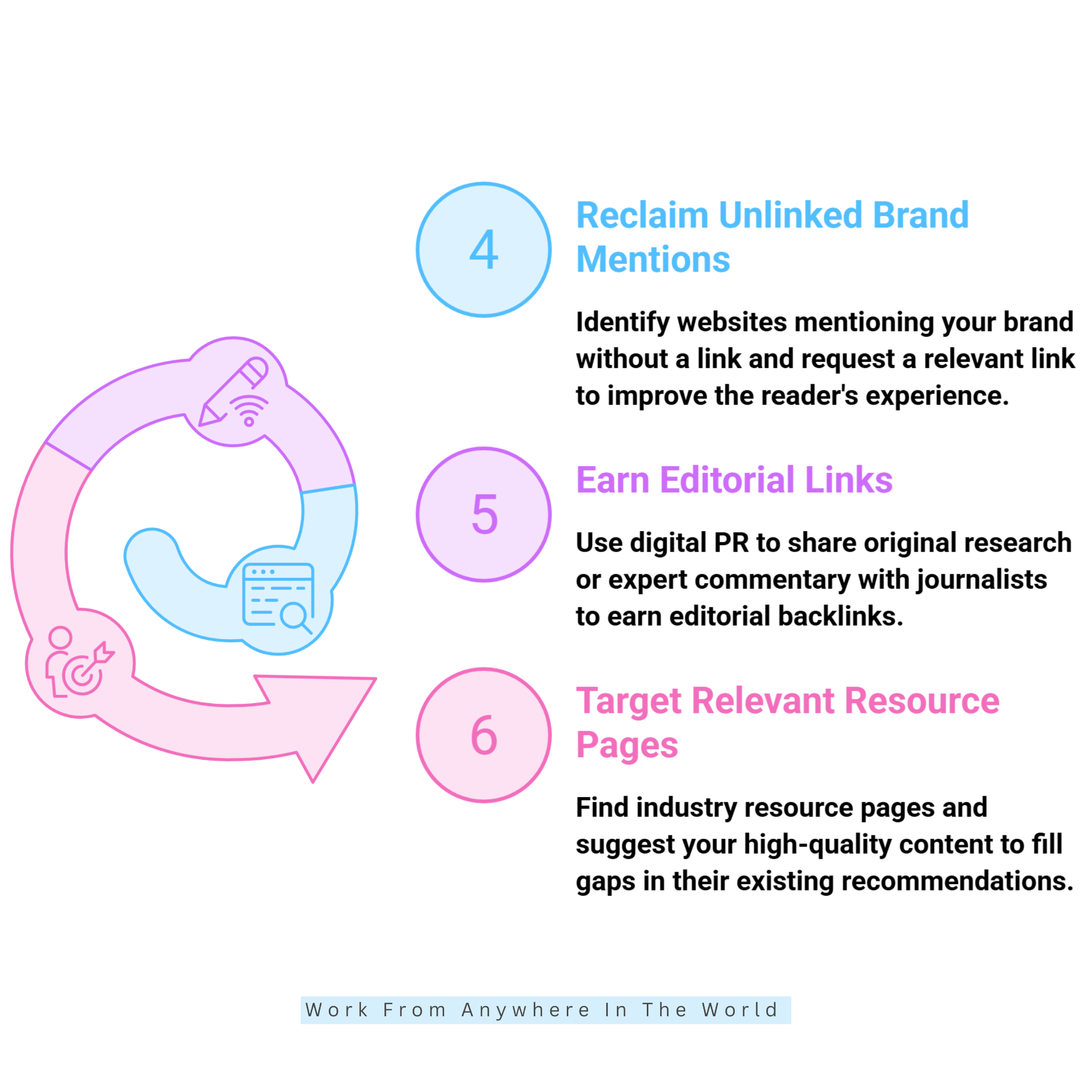
5. Earn Editorial Links Through Digital PR
Digital PR combines public relations, content promotion, and media outreach to attract attention from relevant online publications. Campaigns often feature original research, expert commentary, industry developments, or stories that provide meaningful information to a particular audience.
When journalists reference your findings or expertise, their coverage may generate valuable editorial backlinks. Creating shareable social media content can also help interesting research and stories reach wider audiences.
Digital PR supports brand awareness, referral traffic, and professional credibility. Using appropriate content marketing tools can make it easier to organize promotional activities and distribute useful resources.
However, results depend on the story’s newsworthiness, competition for media attention, and the quality of your outreach. Even successful campaigns may generate brand mentions without backlinks, so editorial links should not be your only objective.
How To Implement It
- Identify a newsworthy topic: Research industry developments, emerging trends, or distinctive stories relevant to your audience. Look for timely subjects that journalists and readers would genuinely find interesting.
- Develop supporting evidence: Gather original data, credible statistics, or expert commentary to strengthen your story. Accurate information and practical insights make your findings more useful to publishers.
- Research relevant publications: Identify journalists, industry websites, and media outlets that regularly cover your subject. Study their recent articles to understand the topics and perspectives they prefer.
- Prepare a compelling pitch: Write a concise message explaining your story’s relevance, supporting evidence, and news value. Understanding how to write content for social media can also help you communicate key messages clearly when promoting your research across different platforms.
- Respond professionally: Answer journalists’ questions promptly and provide accurate information, supporting documents, or additional context. When appropriate, use social media for your business to share published coverage and introduce it to interested audiences.
Avoid sending generic promotional messages to unrelated publications. Personalized outreach built around genuinely useful information gives journalists stronger reasons to consider your story.
You can also learn how to share content on social media to extend the reach of your published research and media coverage. Greater visibility may encourage other publishers to discover and reference your work.
Ultimately, successful digital PR focuses on sharing valuable information and building trustworthy relationships. Editorial backlinks are a potential benefit of meaningful coverage rather than the sole measure of success.
6. Target Relevant Resource Pages
Resource page link building involves finding webpages that recommend useful guides, tools, educational materials, and industry references. These collections help readers discover trustworthy information about specific subjects.
Universities, professional associations, nonprofit organizations, and established publishers may maintain resource pages. If your content fills a genuine gap, the page owner may consider adding it to their recommendations.
For example, a gardening resource collection might benefit from a detailed guide to gardening lessons for beginners. Educational content that answers common questions can be particularly useful to readers seeking practical guidance.
Similarly, an animal-wellness resource page might include an introductory guide to Reiki for pets, provided the page covers complementary practices and presents their limitations accurately.
A plant-based lifestyle resource collection could also reference a comprehensive guide to living the vegan lifestyle. These examples demonstrate how specialized content can serve different audiences and potentially attract relevant backlinks.
This strategy offers moderate potential when resource pages serve engaged audiences and receive regular attention. However, inclusion does not guarantee higher search rankings, and your contribution must genuinely complement the existing recommendations.
How To Implement It
- Find relevant resource pages: Search for educational collections, industry directories, and recommended reading lists related to your niche. Focus on pages that serve audiences interested in your expertise.
- Evaluate their quality: Review each page’s relevance, maintenance, and existing recommendations. Avoid outdated collections or websites that appear designed primarily to exchange or sell links.
- Choose a valuable resource: Identify a detailed guide, tutorial, or educational article that complements the collection. Understanding what makes a good blog can help you recognize the qualities that make content useful to readers.
- Explain your contribution: Describe how your resource addresses an unanswered question or adds valuable information. If your website offers educational materials, explore different digital education tools that may help you develop engaging learning resources.
- Contact the page owner: Send a concise, personalized message explaining why your resource would benefit their audience. Mention the specific section where your recommendation might fit naturally.
For example, an environmental organization’s resource page might benefit from a practical gardening tutorial. A relevant, well-researched contribution can help readers while introducing your website to a new audience.
Avoid requesting inclusion on every resource page you discover. Prioritize collections where your content adds genuine educational value and complements the publisher’s existing recommendations.
Over time, thoughtful resource page outreach can help establish your website as a trusted source of specialized information while creating opportunities for relevant editorial backlinks.
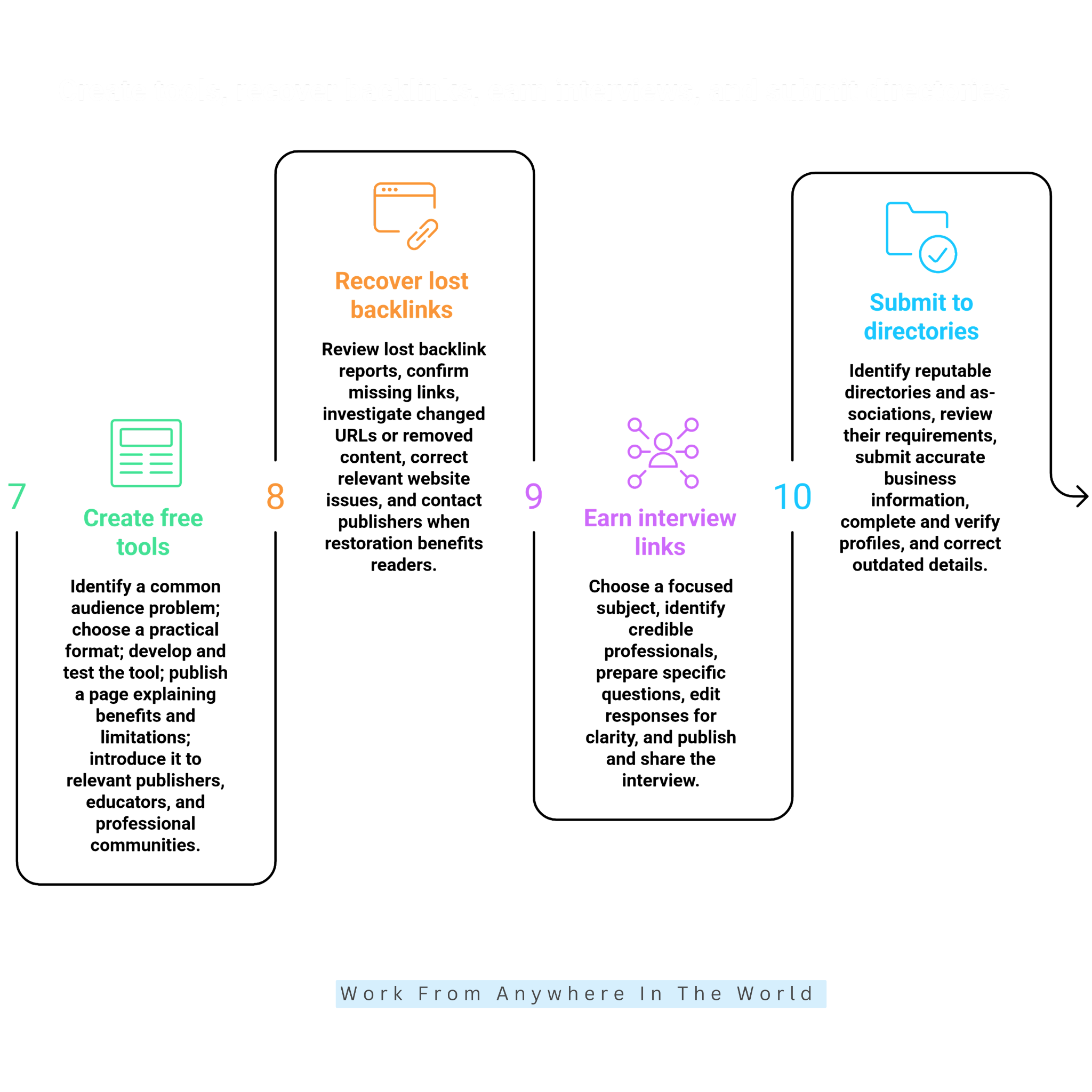
7. Create Free Tools And Downloadable Resources
Free tools and downloadable resources can attract backlinks by helping visitors solve problems or complete tasks more efficiently. Depending on your niche, these might include calculators, spreadsheets, templates, checklists, interactive planners, or assessment tools.
For example, bloggers often need help researching topics and organizing search terms. Exploring free keyword research tools can reveal common challenges and inspire useful resources that simplify the research process.
Practical resources can also support website owners and online businesses. An eCommerce SEO audit checklist, for instance, demonstrates how structured guidance can help readers evaluate their websites and identify areas for improvement.
When other websites recommend your resource, those references may generate relevant backlinks and referral traffic. However, the tool must solve a genuine problem rather than simply offer something for free.
This strategy has strong potential when a resource addresses recurring needs and provides clear benefits. Developing effective tools also requires suitable functionality, careful testing, and ongoing maintenance.
How To Implement It
- Identify a common problem: Research your audience’s recurring challenges and unanswered questions. Consider whether a calculator, checklist, spreadsheet, or interactive resource could provide a practical solution.
- Choose an appropriate format: Select a resource that makes the task easier to complete. For example, a website migration checklist illustrates how organized steps can help website owners manage complicated projects.
- Develop and test the resource: Check accuracy, usability, accessibility, and compatibility with common devices. Exploring useful blogging tools may also help you identify features that simplify content-related tasks.
- Publish a dedicated resource page: Explain what your tool does, who should use it, and how to get started. Include clear instructions, practical examples, and any important limitations.
- Promote your resource: Introduce it to relevant bloggers, educators, publishers, and professional communities. A resource supporting keyword research with Ahrefs, for example, might interest bloggers who want a structured way to organize their findings.
An SEO website could offer a downloadable keyword research spreadsheet to help bloggers categorize search terms by topic, intent, and priority. Readers learning how to use Google Keyword Planner might find such a worksheet particularly useful.
Make your resource easy to understand, accessible, and straightforward to maintain. Update it when information, software requirements, or audience needs change.
A genuinely helpful tool gives other publishers a stronger reason to reference your website. Over time, practical resources can attract interested visitors, encourage sharing, and support sustainable backlink growth.
8. Recover Lost Backlinks
Backlink reclamation involves identifying links that previously pointed to your website but have since disappeared. These links may be lost when publishers update articles, remove pages, change URLs, or reorganize their websites.
Monitoring backlink changes helps you identify technical problems and opportunities to restore valuable references. Using suitable SEO platforms can make this process more manageable, especially when your website has accumulated backlinks over several years.
For example, learning to use a Semrush tutorial can help website owners become familiar with SEO analysis tools and understand how to investigate changes affecting their online visibility.
Recovering lost backlinks can be worthwhile when the problem involves broken URLs, incorrect redirects, or missing pages. Maintaining a technically reliable website is essential for preserving access to valuable content.
However, some links disappear because publishers intentionally remove them or consider the original information outdated. Restoration isn’t always possible, so prioritize references that remain relevant and useful to readers.
How To Implement It
- Identify lost backlinks: Review backlink reports using an SEO platform that tracks changes over time. Comparing tools, such as SEOPress vs Semrush, can help you explore different SEO features before selecting suitable software.
- Verify missing links: Visit the original referring pages to confirm whether the backlinks have disappeared. Check whether the publisher removed the link, changed the surrounding content, or replaced it with another resource.
- Investigate URL changes: Determine whether the original destination was moved, renamed, or deleted. Review internal navigation and redirects to identify problems that may prevent visitors from reaching the intended content.
- Correct technical issues: Repair broken URLs, restore appropriate redirects, and address missing pages when possible. Following practical tips to improve your website speed can also support overall website maintenance, although speed improvements alone will not restore lost backlinks.
- Contact the publisher: When a link has been removed or points to an outdated address, politely suggest an appropriate replacement. Explain how restoring access would help readers find the referenced information.
For example, if a publisher’s article still references your guide but the destination URL has changed, check whether the old address redirects correctly.
If the link no longer works, a relevant replacement URL may help restore access. When evaluating your SEO tools, an article exploring whether Semrush is worth it can provide additional context about choosing software for ongoing SEO work.
Focus on restoring backlinks that continue to serve readers rather than pursuing every lost reference. Regular monitoring and thoughtful website maintenance can help preserve valuable connections and support your long-term SEO efforts.
Wealthy Affiliate – Mini Review
If you’ve ever thought about turning your blog, passion, or niche into an online business,
Wealthy Affiliate (WA) is one of the most beginner-friendly platforms I’ve used.
It combines step-by-step training, website hosting, AI-powered tools,
keyword research, and an active community all in one place.
What I like most is that you can start for free (no credit card needed), explore the platform,
test the tools, and connect with other entrepreneurs before upgrading.
WA isn’t a “get rich quick” scheme — success comes from consistent effort
and applying what you learn over time.
9. Earn Links Through Expert Interviews
Expert interviews allow you to publish original perspectives from professionals with relevant knowledge and experience. By asking thoughtful questions, you can create valuable resources that help readers understand complex subjects.
Interviews can take several forms, including written Q&A articles, podcasts, and video discussions. If you’re interested in audio interviews, learning how to make your first podcast can help you explore another way to share expert insights.
When participants find the published interview valuable, they may share it with their audiences or reference it on their websites. These mentions can generate relevant backlinks, referral traffic, and additional exposure.
Expert interviews can also strengthen your B2B content marketing strategy by introducing knowledgeable industry voices and providing original perspectives.
This strategy offers moderate potential for backlinks and brand recognition. However, results depend on the interview’s quality, the subject’s relevance, and participants’ willingness to share the finished resource.
An interview should provide useful information regardless of whether contributors link to it.
How To Implement It
- Choose a relevant subject: Identify a focused topic that addresses your audience’s interests or challenges. Consider emerging trends, industry questions, or practical problems that experienced professionals can explain.
- Find credible experts: Research professionals with relevant experience, published work, or specialized knowledge. You might find suitable contributors through industry communities or influencer platforms, although audience size alone should never determine someone’s expertise.
- Prepare thoughtful questions: Develop specific questions that encourage detailed explanations and original insights. Avoid questions that produce only short answers or repeat information already widely available.
- Edit and organize the interview: Review responses for clarity while preserving each contributor’s intended meaning. If you plan to publish the discussion in multiple formats, understanding the differences between podcasting and vlogging can help you choose the right format.
- Publish and promote the interview: Introduce the expert, explain the topic’s importance, and organize the responses into an engaging article. Share the finished resource with participants and relevant professional communities.
For example, interviewing experienced digital nomads could reveal how they find clients, manage remote work, and develop sustainable income streams.
Readers exploring how digital nomads make money could benefit from firsthand experiences and practical advice from people living this lifestyle.
For example, a content marketing website could interview experienced SEO professionals about how they evaluate content quality. Their insights might help readers understand the challenges of creating effective digital content.
A freelance writer could also contribute valuable perspectives on content development. Exploring how to make money from freelance writing may inspire questions about professional writing, client expectations, and industry experience.
Verify factual claims where necessary and provide context for technical explanations. Encourage participants to share the published interview without making backlinks a condition of participation.
Over time, thoughtful expert interviews can strengthen professional relationships, introduce fresh perspectives, and create natural opportunities for other websites to reference your content.
10. Submit Your Website To Relevant Business Directories
Business directories help users discover organizations, services, and contact information. Relevant listings can improve local visibility, generate referral traffic, and establish an accurate online representation of your business.
For small businesses, directory listings can complement broader local SEO strategies by making essential business information easier for potential customers to find.
Legitimate regional directories, professional associations, and established industry-specific listings can be valuable resources. Their usefulness depends on the directory’s credibility, audience, and relevance to your services.
Business owners exploring small business success strategies may also recognize the importance of maintaining accurate information across different online platforms.
However, submitting your website to numerous low-quality or unrelated directories solely to manipulate rankings can create an unnatural backlink profile. Focus on legitimate business discovery rather than collecting as many links as possible.
How To Implement It
- Find reputable directories: Research legitimate local business directories, professional associations, and industry-specific platforms. Understanding local keyword research can help you identify relevant geographic terms and the audiences your business wants to reach.
- Evaluate each directory: Review its reputation, intended audience, listing requirements, and overall quality. Prioritize platforms that people genuinely use to find businesses or professional services.
- Submit accurate information: Provide your official business name, website URL, contact details, and relevant service descriptions. If you’re learning how to start a small business from home, consider which business information should be publicly displayed and whether a service-area listing is more appropriate than publishing a home address.
- Complete and verify your profile: Fill in relevant categories, business descriptions, and other useful details. Follow the directory’s verification procedures to establish a complete and trustworthy listing.
- Maintain your listings: Review directory profiles periodically and correct outdated contact details, website addresses, or business descriptions. Accurate information helps customers reach you and reduces confusion.
For example, a local cleaning company could join a legitimate regional business directory that helps residents find service providers. A complete listing might include its service area, contact information, and official website.
Businesses can also support their visibility through other marketing activities. Exploring Facebook post ideas for small businesses can inspire ways to share services, customer updates, and useful information with local audiences.
Keep your company details consistent and prioritize directories that serve genuine customer needs. Avoid services promising hundreds of backlinks through automated directory submissions.
Ultimately, relevant business directories should help potential customers discover trustworthy businesses. Any backlinks they provide should support that purpose rather than exist solely to influence search rankings.
Frequently Asked Questions
Q1: What Is A Quality Backlink?
A quality backlink comes from a credible, relevant website and provides genuine value to readers. It should fit naturally within the surrounding content.
Topical relevance, editorial context, and trustworthy information matter more than third-party authority scores. Quality is generally more important than quantity.
Q2: How Many Backlinks Do I Need To Rank On Google?
There is no fixed number of backlinks required to rank on Google. Rankings depend on competition, content quality, search intent, and website performance.
Instead of chasing a specific number, focus on earning relevant backlinks from trustworthy sources. A few valuable references may be more beneficial than numerous weak links.
Q3: What Is The Difference Between Internal Links And Backlinks?
Internal links connect pages within the same website, helping visitors discover related information. They also help search engines understand your website’s structure.
Backlinks come from other websites and may strengthen your content’s visibility and credibility. Both are valuable, but they serve different purposes in SEO.
Q4: Are NoFollow Links Useful For SEO?
Yes. Google treats the nofollow attribute as a hint rather than a strict instruction when evaluating links. These links do not represent conventional endorsements.
However, nofollow links can still generate referral traffic and increase brand awareness. They may also introduce your content to audiences who share it elsewhere.
Q5: Should I Disavow Low-Quality Backlinks?
Most website owners do not need to disavow every suspicious backlink. Google can generally ignore many links it considers untrustworthy.
Use the Disavow Links tool cautiously, particularly when substantial manipulative links have caused or may cause a manual action. Removing legitimate links unnecessarily can be harmful.
Q6: Should I Buy Backlinks To Improve My SEO?
Buying backlinks specifically to manipulate search rankings violates Google’s spam policies. Paid links that pass ranking credit can expose your website to ranking penalties.
Instead, invest in valuable content, professional relationships, and legitimate promotion. Paid advertising or sponsorships should use appropriate link attributes, such as rel=”sponsored”.
Conclusion
Link building for SEO works best when you focus on creating genuine value. Helpful content, relevant relationships, and thoughtful outreach provide a strong foundation for long-term success.
Create resources worth referencing and connect with publishers who share your audience’s interests. Quality backlinks develop more naturally when your content answers questions and provides useful information.
Remember that successful link building takes patience and consistency. Monitor your backlinks, maintain your website, and refine your strategies as you discover what works.
You don’t need hundreds of backlinks to make meaningful progress. A smaller collection of relevant, editorially earned links can support search visibility and attract valuable referral traffic.
By combining these ten strategies with high-quality content and ethical SEO practices, you can strengthen your website’s credibility and support sustainable growth over time.
I trust you enjoyed this article on Link Building for SEO: 10 Proven Strategies. Please stay tuned for more helpful guides on affiliate marketing, online business, and working from anywhere in the world.
Take care!
— JeannetteZ 🌍✨
💬 Your Opinion Is Important To Me
Do you have thoughts, ideas, or questions? I’d love to hear from you. Please leave your comments below or email me directly at Jeannette@WorkFromAnywhereInTheWorld.com.
📚 More Work From Anywhere Reads
🚀 Ready to Build a Business You Can Run from Home
Or from Anywhere in the World?
Imagine earning income on your terms — from home, a cozy café, or wherever life takes you.
With the right tools, training, and community support, it’s entirely possible.
Start your own online business for free — no credit card needed.
Disclosure
This post may contain affiliate links. As an Amazon Associate and participant in other affiliate programs, I earn from qualifying purchases at no extra cost to you. Please read my full affiliate disclosure.