
Podcasting vs Vlogging – What Is The Difference
Podcasting vs vlogging is an important comparison for creators who want to share ideas, build an audience, and grow their personal brand. While both formats can help you connect with people online, they work in very different ways.
Podcasting focuses on audio content, making it ideal for listeners who enjoy learning while driving, walking, or working. Vlogging relies on video, allowing creators to showcase their personality, surroundings, tutorials, and visual stories more directly.
Choosing between the two depends on your message, comfort level, skills, audience, and long-term content goals. Some creators prefer the simplicity of audio, while others enjoy the visual impact of video.
In this article, we’ll explore the key differences between podcasting and vlogging, including content style, equipment, audience engagement, and earning potential, so you can decide which format best fits your needs.
What Is Podcasting?
Podcasting is a form of digital content production that focuses on audio episodes that listeners can access from anywhere, at any time.
It works like on-demand radio, where creators record their voices to share stories, knowledge, interviews, or discussions on specific topics. These episodes are then published on podcast platforms, allowing listeners to stream or download them easily.
One of the biggest advantages of podcasting is its convenience. People can listen while driving, exercising, cooking, or doing daily tasks without needing to watch a screen.
This makes it a highly flexible and accessible format for busy audiences. Podcasting also fosters a strong personal connection because listeners hear your voice regularly, building trust over time.
From a creator’s perspective, starting is relatively easy, requiring only basic equipment like a microphone and simple editing software.
Content can range from short daily updates to long, in-depth conversations, making it a powerful way to educate, entertain, and engage an audience.
What Is Vlogging?
Vlogging is a form of digital content creation that focuses on video, allowing creators to share their lives, ideas, skills, or experiences through visual storytelling.
The phrase is derived from “video blogging,” a practice in which people make videos and post them to websites so that others can watch them.
Unlike podcasting, which relies only on audio, vlogging combines visuals, sound, and personality to create a more engaging experience.
Creators can film anything from daily routines and travel adventures to tutorials, reviews, or educational content. Vlogs can be simple and casual, recorded on a smartphone, or professionally produced with high-quality cameras, lighting, and editing.
Vlogging’s ability to show rather than just explain is one of its greatest benefits; it makes it simpler to illustrate concepts and establish an emotional connection with viewers.
Facial expressions, surroundings, and actions add depth to the content, helping audiences feel more involved. However, vlogging often requires more time and effort, especially in filming and editing.
Despite this, it remains one of the most powerful ways to build a personal brand, grow an online audience, and create visually engaging content that captures attention quickly.
Wealthy Affiliate – Mini Review
If you’ve ever thought about turning your blog, passion, or niche into an online business,
Wealthy Affiliate (WA) is one of the most beginner-friendly platforms I’ve used.
It combines step-by-step training, website hosting, SEO research tools,
and an active community all in one place.
What I like most: you can start free (no credit card needed),
explore lessons, test the tools, and connect with other entrepreneurs
before upgrading. WA isn’t a “get rich quick” scheme — it’s a platform where success comes
from consistent effort and applying what you learn.
Pros Of Podcasts
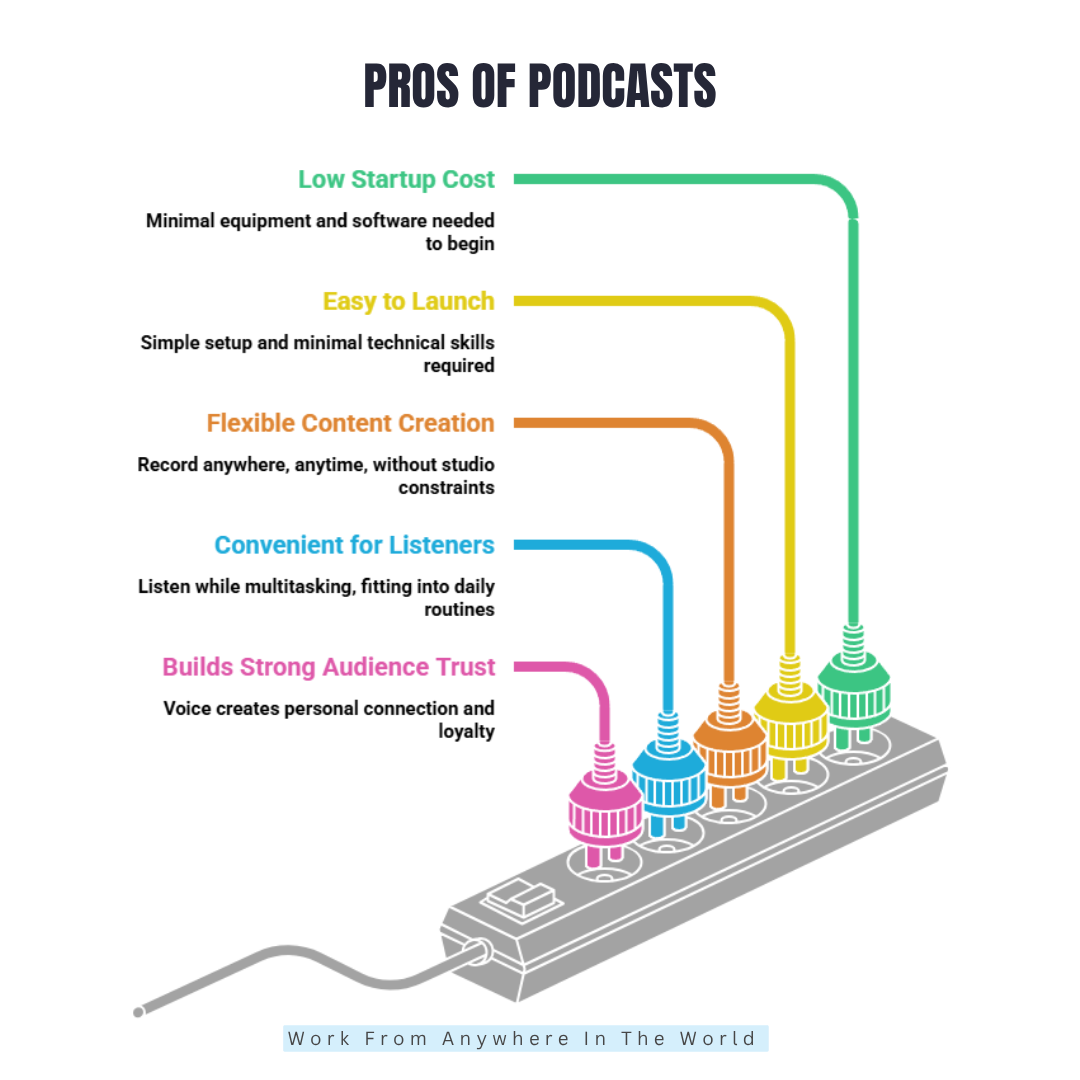
1. Low Startup Cost
Podcasting is one of the easiest ways to start creating content. You don’t need expensive cameras, lighting, or a studio. A simple microphone and free recording software are enough to get started.
It gives you full flexibility—you can record anywhere, at home, in your office, or even while travelling. Listeners love podcasts because they can tune in while driving, working, or exercising, making it effortless to engage.
Podcasting also builds trust. Hearing your voice regularly creates a personal connection. Editing is faster than video production, and long-form content can stay relevant, delivering value for months or even years.
Quick Facts
- Low cost, easy to start
- No camera setup needed
- Perfect for multitasking listeners
- Builds strong audience trust
2. Easy To Launch
Starting a podcast is simple and fast. Unlike video, you don’t need cameras, lighting, or complicated setups. This makes it perfect for beginners who want to start creating content quickly.
With just a microphone and basic software, you can record your first episode in no time. Podcasting allows you to focus on your ideas and voice rather than technical challenges.
It’s also flexible—you can record at home, in your office, or on the go. This ease of setup helps creators stay consistent, build an audience, and grow without feeling overwhelmed by equipment or editing demands.
Quick Facts
- Simple setup, quick start
- Minimal technical skills needed
- Record anywhere, anytime, easily
- Focus on content, not gear
3. Flexible Content Creation
Podcasting gives you complete freedom in how and where you create content. You can record episodes from your home, office, or even while travelling. There’s no need for fancy studios or expensive equipment.
This flexibility makes it easy to stay consistent and produce content regularly. You can plan long-form discussions, interviews, or solo episodes without worrying about visuals.
Listeners enjoy podcasts because they can tune in while multitasking, making your content more accessible. The ability to record anytime and anywhere allows creators to experiment, stay creative, and build a loyal audience over time.
Quick Facts
- Record anywhere, anytime, easily
- No studio required
- Supports long-form discussions
- Perfect for consistent content
4. Convenient For Listeners
Podcasts are designed for easy listening, making them perfect for multitasking. People can enjoy your content while driving, exercising, cooking, or doing daily chores. This convenience helps you reach audiences who might not have time to watch videos.
Because podcasts fit into everyday routines, listeners often return regularly, building loyalty over time. Audio also creates a personal connection, as hearing your voice makes the experience more intimate and engaging.
This format allows you to provide value without demanding full attention, making it easier to grow an audience and keep them engaged consistently.
Quick Facts
- Listen anytime, anywhere
- Perfect for multitasking
- Builds a loyal audience
- Easy daily consumption
5. Builds Strong Audience Trust
Podcasting helps creators build trust and loyalty with their audience. Hearing your voice regularly creates a personal connection that is hard to achieve with text or visuals alone.
Listeners feel like they know you, which strengthens engagement and encourages them to keep coming back. This trust also makes it easier to introduce products, services, or ideas in the future.
Over time, a loyal listener base can lead to sponsorships, partnerships, and monetization opportunities. Podcasting is an effective way to establish a solid, long-lasting relationship with your audience because of the personal nature of audio material.
Quick Facts
- Voice builds personal connection
- Encourages listener loyalty
- Eases content promotion
- Strong engagement over time
Cons Of Podcasts
1. Slow Audience Growth
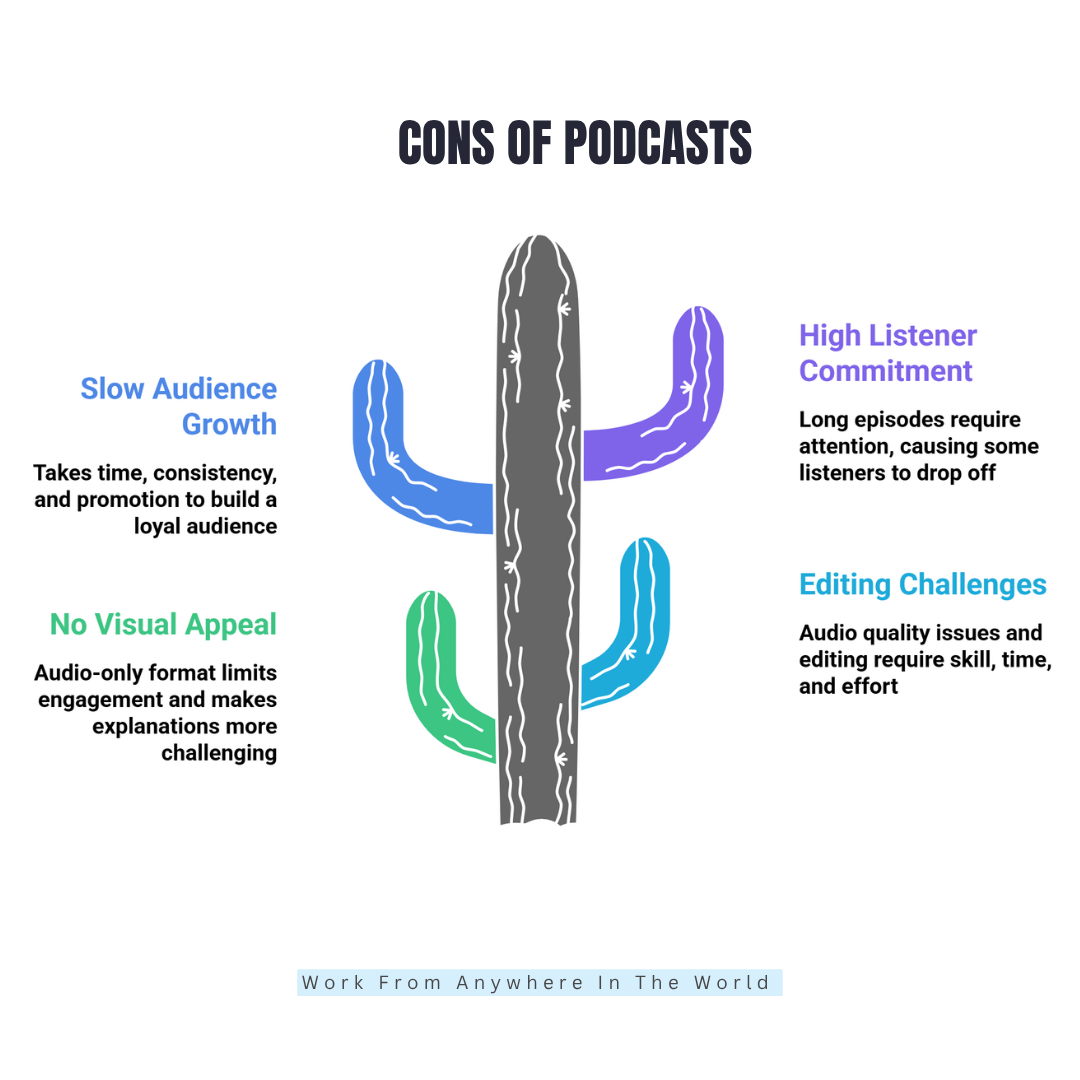
One of the biggest challenges of podcasting is growing your audience. Unlike videos that can go viral overnight, podcasts often build their listener base slowly. It takes time, consistency, and promotion to attract and retain listeners.
You can produce high-quality content, but new podcasts may struggle to be discovered on crowded platforms. Marketing, social media, and collaborations are essential to gain traction. Patience is key.
Many creators don’t see significant growth for months, even with regular episodes. While slow growth can be frustrating, focusing on value and consistency helps build a loyal audience over time.
Quick Facts
- The audience grows slowly over time
- Requires consistent content publishing
- Needs marketing and promotion
- Patience is essential for growth
2. No Visual Appeal
Podcasts rely entirely on audio, which can limit engagement. Unlike videos, you can’t show visuals, expressions, or demonstrations. This makes it harder to explain complex ideas that benefit from visual support.
Some listeners may prefer watching a tutorial or seeing examples rather than listening to a lecture. Creators must use descriptive language to paint mental pictures, a task that can be challenging.
Audio-only content may also be less shareable on platforms that favour visuals. While audio can feel personal, it lacks the visual excitement that keeps some audiences engaged. Podcasters need to work harder to keep listeners’ attention.
Quick Facts
- Audio-only format limits visuals
- Hard to show demonstrations
- Less shareable on social media
- Must use vivid descriptions
3. High Listener Commitment
Podcasts often require longer attention spans. Many episodes run 30 minutes or more, which can feel like a big time commitment. Not all listeners have the patience to listen through full episodes, especially casual audiences.
Skipping parts or quitting mid-way is common. If your content isn’t engaging from the start, you risk losing listeners. This makes the format less suitable for short, snackable content.
Creators need to hook their audience immediately and keep the conversation interesting. High listener commitment can be a barrier, but it also builds loyalty when people invest time in your episodes.
Quick Facts
- Long episodes need attention
- Casual listeners may quit early
- Hoothe k audience at the start
- Builds loyalty over time
4. Editing Challenges
Audio quality is critical in podcasting. Background noise, echo, or inconsistent volume can turn listeners away. Editing can be tricky for beginners, even with simple software.
Removing mistakes, pauses, or unwanted sounds takes time and patience. Poorly edited episodes may seem unprofessional, affecting audience retention. Even small mistakes can distract listeners from your message.
While audio editing is easier than video, it still requires learning and attention to detail. Investing time in quality editing is essential for a professional-sounding podcast that attracts and keeps listeners.
Quick Facts
- Poor audio loses listeners
- Editing requires time and skill
- Mistakes can be distracting
- Quality affects audience retention
Pros Of Vlogging
1. Visual Engagement
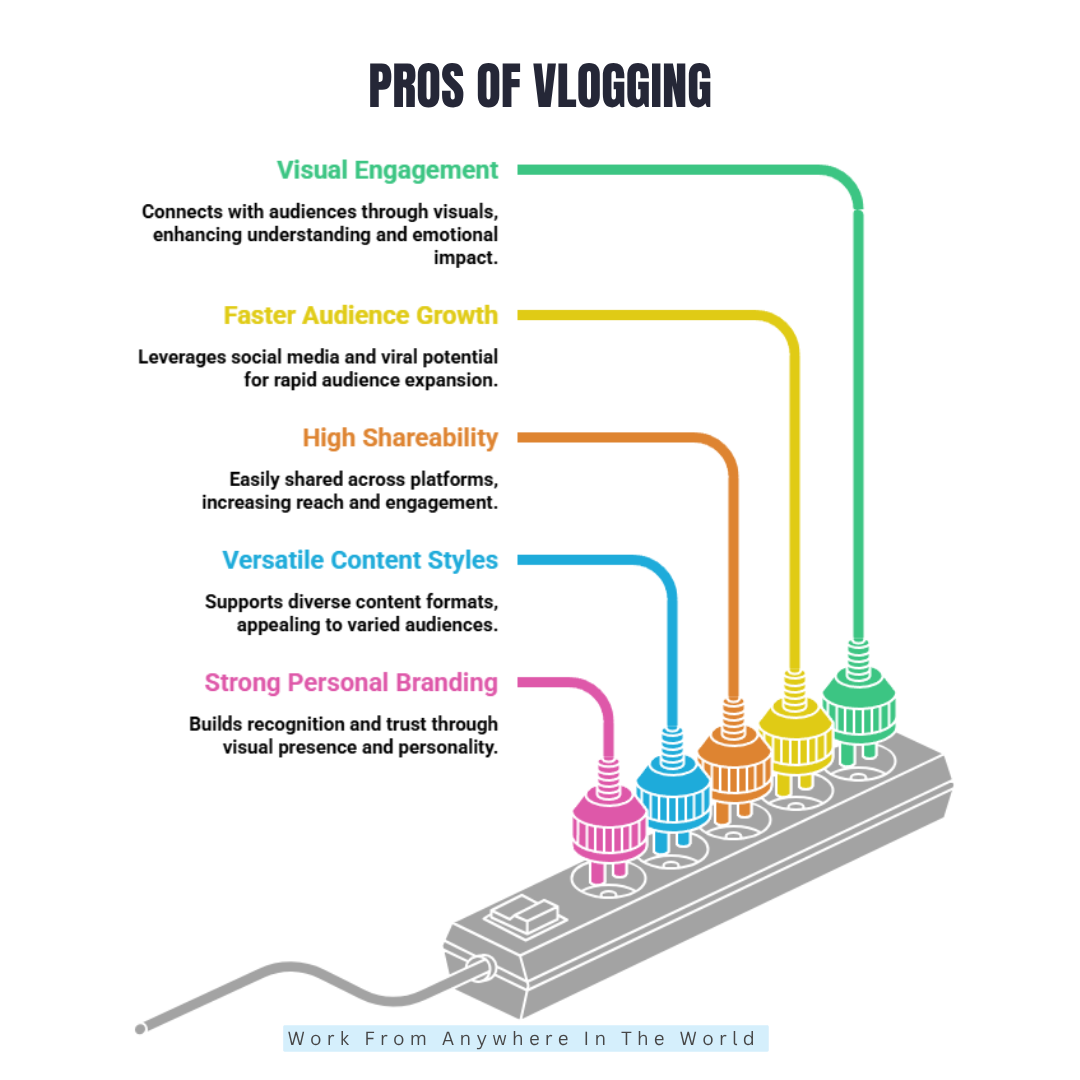
Vlogging allows creators to connect with audiences through visuals. Facial expressions, gestures, and body language make content more engaging.
Viewers can see exactly what you mean, which is especially useful for tutorials, reviews, or storytelling. Colour, surroundings, and camera angles add interest that audio alone cannot provide.
This visual element helps explain complex ideas faster and keeps viewers’ attention longer. Videos also create emotional impact; seeing someone laugh, react, or demonstrate builds a strong connection.
For creators, this is a powerful way to communicate personality, style, and energy, making your content memorable and shareable.
Quick Facts
- Shows expressions and gestures clearly
- Enhances audience understanding visually
- Builds emotional connection quickly
- Makes content more memorable
2. Faster Audience Growth
Vlogs have the potential to grow audiences quickly. Platforms like YouTube or social media allow videos to go viral. A single engaging video can reach thousands in a short time.
With shareable content and strong thumbnails, new viewers discover your channel easily. Consistent uploads keep people coming back for more.
Unlike audio, video often attracts casual viewers who may subscribe after watching once. Creators can leverage trends, challenges, and collaborations to speed up growth.
While building a loyal audience takes time, visual content has a natural advantage in exposure, making vlogging an effective way to expand your reach quickly.
Quick Facts
- Videos can go viral quickly
- Thumbnails attract new viewers
- Leverages social media trends
- The audience grows faster than podcasts
3. High Shareability
Vlogs are very shareable across platforms. People love posting interesting or entertaining videos on social media. Videos can be easily shared on Instagram, TikTok, Facebook, or Twitter, unlike podcasts, which rely on subscriptions.
This increases reach and brings new viewers to your channel. Shared videos can spark conversations, comments, and reactions, boosting engagement. The visual nature makes content more appealing to casual audiences who might not listen to audio-only content.
Creators can also use clips from longer vlogs as teasers, further expanding visibility. High shareability helps content spread organically without relying solely on paid promotion.
Quick Facts
- Easily shared on social media
- Boosts organic reach quickly
- Sparks comments and reactions
- Clips increase content visibility
4. Versatile Content Styles
Vlogging allows for multiple content styles. You can create tutorials, travel diaries, product reviews, lifestyle videos, or storytelling. This versatility helps keep your channel fresh and appealing to different audiences.
Visuals make it easier to explain steps, show results, or demonstrate products. Creators can experiment with formats such as live streaming, short-form clips, or cinematic storytelling.
Versatile content attracts varied audiences and encourages subscriptions. You can also combine different types to find your niche.
Unlike audio-only content, videos offer creative freedom in editing, effects, and visual storytelling, making vlogging one of the most flexible content-creation methods.
Quick Facts
- Supports tutorials, reviews, stories
- Creative freedom with visuals
- Appeals to diverse audiences
- Flexible formats and styles
5. Strong Personal Branding
Vlogging helps showcase your personality on camera. Viewers see your face, expressions, and style, creating a strong personal brand. This visual presence builds recognition and trust faster than audio or text alone.
Over time, your consistent appearance and style make your content memorable. Vlogs allow you to highlight your expertise, opinions, and lifestyle in a relatable way.
This strengthens your authority in your niche and encourages loyalty. Personal branding also opens opportunities for collaborations, sponsorships, and partnerships.
Being on camera regularly establishes you as a recognizable figure, helping your content stand out in a crowded digital space.
Quick Facts
- Showcases personality and style
- Builds audience trust quickly
- Strengthens niche authority
- Opens collaboration opportunities
Cons Of Vlogging
1. High Production Effort
Vlogging requires more effort than podcasting. You need cameras, lighting, good backgrounds, and sometimes props. Filming takes time to set up and shoot, especially for high-quality content.
Editing video is also more complex than editing audio, as it involves cuts, transitions, music, and effects. Beginners may find it overwhelming. Poor production can turn viewers away, even if the content is good.
Consistency can be hard to maintain because of the extra work. Vloggers must invest in equipment, learn editing software, and manage uploads. High production effort can be a barrier, especially for creators just starting.
Quick Facts
- Requires cameras and lighting
- Editing is time-consuming
- High setup effort needed
- Consistency can be challenging
2. Time-Consuming
Creating vlogs takes significantly more time than podcasts. Filming, setting up shots, retakes, and editing all add hours to production. Even short videos can take multiple hours to finish.
Preparing scripts, planning locations, and coordinating visuals increases workload. This can slow content output, especially for creators producing multiple videos per week.
Unlike audio, where recording can be quick, video demands attention to detail. The time investment can lead to burnout if not managed carefully.
While high-quality vlogs are rewarding, creators need patience, planning, and dedication to maintain a consistent upload schedule.
Quick Facts
- Filming and editing take hours
- Requires detailed planning
- Can slow content output
- Risk of creator burnout
3. Equipment Costs
Vlogging often requires expensive gear. Cameras, tripods, microphones, lights, and editing software can add up quickly. Upgrading for higher quality can be costly.
Even beginners who start small may need to invest to compete with professional-looking channels. Technical issues like lighting, audio, and camera quality can affect engagement.
Cheaper equipment may reduce video quality, affecting viewer retention, unlike podcasts, which require minimal tools. Vlogging demands ongoing investment to grow and maintain professionalism.
Equipment costs can be a barrier for creators on a budget, making it harder to maintain consistent quality without financial pressure.
Quick Facts
- Cameras and lights are expensive
- Microphones add to the cost
- Quality affects viewer retention
- Budget limits may restrict growth
4. High Competition
Vlogging faces stiff competition on platforms like YouTube, TikTok, and Instagram. Every day, millions of videos are posted, making it more difficult for new producers to gain recognition.
Standing out requires creativity, strategy, and consistency. Niche saturation can slow growth, especially in popular topics like lifestyle, gaming, or travel. Videos must be optimized with titles, thumbnails, and SEO to gain visibility.
Social media promotion is often necessary. While videos can go viral, competition means many excellent creators struggle to attract an audience. Breaking through the noise takes time, effort, and persistence.
Quick Facts
- Millions of videos are uploaded daily
- Hard to stand out
- Niche saturation slows growth
- Requires SEO and promotion

Conclusion
In conclusion, both podcasting and vlogging offer unique ways to connect with audiences. Podcasting excels in flexibility, convenience, and deep, long-form discussions, making it perfect for audio-focused content.
Vlogging shines with visual engagement, faster growth, and strong personal branding, ideal for creators who thrive on camera. Your choice depends on your style, goals, and audience.
Whether you prefer speaking into a mic or capturing moments on video, both formats can help build influence, grow a loyal following, and deliver creative, valuable content.
I trust you enjoyed this article on Podcasting vs Vlogging – What Is The Difference? Please stay tuned for more insightful blogs on affiliate marketing, online business, and working from anywhere in the world.
Take care!
— JeannetteZ 🌍✨
💬 Your Opinion Is Important To Me
Do you have thoughts, ideas, or questions? I’d love to hear from you. Please leave your comments below or email me directly at Jeannette@WorkFromAnywhereInTheWorld.com.
📚 More Work From Anywhere Reads
🚀 Ready to Build a Business You Can Run from Home
Or from Anywhere in the World?
Imagine creating income on your terms — from home, a cozy café, or wherever life takes you.
With the right tools, training, and community support, it’s entirely possible.
Start your own online business for free — no credit card needed.
Disclosure
This post may contain affiliate links. As an Amazon Associate and participant in other affiliate programs, I earn from qualifying purchases at no extra cost to you. Please read my full affiliate disclosure.