Steps To Increase Organic Traffic: 14 Powerful SEO Tips
Steps to increase organic traffic begin with understanding what your audience searches for and creating content that answers their questions. Attracting more website visitors is exciting, but reaching people who genuinely need your information is even more valuable.
Organic traffic helps websites connect with potential readers and customers through unpaid search results. However, sustainable growth requires more than publishing articles and adding keywords.
A successful strategy combines helpful content, effective SEO, a technically sound website, and regular performance analysis. Our guide to SEO strategies for organic traffic explores additional techniques for improving search visibility.
Whether you’re managing a new blog or an established website, understanding how search engines discover and evaluate content is essential. Our article on increasing blog traffic for free provides complementary ideas for attracting readers.
In this guide, you’ll discover 14 practical steps to increase organic traffic, along with a 30-day SEO action plan to help strengthen your website’s search presence over time.
What Is Organic Traffic?
Organic traffic refers to visitors who discover your website through unpaid search engine results. These visitors typically arrive after searching for information, products, services, or answers on platforms such as Google and Bing.
For example, someone searching for “how to start a vegan blog” might discover our guide to starting a vegan blog. If they click its unpaid search listing, that visit is considered organic search traffic.
Similarly, readers researching sustainable online businesses might discover our Nature article about starting an eco-living blog. This illustrates how niche-focused content can attract visitors with specific interests.
Organic traffic differs from paid search traffic because website owners do not pay for individual clicks from unpaid listings. However, producing quality content, maintaining a website, and implementing SEO still require time and resources.
Search engines use automated systems to discover, index, and rank eligible pages. Relevant content, accessible website structures, and a positive user experience can help search engines understand your pages.
Our guide to on-page SEO explains how titles, headings, content organization, and other page elements contribute to search optimization.
One important advantage of organic traffic is its potential to attract relevant visitors over time. A useful article may continue receiving search visits long after publication, although rankings and traffic can fluctuate.
Unlike social media referrals or direct visits, organic search traffic originates from unpaid search results. Understanding these distinctions helps you evaluate your website’s performance and identify opportunities for improvement.
Wealthy Affiliate – Mini Review
If you’ve ever thought about turning your blog, passion, or niche into an online business,
Wealthy Affiliate (WA) is one of the most beginner-friendly platforms I’ve used.
It combines step-by-step training, website hosting, AI-powered tools,
keyword research, and an active community all in one place.
What I like most is that you can start for free (no credit card needed), explore the platform,
test the tools, and connect with other entrepreneurs before upgrading.
WA isn’t a “get rich quick” scheme — success comes from consistent effort
and applying what you learn over time.
14 Powerful Steps To Increase Organic Traffic
Increasing organic traffic requires a combination of effective SEO techniques, valuable content, and consistent website improvements. Rather than relying on a single strategy, successful website owners focus on several areas that work together to strengthen search visibility.
These steps to increase organic traffic cover everything from keyword research and search intent to content optimization, technical SEO, and performance monitoring. Each improvement helps create a stronger foundation for attracting relevant visitors.
A well-planned SEO strategy also involves understanding your audience, identifying content opportunities, and keeping your website technically sound. Regular updates and performance reviews help ensure your efforts remain effective as search trends evolve.
The following 14 steps will help you identify opportunities, improve existing pages, and develop a practical approach to increasing organic traffic over time.
1. Research Keywords Based On Real Search Intent
Effective keyword research begins with understanding what people are searching for rather than simply collecting popular keywords. Identify the questions, problems, and solutions your target audience wants to explore.
Our guide to choosing keywords for blog posts explains how to identify relevant search terms. Choosing keywords that match your audience’s needs can help attract more interested visitors.
Tools such as Google Keyword Planner, Google Search Console, Semrush, and Ahrefs can help identify search queries, keyword variations, and opportunities for new content.
For a more detailed approach, explore our guide to free keyword research tools. Comparing several sources can help you discover useful topics without relying exclusively on search volume.
Next, examine the search results for your target keyword. Are the leading pages tutorials, product comparisons, service pages, or detailed guides? These results provide clues about the searcher’s intent.
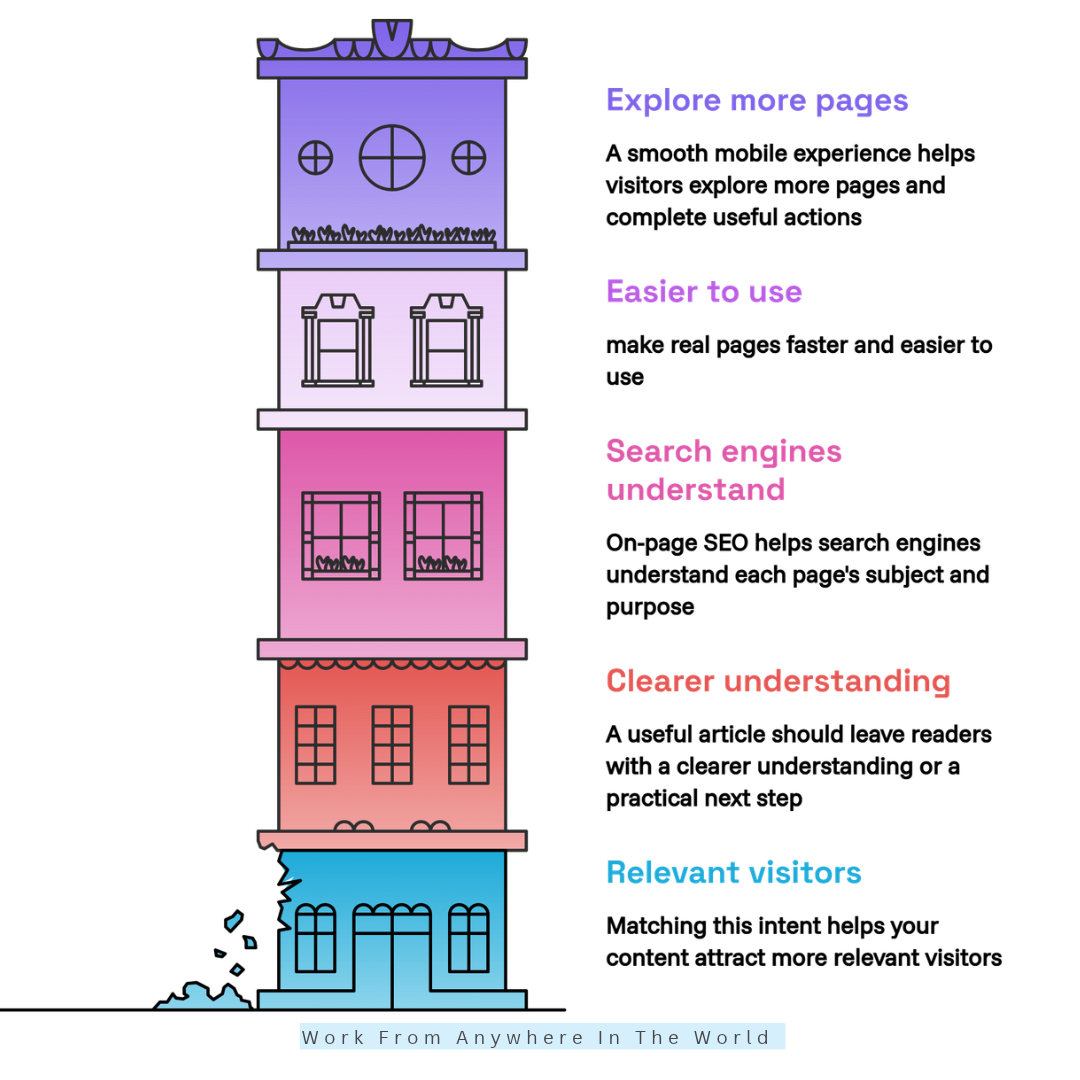
For example, someone searching for how to improve website speed probably wants practical instructions rather than hosting advertisements. Matching your content to that expectation can help attract more relevant visitors.
2. Create Helpful Content That Solves Specific Problems
High-quality content gives visitors a meaningful reason to choose your website and explore additional pages. Instead of writing articles solely around keywords, focus on answering questions your audience genuinely wants resolved.
Our guide to writing high-quality blog posts explores ways to create informative, engaging articles. Clear explanations, practical examples, and actionable advice make your content more useful.
For example, an email marketing article could explain how to build a subscriber list, write welcome emails, segment subscribers, and evaluate campaign results. Our guide to email marketing content strategies demonstrates how focused topics can support a broader educational resource.
Niche websites can also attract readers by addressing specific interests. For instance, our Vegan guide on how to start a vegan blog serves readers interested in building a plant-based content website.
Google encourages publishers to create helpful, reliable, people-first content. Original insights, accurate information, and firsthand experience can help distinguish your articles from generic explanations.
Review your content regularly to identify outdated details, unanswered questions, and opportunities for improvement. A helpful article should leave readers with a clearer understanding or a practical next step.
3. Optimize Every Page For On-Page SEO
On-page SEO helps search engines understand the subject, structure, and purpose of individual pages. Begin with a descriptive title tag that accurately represents your content and encourages relevant searchers to visit.
Our comprehensive on-page SEO guide explains how different page elements contribute to search optimization. These include headings, internal links, descriptive URLs, and relevant content.
Use one clear H1 heading and organize supporting information beneath appropriate H2 and H3 headings. Include your primary keyword naturally in the title, introduction, URL, and selected subheadings where appropriate.
Your meta description should summarize the article accurately and provide a compelling reason to click. Although Google may generate a different search snippet, a well-written description remains valuable.
Images also deserve attention. Use descriptive file names and meaningful alt text when images convey information. For example, a screenshot could use the alt text “website organic traffic performance dashboard.”
Clear formatting, useful internal links, and logical content organization improve navigation for readers. They also help search engines discover related pages and understand how your website’s topics connect.
4. Improve Website Loading Speed And Core Web Vitals
A slow website can frustrate visitors before they have an opportunity to explore your content. Large images, unnecessary scripts, and slow server responses can make pages feel unresponsive.
Start by testing important pages with Google PageSpeed Insights. Review the Core Web Vitals report in Google Search Console to identify potential performance problems affecting real visitors.
Our guide to improving website speed explores practical optimization techniques. Addressing performance problems can improve usability across your website.
Google’s Core Web Vitals measure three important aspects of user experience: Largest Contentful Paint (LCP), Interaction to Next Paint (INP), and Cumulative Layout Shift (CLS).
For good performance, aim for an LCP of 2.5 seconds or less, an INP of 200 milliseconds or less, and a CLS score of 0.1 or less. These thresholds are evaluated at the 75th percentile of page visits.
Compress large images, use modern formats such as WebP or AVIF where appropriate, enable caching, and remove unnecessary plugins. Also review scripts and third-party elements that delay page loading.
Prioritize improvements that make your website genuinely faster and easier to use. A perfect performance score is less important than delivering a reliable experience to real visitors.
5. Make Your Website Mobile-Friendly
Many people discover websites through smartphones, making mobile usability an essential part of website optimization. Visitors should be able to read content, navigate menus, and interact with pages comfortably.
A mobile-friendly design keeps text readable, buttons easy to tap, and images appropriately sized. It also prevents unnecessary horizontal scrolling and layouts that require constant zooming.
Our comparison of mobile websites versus desktop websites explores differences between these browsing experiences. Understanding these differences can help you identify areas that need attention.
Test important pages on several screen sizes instead of relying exclusively on desktop previews. Check whether menus open correctly, images display properly, and forms remain easy to complete.
For example, an online store should make product images, descriptions, and checkout options accessible on smaller screens. Blog readers should also be able to follow headings, open links, and navigate longer articles without difficulty.
Google primarily uses the mobile version of a website’s content for indexing. Maintaining consistent, accessible content across mobile and desktop layouts is therefore particularly important.
A smooth mobile experience helps visitors explore your content and complete meaningful actions. Combined with helpful information and effective SEO, it supports a stronger foundation for organic traffic growth.
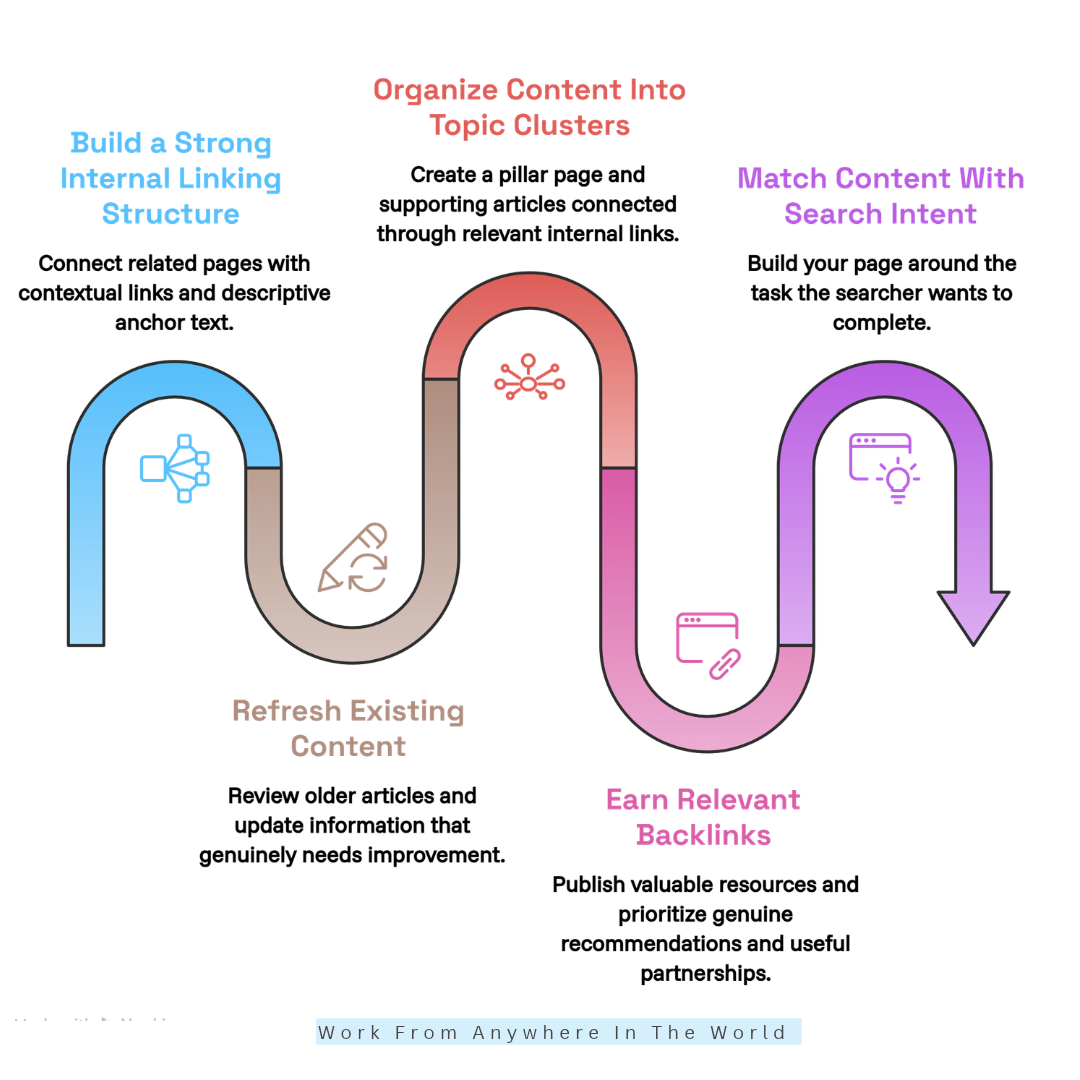
6. Build A Strong Internal Linking Structure
Internal links connect related pages across your website, helping visitors discover useful information and explore additional topics. They also help search engines find pages and understand how your content is organized.
A strong internal linking strategy connects articles that naturally complement one another. Our guide on how to build internal links for SEO explains practical methods for strengthening these connections.
For example, an article about keyword research could link to a detailed guide on content optimization. Similarly, a website speed tutorial might direct readers to a relevant technical SEO resource.
Use descriptive anchor text that explains what readers can expect from the destination page. Avoid generic phrases such as “click here” when a more meaningful description would improve clarity.
You can also connect important service pages, tutorials, and supporting articles through contextual links. This helps visitors navigate related information while giving search engines additional paths to discover your content.
Our guide to writing SEO-friendly content provides complementary advice for organizing articles around relevant topics. Clear content structure makes it easier to identify useful internal linking opportunities.
Whenever you publish a new article, review relevant older posts and add links where they genuinely benefit readers. Regular internal linking reviews can also help identify orphan pages and outdated destinations.
7. Refresh Existing Content With New And Useful Information
Older articles can continue attracting organic traffic when their information remains accurate, relevant, and helpful. Regular content reviews help identify opportunities to improve existing pages rather than constantly publishing new ones.
Start by checking for outdated examples, broken links, old screenshots, missing explanations, and information that no longer answers readers’ questions. Prioritize articles with strong potential for improvement.
Our guide on ways to make your content better explores practical approaches to strengthening existing material. Improving clarity, usefulness, and organization can make older articles more valuable.
Google Search Console can help identify pages receiving many search impressions but relatively few clicks. Compare performance across different periods to discover articles that may have lost visibility.
For example, an older article about SEO tools might need updated screenshots, revised feature descriptions, or information about newly introduced capabilities. Replacing outdated references can make the content more useful.
Our guide to writing better content offers additional techniques for improving readability and presentation. These principles can also guide revisions to previously published articles.
When refreshing a page, review its headings, internal links, examples, and search intent. Add genuinely helpful information where needed, but preserve valuable content that already serves readers well.
Remember that changing the publication date alone does not improve content quality or guarantee higher rankings. Meaningful updates should provide readers with more accurate, complete, or useful information.
📈 Ready To Grow Your Organic Traffic?
Discover more practical SEO strategies to improve your website’s visibility, attract relevant visitors, and build sustainable traffic over time.
8. Organize Content Into Topic Clusters
Topic clusters organize related articles around a central subject, helping readers explore information in a logical way. This approach also makes it easier for search engines to understand how different pages on your website connect.
Start with a comprehensive pillar article that introduces a broad topic. Then create supporting articles that explore individual subjects in greater detail, linking them naturally to the main resource.
For example, a digital marketing website could create an SEO pillar article supported by guides about keyword research, technical SEO, content optimization, and link building.
Our guide to different types of SEO optimization illustrates how a broad subject can be divided into specialized topics. Each supporting article should provide distinct information rather than repeat the same explanations.
Another example is keyword research. A comprehensive guide could connect to supporting resources about identifying long-tail keywords and evaluating keyword competition.
Topic clusters are particularly useful for established websites with extensive content libraries. Instead of publishing disconnected articles, organize related resources into meaningful groups that support one another.
Use contextual internal links to connect your pillar pages and supporting articles. This improves navigation, helps visitors discover additional information, and strengthens the overall structure of your website.
9. Earn Relevant Backlinks Through Valuable Resources
Backlinks are links from other websites that point to your content. Relevant, editorially earned links can introduce your website to new audiences and contribute to how search engines evaluate your pages.
One effective approach is to publish resources that other writers genuinely want to reference. Original research, detailed tutorials, expert interviews, useful templates, and industry guides can provide valuable linking opportunities.
Our guide to getting backlinks for free explores practical approaches to earning relevant links. The emphasis should remain on useful content and genuine relationships rather than collecting links indiscriminately.
For example, a gardening website could publish an original seasonal planting calendar. Other gardening bloggers might reference that resource when helping readers plan their growing seasons.
You can also contribute guest articles to reputable publications, participate in professional discussions, and collaborate with writers who serve complementary audiences.
Our article on link-building strategies for SEO explains additional methods for developing a stronger backlink profile. Prioritize websites that are relevant to your subject and provide genuine editorial value.
Avoid buying links intended to manipulate rankings, participating in excessive link exchanges, or using automated link-building schemes. These practices can violate Google’s spam policies and create unnecessary search risks.
Building valuable backlinks takes patience, but useful resources and authentic professional relationships can support long-term website visibility.
10. Match Content With The Searcher’s Intent
A website can target a relevant keyword and still struggle to attract visitors when its content fails to meet their expectations. Understanding search intent helps you identify what people actually want to accomplish.
Search intent generally falls into four categories: informational, navigational, commercial, and transactional. Each represents a different reason someone enters a query into a search engine.
Informational searches seek answers or explanations, while navigational searches aim to find a particular website. Commercial searches involve comparing options, whereas transactional searches indicate an intention to take action.
For example, someone searching for “best email marketing tools” probably expects comparisons, features, and recommendations. Our guide to email marketing tools for beginners illustrates the type of resource that may address this need.
Before creating an article, examine the search results for your target keyword. Look at the leading content formats, commonly answered questions, and level of detail readers appear to expect.
A person searching for “how to use Google Keyword Planner” is likely looking for instructions rather than a general explanation of keyword research. Our Google Keyword Planner tutorial demonstrates how a focused guide can address a specific learning objective.
Match your article’s format, explanations, and examples to the searcher’s goal. Include practical next steps and relevant supporting resources without distracting readers from the information they came to find.
Remember that search intent can change over time. Review your important articles periodically to ensure they continue addressing the questions and expectations of your audience.
11. Fix Technical SEO And Indexing Issues
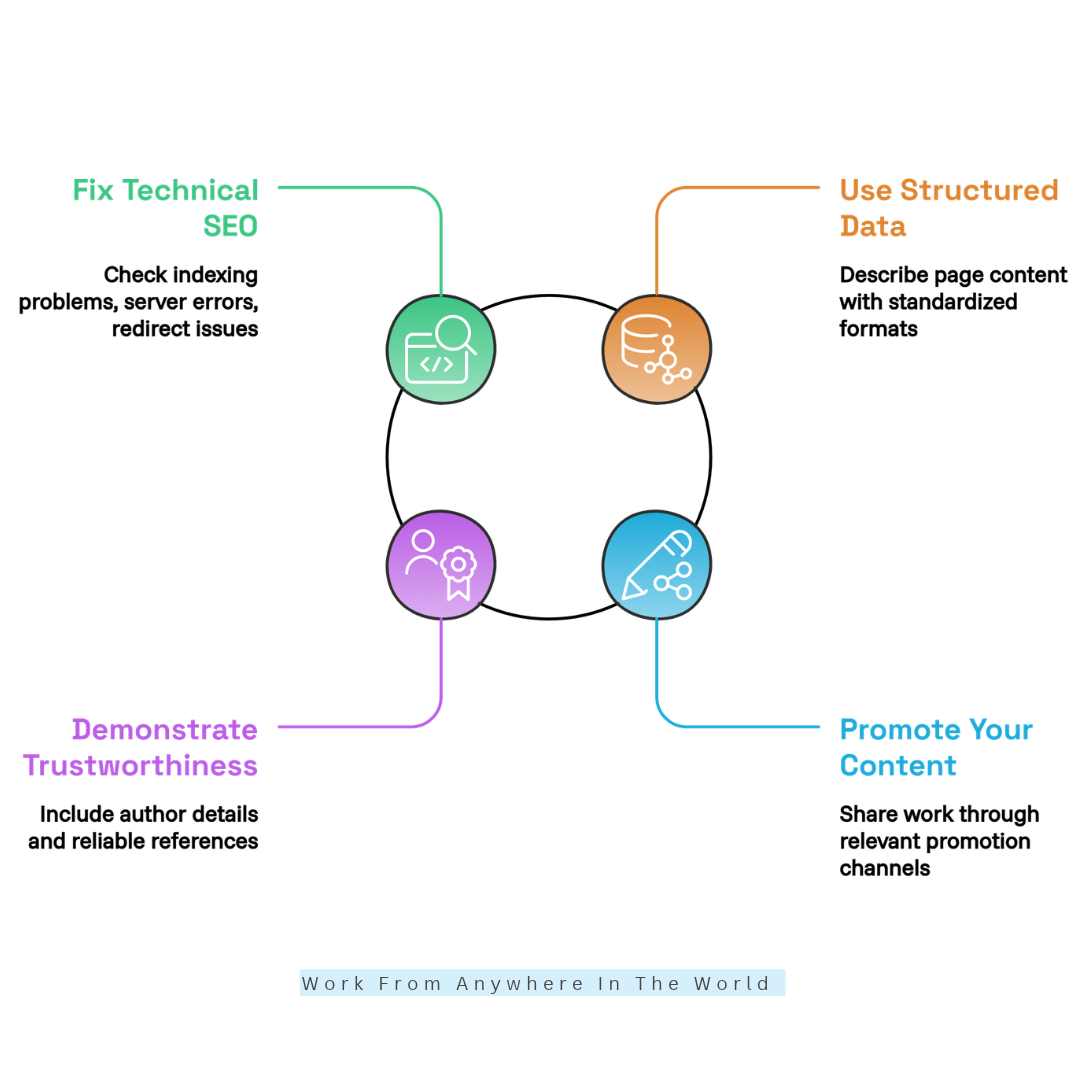
Technical SEO helps search engines access, crawl, render, and understand your website. Even valuable content may struggle to appear in search results when technical problems prevent search engines from processing important pages.
Start by reviewing Google Search Console for indexing problems, server errors, redirect issues, and pages excluded from search results. Use the URL Inspection tool to investigate individual pages.
Our guide on submitting websites to search engines explains key steps to help search engines discover your content. Submitting a website does not guarantee indexing, but it can support discovery.
Your XML sitemap should contain the canonical URLs you want search engines to discover. Review your robots.txt file carefully because it controls crawling permissions, while a properly implemented noindex directive instructs search engines not to index a page.
Check for broken internal links, incorrect canonical tags, redirect chains, and accidental indexing restrictions. These issues can interfere with navigation and prevent important content from being discovered efficiently.
Technical checks become especially important after redesigns, hosting changes, or website migrations. Our website migration checklist covers considerations for protecting your website during significant changes.
Review technical SEO regularly rather than waiting until organic traffic declines. A healthy website structure supports accessibility, content discovery, and long-term search performance.
12. Use Structured Data Where It Fits Your Content
Structured data provides search engines with standardized information about the content of a webpage. It commonly uses JSON-LD markup to describe articles, products, organizations, recipes, events, and other supported content types.
For example, an online store can use product structured data to identify details such as product names, images, prices, and availability. This information must accurately reflect the visible content and meet the applicable requirements.
Our guide to eCommerce SEO best practices explores additional considerations for optimizing online stores. Relevant structured data can complement a well-organized product page.
Publishers can also use article structured data to provide information about articles, authors, and publication dates. Select the schema type that accurately represents the content rather than adding unrelated markup.
WordPress SEO plugins can help manage certain structured data implementations. Our comparison of free WordPress SEO plugins introduces tools that support different website optimization tasks.
After implementation, validate eligible markup with Google’s Rich Results Test. You can also review supported enhancement reports in Search Console to identify potential issues.
Structured data can help search engines interpret eligible content and may support enhanced search appearances. However, adding markup does not guarantee rich results, higher rankings, or additional organic traffic.
13. Demonstrate Experience, Expertise, And Trustworthiness
Readers are more likely to trust information when they understand who created it and why the author is knowledgeable. Clear author information, relevant experience, and reliable references help establish credibility.
Google discusses experience, expertise, authoritativeness, and trustworthiness through its E-E-A-T framework. These concepts are especially relevant when evaluating whether content is helpful and reliable.
Our guide on increasing website authority explores complementary ways to strengthen a website’s credibility. Building authority requires consistent quality and trustworthy information, not superficial claims.
For product reviews, explain how you evaluated the product and which features influenced your conclusions. Include relevant observations, practical limitations, and comparisons that help readers make informed decisions.
For example, a hosting review becomes more valuable when it describes testing methods, website performance, customer support experiences, and potential disadvantages. Readers benefit from understanding both strengths and weaknesses.
Author biographies can also help visitors understand the people behind your articles. Our guide to WordPress author box plugins introduces options for displaying author information.
Keep contact details, editorial policies, and relevant business information accessible. Support important factual claims with reliable references and update articles when information changes.
Remember that E-E-A-T is not a single numerical ranking factor or a badge you can add to your website. Demonstrate these qualities through accurate content, transparent practices, and genuine experience.
14. Promote Your Content Through Relevant Channels
Publishing valuable content is only one part of growing a website. Relevant promotion can introduce your articles to people who may read, share, reference, or return to your resources.
Start by identifying where your intended audience spends time online. Different platforms attract different audiences, so your promotional strategy should reflect your niche and content format.
Our guide on sharing content on social media explores practical ways to introduce articles to interested readers. Choose channels that suit your audience rather than trying to maintain an active presence everywhere.
For example, visual tutorials and gardening guides may appeal to Pinterest users. Professional industry analyses, business tutorials, and career-related articles may be better suited to LinkedIn.
You can also share useful excerpts in relevant online communities, introduce articles through email newsletters, and transform key insights into short educational videos.
Our article on social media content ideas provides additional inspiration for presenting information in different formats. Fresh promotional angles can help older articles reach new audiences.
Adapt your message to each platform rather than publishing identical promotional text everywhere. Participate in genuine discussions and follow community guidelines when sharing links.
Although social media visits are not classified as organic search traffic, promotion can increase content discovery and create opportunities for editorial references and backlinks.
Combine consistent promotion with helpful content, effective SEO, and regular performance monitoring. This balanced approach can support broader visibility and sustainable website growth.
30-Day SEO Plan To Increase Organic Traffic
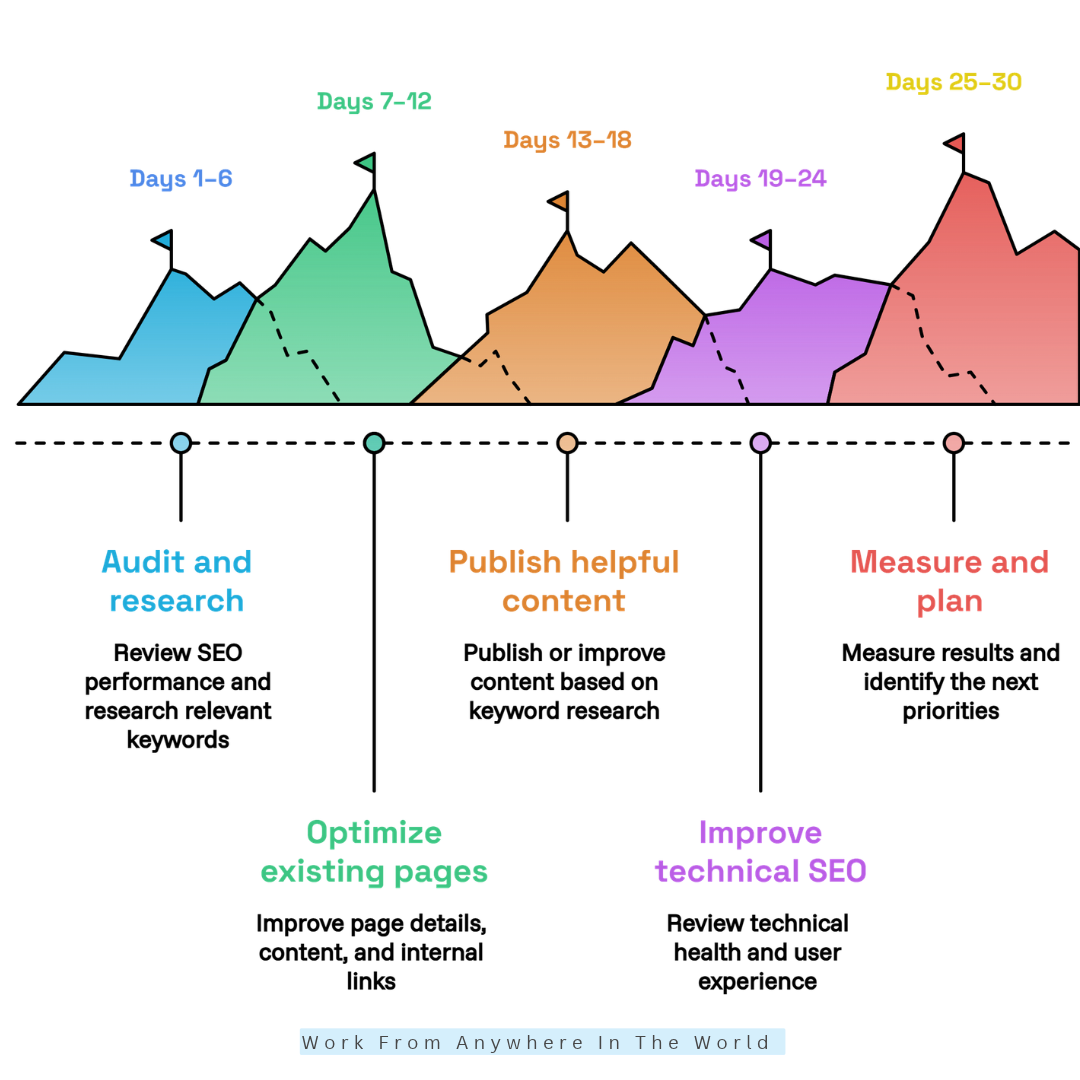
A structured 30-day SEO plan helps you turn individual optimization tasks into a consistent routine. Instead of trying to improve everything at once, divide your work into manageable stages that support steady progress.
This approach allows you to identify technical problems, improve existing content, discover keyword opportunities, and measure your website’s performance. Each stage builds on the work completed during the previous days.
The following monthly roadmap provides practical steps to increase organic traffic and strengthen your website’s search visibility. Adjust the schedule to match your website’s size, available resources, and SEO priorities.
1. Days 1–6: Audit Your Website And Research Keywords
Begin by reviewing your website’s current SEO performance. Open Google Search Console to identify popular search queries, impressions, clicks, indexing issues, and pages attracting organic visitors.
Next, explore Google Analytics to understand how visitors interact with your website. Review organic search sessions, engagement metrics, and important actions that support your business goals.
Research relevant keywords using Google Keyword Planner, Semrush, or Ahrefs. Consider search intent, keyword competition, and audience needs rather than focusing exclusively on high search volumes.
Create a list of priority keywords and match each one to an existing page or planned article. This initial review establishes a clear direction for your remaining SEO activities.
2. Days 7–12: Optimize Existing Website Pages
Focus on improving pages that already have potential to attract organic visitors. Review title tags, meta descriptions, URLs, headings, introductions, and image alt text for accuracy and relevance.
Check whether each article clearly answers its target search query. Improve incomplete explanations, update outdated information, and add practical examples that make the content more useful.
Review your internal linking structure and connect related pages using descriptive anchor text. These connections help visitors discover additional resources while supporting website navigation.
Prioritize pages receiving search impressions but relatively few clicks. Improving titles, descriptions, and content relevance may help these pages attract more interested visitors over time.
3. Days 13–18: Publish Helpful And Relevant Content
Use your keyword research to identify content opportunities that address specific audience questions. Choose subjects that match search intent and complement your website’s existing articles.
Before writing, review relevant search results to understand what information readers expect. Organize each article with clear headings, useful explanations, and practical examples.
Include relevant internal links to supporting articles and reliable external references where appropriate. These additions can improve the reader’s experience and provide helpful context.
Avoid publishing multiple articles that target essentially the same query without offering distinct value. Instead, build connected resources that strengthen your website’s topical coverage.
A focused content strategy gives readers more reasons to explore your website. It also helps you develop a useful collection of articles around related subjects.
4. Days 19–24: Improve Technical SEO And User Experience
Review your website’s technical health and identify issues that may affect search visibility. Test important pages with Google PageSpeed Insights and examine Core Web Vitals reports in Search Console.
Compress oversized images, review unnecessary scripts, and check whether your pages function smoothly on mobile devices. Pay particular attention to loading speed, layout stability, and responsiveness.
Inspect your XML sitemap, robots.txt file, canonical tags, and indexing reports. Investigate important pages that search engines cannot access or index correctly.
Fix broken internal links, review redirect issues, and test your website’s navigation. Make sure menus, forms, and other interactive elements work comfortably across different devices.
Prioritize problems affecting actual visitors rather than chasing perfect performance scores. Meaningful technical improvements support a more reliable browsing experience.
5. Days 25–30: Measure Performance And Plan Next Steps
Use the final six days to review your progress and identify future priorities. Compare Search Console clicks, impressions, average position, and click-through rate with an appropriate previous period.
In Google Analytics 4, examine organic search sessions, engagement metrics, and important conversions. Look for patterns that reveal which pages attract interested visitors and where improvements may be needed.
Remember that 30 days may be too short to evaluate the full impact of SEO changes. Search engines need time to discover updates, and traffic patterns can fluctuate for several reasons.
Record completed tasks, unresolved technical issues, and promising keyword opportunities in a simple tracking sheet. Documenting your progress makes future SEO reviews more organized and productive.
Use these findings to develop your next monthly action plan. Continue improving valuable content, addressing technical issues, and creating resources that meet your audience’s evolving needs.
Frequently Asked Questions
Q1: Can I Increase Organic Traffic Without Backlinks?
Yes, you can increase organic traffic without actively building backlinks. Focus on relevant keywords, helpful content, on-page SEO, internal linking, and improving your website’s technical performance.
However, quality backlinks can support website discovery and strengthen your credibility, particularly in competitive niches. Combining strong content with naturally earned links can support long-term growth.
Q2: Does Publishing More Blog Posts Increase Organic Traffic?
Publishing more articles creates additional opportunities to appear in search results, provided each post offers useful information. Focus on answering specific questions and matching your audience’s search intent.
A smaller collection of comprehensive, well-organized articles may outperform numerous repetitive posts. Regularly updating existing content can also be more valuable than constantly publishing new material.
Q3: Which Tools Help Monitor Organic Traffic?
Google Search Console tracks search impressions, clicks, queries, and indexing performance. Google Analytics 4 provides information about organic visitors, engagement, and important website interactions.
Google PageSpeed Insights evaluates page performance and user experience metrics. Tools such as Semrush and Ahrefs offer additional features for keyword research, competitor analysis, and SEO monitoring.
Q4: How Long Does It Take To Increase Organic Traffic?
Organic traffic growth usually takes time, and results depend on your website’s history, competition, content quality, and technical condition. Some improvements may become noticeable within weeks, while others take several months.
Consistent optimization, helpful content, and regular performance reviews can support gradual progress. Avoid expecting immediate results from every change, especially when working in competitive niches.
Q5: Can Social Media Help Increase Organic Search Traffic?
Social media can introduce your content to new audiences and encourage readers to share useful articles. However, visits directly from social platforms are generally classified as referral or organic social traffic, not organic search traffic.
Social promotion may indirectly support SEO by increasing content discovery and creating opportunities for backlinks. Focus on reaching relevant audiences rather than assuming social shares directly improve search rankings.
Q6: Should I Update Old Articles Or Publish New Ones?
Both approaches can support organic traffic growth, depending on your website’s needs. Updating older articles helps improve outdated information, strengthen internal links, and address changes in search intent.
Publishing new articles allows you to cover additional topics and answer questions your existing content doesn’t address. A balanced strategy combines useful updates with carefully planned new content.
Conclusion
Following these steps to increase organic traffic can help you build a stronger, more sustainable online presence. Successful SEO combines helpful content, thoughtful keyword research, technical improvements, and a clear understanding of your audience.
Rather than trying to improve everything at once, focus on the pages and issues that offer the greatest opportunities. Strengthen your existing articles, create valuable new resources, and connect related content through meaningful internal links.
Remember that organic traffic growth takes time, patience, and consistent effort. Search rankings may fluctuate, but improving your website’s usefulness, accessibility, and relevance provides a stronger foundation for long-term success.
Use the 30-day SEO plan to organize your activities and monitor your progress. By regularly reviewing your results and adapting your strategy, you can attract more relevant visitors and build a website that continues serving your audience.
I trust you enjoyed this guide on Steps to Increase Organic Traffic: 14 Powerful SEO Tips. Please stay tuned for more insightful articles on affiliate marketing, online business, and working from anywhere in the world.
Take care!
— JeannetteZ 🌍✨
💬 Your Opinion Is Important To Me
Do you have thoughts, ideas, or questions? I’d love to hear from you. Please leave your comments below or email me directly at Jeannette@WorkFromAnywhereInTheWorld.com.
📚 More Work From Anywhere Reads
🚀 Ready to Build a Business You Can Run from Home
Or from Anywhere in the World?
Imagine earning income on your terms — from home, a cozy café, or wherever life takes you.
With the right tools, training, and community support, it’s entirely possible.
Start your own online business for free — no credit card needed.
Disclosure
This post may contain affiliate links. As an Amazon Associate and participant in other affiliate programs, I earn from qualifying purchases at no extra cost to you. Please read my full affiliate disclosure.