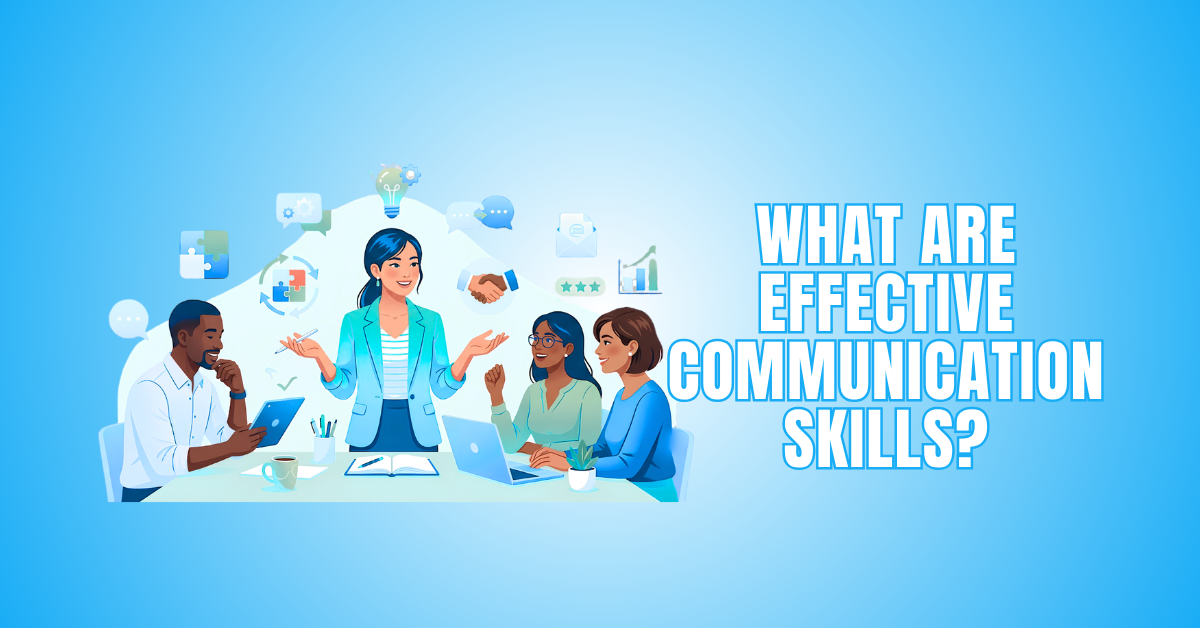
What Are Effective Communication Skills?
Effective communication skills can transform nearly every part of your life. Whether you’re building relationships, leading a team, attending interviews, or simply having everyday conversations, the way you communicate shapes the results you achieve. Strong communication goes far beyond speaking clearly. It includes listening with purpose, understanding emotions, expressing ideas confidently, and creating meaningful connections. This guide explores the most valuable effective communication skills and practical ways to develop them for lasting personal and professional success.
What Are Effective Communication Skills?
Effective communication skills are the abilities that help people exchange ideas, thoughts, feelings, and information clearly while creating mutual understanding. Great communication isn’t measured by how much someone speaks. Instead, it depends on whether the message is understood accurately and encourages positive interaction.
Communication happens through spoken words, written messages, facial expressions, gestures, body language, tone of voice, and even silence. Every conversation combines several of these elements, making communication a complete human experience rather than a simple exchange of words.
Strong communicators know how to adjust their message based on the audience, situation, and purpose. They listen carefully before responding, ask thoughtful questions, and make others feel heard. This creates trust, reduces misunderstandings, and encourages better collaboration.
Whether you’re managing a business, studying at school, working remotely, negotiating with clients, or strengthening personal relationships, effective communication skills make every interaction more productive. They improve teamwork, increase confidence, reduce conflicts, and help people build stronger, lasting connections.
In today’s connected world, communication is one of the most valuable life skills anyone can develop. The good news is that these abilities improve with consistent practice and self-awareness.
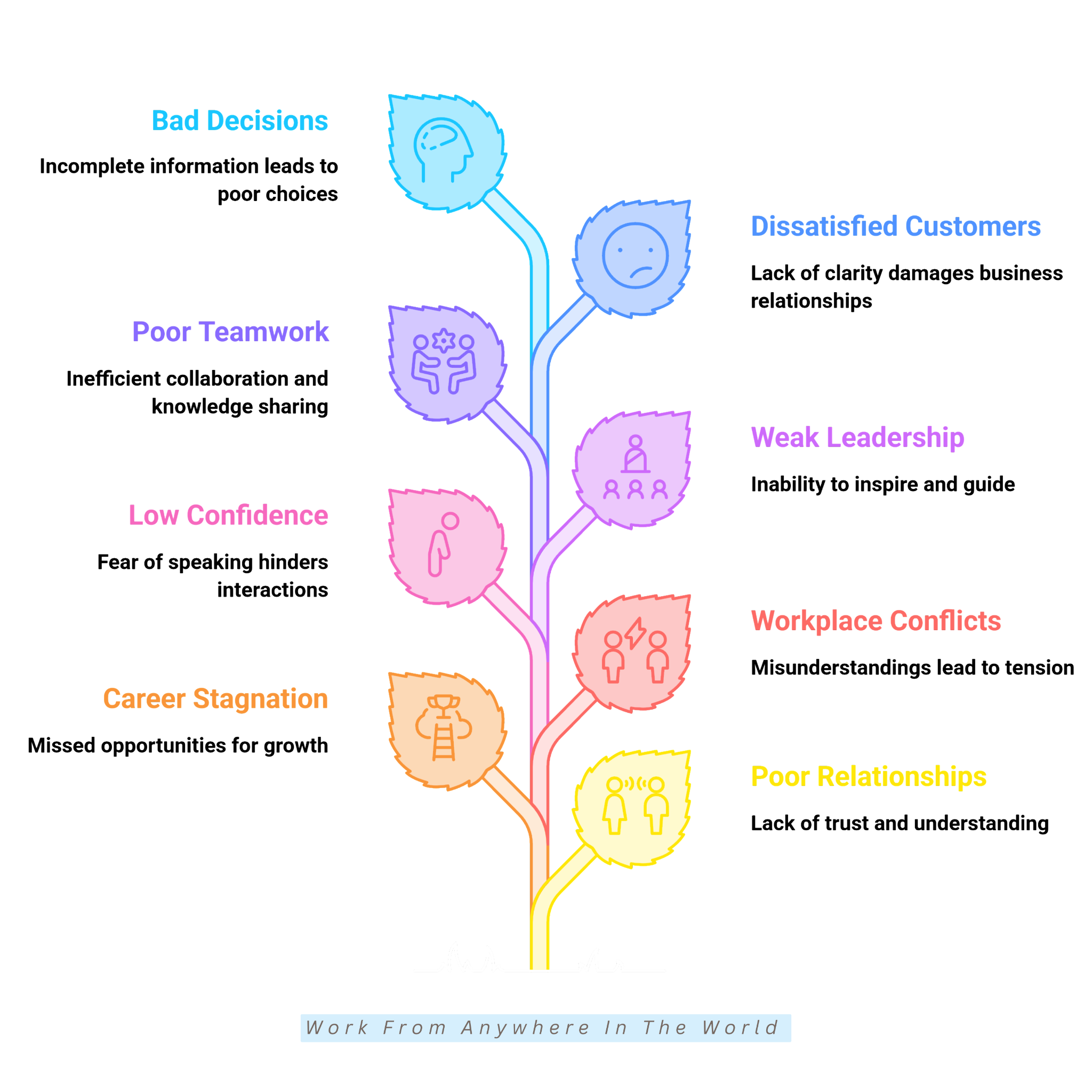
Why Are Effective Communication Skills Important?
1. They Build Stronger Relationships
Effective communication skills are the foundation of healthy personal and professional relationships. When people communicate honestly, listen carefully, and express themselves respectfully, trust develops naturally over time. Friends understand each other better, families solve disagreements more peacefully, and colleagues collaborate with greater confidence. For example, a manager who regularly checks in with team members and genuinely listens to their concerns creates a supportive work environment where employees feel valued. According to workplace research by Gallup, employees who feel heard and supported are significantly more engaged, leading to stronger relationships and better overall performance.
2. They Improve Career Growth And Professional Success
Strong communication skills often separate good employees from exceptional professionals. Employers consistently rank communication among the most desirable workplace skills because it affects leadership, teamwork, customer service, and problem-solving. Professionals who explain ideas clearly, present confidently, and communicate effectively with clients are more likely to earn promotions and leadership opportunities. Imagine two employees with similar technical expertise. The one who confidently presents project updates, collaborates effectively, and communicates solutions clearly is often recognized as a stronger leader. Effective communication becomes a competitive advantage that continues delivering value throughout an entire career.
3. They Reduce Misunderstandings And Workplace Conflicts
Many personal and workplace conflicts begin with poor communication rather than actual disagreement. Unclear instructions, assumptions, and incomplete information can easily create confusion that affects productivity and relationships. Effective communication skills encourage people to clarify expectations, ask thoughtful questions, and confirm understanding before moving forward. For example, instead of assuming everyone understands a project deadline, an experienced team leader summarizes responsibilities and confirms each member’s tasks. This small communication habit reduces mistakes, prevents unnecessary tension, and helps projects move smoothly from beginning to completion while maintaining positive working relationships.
4. They Increase Confidence In Every Conversation
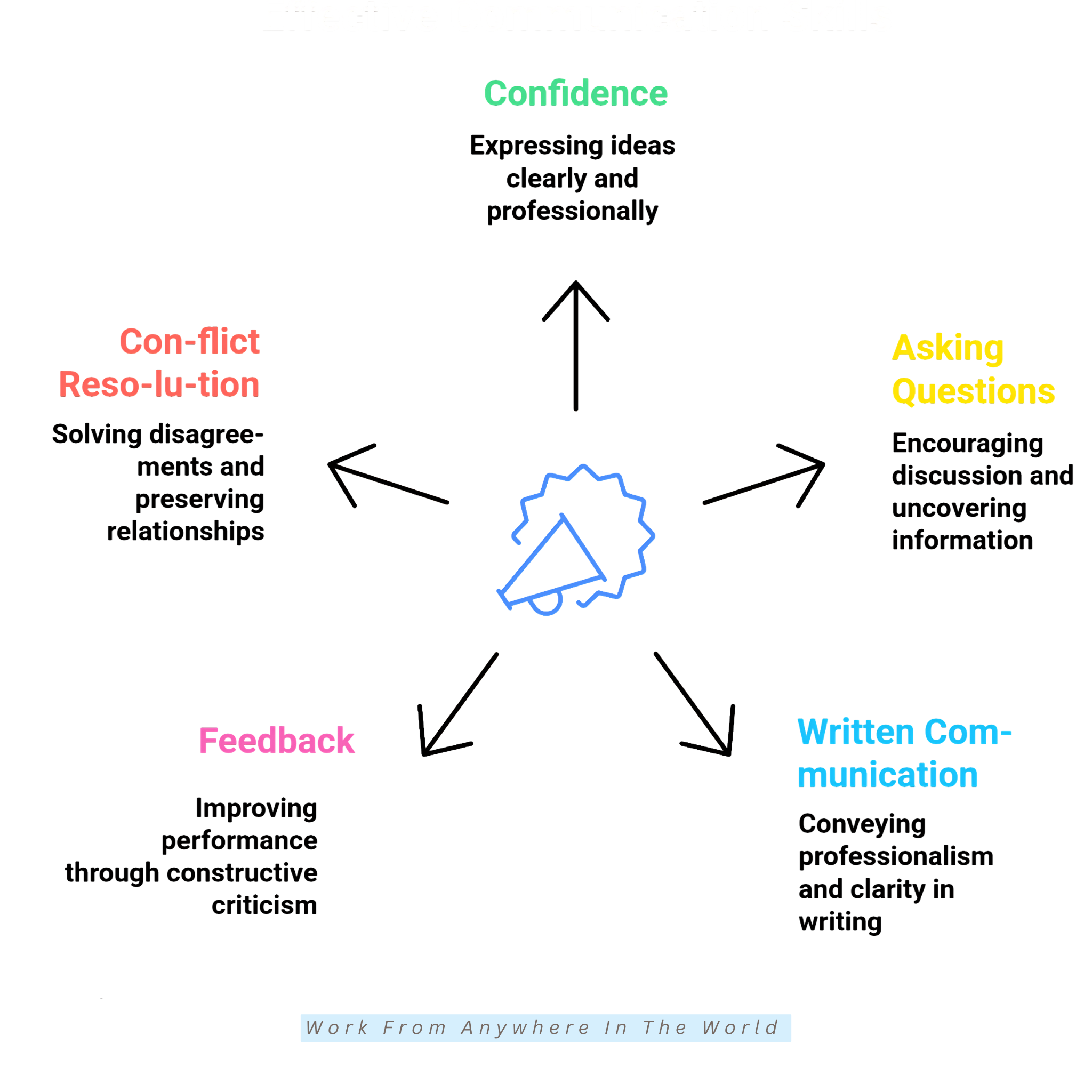
People who communicate effectively usually feel more confident because they know how to organize their thoughts and express ideas with clarity. Confidence influences interviews, presentations, networking events, business meetings, and even casual conversations. Rather than worrying about saying the wrong thing, skilled communicators focus on delivering value through meaningful discussions. For example, a university student who practices public speaking regularly often becomes more comfortable answering questions during class presentations and job interviews. Every successful conversation builds additional confidence, creating a positive cycle that improves both communication ability and self-esteem over time.
5. They Strengthen Leadership Skills
Outstanding leaders communicate a clear vision, inspire teams, provide constructive feedback, and guide people through challenges. Leadership is less about giving instructions and more about creating understanding and motivation. Effective communication skills help leaders explain goals, encourage collaboration, and build trust among team members. For example, during organizational changes, a leader who openly explains the reasons behind new policies and answers employee questions honestly reduces uncertainty and strengthens team morale. Research consistently shows that transparent communication improves employee engagement and helps organizations navigate change more successfully while maintaining productivity.
6. They Improve Teamwork And Collaboration
Successful teamwork depends on clear communication between individuals with different skills, experiences, and perspectives. When everyone shares ideas openly, listens respectfully, and communicates expectations clearly, projects become more efficient and creative. Effective communication also encourages knowledge sharing, which helps teams solve problems faster. Imagine a marketing team planning a product launch. Designers, writers, developers, and sales professionals communicate regularly, update each other on progress, and discuss challenges early. This collaborative approach minimizes delays, improves decision-making, and produces stronger results than teams working independently with limited communication.
7. They Enhance Customer And Client Relationships
Whether running a business or working in customer service, communication directly affects customer satisfaction and loyalty. Clients appreciate professionals who explain information clearly, respond promptly, and genuinely understand their needs. Effective communication builds credibility and creates lasting business relationships. For example, a freelance graphic designer who regularly updates clients, explains project timelines, and welcomes feedback often receives repeat business and referrals. According to several customer experience studies, businesses that consistently deliver excellent communication enjoy higher customer retention because people value transparency, reliability, and personalized interactions as much as the final product or service.
8. They Support Better Problem-Solving And Decision-Making
Clear communication makes problem-solving more efficient because people exchange accurate information, consider multiple viewpoints, and evaluate solutions together. When communication is limited, important details can be overlooked, leading to poor decisions. Effective communicators ask questions, verify facts, and encourage open discussion before reaching conclusions. For instance, during a product development meeting, team members who openly discuss customer feedback, budget limitations, and technical challenges are more likely to identify practical solutions. Better communication creates informed decisions that save time, reduce costly mistakes, and improve outcomes for both individuals and organizations.
12 Essential Effective Communication Skills To Master
1. Active Listening
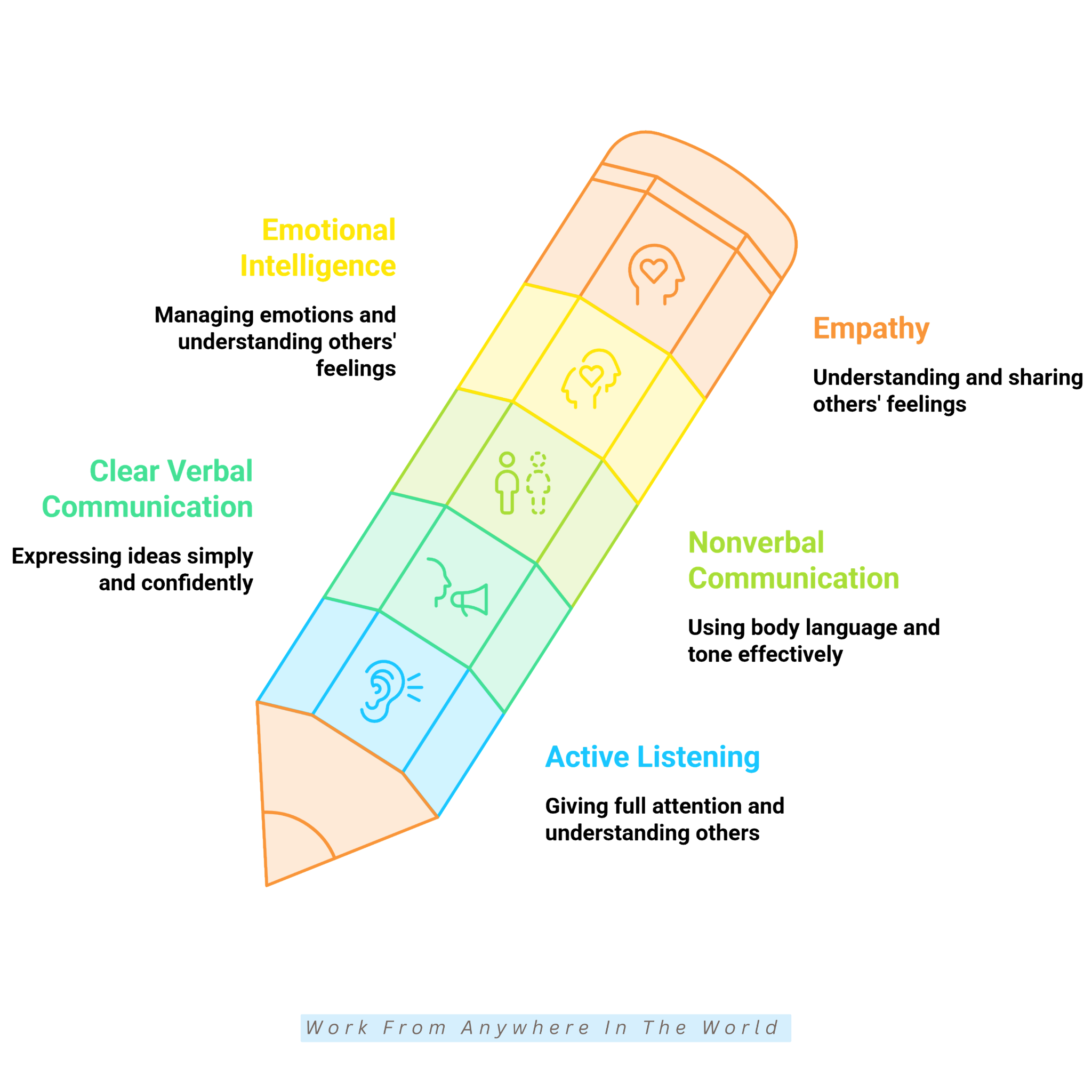
Active listening is one of the most valuable effective communication skills because it helps people feel respected, understood, and appreciated. Instead of simply waiting for your turn to speak, active listening involves giving your full attention, asking thoughtful questions, and responding based on what the other person actually says. This simple habit reduces misunderstandings and strengthens trust in both personal and professional relationships. For example, during a client meeting, carefully listening to the client’s goals before offering solutions often leads to better outcomes and higher satisfaction. According to workplace studies, employees who feel genuinely heard are significantly more engaged and committed to their organizations, making active listening a powerful skill for long-term success.
2. Clear Verbal Communication
Clear verbal communication means expressing ideas in a simple, organized, and confident way so others understand your message without confusion. Choosing the right words, maintaining an appropriate tone, and explaining complex ideas in an easy-to-follow manner can improve every conversation. Whether you’re speaking in a meeting, giving instructions, or discussing ideas with friends, clarity saves time and prevents unnecessary misunderstandings. For example, a project manager who outlines deadlines, responsibilities, and expectations clearly helps the team work more efficiently and avoid costly mistakes. Research from the Project Management Institute suggests that ineffective communication contributes to project failure, highlighting why speaking clearly is a critical professional skill.
3. Nonverbal Communication
Words are only one part of communication. Your facial expressions, posture, eye contact, gestures, and tone of voice often communicate just as much as the words you choose. Positive body language helps reinforce your message and makes conversations feel more genuine and engaging. Smiling naturally, maintaining appropriate eye contact, and using open body posture can immediately improve how others perceive you. For instance, during a job interview, confident posture and steady eye contact can leave a stronger impression than simply giving correct answers. Communication experts frequently note that nonverbal cues play a major role in how people interpret messages, making this skill essential for building credibility and trust.
4. Emotional Intelligence
Emotional intelligence is the ability to recognize, understand, and manage your own emotions while responding thoughtfully to the emotions of others. This skill helps people stay calm under pressure, communicate respectfully during disagreements, and build stronger relationships. Instead of reacting impulsively, emotionally intelligent communicators pause, consider different perspectives, and choose constructive responses. For example, if a colleague becomes frustrated during a meeting, acknowledging their concerns before discussing solutions can quickly reduce tension and encourage productive collaboration. Research published by TalentSmart found that emotional intelligence is strongly associated with workplace performance, demonstrating that communication involves understanding emotions as much as exchanging information.
5. Empathy
Empathy allows you to understand another person’s feelings, experiences, and point of view before responding. It transforms ordinary conversations into meaningful connections by showing genuine care and respect. Empathetic communication helps resolve conflicts, strengthen friendships, improve teamwork, and build customer loyalty. For example, a customer service representative who first acknowledges a customer’s frustration before offering a solution is much more likely to create a positive experience than someone who immediately focuses on company policies. In healthcare, education, leadership, and business, empathy consistently improves communication outcomes because people naturally respond better when they feel understood, respected, and valued rather than simply being given information.
6. Confidence In Communication
Confidence in communication allows you to express your ideas with clarity, conviction, and professionalism without appearing aggressive. Confident communicators speak at a steady pace, maintain positive body language, and present their opinions respectfully, making it easier for others to trust and understand their message. Confidence also encourages people to participate in discussions, ask questions, and share innovative ideas. For example, during a business presentation, a confident speaker who explains solutions with enthusiasm and answers questions calmly is more likely to persuade clients and gain support. According to LinkedIn’s Workplace Learning Report, communication remains one of the most sought-after soft skills, and confidence significantly enhances its impact.
7. Asking Effective Questions
Great communicators know that meaningful conversations begin with thoughtful questions. Asking effective questions encourages discussion, uncovers valuable information, and demonstrates genuine interest in the other person’s perspective. Open-ended questions often lead to deeper conversations because they invite detailed responses instead of simple yes-or-no answers. This skill is especially valuable in leadership, customer service, sales, education, and problem-solving. For example, instead of asking a client, “Are you happy with the project?” a consultant might ask, “Which part of the project has delivered the most value to your business?” This approach reveals useful insights, strengthens relationships, and leads to better decisions for everyone involved.
Wealthy Affiliate – Mini Review
If you’ve ever thought about turning your blog, passion, or niche into an online business,
Wealthy Affiliate (WA) is one of the most beginner-friendly platforms I’ve used.
It combines step-by-step training, website hosting, AI-powered tools,
keyword research, and an active community all in one place.
What I like most is that you can start for free (no credit card needed), explore the platform,
test the tools, and connect with other entrepreneurs before upgrading.
WA isn’t a “get rich quick” scheme — success comes from consistent effort
and applying what you learn over time.
8. Written Communication
Strong written communication is just as important as speaking, especially in today’s digital workplace. Emails, reports, proposals, instant messages, and social media posts all represent your professionalism and attention to detail. Well-structured writing helps readers understand your ideas quickly while reducing confusion and unnecessary follow-up questions. Using simple language, organized formatting, and a friendly tone makes written communication more effective. For example, an employee who sends a concise email outlining project updates, deadlines, and next steps saves colleagues valuable time and improves team coordination. As remote work continues to grow worldwide, excellent writing skills have become one of the most valuable communication assets professionals can develop.
9. Giving And Receiving Feedback
Constructive feedback helps individuals and teams improve, learn from experience, and achieve better results. Effective communicators know how to offer feedback that is specific, respectful, and focused on improvement rather than criticism. They also welcome feedback with an open mind, viewing it as an opportunity for growth instead of a personal attack. For example, a marketing manager reviewing a designer’s work might highlight the campaign’s strengths before suggesting improvements that enhance the final design. This balanced approach keeps motivation high while encouraging continuous learning. Organizations with strong feedback cultures often experience higher employee engagement, improved performance, and better collaboration across departments.
10. Conflict Resolution
Conflict is a natural part of life, but effective communication determines whether disagreements become obstacles or opportunities for growth. Strong conflict resolution involves listening carefully, staying calm, understanding different viewpoints, and working together to find practical solutions. Instead of focusing on blame, skilled communicators concentrate on solving the underlying problem while preserving positive relationships. For example, if two coworkers disagree about project responsibilities, discussing expectations openly and agreeing on clear task assignments can quickly restore teamwork. Research from the American Management Association suggests that managers spend a significant portion of their time resolving workplace conflicts, making this communication skill valuable for professionals at every career level.
11. Public Speaking
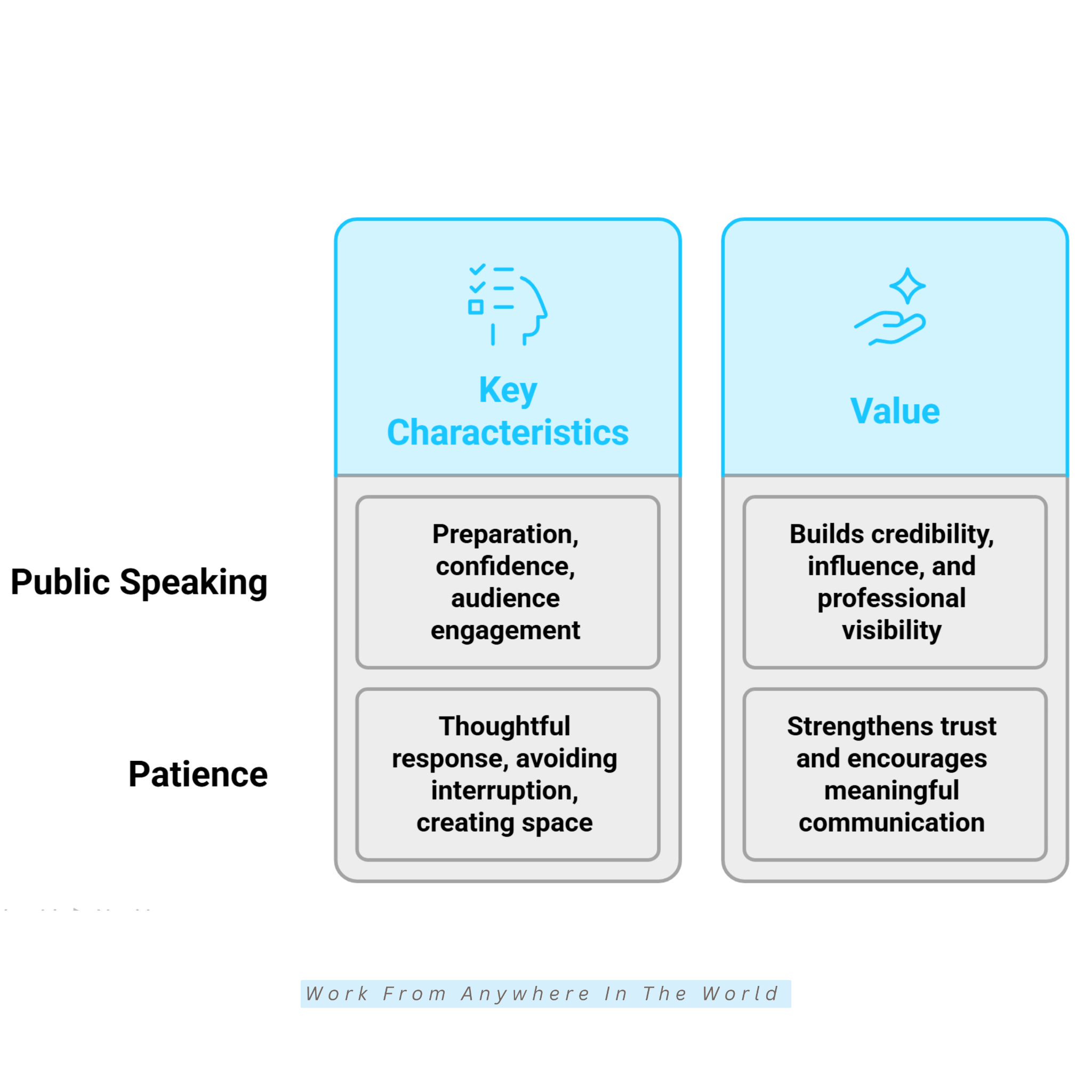
Public speaking is an essential communication skill that helps people share ideas confidently with groups of any size. Whether presenting at work, teaching a class, speaking at an event, or leading a meeting, effective public speaking combines preparation, confidence, and audience engagement. Great speakers organize their ideas clearly, use relatable examples, and maintain eye contact to keep listeners interested. For example, an entrepreneur pitching a business idea with enthusiasm and clear storytelling is more likely to attract investors than someone who simply reads slides. Surveys consistently show that public speaking is one of the most valued leadership skills because it builds credibility, influence, and professional visibility.
12. Patience
Patience allows conversations to develop naturally without rushing to conclusions or interrupting others. It helps people think carefully before responding, making discussions more respectful and productive. Patient communicators understand that everyone processes information differently, so they create space for questions, clarification, and thoughtful dialogue. This approach is especially valuable in customer service, education, healthcare, and leadership, where understanding individual needs is essential. For example, a teacher who patiently explains a difficult concept using different methods helps students build confidence instead of feeling discouraged. By remaining calm during challenging conversations, patient communicators strengthen trust, encourage openness, and create an environment where meaningful communication can flourish.
Frequently Asked Questions
Q1: How Can I Improve My Communication Skills Quickly?
Start by listening more attentively, speaking with clarity, maintaining positive body language, and thinking before responding. Reading regularly, practicing public speaking, and asking for feedback from trusted colleagues or friends can also help you improve your communication skills much faster.
Q2: Why Is Emotional Intelligence Important In Communication?
Emotional intelligence helps you recognize and manage emotions while understanding how others feel. This allows you to respond thoughtfully instead of reacting impulsively. As a result, conversations become more respectful, conflicts are easier to resolve, and relationships grow stronger over time.
Q3: Are Communication Skills Important For Leadership?
Absolutely. Great leaders communicate clear goals, motivate teams, provide constructive feedback, and build trust through open conversations. Strong communication helps leaders inspire confidence, encourage collaboration, and guide organizations through challenges while maintaining positive relationships with employees and stakeholders.
Conclusion
Effective communication skills are among the most valuable abilities you can develop because they influence every conversation, relationship, and opportunity in life. From active listening and empathy to public speaking and storytelling, each skill strengthens your ability to connect with others and express ideas with confidence. The more you practice these techniques, the more natural they become. Small, consistent improvements can lead to stronger relationships, greater career success, and more meaningful interactions every day.
I trust you enjoyed this What Are Effective Communication Skills? Please stay tuned for more insightful blogs on affiliate marketing, online business, and working from anywhere in the world.
Take care!
— JeannetteZ 🌍✨
💬 Your Opinion Is Important To Me
Do you have thoughts, ideas, or questions? I’d love to hear from you. Please leave your comments below or email me directly at Jeannette@WorkFromAnywhereInTheWorld.com.
📚 More Work From Anywhere Reads
🚀 Ready to Build a Business You Can Run from Home
Or from Anywhere in the World?
Imagine earning income on your terms — from home, a cozy café, or wherever life takes you.
With the right tools, training, and community support, it’s entirely possible.
Start your own online business for free — no credit card needed.
Disclosure
This post may contain affiliate links. As an Amazon Associate and participant in other affiliate programs, I earn from qualifying purchases at no extra cost to you. Please read my full affiliate disclosure.