
How To Start A Freelancing Business
How to start a freelancing business is a question many beginners ask when exploring flexible ways to earn income online. While freelancing may seem simple at first, building a stable and successful business often requires planning, consistency, and patience.
The good news is that starting a freelancing business does not always require a large investment. With the right skills, clear goals, and a professional approach, many beginners can gradually build freelance opportunities.
In this guide, you’ll learn how to start a freelancing business step by step, including practical tips to help you build a strong foundation and avoid common beginner mistakes.
What Is A Freelancing Business?
Freelancing is more than simply completing random online tasks or earning quick money from short-term gigs. At its core, freelancing involves offering a specific skill or service, solving problems for clients, and getting paid for your expertise while working independently.
Unlike a traditional job, freelancers manage their own work, choose the services they offer, and decide how they want to grow their business over time.
In a freelancing business:
- Your skills become your service or product
- Clients become your customers
- You choose the type of work you offer
- You manage pricing, communication, and business growth
While freelancing offers flexibility and independence, it also requires responsibility, consistency, and a professional mindset. Over time, building strong skills and client relationships may help create a more stable and rewarding business.
How To Start A Freelancing Business: A Step-by-Step Guide
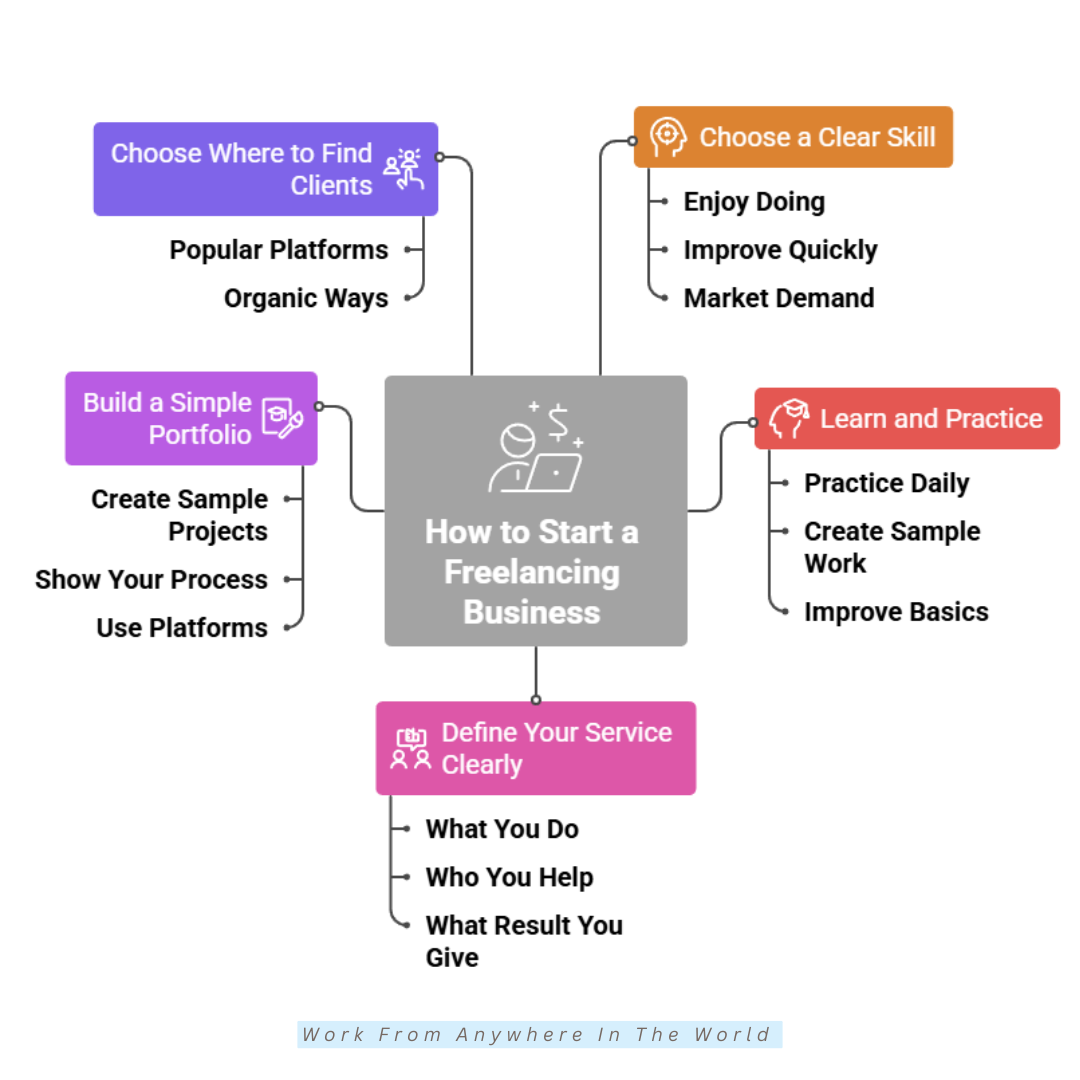
Step 1: Choose A Clear Skill
Before starting a freelancing business, it can help to focus on one clear skill and build a strong foundation around it. While offering multiple services may seem appealing at first, many beginners find it easier to gain confidence and attract clients by specializing in one area.
Take time to consider what you enjoy, what you can learn and improve, and what people are actively looking for in the market. Choosing a clear direction early may help reduce confusion and make it easier to build experience and a portfolio.
Some common freelancing skills include:
When choosing a skill, it may help to consider something that:
- You enjoy doing
- You can improve over time
- Has real market demand
- Allows you to build a portfolio
- Offers long-term growth potential
You do not need to be perfect when starting. Focusing on one clear direction may simply make the learning process feel more manageable.
Step 2: Learn And Practice
Before looking for clients, it can help to spend time building skills through learning and regular practice. Developing confidence and improving weaker areas may make freelancing feel more manageable and help prepare you for real projects.
Rather than focusing only on earning right away, many beginners find it helpful to strengthen their skills and create practice work first. Over time, experience and confidence often make it easier to attract clients and deliver better results.
Before applying for freelance work, you might focus on:
- Practicing your skill regularly
- Creating sample work or portfolio pieces
- Improving the basics in your chosen field
- Learning from real examples and competitors
- Using feedback to improve over time
For example:
- Writers: Blog posts, captions, or website content
- Designers: Logos, graphics, or social media visuals
- SEO specialists: Content optimization and keyword research
- Social media managers: Content planning and scheduling
- Web developers: Simple websites or landing pages
Tip
You do not always need real clients to begin learning. Practicing consistently and building experience over time may help strengthen skills and confidence.
Step 3: Define Your Service Clearly
Having a clear service offering can make it easier for potential clients to understand what you do, who you help, and how your skills may benefit them. A specific message often feels more professional and may help build trust more quickly.
Instead of using broad descriptions such as:
“I’m a freelancer”
It may help to clearly explain your service and the results you aim to deliver.
For example:
“I help small businesses grow their social media through content strategy and engagement.”
A clear service description often explains:
- What you do
- Who you help
- What result or outcome do you provide
For example:
“I write SEO-friendly blog posts that help websites improve search visibility and attract organic traffic.”
When your message is clear and specific, potential clients may find it easier to understand your services and decide whether you are the right fit for their needs.
Step 4: Build A Simple Portfolio
A portfolio can help potential clients understand your skills and the type of work you can offer. Even without real client experience, it is still possible to create a strong portfolio by developing sample projects that reflect your abilities.
The goal is not to showcase years of experience but to demonstrate your skills, style, and problem-solving ability through clear and practical examples.
You might begin by:
- Creating 3–5 sample projects
- Treating them like real client work
- Showcasing your process or approach
- Highlighting the type of results or outcomes you aim to provide
For example:
- Writers: Blog posts, website content, or social media captions in a chosen niche
- Designers: Branding kits, graphics, or social media visuals
- Social media managers: Sample content calendars or mock content plans
You can organize your work using platforms such as:
- Google Docs
- Canva
- A simple personal website or portfolio page
A portfolio does not need to be perfect in the beginning. A simple and well-organized presentation of your skills may help build credibility and confidence over time.
Step 5: Choose Where To Find Clients
Finding clients is an important part of building a freelancing business, but many beginners find it easier to start by focusing on a few platforms rather than trying to be everywhere at once. Focusing on fewer places may help build confidence, improve communication skills, and create a more manageable workflow.
Over time, gaining experience with client conversations, proposals, and project expectations may help make freelancing feel more comfortable and professional.
Some popular freelancing platforms include:
Other ways to connect with potential clients include:
- Facebook groups
- Personal or professional networks
Since each platform works differently, it may help to take time to understand how people communicate and what clients are looking for. Many freelancers combine platform-based work with relationship-building through networking and online communities to gradually create more opportunities.
Step 6: Create A Strong Profile
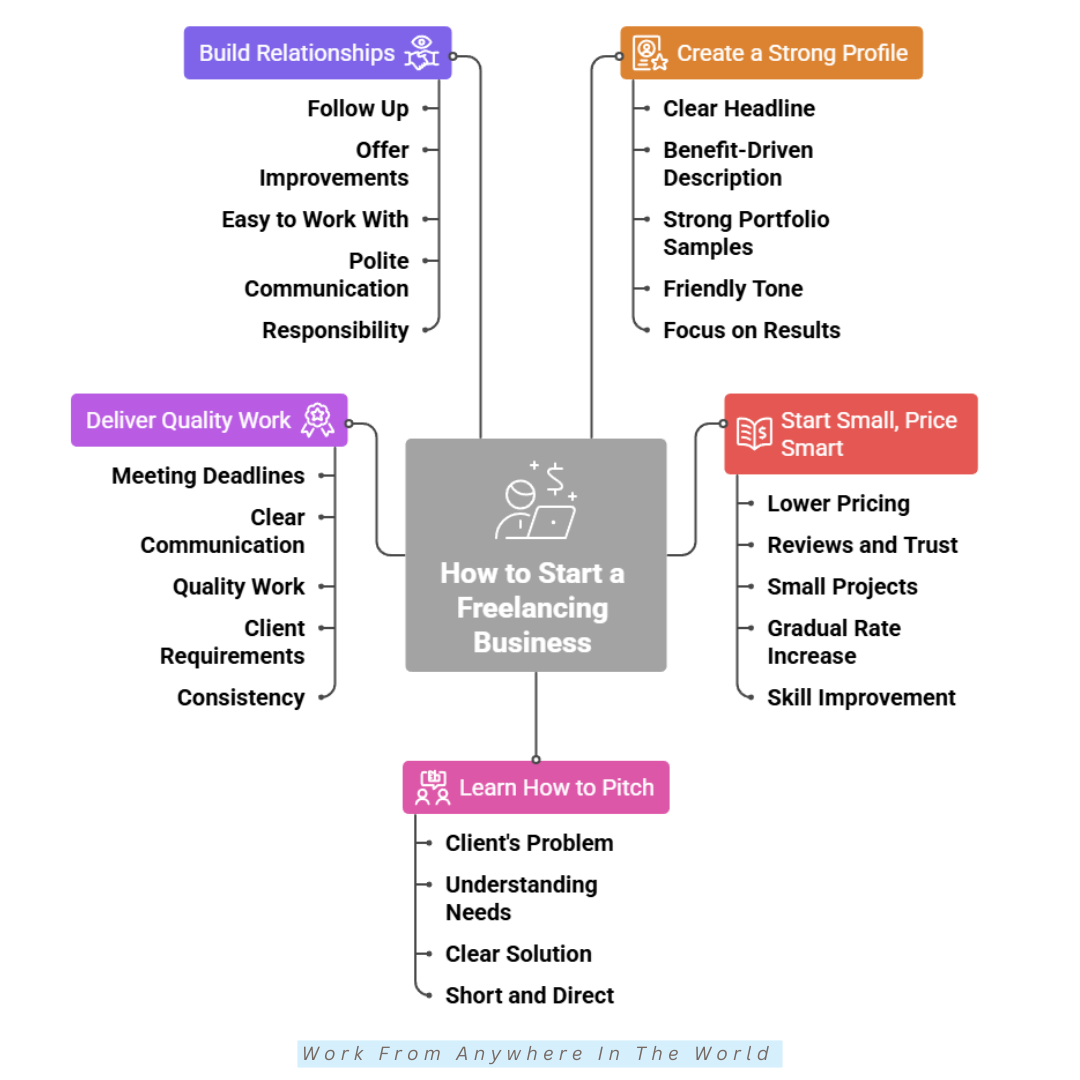
Your freelancing profile is often one of the first things potential clients see, so a clear, professional presentation can help create a positive impression. A well-written profile can help explain what you do, who you help, and the value or results you aim to deliver.
Rather than trying to include everything, many freelancers find it helpful to keep their profiles clear, honest, and easy to understand.
You may want to focus on:
- A clear headline that highlights your skill or service
- A simple, benefit-focused description
- Portfolio examples that showcase your work
- A friendly but professional tone
- Clearly explaining the value or results you provide
It may also help to avoid:
- Long or overly complicated descriptions
- Copying content from other profiles
- Exaggerated claims or unrealistic promises
- Unclear or confusing wording
- Including unnecessary information
A simple, well-organized profile may help potential clients better understand your services and feel more confident about working with you.
Step 7: Start Small And Price Fairly
Setting prices as a beginner can sometimes feel challenging. Many freelancers choose to start with fair, realistic pricing as they build experience, confidence, and a portfolio.
Rather than focusing solely on higher rates at the outset, smaller projects may help build reviews, strengthen skills, and foster a better understanding of client expectations. Over time, pricing may naturally evolve as experience and confidence grow.
A practical approach may include:
- Starting with fair and realistic pricing
- Building trust and client reviews
- Taking smaller projects to gain experience
- Gradually increasing rates over time
- Adjusting pricing as skills improve
When setting prices, it may help to:
- Research beginner rates within your niche
- Compare market averages for similar services
- Consider simple service packages (basic, standard, premium)
- Keep pricing flexible while gaining experience
Freelancing often develops gradually, and pricing may become easier to adjust as skills, confidence, and experience grow.
Step 8: Learn How To Pitch
Pitching is one way freelancers introduce their services to potential clients and explain how they may be able to help solve a problem. Even strong skills can be difficult to showcase if potential clients do not clearly understand the value you offer.
A clear and professional pitch often focuses on the client’s needs, the problem they may be facing, and how your service could help support a solution. Keeping communication simple and relevant may also help create a stronger first impression.
A helpful pitch may include:
- Understanding the client’s challenge or goal
- Showing awareness of their needs
- Explaining how the issue may affect results or growth
- Offering a clear solution or approach
- Briefly explaining how your skills may help
- Keeping the message clear and concise
For example:
“I noticed your blog could benefit from stronger SEO optimization. I help improve search visibility through keyword-focused content and would be happy to share examples of similar work.”
Keeping pitches short, relevant, and focused on value may help make communication feel more professional and approachable.
Step 9: Deliver Quality Work
Once you begin working with clients, delivering reliable and professional work becomes an important part of building a freelancing business. Early projects may help shape your confidence, experience, and professional reputation over time.
Many freelancers find that clear communication, meeting deadlines, and understanding project expectations can help foster more positive working relationships with clients.
You may want to focus on:
- Meeting deadlines
- Communicating clearly
- Delivering quality work
- Understanding client requirements
- Staying consistent in your work
- Maintaining a professional approach
Positive client experiences may also help:
- Create repeat work opportunities
- Lead to referrals or recommendations
- Strengthen confidence and experience
- Improve your portfolio
- Open the door to new opportunities
- Build stronger long-term relationships
Over time, consistent, professional work may help build trust and make freelancing feel more sustainable.
Step 10: Build Professional Relationships
Freelancing is not only about completing projects—it also involves building professional relationships over time. Positive client experiences may sometimes lead to repeat work, referrals, and long-term opportunities.
Many clients appreciate freelancers who are reliable, respectful, communicative, and easy to work with. Building trust through professionalism and consistency may help strengthen working relationships over time.
You may want to focus on:
- Following up with clients when appropriate
- Offering helpful suggestions or small improvements
- Maintaining clear and polite communication
- Showing reliability and responsibility
- Staying professional throughout each project
Clients often value freelancers who:
- Communicate clearly
- Understand project needs
- Are reliable and consistent
- Respond in a timely manner
- Approach challenges professionally
Over time, building strong professional relationships may help create a more stable and rewarding freelancing experience.
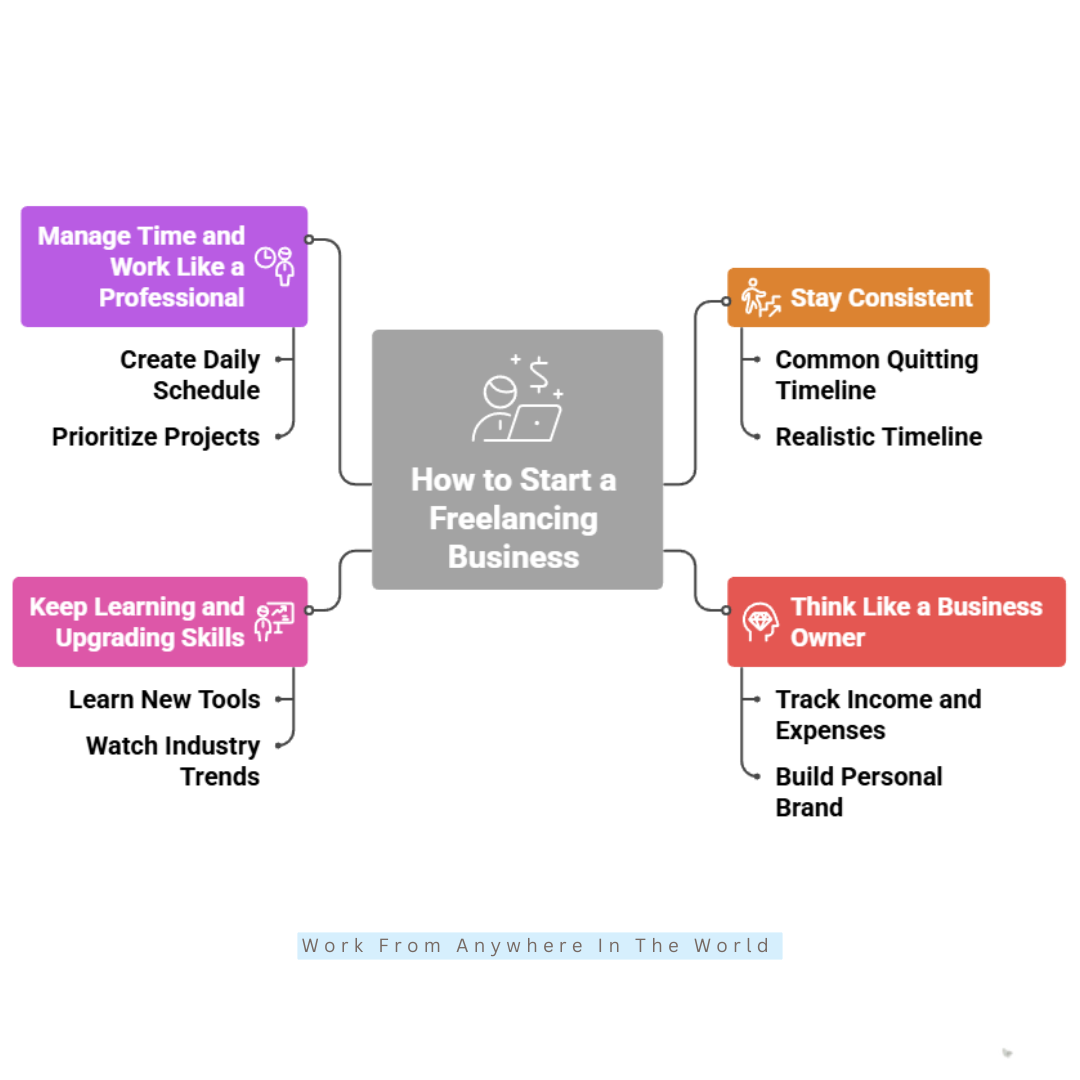
Step 11: Stay Consistent
Building a freelancing business often takes time, patience, and consistent effort. Progress may feel slow at first, especially when building skills, gaining experience, and learning to work with clients.
Many freelancers find that steady improvement and regular practice help build confidence over time. Rather than expecting immediate results, focusing on learning, improving, and showing up consistently may help create a stronger long-term foundation.
Freelancing timelines can vary depending on skills, niche, experience, and market demand. Some freelancers may find their first clients relatively quickly, while others may take longer as they build experience and visibility.
Helpful areas to focus on include:
- Continuing to improve your skills
- Staying consistent with learning and practice
- Building experience through smaller projects
- Improving communication and professionalism
- Being patient with long-term growth
Over time, small, consistent efforts may help strengthen confidence, skills, and professional opportunities.
Step 12: Think Like A Business Owner
As freelancing develops, many people begin to view their work more as a business than as a collection of individual projects. Taking a professional approach may help with organization, long-term planning, and building stronger client relationships over time.
Thinking about freelancing as a business may also encourage more consistent decision-making and support long-term growth goals.
This may include:
- Tracking income and expenses
- Improving services over time
- Building a professional brand or online presence
- Focusing on positive client experiences
- Planning for future growth
Over time, some freelancers may choose to:
- Increase their rates as experience grows
- Improve systems and workflows
- Expand the services they offer
- Collaborate with others or build a small team
Freelancing can evolve in different ways depending on personal goals, skills, and experience. Taking a professional and consistent approach may help create more opportunities over time.
Step 13: Keep Learning And Improving Skills
Freelancing continues to evolve, with new tools, trends, and client expectations appearing over time. Continuing to learn and improve their skills may help freelancers stay current, strengthen their confidence, and expand the types of services they can offer.
Regular learning can also help identify areas for improvement and support long-term professional growth. As skills develop, some freelancers may find it easier to take on more advanced projects or explore new opportunities.
Helpful areas to focus on include:
- Learning new tools within your niche
- Strengthening weaker areas or skills
- Staying informed about industry trends
- Practicing regularly
- Learning from experienced freelancers
You may also find it helpful to:
- Take online courses or tutorials
- Join freelancer communities
- Study examples from competitors or peers
- Experiment with new techniques
- Apply new skills through practice projects or client work
Over time, continued learning and regular practice may help strengthen both skills and confidence in freelancing.
Step 14: Manage Time And Work Professionally
Time management can play an important role in freelancing, especially when balancing projects, deadlines, and ongoing learning. Having a simple structure may help work feel more organized and manageable over time.
Since freelancing often offers flexibility, many people find it helpful to create routines that support productivity while maintaining a healthy balance between work and personal time.
Helpful areas to focus on include:
- Creating a daily work schedule
- Setting realistic deadlines for tasks
- Prioritizing important projects
- Reducing distractions while working
- Tracking how time is spent
You may also find it helpful to:
- Break larger projects into smaller steps
- Use simple tools to organize tasks and schedules
- Create regular working hours when possible
- Take short breaks to maintain focus
- Review progress at the end of the day
Over time, developing simple routines and time-management habits may help make freelancing feel more organized and sustainable.
FAQs
1. Do I Need Experience To Start Freelancing?
No, professional experience is not always required to start freelancing. Many beginners begin by developing basic skills, practicing regularly, and creating sample work to showcase their abilities.
In many cases, clients are more interested in the quality of your work and how well you can solve a problem than in formal job experience.
2. How Long Does It Take To Get Your First Client?
The time it takes to find a first client can vary depending on skills, niche, experience, and how actively services are promoted. Some freelancers may find opportunities relatively quickly, while others may take more time as they build confidence and visibility.
Regular practice, building a strong profile, and improving communication may help increase opportunities over time.
3. Which Freelancing Skill Is Best For Beginners?
Beginner-friendly freelancing skills may include content writing, social media management, graphic design, virtual assistance, or basic website support.
Choosing a skill that matches your interests and strengths may make learning feel more enjoyable and sustainable over time.
4. Can Freelancing Become A Full-Time Income Source?
Yes, freelancing may become a full-time source of income for some people over time. Growth often depends on factors such as skills, consistency, client relationships, niche demand, and experience.
Many freelancers gradually build their businesses by improving their skills, gaining repeat clients, and expanding the services they offer.
Conclusion
Starting a freelancing business can be a practical way to build income online while developing valuable professional skills. While progress may take time, focusing on one clear skill, building experience, and improving consistently may help create a stronger foundation over time.
Freelancing often develops gradually through learning, practice, and real-world experience. Building a portfolio, improving communication, and delivering reliable work may help create more opportunities as confidence and skills grow.
Whether freelancing becomes a side income or a long-term career, taking a patient and professional approach may help make the journey feel more sustainable and rewarding.
I trust you enjoyed this article on How To Start A Freelancing Business. Please stay tuned for more insightful blogs on affiliate marketing, online business, and working from anywhere in the world.
Take care!
— JeannetteZ 🌍✨
💬 Your Opinion Is Important To Me
Do you have thoughts, ideas, or questions? I’d love to hear from you. Please leave your comments below or email me directly at Jeannette@WorkFromAnywhereInTheWorld.com.
📚 More Work From Anywhere Reads
🚀 Ready to Build a Business You Can Run from Home
Or from Anywhere in the World?
Imagine creating income on your terms — from home, a cozy café, or wherever life takes you.
With the right tools, training, and community support, it’s entirely possible.
Start your own online business for free — no credit card needed.
Disclosure
This post may contain affiliate links. As an Amazon Associate and participant in other affiliate programs, I earn from qualifying purchases at no extra cost to you. Please read my full affiliate disclosure.