

Hobby Blogging vs Pro Blogging: Pros, Cons, & Smart Choices
Hobby Blogging vs Pro Blogging is a choice many bloggers eventually face. Some people blog for fun and personal enjoyment, while others turn blogging into a serious online business. Both approaches can be rewarding, but they often lead to very different experiences and goals.
Blogging has changed a lot over the years. It is now faster, more competitive, and filled with opportunities for those willing to grow. Many bloggers start casually, only to later wonder:
“Could I actually turn this into something more?”
If you are trying to decide between hobby blogging and professional blogging, you are not alone. In this article, we will explore the key differences, benefits, and challenges to help you decide which path may suit you best.
What Is Hobby Blogging?
Hobby blogging means writing a blog for fun, not for money or business reasons. It's your own online space to share your ideas, experiences, and interests.
You don't need to follow strict SEO rules, worry about keywords, or stick to a posting schedule. You write whenever you want, so it feels natural and relaxed. Some days you write a lot, other days not at all, and that's completely fine.
Most people start hobby blogging because they love a topic, like pets, travel, cooking, gardening, or even daily life. It can feel like keeping an online diary that others can read and connect with if they find it.
That freedom is comforting. Since you're not chasing traffic or money, your writing stays personal and honest. Sometimes your writing is polished, and sometimes it's a bit messy, but that's what makes it real.
Over time, you might build a small audience who likes your style. Still, the main goal is self-expression. Hobby blogging is about creativity, reflection, and enjoying writing, not about performance.
Pros Of Hobby Blogging
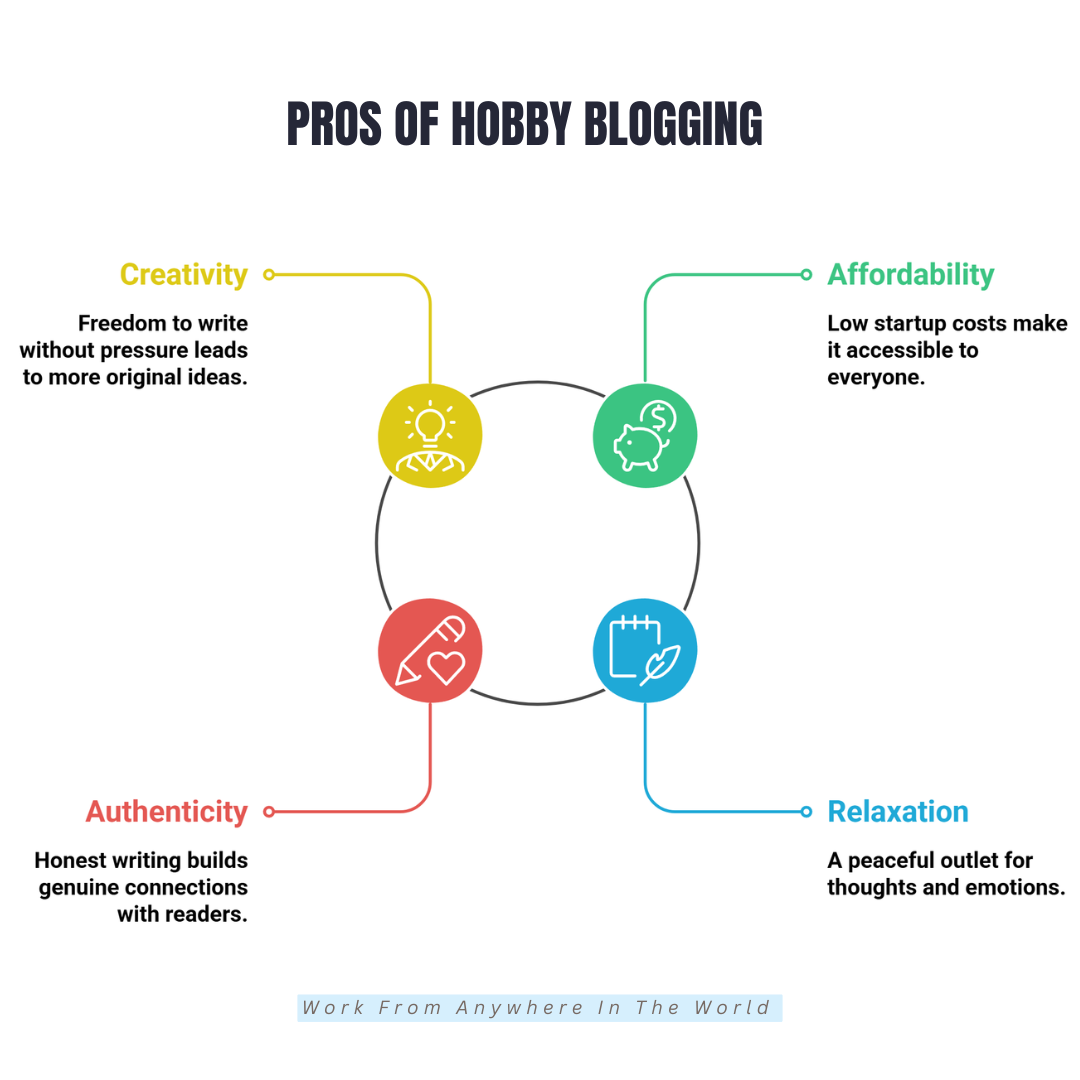
1. No Pressure, Just Creativity
Hobby blogging offers total freedom, which makes it truly enjoyable. You write when you want, without deadlines, traffic pressure, or strict schedules. If you skip a week or even a month, nothing happens, so stress stays low.
In this relaxed space, creativity flows more naturally because you’re not focused on SEO, keywords, or algorithms. You simply write what feels right, at your own pace, without worrying about being perfect or overly professional.
2. Affordability
It’s also easy and affordable to start. Many platforms are free, and even upgrading to a domain or hosting is low-cost. This makes it perfect for beginners, students, or anyone experimenting without financial risk. You can try ideas, learn gradually, and focus on creativity instead of budget concerns.
3. Authentic Voice
Hobby blogging helps you develop a more real, human voice because there's no pressure to sound like a marketer or SEO expert. You write the way you think, almost like talking to a friend.
This makes your content feel honest and relatable. It might not always be perfect, but that's what makes it strong. Readers can sense your real emotions and thoughts.
There's no forced structure or keyword stuffing, just natural writing. Over time, this builds a quiet connection with readers who value sincerity.
They return for your personality and perspective, not for perfection. In a world full of optimized content, this honesty stands out.
4. Mental Relaxation
Hobby blogging often feels more like mental relaxation than just writing. It gives you a place to slow down, think clearly, and share what's on your mind.
There's no pressure to perform, rank, or make money, so it feels lighter and more peaceful. Many people use it like journaling, but in a more open and creative way.
You can write about your day, your thoughts, or small moments that usually go unspoken. This simple habit helps clear your mind and brings calm.
It lets you process emotions in a healthy way without worrying about structure or results. Over time, it can feel therapeutic, almost like talking to yourself, but in a creative format.
Cons Of Hobby Blogging
1. No Income (Usually)
Most hobby blogs don't make real money. You can add ads or try affiliate links, but without a clear plan, it's rare to earn a steady income. It's not about your writing skills; hobby blogging just isn't set up for making money.
Usually, there's no SEO planning, keyword targeting, or traffic funnel. So even if you post often, your earnings may be low, or you may not earn at all. Sometimes, a hobby blog takes off and brings in real income, but that's rare.
You might get a small surprise now and then, but it's not common. For most hobby bloggers, money isn't the goal—the blog is a passion project.
2. Slow Growth
Growth in hobby blogging is usually slow because there's little focus on SEO, promotion, or audience building. You might write great posts, but they may not reach people quickly.
Search engines take time to notice posts that aren't optimized, and without sharing or marketing, your blog stays less visible. This can get frustrating. You put in effort, but traffic barely changes.
There are no big jumps, just slow and sometimes invisible progress. It takes patience, and not everyone likes waiting. Over time, this slow pace can make bloggers lose excitement and motivation.
3. Lack Of Direction
A common problem in hobby blogging is a lack of clear direction or structure. You often start excited, writing about anything you like, which feels fun and free.
But without goals or planning, the blog can start to feel scattered. There's no content strategy or plan for what to write next. This often leads to inconsistency: you post a lot at first, then stop for long periods.
Motivation fades because there's no clear purpose. Over time, the blog can feel random and disconnected, making it harder to stay committed.
4. Low Engagement And Feedback
Another downside of hobby blogging is low reader engagement. Since there's usually little SEO or promotion, traffic stays low, so you get fewer comments, shares, and reactions.
That silence can feel discouraging, especially after putting effort into each post. Blogging feels less rewarding without feedback. You might wonder if anyone is reading your work.
Even good posts can go unnoticed simply because people don't find them. Over time, this lack of interaction can lower motivation and make writing less exciting.

What Is Pro Blogging?
Pro blogging is when blogging shifts from a casual hobby to a more serious, structured effort, usually to earn money or build a long-term online presence. It's no longer just about writing whatever you want.
Now, there's planning involved. You think about what people are searching for, use SEO strategies, and work to grow your traffic. It feels like running a small online business, even if you're the only one doing it.
You might focus on affiliate marketing, ads, or digital product sales, so every post serves a purpose beyond self-expression. Pro blogging teaches discipline and skill development, especially in writing and marketing.
It can feel stressful sometimes because results don't come instantly. But when it works, it can become a real source of income. So it's more structured, more strategic, and a bit demanding—but also very rewarding if you stick with it.
Wealthy Affiliate – Mini Review
If you’ve ever thought about turning your blog, passion, or niche into an online business,
Wealthy Affiliate (WA) is one of the most beginner-friendly platforms I’ve used.
It combines step-by-step training, website hosting, AI-powered tools,
keyword research, and an active community all in one place.
What I like most is that you can start free (no credit card needed), explore the platform,
test the tools, and connect with other entrepreneurs before upgrading.
WA isn’t a “get rich quick” scheme — success comes from consistent effort
and applying what you learn over time.
Pros of Pro Blogging
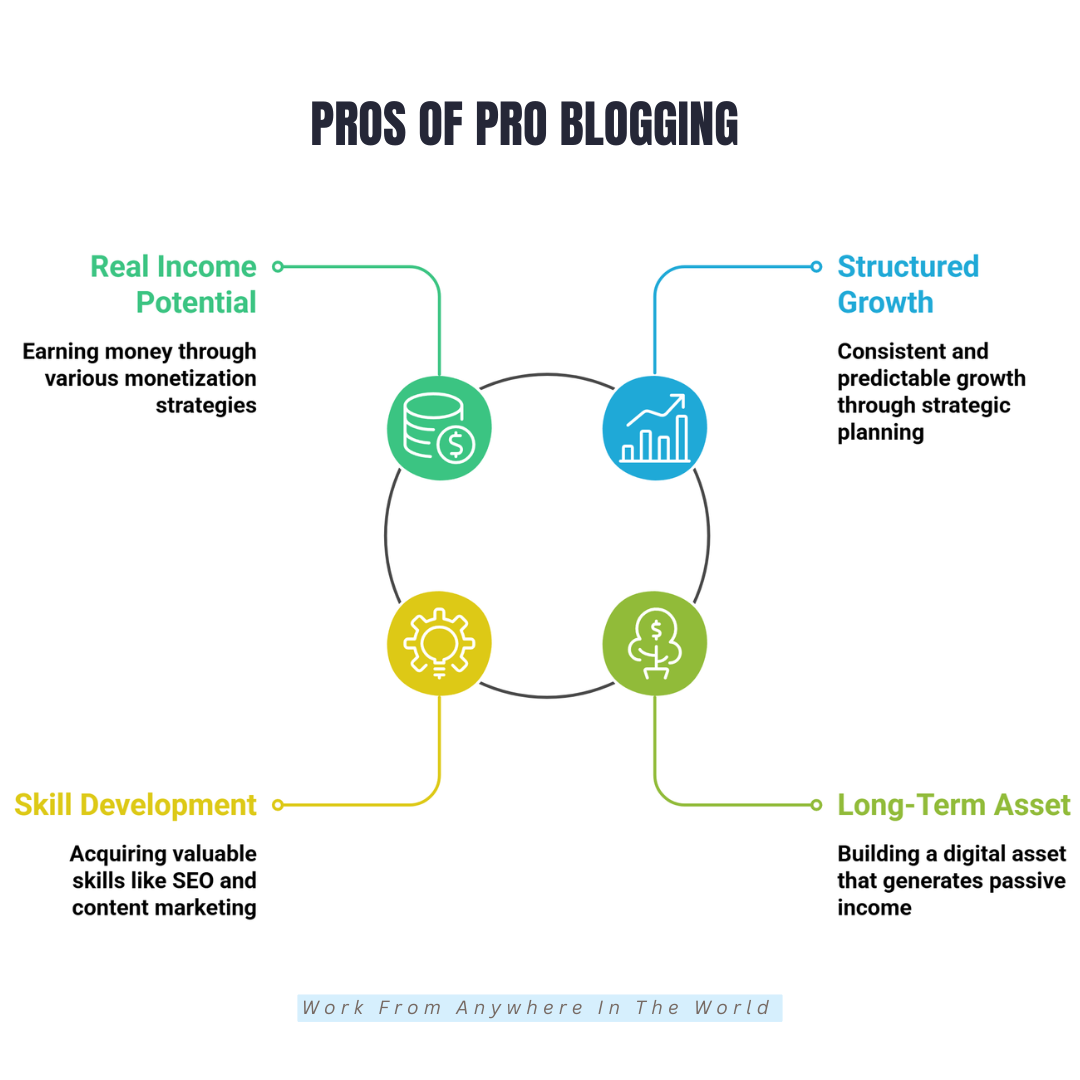
1. Real Income Potential
This is honestly the biggest reason people choose to blog professionally. You are not just writing for fun anymore; you are building income streams.
Pro bloggers can earn in different ways, like affiliate marketing, display ads, digital products, and sponsored posts. It depends on strategy and consistency.
Some bloggers make a small side income each month, while others turn it into a full-time job. The difference comes from planning and traffic.
It does not happen overnight, but the earning potential is real. If done properly, a blog can become a steady source of online income over time.
2. Structured Growth
Pro blogging gives you direction instead of randomness. You don't just publish whatever comes to mind. You follow a plan, research keywords, and target topics people are actually searching for.
This makes your content more discoverable. You also build authority in your niche step by step. Traffic doesn't just appear randomly; it grows because you work for it. You improve old posts, track performance, and adjust your strategy.
Over time, this approach creates more predictable and stable growth. It feels organized, and even if progress is slow at first, it becomes more consistent and measurable later on.
3. Skill Development
One of the hidden benefits of pro blogging is how much you learn along the way. It's not just about writing; you pick up real-world skills like SEO, content marketing, copywriting, and basic analytics.
You start to see how readers behave and what content works best. These skills help beyond blogging, too—they're useful for freelancing, digital marketing, or starting other online businesses.
Even if you move on from blogging, the knowledge stays with you. It becomes a practical learning experience, not just a creative outlet.
4. Long-Term Asset
A pro blog isn't just content online; it can become a real digital asset. As your traffic and authority grow, it can earn passive income through ads, affiliates, or products.
Some people even sell their blogs for good money if they do well. Hobby blogs rarely offer this because they're not built for structure or monetization.
With pro blogging, every post adds long-term value. You're building something that keeps working even when you're not writing every day. That long-term potential is what makes it powerful.
Cons Of Pro Blogging
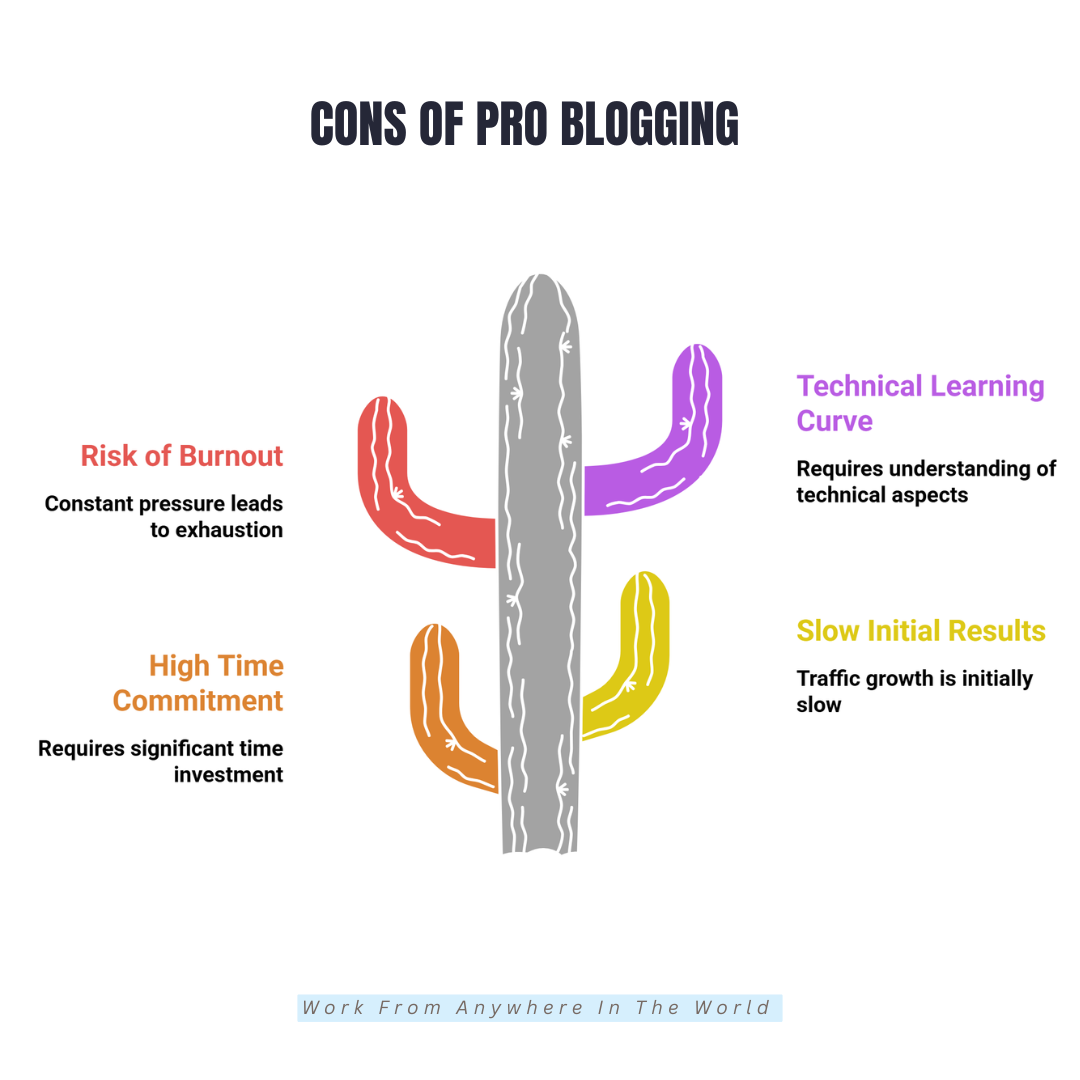
1. High Time Commitment
Pro blogging takes a lot of time, and many people underestimate this at first. It's not just about writing and publishing posts. You need to do keyword research, plan topics, write content, optimize for SEO, and sometimes update old posts.
Plus, there's promotion and tracking your results. It can feel like a full-time job, even if you're not earning much yet. Some days, you spend hours and still feel like you haven't done enough. This constant workload can be tiring, especially when you're trying to stay consistent every week.
2. Slow Initial Results
One of the hardest parts of pro blogging is how slow results can be at first. You work hard, publish content, and still see little traffic in the beginning. Search engines take time to trust new sites, so growth is slow.
This waiting period can feel discouraging, especially when you compare yourself to others. Even good content might go unnoticed for weeks or months.
It takes patience, and not everyone is ready for that slow start. Many people give up too soon because they expect faster results.
3. Risk Of Burnout
Pro blogging can lead to burnout if you're not careful. When you always focus on deadlines, SEO, and performance, the pressure adds up. You might feel like you always need to publish more or do better.
Over time, this mental load gets heavy. Writing starts to feel like work instead of something fun. Even small tasks can feel overwhelming when you're tired.
If you don't keep a balance, motivation drops quickly. Many bloggers take breaks or quit for a while because they feel drained by the constant effort and expectations.
4. Technical And Learning Curve
Pro blogging involves more than writing—it comes with a technical learning curve that can feel overwhelming at first. Beginners need to understand SEO, analytics, website setup, and basic troubleshooting, which takes time and practice.
Mistakes are common and part of the process, but they can slow progress if expectations aren't realistic. Many new bloggers struggle because they underestimate the technical side of blogging.
To make things easier, beginner-friendly resources can help. Platforms like WPBeginner offer step-by-step setup guides, while Moz provides a solid introduction to SEO.
Communities like Reddit (r/Blogging) also offer practical advice and support, helping you learn faster and more confidently.
How To Transition From Hobby To Pro
Step 1: Pick A Clear Niche
Choosing a clear niche is the first real step from hobby to pro blogging. Don't pick a topic that's too broad, as it can slow growth and confuse readers. A focused topic helps search engines better understand your site.
For example, instead of writing about “pets,” you could focus on “senior dog care.” It might seem small, but having a focus builds authority and helps your blog grow faster and stronger.
Step 2: Learn Basic SEO
SEO sounds big, but you only need the basics to start. Focus on keywords, good titles, and clear headings. That's enough in the beginning. It simply helps people find your blog on Google.
You don't need advanced tools or deep knowledge right away. Just apply basic SEO to every post, and you'll slowly notice improved visibility and steady traffic growth.
Step 3: Publish Consistently
Consistency is more important than perfection in blogging. You don't have to post every day, but try to be regular. Even one or two posts a week is enough.
This builds trust with readers and search engines. Some posts will be better than others, and that's normal. The key is to keep going. Regular publishing makes your blog stronger and more visible over time.
Step 4: Add Monetization
Start monetizing slowly once you have some content and traffic. Keep it simple at first. Affiliate links and basic ads are enough to begin with. Don't rush into complicated ways to make money.
The goal is to support your blog, not force earnings too soon. As your traffic grows, more income options will come. Simple monetization works best when it fits naturally with helpful content.
Step 5: Improve Over Time
Blogging is a long-term process, not something perfect right away. Your first posts will be basic, and that's okay. Keep improving as you go.
Update old articles, fix mistakes, and write better content over time. Growth comes from taking action, not waiting. Each post teaches you something new and slowly builds your skills, confidence, and blogging success.
Conclusion
In the end, hobby blogging and pro blogging aren't rivals—they're just different paths. One is driven by passion, the other by purpose and income.
You don't have to rush your decision. Many bloggers start casually and slowly move toward a more professional approach. What matters most is being consistent and enjoying the process.
Whether you blog for fun or growth, the best results come when you stay genuine, keep learning, and stick with it long enough to see progress. Your voice matters, so keep sharing it. You never know who you'll inspire.
I trust you enjoyed this article on Hobby Blogging vs Pro Blogging: Pros, Cons, and Smart Choices. Please stay tuned for more insightful blogs on affiliate marketing, online business, and working from anywhere in the world.
Take care!
— JeannetteZ 🌍✨
💬 Your Opinion Is Important To Me
Do you have thoughts, ideas, or questions? I’d love to hear from you. Please leave your comments below or email me directly at Jeannette@WorkFromAnywhereInTheWorld.com.
📚 More Work From Anywhere Reads
🚀 Ready to Build a Business You Can Run from Home
Or from Anywhere in the World?
Imagine creating income on your terms — from home, a cozy café, or wherever life takes you.
With the right tools, training, and community support, it’s entirely possible.
Start your own online business for free — no credit card needed.
Disclosure
This post may contain affiliate links. As an Amazon Associate and participant in other affiliate programs, I earn from qualifying purchases at no extra cost to you. Please read my full affiliate disclosure.