Freelancer.com vs PeoplePerHour: Pros & Cons
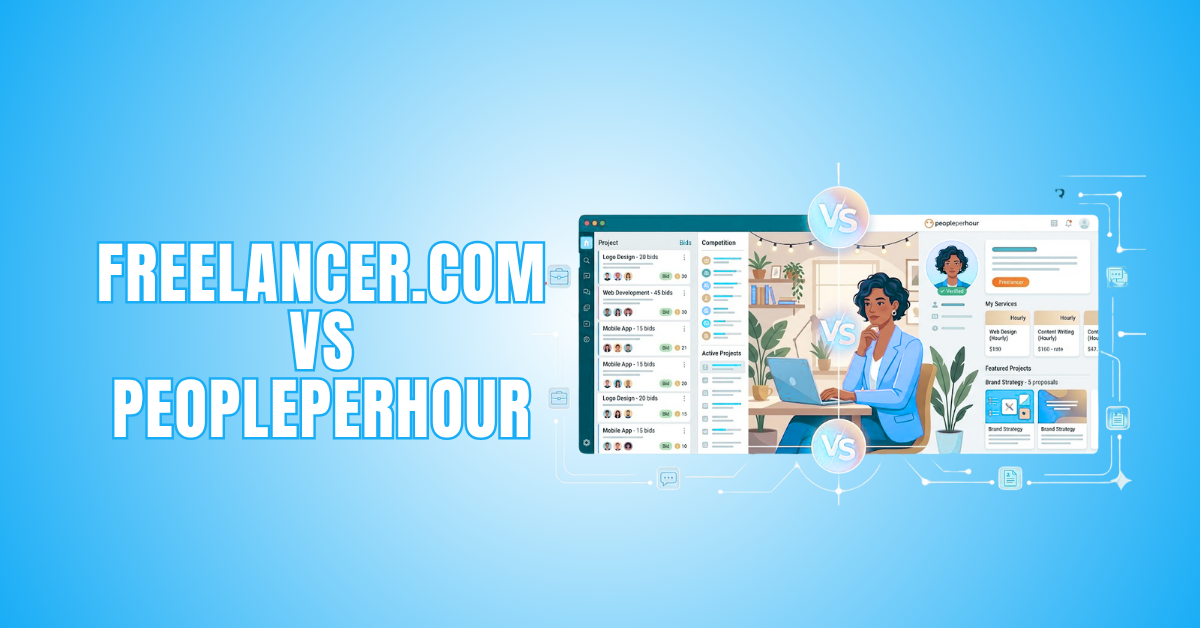
Freelancer.com vs PeoplePerHour is a common comparison for beginners and experienced freelancers looking for the right platform. Both connect freelancers with clients worldwide, but they differ in how they match projects and support long-term success.
Choosing the right platform can influence the types of projects you find, your earning potential, and your overall freelancing experience. Understanding these differences makes it easier to select the platform that best fits your goals.
In this comparison, we’ll explore their features, fees, ease of use, job opportunities, and overall value. We’ll also highlight the strengths and limitations of each platform to give you a balanced perspective.
By the end of this guide, you’ll have the information you need to choose the platform that best matches your skills, work style, and long-term freelance goals.
What Is Freelancer.com?
Freelancer.com is an Australia-based freelancing marketplace headquartered in Sydney. It connects businesses with freelancers across many industries, including writing, programming, graphic design, engineering, digital marketing, and customer support.
Businesses can post projects for freelancers to bid on. Freelancers can also enter contests to showcase their skills and win work. This flexibility appeals to different working styles.
The platform includes milestone payments, time tracking, and secure communication tools. These features help freelancers and clients manage projects more efficiently from start to finish.
Freelancer.com supports both short-term projects and long-term collaborations. Whether you’re starting your freelance career or growing an established business, the platform offers opportunities across a wide range of industries.
Pros Of Freelancer.com
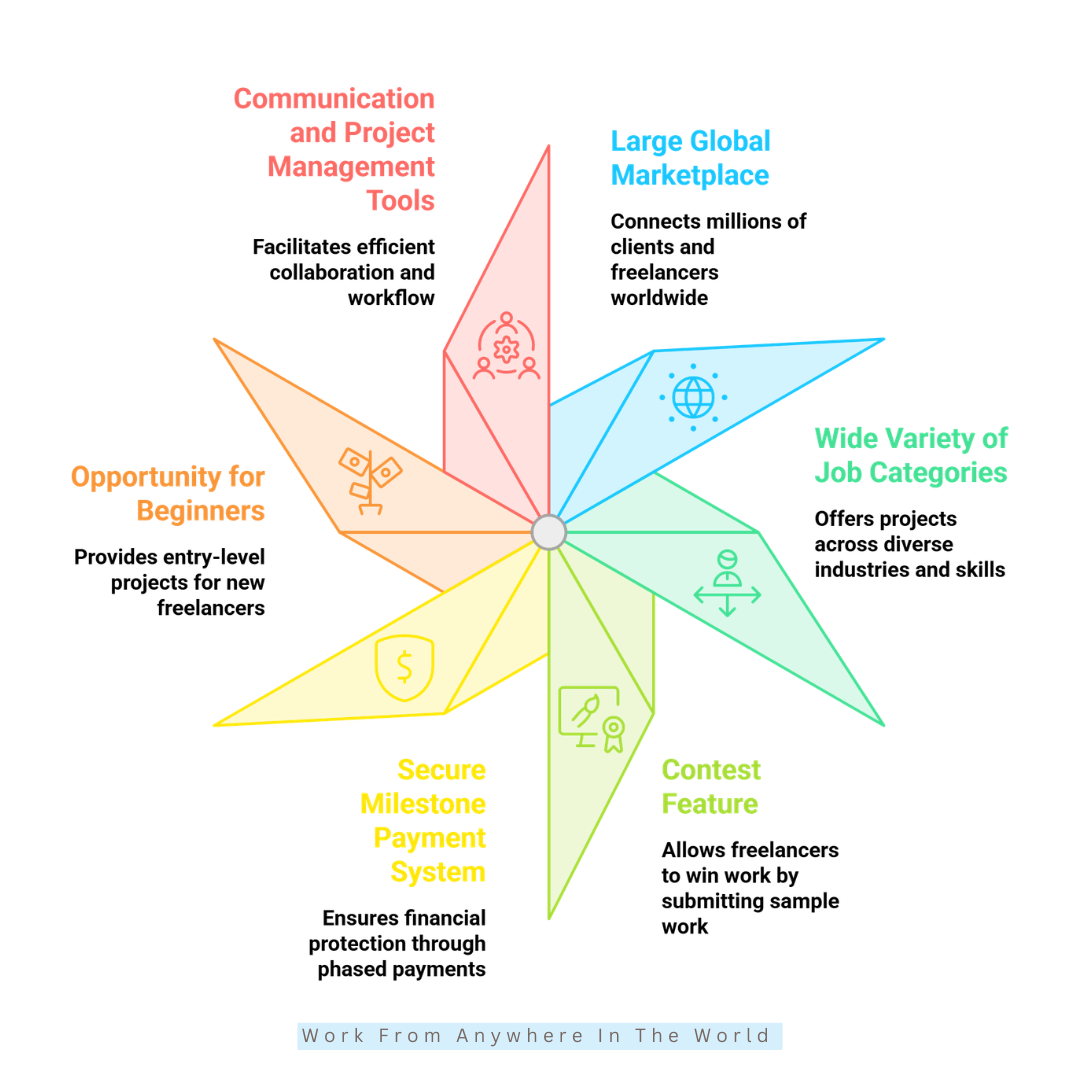
Freelancer.com offers a wide range of opportunities for freelancers at different experience levels. Its global marketplace connects businesses with professionals across many industries.
The platform provides several ways to find work, including project bidding and skill-based contests. This flexibility allows freelancers to choose the approach that best suits their strengths.
Freelancer.com also includes tools that make managing projects easier. Features such as milestone payments, time tracking, and secure messaging help support smooth collaboration.
Whether you’re building your portfolio or expanding an established freelance business, Freelancer.com offers features that can support your long-term success. Let’s explore some of its biggest advantages.
1. Access To A Large Global Marketplace
One of the biggest advantages of Freelancer.com is its large global marketplace. It connects businesses and freelancers from many countries, industries, and skill levels.
This broad reach gives freelancers access to projects in writing, programming, graphic design, marketing, accounting, and many other fields. It also makes it easier to explore different niches and types of work.
For beginners, Freelancer.com provides opportunities to gain experience and build a portfolio with real clients. Experienced freelancers can pursue larger projects and develop long-term client relationships.
Working with clients from around the world can also increase your earning potential. A larger marketplace often means more opportunities to find projects that match your skills and career goals.
2. Wide Variety Of Job Categories
Freelancer.com supports a broad range of job categories, making it suitable for professionals with different skills. Projects are available across many industries and experience levels.
Whether you specialize in graphic design, software development, content writing, virtual assistance, engineering, translation, or digital marketing, you’ll find opportunities in a variety of fields. This gives freelancers more flexibility when searching for work.
The platform is also a good choice for freelancers with multiple skills or those who want to explore new service areas. Instead of focusing on a single niche, you can apply for different types of projects.
Diversifying your services can create more income opportunities over time. It may also help reduce your reliance on seasonal demand within a single industry.
3. Contest Feature For Winning Work
One of Freelancer.com’s unique features is its contest system. Instead of relying only on proposals, freelancers can submit sample work for selected projects.
This approach allows designers, writers, and other creative professionals to showcase their skills before a client makes a hiring decision. Strong work can often speak louder than a written proposal.
For talented freelancers, contests provide another way to win projects, even without an extensive portfolio or many client reviews. They can be especially valuable for those who are just getting started.
A successful contest entry may also lead to long-term client relationships and future projects. It gives freelancers another opportunity to secure work beyond traditional bidding.
4. Secure Milestone Payment System
Freelancer.com offers a milestone payment system that provides an extra layer of financial protection. Clients can fund milestones before work begins, giving freelancers greater confidence that agreed work will be paid for.
This system helps reduce misunderstandings about payments and project expectations. It also creates a clearer structure for managing projects from start to finish.
For larger projects, dividing the work into milestones makes it easier to track progress. Both freelancers and clients can review each stage before moving on to the next.
Although payment disputes can still occur occasionally, a structured milestone system helps build trust between both parties. It also encourages smoother collaboration throughout the project.
5. Opportunity For Beginners To Start Freelancing
Freelancer.com can be a good place for beginners to gain freelance experience. The platform offers many small and entry-level projects across a variety of industries.
These opportunities allow new freelancers to build a portfolio and earn their first client reviews. They also provide valuable experience when learning how to write proposals and communicate with clients.
While early projects may not pay as much, they can help establish credibility over time. Positive ratings often improve your chances of winning larger and better-paying projects.
For anyone starting an online freelance career, Freelancer.com can be a practical place to learn and grow. Each completed project helps build the skills and confidence needed for long-term success.
6. Tools For Communication And Project Management
Freelancer.com includes several built-in tools to help manage projects more efficiently. Messaging, file sharing, time tracking, milestone management, and payment features are all available within the platform.
Having these tools in one place can reduce the need for additional apps. It also helps freelancers and clients stay organized throughout a project.
Clear communication makes it easier to discuss deadlines, revisions, and project expectations. This can help prevent misunderstandings and keep projects moving smoothly.
For freelancers managing multiple clients, these built-in tools can save time and improve productivity. A well-organized workflow also allows you to focus more on delivering quality work.
Cons Of Freelancer.com
While Freelancer.com offers many advantages, it also has some limitations that freelancers should consider. Understanding these challenges can help you decide whether the platform matches your experience, work style, and career goals.
Some drawbacks may affect beginners more than experienced freelancers. Others are common across many freelance marketplaces and can often be managed with the right approach.
Being aware of these potential challenges allows you to set realistic expectations before joining the platform. It also helps you prepare strategies to improve your chances of success.
The following disadvantages shouldn’t discourage you from using Freelancer.com. Instead, they provide a balanced view so you can make a well-informed decision before getting started.
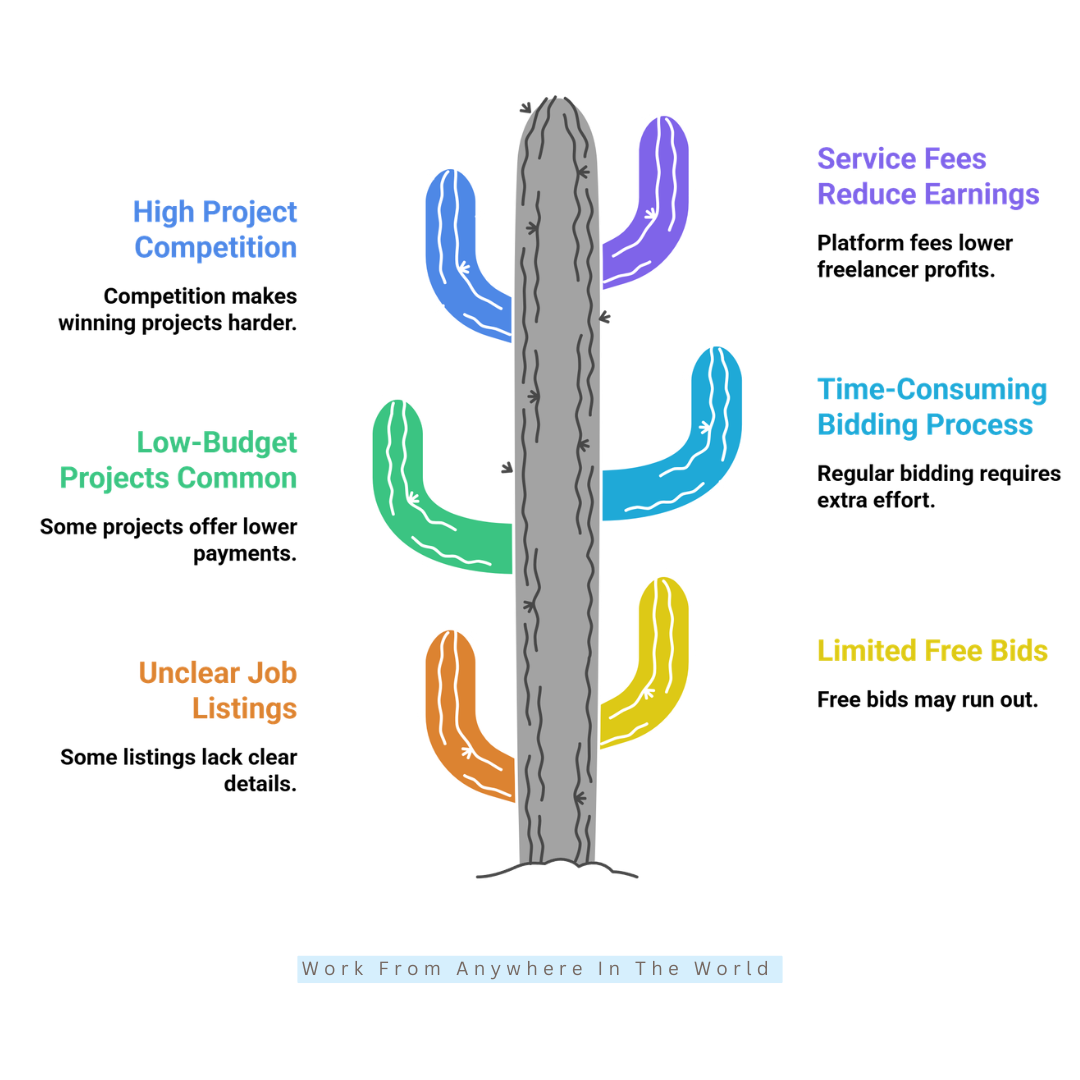
1. High Competition Can Make Winning Jobs Difficult
One downside of Freelancer.com is the high level of competition. Since freelancers from around the world use the platform, many projects receive numerous bids within a short time.
Beginners and freelancers with few client reviews may need more time to secure their first projects. Experienced freelancers with established reputations often have an advantage when competing for work.
Building a strong profile and writing thoughtful proposals can improve your chances of success. Patience and consistency also become important as you gain experience on the platform.
Although competition can be challenging, many freelancers build successful careers over time. Staying persistent and continuing to develop your skills can make a real difference.
2. Service Fees May Reduce Earnings
Freelancer.com charges service fees on completed projects, which can reduce your overall earnings. The amount depends on the type of project, contest, or payment arrangement.
These fees help support platform features, secure payments, and other services offered to freelancers and clients. However, they can have a greater impact on lower-paying projects.
For freelancers completing many small jobs, platform fees may add up over time. Pricing your services carefully can help offset these costs and protect your profitability.
Although service fees are something to consider, they are common on many freelance platforms. Understanding the fee structure allows you to plan your rates more effectively and build a sustainable freelance business.
3. Risk Of Low-Budget Or Underpriced Projects
Another disadvantage of Freelancer.com is the number of low-budget projects available on the platform. Since clients have different expectations and budgets, some listings may offer less compensation than the work requires.
This can make it more challenging to find fairly priced opportunities, especially in competitive categories such as writing or graphic design. Taking the time to review each project carefully becomes even more important.
Freelancers should avoid undervaluing their skills simply to win more work. Setting fair rates and choosing suitable projects can help build a stronger freelance business over time.
While low-budget projects are common on many freelance platforms, there are also clients willing to pay for quality work. Being selective and continuing to improve your skills can help you attract better opportunities.
4. Bidding System Can Be Time-Consuming
Freelancer.com mainly relies on a bidding system, so freelancers must regularly submit proposals to win projects. This process takes time and requires consistent effort.
Writing personalized bids, setting competitive prices, and competing with other applicants can become repetitive. Even well-prepared proposals do not guarantee that you’ll win the project.
For freelancers with busy schedules, managing the bidding process may sometimes feel time-consuming. Staying organized and applying for suitable projects can help you use your time more effectively.
Although bidding requires patience, it also gives freelancers the freedom to choose the projects they want to pursue. Developing strong proposals over time can improve your chances of winning quality work.
5. Fake Or Unclear Job Listings Occasionally Appear
Some freelancers may come across job listings with unclear requirements or unrealistic expectations. In some cases, project descriptions do not provide enough detail to understand exactly what the client needs.
Occasionally, suspicious or low-quality listings may also appear. This makes it important to review each opportunity carefully before submitting a proposal.
Checking a client’s profile, payment verification, previous reviews, and communication style can help reduce potential risks. Taking a few extra minutes to research a project is often worthwhile.
While these listings can be frustrating, they are not unique to Freelancer.com. Staying alert and choosing projects carefully can help you find more reliable clients and better opportunities.
6. Limited Free Bids For Some Users
Freelancer.com limits the number of free bids available to freelancers. Once those bids are used, additional bidding opportunities may require a paid membership plan.
For beginners who are still exploring freelancing or earning inconsistent income, this extra cost may feel like a disadvantage. It can also reduce the number of projects they apply for each month.
Having a limited number of bids encourages freelancers to choose projects more carefully. Focusing on opportunities that match your skills can often lead to better results than submitting large numbers of generic proposals.
Although the bidding limit may slow job searching at first, applying strategically can improve the quality of your applications. Over time, a thoughtful approach often produces better long-term results than simply sending more bids.
Wealthy Affiliate – Mini Review
If you’ve ever thought about turning your blog, passion, or niche into an online business,
Wealthy Affiliate (WA) is one of the most beginner-friendly platforms I’ve used.
It combines step-by-step training, website hosting, AI-powered tools,
keyword research, and an active community all in one place.
What I like most is that you can start free (no credit card needed), explore the platform,
test the tools, and connect with other entrepreneurs before upgrading.
WA isn’t a “get rich quick” scheme — success comes from consistent effort
and applying what you learn over time.
What Is PeoplePerHour?
PeoplePerHour is a UK-based freelance marketplace headquartered in London. It connects businesses with freelancers offering services such as web development, content writing, graphic design, SEO, digital marketing, and business support.
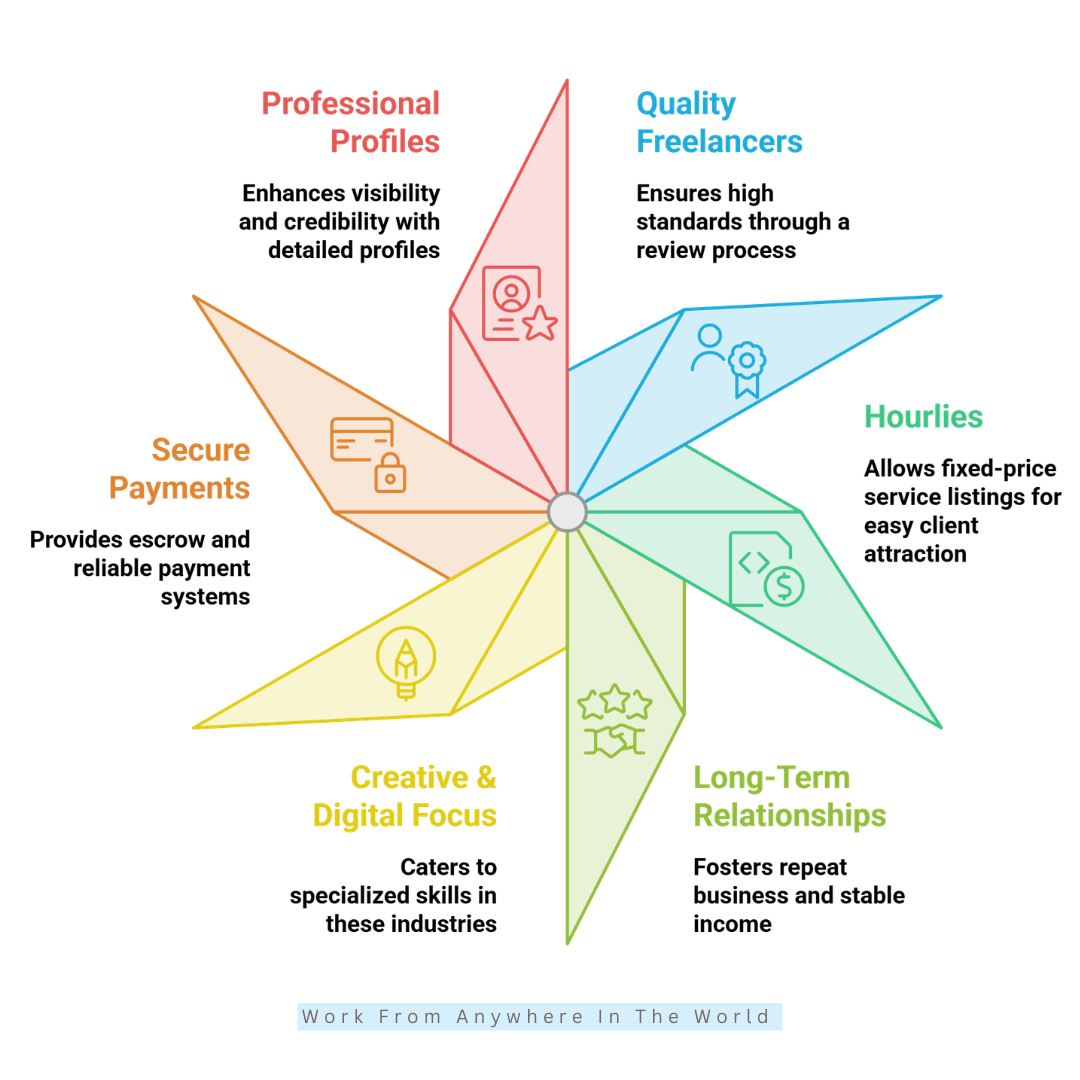
One of the platform’s distinctive features is its freelancer approval process and Hourlies, which are fixed-price service packages that freelancers can offer directly to clients. This gives buyers another way to hire freelancers beyond traditional project listings.
PeoplePerHour focuses on project-based freelance work across a variety of industries. The platform is especially popular with creative and digital professionals looking for flexible work opportunities.
Whether you’re an experienced freelancer or just starting your freelance journey, PeoplePerHour provides tools to connect with clients, manage projects, and build long-term working relationships.
Pros Of PeoplePerHour
PeoplePerHour offers several advantages for freelancers looking to build a flexible online career. Its features are designed to help freelancers connect with clients, manage projects, and grow their businesses.
The platform combines traditional project bidding with fixed-price Hourlies, giving freelancers more than one way to attract clients. This flexibility allows users to choose the approach that best suits their services.
PeoplePerHour also provides tools to support communication, secure payments, and project management. These features help freelancers and clients work together more efficiently.
Whether you’re building your portfolio or expanding an established freelance business, PeoplePerHour offers opportunities across a variety of industries. Let’s explore some of its biggest advantages.
1. Strong Focus On Quality Freelancers
One advantage of PeoplePerHour is its freelancer approval process, which helps maintain the overall quality of the platform. Unlike some freelance marketplaces, new freelancers are typically reviewed before they can begin offering their services.
This selective approach can benefit clients looking for skilled professionals. It may also reduce competition from inactive or low-quality accounts, giving approved freelancers greater visibility.
For freelancers who are committed to delivering high-quality work, a more selective marketplace can create better opportunities to build credibility. Strong performance and positive reviews can also help attract repeat clients.
Although the approval process requires extra patience at the beginning, it can contribute to a more professional freelance environment. Over time, this may lead to stronger client relationships and higher-value projects.
2. Opportunity To Sell Services Through Hourlies
PeoplePerHour allows freelancers to create fixed-price service listings called Hourlies. Instead of only applying for jobs, freelancers can showcase their services with clear pricing and defined deliverables.
For example, a writer can offer blog writing packages, while a designer can create logo design services. Clients can browse these listings and purchase services directly without posting a project first.
Hourlies provide another way to attract clients and generate work without constantly submitting proposals. They also make it easier for buyers to understand exactly what is included before making a purchase.
As your Hourlies gain positive reviews and visibility, they can generate repeat business and attract new clients. This can help create a more consistent workflow while reducing the time spent searching for projects.
3. Potential For Long-Term Client Relationships
PeoplePerHour gives freelancers the opportunity to build long-term relationships with clients. Delivering high-quality work and meeting deadlines can encourage clients to return for future projects.
Repeat clients can provide a more predictable workflow and reduce the time spent searching for new opportunities. They may also eliminate the need to write proposals for every project.
Strong professional relationships often lead to positive reviews, referrals, and larger projects over time. Consistent communication and reliable service can help build trust with clients.
Developing long-term client relationships takes time, but the rewards can be significant. A loyal client base can provide greater stability and support the long-term growth of your freelance business.
4. Good For Creative And Digital Services
PeoplePerHour is well suited to freelancers offering creative and digital services. Popular categories include graphic design, web development, SEO, content writing, branding, and digital marketing.
Clients visiting the platform are often looking for professionals with specialized skills. This can make it easier for freelancers in these industries to connect with businesses seeking their expertise.
For niche specialists, PeoplePerHour provides an opportunity to showcase their experience and stand out from more general freelancers. A focused marketplace can also help attract clients who value quality and specialized knowledge.
If your skills align with the platform’s strongest categories, PeoplePerHour can be an excellent place to build your reputation. Over time, this focus may lead to more consistent projects and long-term client relationships.
5. Secure Payment And Project Management Features
PeoplePerHour includes secure payment systems and project management tools that help freelancers and clients work together more efficiently. These features support smoother communication throughout each project.
Clients can place funds in escrow, giving freelancers greater confidence that payment will be released once the agreed work is completed. This helps create a more secure working environment for both parties.
Built-in communication tools also make it easier to discuss project requirements, revisions, deadlines, and expectations in one place. Keeping everything organized can reduce misunderstandings and improve collaboration.
A well-managed workflow benefits both freelancers and clients. Over time, clear communication and reliable payment processes can help build trust and encourage long-term working relationships.
6. Easier Branding Through Professional Profiles
PeoplePerHour allows freelancers to create detailed profiles that showcase their skills, experience, portfolios, certifications, and client feedback. A well-crafted profile can improve visibility and attract clients looking for specific expertise.
Many clients review freelancer profiles before making a hiring decision. This gives professionals an opportunity to build credibility and clearly communicate their strengths.
Positive reviews, completed projects, and a strong portfolio can further enhance a freelancer’s reputation over time. These elements help demonstrate reliability and the quality of your work.
Investing time in building a professional profile can lead to more opportunities as your reputation grows. A strong personal brand may also make it easier to attract higher-value clients and secure long-term freelance work.
Cons Of PeoplePerHour
Although PeoplePerHour offers many advantages, it also has some limitations that freelancers and clients should consider. Understanding these potential drawbacks can help you decide whether the platform matches your goals and working style.
Some challenges relate to competition, platform policies, and the approval process for new freelancers. Others may affect how quickly you find projects or grow your freelance business.
Knowing these limitations in advance allows you to set realistic expectations and prepare effective strategies for success. Every freelance marketplace has strengths and weaknesses, and PeoplePerHour is no exception.
The following disadvantages should not discourage you from using the platform. Instead, they can help you make informed decisions and build a more successful freelance career.
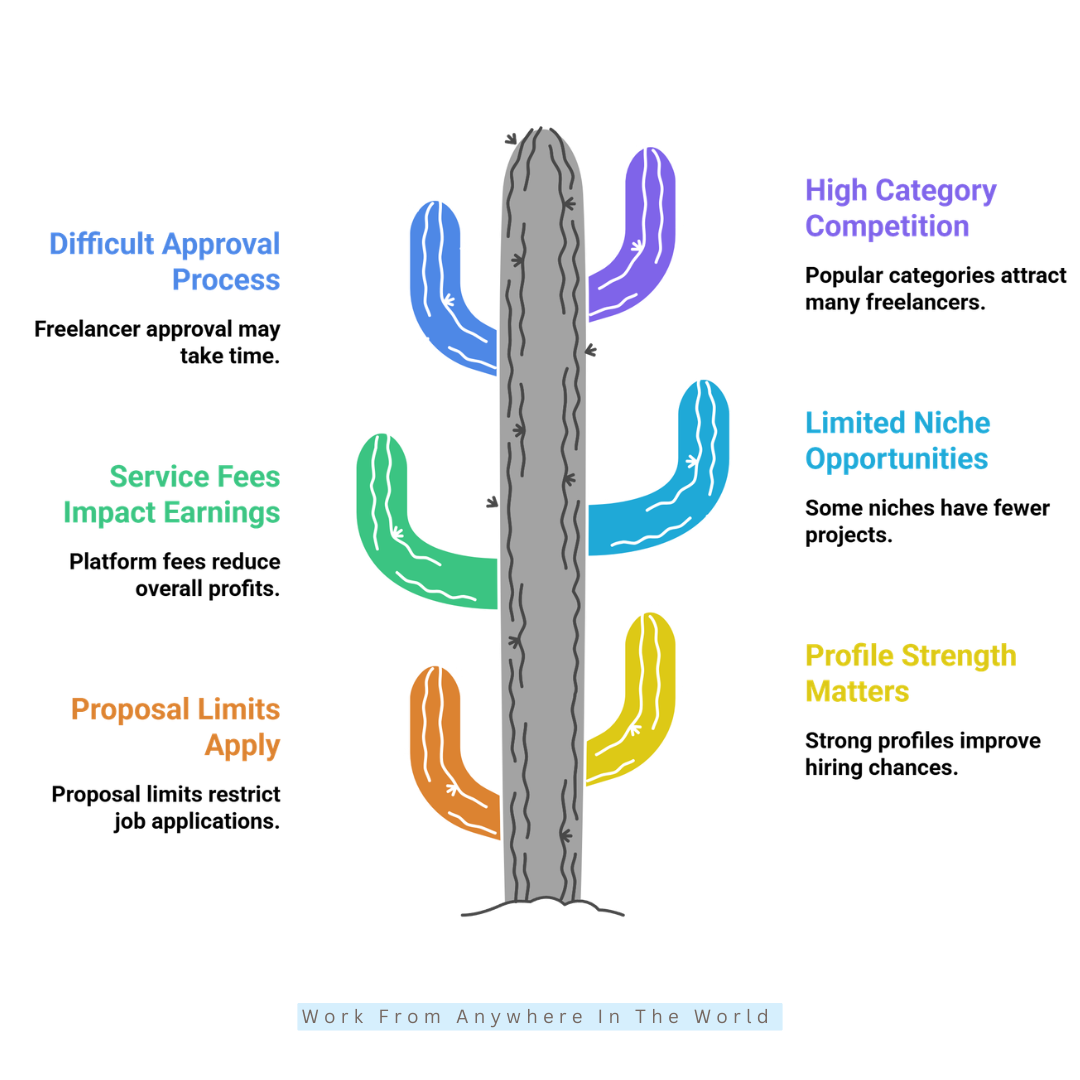
1. Freelancer Approval Process Can Be Difficult
One disadvantage of PeoplePerHour is its freelancer approval process. Unlike some freelance marketplaces, not every application is accepted automatically.
New users may need to provide a strong profile, relevant experience, or portfolio examples before they can begin offering their services. While this helps maintain quality, it can be frustrating for beginners who want to start freelancing quickly.
Applicants who are not accepted may need to strengthen their profiles before applying again. This can delay their ability to start bidding on projects and earning income.
Although the approval process requires patience, taking time to improve your profile can increase your chances of being accepted. A well-prepared application also creates a stronger first impression with potential clients.
2. High Competition In Popular Categories
Competition can be strong in popular categories such as writing, graphic design, SEO, and web development. Experienced freelancers with positive reviews and established portfolios often receive more attention from clients.
For newcomers, standing out without ratings or completed projects may take time. Building credibility usually starts with delivering high-quality work on smaller projects.
Winning projects consistently often requires well-written proposals, competitive pricing, and a professional profile. Patience and persistence also play an important role as you establish your reputation.
Although competition can be challenging, every completed project helps strengthen your profile. As your experience and client feedback grow, attracting new opportunities often becomes easier.
3. Service Fees Can Affect Profit Margins
PeoplePerHour charges service fees on freelancer earnings, which can reduce the amount you receive from completed projects. The impact becomes more noticeable on smaller jobs with lower budgets.
Although the platform provides secure payments and project management tools, some freelancers feel the fees can add up over time. This is especially true when completing a high volume of lower-paying projects.
Understanding how service fees affect your earnings is important when setting your rates. Factoring these costs into your pricing can help you protect your profit margins from the start.
While the fees are part of using the platform, careful pricing and choosing worthwhile projects can help you maximize your earnings. Taking a business-minded approach makes it easier to evaluate which opportunities are truly worth accepting.
4. Limited Job Availability In Some Niches
PeoplePerHour may not offer the same number of job opportunities in every niche as some larger freelance marketplaces. Freelancers with highly specialized skills may find fewer relevant projects available.
The number of opportunities can vary depending on client demand and the services you offer. This may make it more difficult to maintain a steady flow of work in certain industries.
Expanding your service offerings or highlighting complementary skills can help increase your visibility. Keeping your profile up to date also makes it easier for clients to understand the value you provide.
Although some niches have fewer projects, being flexible can open the door to additional opportunities. Adapting your services to changing client needs may help you reach a wider audience and secure more consistent work.
5. Proposal Limits May Restrict Applications
PeoplePerHour limits the number of proposals freelancers can submit during certain periods. This may reduce the flexibility to apply for every project that matches your skills.
Because of these limits, freelancers often need to be more selective when choosing opportunities. This can be frustrating for beginners who are trying to build experience and connect with new clients.
A limited number of proposals may also slow the process of finding regular work. As a result, securing your first few projects can take longer than on platforms without application limits.
Although proposal limits can feel restrictive, they also encourage a more focused approach to job applications. Choosing projects that closely match your skills and experience may improve the quality of your applications and increase your chances of receiving a positive response.
6. Success Often Depends On Profile Strength
Success on PeoplePerHour often depends on the strength of your professional profile. Freelancers with detailed portfolios, positive reviews, certifications, and clear service descriptions are more likely to attract client attention.
For beginners without client feedback or work samples, securing the first few projects may require extra time and persistence. Many clients compare several profiles before deciding who to hire.
Building a strong reputation doesn’t happen overnight. Each completed project and positive review adds credibility and helps demonstrate your skills to future clients.
Although early progress may feel slow, every successful project contributes to a stronger profile. Over time, this growing track record can make it easier for clients to recognize your experience and expertise.
FAQs
Q1: Which Is Better For Beginners: Freelancer.com vs PeoplePerHour?
Freelancer.com is generally easier for beginners because anyone can create an account and start bidding on projects. PeoplePerHour has a freelancer approval process, which may take longer, but some users appreciate its focus on quality professionals.
Q2: Which Platform Has Less Competition: Freelancer.com vs PeoplePerHour?
PeoplePerHour may have less competition because of its approval process and smaller marketplace. Freelancer.com offers more projects overall, but it also attracts more freelancers competing for the same opportunities.
Q3: Is Payment Safe On Freelancer.com vs PeoplePerHour?
Yes. Both platforms offer secure payment systems to protect freelancers and clients. Freelancer.com uses milestone payments, while PeoplePerHour uses an escrow system to help ensure payments are released once agreed work is completed.
Q4: Which Platform Offers More Freelance Categories?
Freelancer.com generally offers a wider variety of freelance categories and project types. PeoplePerHour focuses more heavily on creative, digital, and professional services.
Q5: Can I Use Freelancer.com And PeoplePerHour At The Same Time?
Yes. Many freelancers create profiles on multiple platforms to expand their opportunities. Using more than one marketplace may help you reach different clients and reduce your reliance on a single source of work.
Q6: Which Platform Is Better For Long-Term Freelance Growth?
The better platform depends on your skills, experience, and career goals. Freelancer.com offers access to a larger global marketplace, while PeoplePerHour provides a more selective environment with features that appeal to many creative and digital professionals.
Conclusion
Freelancer.com vs PeoplePerHour is a comparison between two popular freelance marketplaces that cater to different needs and working styles. Freelancer.com offers access to a larger marketplace with a wide variety of projects, while PeoplePerHour places greater emphasis on professional services, quality freelancers, and long-term client relationships.
The best platform depends on your skills, experience, and freelance goals. Comparing their features, fees, and project opportunities can help you choose the marketplace that best fits your workflow and career aspirations.
Many freelancers also use both platforms to expand their opportunities and connect with different types of clients. Exploring both platforms can help you decide whether Freelancer.com vs PeoplePerHour is the better choice for your freelance business and long-term goals.
I trust you enjoyed this article on Freelancer.com vs PeoplePerHour: Pros & Cons. Please stay tuned for more insightful blogs on affiliate marketing, online business, and working from anywhere in the world.
Take care!
— JeannetteZ 🌍✨
💬 Your Opinion Is Important To Me
Do you have thoughts, ideas, or questions? I’d love to hear from you. Please leave your comments below or email me directly at Jeannette@WorkFromAnywhereInTheWorld.com.
📚 More Work From Anywhere Reads
🚀 Ready to Build a Business You Can Run from Home
Or from Anywhere in the World?
Imagine creating income on your terms — from home, a cozy café, or wherever life takes you.
With the right tools, training, and community support, it’s entirely possible.
Start your own online business for free — no credit card needed.
Disclosure
This post may contain affiliate links. As an Amazon Associate and participant in other affiliate programs, I earn from qualifying purchases at no extra cost to you. Please read my full affiliate disclosure.