

Toptal vs Guru: Which Freelance Platform Should You Choose?
Toptal vs Guru is a comparison that many freelancers consider when choosing the right platform for their skills and career goals. Although both connect freelancers with clients, they take very different approaches.
Toptal focuses on highly skilled professionals who can pass a rigorous screening process and work with premium clients. Guru, on the other hand, offers an open marketplace that welcomes freelancers across many industries and experience levels.
Understanding these differences can help you choose the platform that best matches your skills, preferred way of working, and income goals.
This guide compares Toptal and Guru, including their features, pricing, advantages, disadvantages, and ideal users, so you can make a confident and informed decision.
What Is Toptal?
Toptal is a premium freelance marketplace founded in 2010. It connects businesses with experienced professionals in software development, design, finance, project management, and consulting.
Unlike many freelance platforms, Toptal uses a rigorous screening process before accepting new freelancers. The company states that only a small percentage of applicants successfully join its network.
Businesses often choose Toptal when they need highly skilled professionals for complex projects or long-term engagements. The platform focuses on matching clients with freelancers who have proven expertise in their fields.
Because of its selective approach, Toptal is generally better suited to experienced freelancers than those who are just starting their careers.
Pros Of Toptal
Toptal has built its reputation by connecting businesses with highly experienced freelance professionals. Its selective screening process helps maintain a network of skilled experts across several industries.
For qualified freelancers, the platform offers access to premium clients and projects that often require specialized knowledge. This can create opportunities that are less common on open freelance marketplaces.
Although joining Toptal is challenging, many successful applicants value the quality of the work available. The platform focuses on long-term relationships and professional collaboration.
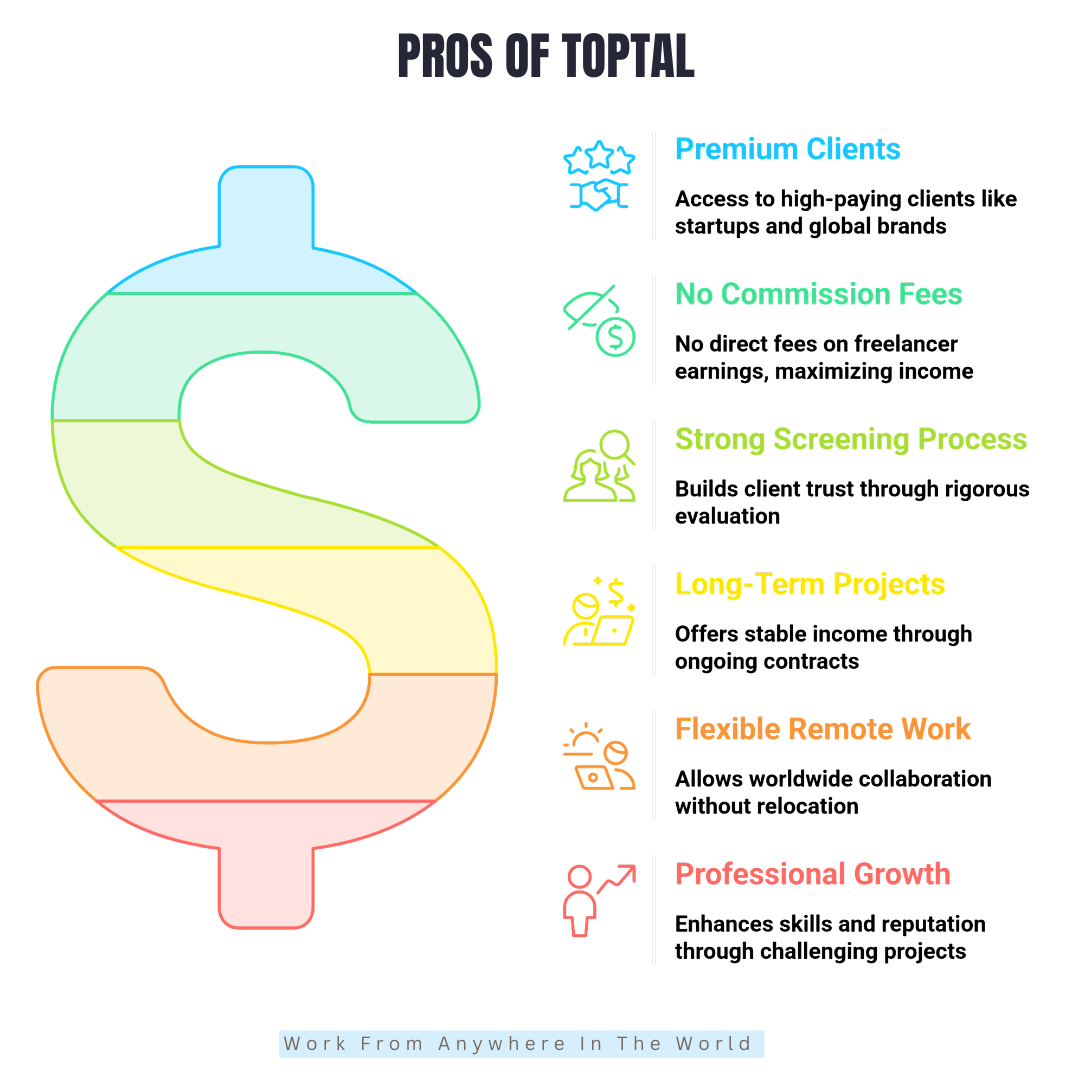
The following advantages explain why Toptal appeals to experienced freelancers seeking high-value projects and career growth. They also highlight what sets the platform apart from many traditional freelance marketplaces.
1. Access To Premium And High-Paying Clients
One of Toptal's biggest advantages is its focus on connecting freelancers with premium clients. Many businesses use the platform to find experienced professionals for specialized projects and long-term engagements.
Because Toptal has a rigorous screening process, freelancers often compete with a smaller pool of highly qualified professionals. This can reduce the number of low-budget projects that are common on more open freelance marketplaces.
Many clients are willing to pay higher rates for specialized skills and proven experience. This creates opportunities for experienced freelancers to earn more while working on challenging projects.
For professionals with established expertise, Toptal can provide access to clients who value quality, reliability, and long-term collaboration.
2. No Direct Commission Fees On Freelancer Earnings
Unlike many freelance marketplaces, Toptal does not deduct a visible commission fee from freelancer payments. Instead, freelancers agree to a rate with Toptal, while the company manages client pricing separately.
This pricing model can make earnings more predictable because freelancers know the amount they will receive for approved work. It also removes the need to calculate service fees on every payment.
For experienced professionals, this approach allows them to focus on delivering quality work rather than managing platform deductions. Many freelancers appreciate the simplicity of receiving their agreed rate for completed projects.
Although Toptal includes its own margin in the rates charged to clients, freelancers do not see recurring commission deductions from their payments.
3. Strong Screening Process Builds Client Trust
Toptal is known for its rigorous screening process, which accepts only a small percentage of applicants. Freelancers complete multiple assessments before joining the platform.
Although the application process is demanding, it helps build confidence among clients looking for experienced professionals. Businesses know that freelancers have already met Toptal's selection standards.
Because clients spend less time reviewing applicants, projects can move forward more efficiently. This often creates a smoother hiring experience for both clients and freelancers.
For professionals who qualify, Toptal's selective approach can open the door to high-quality projects and long-term client relationships.
4. Greater Chance Of Long-Term Projects
Toptal focuses on connecting businesses with experienced professionals for substantial projects and ongoing engagements. Many assignments last longer than the short-term jobs commonly found on open freelance marketplaces.
Working with long-term clients can reduce the need to search for new projects on a regular basis. This allows freelancers to spend more time delivering quality work and building professional relationships.
Longer contracts also provide opportunities to work on complex projects and develop a deeper understanding of a client's business. Many freelancers value this level of collaboration and continuity.
For experienced professionals seeking greater stability, Toptal's focus on long-term engagements can be a significant advantage.
5. Flexible Remote Work Opportunities Worldwide
Toptal operates as a fully remote talent network, allowing freelancers to work with businesses from around the world. Professionals can often choose projects that match their skills, availability, and career goals.
Working remotely also gives freelancers the freedom to collaborate with international clients without relocating. This flexibility makes it easier to build a career from almost any location with a reliable internet connection.
Global projects can expose freelancers to different industries, business practices, and technical challenges. These experiences often help professionals expand their knowledge and strengthen their expertise.
For freelancers who enjoy remote work and international collaboration, Toptal offers access to opportunities beyond their local market.
6. Focus On High-Level Professional Growth
Toptal attracts experienced professionals and businesses looking for advanced skills and specialized expertise. Many projects involve complex challenges that require strong technical or professional knowledge.
Working on these assignments can help freelancers expand their skills and gain experience in demanding environments. Many professionals value the opportunity to collaborate with experienced teams and contribute to significant projects.
Over time, these experiences can strengthen a freelancer's portfolio and broaden their professional expertise. Long-term collaborations may also lead to additional opportunities with existing clients.
For experienced freelancers, Toptal offers more than project work. It provides an environment that supports continuous learning and professional development.
Cons Of Toptal
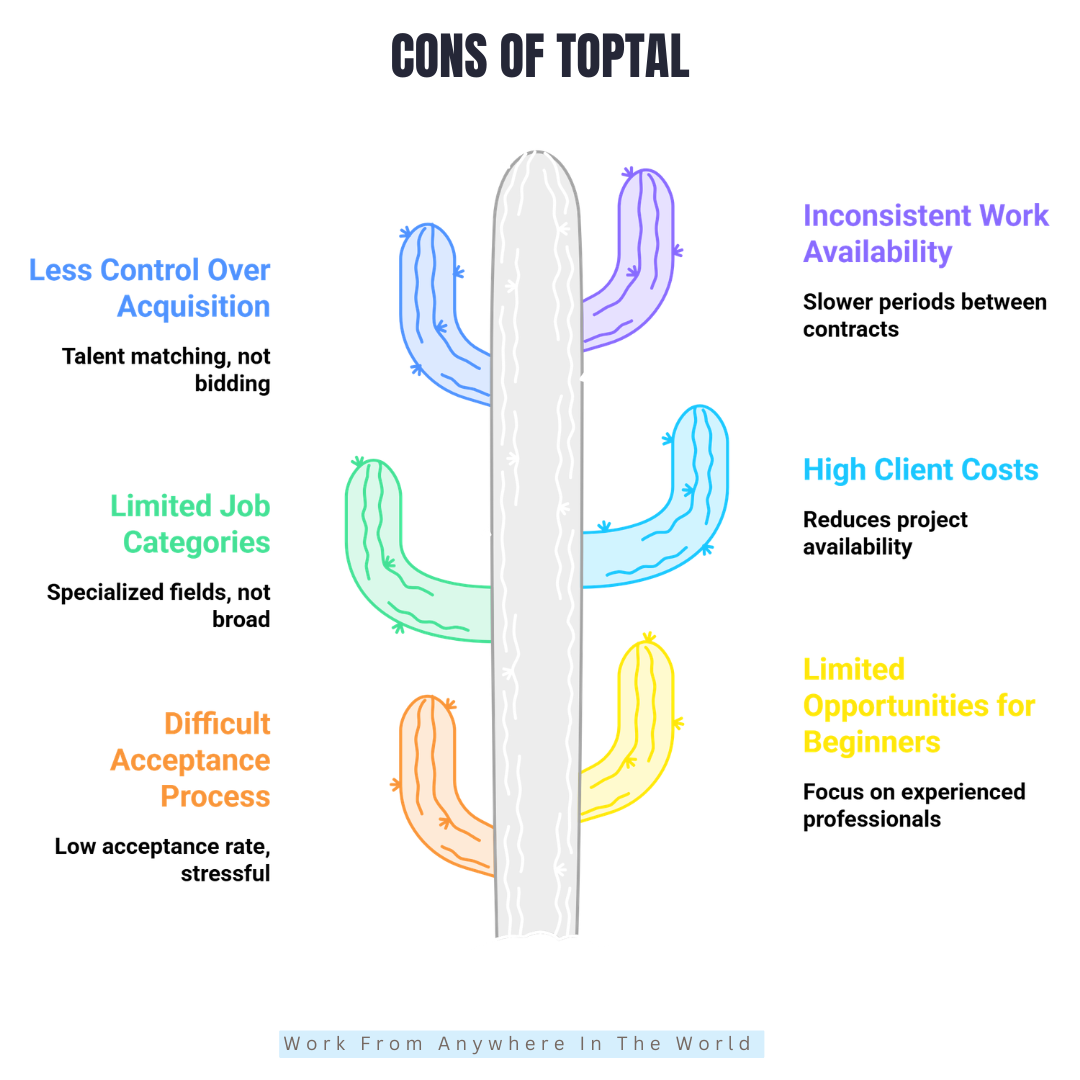
Although Toptal offers many advantages, it may not be the right platform for every freelancer. Its selective approach and premium focus can create challenges that are less common on open freelance marketplaces.
The application process is demanding, and not everyone is accepted into the network. Even experienced professionals may find it difficult to meet the platform's requirements.
Some freelancers also prefer marketplaces with a wider variety of projects and fewer barriers to entry. The best choice depends on your experience, goals, and preferred way of working.
The following disadvantages highlight some of the factors to consider before applying to Toptal. Understanding these challenges can help you decide whether the platform matches your experience and career goals.
1. Extremely Difficult Acceptance Process
One of Toptal's biggest challenges is its highly selective screening process. Applicants complete several assessments before they can join the platform.
The application process may include English communication tests, technical evaluations, interviews, and practical project assessments. Completing each stage takes time and careful preparation.
Even experienced freelancers are not guaranteed acceptance. For those who are still building their skills or portfolios, the process can feel especially demanding.
Compared to open freelance marketplaces, Toptal has a much higher barrier to entry. This makes it a challenging option for beginners and freelancers with limited professional experience.
2. Limited Opportunities For Beginners
Toptal is designed for experienced professionals with established skills and proven expertise. As a result, it offers fewer opportunities for freelancers who are just starting their careers.
Many projects require a strong portfolio, specialized knowledge, and previous professional experience. Beginners may find it difficult to meet these expectations or compete for available work.
Unlike more open freelance marketplaces, Toptal is not intended as a place to gain entry-level experience. New freelancers often need to build their skills and portfolios before applying.
For professionals with limited experience, other freelance platforms may provide a more accessible starting point while they develop their expertise.
3. Limited Job Categories Compared To Broader Platforms
Toptal focuses on a select group of professional fields rather than supporting every type of freelance service. Its marketplace is built around specialized skills in areas such as software development, design, finance, project management, and consulting.
Freelancers in creative, administrative, or entry-level roles may find fewer opportunities on the platform. This can limit its appeal for professionals outside Toptal's core areas of expertise.
Broader freelance marketplaces often support a wider range of industries and services. They allow freelancers from many different backgrounds to create profiles and compete for projects.
For professionals outside Toptal's specialist fields, a more open freelance platform may provide a greater variety of opportunities.
4. Premium Pricing May Limit Some Opportunities
Toptal positions itself as a premium freelance marketplace for experienced professionals. As a result, businesses typically pay higher rates than they would on many open freelance platforms.
While many companies value this approach, smaller businesses or those with limited budgets may choose more affordable alternatives. This can reduce the number of clients looking for freelance talent through Toptal.
Because the platform focuses on premium projects, freelancers may find fewer opportunities than on larger marketplaces with broader client bases. However, the available projects are often more specialized.
For some freelancers, having fewer but higher-value opportunities is a worthwhile trade-off. Others may prefer platforms with a larger volume of projects.
5. Less Control Over Client Acquisition
Unlike many freelance marketplaces, Toptal primarily matches freelancers with clients based on their skills and project requirements. This reduces the need to search for projects or submit regular proposals.
While this approach can save time, it also gives freelancers less direct control over finding new opportunities. Available work depends largely on client demand and Toptal's matching process.
Some freelancers prefer browsing projects, submitting proposals, and deciding which clients to approach. They may find Toptal's structured system less flexible than more open freelance platforms.
For professionals who enjoy actively building their client base, Toptal's matching model may feel more restrictive than traditional freelance marketplaces.
6. Potentially Inconsistent Work Availability
Although Toptal is known for working with premium clients, project availability is not always consistent. Even experienced freelancers may experience quieter periods between contracts.
The number of opportunities can vary depending on market demand, client hiring needs, and your area of expertise. This means work is not guaranteed, even after joining the platform.
Because Toptal focuses on high-value projects rather than high volume, there may be fewer opportunities than on larger freelance marketplaces. Some freelancers prefer a platform with a wider selection of available projects.
For professionals who rely on a steady flow of freelance work, occasional gaps between contracts may be something to consider before choosing Toptal.
Wealthy Affiliate – Mini Review
If you’ve ever thought about turning your blog, passion, or niche into an online business,
Wealthy Affiliate (WA) is one of the most beginner-friendly platforms I’ve used.
It combines step-by-step training, website hosting, AI-powered tools,
keyword research, and an active community all in one place.
What I like most is that you can start free (no credit card needed), explore the platform,
test the tools, and connect with other entrepreneurs before upgrading.
WA isn’t a “get rich quick” scheme — success comes from consistent effort
and applying what you learn over time.
What Is Guru?
Guru is a freelance marketplace founded in 1998 and headquartered in Pittsburgh, Pennsylvania, United States. It connects businesses with freelancers in programming, design, writing, marketing, consulting, and administrative support.
Clients can post projects and hire freelancers using hourly, fixed-price, recurring, or task-based agreements. This flexibility allows businesses to choose the payment structure that best suits each project.
Guru also offers its SafePay system to help provide secure and transparent payments between clients and freelancers. This feature helps both parties manage payments throughout the project.
Unlike highly selective freelance platforms, Guru welcomes freelancers with different skills and experience levels. Its broad range of services and flexible hiring options appeal to both businesses and independent professionals.
Pros Of Guru
Guru has been helping businesses and freelancers connect for many years through its flexible online marketplace. It supports a wide range of industries, making it suitable for professionals with different skills and experience levels.
The platform offers multiple payment options, project types, and membership plans to meet the needs of both freelancers and clients. This flexibility allows users to choose an approach that matches their preferred way of working.
Unlike highly selective freelance platforms, Guru is open to freelancers at different stages of their careers. Experienced professionals and newcomers alike can build profiles and compete for projects.
The following advantages explain why Guru remains a popular choice for freelancers seeking flexibility, variety, and long-term opportunities.
1. Wide Range Of Freelance Categories
Guru supports a wide range of freelance categories. This makes it suitable for professionals with different skills and experience levels.
The platform includes programming, writing, graphic design, marketing, engineering, legal consulting, accounting, and administrative services. Freelancers can choose projects that match their expertise.
The wide variety of categories also benefits businesses. They can hire professionals for different tasks without switching between multiple freelance platforms.
This flexibility makes Guru a practical choice for both freelancers and clients. It offers opportunities across many industries in one convenient marketplace.
2. Flexible Payment Options For Different Projects
Guru offers several payment options to suit different project needs. Clients and freelancers can choose the arrangement that works best for each project.
The platform supports hourly contracts, fixed-price agreements, recurring payments, and task-based work. This flexibility helps both parties manage budgets and expectations more effectively.
Long-term projects may benefit from recurring payments, while shorter jobs often suit fixed-price or task-based agreements. Users can choose the option that best fits their working relationship.
Offering multiple payment methods makes Guru a flexible freelance platform. It gives clients and freelancers more choice than platforms with limited payment structures.
3. SafePay System Adds Payment Security
Guru includes a payment protection feature called SafePay. It helps provide greater security for both freelancers and clients during a project.
Clients can deposit funds before work begins, giving freelancers added confidence that payment is available. Funds are released when agreed milestones are completed or the project is finished.
This system helps reduce payment disputes and the risk of unpaid invoices. It also creates a more transparent payment process for both parties.
For new freelancers, SafePay can provide extra peace of mind when working with unfamiliar clients. It helps build trust before a project even begins.
4. Easier Entry For Beginners And New Freelancers
Guru has a lower barrier to entry than many highly selective freelance platforms. New freelancers can create an account and begin applying for projects without a lengthy screening process.
This makes the platform more accessible for those who are building their portfolios or gaining freelance experience. Freelancers can explore opportunities across a wide range of industries.
Many users begin with smaller projects to build reviews and strengthen their profiles. Over time, this can improve their visibility and help attract more clients.
For those starting a freelance career, Guru provides a practical way to gain experience and grow professionally. It offers an accessible environment to develop skills and build confidence.
5. Built-In Collaboration And Work Management Tools
Guru provides built-in collaboration tools to help freelancers and clients manage projects more efficiently. Its WorkRooms keep communication, files, contracts, and payments together in one place.
Keeping everything in a single workspace makes projects easier to organize. Users spend less time switching between different apps and tools.
The platform also helps teams track progress and stay connected throughout each project. Better organization can reduce misunderstandings and improve productivity.
For businesses working with multiple freelancers, these management tools simplify collaboration. They help keep projects running smoothly from start to finish.
6. Lower Competition In Certain Niches Compared To Major Platforms
Guru receives less mainstream attention than some of the largest freelance platforms. As a result, competition may feel lower in certain industries and specialized niches.
Freelancers with focused skills may find it easier to stand out and attract potential clients. Strong proposals and a well-written profile can further improve visibility.
With fewer applicants competing for some projects, qualified freelancers may have a better chance of being noticed. This can be especially helpful when building a client base.
For professionals looking beyond larger freelance marketplaces, Guru offers another way to find freelance work. Its smaller marketplace may provide opportunities that are harder to find on more crowded platforms.

Cons Of Guru
While Guru offers flexibility and useful collaboration tools, it may not be the best fit for every freelancer or business. Some users find the platform has fewer opportunities and lower visibility than larger freelance marketplaces.
The level of competition and project availability can also vary depending on your industry and experience. Building a strong profile and earning positive reviews often takes time and consistent effort.
Some freelancers may also find that certain features are limited compared to competing platforms. Understanding these drawbacks can help you decide whether Guru matches your freelance goals.
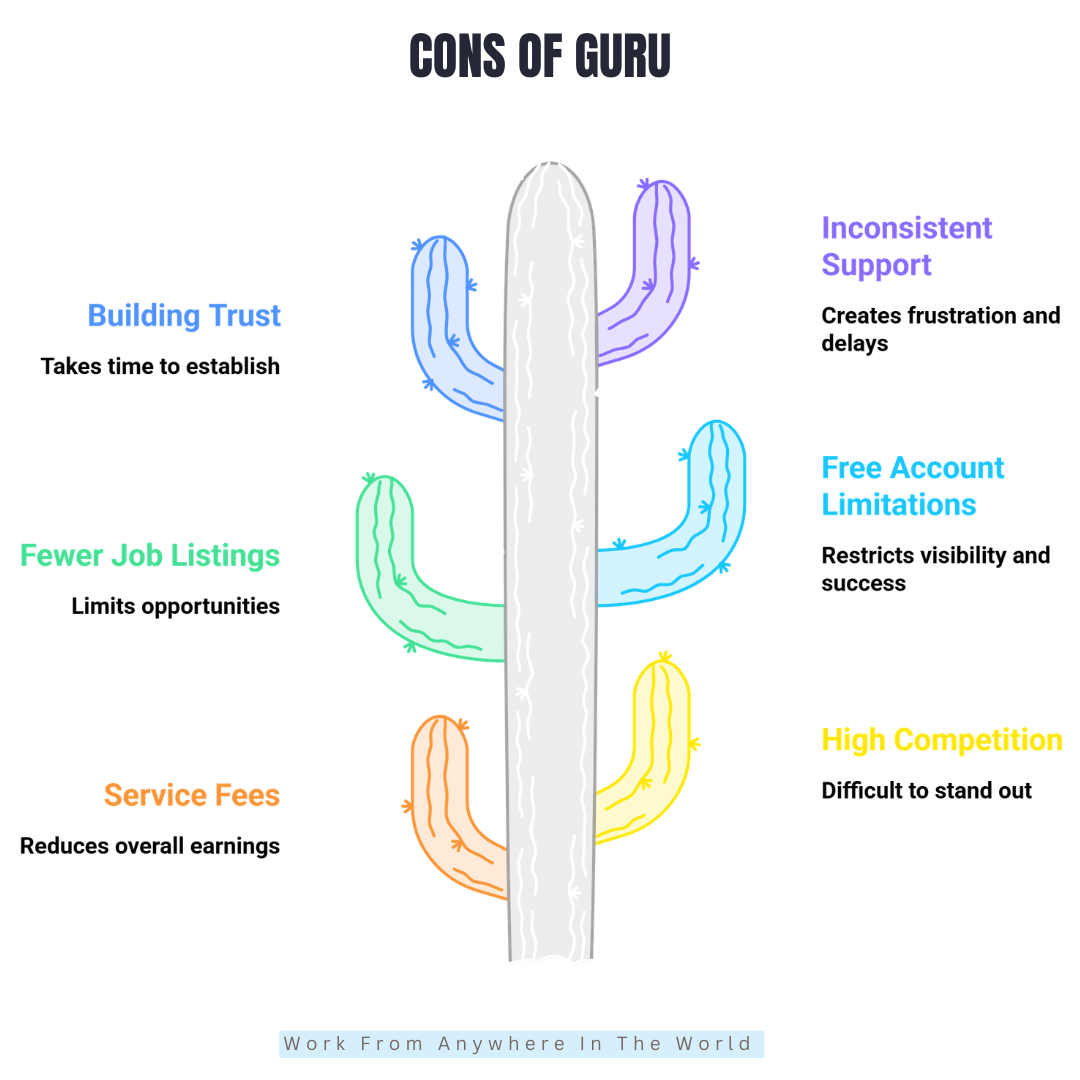
The following disadvantages highlight some of the challenges to consider before choosing Guru. Understanding them can help you decide whether the platform is the right fit for your freelance career or hiring needs.
Guru attracts freelancers from around the world. Competition can be especially strong in popular fields such as writing, graphic design, web development, and digital marketing.
Many freelancers apply for the same projects. New users may find it difficult to stand out without reviews or a strong portfolio.
Even experienced freelancers may need to submit several proposals before securing a contract. Success often depends on skills, experience, and the quality of each application.
For beginners, building a steady stream of work can take time. Patience and consistent effort are often needed to establish a successful profile.
3. Fewer Job Listings Than Larger Competitors
Guru generally has fewer job listings than larger freelance platforms such as Upwork or Fiverr. This may limit opportunities for freelancers in some industries and specialized fields.
A lower volume of projects can make it harder to find new work on a regular basis. This may be more noticeable for freelancers who depend on a steady flow of client projects.
Project availability often varies depending on your skills, experience, and niche. Some users may need to wait longer before finding suitable opportunities.
Many freelancers use Guru alongside other freelance platforms rather than relying on it alone. Diversifying across multiple marketplaces can help create a more consistent flow of work.
4. Free Accounts Have Some Limitations
Guru allows freelancers to join and create a free account. However, some features and benefits are reserved for paid membership plans.
Free accounts may have limits on bidding opportunities, service fee discounts, or access to certain platform features. These restrictions can affect how freelancers use the platform.
Freelancers who want greater visibility or additional benefits may choose to upgrade to a premium plan. The extra features can support business growth over time.
For beginners, paying for a membership before earning a steady income may be difficult. Comparing the costs and benefits can help determine whether an upgrade is worthwhile.
5. Building Trust And Reviews Takes Time
Success on Guru often depends on a strong profile, positive client reviews, and a history of completed projects. Building that reputation usually takes time and consistent effort.
New freelancers may find it harder to win projects because many clients prefer experienced professionals with established ratings. A strong portfolio can help improve visibility.
Many freelancers begin with smaller projects to gain reviews and build credibility. As their reputation grows, they may become more competitive for larger contracts.
For those expecting immediate results, this gradual process can feel challenging. Patience and consistent, high-quality work are often needed to achieve long-term success.
6. Customer Support Experiences May Vary
Some Guru users have reported mixed experiences with customer support. Response times may vary depending on the type and complexity of the issue.
Many users resolve their concerns successfully, while others report delays with account or payment-related enquiries. Support experiences can differ from one case to another.
For freelancers, quick assistance can be important when managing active projects or resolving account issues. Delays may occasionally interrupt their workflow.
When comparing freelance platforms, customer support is another factor worth considering. Reliable assistance can make a difference when unexpected issues arise.
FAQs
Q1: Is Toptal Better Than Guru For Beginners?
Toptal is generally not the best choice for beginners because of its rigorous screening process. Applicants must demonstrate advanced skills before joining the platform.
Guru is more beginner-friendly and allows freelancers to create an account and apply for projects immediately. It can be a good place to gain experience and build a professional portfolio.
Q2: Which Platform Pays More – Toptal Or Guru?
Toptal is known for connecting experienced freelancers with premium clients. As a result, projects on the platform often offer higher rates. Guru features projects with a wide range of budgets.
Your earnings depend on your skills, experience, niche, and ability to attract clients. Building a strong profile and earning positive reviews can also increase your opportunities over time.
Q3: Can I Use Both Toptal And Guru Together?
Yes. Many freelancers use more than one platform to increase their chances of finding work and building a steady client base. This approach also provides access to a wider variety of projects and clients.
If you are accepted into Toptal, you can also use Guru to explore additional opportunities. Combining both platforms offers greater flexibility and project variety.
Q4: Which Platform Is Easier To Get Clients On?
Guru is generally easier to join because it allows freelancers to create profiles and submit proposals without an extensive screening process.
Toptal has a more selective application process. However, accepted freelancers gain access to premium clients and high-quality projects.
Q5: Which Platform Is Better For Long-Term Freelance Work?
Both platforms support long-term freelance work but in different ways. Toptal focuses on premium, ongoing projects, while Guru offers a mix of short-term and long-term opportunities.
The better choice depends on your experience, career goals, and the type of clients you want to work with. Consider each platform's application process, project quality, and earning potential before making your decision.
Q6: How Do I Choose Between Toptal And Guru?
Choose Toptal if you are an experienced freelancer seeking premium clients and higher-paying projects. Choose Guru if you want an easier entry point and a wider variety of freelance opportunities.
Comparing the application process, project types, and competition can help you decide which platform best matches your freelance goals.
Conclusion
Both Toptal and Guru offer valuable opportunities, but they serve different types of freelancers. Each platform has its own strengths, depending on your experience and career goals.
Toptal is better suited to highly skilled professionals seeking premium clients and long-term, high-paying projects. Its rigorous screening process creates a more exclusive freelance marketplace.
Guru is ideal for beginners and freelancers who value flexibility and access to a wide range of projects. It offers an easier entry point while supporting freelancers across many industries.
Ultimately, the best choice in this Toptal vs Guru comparison depends on your skills, experience, and long-term freelancing goals. Comparing each platform's features can help you choose the one that best supports your freelance career.
I trust you enjoyed this article on Toptal vs Guru: Which Freelance Platform Should You Choose?. Please stay tuned for more insightful blogs on affiliate marketing, online business, and working from anywhere in the world.
Take care!
— JeannetteZ 🌍✨
💬 Your Opinion Is Important To Me
Do you have thoughts, ideas, or questions? I’d love to hear from you. Please leave your comments below or email me directly at Jeannette@WorkFromAnywhereInTheWorld.com.
📚 More Work From Anywhere Reads
🚀 Ready to Build a Business You Can Run from Home
Or from Anywhere in the World?
Imagine creating income on your terms — from home, a cozy café, or wherever life takes you.
With the right tools, training, and community support, it’s entirely possible.
Start your own online business for free — no credit card needed.
Disclosure
This post may contain affiliate links. As an Amazon Associate and participant in other affiliate programs, I earn from qualifying purchases at no extra cost to you. Please read my full affiliate disclosure.