Developing A Marketing Plan: 15 Proven Tips
Developing a marketing plan helps you define your goals, understand your audience, and create a clear path for growing your business. It provides direction and keeps your marketing efforts focused and measurable.
Whether you're launching a new business or refining your current approach, having a clear plan helps you make informed decisions and use your time and budget more effectively.
The most effective plans continue to evolve as your business grows, your audience changes, and new opportunities emerge. Reviewing and refining your approach regularly helps you stay on track and achieve better results.
In this guide, you'll discover 15 proven tips to help you create a practical, results-driven marketing plan that supports sustainable business growth.
Essential Types Of Marketing Plans For Business Growth
Not every business uses the same type of marketing plan. The right approach depends on your goals, target audience, budget, and the channels you use to reach potential customers.
Some plans support long-term growth, while others are designed for product launches, seasonal campaigns, or digital marketing initiatives.
Understanding the different options makes it easier to choose the approach that best fits your needs. As your business grows, you may find that combining several types creates a more effective marketing strategy.
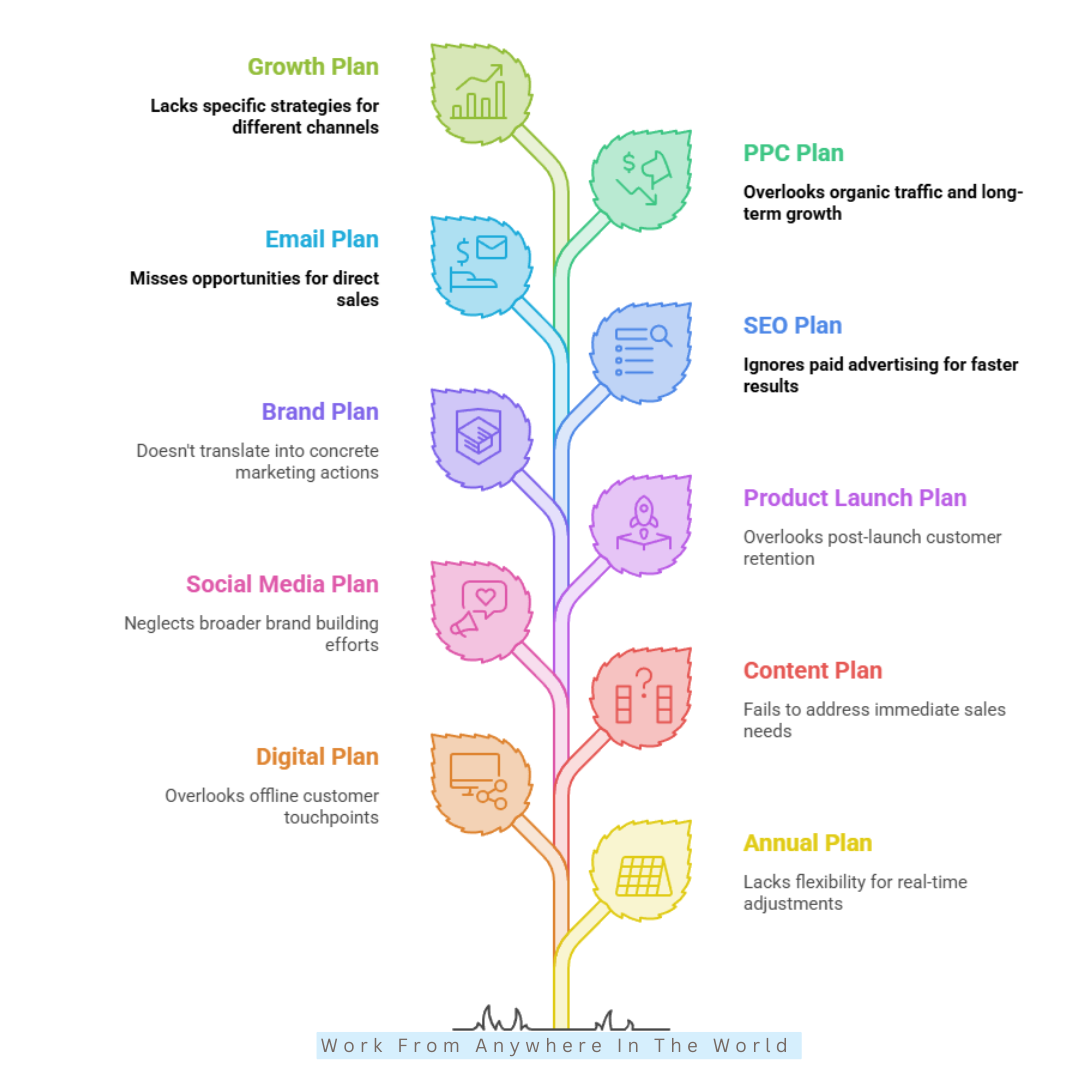
Each type serves a different purpose and can help you reach your objectives more efficiently. Below are some of the most common marketing plans and how they can support your long-term success.
1. Annual Marketing Plan
An annual marketing plan outlines your marketing activities for the entire year. It typically includes your objectives, target audience, budget, major campaigns, and implementation timeline.
This type of plan helps keep your marketing organized and aligned with your business goals. It is ideal for businesses that want a clear roadmap and a consistent approach throughout the year.
2. Digital Marketing Plan
A digital marketing plan focuses on promoting your business through online channels. These include websites, search engines, social media, email, and paid advertising.
It outlines the strategies and tactics you will use to attract, engage, and convert potential customers. Each channel plays a role in supporting your overall marketing goals.
This type of plan helps you measure campaign performance and optimize your marketing activities. It is ideal for businesses that want to grow their digital presence and adapt their strategy based on real-time results.
3. Content Marketing Plan
A content marketing plan focuses on creating and sharing valuable content. Its purpose is to attract, engage, and retain your target audience.
It may include blog posts, videos, infographics, email newsletters, guides, and other educational resources. Each content type supports your overall marketing objectives.
This type of plan helps build trust, improve search visibility, and generate leads. It is ideal for businesses that want to establish authority while developing lasting relationships with their audience.
4. Social Media Marketing Plan
A social media marketing plan explains how your business will use platforms such as Facebook, Instagram, LinkedIn, TikTok, and other social networks. It outlines your approach to reaching and engaging your target audience.
The plan typically includes content schedules, posting strategies, audience engagement, and advertising campaigns. It provides a clear framework for managing your social media activities.
This type of plan helps increase brand awareness, strengthen customer relationships, and grow your online community. It is ideal for businesses that want to build an active social media presence and connect directly with their audience.
5. Product Launch Marketing Plan
A product launch marketing plan is designed to introduce a new product or service to the market. It outlines the activities needed before, during, and after the launch.
The plan may include pre-launch promotions, launch campaigns, post-launch follow-up, and marketing across multiple channels. These often include advertising, social media, public relations, and email marketing.
This type of plan builds awareness, creates excitement, and encourages early sales. It is ideal for businesses that want to maximize the impact of a new product launch while reaching the right audience.
6. Brand Marketing Plan
A brand marketing plan focuses on building a strong brand identity and reputation. It defines your brand voice, messaging, visual identity, and market positioning.
The plan ensures your brand is presented consistently across your website, social media, advertising, and other marketing channels. It creates a clear and recognizable experience for your audience.
This type of plan helps build trust, strengthen customer loyalty, and create an emotional connection with your audience. It is ideal for businesses that want to stand out from their competitors and establish a memorable brand over the long term.
7. SEO Marketing Plan
An SEO marketing plan focuses on improving your website's visibility in search engines such as Google. It outlines the strategies needed to increase organic traffic and attract potential customers.
The plan typically includes keyword research, content optimization, link building, and technical SEO improvements. Each element works together to improve your search rankings over time.
This type of plan helps generate high-quality leads without relying solely on paid advertising. It is ideal for businesses that want to build long-term online visibility and achieve sustainable growth through organic search.
8. Email Marketing Plan
An email marketing plan focuses on sending targeted messages to your subscribers. It outlines how you will use newsletters, promotional emails, and automated email sequences to communicate with your audience.
The plan includes audience segmentation, personalization, content planning, and campaign scheduling. These strategies help improve open rates, click-through rates, and conversions.
This type of plan helps build stronger customer relationships, increase engagement, and encourage repeat business. It is ideal for businesses that want to maintain consistent communication while supporting long-term sales and customer loyalty.
9. Pay-Per-Click (PPC) Marketing Plan
A pay-per-click (PPC) marketing plan focuses on driving traffic through paid campaigns on platforms such as Google Ads and social media. Businesses pay each time someone clicks on their advertisement.
The plan typically includes keyword targeting, ad creation, budget management, bidding strategies, and performance tracking. These elements help maximize the effectiveness of each campaign.
This type of plan helps generate leads, increase sales, and deliver measurable results in a short period. It is ideal for businesses that want to reach their target audience quickly while monitoring their return on investment (ROI).
10. Growth Marketing Plan
A growth marketing plan focuses on expanding a business through continuous testing and data-driven decision-making. It uses experiments to identify the most effective ways to attract, convert, and retain customers.
The plan may include testing different marketing channels, improving conversion rates, and increasing customer retention. It relies on ongoing analysis to refine strategies and maximize results.
This type of plan supports steady, long-term business growth through continuous improvement. It is ideal for businesses that want to scale efficiently by making informed decisions based on real performance data.
15 Proven Tips For Developing A Marketing Plan
Developing a marketing plan doesn't have to be complicated. Breaking the process into clear, manageable steps makes it easier to create an effective roadmap for your business.
Whether you're launching a new business or updating your current approach, a well-structured plan helps keep your marketing focused. It also makes it easier to measure your progress and adjust your efforts over time.
The following tips will help you define your goals, understand your audience, choose the right marketing channels, and make informed decisions. Each one builds on the previous step to create a practical and results-driven approach.
Use these 15 proven tips as a guide to develop a marketing plan that supports your business objectives, strengthens your brand, and encourages long-term growth.
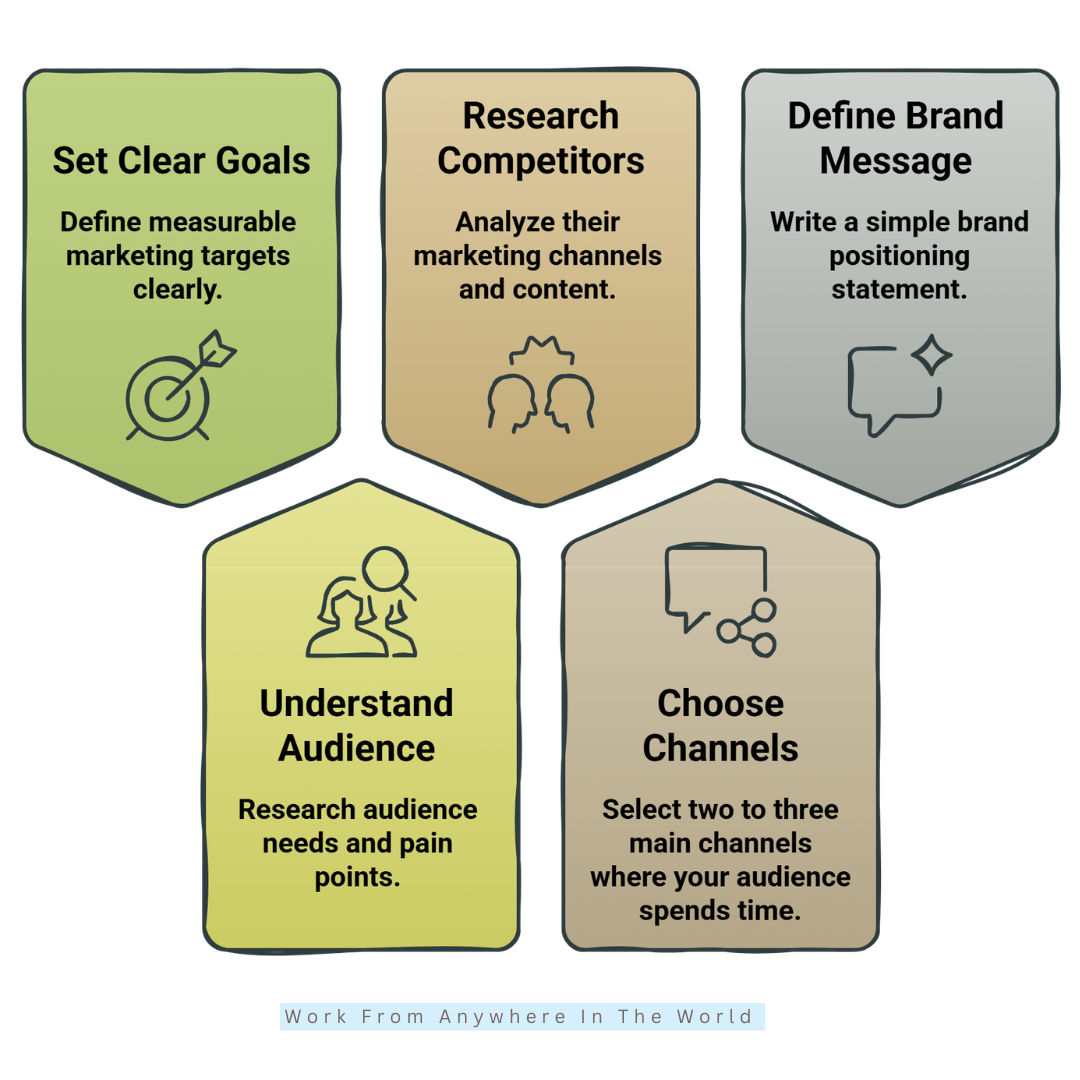
Tip No. 1: Setting Clear And Specific Marketing Goals
Setting clear and specific marketing goals is the foundation of a successful marketing plan. Without clear goals, your strategy can become unfocused and difficult to measure.
Instead of using broad objectives like “get more customers,” define measurable goals such as “increase website leads by 25% over the next three months.” This gives your marketing a clear direction and makes it easier to track your progress.
Clear goals also improve decision-making because every marketing activity supports a specific objective. As a result, your marketing becomes more focused, organized, and effective.
Key Points
- Define measurable marketing targets.
- Break goals into smaller milestones.
- Align goals with your business vision.
- Set realistic, time-based objectives.
Tip No. 2: Understanding Your Target Audience
Understanding your target audience is one of the most important parts of developing a successful marketing plan. You can't market your products or services effectively if you don't know who you're trying to reach.
Go beyond basic demographics such as age and location. Learn about your audience's challenges, interests, goals, buying behaviour, and the solutions they are searching for.
The better you understand your audience, the easier it becomes to create messages that resonate with them. This builds trust, increases engagement, and improves your chances of turning potential customers into loyal buyers.
Key Points
- Research your audience's needs and pain points.
- Create simple customer personas.
- Study buying behaviour patterns.
- Collect feedback from real customers.
Tip No. 3: Researching Your Competitors
Researching your competitors helps you understand what is already working in your industry. It gives you valuable insights before you develop your own marketing strategies.
You don't need to copy what other businesses are doing. Instead, review their websites, content, advertising, and social media presence to see what attracts attention and engages their audience.
This type of research helps you identify market gaps, discover new opportunities, and avoid common mistakes. It is an effective way to position your brand and create a marketing plan that stands out from the competition.
Key Points
- Identify your main competitors.
- Analyze their marketing channels.
- Study their content and messaging.
- Look for gaps and opportunities.
Tip No. 4: Choosing The Right Marketing Channels
Choosing the right marketing channels helps you reach the people who are most likely to become your customers. Not every platform is suitable for every business.
Focus on the channels where your target audience spends the most time. For example, B2B businesses often perform well on LinkedIn, while lifestyle brands may achieve better results on Instagram or TikTok.
You don't need to be active on every platform. A focused channel strategy helps you create better content, engage more effectively, and achieve stronger results with less time and effort.
Key Points
- Identify your audience's preferred platforms.
- Select two or three main marketing channels.
- Avoid spreading your efforts too thin.
- Focus on the platforms that deliver the best results.
Tip No. 5: Defining A Clear Brand Message
Defining a clear brand message helps people understand what your business offers and why it matters. If your message isn't easy to understand, potential customers may quickly lose interest.
Keep your message simple, clear, and relevant to your target audience. Focus on the problems you solve and the value your products or services provide, rather than using complicated or technical language.
A strong brand message makes your business more memorable and helps build trust with your audience. Consistent messaging across all marketing channels also creates a more professional and recognizable brand.
Key Points
- Write a simple brand positioning statement.
- Focus on your customers' core problems.
- Keep your messaging consistent across all channels.
- Avoid complex or technical language.
Tip No. 6: Focusing On Solving Customer Problems
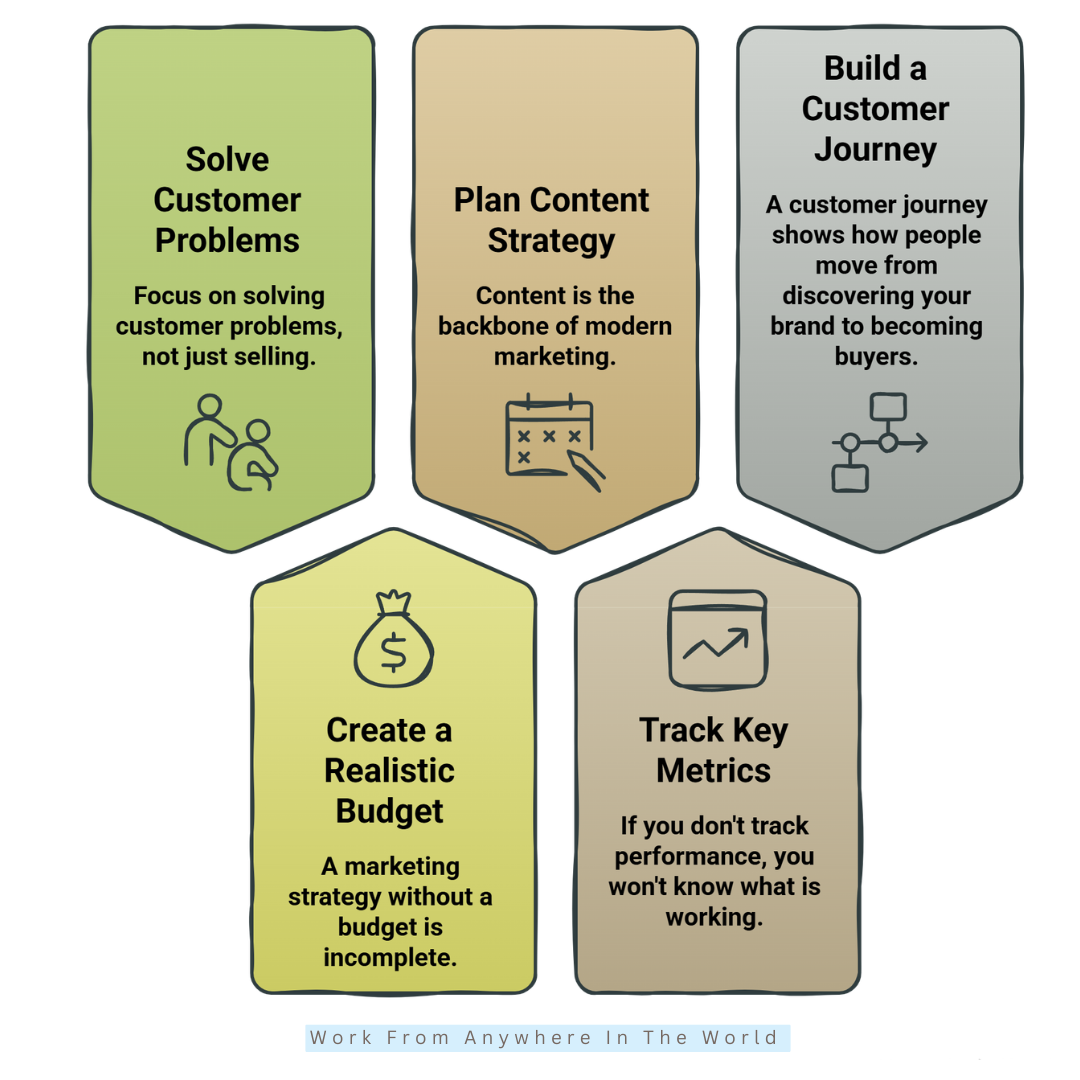
Focusing on solving customer problems is one of the most effective ways to develop a successful marketing plan. People are more likely to engage with businesses that offer helpful solutions rather than constant sales messages.
Take time to understand the challenges your target audience faces. Then show how your products or services can solve those problems through useful content, clear messaging, and practical solutions.
When you put your customers' needs first, trust develops naturally over time. This approach strengthens customer relationships, encourages loyalty, and makes your marketing more effective in the long term.
Key Points
- Identify your customers' key pain points.
- Create solution-focused messaging.
- Share helpful and educational content.
- Position your products or services as the solution.
Tip No. 7: Creating A Realistic Marketing Budget
Creating a realistic marketing budget helps you plan your activities with confidence. It ensures your resources are used effectively and supports consistent marketing over time.
Start by deciding how much you can comfortably invest in your marketing efforts. Then divide your budget into key areas such as advertising, content creation, marketing tools, and promotional activities.
A well-planned budget helps you monitor your spending and make informed decisions as your business grows. It is not about spending more money, but about investing wisely to achieve the best possible results.
Key Points
- Set a realistic monthly marketing budget.
- Divide your budget into key marketing activities.
- Track your marketing expenses regularly.
- Adjust your spending based on performance.
Tip No. 8: Planning Your Content Strategy In Advance
Planning your content strategy in advance helps keep your marketing organized and consistent. It ensures every piece of content supports your business goals and provides value to your audience.
Create a schedule for your blog posts, social media updates, videos, email newsletters, and other content. Planning ahead gives you time to produce higher-quality content and reduces the pressure of finding ideas at the last minute.
A well-planned content strategy keeps your messaging consistent and strengthens your overall marketing plan. It also helps you build trust with your audience while making your marketing efforts more effective over time.
Key Points
- Create a monthly content calendar.
- Plan your topics in advance.
- Align your content with your marketing goals.
- Maintain a consistent publishing schedule.
Tip No. 9: Tracking Key Performance Metrics Regularly
Tracking key performance metrics helps you measure the success of your marketing plan. It shows which strategies are delivering results and where improvements may be needed.
Focus on meaningful metrics such as website traffic, leads, conversions, and customer engagement. Reviewing this information regularly helps you identify trends and make informed decisions.
A data-driven approach allows you to refine your marketing strategy over time. It helps you allocate your resources more effectively and achieve better long-term results.
Key Points
- Identify your key marketing metrics.
- Review your performance weekly or monthly.
- Focus on meaningful conversion data.
- Adjust your strategy based on the results.
Tip No. 10: Building A Simple Customer Journey Or Funnel
Building a simple customer journey helps guide potential customers from discovering your business to making a purchase. A clear and well-planned journey makes it easier for people to understand what to do next.
Think about each stage of the customer experience, from creating awareness and building interest to encouraging action. Every step should feel natural and provide value to your audience.
A well-designed customer journey helps you identify opportunities to improve the buying experience and increase conversions. It also creates a more effective marketing plan that supports long-term business growth.
Key Points
- Map each stage of the customer journey.
- Identify key entry and exit points.
- Improve areas with lower conversion rates.
- Keep the buying process simple and straightforward.
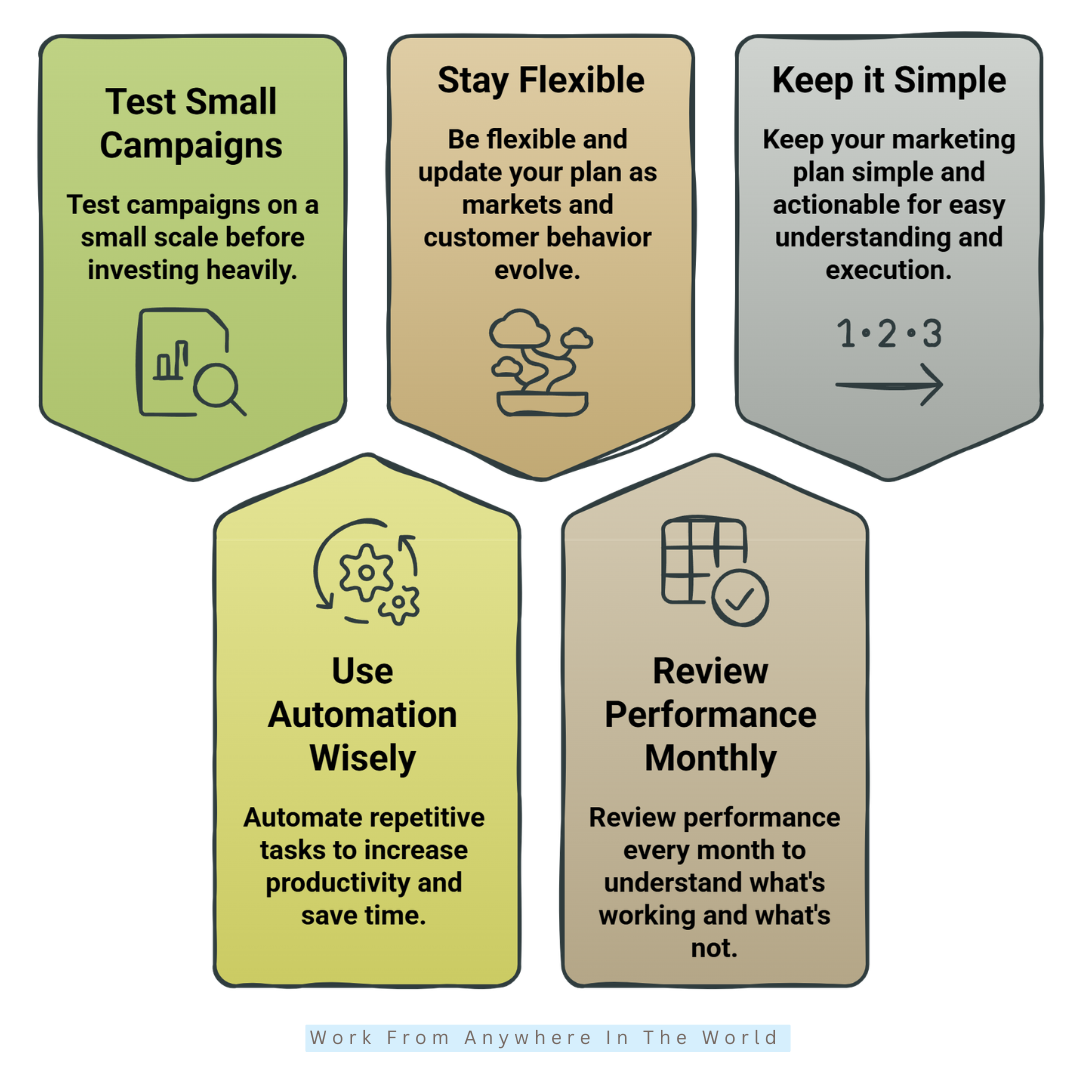
Tip No. 11: Testing Small Campaigns Before Scaling Up
Testing small marketing campaigns before scaling up helps you identify what works best while keeping your budget under control. It allows you to make informed decisions before investing more heavily in a campaign.
Start by testing different messages, visuals, audiences, or marketing channels on a smaller scale. The results will show what generates the most engagement, leads, or conversions.
Small-scale testing helps reduce risk, improve your marketing strategy, and make better use of your budget. Once you have proven results, you can expand your campaign with greater confidence.
Key Points
- Run small pilot campaigns first.
- Test different messages and creative assets.
- Analyze campaign performance before scaling.
- Invest more in your most successful campaigns.
Tip No. 12: Using Automation Tools Where They Add Value
Using automation tools can save time and improve the efficiency of your marketing activities. They are particularly useful for managing repetitive tasks while keeping your campaigns organized and consistent.
Automation can help with email marketing, social media scheduling, lead follow-ups, and other routine activities. When used thoughtfully, it gives you more time to focus on strategy, creativity, and building customer relationships.
The most effective marketing plans combine automation with genuine human interaction. This approach improves productivity while maintaining a personal experience for your audience.
Key Points
- Automate repetitive marketing tasks.
- Use email automation sequences.
- Schedule social media content.
- Maintain a personal touch in your communication.
Tip No. 13: Staying Flexible And Updating Your Plan When Needed
Staying flexible allows your marketing plan to grow with your business and changing market conditions. As customer needs, industry trends, and business goals evolve, your marketing plan should evolve with them.
Review your marketing performance regularly and use the results to refine your strategies. Small adjustments based on real data can often lead to better long-term outcomes than making major changes all at once.
A flexible marketing plan helps you respond to new opportunities and changing customer expectations. It supports continuous improvement and keeps your marketing relevant, effective, and aligned with your business goals.
Key Points
- Review your marketing strategy regularly.
- Adjust your plan based on performance.
- Adapt to changing market conditions.
- Replace underperforming marketing tactics.
Tip No. 14: Reviewing Performance Every Month
Reviewing your marketing performance every month helps you understand what is working and where improvements can be made. Regular reviews keep your marketing plan aligned with your business goals and changing priorities.
Compare your results with your original objectives and identify the strategies that delivered the best outcomes. At the same time, look for opportunities to improve areas that are not performing as expected.
Monthly reviews support continuous improvement and help you make informed decisions for future campaigns. They also keep your marketing plan up to date and focused on achieving long-term success.
Key Points
- Review your marketing performance every month.
- Compare your results with your goals.
- Identify your most successful strategies.
- Improve areas that need better results.
Tip No. 15: Keeping Your Marketing Plan Simple And Actionable
Keeping your marketing plan simple makes it easier to turn your ideas into action. A clear and well-organized approach helps you stay focused on your goals without becoming overwhelmed by unnecessary details.
Concentrate on the strategies and activities that will have the greatest impact on your business. A practical plan is easier to follow, update, and adapt as your business grows.
Simplicity encourages consistent action and supports better decision-making over time. By focusing on what matters most, you'll create a plan that is both effective and sustainable.
Key Points
- Remove unnecessary complexity.
- Focus on your core priorities.
- Keep your plan easy to follow.
- Create clear and actionable steps.
Frequently Asked Questions
Q1: What Should A Marketing Plan Include?
A marketing plan should include your business goals, target audience, marketing channels, budget, messaging, content strategy, and performance metrics. It should also explain how you will measure success and adjust your strategy over time.
Q2: How Often Should A Marketing Plan Be Updated?
Review your marketing plan at least once every quarter and make adjustments as needed. Regular updates help you respond to changing customer needs, market trends, and business objectives while keeping your strategy effective.
Q3: What's The Difference Between A Marketing Strategy And A Marketing Plan?
A marketing strategy explains your long-term approach to reaching your target audience and achieving your business goals. A marketing plan puts that strategy into action by outlining the specific activities, timelines, budgets, and marketing channels you will use.
Q4: How Long Should A Marketing Plan Be?
The length of a marketing plan depends on your business and objectives. A simple plan for a small business may only be a few pages, while larger organizations often create more detailed plans covering multiple products, audiences, and campaigns.
Q5: Can Small Businesses Benefit From A Marketing Plan?
Yes. A marketing plan helps small businesses prioritize their resources, focus on the right audience, and make better marketing decisions. Even a simple plan can improve consistency and support long-term business growth.
Q6: Do I Need A Marketing Plan Before Launching A Business?
Creating a marketing plan before launching a business is highly recommended. It helps you understand your target audience, define your marketing goals, choose the right channels, and prepare a clear strategy for attracting your first customers.
Conclusion
Developing a marketing plan is about creating a clear roadmap that guides your business towards its goals. When you understand your target audience, choose the right marketing channels, and focus on consistent action, your marketing becomes more effective.
A successful plan doesn't need to be complicated. It should be practical, flexible, and easy to update as your business grows and market conditions change.
By applying the strategies in this guide, you can make better marketing decisions, strengthen your brand, and build lasting relationships with your customers. Small, consistent improvements often lead to the greatest long-term success.
Whether you're creating your first plan or refining an existing one, the key is to stay focused on your objectives and continue learning from your results.
With the right approach, it can become a valuable tool that guides your marketing efforts, supports better decision-making, and contributes to sustainable business growth over time.
I trust you enjoyed this article on Developing A Marketing Plan: 15 Proven Tips. Please stay tuned for more insightful blogs on affiliate marketing, online business, and working from anywhere in the world.
Take care!
— JeannetteZ 🌍✨
💬 Your Opinion Is Important To Me
Do you have thoughts, ideas, or questions? I’d love to hear from you. Please leave your comments below or email me directly at Jeannette@WorkFromAnywhereInTheWorld.com.
📚 More Work From Anywhere Reads
🚀 Ready to Build a Business You Can Run from Home
Or from Anywhere in the World?
Imagine creating income on your terms — from home, a cozy café, or wherever life takes you.
With the right tools, training, and community support, it’s entirely possible.
Start your own online business for free — no credit card needed.
Disclosure
This post may contain affiliate links. As an Amazon Associate and participant in other affiliate programs, I earn from qualifying purchases at no extra cost to you. Please read my full affiliate disclosure.