
Networking For Beginners: Build Professional Connections
Meeting new people can feel uncomfortable when you don’t know where to begin. This Networking for Beginners guide explains simple ways to build professional relationships with confidence.
You don’t need years of experience or a large network to make valuable connections. Small conversations and a genuine interest in other people are often the best place to start.
Good networking isn’t about collecting business cards or adding hundreds of contacts on LinkedIn. It’s about getting to know people, sharing ideas, and building trust.
The following guide explores different types of networking and practical steps to help you expand your network and create valuable professional connections.
What Is Networking?
Networking is the process of building relationships with people who share similar interests, careers, or goals. It involves meeting new people, exchanging ideas, sharing knowledge, and creating connections that can benefit everyone involved.
Strong networking isn’t just about finding a job or growing a business. It’s also about learning from others, building trust, and creating meaningful relationships that can lead to future opportunities.
Today, networking takes place both online and in person. Some of the most common places where you can build meaningful professional connections include:
- Social media platforms
- Industry events
- Professional communities
- Online forums
- Conferences
- Coworking spaces
- Freelancing platforms
- Alumni groups
- Local meetups
10 Types Of Networking For Beginners
Networking isn’t limited to business events or formal meetings. There are many ways to build professional relationships, and each type of networking offers its own advantages.
Some networking opportunities focus on growing your career, while others help you learn new skills, find mentors, or connect with people who share your interests. The best approach depends on your goals and the type of relationships you want to build.
As a beginner, you don’t need to try every type of networking. Starting with one or two that match your interests is often the easiest way to build confidence and gain experience.
The following types of networking can help you expand your professional circle, discover new opportunities, and build meaningful connections that support your personal and career goals.
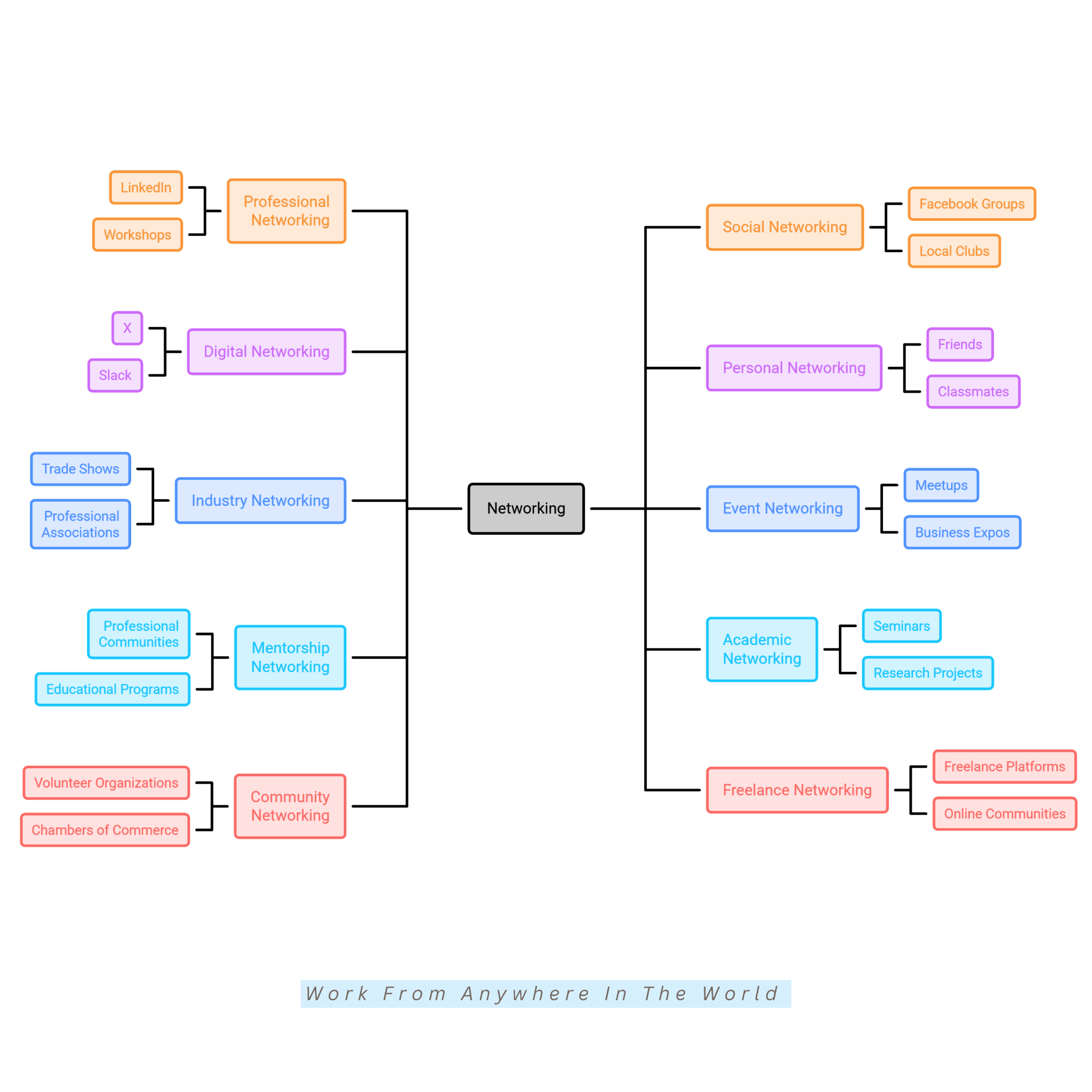
1. Professional Networking
Professional networking focuses on building relationships that support career growth, business opportunities, and professional development. People often connect through LinkedIn, workshops, seminars, conferences, and industry-specific communities.
This type of networking helps beginners learn from experienced professionals, discover job opportunities, secure referrals, and expand their industry knowledge. It can also lead to valuable collaborations, partnerships, or freelance projects.
From my experience, the best networking feels natural rather than forced. Instead of trying to collect as many contacts as possible, focus on building genuine relationships based on trust and mutual respect.
Staying active, engaging with others regularly, and maintaining professional communication will help strengthen your network. Meaningful connections often provide greater value than having a long list of contacts.
2. Social Networking
Social networking is about building relationships with people who share your interests, hobbies, or lifestyle. These connections often begin in Facebook groups, local clubs, community events, or other online communities.
Although social networking is more informal than professional networking, it can still create valuable opportunities. Many people meet future clients, business partners, mentors, or collaborators through friendships and shared interests.
For beginners, social networking often feels more relaxed and less intimidating than formal business events. It provides a comfortable environment for meeting new people and building confidence.
The key is to be genuine and supportive. Taking part in conversations, offering help, and showing interest in others naturally strengthens your network and helps build lasting relationships.
3. Digital Networking
Digital networking focuses on building professional relationships through online platforms such as LinkedIn, X, Slack, Discord, and industry forums. It allows you to connect with people around the world without travelling.
This type of networking is especially useful for remote workers, freelancers, and online business owners. It provides opportunities to exchange ideas, ask questions, and learn from experienced professionals.
Regularly sharing useful content, joining discussions, and engaging with others can increase your visibility. Over time, these interactions may lead to new clients, collaborations, job opportunities, or business partnerships.
Like all forms of networking, success comes from building genuine relationships rather than simply collecting contacts. Consistent and meaningful engagement usually produces the best results.
4. Personal Networking
Personal networking is about building and maintaining relationships with people you already know. This includes friends, classmates, neighbours, relatives, former colleagues, and other existing contacts.
Many beginners overlook personal networking because they assume opportunities only come from formal business settings. In reality, the people already in your network may introduce you to new jobs, clients, mentors, or valuable connections.
Staying in touch, showing genuine interest, and offering support helps strengthen these relationships. Building trust with people you already know is often easier than starting from scratch with new contacts.
5. Industry Networking
Industry networking connects you with people who work in the same profession or business sector. These connections often develop through trade shows, webinars, professional associations, workshops, and industry-specific online communities.
For beginners, industry networking is an excellent way to stay informed about new trends, tools, skills, and career opportunities. It also provides opportunities to learn from experienced professionals and expand your knowledge.
Taking part in discussions, attending events, and sharing useful ideas can help increase your visibility and build credibility within your industry. The more you contribute, the more people will begin to recognize your expertise.
In my experience, industry networking is most valuable when you focus on learning and helping others rather than simply promoting yourself. Genuine relationships usually lead to the best opportunities.
6. Event Networking
Event networking takes place at conferences, workshops, seminars, meetups, business expos, and other professional gatherings. These events provide opportunities to meet people face-to-face, exchange ideas, and build meaningful relationships.
For beginners, networking events are an excellent way to learn from experienced professionals and expand your professional circle. Smaller events are often less intimidating and make it easier to start conversations.
Preparing a few discussion topics and asking thoughtful questions can help keep conversations flowing naturally. Showing genuine interest in others often leaves a stronger impression than trying to promote yourself.
After the event, follow up with a short email, LinkedIn message, or connection request. Staying in touch helps strengthen new relationships and keeps the conversation going.
7. Mentorship Networking
Mentorship networking focuses on building relationships with experienced professionals who are willing to share their knowledge, guidance, and advice. A good mentor can help you navigate challenges and make more informed career or business decisions.
For beginners, having a mentor can make learning much easier. Mentors often provide valuable insights, share practical experience, and help you avoid common mistakes.
You can find mentors through professional communities, workplaces, educational programs, networking events, or online platforms. Building a mentorship takes time, so it’s important to approach these relationships with patience and respect.
Strong mentorships are built on trust, open communication, and a willingness to learn. Staying in touch and showing appreciation for your mentor’s guidance helps create a lasting and meaningful relationship.
8. Academic Networking
Academic networking takes place in schools, colleges, universities, and other learning environments. It involves building relationships with teachers, classmates, alumni, researchers, and other students who share similar academic or career interests.
For students and recent graduates, academic networking provides valuable opportunities to learn, collaborate, and expand professional connections. Seminars, workshops, research projects, and campus events are all excellent places to meet new people.
Online academic communities also make it easier to connect with experts and students from around the world. These connections can provide fresh perspectives and open doors beyond your local community.
Strong academic networks can lead to internships, scholarships, research opportunities, and future employment. They also help develop communication, teamwork, and professional confidence.
9. Community Networking
Community networking focuses on building relationships within your local community. It often happens through volunteer organizations, chambers of commerce, business associations, charities, and community events.
These connections can lead to referrals, partnerships, and opportunities that may not be advertised online. They also help you build trust and become known within your local area.
Getting involved in community activities allows you to meet people from a wide range of backgrounds. These relationships can benefit both your personal and professional life.
The best community networking happens when you actively participate and look for ways to support others. Genuine involvement often leads to stronger and more meaningful connections.
10. Freelance Networking
Freelance networking focuses on building relationships with clients, freelancers, and other independent professionals. It often takes place on freelance platforms, LinkedIn, online communities, social media, and networking events.
For beginners, freelance networking can lead to new clients, referrals, collaborations, and valuable business contacts. It also provides opportunities to learn from experienced freelancers and expand your professional network.
Building a good reputation is one of the most important parts of freelance networking. Delivering quality work and communicating professionally encourages clients to return and recommend your services.
Strong freelance relationships often lead to repeat business and long-term collaborations. A reliable network can become one of your greatest business assets.
How To Start Networking As A Beginner
Getting started with networking may feel intimidating at first, especially if you’ve never attended a networking event or introduced yourself to new people. The good news is that networking is a skill anyone can learn with practice.
You don’t need an extensive list of contacts or years of experience to build meaningful relationships. Small, consistent efforts often lead to the strongest professional connections.
The goal isn’t to collect as many contacts as possible. Instead, focus on meeting people, learning from their experiences, and building genuine relationships based on trust and mutual respect.
The following practical steps will help you build confidence, expand your network, and create meaningful connections that support your personal and professional goals.
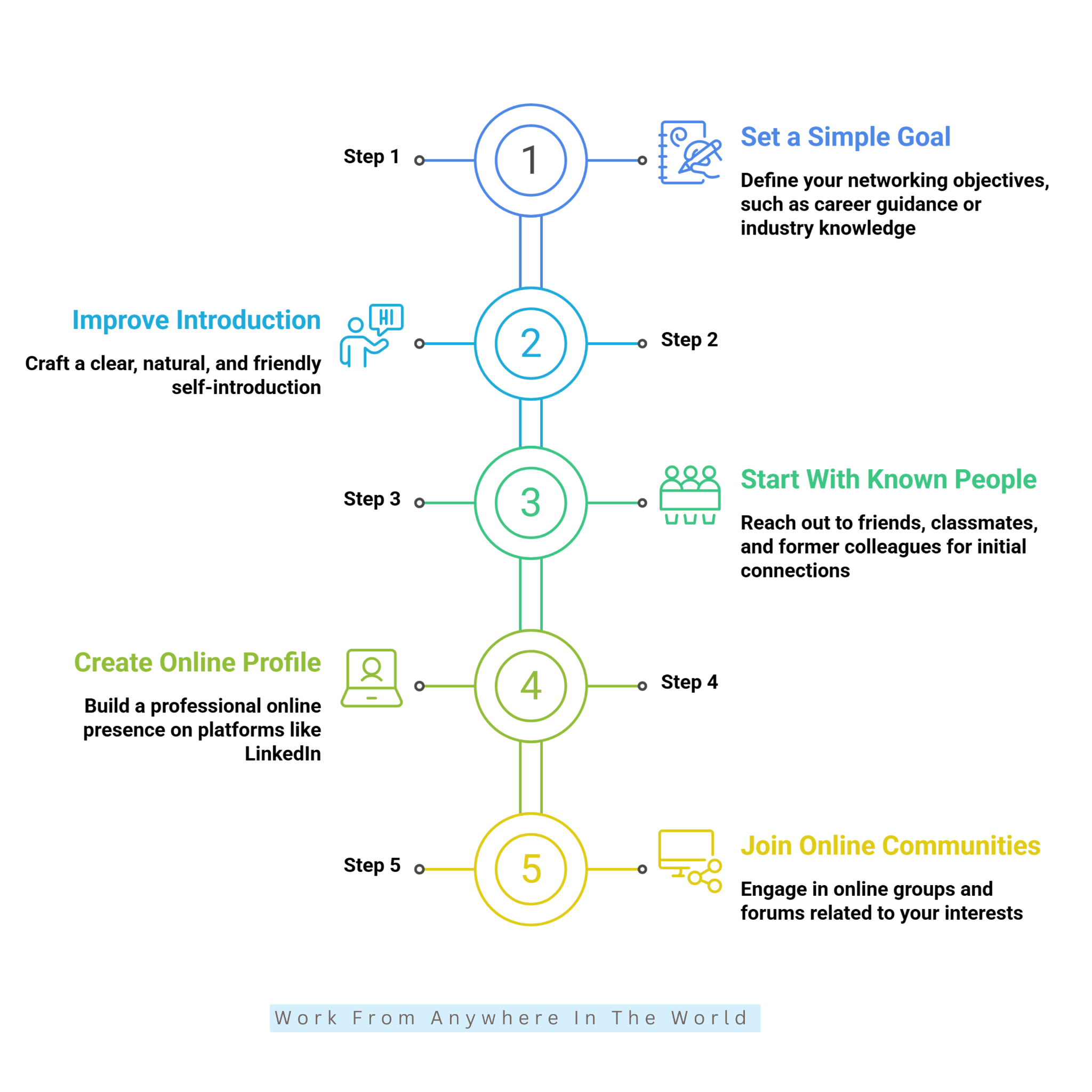
1. Set A Simple Networking Goal
Networking is much easier when you know what you hope to achieve. Before reaching out to new people, decide whether you’re looking for career advice, freelance opportunities, a mentor, or a chance to learn more about your industry.
Having a goal helps you stay focused without feeling overwhelmed. You don’t need a detailed plan to get started. Even a simple objective, such as connecting with professionals in your field, is enough.
In my experience, networking works best when you stay curious, ask thoughtful questions, and remain open to learning from others. Building genuine relationships is far more valuable than trying to collect as many contacts as possible.
Key Points
- Define your short-term and long-term goals.
- Focus on one industry or area of interest first.
- Identify the skills you want to develop.
- Set small, realistic networking goals.
- Keep track of the people you meet and what you learn.
2. Create A Strong Introduction
A good introduction helps you start conversations with confidence and leaves a positive first impression. It doesn’t need to be perfect or memorized. The best introductions are simple, natural, and genuine.
Briefly explain who you are, what you do, and what you hope to learn or achieve. Keep your introduction short and easy to understand so the conversation can develop naturally.
Speaking with a friendly and confident tone is often more effective than trying to sound overly formal. As you gain experience, introducing yourself will become more comfortable and feel more natural.
Key Points
- Keep your introduction short and easy to remember.
- Explain who you are and what you do.
- Share what you hope to learn or achieve.
- Speak naturally and with confidence.
- Practice your introduction so it feels comfortable.
3. Start With People You Already Know
Networking doesn’t have to begin with strangers. The people you already know are often the best place to start building your network.
Friends, classmates, teachers, relatives, and former colleagues may already have valuable advice, experience, or professional connections to share. Reaching out to familiar people can feel less intimidating and help build your confidence.
Simple conversations often lead to introductions, referrals, or new opportunities you might not have expected. In my experience, many strong professional networks begin with people you already know and trust.
Key Points
- Reconnect with classmates and friends.
- Talk to teachers or mentors for guidance.
- Stay in touch with former colleagues.
- Ask for advice and introductions.
- Explore opportunities within your existing network.
4. Create A Professional Online Profile
Your online profile is often the first impression people have of you before they meet you. Platforms like LinkedIn allow potential employers, clients, and professional contacts to learn more about your background and experience.
You don’t need a perfect profile to make a positive impression. A clear profile photo, a short bio, and up-to-date information about your skills and experience are usually enough to get started.
Keeping your profile current shows that you’re active and engaged in your profession. Sharing useful insights or achievements can also help demonstrate your knowledge and encourage meaningful connections.
Key Points
- Add a clear and professional profile photo.
- Write a short and informative bio.
- Keep your skills and experience up to date.
- Share useful insights or achievements.
- Review your profile regularly for accuracy.
5. Join Online Communities
Online communities are an excellent place for beginners to start networking in a relaxed environment. Facebook groups, LinkedIn communities, Discord servers, and industry forums all provide opportunities to connect with people who share your interests.
These communities allow you to ask questions, exchange ideas, and learn from people with different levels of experience. They can also help you stay informed about trends and developments in your field.
You don’t need to participate constantly when you’re getting started. Reading discussions, commenting on posts, and asking thoughtful questions are simple ways to become more involved.
As you participate more regularly, people will begin to recognize your name and contributions. These interactions can gradually develop into valuable professional relationships.
Key Points
- Join communities related to your field.
- Observe discussions before joining in.
- Start by commenting on posts.
- Ask simple and relevant questions.
- Participate regularly and respectfully.
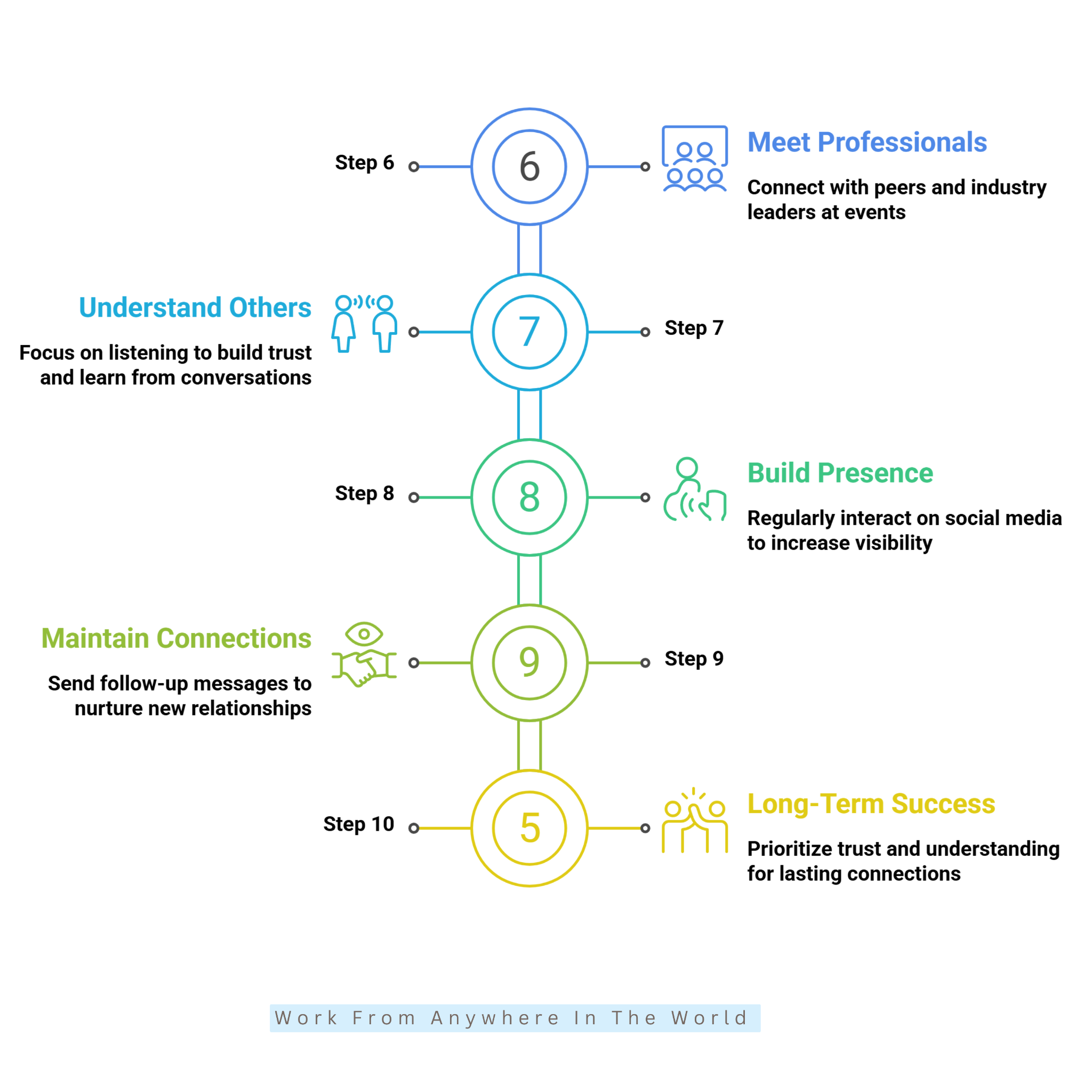
6. Attend Workshops And Events
Workshops, seminars, conferences, and networking events provide excellent opportunities to meet new people and expand your professional network. Many events are available both in person and online, making it easier to get involved.
Large events can feel intimidating when you’re just getting started. Beginning with smaller workshops or local meetups often makes it easier to start conversations and build confidence.
Rather than trying to meet everyone, focus on having a few genuine conversations. Taking time to listen and ask thoughtful questions often leaves a stronger impression than trying to speak with as many people as possible.
Following up with a short email or LinkedIn message after the event helps strengthen new connections. A simple thank-you or friendly message can start a valuable professional relationship.
Key Points
- Attend beginner-friendly workshops and networking events.
- Prepare a few simple conversation starters.
- Ask thoughtful questions and listen carefully.
- Focus on building a few genuine connections.
- Follow up after meeting new people.
7. Practice Active Listening
Active listening is one of the most valuable networking skills you can develop. Instead of thinking about what you’ll say next, focus on understanding what the other person is sharing.
People appreciate conversations where they feel heard and respected. Listening carefully also helps you learn from other people’s experiences, ideas, and perspectives.
Thoughtful questions and genuine interest often lead to more engaging conversations. They also help build trust and encourage stronger professional relationships.
Key Points
- Listen carefully without interrupting.
- Ask thoughtful follow-up questions.
- Focus on understanding before responding.
- Avoid rushing the conversation.
- Show genuine interest in what others share.
8. Engage Consistently On Social Media
Social media can be a valuable tool for building professional relationships and expanding your network. You don’t need to post every day or spend hours online to make a positive impression.
Simple actions like commenting on posts, sharing useful information, and joining discussions help people become familiar with you. Consistent engagement also shows that you’re interested in your industry and willing to contribute.
Focus on adding value instead of trying to gain attention. Thoughtful interactions often lead to conversations, new connections, and professional opportunities.
Key Points
- Comment on posts related to your field.
- Share useful tips, ideas, or resources.
- React to relevant content regularly.
- Follow industry leaders and professional pages.
- Engage consistently without feeling pressured.
9. Follow Up After Conversations
Following up is one of the most important parts of networking, yet many beginners forget to do it. A short message after meeting someone helps keep the conversation going and shows that you appreciated their time.
Your follow-up doesn’t need to be long or formal. A simple thank-you message or a quick note referring to something you discussed is often enough to make a positive impression.
Building a professional network doesn’t end after the first conversation. Staying in touch from time to time helps strengthen relationships and keeps you connected when future opportunities arise.
Key Points
- Send a short thank-you message.
- Mention something you discussed.
- Connect on LinkedIn or another professional platform.
- Share useful resources when appropriate.
- Stay polite, genuine, and professional.
10. Focus On Building Genuine Relationships
The goal of networking is to build relationships, not simply collect contacts. Taking the time to get to know people creates stronger connections than exchanging business cards or adding names to your contact list.
Not every conversation will lead to an immediate opportunity, and that’s perfectly normal. The strongest professional relationships are built through trust, mutual respect, and regular communication.
Small gestures, such as offering encouragement, sharing useful information, or checking in from time to time, show that you value the relationship. These actions often leave a lasting impression.
In my experience, successful networking comes from being genuine, patient, and willing to help others. The stronger the relationships you build, the more valuable your network becomes.
Key Points
- Be honest and natural in conversations.
- Focus on building lasting relationships.
- Offer support whenever you can.
- Be patient and avoid rushing relationships.
- Stay in touch through regular communication.
Frequently Asked Questions
Q1: What Is The Easiest Way For Beginners To Start Networking?
The easiest way to start networking is by reconnecting with people you already know or joining online communities related to your interests. Small conversations and regular participation often feel more comfortable than attending large networking events.
Q2: How Often Should I Follow Up With Professional Connections?
Follow up whenever it feels natural rather than on a fixed schedule. A short message, congratulations on an achievement, or sharing a useful resource can help keep the relationship active.
Q3: Is Networking Important For Freelancers And Remote Workers?
Yes. Networking helps freelancers and remote workers find clients, receive referrals, collaborate with others, and stay informed about industry trends. Many opportunities come through professional relationships rather than traditional advertising.
Q4: Can Introverts Become Successful At Networking?
Absolutely. Many introverts build strong professional relationships by listening carefully and having meaningful one-on-one conversations. Smaller networking events and online communities can also feel more comfortable than large gatherings.
Q5: How Long Does It Take To Build A Professional Network?
Building a strong professional network takes time and consistent effort. Every conversation and new connection contributes to your network, and even small steps can lead to valuable opportunities.
Q6: What Is The Biggest Networking Mistake Beginners Make?
One of the biggest mistakes is focusing on collecting contacts instead of building relationships. Listening, offering support, and staying in touch often create stronger professional connections than simply exchanging contact information.
Conclusion
Building a strong professional network doesn’t happen overnight. It starts with simple conversations, a willingness to learn, and a genuine interest in getting to know other people.
You don’t need perfect communication skills or a large network to get started. Every new conversation is an opportunity to learn, build confidence, and create valuable professional connections.
The most successful networkers focus on helping others, listening carefully, and building trust. Strong relationships are created through honest communication and mutual respect, not by collecting as many contacts as possible.
Whether you network online or in person, consistency is more important than perfection. Keep learning, stay engaged, and your professional network will continue to grow.
I trust you enjoyed this article on Networking for Beginners: Build Professional Connections. Please stay tuned for more insightful blogs on affiliate marketing, online business, and working from anywhere in the world.
Take care!
— JeannetteZ 🌍✨
💬 Your Opinion Is Important To Me
Do you have thoughts, ideas, or questions? I’d love to hear from you. Please leave your comments below or email me directly at Jeannette@WorkFromAnywhereInTheWorld.com.
📚 More Work From Anywhere Reads
🚀 Ready to Build a Business You Can Run from Home
Or from Anywhere in the World?
Imagine creating income on your terms — from home, a cozy café, or wherever life takes you.
With the right tools, training, and community support, it’s entirely possible.
Start your own online business for free — no credit card needed.
Disclosure
This post may contain affiliate links. As an Amazon Associate and participant in other affiliate programs, I earn from qualifying purchases at no extra cost to you. Please read my full affiliate disclosure.