
Tips To Connect With Your Audience: 15 Proven Ideas
These tips to connect with your audience can help you build trust, encourage engagement, and create lasting relationships. A genuine connection makes people more likely to remember your message and return to your content.
Connecting with others is not only a marketing skill. It is also a human skill based on listening, understanding, and communicating clearly.
Your audience wants content that reflects their needs, interests, and concerns. When people feel understood, they are more likely to interact with your brand and value what you share.
You do not need complicated strategies to build these relationships. Thoughtful communication and consistent engagement can make a meaningful difference over time.
In this guide, you will discover practical ways to understand your audience and communicate more effectively. These strategies can help creators, freelancers, educators, and business owners build stronger connections.
15 Practical Tips To Connect With Your Audience
Building a loyal audience starts with understanding the people you want to reach. The stronger your connection, the more likely they are to trust your advice, engage with your content, and recommend your brand to others.
There is no single formula that works for everyone. However, the most successful creators and businesses share one thing in common. They consistently put their audience first.
The good news is that building meaningful relationships does not require a large budget or years of experience. Small improvements in the way you communicate can make a lasting impression.
The following practical tips will help you better understand your audience, improve engagement, and build stronger relationships over time. Whether you are just starting or growing an established brand, these strategies can help you create genuine connections.
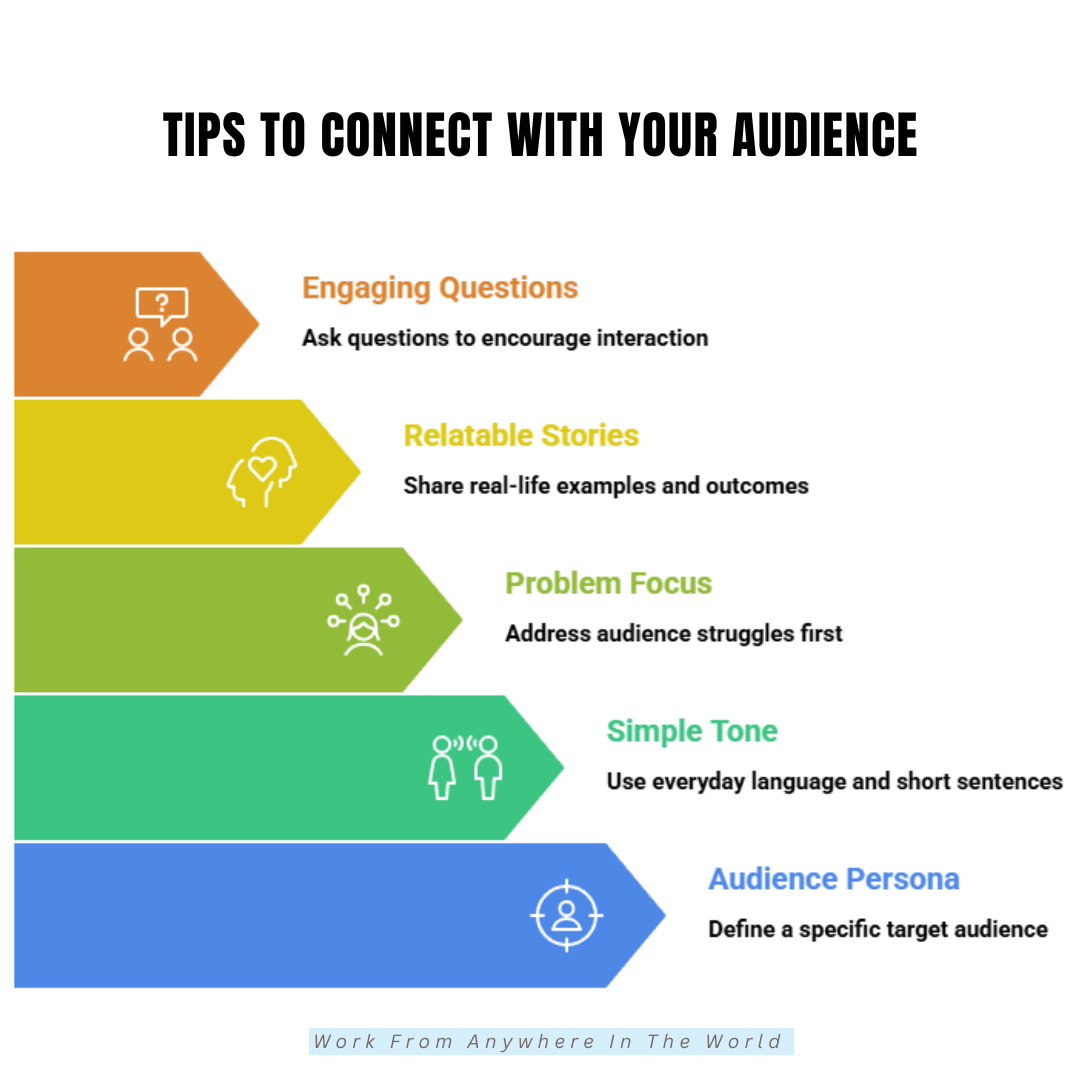
Tip 1: Knowing Your Target Audience
Knowing your target audience is the foundation of every successful content strategy. Instead of writing for everyone, imagine speaking to one specific person with particular needs and goals.
Think about their challenges, questions, and what they hope to achieve. When you understand what matters most to them, your content becomes more relevant and engaging.
Take time to read comments, answer questions, and look for recurring themes. These insights help you understand the language your audience uses and the topics they care about most.
The better you know your audience, the easier it becomes to create content that builds trust, encourages engagement, and keeps people coming back for more.
Key Points
- Define one clear audience persona.
- Read comments for real insights.
- Identify the top three daily struggles.
- Use your audience’s language naturally.
Tip 2: Use A Clear And Natural Tone
People connect with people, not complicated language. If your content is easy to read and sounds natural, your audience is more likely to trust you and stay engaged.
Many writers believe that using long words or technical terms makes them sound more professional. In reality, clear communication is far more effective. Readers appreciate content they can understand without having to read the same sentence twice.
Write as though you are having a conversation with one person. Use everyday language, explain ideas clearly, and keep your sentences concise. This approach makes your content feel genuine and helps readers relate to your message.
A simple writing style also improves readability across blogs, emails, social media, and websites. People are busy, and most scan content before deciding whether to continue reading.
Before publishing, read your content aloud. If something sounds awkward or unnatural, rewrite it until it flows smoothly. The easier your content is to read, the easier it is for your audience to connect with you.
Key Points
- Use short, clear sentences.
- Avoid jargon and unnecessary complexity.
- Write as though you’re speaking to one person.
- Read your content aloud before publishing.
Tip 3: Focus On Your Audience’s Problems First
People pay attention when they feel understood. Before offering advice or promoting a product, show your audience that you understand the challenges they are facing.
Think about the questions they ask, the frustrations they experience, and the goals they want to achieve. When your content addresses these issues first, readers immediately see that it is relevant to their situation.
Avoid making your content about yourself, your business, or your achievements. Instead, focus on the value you can provide. Explain how your ideas, products, or services can help solve a specific problem or make life easier.
Once your audience feels heard, they are far more likely to trust your recommendations and continue reading. Solving real problems consistently helps build credibility and encourages people to return whenever they need reliable advice.
Key Points
- Start with a relatable problem.
- Address your audience’s pain points first.
- Avoid talking about yourself too early.
- Offer clear, practical solutions.
Tip 4: Use Relatable Stories
Relatable stories help your audience connect with your message on a deeper level. Facts and advice are valuable, but stories make your content more memorable and create a stronger emotional connection.
You don’t need dramatic life experiences to tell a good story. Everyday situations often have the greatest impact because your audience can see themselves in them.
Think about a challenge you faced, a lesson you learned, or a common problem your readers experience. Keep your stories focused and relevant to the point you want to make.
Explain the situation, describe the challenge, and share the outcome or lesson learned. This simple structure makes your content more engaging without distracting from your main message.
Stories also make your content feel more authentic. Instead of simply telling readers what they should do, you show them how an idea works in a real-life situation. That makes your advice easier to understand and more memorable.
Whenever possible, end your story with a practical takeaway your audience can apply themselves. A relatable story combined with a useful lesson builds trust, encourages engagement, and helps people remember your content long after they’ve finished reading.
Key Points
- Share simple, real-life examples.
- Keep stories short and relevant.
- Focus on relatable situations.
- End with a practical lesson or solution.
Tip 5: Asking Engaging Questions
Asking engaging questions encourages people to think and participate. Instead of doing all the talking, invite your readers to become part of the conversation.
Good questions help people reflect on their own experiences. They encourage readers to compare your ideas with their own challenges, goals, and opinions. Even if they never leave a comment, they are actively engaging with your content.
Ask questions that are relevant, specific, and easy to answer. For example, you might ask what challenge they are facing, what strategy has worked for them, or what they would like to learn next.
These questions make your content feel more personal and less like a one-way discussion. You can also use questions to introduce a new topic or transition between ideas.
A well-placed question creates curiosity and encourages readers to keep reading to discover the answer. Not every question needs a written response.
Sometimes the most effective questions are the ones your audience answers silently as they continue reading. Those moments of reflection help create stronger connections and make your content more memorable.
Key Points
- Ask simple, relatable questions.
- Use questions to introduce new ideas.
- Encourage reflection and conversation.
- Keep your questions clear and relevant.
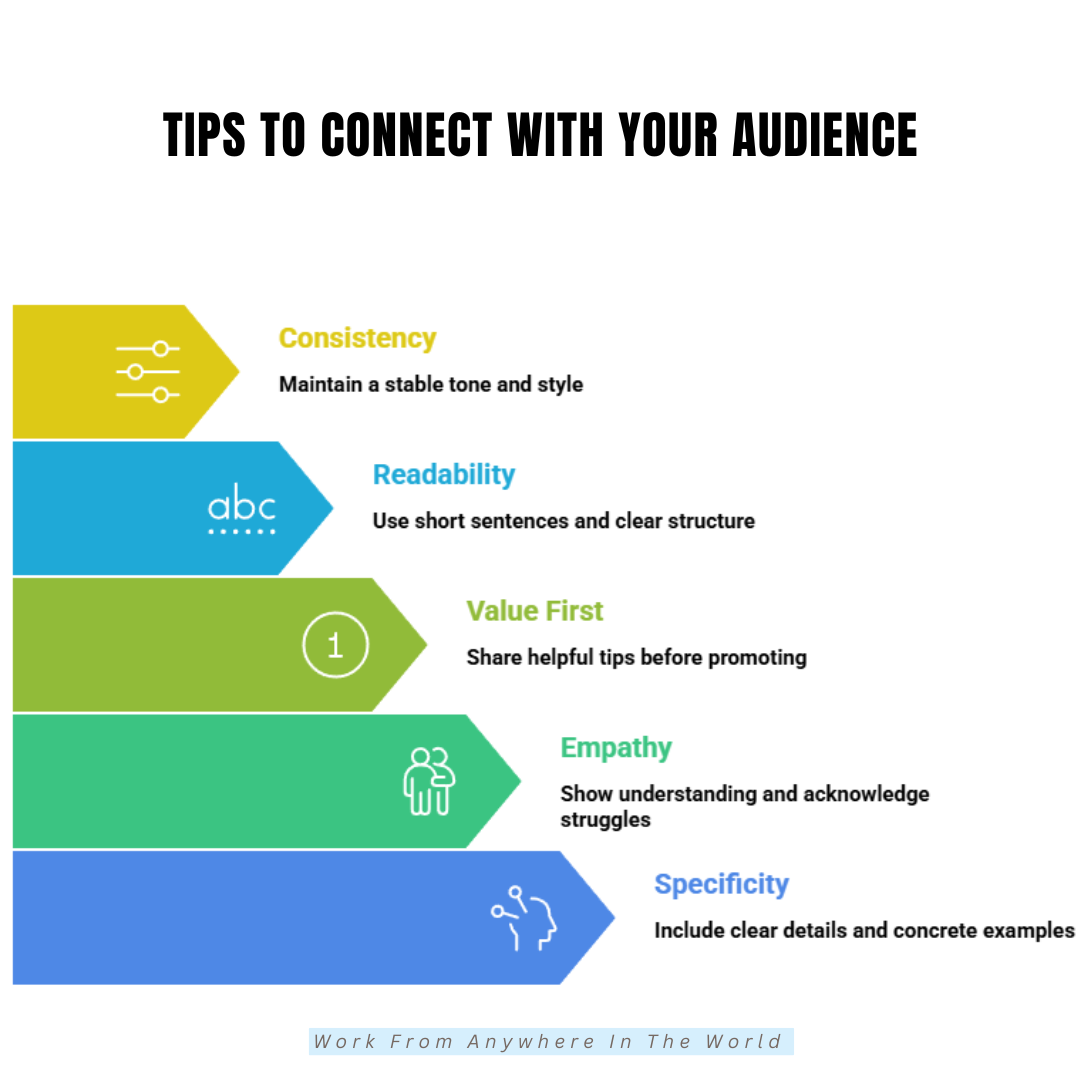
Tip 6: Be Specific
Specific advice is far more helpful than general statements. Broad recommendations may sound encouraging, but they rarely show readers what to do next.
Instead of saying, “Create better content,” explain what better content looks like. You might suggest answering one common question, adding a practical example, or simplifying a confusing section.
Specific details make your message feel more personal and relevant. Readers can quickly see how your advice applies to their situation, which makes your content more useful.
Examples are especially helpful when explaining a strategy or process. They turn abstract ideas into something readers can understand, remember, and apply with confidence.
Try to focus on one idea at a time rather than covering several topics briefly. A clear, well-developed explanation usually provides more value than a long list of vague suggestions.
Specific content also builds trust. When readers receive clear steps and realistic guidance, they are more likely to view you as a dependable source of practical information.
Key Points
- Use clear, real-world examples.
- Replace vague statements with useful details.
- Provide practical, step-by-step guidance.
- Explore one idea thoroughly before moving on.
Tip 7: Showing Empathy And Understanding
Showing genuine empathy and understanding helps build stronger relationships with your audience. People are more likely to trust you when they feel that you recognize their challenges and understand what they are experiencing.
Before offering advice or solutions, acknowledge their situation. A simple statement that reflects their concerns can make readers feel heard and valued. This creates a stronger connection and encourages them to continue reading.
Empathy does not mean agreeing with everything your audience says. It means listening carefully, understanding different perspectives, and responding with kindness and respect. Even when discussing difficult topics, a supportive tone helps build trust.
Avoid making assumptions or judging people for the choices they have made. Instead, focus on providing encouragement, practical guidance, and realistic solutions that help them move forward with confidence.
Showing empathy also means choosing your words carefully. Write in a way that is encouraging rather than critical. When your audience feels respected and understood, they are more likely to engage with your content, share it with others, and return whenever they need reliable advice.
Key Points
- Acknowledge your audience’s struggles first.
- Respond with understanding and respect.
- Use an encouraging, supportive tone.
- Avoid judgment and focus on practical solutions.
Tip 8: Providing Value Before Promoting Anything
Providing value before asking for anything in return is one of the best ways to build trust. People are far more likely to trust your recommendations when they have already benefited from your content.
Focus on helping your audience solve a problem, answer a question, or learn something new. Share practical advice, useful resources, and actionable tips that people can apply immediately.
Even small wins can leave a lasting impression and encourage readers to return. Avoid filling your content with sales messages or constant self-promotion.
While there is nothing wrong with recommending your products or services, they should naturally support the information you are sharing rather than interrupt it. Readers appreciate content that puts their needs first.
Think of every article, video, or email as an opportunity to build trust. When you consistently provide helpful information, your audience begins to see you as a reliable source instead of someone who is only trying to make a sale.
Over time, this trust becomes one of your greatest assets. People are much more willing to subscribe, share your content, purchase your products, or recommend your business because you have already demonstrated your knowledge and willingness to help.
Key Points
- Share helpful advice before promoting products.
- Solve small problems to build trust.
- Avoid excessive self-promotion.
- Focus on helping your audience consistently.
Wealthy Affiliate – Mini Review
If you’ve ever thought about turning your blog, passion, or niche into an online business,
Wealthy Affiliate (WA) is one of the most beginner-friendly platforms I’ve used.
It combines step-by-step training, website hosting, AI-powered tools,
keyword research, and an active community all in one place.
What I like most is that you can start free (no credit card needed), explore the platform,
test the tools, and connect with other entrepreneurs before upgrading.
WA isn’t a “get rich quick” scheme — success comes from consistent effort
and applying what you learn over time.
Tip 9: Keeping Your Content Easy To Read
Keeping your content easy to read makes it more enjoyable and accessible. Even the best ideas can be overlooked if readers struggle to follow your message.
Use short sentences, concise paragraphs, and clear headings to guide readers through your content. Breaking information into smaller sections makes it less overwhelming and helps people find the answers they are looking for more quickly.
Think about how most people consume content today. Many read articles on their phones while travelling, taking a break, or multitasking.
A clean layout with plenty of white space makes your content much easier to scan and encourages readers to stay on the page longer.
Simple formatting also improves understanding. Bullet points, numbered lists, and descriptive headings help organize information and highlight important ideas. Readers should never have to search for the main takeaway.
Remember, your goal is not to impress people with long words or complex explanations. It is to communicate your message as clearly as possible. The easier your content is to read, the easier it is for your audience to understand, trust, and act on your advice.
Key Points
- Use short paragraphs and sentences.
- Break content into clear sections.
- Use headings and lists to improve readability.
- Format your content for mobile devices.
Tip 10: Staying Consistent With Your Voice
Staying consistent with your voice helps your audience recognize and trust your content. When your tone and writing style remain the same, readers know what to expect each time they visit.
Choose a voice that feels natural to you. It should also match the needs and expectations of your audience. Whether you write in a friendly, professional, or conversational style, stay consistent across your blog posts, emails, social media, and videos.
Changing your tone too often can confuse readers. One article may sound formal, while the next feels overly casual. A consistent voice makes your brand feel more authentic and easier to recognize.
Your voice should also reflect your values. As people read more of your content, they begin to associate your writing style with your brand. That familiarity builds trust and encourages them to return.
Being consistent does not mean sounding repetitive. You can explore new topics and try different content formats while keeping the same overall personality. A recognizable voice helps strengthen your relationship with your audience over time.
Key Points
- Choose one clear writing tone.
- Keep your style consistent across all content.
- Let your voice reflect your brand and values.
- Build a recognizable and trustworthy identity.
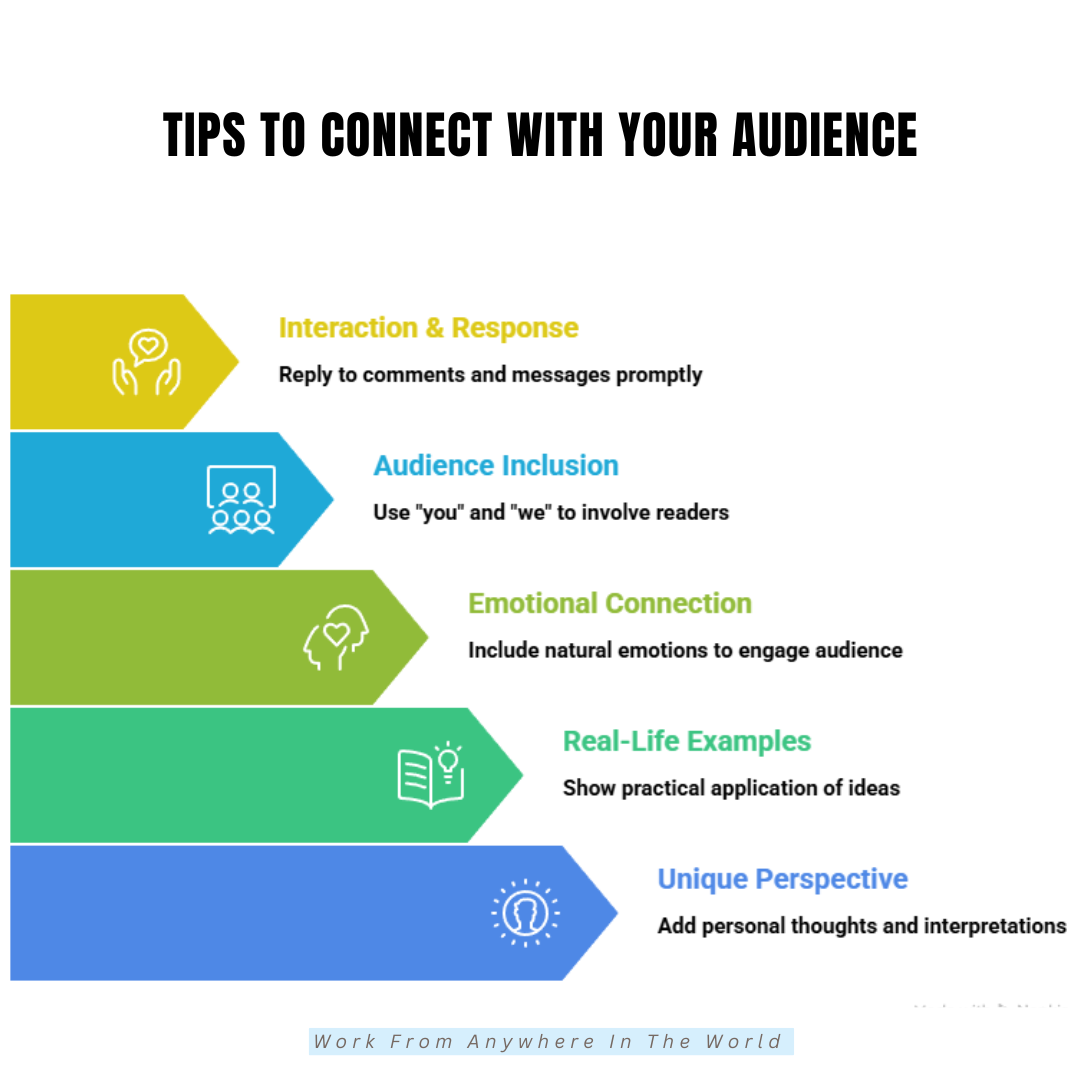
Tip 11: Share Your Unique Perspective
Your unique perspective is what makes your content stand out. Many people can write about the same topic, but your point of view is what makes readers remember you.
Don’t simply repeat what others have already said. Share your own thoughts, insights, or observations whenever they add value. Even a different way of explaining a familiar idea can help readers see it in a new light.
If you have personal experience with the topic, include it where it’s relevant. Real examples make your content more relatable and help readers understand how your advice works in practice. If you are new to a subject, share what you have learned or why you reached a particular conclusion.
Your perspective also adds personality to your content. Readers are more likely to remember someone who offers fresh insights instead of repeating the same generic advice they can find elsewhere.
As you continue publishing helpful content, your unique voice becomes part of your brand. People return because they enjoy the way you explain ideas and trust the value you bring to every topic.
Key Points
- Share your own insights and opinions.
- Avoid repeating common advice.
- Use personal examples when they add value.
- Let your perspective make your content memorable.
Tip 12: Use Real-Life Examples
Real-life examples make your content easier to understand. They help readers see how your advice works in everyday situations. Instead of explaining an idea in general terms, describe a simple situation that your audience can relate to.
This makes your content easier to understand and helps readers see how they can apply your advice in their own lives. Your examples don’t have to be long or complicated.
A brief story, a common scenario, or a practical example is often enough to make a point clearer. The goal is to help readers picture the idea instead of just reading about it.
Choose examples that are relevant to your audience and the topic you are discussing. When readers recognize themselves in your examples, they are more likely to stay engaged and remember what you have shared.
Real-life examples also build credibility. They show that your advice is practical rather than theoretical, making it easier for readers to trust your content and take action.
Key Points
- Use simple, real-life examples.
- Relate your advice to everyday situations.
- Keep examples clear and relevant.
- Help readers visualize your message.
Tip 13: Include Emotion Naturally
Emotion helps people connect with your message on a deeper level. While facts and information are important, genuine emotion makes your content more memorable and relatable.
Think about how your audience feels when they face a challenge. They may feel frustrated, uncertain, hopeful, or excited. Acknowledging those emotions shows that you understand their situation and makes your content feel more relatable.
You don’t need dramatic language to create an emotional connection. Simple, honest wording is often far more effective. Let the emotion come from the situation you are describing rather than from exaggerated expressions.
Balance is also important. Too little emotion can make your content feel cold, while too much can distract from your message. Aim for a natural tone that supports your ideas without overwhelming the reader.
When your audience feels understood, they are more likely to trust your advice and remember what you have shared. A genuine emotional connection encourages people to stay engaged and return for more of your content.
Key Points
- Use a natural and authentic emotional tone.
- Acknowledge how your audience may feel.
- Keep emotions honest and relevant.
- Avoid exaggerated or dramatic language.
Tip 14: Make Your Audience Feel Included
People are more likely to engage with your content when they feel included. Speaking directly to your readers helps them feel part of the conversation rather than simply reading information.
Speak directly to your readers by using words like “you,” “we,” and “us” where they fit naturally. This creates a more personal tone and helps readers feel that you are talking with them rather than at them.
Write in a way that welcomes your audience into the discussion. Encourage them to think about how your ideas apply to their own experiences. This makes your content more engaging and helps build a stronger connection.
Avoid sounding distant or overly formal. A warm, conversational style is easier to relate to and makes readers feel comfortable spending time with your content.
When people feel included, they are more likely to trust your message, stay engaged, and return for future content. Creating that sense of belonging is one of the best ways to build a loyal audience over time.
Key Points
- Speak directly to your readers.
- Use “you” and “we” naturally.
- Create a welcoming, conversational tone.
- Help your audience feel included and valued.
Tip 15: Responding To Comments And Messages
Responding to comments and messages helps strengthen your relationship with your audience. Building trust doesn’t end when you publish your content. It grows every time you interact with the people who follow your work.
Take the time to reply when someone leaves a comment or sends you a message. Even a short response shows that you appreciate their time and value their opinion. These small interactions help build trust and encourage people to engage again.
You don’t have to write lengthy replies. A friendly and thoughtful response is often enough to make someone feel heard. When appropriate, answer questions, thank readers for their feedback, and continue the conversation.
Being responsive also shows that you are active and genuinely interested in your audience. Over time, regular interactions can turn first-time visitors into loyal readers who look forward to your future content.
Remember that every comment and message is an opportunity to strengthen your relationship with your audience. The more valued people feel, the more likely they are to trust your advice, recommend your content, and become long-term supporters.
Key Points
- Reply to comments whenever possible.
- Acknowledge messages in a friendly way.
- Show genuine interest in your audience.
- Build lasting relationships through regular interaction.
How To Build Trust With Your Audience
Building trust with your audience doesn’t happen overnight. It grows through consistent actions, honest communication, and a genuine desire to help.
When people see that you regularly provide valuable content and understand their needs, they become more confident in your advice. Every helpful article, thoughtful response, and authentic interaction strengthens that relationship.
Instead of looking for quick wins, focus on creating positive experiences every time someone engages with your content. Over time, those small moments build credibility, loyalty, and long-lasting trust.
This introduction flows naturally after the 15 tips and sets up the next section without repeating what readers have already learned. It also reinforces the main message of the article: building trust is a process, not a shortcut.
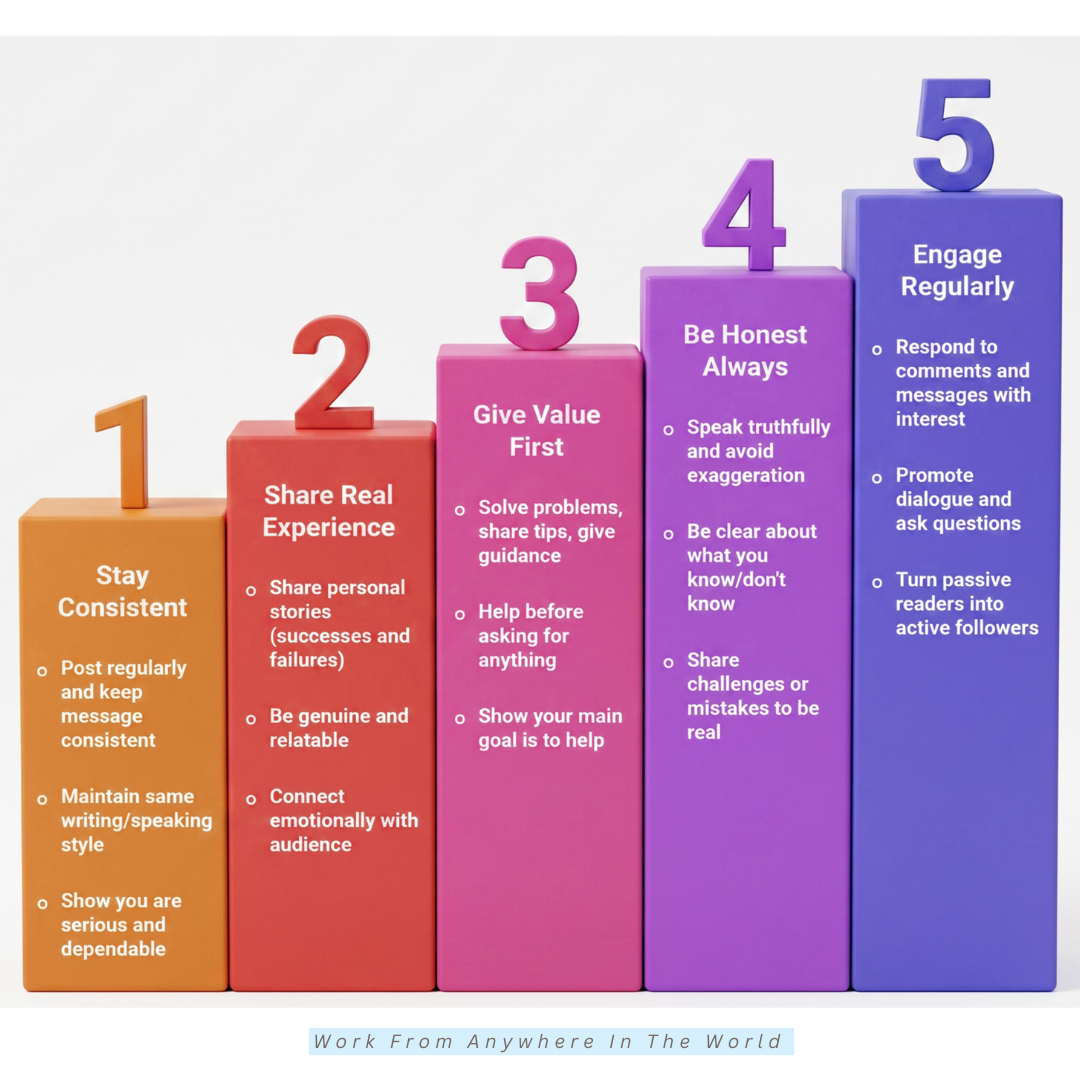
1. Stay Consistent
One of the fastest ways to build trust with your audience is to stay consistent. People are more likely to follow someone who regularly shares helpful content and delivers on their promises.
Consistency goes beyond publishing on a schedule. It also includes your writing style, tone, and the quality of your content. When readers know what to expect, they become more comfortable returning to your website, blog, or social media channels.
You don’t have to publish every day to earn trust. Choose a schedule that works for you and stick with it. Posting one high-quality article each week is often more effective than publishing several rushed pieces and then disappearing for weeks.
Every time you show up and provide value, you reinforce your credibility. Over time, your audience sees you as someone they can rely on for helpful, accurate, and consistent information.
Key Points
- Publish content on a regular schedule.
- Maintain a consistent tone and style.
- Focus on quality over quantity.
- Build trust by showing up consistently.
2. Share Real Experiences
Another effective way to build trust with your audience is to share real experiences. People are more likely to trust advice that comes from genuine situations rather than theory alone.
If you have personal experience with a topic, explain what you did, what you learned, and how it helped you. You don’t need to present yourself as an expert with all the answers.
Honest lessons, including mistakes and challenges, often feel more authentic than perfect success stories. If you’re new to a subject, you can still build trust by sharing what you’ve learned through research, testing different approaches, or studying reliable sources.
The key is to be honest about your knowledge and avoid pretending to have experience you don’t have. Real experiences make your content more relatable.
They help readers understand how your advice works in practice and show that you are willing to share both successes and lessons learned.
Key Points
- Share genuine experiences and lessons learned.
- Be honest about what you know.
- Include challenges as well as successes.
- Help readers see how your advice works in practice.
3. Give Value First
One of the quickest ways to build trust with your audience is to give value before expecting anything in return. When people consistently benefit from your content, they naturally become more confident in your advice.
Look for opportunities to solve small problems, answer common questions, or share practical tips that readers can use straight away. Even simple guidance can make a positive impression and encourage people to return for more.
Resist the urge to promote your products or services in every piece of content. Instead, focus on helping your audience achieve their goals.
When readers see that your priority is to support them, they are more likely to trust your recommendations in the future. Trust is built through repeated positive experiences.
Every helpful article, video, email, or social media post strengthens your credibility. Over time, your audience will remember the value you provide and view you as a reliable source of information.
Key Points
- Put your audience’s needs first.
- Solve problems with practical advice.
- Avoid excessive self-promotion.
- Build trust by providing consistent value.
4. Be Honest Always
Honesty is one of the strongest foundations of trust. When you are open and truthful with your audience, they are more likely to believe your advice and return for future content.
Be honest about what you know and what you are still learning. If a strategy takes time to produce results, say so. Avoid making exaggerated claims or promising outcomes that you cannot guarantee. Readers appreciate realistic advice far more than unrealistic promises.
Don’t be afraid to admit mistakes or share lessons you have learned along the way. Being transparent shows that you are genuine and willing to grow. In many cases, this makes your content more relatable and credible.
Trust is built through honesty in every interaction. When your audience knows they can rely on you for accurate information and realistic expectations, they are more likely to recommend your content and become loyal followers.
Key Points
- Be truthful in everything you share.
- Set realistic expectations.
- Admit mistakes and share what you learn.
- Build credibility through honesty and transparency.
5. Engage Regularly
Building trust doesn’t end when you publish your content. It grows through regular interaction with your audience. Every conversation is an opportunity to strengthen your relationship.
Take time to reply to comments and messages whenever you can. Even a brief response shows that you appreciate your audience and value their feedback. These small interactions can leave a lasting impression.
You can also encourage engagement by asking questions, inviting opinions, or starting discussions. When people feel comfortable sharing their thoughts, they become more invested in your content and your community.
Regular engagement also shows that you are active and approachable. Over time, your audience sees that you are genuinely interested in helping rather than simply publishing content and moving on.
The stronger your relationships become, the stronger your audience’s trust will be. People are far more likely to return, recommend your content, and support your work when they feel seen, heard, and appreciated.
Key Points
- Reply to comments and messages.
- Encourage conversations with your audience.
- Be active and approachable.
- Build trust through regular interaction.
Frequently Asked Questions
Q1: Why Is Connecting With Your Audience Important?
Connecting with your audience helps build trust, increase engagement, and create lasting relationships. When people feel understood and valued, they are more likely to return to your content, recommend it to others, and become loyal followers.
Q2: How Do I Know Who My Target Audience Is?
Start by identifying who will benefit most from your content. Consider their interests, challenges, goals, and the questions they are trying to answer. Understanding your audience helps you create more relevant and valuable content.
Q3: What Is The Best Way To Build Trust With Your Audience?
Building trust starts with honesty, consistency, and providing genuine value. Share accurate information, communicate openly, and focus on helping your audience before promoting products or services. Trust grows over time through positive and reliable interactions.
Q4: How Can I Increase Audience Engagement?
Encourage engagement by asking thoughtful questions, responding to comments, and creating content that solves real problems. Using relatable stories and inviting readers to share their opinions also helps create meaningful conversations.
Q5: What Type Of Content Connects Best With An Audience?
Content that is helpful, authentic, and easy to understand often creates the strongest connection. Sharing practical advice, real-life examples, and genuine insights makes your content more relatable and encourages readers to keep coming back.
Q6: How Long Does It Take To Build A Loyal Audience?
Building a loyal audience is a gradual process that requires consistency and patience. By regularly publishing valuable content and engaging with your readers, you can develop lasting relationships that continue to grow over time.
Conclusion
Building a strong connection with your audience takes time. It grows when you are dependable, honest, and committed to providing genuine value.
Share your knowledge, offer practical advice, and engage with your audience regularly. Small actions, such as answering questions or responding to comments, help build lasting trust.
Remember that trust isn’t built through perfect content. It’s built through authenticity, consistency, and clear communication.
Keep showing up, keep helping, and stay true to your voice. Over time, your audience won’t just follow your content—they’ll trust your advice and return for more.
I trust you enjoyed this article on the Tips To Connect With Your Audience: 15 Proven Ideas. Please stay tuned for more insightful blogs on affiliate marketing, online business, and working from anywhere in the world.
Take care!
— JeannetteZ 🌍✨
💬 Your Opinion Is Important To Me
Do you have thoughts, ideas, or questions? I’d love to hear from you. Please leave your comments below or email me directly at Jeannette@WorkFromAnywhereInTheWorld.com.
📚 More Work From Anywhere Reads
🚀 Ready to Build a Business You Can Run from Home
Or from Anywhere in the World?
Imagine creating income on your terms — from home, a cozy café, or wherever life takes you.
With the right tools, training, and community support, it’s entirely possible.
Start your own online business for free — no credit card needed.
Disclosure
This post may contain affiliate links. As an Amazon Associate and participant in other affiliate programs, I earn from qualifying purchases at no extra cost to you. Please read my full affiliate disclosure.