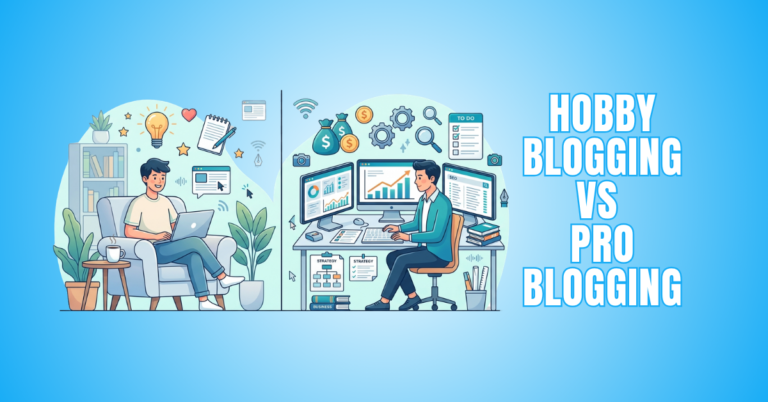

How To Turn Your Blog Into A Business
How to turn your blog into a business is a question many bloggers ask once they realize their content has real earning potential. What often begins as a hobby or creative outlet can gradually grow into a profitable online business with the right strategy.
Building a successful blog takes more than simply publishing articles. It requires consistency, audience trust, smart monetization methods, and long-term planning.
Many bloggers struggle with the transition from casual writing to generating a reliable income. The good news is that turning a blog into a business does not have to be overly complicated.
With the right approach, you can create multiple income streams while continuing to share valuable content with your audience. In this guide, you’ll learn step by step how to turn your blog into a business and build a sustainable online brand.
Why Blogs Can Become Profitable Businesses
Blogs are no longer just personal journals—they’ve become real opportunities to make money. A blog may attract a passionate readership that respects your viewpoints with the correct niche and regular content.
This trust is gold for monetization: advertisers want your readers, affiliate programs reward your recommendations, and your own products or services gain instant credibility.
Unlike many businesses, blogs have low startup costs and can run from anywhere, making them flexible and scalable. Essentially, a blog turns your knowledge, passion, and effort into a platform that can generate ongoing income.
How To Turn Your Blog Into A Business: A Step-By-Step Guide
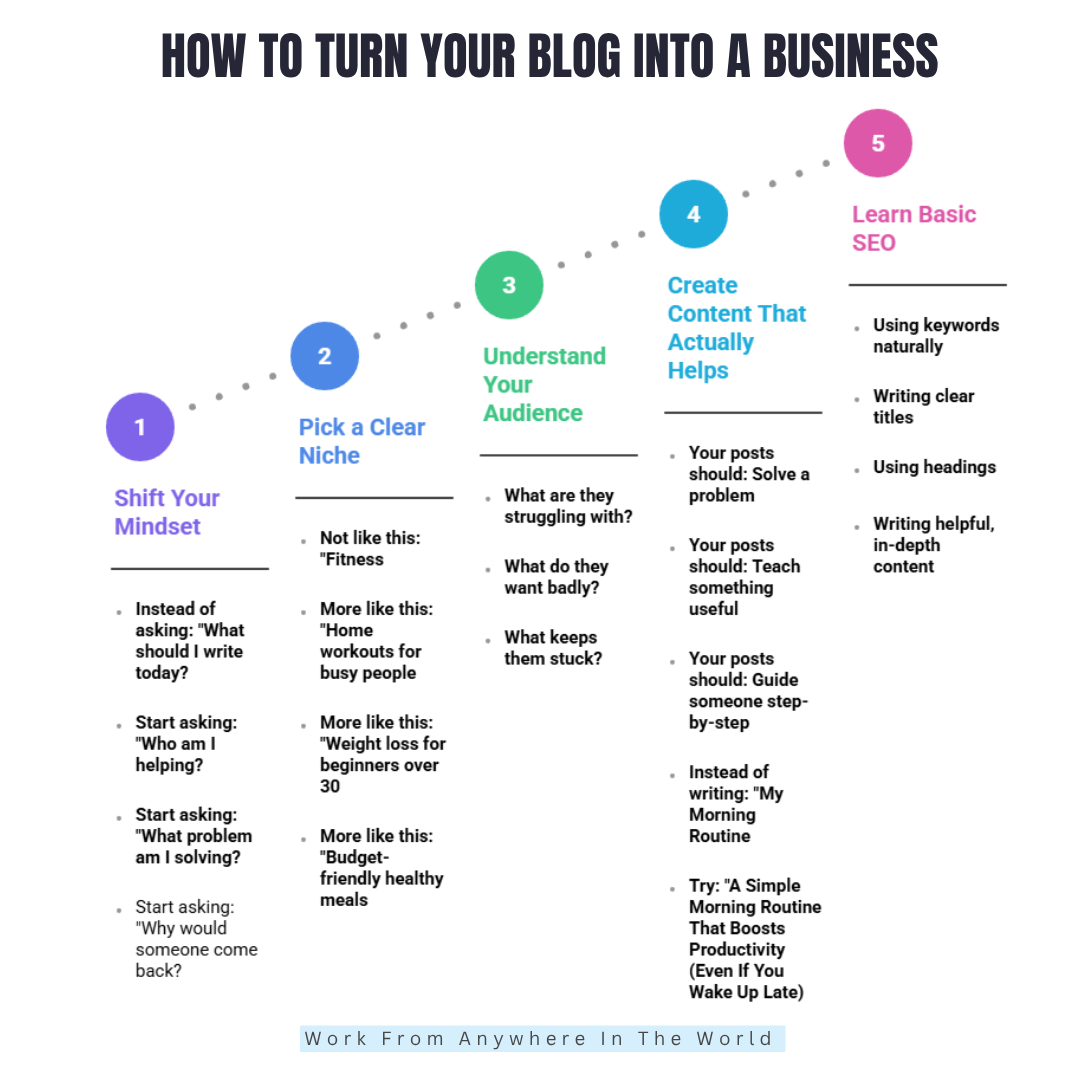
1. Shift Your Mindset
Let’s be honest. Most blogs never grow because the person behind them never really decides to treat it seriously. It stays a side thing. Something you “try when you have time.” But a business doesn’t work like that.
Instead of asking
- “What should I write today?”
Start asking
- “Who am I helping?”
- “What problem am I solving?”
- “Why would someone come back?”
This small shift changes everything. When you start thinking like this, your content becomes more focused. More useful. And honestly, more valuable. People don’t bookmark random thoughts—they come back for solutions, ideas, or even comfort.
You don’t need to become super formal or lose your personality. Not at all. Just give your writing a bit of direction. Think of it like this—you’re still talking, just now you actually know who you’re talking to. That’s where things start to click.
2. Pick A Clear Niche
This is one of the biggest mistakes beginners make. And it’s understandable—you have multiple interests, so you want to write about all of them.
But here’s the problem: when your blog is about everything, it stands for nothing.
Not like this
- “Fitness”
More like this
- “Home workouts for busy people”
- “Weight loss for beginners over 30”
- “Budget-friendly healthy meals”
See the difference? The second group feels more targeted. More intentional. And more helpful.
When someone lands on your blog, they should instantly understand what it’s about. No guessing. No confusion. Also, search engines love clarity. If your blog consistently talks about one focused topic, it becomes easier to rank.
You don’t have to stay in one box forever. You can expand later. But in the beginning? Narrow is powerful. It helps you build authority faster and attract the right audience—not just random visitors who leave in 10 seconds.
3. Understand Your Audience
This part is often ignored, but it’s actually the backbone of everything. You don’t need millions of readers. You just need people who feel like, “Hey, this blog gets me.”
Ask yourself
- What are they struggling with?
- What do they want badly?
- What keeps them stuck?
Don’t just guess—try to observe. Look at comments, forums, and social media. What are people complaining about? What questions keep coming up?
When you understand your audience deeply, writing becomes easier. You don’t sit there thinking, “What should I write?” You already know. A blog that connects emotionally and practically? That’s powerful.
Also, when people feel understood, they trust you faster. And trust is what eventually turns into clicks, shares, and yes, even income. So don’t rush this step. The better you understand your audience, the easier everything else becomes.
4. Create Content That Actually Helps
Here’s a truth that might sting a little—most blog content out there is… forgettable. Not bad. Just not useful enough. Your job is to be different.
Your posts should
- Solve a problem
- Teach something useful
- Or guide someone step-by-step
For example – instead of writing:
- “My Morning Routine”
Try
- “A Simple Morning Routine That Boosts Productivity (Even If You Wake Up Late)”
See the shift? One is about you. The other is about helping someone. Before publishing anything, ask yourself: Would this actually help someone in real life? If the answer is “maybe”… improve it. Add details. Add steps. Add examples.
The more practical your content is, the more people will save it, share it, and come back later. Helpful content builds authority. And authority builds a business.
5. Learn Basic SEO
SEO sounds complicated at first. Like something only tech people understand. But honestly? The basics are pretty simple—and that’s all you need to start.
Focus on:
- Using keywords naturally (what people search for)
- Writing clear titles
- Using headings (like this article)
- Writing helpful, in-depth content
Think of SEO like this—you’re just helping Google understand your content.
For example, you have a chance to appear if someone searches for “how to start a blog” and your article provides a clear solution. You don’t need fancy tools in the beginning. Just think from the reader’s perspective.
What would they type into Google? Also, don’t overdo it. Stuffing keywords everywhere makes your writing feel weird and robotic. Keep it natural. Keep it readable.
Good SEO isn’t about tricking the system—it’s about clarity. And clarity always wins in the long run.
6. Build Traffic
Let’s not sugarcoat it—without traffic, your blog is basically invisible. You could have amazing content, but if no one sees it, it won’t matter.
No traffic = no business. Simple.
Here are realistic ways to grow:
Search Traffic
This is slow but powerful. You write blog posts that answer real questions people are searching for.
Example:
These posts might not blow up instantly. But over time, they bring steady visitors. It’s like planting seeds—you won’t see results immediately, but once it grows, it keeps growing.
Social Media
Don’t try to be everywhere. Seriously, that’s exhausting.
Pick one platform:
Focus there. Share your content, engage with people, and stay consistent.
Email List
This is your safety net. Algorithms change. Platforms die. But your email list? That’s yours. Even if you start with 5 people, it counts.
Wealthy Affiliate – Mini Review
If you’ve ever thought about turning your blog, passion, or niche into an online business,
Wealthy Affiliate (WA) is one of the most beginner-friendly platforms I’ve used.
It combines step-by-step training, website hosting, SEO research tools,
and an active community all in one place.
What I like most: you can start free (no credit card needed),
explore lessons, test the tools, and connect with other entrepreneurs
before upgrading. WA isn’t a “get rich quick” scheme — it’s a platform where success comes
from consistent effort and applying what you learn.
7. Build A Personal Brand
Here’s something most new bloggers don’t realize at first—people don’t just follow blogs, they follow people. Your content matters, yes. But you matter just as much. Think about it.
There are thousands of blogs on the same topic. Same advice. Same ideas. So why do some grow faster? Because they feel personal. Real. Humans.
Start building your presence:
- Share your experiences
- Be honest about wins and failures
- Let your personality show
You don’t have to overshare or be dramatic. Just be you. Also, try to keep a consistent voice. Whether it’s casual, funny, or straight to the point, people should recognize your style over time.
When readers connect with you, they trust you more. And when trust builds, everything else becomes easier—traffic, engagement, even income. At the end of the day, your blog is not just content. It’s your brand. And that’s what people remember.
8. Build Trust
Honestly, this step is underrated—but it’s the most important one. People don’t buy from random blogs. They buy from people they trust.
- Be honest
- Share real experiences
- Don’t oversell
If something didn’t work for you, say it. If a product has flaws, mention them. That honesty actually builds more credibility than pretending everything is perfect.
Also, small actions matter:
- Reply to comments
- Answer emails
- Engage with your readers
It makes your blog feel human, not like some faceless website. Trust takes time. You won’t build it overnight. But once people trust you, they’ll listen to your recommendations, share your content, and even buy from you without hesitation. That’s when your blog truly starts acting like a business.
9. Be Consistent
This is where most people quit. Not because they’re bad—but because they get discouraged. You’ll post something you worked hard on.
And nothing happens.
- No traffic.
- No comments.
- No shares.
It feels frustrating. Almost like you’re wasting time.But this phase? It’s normal. Consistency doesn’t mean posting every day. It means showing up regularly—even when results are slow.
Maybe it’s:
- Once a week
- Twice a month
That’s fine. Just stick to it. Blogging rewards patience. The posts you write today might bring traffic months later. And here’s the truth—most successful bloggers weren’t instantly successful. They just didn’t quit when it felt pointless. Keep going. Even when it’s quiet.

How You’ll Make Money
1. Advertising-Based Business
An advertising-based business earns money by displaying ads on your blog or website. It works best when you have regular visitors and interesting material that draws users back time and time again.
Process
Building an advertising business starts with creating valuable, SEO-focused content that attracts consistent visitors. Choose topics people search for and solve real problems. As traffic grows, join ad networks like Google AdSense.
Place ads carefully so they remain visible without harming user experience. Continuously update content, test ad placements, and improve page views to increase revenue steadily.
Earnings
- Beginners: $10–$50/month
- Moderate traffic (10k/month): $50–$200
- High traffic (50k+): $300–$1000+
- Premium niches earn higher CPC
- Seasonal traffic increases revenue
- Passive income grows over time
2. Affiliate Marketing Business
Affiliate marketing is one of the most popular ways to monetize a blog. By recommending goods or services and receiving payment when a customer purchases using your special link, you can earn commissions.
Process
Start by choosing goods that are relevant to your niche and actually benefit your target market. Create helpful content like reviews, tutorials, and comparisons with natural affiliate links.
Focus on building trust through honest recommendations. Use SEO to attract search traffic and publish evergreen content that continues to generate clicks and commissions over time.
Earnings
- Beginners: $0–$100/month
- Small niche blogs: $100–$500
- Authority blogs: $500–$3000+
- High-ticket products boost income
- Recurring commissions possible
- Depends on the conversion rate
3. Digital Product Business
A digital product business involves selling your own products, such as ebooks, courses, templates, or guides. It gives you full control over pricing, branding, and profit margins compared to other monetization methods.
Process
Create a basic product, such as an ebook, template, or mini-course, to address a particular issue that your audience is facing. Focus on clarity, not perfection. Promote through your blog, email list, and social media.
Use platforms like Gumroad or your website for delivery. Continuously improve based on feedback and expand with more products or bundles over time.
Earnings
- Beginners: $50–$300/month
- Growing audience: $300–$2000
- Strong brand: $2000–$10000+
- High profit margins
- No inventory cost
- Scalable income model
4. Service-Based Business
A service-based business means offering your skills to clients through your blog. This includes writing, SEO, design, marketing, or consulting services, depending on your expertise and experience.
Process
Begin by showcasing your skills through high-quality blog content related to your expertise. Create a clear service page that explains your offerings. Use platforms like LinkedIn and freelancing sites to attract clients.
Focus on delivering real results and maintaining strong communication. As your reputation grows, referrals increase naturally. You can scale by raising prices or building a small team.
Earning
- Beginners: $100–$500/month
- Intermediate: $500–$2000
- Experienced: $2000–$10000+
- High-demand skills pay more
- Recurring clients possible
- Fastest way to earn
5. Sponsored Content Business
Sponsored content means brands pay you to write about their products or services. This works best when your blog has authority, audience trust, and a clear niche with engaged readers.
Process
Focus on building a strong niche blog with consistent, high-quality content and engaged readers. Develop a clear brand identity and audience trust. Create a media kit showcasing your traffic and engagement.
Make contact with brands or respond to collaboration offers. Choose relevant partnerships and maintain authenticity. Set pricing based on your influence and continuously grow your blog authority.
Earnings
- Beginners: $50–$150/post
- Mid-level blogs: $150–$500
- Established blogs: $500–$2000+
- Depends on niche authority
- Long-term brand deals possible
- Higher engagement = higher rates
6. Membership Business
A membership business allows you to earn recurring income by offering exclusive content, tools, or community access. It works best when you have a loyal audience that values your knowledge.
Process
Start by identifying the premium value you can offer beyond free content, such as exclusive posts, courses, or community access. Create simple membership tiers with clear benefits.
Use platforms like Patreon or your website to manage subscriptions. Deliver consistent value to retain members. Focus on building strong relationships and trust, as loyal audiences are more likely to stay and pay monthly.
Earnings
- Beginners: $50–$200/month
- Small audience: $200–$1000
- Loyal community: $1000–$5000+
- Recurring monthly income
- Low churn = stable growth
- High-value niche earns more
7. Email Marketing Business
An email marketing business focuses on building an email list and earning through promotions, affiliate offers, or product sales. Without depending on algorithms, it provides you with direct access to your audience.
Process
Begin by offering a valuable lead magnet, such as an ebook or checklist, to collect emails. Drive traffic from your blog to grow your list. Send helpful, engaging emails regularly to build trust. Avoid aggressive selling early.
Monetize through affiliate offers, products, or sponsorships. Use tools like Mailchimp or ConvertKit to manage campaigns and optimize based on audience behaviour.
Earnings
- Beginners: $20–$100/month
- Growing list: $100–$1000
- Large list: $1000–$10000+
- High ROI channel
- Repeat buyers increase income
- Strong conversion rates
8. E-Commerce Business
You can sell tangible or digital goods online with an e-commerce or dropshipping business. You don’t need to keep inventory if you use suppliers who handle storage and delivery.
Process
Start by selecting a profitable niche and researching trending products. Build an online store using platforms like Shopify. In dropshipping, partner with suppliers who handle inventory and delivery.
Focus on marketing through content, social media, and ads. Prioritize branding and customer experience. Test different products regularly and scale the ones that perform well over time.
Earnings
- Beginners: $0–$200/month
- Testing phase: $200–$1000
- Scaling stage: $1000–$10000+
- Depends on product demand
- Ads impact profit margins
- High risk, high reward

FAQs
1. How Long Does It Take To Turn A Blog Into A Business?
It usually takes 6 to 12 months to see real results. Consistency matters most. Focus on content, audience growth, and trust first. Income grows slowly but becomes stable over time.
2. What Is The Easiest Way To Start Earning From A Blog?
Affiliate marketing is often the easiest starting point. You recommend useful products and earn commissions. It doesn’t require your own product, making it simple and beginner-friendly for new bloggers.
3. Do I Need A Lot Of Traffic To Make Money From Blogging?
Not always. Even small, targeted traffic can earn well if your audience trusts you. A niche blog with loyal readers often performs better than a large, unfocused audience.
Conclusion
Turning your blog into a business isn’t about shortcuts. It’s about showing up, learning as you go, and actually helping people. Some days it’ll feel slow. Other days, you’ll see progress and think—okay, this might actually work.
Stick with it. Focus on value, build trust, and keep improving. Over time, your blog stops being “just a blog”… and starts becoming something much bigger.
I trust you enjoyed this article on How To Turn Your Blog Into A Business. Please stay tuned for more insightful blogs on affiliate marketing, online business, and working from anywhere in the world.
Take care!
— JeannetteZ 🌍✨
💬 Your Opinion Is Important To Me
Do you have thoughts, ideas, or questions? I’d love to hear from you. Please leave your comments below or email me directly at Jeannette@WorkFromAnywhereInTheWorld.com.
📚 More Work From Anywhere Reads
🚀 Ready to Build a Business You Can Run from Home
Or from Anywhere in the World?
Imagine creating income on your terms — from home, a cozy café, or wherever life takes you.
With the right tools, training, and community support, it’s entirely possible.
Start your own online business for free — no credit card needed.
Disclosure
This post may contain affiliate links. As an Amazon Associate and participant in other affiliate programs, I earn from qualifying purchases at no extra cost to you. Please read my full affiliate disclosure.