

How To Become A Copywriter
How to become a copywriter is a question many beginners ask as they explore flexible online careers. Copywriting plays an important role in digital marketing, helping businesses create content that informs, persuades, and encourages action.
From website pages and email campaigns to advertisements and social media content, copywriters help brands communicate effectively with their audiences. The good news is that getting started does not always require a formal degree or years of experience.
In this guide, you’ll learn how to become a copywriter step by step, including practical tips, essential skills, and ways to start building experience in the real world.
What Is Copywriting?
Copywriting is the art of writing persuasive content that encourages people to take action. It is commonly used in advertisements, websites, emails, landing pages, and social media marketing.
While regular writing often aims to inform or entertain, copywriting is designed to influence decisions and guide readers toward a specific outcome.
That action may include:
- Buying a product
- Signing up for a service
- Clicking a link
- Subscribing to a newsletter
Good copywriting combines clear messaging, emotion, and strategy to encourage action naturally. Even a simple phrase such as “Buy Now” or “Get Started” is carefully written to inspire a response.
How To Become A Copywriter: A Step-By-Step Guide
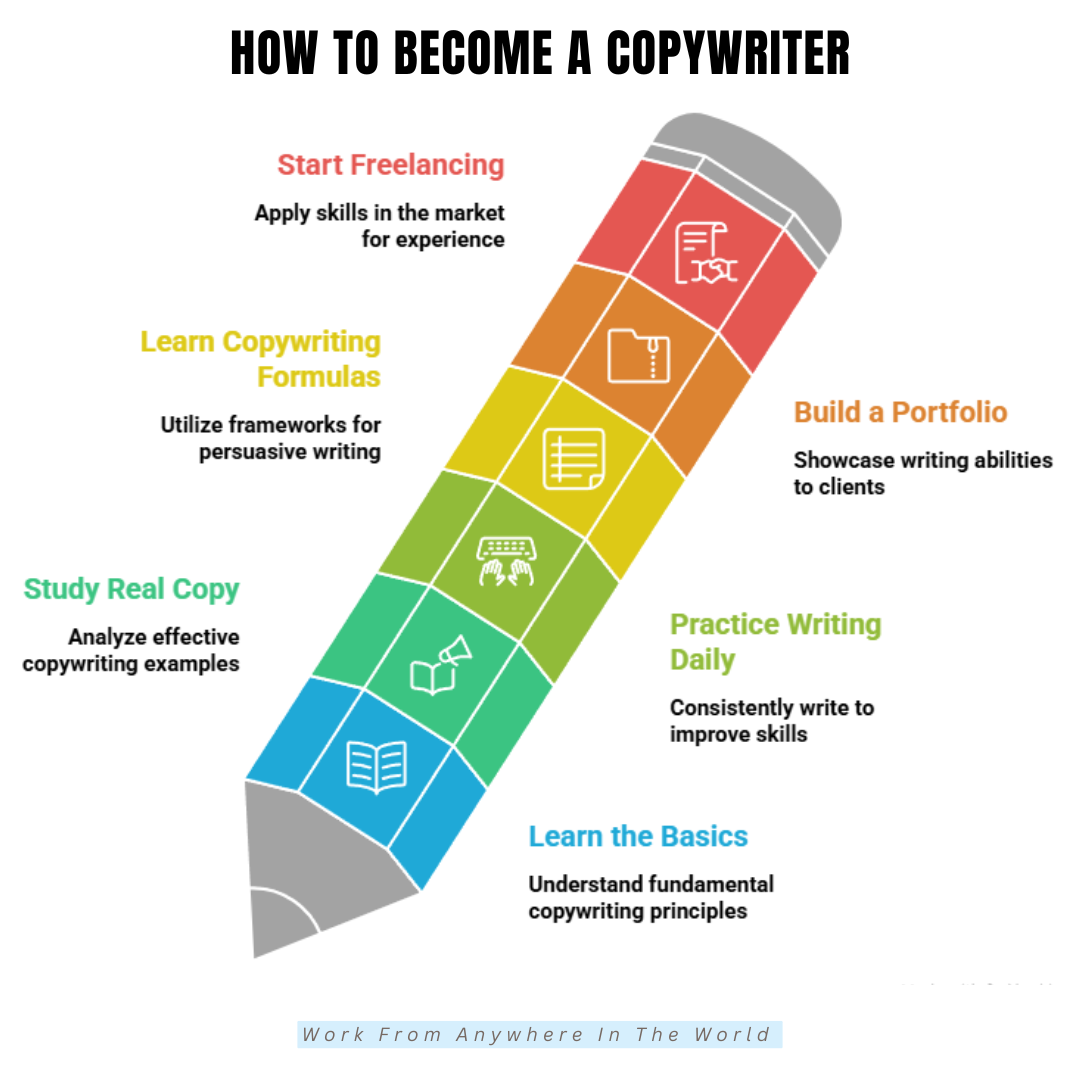
Step 1: Learn The Basics Of Copywriting
Before learning advanced techniques, it helps to understand the basics of copywriting. At its core, copywriting is the skill of writing words that encourage people to take action, whether that means buying a product, signing up for a service, or clicking a link.
As a beginner, focus on understanding how persuasive writing works. Pay attention to how brands communicate with their audiences through advertisements, websites, emails, and social media. Notice how headlines grab attention, how messages build interest, and how simple wording can influence decisions.
Start by learning:
- What copywriting is
- Different types of copywriting
- How advertisements capture attention
- How sales pages guide readers toward action
- What makes headlines effective
Real-World Example
Nike’s famous slogan: “Just Do It.”
Why It Works
The message is short, clear, and memorable. It encourages action while fostering motivation and confidence. Its simplicity makes it easy to remember, while the emotional connection helps strengthen the brand’s identity.
A strong headline or message often captures attention quickly and encourages people to keep reading. Even a few carefully chosen words can have a powerful impact.
Step 2: Study Real Copy
One of the fastest ways to improve your copywriting skills is to study real examples. Regularly explore Facebook ads, landing pages, email newsletters, and product descriptions from established brands.
Instead of simply reading the content, try to understand why it works. Pay attention to headlines, emotional triggers, word choice, structure, and calls-to-action. Consider how the message guides readers and encourages them to take the next step.
Look at examples such as:
- Facebook ads
- Landing pages
- Email newsletters
- Product descriptions
Ask yourself questions like:
- Why is this convincing?
- What emotion is it triggering?
- What problem is it solving?
Studying persuasive writing regularly can help you develop a stronger understanding of how copywriting works in real-world situations.
Step 3: Practice Writing Daily
Regular writing practice is one of the most important parts of becoming a copywriter. Reading and studying examples can help, but improvement often comes through consistent practice.
Start with simple exercises to build confidence and improve your skills. Rewriting advertisements, creating product descriptions, writing social media captions, or practicing headlines can help strengthen your writing style over time.
Do not worry too much about mistakes in the beginning. Like most skills, copywriting tends to improve through consistency and repetition.
Even 20–30 minutes of regular writing practice may gradually help make your sentences clearer, more natural, and more persuasive.
Start small:
- Rewrite ads in your own words
- Write sample product descriptions
- Create social media captions
- Practice writing headlines
Step 4: Learn Copywriting Formulas
Copywriting formulas can make writing feel less overwhelming by providing a clear structure to follow. Instead of guessing what to write next, these frameworks help organize ideas and guide readers toward taking action.
Beginners often start with simple formulas such as AIDA (Attention, Interest, Desire, Action) and PAS (Problem, Agitation, Solution). These frameworks can help improve clarity, structure, and persuasion in your writing.
Rather than overthinking the process, try using these formulas in practice. Over time, you may start to notice how businesses and marketers use simple structures to communicate more effectively and encourage action.
You can also explore:
- AIDA, PAS, BAB, and 4P formulas in more detail
- Real advertising examples using each formula
- How brands use different formulas for different goals
- Rewriting one advertisement using two different formulas
Step 5: Build A Portfolio
A portfolio can help demonstrate your writing skills and give potential clients or employers an idea of what you can do. Even if you do not have real client work yet, you can still build a strong portfolio by creating sample content.
Start by writing practice pieces in different formats and styles. Focus on making your writing clear, helpful, and professional rather than aiming for perfection.
You could begin by creating:
- Sample advertisements
- Practice blog posts or sales pages
- Social media content
- Email marketing examples
Keep your work organized in Google Docs, a portfolio platform, or a simple website so it is easy to view and share. Over time, a well-organized portfolio may help build credibility and open the door to freelance opportunities.
Step 6: Start Freelancing
Freelancing is often the stage where beginners begin applying their copywriting skills in real-world situations. While it may feel intimidating at first, gaining experience through smaller projects can help build confidence and improve writing skills over time.
Many beginners start by exploring freelance platforms, community groups, or local opportunities to gain practical experience. Smaller projects may help you better understand client expectations, deadlines, and different writing styles.
You could start by exploring:
- Fiverr
- Upwork
- Freelancer.com
- Facebook groups
- Local businesses
In the beginning, smaller or lower-paying projects may be more common, but they can still provide valuable experience. Over time, building skills, confidence, and a portfolio may help open the door to larger opportunities.
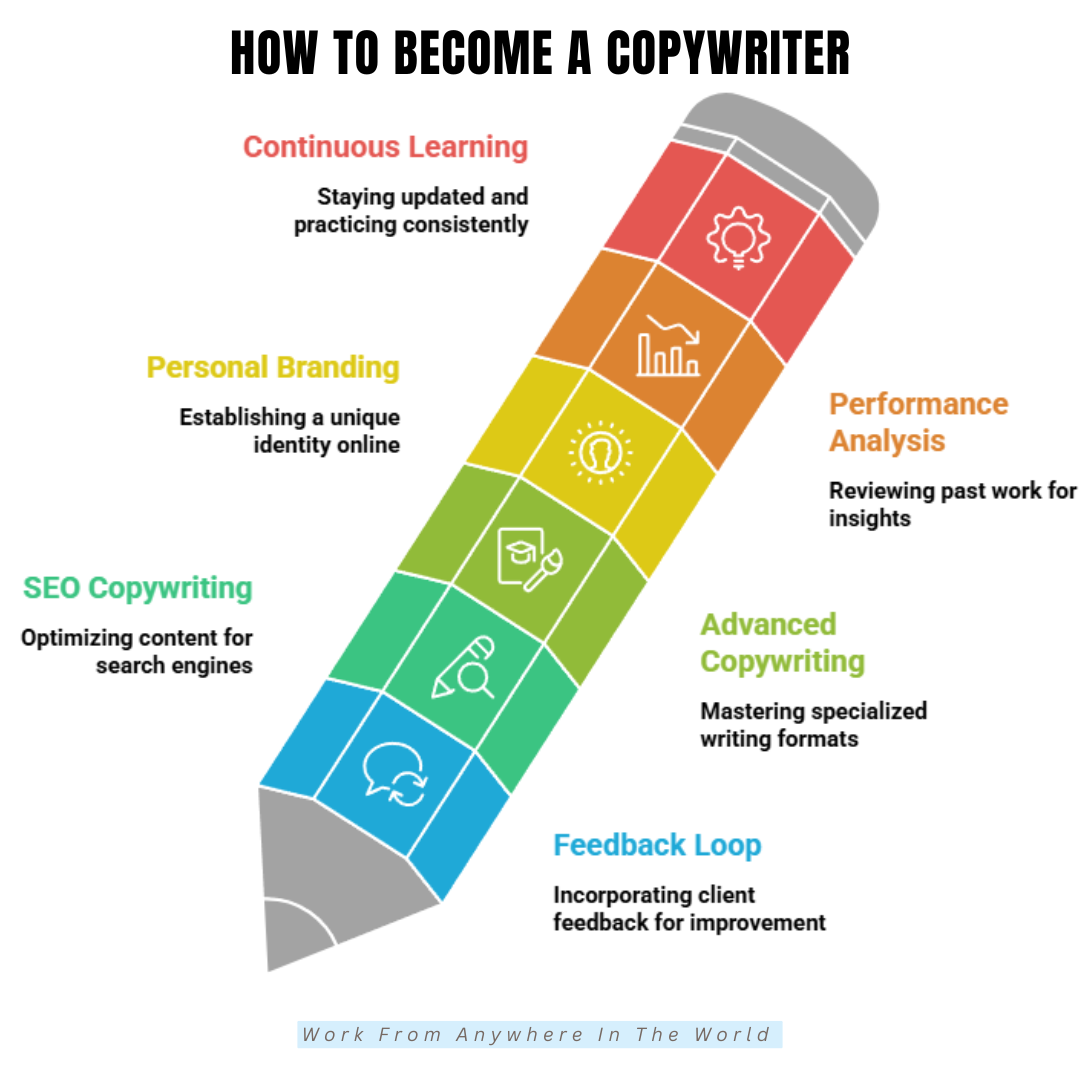
Step 7: Improve With Feedback
Feedback can play an important role in helping copywriters improve their skills over time. Whether feedback comes from clients, colleagues, or practice projects, it may highlight what is working well and where improvements can be made.
As you gain experience, paying attention to suggestions and patterns in feedback can help strengthen your writing style and better align your work with audience needs. Over time, this process may help improve clarity, tone, and overall effectiveness.
Feedback can help you understand:
- What worked well in your writing
- Which areas may need improvement
- How readers or clients respond to your tone and messaging
- Ways to make future copy stronger and more effective
While feedback may sometimes feel challenging, many writers find it becomes a valuable part of learning and professional growth over time.
Step 8: Learn SEO Copywriting
SEO copywriting combines search engine optimization (SEO) with persuasive writing. The goal is to create content that helps pages rank in search engines while also keeping readers engaged and encouraging action.
As a beginner, it can help to understand how keywords, search intent, and content structure work together. Learning how to naturally include keywords, write clear headings, and create helpful content may improve both readability and search visibility.
You may also want to learn about meta descriptions, on-page SEO, and blog structure, as these elements can help content perform better in search results.
When starting, focus on writing content that is clear, helpful, and easy to read while answering real questions people search for online.
Key focus areas:
- Keyword research
- Search intent
- On-page SEO
- Meta description writing
- Blog structure optimization
Wealthy Affiliate – Mini Review
If you’ve ever thought about turning your blog, passion, or niche into an online business,
Wealthy Affiliate (WA) is one of the most beginner-friendly platforms I’ve used.
It combines step-by-step training, website hosting, AI-powered tools,
keyword research, and an active community all in one place.
What I like most is that you can start free (no credit card needed), explore the platform,
test the tools, and connect with other entrepreneurs before upgrading.
WA isn’t a “get rich quick” scheme — success comes from consistent effort
and applying what you learn over time.
Step 9: Practice Advanced Copywriting
Once you understand the basics, you can begin practicing more advanced types of copywriting, such as email marketing, sales funnels, landing pages, and advertising copy. These formats are often more strategic because they guide readers toward a specific action.
Take your time with this stage. Try writing sample email sequences, simple landing pages, or short ad campaigns to understand how each format works.
As you practice, you will begin to see how professional marketers use structure, timing, and persuasive language to move readers from interest to action.
Advanced areas to practice:
- Email marketing
- Sales funnels
- Landing pages
- Ad campaigns
Step 10: Build Your Personal Brand
Building a personal brand can help you stand out as a copywriter and create more opportunities over time. Sharing your work online may help potential clients better understand your writing style and build trust in your skills.
You might begin by sharing writing samples, posting on professional platforms, writing blog content, or showcasing projects from practice or freelance work. Consistency often matters more than perfection, especially in the beginning.
Over time, regularly sharing your work may help strengthen your professional presence and make it easier to connect with freelance opportunities or potential clients.
Ways to build your brand:
- Post on LinkedIn
- Share writing samples
- Write blog content
- Showcase writing results or projects
Step 11: Analyze And Improve Your Copy
Copywriting often improves through regular review and practice. Looking back at your past work may help you better understand what connects with readers and which areas could be strengthened.
Pay attention to elements such as headlines, structure, clarity, and audience response. Small adjustments, including stronger wording or clearer messaging, may improve how effectively your copy communicates.
Reviewing feedback, audience engagement, and past results can also help strengthen future writing and build confidence over time.
Areas to focus on:
- Content performance review
- Headline testing
- Identifying weaker areas in your writing
- Understanding audience behaviour
- Revising and improving copy
Step 12: Keep Learning And Stay Consistent
Learning copywriting is an ongoing process that often improves through practice, consistency, and real-world experience. Like many creative and professional skills, progress tends to happen gradually over time.
Continuing to explore new techniques, study examples from experienced copywriters, and practice regularly may help strengthen both confidence and writing ability. Staying informed about trends in digital marketing, content writing, and audience behaviour can also help keep your skills relevant.
Over time, consistent practice may help make your writing feel more natural, clear, and persuasive.
Key focus areas:
- Building a regular writing habit
- Continuous skill development
- Learning from real copywriting examples
- Staying updated with marketing trends
- Developing long-term writing consistency
Skills You Need To Become A Copywriter
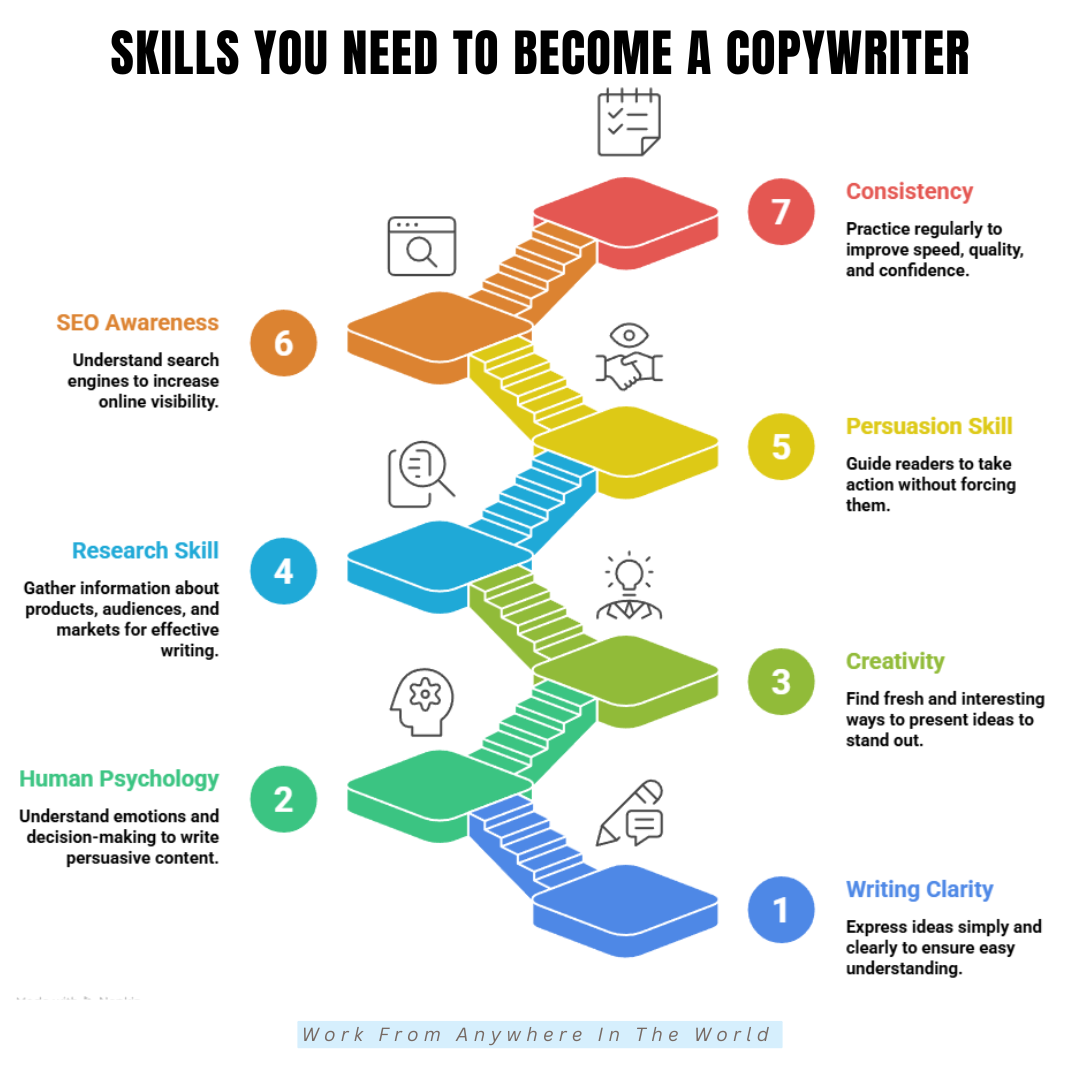
1. Writing Clarity
Writing clarity is one of the most important skills in copywriting. Strong copywriting communicates ideas clearly and simply so readers can quickly understand the message. Rather than using complicated words or long sentences, effective copy focuses on clear communication.
The goal is to make content easy to understand while keeping it engaging and persuasive. Over time, practicing short, direct writing may help improve clarity and strengthen your message.
2. Understanding Human Psychology
Copywriting is closely connected to human psychology. It can help to understand how people think, feel, and make decisions. Effective copy often connects with emotions such as curiosity, trust, or desire to encourage action.
Observing how advertisements influence everyday decisions may also help strengthen this skill. Over time, studying real examples and considering the reader’s perspective may improve your ability to write more persuasive content.
3. Creativity In Writing
Creativity can help copy stand out and capture attention. It is not about being highly artistic but rather finding fresh and engaging ways to communicate ideas.
Creative copywriting may include writing stronger headlines, unique descriptions, or messages that encourage people to stop and read. Practicing different writing styles and studying strong examples may gradually help improve creativity and confidence.
4. Research Skill
Research plays an important role in effective copywriting. Understanding the product, audience, and market may help make writing more relevant, accurate, and persuasive.
Research can also help identify customer concerns, goals, and language that connects with readers. Reviewing competitor content, customer feedback, and product details may help strengthen your writing and make it more effective.
5. Persuasion Skill
Persuasion is an important part of copywriting. Effective writing often guides readers toward action in a natural and helpful way rather than feeling overly promotional.
This may involve building trust, creating interest, and clearly communicating value. Studying advertisements and persuasive messaging may help strengthen this skill over time and improve the effectiveness of your content’s connection with readers.
6. SEO Awareness
SEO awareness can help content reach more people online. Understanding how search engines work and how keywords are naturally used in content may improve visibility and search performance.
SEO copywriting is not only about rankings—it also focuses on creating helpful, engaging content that answers real questions. Learning about keywords, meta descriptions, and content structure may help strengthen your writing and increase your value as a copywriter.
7. Consistency And Practice
Building copywriting skills often takes time, practice, and patience. Reading strong examples, practicing regularly, and applying what you learn may gradually improve both confidence and writing quality.
Even small, consistent writing habits can make a difference over time. As skills develop, writing may become clearer, more natural, and more persuasive through regular practice and experience.
FAQs
1. Do I Need A Degree To Become A Copywriter?
No, a degree is not always required to become a copywriter. Strong writing skills, regular practice, and an understanding of marketing and communication are often more important than formal education.
Many copywriters build their skills through self-study, real-world experience, and consistent practice over time.
2. How Much Can A Beginner Copywriter Earn?
Earnings for beginner copywriters can vary depending on experience, niche, skill level, and the type of clients or projects they work with.
Some beginners may start with smaller projects while building experience, and income may grow gradually as skills, confidence, and a portfolio develop over time.
3. Can I Become A Copywriter Without Experience?
Yes, it is possible to start copywriting without prior experience. Many beginners begin by practicing writing samples, building a portfolio, and gradually gaining experience through smaller freelance projects or personal practice.
Over time, consistent practice and real-world experience may help strengthen skills and create more opportunities.
Conclusion
Becoming a copywriter is often a gradual process that develops through practice, patience, and consistency. While no one becomes an expert overnight, learning the basics, studying real examples, and building writing experience over time may help strengthen both skills and confidence.
Whether you are interested in freelance work, remote opportunities, or building a long-term career, copywriting can become a valuable skill with continued learning and regular practice.
I trust you enjoyed this article on How to Become A Copywriter. Please stay tuned for more insightful blogs on affiliate marketing, online business, and working from anywhere in the world.
Take care!
— JeannetteZ 🌍✨
💬 Your Opinion Is Important To Me
Do you have thoughts, ideas, or questions? I’d love to hear from you. Please leave your comments below or email me directly at Jeannette@WorkFromAnywhereInTheWorld.com.
📚 More Work From Anywhere Reads
🚀 Ready to Build a Business You Can Run from Home
Or from Anywhere in the World?
Imagine creating income on your terms — from home, a cozy café, or wherever life takes you.
With the right tools, training, and community support, it’s entirely possible.
Start your own online business for free — no credit card needed.
Disclosure
This post may contain affiliate links. As an Amazon Associate and participant in other affiliate programs, I earn from qualifying purchases at no extra cost to you. Please read my full affiliate disclosure.