
How To Set Up An Affiliate Marketing Website: 15 Easy Steps
How to Set Up an Affiliate Marketing Website is one of the first questions beginners ask when starting their online journey. Building a strong foundation is essential if you want to turn affiliate marketing into a reliable source of income.
Affiliate marketing allows you to promote products and earn commissions, but success depends on having a well-structured website. Many beginners jump into marketing without setting up their site properly, which can limit their results.
A clear layout, valuable content, and a user-friendly design help attract visitors, build trust, and increase conversions. In this guide, you’ll learn how to set up an affiliate marketing website step by step using simple and practical strategies.
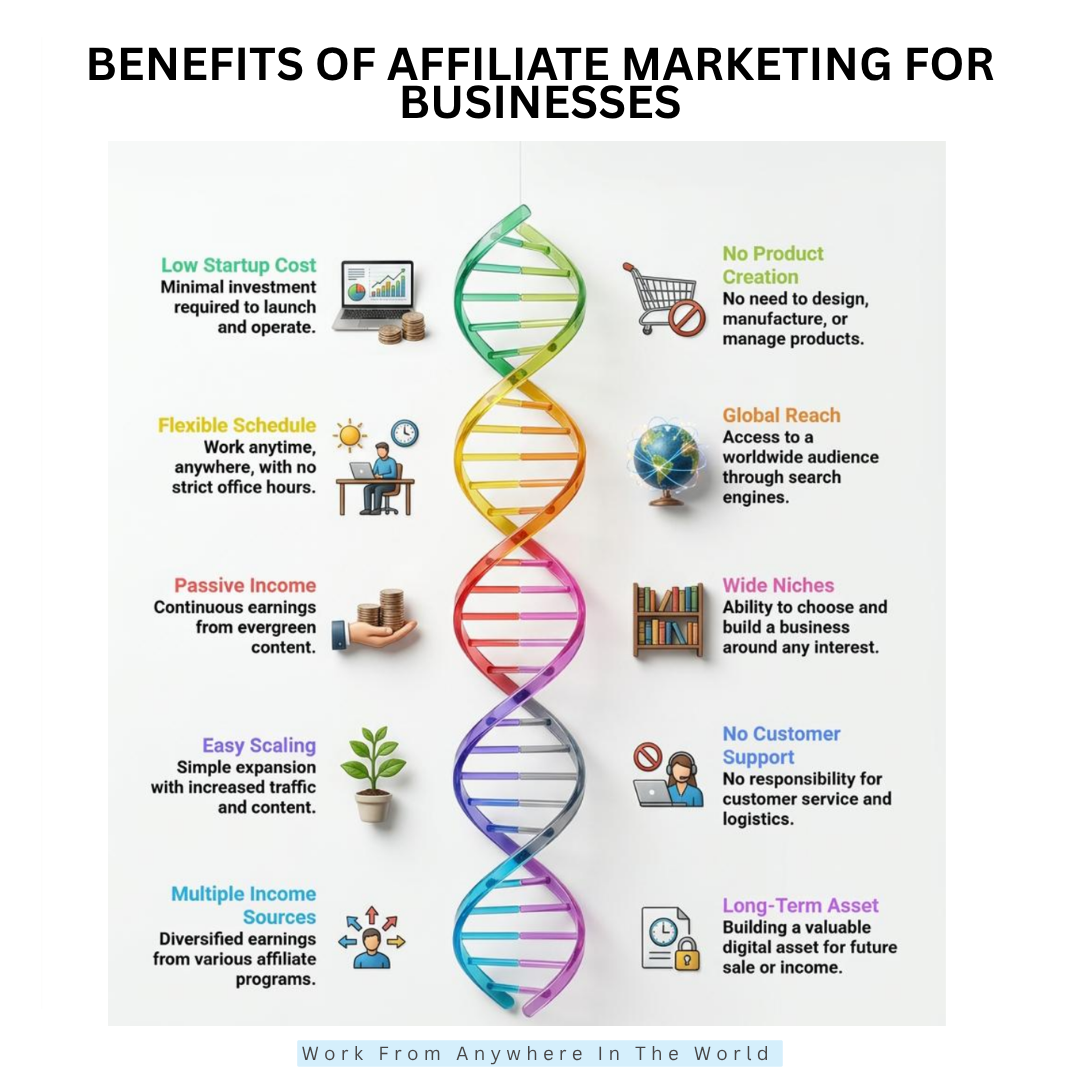
Benefits Of Affiliate Marketing For Businesses
1. Low Startup Cost
Affiliate websites require very little investment compared to traditional businesses. You mainly need a domain, hosting, and basic tools to begin. There is no need to create products or maintain inventory, which makes affiliate marketing affordable for beginners starting online.
2. No Product Creation Required
In affiliate marketing, you promote products from other companies. You do not need to design, manufacture, or manage products yourself. This allows you to focus mainly on creating helpful content and marketing strategies that attract visitors to your website.
3. Flexible Work Schedule
Running an affiliate website allows you to work whenever you want. You can create content in the morning, in the evening, or on weekends. There are no strict office hours. This flexibility makes affiliate marketing ideal for students, parents, or people with full-time jobs.
4. Global Audience Reach
An affiliate website can reach people worldwide. Once your content appears in search results, visitors from different countries can read it and purchase products through your links. This global reach increases opportunities for traffic, commissions, and long-term online growth.
5. Passive Income Potential
Affiliate websites can generate passive income over time. A well-written article can bring traffic and commissions for months or years. Even while you sleep, visitors may click your affiliate links and make purchases, allowing your website to earn continuously.
6. Wide Range Of Niches
Affiliate marketing works in almost every niche. You can create websites about technology, health, beauty, travel, gardening, finance, or education. This variety allows you to choose a topic you enjoy and build a business around your interests.
7. Easy To Scale The Business
Affiliate websites can grow easily with time. As your traffic increases, you can publish more content, promote additional products, or join multiple affiliate programs. Expanding your website allows you to reach more visitors and increase your earning potential.
8. No Customer Support Responsibility
When you promote affiliate products, the company selling the product handles customer service. They manage shipping, refunds, and complaints. Your main role is recommending useful products through your content, which reduces business stress and operational responsibilities.
9. Multiple Income Sources
An affiliate website can earn from many programs at the same time. You can promote products from different companies within the same niche. This diversification protects your income and ensures your earnings do not depend on a single program.
10. Long-Term Online Asset
A successful affiliate website becomes a valuable digital asset. With consistent content and traffic growth, the site can generate steady income for years.
Some affiliate websites are even sold for large sums later, creating a profitable exit opportunity, especially when they have established a strong brand presence and a loyal audience base that attracts potential buyers.
15 Easy Steps On How To Set Up An Affiliate Marketing Website
Step 1: Choose A Profitable Niche That People Actually Search For
Choosing the right niche is the foundation of your affiliate marketing website. Start by looking for topics people already search online. Demand matters. If nobody searches for your topic, it will be difficult to get traffic.
Focus on a specific niche instead of a very broad market. For example, “home fitness equipment for small apartments” is clearer than just “fitness.” A focused niche helps you better understand your audience.
It also makes content creation easier. Seek out niches that provide answers to prevalent queries or solve actual difficulties. A well-designed website improves customer satisfaction and keeps users on it longer.
Pro Tips
- Choose a niche with buyer intent
- Avoid overly broad niche topics
- Research keywords before choosing a niche
- Focus on problems people want solved
Step 2: Find High-Quality Affiliate Programs To Promote
After choosing your niche, the next step is finding the right affiliate programs. Not all programs are equal. Some offer higher commissions, better tracking, and reliable payments. Start by searching for programs related to your niche.
Look for products people already trust and actively buy. Platforms like Amazon Associates, ShareASale, and ClickBank offer thousands of options.
Always check the commission rate and payment terms before joining. Promote products that genuinely help your audience.
Recommending useful and high-quality products builds credibility over time. When readers trust your recommendations, they are more likely to click your affiliate links and complete purchases.
Pro Tips
- Promote trusted and well-known brands
- Compare commission rates before joining
- Choose products your audience needs
- Test products whenever possible
Step 3: Pick A Memorable Domain Name For Your Brand
Your domain name is your website’s identity. It is the first thing visitors notice. Choose a name that is short, simple, and easy to remember. Avoid complicated spelling, numbers, or hyphens, as they can confuse visitors.
A good domain should also reflect your niche or brand idea. For example, a fitness website might include words related to health or workouts. Before buying, check if the domain is available and unique.
A clear and professional domain name builds trust with readers. It also makes your website easier to share and recognize online as your affiliate brand grows.
Pro Tips
- Keep the domain name short and simple
- Use niche-related keywords carefully
- Avoid numbers, symbols, and hyphens
- Choose brandable and easy-to-spell names
Step 4: Choose Reliable Web Hosting For A Fast Website
The location of your website on the internet is called web hosting. A reliable host keeps your site quick, secure, and available at all times. Speed matters. Visitors leave quickly if pages load slowly.
Choose a hosting provider known for good uptime and strong support. Many beginner-friendly hosts offer one-click WordPress installation and simple dashboards. Also, check security features and backup options.
These protect your website if something goes wrong. Good hosting may cost a little more, but it saves time and prevents technical problems later. A stable website creates a better experience for visitors and search engines.
Pro Tips
- Choose hosting with a strong uptime guarantee
- Prioritize fast-loading website servers
- Check support availability before purchasing
- Look for automatic backup features
Step 5: Install WordPress To Build Your Website Easily
WordPress is the most popular platform for building affiliate marketing websites. It is flexible, beginner-friendly, and requires no coding skills. Most hosting companies make it easy to set up WordPress with a single click.
Once installed, you can manage pages, publish blog posts, and customize your website design from one dashboard. WordPress also supports thousands of themes and plugins that help improve SEO, speed, and security.
This makes it perfect for affiliate marketers who want full control over their website. With WordPress, you can easily grow your site, add new features, and scale your affiliate business over time.
Pro Tips
- Use the one-click WordPress installation option
- Keep WordPress updated for security
- Choose lightweight themes for speed
- Install only essential plugins first

Step 6: Select A Clean And Mobile-Friendly Website Theme
Your website theme controls how your site looks and feels. A clean and simple theme works best for affiliate marketing. Avoid themes with too many animations or heavy design elements, as they can slow your website.
Today, most visitors use mobile phones, so your website must look good on small screens. Choose a responsive theme that automatically adjusts layout for different devices.
Popular lightweight themes are easy to customize and load faster. Simple, professional, and fast designs usually perform better in affiliate marketing.
Pro Tips
- Choose lightweight and fast themes
- Ensure mobile responsiveness first
- Avoid heavy animations and clutter
- Use a simple professional layout design
Step 7: Install Essential Plugins To Improve Your Website
Plugins add extra features to your affiliate website without coding. But don’t install too many plugins because they can slow down your site. Start with only the essential ones. Install SEO plugins to help your content rank in search engines.
To keep hackers and spammers off your website, use security plugins. Add link management plugins to properly organize affiliate links. Speed optimization plugins help your pages load faster.
Each plugin should solve a real problem on your website. Keeping your site lightweight improves performance, user experience, and search engine ranking, which helps bring more organic traffic.
Pro Tips
- Install only necessary plugins
- Choose trusted plugin developers
- Delete unused plugins regularly
- Check plugin compatibility first
Step 8: Create Important Pages That Build Trust
Every affiliate website needs essential pages to look professional and trustworthy. Start by creating a Home page that introduces your website’s purpose. Create an About page to tell your story and describe your area of expertise.
The Contact page helps visitors reach you easily. Privacy Policy and Affiliate Disclosure pages are very important for legal and transparency reasons. These pages show that you are honest about affiliate promotions.
Visitors trust websites that are open and clear about information. Trust plays a big role in online buying decisions. When readers trust your website, they are more likely to follow your recommendations.
Pro Tips
- Add affiliate disclosure on every site
- Write simple and clear policy pages
- Make the contact page easy to find
- Update pages when needed
Wealthy Affiliate – Mini Review
If you’ve ever thought about turning your blog, passion, or niche into an online business,
Wealthy Affiliate (WA) is one of the most beginner-friendly platforms I’ve used.
It combines step-by-step training, website hosting, SEO research tools,
and an active community all in one place.
What I like most: you can start free (no credit card needed),
explore lessons, test the tools, and connect with other entrepreneurs
before upgrading. WA isn’t a “get rich quick” scheme — it’s a platform where success comes
from consistent effort and applying what you learn.
Step 9: Perform Smart Keyword Research For Traffic
Start by thinking about questions your audience may ask. Concentrate on long-tail keywords since they are typically more targeted and easier to rank.
Avoid choosing highly competitive keywords when you are just starting. Look for keywords that solve problems or show buying intent.
Good keyword selection helps your articles appear in search results. More visibility means more visitors and more opportunities to earn affiliate commissions through your website content.
Pro Tips
- Target low competition long-tail keywords
- Focus on buyer-intent keywords
- Use keyword research tools
- Analyze competitor keywords
Step 10: Create Helpful Content That Solves Problems
Content is the main engine of your affiliate website. People visit websites to find answers. Focus on writing content that helps readers solve their problems or learn something useful.
Product reviews, buying guides, tutorials, and comparison articles work well for affiliate marketing. Write in a simple, conversational style so readers can easily understand.
Avoid copying content from other websites. Original and helpful content ranks better in search engines. Always be honest when discussing product advantages and disadvantages. Readers are more inclined to click affiliate links and believe your suggestions when they perceive you as helpful.
Pro Tips
- Write original and helpful articles
- Include product pros and cons
- Use simple human-like language
- Focus on the reader’s problems first

Step 11: Add Affiliate Links Naturally Within Your Content
Affiliate links should feel natural inside your articles. Do not force links into every sentence. Place links where they help readers find useful products or information.
For example, add links when mentioning a product review or recommending a tool. Use clear call-to-action phrases like “Check price” or “Learn more.” Too many affiliate links can make your website look spammy. Balance is important.
Readers should focus on your content first and links second. Honest recommendations increase trust. When visitors trust your suggestions, they are more likely to click links and complete purchases through your affiliate website.
Pro Tips
- Avoid excessive affiliate links
- Place links inside a helpful context
- Use natural call-to-action words
- Recommend only useful products
Step 12: Make Your Website Search Engine Friendly
Search engine optimization (SEO) helps your website appear in search results when people look for information. Start by using your main keyword naturally in titles, headings, and content.
Improve website speed because fast sites rank better and keep visitors longer. Since many consumers browse on phones, make sure your website functions properly on mobile devices.
Add internal links between your articles to help search engines understand your site structure. Also, try to get backlinks from other trusted websites. Good SEO drives free organic traffic, which is crucial for long-term affiliate marketing success.
Pro Tips
- Use keywords naturally in content
- Improve page loading speed
- Focus on mobile-friendly design
- Build quality backlinks slowly
Step 13: Promote Your Website To Bring Visitors
Publishing content is not enough; you need traffic to earn from affiliate marketing. Post your articles on social media platforms like Facebook, Instagram, Pinterest, and LinkedIn, depending on your niche.
Participate in online forums or communities frequented by your target. Email marketing helps you reach subscribers directly with updates and recommendations.
Consistency matters—regularly promote new posts and engage with your audience. Collaborations with other bloggers or influencers can also drive visitors.
The more people see your content, the higher the chances they will click your affiliate links and make purchases, boosting your website income.
Pro Tips
- Share content on relevant social platforms
- Join niche-specific forums or groups
- Use email marketing for engagement
- Collaborate with bloggers or influencers
Step 14: Track Your Traffic And Affiliate Performance
Tracking performance helps you understand what is working on your website. Use analytics tools to monitor visitor numbers, page views, and user behaviour. Check which articles bring the most traffic and which affiliate links receive clicks.
This data helps you improve weak content and focus on high-performing topics, thereby enhancing your overall content strategy and increasing audience engagement.
Tracking also shows where your visitors come from, such as search engines or social media. Regular monitoring helps you make smart marketing decisions by providing insights into user behaviour and campaign performance.
Without tracking, you are guessing instead of improving based on real results. Data-driven strategies help your affiliate website grow faster and earn more over time.
Pro Tips
- Use Google Analytics for tracking
- Monitor top-performing articles
- Check click-through rates regularly
- Improve low-traffic content first
Step 15: Scale And Grow Your Affiliate Website
After your website starts getting traffic, focus on expansion. Publish more helpful articles related to your niche. More content means more chances to rank in search engines and attract visitors.
Consider adding product comparison guides, detailed reviews, and problem-solving tutorials. You can also join more affiliate programs to diversify income sources, such as those related to the products you review or promote on your site.
Backlink building helps improve website authority. Outsource content writing to save time. Scaling your website is a long-term strategy.
Affiliate marketing success usually comes from consistency, patience, and continuous improvement rather than quick results.
Pro Tips
- Publish content regularly
- Join multiple affiliate programs
- Build quality backlinks
- Update old articles often

Conclusion
One sensible strategy for generating online revenue is to set up an affiliate marketing website. Success comes from choosing the right niche, creating helpful content, and promoting quality products.
Focus on SEO, trust building, and regular website updates. Remember, affiliate marketing needs patience and consistency.
Results may take time, but steady effort can bring long-term benefits. Start small, learn continuously, and grow your website step by step. Stay committed to your strategy.
I trust you enjoyed this article on How To Set Up An Affiliate Marketing Website: 15 Easy Steps. Please stay tuned for more insightful blogs on affiliate marketing, online business, and working from anywhere in the world.
Take care!
— JeannetteZ 🌍✨
💬 Your Opinion Is Important To Me
Do you have thoughts, ideas, or questions? I’d love to hear from you. Please leave your comments below or email me directly at Jeannette@WorkFromAnywhereInTheWorld.com.
📚 More Work From Anywhere Reads
🚀 Ready to Build a Business You Can Run from Home
Or from Anywhere in the World?
Imagine creating income on your terms — from home, a cozy café, or wherever life takes you.
With the right tools, training, and community support, it’s entirely possible.
Start your own online business for free — no credit card needed.
Disclosure
This post may contain affiliate links. As an Amazon Associate and participant in other affiliate programs, I earn from qualifying purchases at no extra cost to you. Please read my full affiliate disclosure.