How To Increase Website Authority
Website authority is all about trust. The more credible your site appears, the easier it is to rank higher, attract organic traffic, and build a loyal audience.
Search engines look for signals like quality content, strong backlinks, and a great user experience to decide which sites deserve visibility. The good news? You can improve your website authority with the right strategy and consistent effort.
Learning how to increase website authority starts with building trust through helpful content, quality backlinks, and a smooth user experience. In this guide, we'll break down simple, practical steps to help you grow.
What Is Website Authority?
Website authority is the online reputation of your website. It demonstrates how users and search engines view your material as reliable, credible, and valuable.
When a website has high authority, search engines believe it consistently provides helpful, accurate information. As a result, those sites usually rank higher in search results, get more clicks, and attract more organic traffic. Many signals influence authority.
These include the quality of your content, the number of reputable websites linking back to you, how often people visit and engage with your pages, and whether your site is technically sound and easy to use.
Tools like Moz, Ahrefs, and Semrush even provide authority scores, but these are estimates—not official Google metrics.
Think of website authority like real-world credibility. If well-known experts recommend you, people trust you more. The same idea applies online. When strong, relevant sites link to yours, that trust grows.
Building authority doesn't happen overnight. It takes consistency, valuable content, and real connections. But once your website becomes known as a reliable source, everything gets easier—ranking, traffic, leads, and growth.
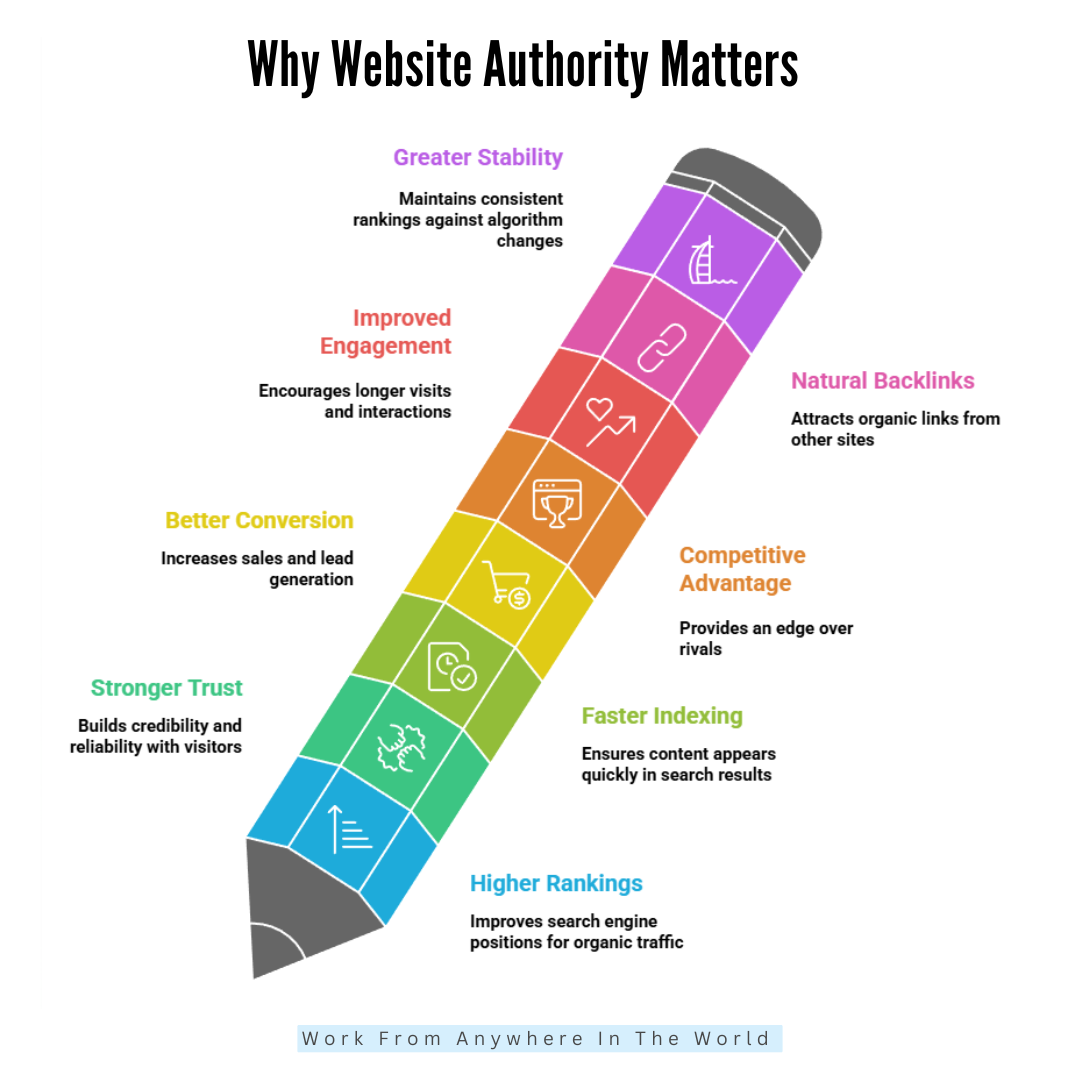
Why Website Authority Matters
1. Higher Rankings In Search Results
Higher website authority improves your search rankings. When search engines see your site as credible, your pages appear higher in results.
This means more traffic, greater visibility, and more opportunities for your audience to discover your business organically, without paying for advertising.
2. Stronger Trust And Brand Credibility
Strong website authority builds trust with visitors. When users repeatedly see your site ranking well, they naturally view your brand as reliable.
This trust encourages people to read more, subscribe, contact you, and choose your business over competitors offering similar products or services.
3. Faster Indexing And Content Visibility
Websites with higher authority are crawled and indexed more often. Search engines prioritize trusted sites, so your updates and new content appear in results faster. This helps you stay relevant, react to new trends, and grow your organic presence consistently over time.
4. Better Conversion And Sales Performance
Better authority usually leads to higher conversion rates. When people believe your site is credible, they feel safer making purchases, submitting forms, or requesting services. That confidence directly supports business growth and helps you turn casual visitors into loyal, long-term customers.
5. Competitive Advantage In Your Industry
With strong website authority, ranking competitive keywords becomes easier. Your content requires less effort to perform well because search engines already trust your domain.
This long-term advantage saves time, reduces marketing costs, and helps you stay ahead of weaker or newer competitors.
6. Improved Audience Engagement
Higher website authority attracts more engaged visitors. People stay longer, explore more pages, and interact with your content because they see your site as valuable.
This deeper engagement helps build relationships, increases repeat visits, and strengthens your overall online presence over time.
7. More Natural Backlinks Over Time
Authoritative websites attract links naturally. Other bloggers, journalists, and businesses are more likely to reference and recommend your content.
These organic backlinks further strengthen your authority, creating a positive cycle that continues to improve your rankings, reputation, and reach without resorting to artificial link-building tactics.
8. Greater Long-Term Stability In Rankings
Websites with strong authority experience more stable rankings. Algorithm changes affect them less because search engines already trust their content and history.
This stability helps you maintain consistent traffic, predictable growth, and reliable performance without constantly worrying about sudden drops or penalties.
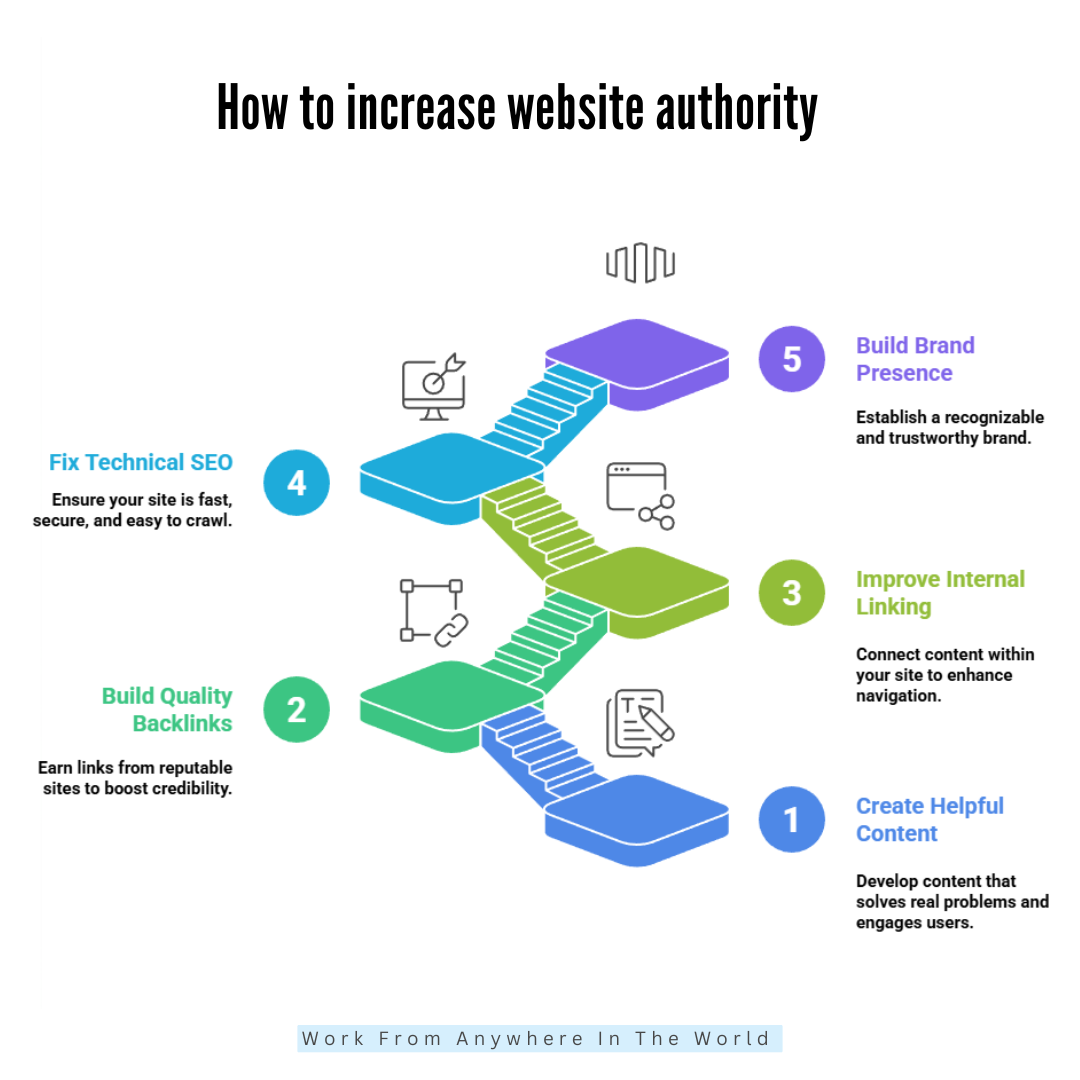
How To Increase Website Authority
1. Create Truly Helpful Content
Helpful content solves real problems. It speaks clearly. It feels human. Avoid fluff. Use short sentences. Get to the point fast. Understand what your audience really wants.
Then answer it better than anyone else. Add examples. Explain the “why” and the “how.” Make it easy to skim. Use headings and clean formatting. Stay honest. Don't overpromise.
Update content when things change. When people enjoy your content, they stay longer. They trust you more. Search engines notice that. Authority grows naturally. Helpful content always wins.
Pro Tips
- Write for humans, not algorithms
- Answer the main question first
- Break text into short paragraphs
- Use real examples and data
2. Build High-Quality Backlinks
Backlinks are like trust votes. When reputable websites link to you, search engines see your site as more credible. But quality matters more than quantity. One strong link can beat dozens of weak ones.
Earn links naturally by creating content people actually want to reference. Build relationships. Contribute to industry blogs. Share valuable insights and data. Avoid spammy link schemes.
They hurt more than help. Stay patient. Genuine backlinks grow over time. And when they do, your authority, rankings, and traffic improve steadily and sustainably. Think trust first. Links will follow.
Pro Tips
- Focus on relevance over volume
- Create content worth referencing
- Build genuine industry relationships
- Avoid paid spammy links
3. Improve Internal Linking
Internal links help connect your content. They guide visitors to related pages and help search engines understand your site structure. Think of them as helpful signposts. Use clear anchor text so readers know what to expect when they click.
Link to your most important pages more often. Keep it natural. Don't force links where they don't belong. This also helps spread authority across your site, instead of keeping it stuck on just a few pages.
Better navigation means better engagement. People stay longer. They read more. And that sends strong positive signals about your website.
Pro Tips
- Link related pages naturally
- Use clear descriptive anchor text
- Prioritize important cornerstone pages
- Avoid overloading every paragraph
Wealthy Affiliate – Mini Review (2025)
If you’ve ever thought about turning your blog, passion, or niche into an online business,
Wealthy Affiliate (WA) is one of the most beginner-friendly platforms I’ve used.
It combines step-by-step training, website hosting, SEO research tools,
and an active community all in one place.
What I like most: you can start free (no credit card needed),
explore lessons, test the tools, and connect with other entrepreneurs
before upgrading. WA isn’t a “get rich quick” scheme — it’s a platform where success comes
from consistent effort and applying what you learn.
4. Fix Technical SEO Issues
Technical SEO makes your site easier to crawl, load, and understand. When your website runs smoothly, users stay longer, and search engines trust it more. Focus on speed, mobile friendliness, secure HTTPS, clean URLs, and fixing broken links.
Compress images. Remove unnecessary plugins or scripts. Keep your site structure simple. Make sure every critical page is accessible.
Technical issues may seem small, but together they can seriously hurt rankings and authority. A fast, stable, well-organized site feels professional. It builds trust. And it supports every other SEO effort you make.
Pro Tips
- Improve loading speed consistently
- Fix broken and redirected links
- Ensure full mobile responsiveness
- Use secure HTTPS everywhere
5. Build A Strong Brand Presence
A strong brand makes your website more memorable and trustworthy. When people recognize your name, they're more likely to click, stay, and return. Search engines notice that behaviour. Share valuable content consistently.
Show your expertise. Be active where your audience spends time. Encourage mentions, reviews, and honest conversations. Keep your message, tone, and visuals consistent across platforms.
Over time, your brand becomes a signal of quality. That trust supports higher rankings, better engagement, and more natural backlinks. Strong brands don't just attract traffic. They attract loyalty.
Pro Tips
- Stay consistent across all channels
- Encourage genuine customer reviews
- Share content regularly and openly
- Build relationships, not just visibility
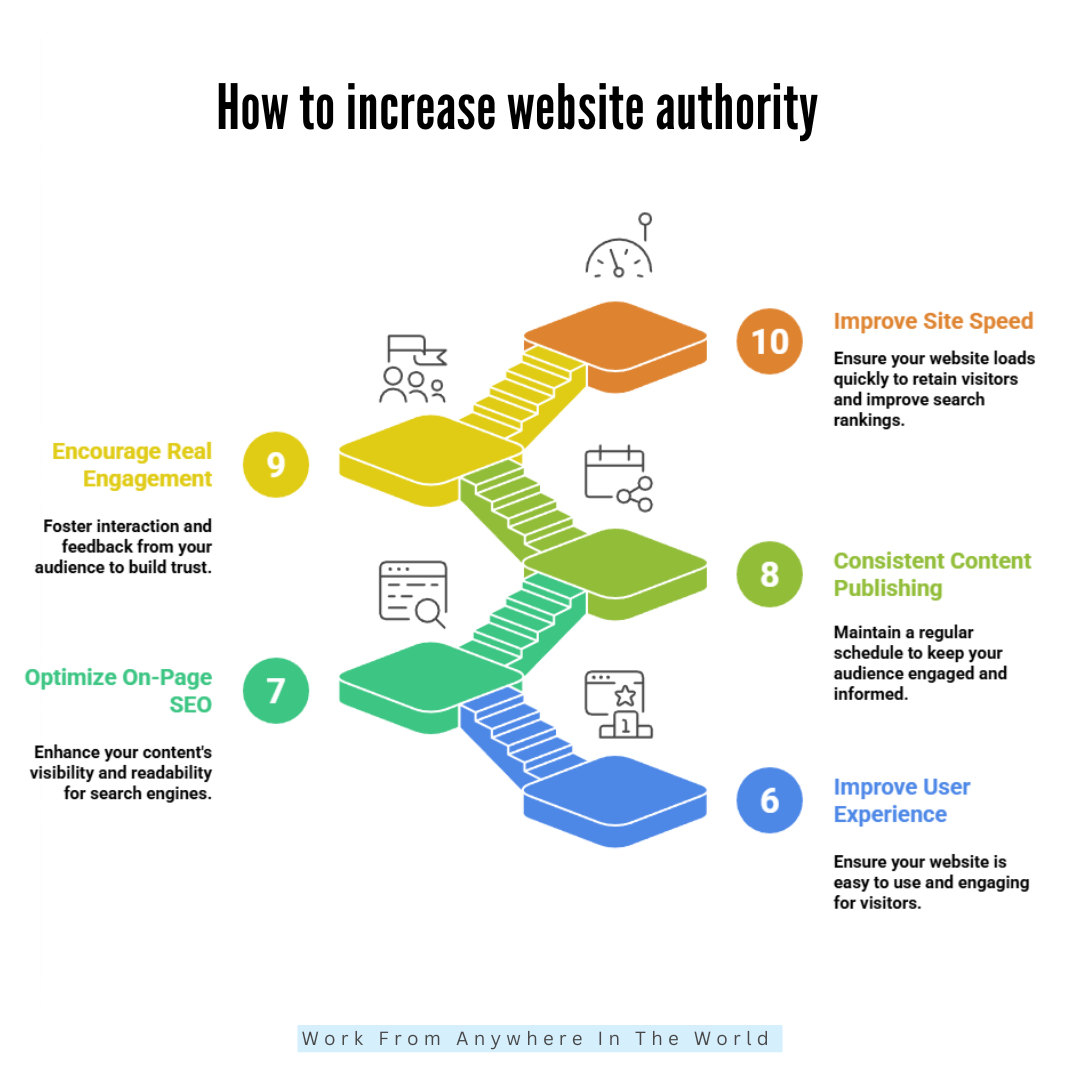
6. Improve User Experience (UX)
User experience (UX) is all about how people feel when they visit your website. If your site is easy to use, people stay longer. They read more. They click more. That sends strong trust signals to search engines.
Keep navigation simple. Use clear menus. Choose readable fonts and clean layouts. Avoid clutter and distracting pop-ups. Make sure every page loads fast and works smoothly on mobile devices.
Fix broken links and buttons. Guide visitors gently toward what they need. A smooth, stress-free website builds trust. And when users trust you, your website authority naturally grows stronger over time.
Pro Tips
- Keep navigation simple and clear
- Use clean, readable page layouts
- Test on mobile and desktop
- Remove confusing or broken elements
7. Optimize On-Page SEO
Search engines can better comprehend your content with on-page SEO. It also makes your pages easier for people to read. Use clear headings. Include your primary keyword naturally. Add related terms so search engines see context.
Write short, direct sentences. Use meta titles and descriptions that encourage clicks. Add alt text to images so they're accessible and easier to index. Structure your content for skimming.
Think about what the reader needs first. Then organize your page around that goal. When your content is easy to understand, both users and search engines respond better. And your website authority grows naturally.
Pro Tips
- Use headings to organize ideas
- Add keywords naturally, not forcefully
- Write compelling meta descriptions
- Include helpful image alt text
8. Be Consistent With Content Publishing
Consistency builds trust. When you publish regularly, people know they can rely on you for fresh, helpful content. Search engines notice this pattern too. You don't need daily posts. Just a simple, realistic schedule you can maintain.
Quality still matters more than quantity—plantopics. Focus on what your audience actually needs. Update older posts instead of letting them fade. Consistency shows commitment.
It also keeps your brand active in your niche. Over time, this steady effort helps increase authority, traffic, and engagement. Slow and steady works best online.
Pro Tips
- Create a simple content schedule
- Refresh and update older posts
- Prioritize quality over quantity
- Stay patient and consistent
9. Encourage Real Engagement
Engagement tells search engines that your content matters. When people leave comments, ask questions, or share your posts, it signals value. Invite conversation.
Encourage feedback. Respond to comments and messages. Make your audience feel heard. Add clear calls-to-action so people know what to do next.
Engagement also increases time on site. That builds authority and strengthens trust. Real interaction beats silent traffic every time. Focus on community, not just clicks.
Pro Tips
- Ask questions in your content
- Reply to comments quickly
- Add clear calls-to-action
- Build relationships, not numbers
10. Improve Your Site Speed
Site speed matters a lot. People don't like waiting. If your pages load slowly, visitors leave. Search engines notice that. Faster sites rank better and feel more professional. Compress large images. Remove heavy scripts you don't need.
Use reliable hosting. —cache so they load quickly for repeat visitors. Test your speed often. Try to keep pages lightweight and clean. A fast website creates a smoother experience. Visitors stay longer.
They browse more pages. And that steady engagement strengthens your overall website authority over time. Speed isn't just technical. It's a trust factor, too.
Pro Tips
- Compress large images always
- Remove unnecessary heavy plugins
- Use fast, reliable hosting
- Enable browser caching frequently
11. Build Topical Authority
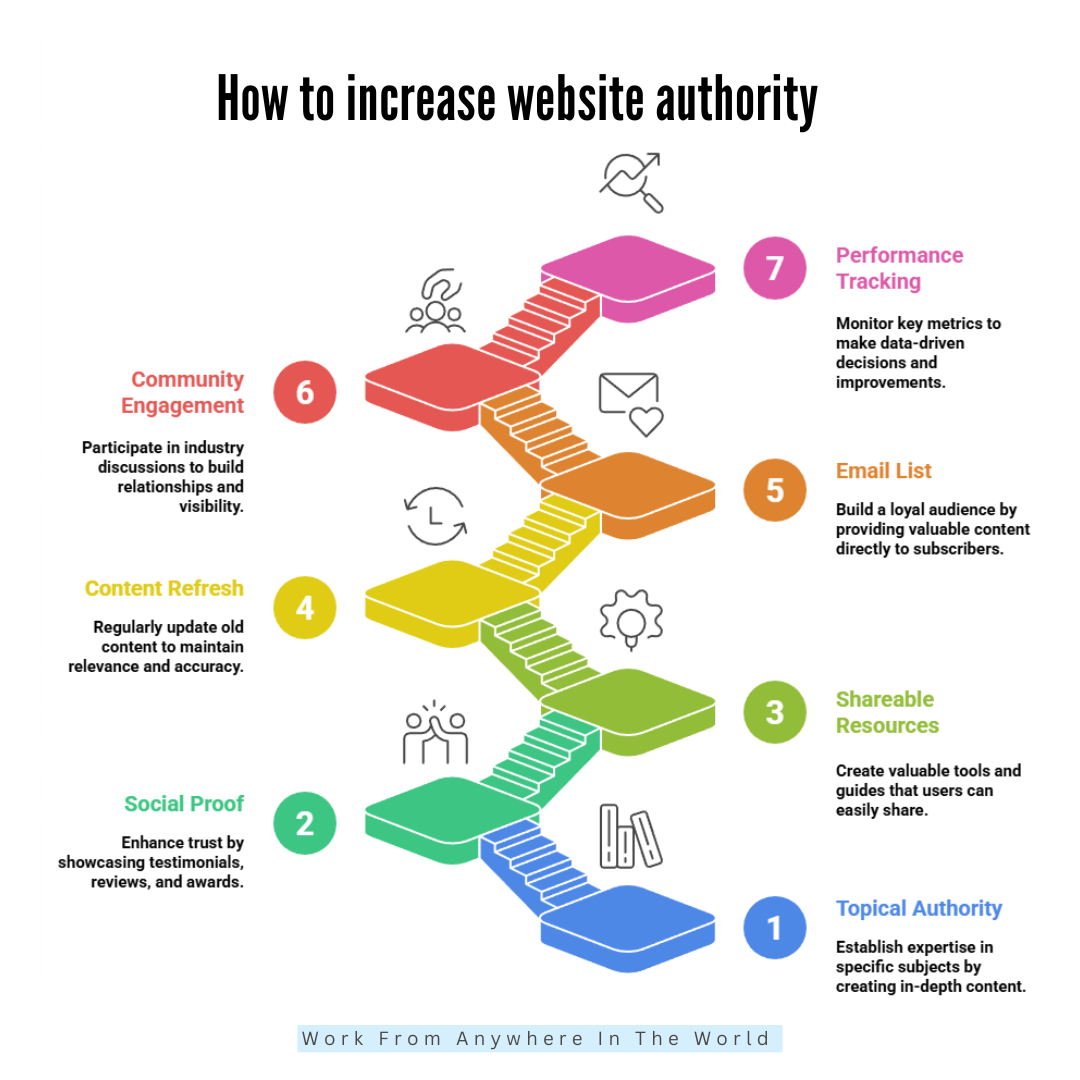
Topical authority means becoming a trusted source on specific subjects. Instead of writing random articles, focus on clear themes your audience cares about. Cover each topic in depth.
Create guides, supporting posts, FAQs, and resources that connect together. Link related content internally so readers can easily explore more.
This shows search engines that you genuinely understand the subject. Over time, your site becomes the “go-to” place for that topic. That recognition boosts rankings, trust, and credibility.
People come back because they know they'll find real answers, not surface-level content. Depth always beats quantity when building authority.
Pro Tips
- Focus on tightly related topics
- Create deep supporting articles
- Interlink all relevant content
- Update content as trends change
12. Leverage Social Proof
Social proof helps people trust you faster. When visitors see reviews, testimonials, case studies, and mentions from others, they feel more confident. Share real stories from real customers. Display ratings clearly.
Highlight positive feedback on key pages. Encourage happy users to leave reviews. Share media features or awards if you have them. Social proof isn't bragging.
It's reassurance. It tells new visitors they're making a safe choice. Strong social proof improves conversions, engagement, and brand reputation. All of that supports website authority and long-term growth.
Pro Tips
- Showcase real customer testimonials
- Encourage honest user reviews
- Highlight awards and mentions
- Use case studies when possible
13. Create Shareable Resources
Shareable content spreads your brand further. Think checklists, templates, tools, guides, and infographics. These resources solve problems quickly. People bookmark them. They share them. Sometimes they even link to them.
That creates natural backlinks and brand awareness. Make your resources simple, valuable, and easy to understand. Keep the design clean. Update them when needed. Don't gate everything behind forms.
Give tangible value first. When your content helps people work smarter or learn faster, they remember you. And your website authority continues to grow as more people reference your work.
Pro Tips
- Create tools people actually need
- Keep downloads simple and clear
- Update resources regularly
- Encourage sharing without pressure
14. Refresh And Update Old Content
Old content can lose value over time. Facts change. Links break—search intent shifts. So revisit your older posts regularly—update stats. Improve headlines. Add fresh insights. Replace weak sections. Fix formatting.
Make your content more transparent and more helpful than before—search engines like fresh, accurate information. Readers do too. Updating content is often faster than creating something new.
Yet it can deliver big, significant results. You'll keep your rankings strong, build more trust, and show that your site is active and cared for.
Pro Tips
- Review top posts regularly
- Replace outdated information quickly
- Improve structure and readability
- Fix broken links and media
15. Build An Email List
You may stay in touch with your audience by using an email list. Instead of waiting for people to return, you can send content straight to them. Offer value, like tips or resources, in exchange for sign-ups.
Keep emails helpful and straightforward. Share updates, blog posts, or tools your audience will appreciate. This builds loyalty and repeat traffic.
Those returning visitors strengthen engagement signals and brand trust. Over time, your website authority benefits from that consistent, direct connection.
Pro Tips
- Offer real value for sign-ups
- Keep emails short and helpful
- Send consistently, not excessively
- Build trust before promoting
16. Engage In Your Community
Authority grows when people know you — not just your website. Join industry discussions. Comment thoughtfully on relevant blogs or forums. Share insights on social platforms. Answer questions. Be helpful without being salesy.
People begin to recognize your name. They see you as a real expert. That recognition often leads to mentions, shares, and backlinks.
Community engagement builds both trust and visibility. And strong visibility supports stronger website authority over time.
Pro Tips
- Contribute helpful insights consistently
- Avoid spammy self-promotion
- Build genuine relationships
- Show up where your audience is.
17. Track Performance And Learn
You can't improve what you don't measure. Track your rankings, traffic, engagement, and conversions. Use tools like Google Search Console and Google Analytics. See what works. See what doesn't. Identify pages people love.
Improve the ones they ignore. Make data-driven decisions instead of guessing. Minor tweaks can create significant gains over time.
When you learn from real numbers, you build more innovative strategies. And more innovative strategies lead to a stronger website authority.
Pro Tips
- Monitor performance monthly
- Focus on key metrics
- Test improvements slowly
- Learn and adapt continuously
Conclusion
Building website authority doesn't happen overnight. It grows with consistent effort, valuable content, authentic engagement, and a great user experience.
To increase website authority, focus on long-term trust, absolute value, and a consistent user-first strategy. Over time, search engines and users will see your site as trustworthy and credible.
And that trust becomes your most significant advantage online. Stay patient. Stay consistent. Authority will grow naturally when you keep delivering real value.
I trust you enjoyed this article on How To Increase Website Authority. Please stay tuned for more insightful blogs on affiliate marketing, online business, and working from anywhere in the world.
Take care!
— JeannetteZ 🌍✨
💬 Your Opinion Is Important To Me
Do you have thoughts, ideas, or questions? I’d love to hear from you. Please leave your comments below or email me directly at Jeannette@WorkFromAnywhereInTheWorld.com.
📚 More Work From Anywhere Reads
🚀 Ready to Build a Business You Can Run from Home
Or from Anywhere in the World?
Imagine creating income on your terms — from home, a cozy café, or wherever life takes you.
With the right tools, training, and community support, it’s entirely possible.
Start your own online business for free — no credit card needed.
Disclosure
This post may contain affiliate links. As an Amazon Associate and participant in other affiliate programs, I earn from qualifying purchases at no extra cost to you. Please read my full affiliate disclosure.