
How Effective Is Affiliate Marketing
How effective is affiliate marketing? This is a question many people ask before investing time and effort. While the concept sounds simple, understanding how effective affiliate marketing really is requires a closer look at how it works in practice.
At its core, affiliate marketing involves promoting a product and earning a commission when someone makes a purchase. However, success is not automatic. It depends on strategy, consistency, and choosing the right approach.
In this guide, you’ll get a clear and honest breakdown of affiliate marketing. We’ll explore what works, what doesn’t, and whether it can realistically replace a full-time income.
How Effective Is Affiliate Marketing For Businesses And Marketers
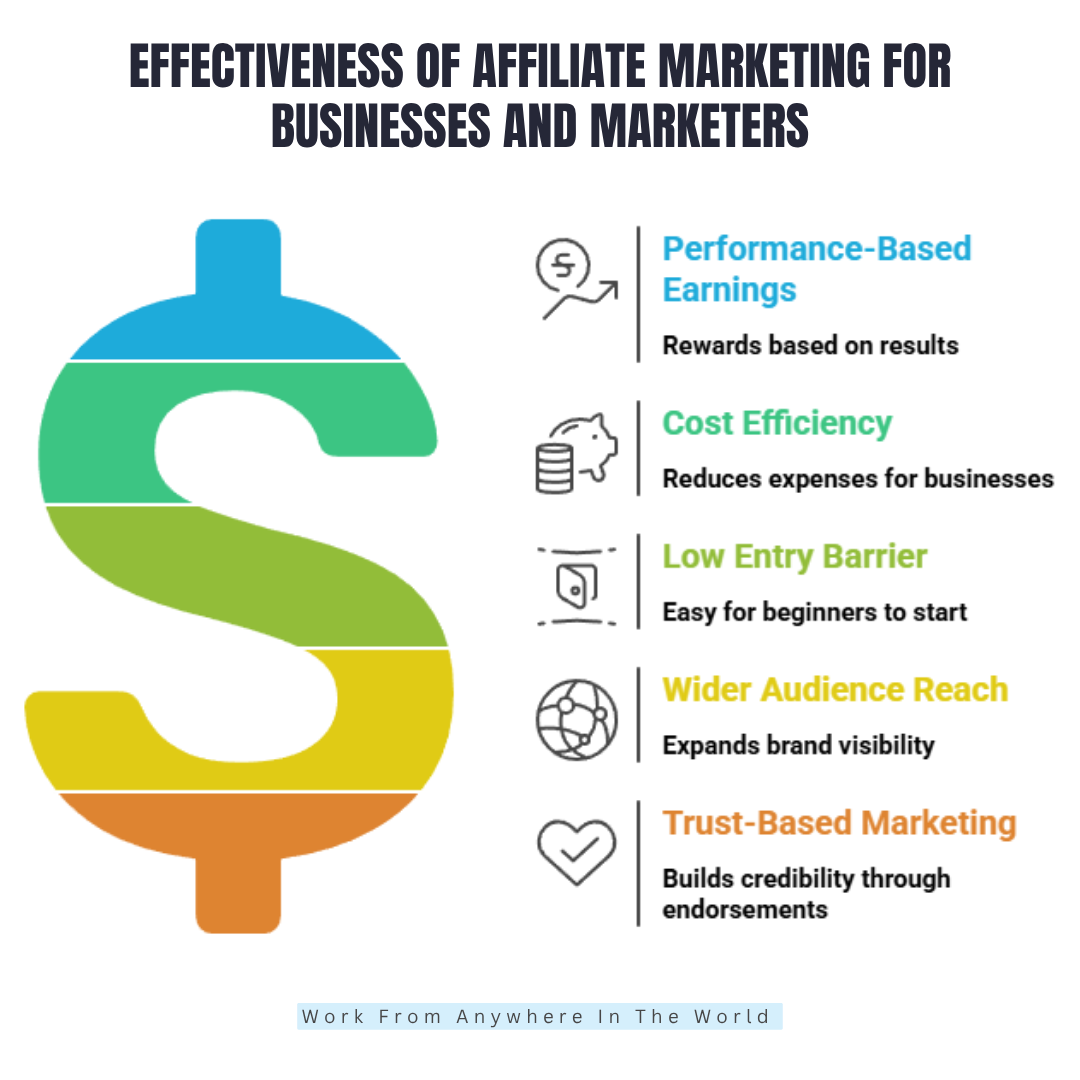
1. Performance-Based Earnings Model
Affiliate marketing is effective because both businesses and marketers earn based on results. Businesses only pay when a sale or lead occurs, reducing financial risk and improving budget control.
Marketers earn directly from their efforts, making the system performance-driven. Businesses benefit from stability and predictable costs.
Marketers, however, face income uncertainty because earnings depend on conversions. At the same time, they have the potential to earn higher rewards.
Businesses
- Pay only for confirmed sales or leads
- Lower financial risk compared to traditional ads
- Better control over marketing budget
- Easy to track return on investment (ROI)
- No need for upfront advertising costs
Marketers
- Earn based on real performance
- High income potential with a good strategy
- No limit on earnings
- Can scale income with more traffic and content
- Income is not fixed and depends on conversions
2. Cost Efficiency
Affiliate marketing is highly cost-efficient, especially for businesses. They don’t need to spend money on uncertain advertising campaigns.
Instead, they pay only when actual results, like sales or leads, are achieved. This reduces unnecessary expenses and improves overall return on investment.
For marketers, the main investment is time, effort, and sometimes paid traffic. So, businesses save money while marketers invest work to earn consistent commissions.
Businesses
- No wasted budget on non-performing ads
- Pay only when results are achieved
- Lower customer acquisition cost
- No need for large marketing teams
- Better budget management
Marketers
- Minimal startup cost required
- Invest mainly time and effort
- Optional cost for ads or tools
- No need to create products
- Can start with free platforms
3. Low Entry Barrier
Affiliate marketing is easy to start, making it ideal for beginners. Businesses benefit because they can quickly recruit affiliates to promote their products. Marketers gain even more since they don’t need inventory, product creation, or large investments.
With basic digital skills and internet access, anyone can begin. This low barrier makes affiliate marketing one of the most accessible and popular online income opportunities today.
Businesses
- Easy to recruit new affiliates
- No training cost for large teams
- Quick expansion of the marketing network
- Access to diverse promoters
- Less hiring pressure
Marketers
- No product creation needed
- No inventory or delivery issues
- Start with a low or zero investment
- Beginner-friendly model
- Easy entry into online income
4. Wider Audience Reach
Affiliate marketing allows businesses to reach diverse audiences through multiple affiliates. Each marketer brings their own followers, expanding brand visibility across niches.
Marketers benefit as well. They promote products that already have demand, making it easier to generate sales.
This creates a mutually beneficial system. Businesses gain broader exposure, while marketers reach ready-to-buy audiences without having to build demand from scratch.
- Reach multiple target audiences
- Expand into new markets easily
- Increase brand awareness
- Gain exposure without extra effort
- Use niche-specific audiences
Marketers
- Promote trending or popular products
- No need to build product demand
- Access ready-to-buy audiences
- Easier conversion opportunities
- Can target specific niches
5. Trust-Based Marketing Advantage
In affiliate marketing, trust is essential. People are more likely to follow recommendations from real individuals than from traditional ads.
Businesses gain credibility because affiliates’ endorsements feel genuine, boosting customer confidence. Meanwhile, marketers build a loyal audience over time by providing honest, helpful advice.
This trust-based approach increases conversions, strengthens relationships, and creates long-term value for both businesses and affiliates.
Businesses
- Gain trust through third-party promotion
- Higher conversion rates
- Reduced skepticism from customers
- Stronger brand credibility
- Better long-term customer relationships
Marketers
- Build personal brand authority
- Gain audience trust over time
- Increase engagement and loyalty
- Higher chances of repeat sales
- Strong relationship with followers
6. Passive Income Potential
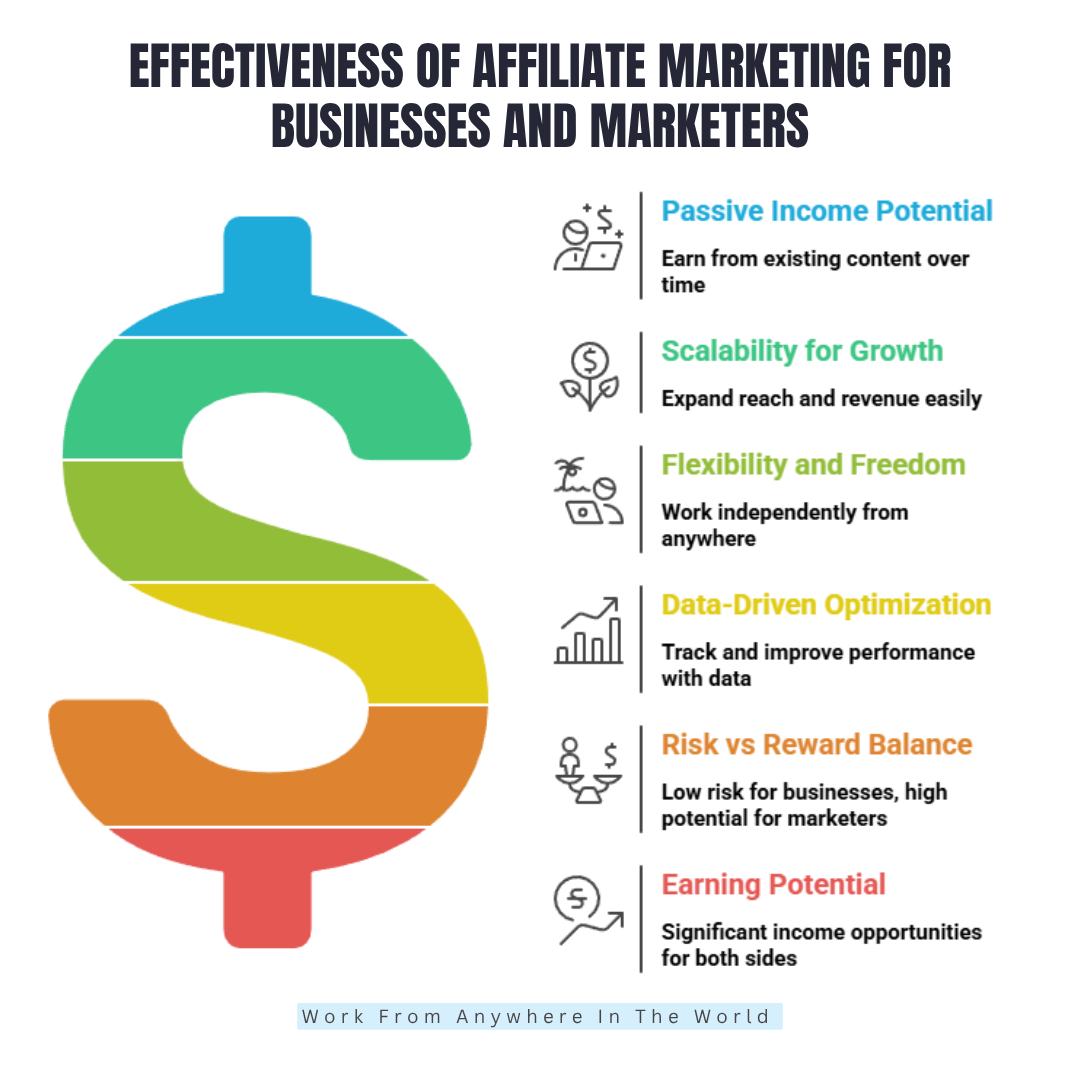
Affiliate marketing provides long-term income opportunities for both sides. Businesses continue generating sales through affiliates without extra effort.
Marketers benefit even more, as they can earn from existing content like blog posts, videos, or social media posts over time. This means income can keep coming in without constant active work.
By building strong relationships with followers and consistently providing value, marketers can turn their content into a steady, semi-passive revenue stream.
Businesses
- Continuous sales from affiliates
- No need for constant promotion
- Long-term revenue stream
- Automated marketing support
- Reduced workload
Marketers
- Earn from old blog posts or videos
- Long-term passive income
- Content works 24/7
- Income grows over time
- Less effort after initial work
7. Scalability For Growth
Affiliate marketing offers virtually unlimited growth potential. Businesses can expand by recruiting more affiliates, increasing their reach and sales without heavy investment.
Marketers can scale their earnings by promoting multiple products or entering new niches. Both sides benefit equally—businesses achieve wider exposure and higher revenue, while marketers increase income streams.
This scalability makes affiliate marketing a flexible and powerful strategy for long-term growth and continuous opportunity.
Businesses
- Expand marketing easily
- Add unlimited affiliates
- Increase sales channels
- Grow without a large investment
- Faster business expansion
Marketers
- Promote multiple products
- Increase income streams
- Scale with more traffic
- Grow personal brand
- Expand into multiple niches
8. Flexibility And Freedom
Affiliate marketing offers great flexibility for both businesses and marketers. Businesses can run campaigns without managing large teams, saving time and resources.
Marketers enjoy even more freedom—they can work independently, choose their niche, set their own schedule, and operate from anywhere.
This flexibility allows marketers to balance work and life while businesses maintain efficient marketing operations without extra staff or overhead.
Businesses
- No need to manage full-time marketers
- Flexible marketing operations
- Easy campaign adjustments
- Less operational pressure
- Work with global affiliates
Marketers
- Work from anywhere
- Choose your own working hours
- Select preferred niche
- No boss or fixed schedule
- Full control over work
Wealthy Affiliate – Mini Review
If you’ve ever thought about turning your blog, passion, or niche into an online business,
Wealthy Affiliate (WA) is one of the most beginner-friendly platforms I’ve used.
It combines step-by-step training, website hosting, SEO research tools,
and an active community all in one place.
What I like most: you can start free (no credit card needed),
explore lessons, test the tools, and connect with other entrepreneurs
before upgrading. WA isn’t a “get rich quick” scheme — it’s a platform where success comes
from consistent effort and applying what you learn.
9. Data-Driven Optimization
Affiliate marketing is highly measurable, allowing both businesses and marketers to closely track performance. Businesses can monitor which affiliates drive the most sales and adjust campaigns for better results.
Marketers can analyze clicks, conversions, and audience behaviour to improve their content and strategies. This data-driven approach supports continuous improvement and greater efficiency.
Over time, it leads to sustainable growth, making affiliate marketing a smart, results-focused strategy for everyone involved.
Businesses
- Track affiliate performance
- Measure ROI easily
- Identify top-performing affiliates
- Optimize campaigns
- Improve conversion rates
Marketers
- Track clicks and sales
- Analyze audience behavior
- Improve content strategy
- Optimize conversion rates
- Make data-based decisions
10. Risk vs Reward Balance
Affiliate marketing offers a clear balance between risk and reward for both sides. Businesses face lower risk because they pay only for actual results, ensuring stable and predictable growth.
Marketers take on more risk since their income depends entirely on performance, but this also gives them higher earning potential.
The more effort and strategy they invest, the greater the rewards. This balance makes affiliate marketing a win-win: businesses get safe growth, while marketers have the opportunity to earn significantly.
Businesses
- Low financial risk
- Stable and predictable growth
- Pay only for results
- Safe marketing investment
- Consistent returns
Marketers
- Income is not guaranteed
- Higher earning potential
- Depends on performance
- Risk of low conversions
- Reward increases with effort
11. Earning Potential In Affiliate Marketing
Affiliate marketing generates income for both businesses and marketers, but in different ways. Businesses earn revenue from affiliate-driven sales, while marketers earn commissions on clicks, leads, or purchases.
Earnings depend on factors such as product price, commission rates, traffic, and conversions. Top affiliates can earn thousands per month, while businesses can significantly increase revenue with a strong affiliate network.
Success comes down to strategy, consistency, and choosing the right niche. These factors help maximize earnings for both sides.
Businesses
- Increased revenue from more sales
- High ROI from performance-based spending
- Better profit margin using affiliates instead of ads
- Scalable earnings through more affiliates
- Revenue grows with consistent traffic and conversions
Marketers
- Commission depends on product price and conversion
- More traffic = more income potential
- High-demand products increase earnings
- Promoting multiple products diversifies income
- Experienced marketers can earn thousands monthly
Advantages Of Affiliate Marketing
1. Performance-Based Earnings
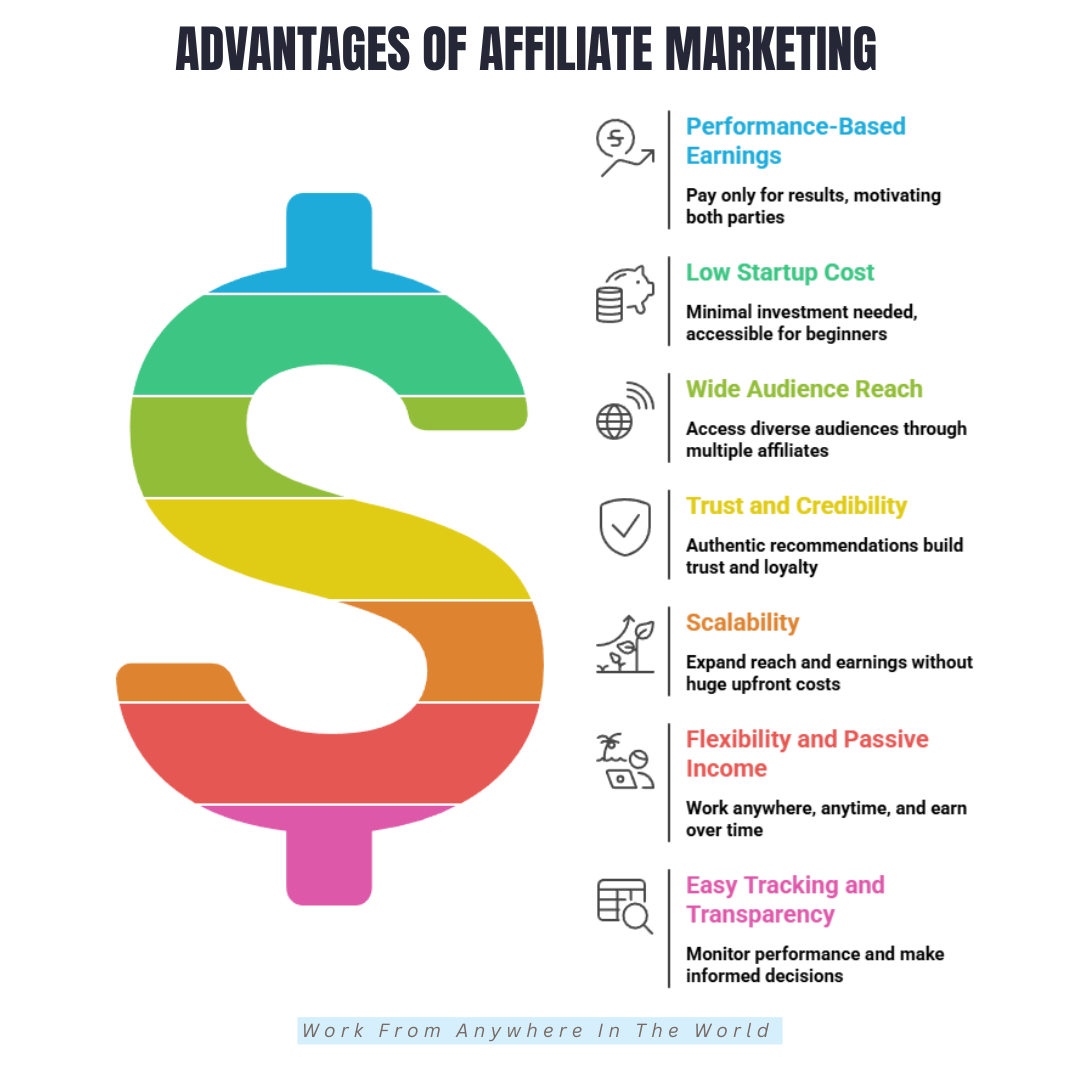
Affiliate marketing is highly cost-effective because businesses pay only for results, such as sales or leads. Marketers earn based on performance, which motivates both sides.
Businesses achieve better ROI and reduced risk, while affiliates can scale earnings by refining their strategies. This fair system ensures effort translates directly into income.
It aligns incentives perfectly, making it one of the most results-driven and efficient marketing methods available for both businesses and marketers.
2. Low Start-Up Cost
Marketers can start with minimal investment—just a website, social media, or email list—without needing products, inventory, or warehouses.
Businesses save money on ads, campaigns, and large marketing teams. This low barrier allows beginners to test strategies, learn, and gradually scale.
Both sides benefit: marketers gain an accessible online income opportunity, and businesses enjoy efficient, cost-effective marketing that doesn’t require heavy upfront spending or long setup times.
3. Wide Audience Reach
Affiliate marketing enables businesses to reach diverse audiences through multiple affiliates from different niches. Marketers also benefit by promoting products with pre-existing demand, increasing sales chances.
Affiliates bring unique followers, subscribers, or social media audiences, giving brands exposure they couldn’t achieve on their own.
This mutually beneficial setup helps businesses grow visibility organically and allows marketers to tap into ready-made, targeted audiences for faster, more effective results.
4. Trust And Credibility
People trust authentic recommendations over traditional ads. When influencers or affiliates genuinely promote a product, businesses gain credibility, and marketers strengthen personal authority.
Over time, this trust leads to higher loyalty and better conversion rates. Both sides need to prioritize transparency and honesty.
When done right, affiliate marketing becomes a tool for building long-term relationships and attracting repeat customers. It also strengthens brand authenticity.
This approach improves overall effectiveness and delivers sustainable results for both businesses and marketers.
5. Scalability
Affiliate marketing is highly scalable. Businesses can add more affiliates to expand audience reach, while marketers can promote multiple products simultaneously to increase earnings.
Growth happens without huge upfront investment or infrastructure. For businesses, this means increased revenue and brand awareness. For marketers, it offers potential for unlimited income streams.
With proper strategy and planning, scalability ensures continuous expansion, making affiliate marketing a long-term growth opportunity for both parties.
6. Flexibility And Passive Income
Marketers enjoy the freedom to work anywhere, anytime, and choose preferred niches. Businesses benefit as affiliates handle most promotion work, reducing operational stress.
Additionally, marketers can earn passive income as their content continues to generate commissions over time. Businesses also enjoy consistent sales without constant effort.
This combination of flexibility and long-term earning potential makes affiliate marketing highly effective, supporting growth and income while allowing marketers to maintain work-life balance and businesses to operate efficiently.
7. Easy Tracking And Transparency
Affiliate marketing offers clear tracking and transparency for both businesses and marketers. Every click, lead, and sale can be monitored using tracking tools.
This helps businesses understand which affiliates perform best and where to invest more. Marketers can also analyze which content generates the most income.
This level of visibility enables better decision-making, more effective strategies, and greater efficiency, making affiliate marketing more effective and reliable than many traditional marketing methods.
Disadvantages Of Effective Affiliate Marketing
1. High Competition
Affiliate marketing is competitive. Many marketers promote similar products, making it harder to stand out. Businesses may struggle to find unique affiliates, while marketers need to put in more effort to drive conversions.
Creativity, originality, and consistent quality content are essential. Although challenging, competition encourages better strategies, higher-quality promotions, and innovation.
Both businesses and marketers must work strategically to stay effective and achieve meaningful results in a crowded affiliate marketing landscape.
2. Time-Intensive Results
Affiliate marketing isn’t instant. Building traffic, trust, and conversions can take weeks or months. Businesses may not see immediate ROI, and marketers might earn little initially.
Consistency and long-term planning are crucial. Over time, results compound as content gains traction and audiences grow.
Patience is required, and those who persist often experience sustainable income and growth. Both marketers and businesses must commit to a long-term effort to fully benefit from affiliate marketing.
3. Income Uncertainty
For marketers, income fluctuates with traffic, product demand, and conversions, unlike fixed salaries. Businesses also face uncertainty if affiliates underperform.
Beginners may struggle, while top affiliates earn substantial commissions. Effective planning, niche selection, and consistent content creation help reduce risk.
Businesses enjoy more financial predictability, while marketers must manage variability carefully. Diversification and strategy are key to long-term success in this performance-based system.
4. Dependence On Others
Affiliate marketing relies on collaboration. Businesses depend on affiliates to promote products, and marketers rely on product quality, availability, and brand reputation.
Misrepresentation or poor execution can harm both sides. Clear guidelines, communication, and trustworthy partnerships are critical.
Dependence limits control but also encourages strategic collaboration, ensuring affiliates and businesses work together efficiently while minimizing risks associated with shared responsibilities.
5. Trust And Credibility Risks
Trust is central. Misleading promotions or low-quality products can damage credibility. Businesses risk brand reputation, while marketers risk losing audience trust.
Both must prioritize honesty, transparency, and value-driven promotion. Long-term relationship building is essential for sustainable results. Without trust, conversions drop, engagement falls, and affiliate marketing becomes ineffective.
Maintaining credibility ensures continued loyalty, repeat sales, and a positive reputation for both marketers and businesses.
6. Platform And Messaging Risks
Affiliate marketing often relies on platforms such as social media, marketplaces, and search engines. Algorithm changes or policy shifts can reduce traffic and conversions.
Businesses cannot fully control how affiliates present products, risking misaligned messaging. Clear guidelines, monitoring, and multi-channel strategies are essential.
Balancing affiliate freedom with oversight maximizes results while protecting brand integrity. Both sides must adapt to platform-specific risks and maintain consistent messaging to achieve effective affiliate marketing.

FAQs
Q1: Is Affiliate Marketing Good For Beginners?
Yes, it’s beginner-friendly because it requires low investment. However, success depends on learning, consistency, and patience. It’s simple to start but takes time to master properly.
Q2: How Long Does It Take To Earn Money?
It usually takes a few months to see results. Some people earn faster, but most need time to build traffic, trust, and content before generating consistent income.
Q3: Can Affiliate Marketing Be A Full-Time Income?
Yes, many people earn a full-time income through affiliate marketing. But it requires strategy, consistent effort, and multiple income streams to be stable and sustainable in the long term.
Conclusion
Affiliate marketing is a powerful strategy with clear benefits for both businesses and marketers. Businesses gain lower risk, cost efficiency, and scalable growth.
Marketers enjoy flexibility, passive income potential, and strong earning opportunities. Success depends on having the right strategy, staying consistent, and building trust with your audience.
When done well, affiliate marketing becomes a win-win. It helps businesses grow while allowing marketers to earn steady, long-term income.
I trust you enjoyed this article on How Effective Is Affiliate Marketing. Please stay tuned for more insightful blogs on affiliate marketing, online business, and working from anywhere in the world.
Take care!
— JeannetteZ 🌍✨
💬 Your Opinion Is Important To Me
Do you have thoughts, ideas, or questions? I’d love to hear from you. Please leave your comments below or email me directly at Jeannette@WorkFromAnywhereInTheWorld.com.
📚 More Work From Anywhere Reads
🚀 Ready to Build a Business You Can Run from Home
Or from Anywhere in the World?
Imagine creating income on your terms — from home, a cozy café, or wherever life takes you.
With the right tools, training, and community support, it’s entirely possible.
Start your own online business for free — no credit card needed.
Disclosure
This post may contain affiliate links. As an Amazon Associate and participant in other affiliate programs, I earn from qualifying purchases at no extra cost to you. Please read my full affiliate disclosure.