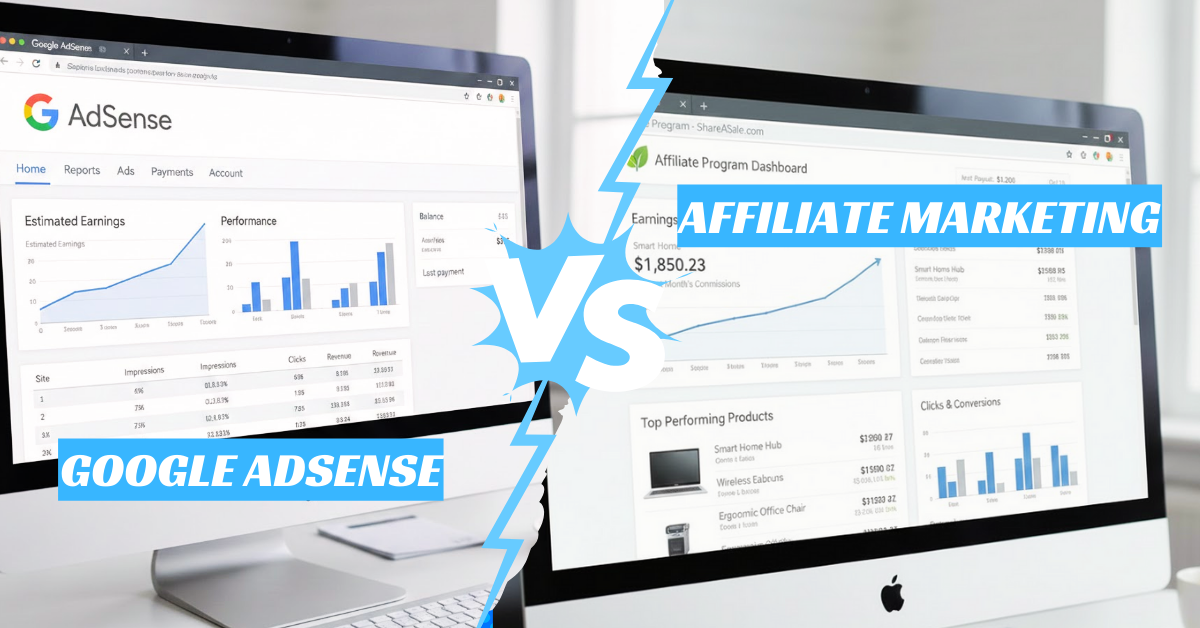
Google AdSense vs Affiliate Marketing: Which One Is Better?
Making money online often comes down to two popular methods: Google AdSense vs Affiliate Marketing. They both work, but they earn in entirely different ways.
AdSense pays when people view or click ads, while affiliate marketing pays when someone buys through your link. One relies on traffic, the other on influence.
Knowing how each method works helps you pick the right strategy for your content, niche, and long-term goals. Let’s break it down in a simple, friendly way.
What Is Google AdSense?
Google AdSense is Google’s advertising platform that allows website owners, bloggers, and creators to earn money by displaying ads on their content.
Once you join the program, Google automatically shows advertisements that match your niche and audience interests. You get paid when people view or click those ads.
You may select a name that seems distinctive, memorable, and ideally fits your company's mission with a well-defined procedure and a little imagination. You don’t need to sell anything or promote products.
AdSense works well for informational websites with steady traffic. When optimized correctly, it provides a reliable, passive income stream without much ongoing effort.
Pros Of Google AdSense
1. Easy To Get Started
For newbies, Google AdSense is among the simplest ways to make money. You don’t need to create products, manage customers, or handle payments.
Once your site meets basic requirements, you apply, get approved, and place a simple code on your website. Google takes care of the rest. Ads appear automatically based on your content and visitors.
Even non-technical users can set it up in minutes. This low barrier makes AdSense ideal for new bloggers and small website owners.
2. Passive Income Potential
Once ads are placed, AdSense can generate income even when you are not actively working. A blog post written months or years ago can still earn money if it gets traffic.
This creates true passive income potential. As your content library grows, so does your earning opportunity. While traffic is required, the income does not depend on daily selling or promotion. This makes AdSense attractive for long-term content-based websites.
3. Works With Almost Any Niche
Google AdSense supports a wide range of niches. From education and technology to lifestyle, food, and hobbies, ads are usually available. You don’t need a buyer-focused niche. Informational and general content works well.
This flexibility allows creators to monetize passion projects or informational blogs easily. Even if your niche changes or expands, AdSense can adapt. This makes it a versatile option for multi-topic or evolving websites.
4. Global Monetization
AdSense lets you earn from visitors worldwide. You don’t need traffic from one specific country to make money. Google shows ads relevant to each visitor’s location, language, and interests.
This means international traffic still has value. For blogs targeting global audiences, this is a major benefit. You can monetize worldwide reach without setting up multiple ad networks or payment systems.
5. Multiple Ad Formats
AdSense offers various ad formats, including display ads, in-article ads, in-feed ads, and responsive units. This gives you control over how ads appear on your site. You can blend ads naturally into content without ruining the user experience.
Responsive ads automatically adjust to different screen sizes, improving performance on mobile devices. This flexibility helps balance monetization with readability and site design.
6. Detailed Performance Reports
AdSense provides clear and detailed analytics. You can track impressions, clicks, earnings, CTR, and RPM in real time. These insights help you understand which pages perform best and where to improve.
You can test placements and see results quickly. This data-driven approach makes optimization easier, even for beginners. You may concentrate on content that consistently brings in ad income by knowing what works.
7. No Customer Support Required
With AdSense, you don’t interact with customers at all. There are no refunds, complaints, or support tickets to manage. Google handles advertisers and transactions. This saves time and reduces stress.
You can focus entirely on content creation and traffic growth. For solo bloggers or small teams, this simplicity is extremely valuable. Monetization runs quietly in the background without daily management.
8. Integrates Well With SEO Content
AdSense works especially well with SEO-driven content. Blog posts, guides, tutorials, and informational articles monetize naturally with ads. You don’t need aggressive selling tactics.
Visitors come looking for answers, and ads appear as a passive monetization layer. This aligns well with generative engine optimization and search-based traffic strategies. Content remains helpful, while ads generate income quietly alongside it.

Cons Of Google AdSense
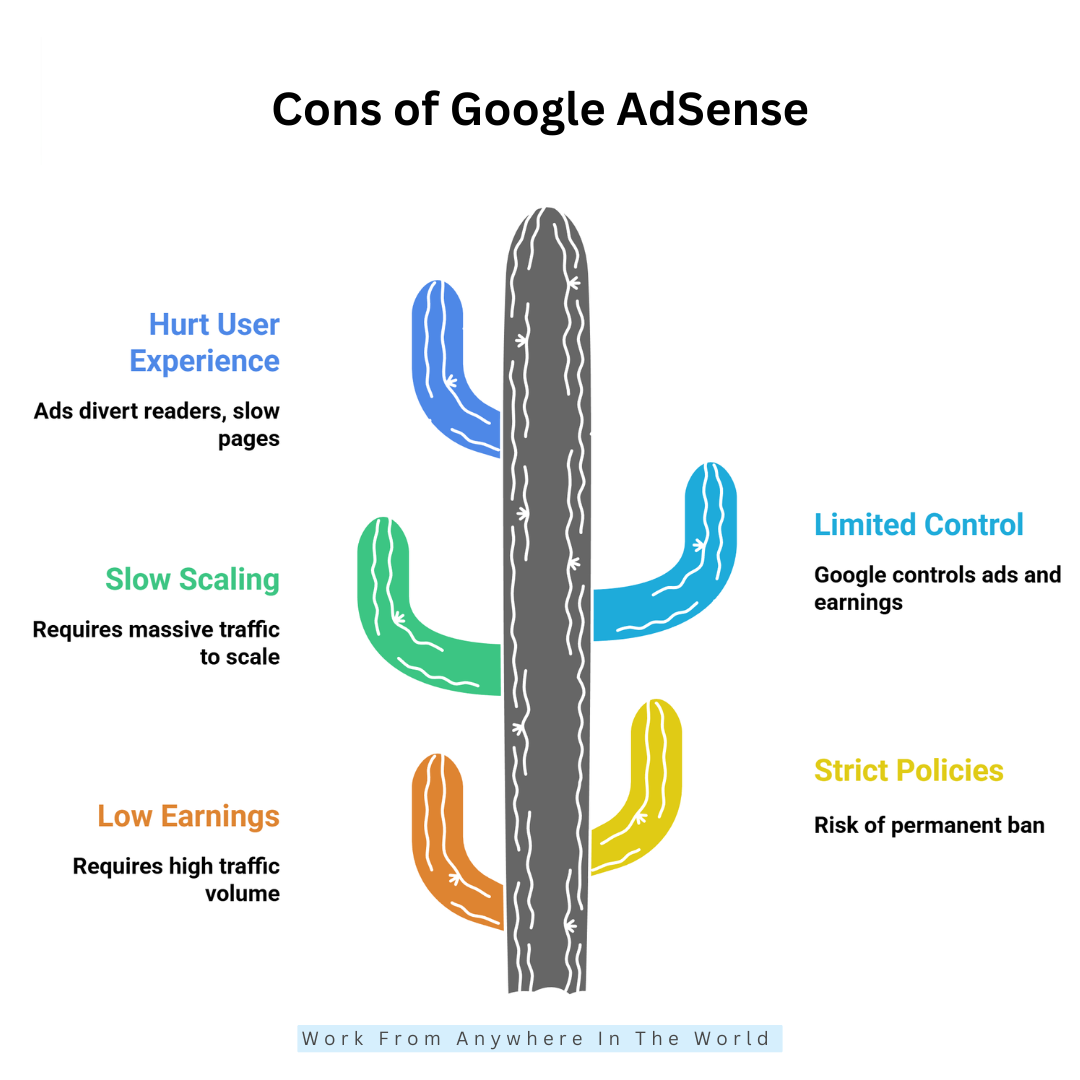
1. Low Earnings Without High Traffic
Google AdSense pays per impression and click, so meaningful income requires large traffic volumes. Small or new websites often earn very little, even with quality content. Many bloggers see only cents or a few dollars per day at first.
This makes AdSense slow for income growth. Without consistent SEO, social traffic, or viral reach, earnings stay limited. For creators expecting quick results, this can feel frustrating and unmotivating.
2. Strict Policies And Risk Of Permanent Ban
AdSense has very strict rules, and violations can lead to sudden account suspension or permanent bans. Even accidental self-clicks, invalid traffic, or incorrect ad placement can cause issues.
Google rarely provides detailed explanations. Once banned, it is extremely hard to get approved again. This makes AdSense risky as a primary income source. One mistake can completely stop your monetization overnight.
3. Requires Massive Traffic to Scale Income
To earn a full-time income with AdSense, you usually need tens of thousands of visitors per month or more. Each visitor generates only a small amount of revenue.
This puts heavy pressure on content production, SEO optimization, and traffic growth. Compared to affiliate marketing or selling products, AdSense scales slowly. Growth depends on volume, not conversions, which demands long-term effort.
4. Limited Control Over Ads And Earnings
Google controls which ads appear, how much advertisers pay, and how ads are optimized. You cannot choose specific advertisers or negotiate rates. This limits customization and branding control.
Some ads may not perfectly match your audience. You also have limited influence over CPC and RPM. For experienced marketers, this lack of control can feel restrictive and reduce overall revenue potential.
5. Can Hurt User Experience And SEO
Ads can divert readers from your content and slow down page loads. Intrusive placements may increase bounce rates and reduce engagement. Poor user experience can also impact SEO rankings over time.
Some visitors use ad blockers, reducing impressions and earnings. Balancing monetization with site performance is challenging. For brand-focused or service-based websites, AdSense can do more harm than good if not handled carefully.
What Is Affiliate Marketing?
Using a special link to promote a product or service, affiliate marketing is a performance-based earning strategy. You are paid when someone makes a purchase using that link.
Instead of earning from clicks or views, you earn from real actions—purchases, sign-ups, or subscriptions. Many bloggers, YouTubers, and influencers use affiliate marketing because commissions can be high, even with small audiences.
You choose the products you trust, create helpful content around them, and guide your audience to solutions they genuinely need. If you build trust and target buyer-intent topics, affiliate marketing can become a powerful, long-term income source.
Wealthy Affiliate – Mini Review (2025)
If you’ve ever thought about turning your blog, passion, or niche into an online business,
Wealthy Affiliate (WA) is one of the most beginner-friendly platforms I’ve used.
It combines step-by-step training, website hosting, SEO research tools,
and an active community all in one place.
What I like most: you can start free (no credit card needed),
explore lessons, test the tools, and connect with other entrepreneurs
before upgrading. WA isn’t a “get rich quick” scheme — it’s a platform where success comes
from consistent effort and applying what you learn.
Pros Of Affiliate Marketing
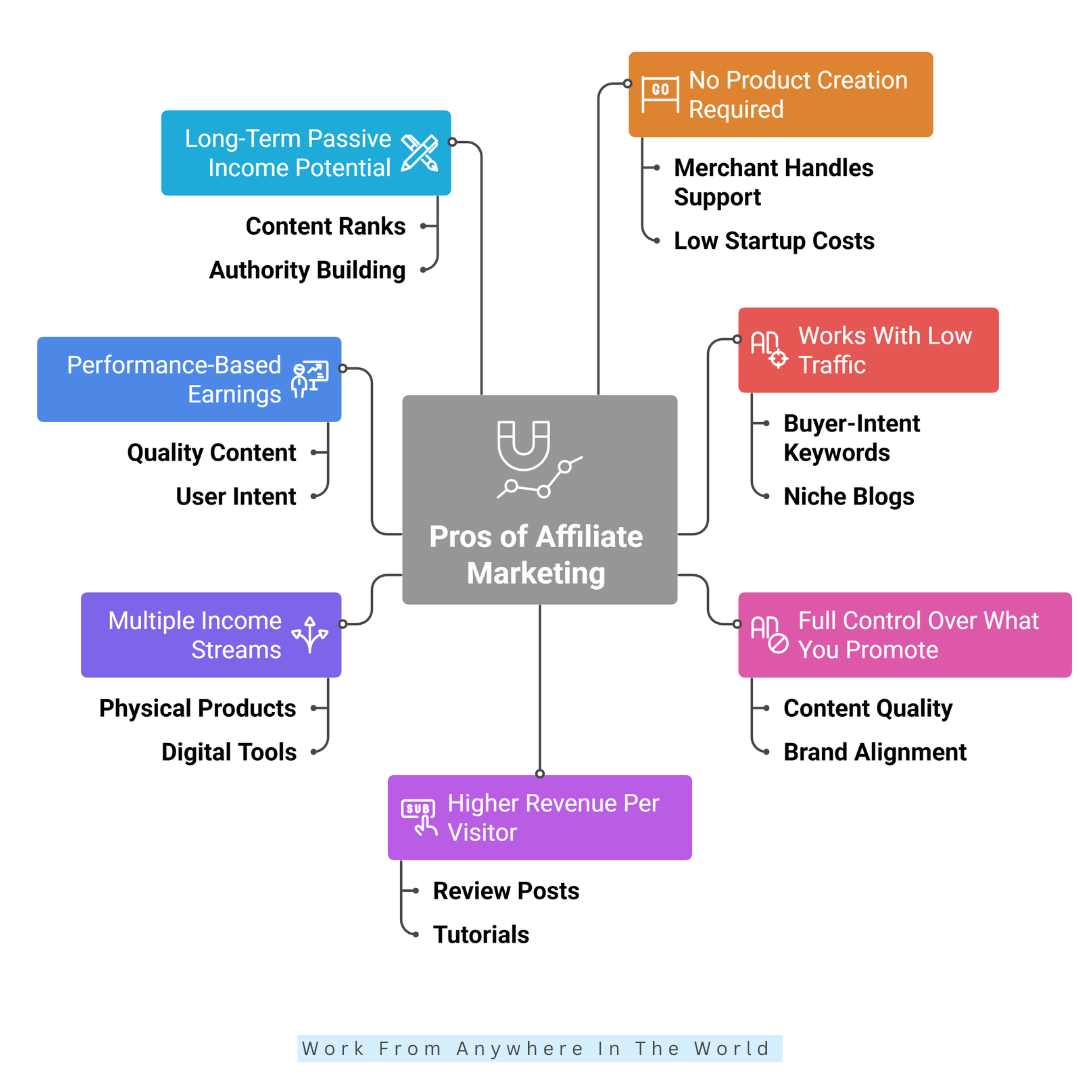
1. No Product Creation Required
You don’t need to create, store, or deliver products. The merchant handles everything, including customer support and refunds. This removes major operational stress and startup costs.
You focus only on promoting helpful solutions. This makes affiliate marketing beginner-friendly and low-risk. Content creators can monetize expertise without running a full business or investing in inventory.
2. Works With Low Traffic
Affiliate marketing can be profitable with limited traffic if the audience is targeted. Buyer-intent keywords convert better than general content. One well-placed recommendation can outperform thousands of ad impressions.
This makes affiliate marketing ideal for niche blogs and authority sites. You focus on relevance, not volume, which reduces pressure on traffic growth.
3. Full Control Over What You Promote
You choose the products, brands, and offers you promote. This gives you control over content quality and brand alignment. You can avoid low-quality products and focus on value-driven recommendations.
If an offer stops performing, you can switch easily. This flexibility allows continuous optimization and better long-term trust with your audience.
4. Higher Revenue Per Visitor
Affiliate marketing earns more per visitor compared to display ads. Visitors who trust your content are more likely to convert. This increases overall site profitability without increasing traffic.
It’s especially effective for review posts, tutorials, and comparison guides. Higher revenue per visitor makes affiliate marketing more efficient and sustainable.
5. Multiple Income Streams
You can simultaneously advertise several products from several businesses. This diversifies income and reduces dependence on one platform. If one program closes or reduces commissions, others continue earning.
Diversification increases income stability and long-term security. You can mix physical products, digital tools, and subscriptions for balanced revenue.
6. Performance-Based Earnings
You earn based on results, not ad impressions. If your content converts well, income increases. This rewards quality content, trust, and user intent.
Skilled marketers can outperform high-traffic sites with a smarter strategy. Performance-based payouts encourage continuous improvement and optimization.
7. Long-Term Passive Income Potential
Once content ranks and builds trust, affiliate links can generate income for years. Old posts continue earning with minimal updates. This creates long-term passive income.
While maintenance is needed, effort decreases over time. Affiliate marketing rewards consistency and authority building, making it a powerful long-term monetization strategy.
Cons Of Affiliate Marketing
1. Takes Time To Build Trust And Results
Affiliate marketing is not a quick-money model. You need time to build content, authority, and audience trust. Search rankings and conversions do not happen overnight. Many affiliates quit early because results take months.
You must consistently publish helpful, honest content. Without patience and persistence, progress feels slow. This long ramp-up period can be discouraging for creators expecting fast returns.
2. Dependent On Third-Party Programs
Affiliate marketers rely on external companies. Merchants can change commission rates, terms, or shut down programs without warning. A profitable offer today may disappear tomorrow. This lack of control creates risk. You don’t own the product or customer relationship. Relying heavily on one affiliate program can make income fragile if policies change suddenly.
3. Commission Rates Can Drop Suddenly
Affiliate programs often reduce commissions over time. Companies adjust payouts based on profit margins or strategy shifts. This can instantly reduce earnings, even if traffic stays the same.
Affiliates have no negotiating power in most cases. Sudden rate cuts can feel unfair and destabilizing. This makes long-term income planning difficult and highlights the need for diversification.
4. High Competition In Popular Niches
Affiliate marketing is highly competitive. Popular niches attract many marketers promoting the same products. Ranking for buyer-intent keywords can be difficult. New affiliates struggle to stand out against established sites with authority and backlinks.
Competition drives up content quality requirements and marketing effort. Success often requires deeper research, better content, and stronger branding than beginners expect.
5. Requires Strong SEO Or Marketing Skills
Successful affiliate marketing demands solid SEO, copywriting, and conversion skills. Without these, content may not rank or convert. Learning these skills takes time and effort.
Many beginners fail because they underestimate the learning curve. Unlike ads, affiliate income depends heavily on persuasion and intent targeting. This makes the model less beginner-friendly without proper guidance.
6. Requires Legal Disclosures And Compliance
Affiliate marketers must follow legal guidelines, including disclosure rules and platform policies. Missing disclosures can lead to penalties or account bans. Compliance adds complexity to content creation.
Rules vary by country and platform. Keeping up with regulations requires attention and updates. This extra responsibility can feel burdensome, especially for beginners.

Google AdSense vs Affiliate Marketing: Key Differences You Must Know
1. Earning Model
Google AdSense pays you based on clicks and impressions. You earn whenever someone views or clicks an ad on your site. It’s simple: traffic equals revenue.
Affiliate marketing, on the other hand, pays commissions for actions, such as purchases or sign-ups. You only earn when your audience takes a specific action. This difference means AdSense rewards volume, while affiliate marketing rewards quality and buyer intent.
For long-term income, affiliate marketing can produce much higher returns per visitor, while AdSense provides smaller, steadier income streams for large audiences.
2. Setup And Ease Of Use
AdSense is very beginner-friendly. You apply, get approved, paste the code on your website, and the ads start showing automatically. There’s minimal effort beyond adding content.
Affiliate marketing requires more steps: selecting products, joining programs, creating content that persuades, and embedding your links naturally. It necessitates audience comprehension and strategic preparation.
While harder to start, affiliate marketing allows more control over your income because you choose the products and niche. AdSense is simpler but limits your influence over what appears on your site.
3. Traffic Requirements
AdSense needs high traffic to generate meaningful income. A small blog with 1,000 monthly visitors might earn only a few dollars. Affiliate marketing can be profitable even with small, targeted audiences, especially if visitors have buying intent.
For instance, 500 focused readers looking for a solution can generate more revenue than 50,000 general visitors clicking ads.
This makes affiliate marketing ideal for niche blogs or highly engaged communities, while AdSense benefits content that attracts broad, high-volume traffic like news, entertainment, or viral content.
4. Income Potential
AdSense income depends largely on traffic volume and niche CPC (cost per click). Most bloggers earn $3–$10 per 1,000 pageviews, and scaling requires massive traffic.
Affiliate marketing offers a higher earning potential per visitor. Commissions can range from $10 to hundreds per sale. A small, well-targeted audience can make more than a huge AdSense blog.
Over time, affiliate marketing can scale faster because it leverages buyer intent and product relevance, whereas ad rates and click-through ratios limit AdSense.
5. Passive vs Active Income
AdSense is mostly passive. Once set up, you earn as long as traffic flows. Minimal maintenance is needed unless you want to optimize ad placement.
Affiliate marketing can also become passive, but initially, it’s more active. You must create persuasive content, monitor links, and adjust recommendations if products or commissions change.
Over time, both can generate long-term income, but AdSense is simpler for hands-off revenue, while affiliate marketing rewards consistent effort and strategic promotion.

6. User Experience
Ads can clutter a website, slow it down, and distract readers, which may reduce engagement. Poorly placed AdSense ads can harm user experience.
Affiliate links, when integrated naturally, feel part of the content. They help the reader by recommending solutions rather than interrupting their experience.
A site with carefully placed affiliate links can maintain a professional, clean design. Therefore, affiliate marketing often enhances user trust, while AdSense can feel intrusive if overused.
7. Niche Compatibility
AdSense works best in high-traffic, broad-interest niches, like entertainment, news, lifestyle, or viral content. Affiliate marketing thrives in product-focused niches where users are ready to buy, such as tech gadgets, fitness equipment, software, finance, or beauty products.
If your audience seeks solutions, affiliate marketing converts better. AdSense fits content-heavy sites, while affiliate marketing suits solution-oriented content, reviews, tutorials, or recommendation posts.
8. Risk And Stability
AdSense income is relatively stable, but it can fluctuate with CPC changes, seasonal trends, or account issues. Affiliate marketing carries more risk—links can expire, merchants can change commissions, or products may be discontinued.
However, the reward-to-risk ratio is higher. Affiliate marketing allows multiple income streams if you join several programs, diversify products, and build trust. AdSense is reliable but capped, while affiliate marketing offers unlimited growth potential if executed correctly.
9. Control Over Content And Monetization
With AdSense, you have limited control over which ads appear. Google decides, based on algorithms and audience behaviour. Some ads may not align with your brand. Affiliate marketing gives you complete control.
You choose products, brands, and promotion methods. This helps maintain brand integrity and trust with your audience.
You can also strategically adjust campaigns to improve conversions and earnings. If brand alignment matters, affiliate marketing is better; AdSense is easier but less flexible.
10. Long-Term Growth And Scalability
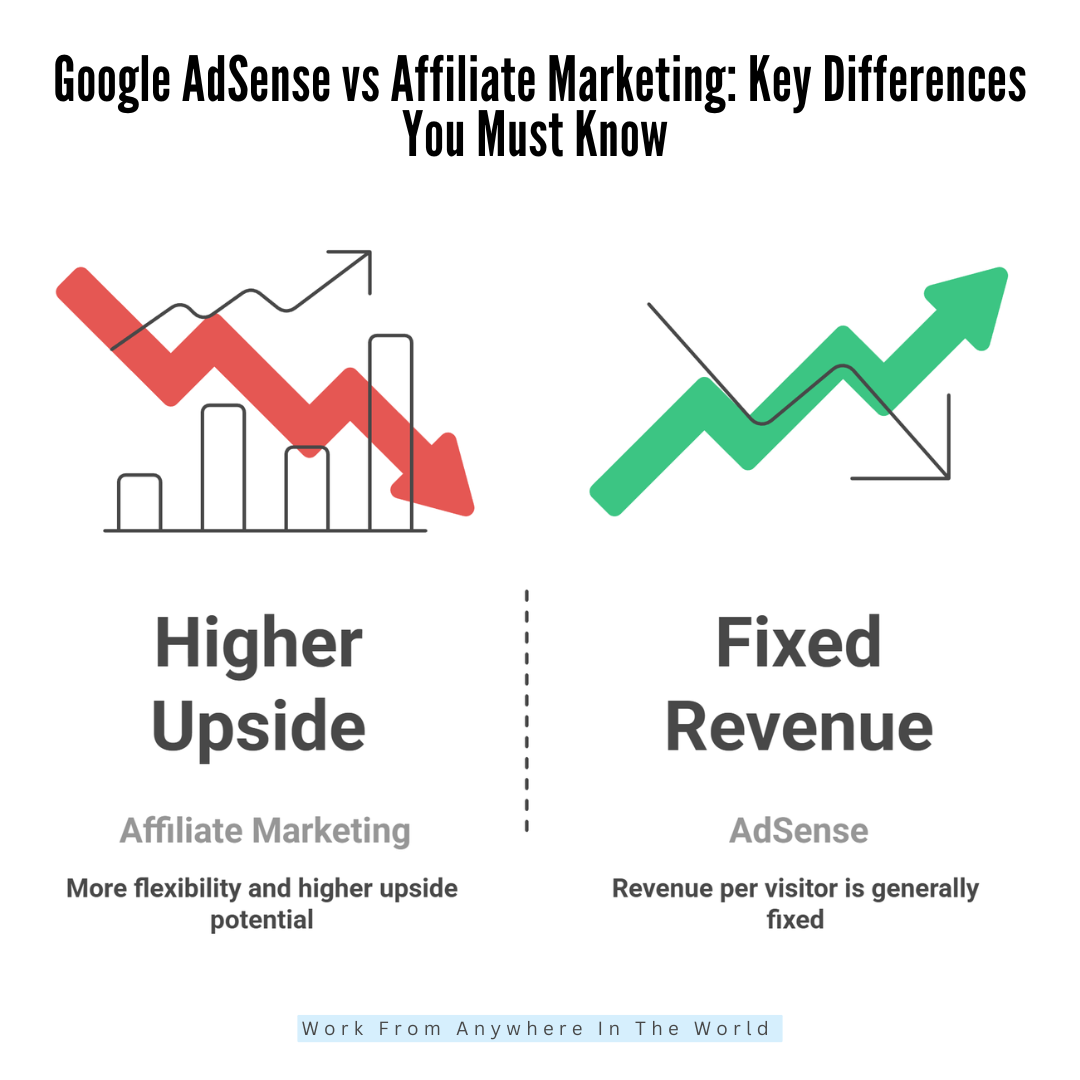
AdSense income scales mainly with traffic growth, and revenue per visitor is generally fixed. Affiliate marketing scales with traffic quality, content strategy, and audience trust.
As you grow your email list, SEO, and social media presence, affiliate income can increase faster than AdSense. Many successful creators combine both: affiliate marketing as the primary revenue driver, and AdSense as supplemental income.
For sustainable online business growth, affiliate marketing offers more flexibility and higher upside potential over time.
FAQ
Q1: Can I Use AdSense And Affiliate Marketing On The Same Site?
Yes! Combining both is highly effective. Use AdSense on general posts for passive income and affiliate links on product-focused posts for higher commissions from motivated buyers.
Q2: Which Earns More: AdSense Or Affiliate Marketing?
Affiliate marketing usually earns more per visitor because it rewards actual purchases or sign-ups, while AdSense depends on clicks and impressions, providing a smaller but steady income.
Q3: Do I Need High Traffic For Both Monetization Methods?
AdSense requires high traffic to make a significant income. Affiliate marketing can earn well even with smaller, targeted audiences if visitors are ready to take action.
Q4: Which Is Easier To Start With?
AdSense is more manageable for beginners—setup is simple, and Google handles ads. Affiliate marketing requires planning, product selection, and content creation, making it slightly more advanced.
Q5: How Much Traffic Do I Need For AdSense?
There’s no fixed number, but generally, you need thousands of monthly page views to earn a meaningful income from AdSense.
Q6: Do Both Methods Affect Website Speed?
AdSense can slow down your site due to ad scripts. Affiliate links have minimal impact unless poorly managed.
Q7: Can I Get Banned From AdSense?
Yes. Violating policies—like invalid clicks, copyrighted content, or unsafe pages—can lead to an account ban.
Q8: Which Is Better For Small Blogs?
Affiliate marketing is often better for small blogs with niche content. AdSense works better when traffic is broad and high.
Conclusion
Both Google AdSense and affiliate marketing are powerful ways to monetize a website, but they work in different ways. AdSense provides steady, passive income from general traffic, while affiliate marketing earns higher commissions from targeted, motivated visitors.
Combining both strategies allows you to maximize revenue, diversify income streams, and maintain a great user experience. Your audience, niche, and long-term objectives will determine the optimal strategy.
I trust you enjoyed this article on the Google AdSense vs Affiliate Marketing: Which One Is Better? Please stay tuned for more insightful blogs on affiliate marketing, online business, and working from anywhere in the world.
Take care!
— JeannetteZ 🌍✨
💬 Your Opinion Is Important To Me
Do you have thoughts, ideas, or questions? I’d love to hear from you. Please leave your comments below or email me directly at Jeannette@WorkFromAnywhereInTheWorld.com.
📚 More Work From Anywhere Reads
🚀 Ready to Build a Business You Can Run from Home
Or from Anywhere in the World?
Imagine creating income on your terms — from home, a cozy café, or wherever life takes you.
With the right tools, training, and community support, it’s entirely possible.
Start your own online business for free — no credit card needed.
Disclosure
This post may contain affiliate links. As an Amazon Associate and participant in other affiliate programs, I earn from qualifying purchases at no extra cost to you. Please read my full affiliate disclosure.