Business Ideas For Stay-at-Home Moms
Business ideas for stay-at-home moms can open the door to earning an income while maintaining greater control over when and where you work. The challenge is finding an opportunity that works realistically alongside family life.
A successful home business does not need to begin with a large investment or complicated setup. Existing skills, professional experience, creative talents, or knowledge gained through everyday life can all become starting points.
Flexibility is important, but so are demand and profitability. Before choosing an idea, consider who would pay for your product or service, what it will cost to get started, and how much time you can consistently dedicate to the business.
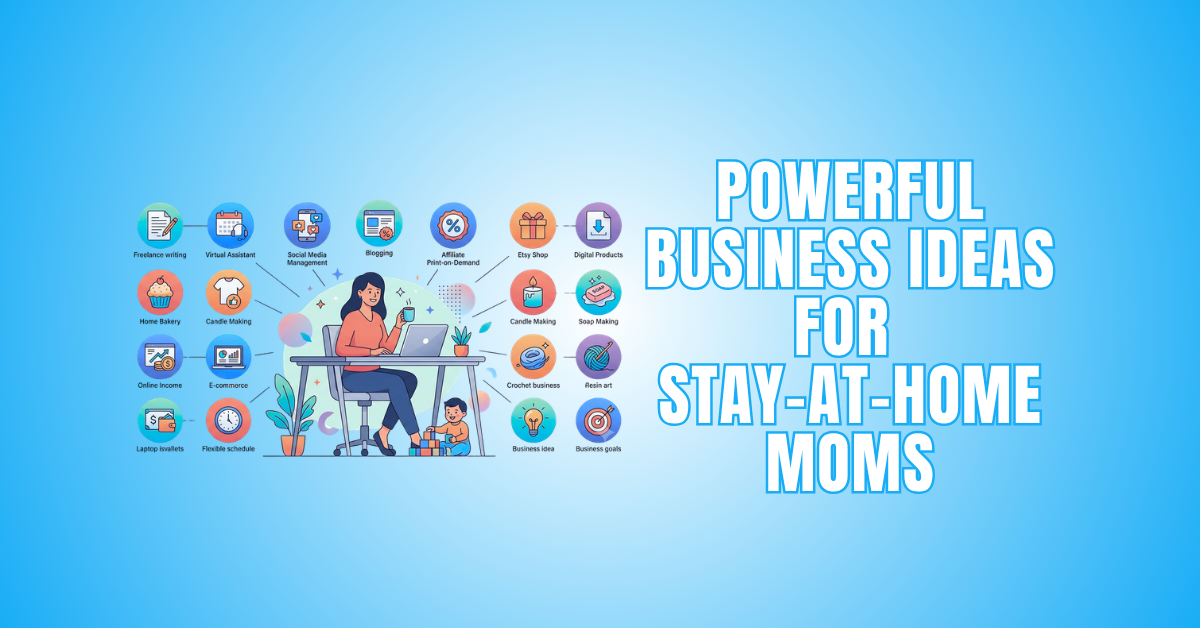
This guide explores 15 home business opportunities ranging from freelance services and digital work to creative ventures. You'll discover what each business involves, the skills required, useful platforms, and factors that can influence earning potential.
15 Powerful Business Ideas For Stay-At-Home Moms
Choosing a home business starts with understanding what you can realistically offer and who might need it. An idea becomes more promising when your skills or interests solve a problem people are willing to pay to address.
Think about how each opportunity would fit into your everyday routine before committing to it. Some businesses allow work to be completed in short blocks, while others require scheduled appointments or regular customer communication.
Startup requirements also vary considerably between business ideas. Service-based options may require minimal equipment, while product businesses can involve materials, inventory, packaging, or dedicated workspace.
Consider how easily an idea could attract customers and develop beyond the first few sales. Researching demand and competition can help you determine whether there is enough opportunity to build a sustainable business.
The following 15 ideas offer different paths to earning from home. Comparing their daily tasks, required skills, useful platforms, and earning potential can help you identify the opportunities worth exploring further.
1. Freelance Writing
Freelance writing can be a practical home business for moms who enjoy working with words and researching different topics. Much of the work can be scheduled around family responsibilities and completed from home.
Businesses, bloggers, online stores, and other organizations need writers for many types of content. Starting also requires relatively little equipment, making it an accessible business to explore from home.
What Is Freelance Writing?
Freelance writers create content for clients while working independently rather than for a single employer. Projects can include blog posts, website pages, newsletters, product descriptions, case studies, and marketing materials.
Writers may accept individual assignments or establish ongoing relationships with several clients. Some offer several services, while others specialize in a particular subject or type of content.
How To Start A Freelance Writing Business
- Decide which topics or types of writing you would like to offer.
- Create several strong writing samples for your portfolio.
- Search for online freelance jobs or approach suitable businesses directly.
- Build professional relationships and ask satisfied clients for referrals.
- Add your strongest completed projects to your portfolio as you gain experience.
Skills And Tools You May Need
- Strong writing, grammar, research, and editing skills
- Communication and time management
- Basic SEO knowledge
- Word-processing and editing software
- Cloud storage and project management tools
Growth Potential And Scaling Opportunities
Experience can lead to specialization in a particular industry or expansion into related services. Copywriting, editing, email marketing, content planning, and content strategy are possible directions.
You could also create digital resources, collaborate with other freelancers, or eventually develop a small content business. These options allow the business to grow without depending entirely on individual writing assignments.
2. Virtual Assistant
Becoming a virtual assistant can be a flexible home business for moms with strong organizational and communication skills. Most services can be provided remotely, making it easier to arrange work around other responsibilities.
Clients may need help with administration, customer service, marketing, research, or other everyday tasks. You can begin with skills you already have and introduce more specialized services as your experience develops.
What Is A Virtual Assistant?
A virtual assistant provides remote professional support to businesses, entrepreneurs, and other clients. Services can range from routine administrative work to specialized marketing, technical, or creative tasks.
Responsibilities might include managing email, scheduling appointments, organizing documents, researching information, or responding to customers. Some virtual assistants specialize in areas such as bookkeeping, email marketing, or project coordination.
How To Start A Virtual Assistant Business
- Identify skills you can confidently offer as professional services.
- Choose several related services that suit your experience and interests.
- Create clear service packages so prospective clients understand what you provide.
- Look for clients through freelance platforms, professional networks, referrals, or direct outreach.
- Refine your services as you discover which tasks clients need most.
Skills And Tools You May Need
- Organization, communication, time management, and problem-solving skills
- Strong attention to detail and customer service
- Google Workspace or Microsoft 365
- Video conferencing and cloud-storage software
- Project management tools
- Specialized software related to the services you offer
Growth Potential And Scaling Opportunities
As your experience grows, you can specialize in higher-level services such as project management, operations support, email marketing, or online business management.
You may also collaborate with other virtual assistants or subcontract selected tasks as your client base expands. This can eventually develop into a small virtual support agency.
3. Social Media Management
Social media management can be a flexible home business for moms who enjoy creating content and communicating online. Much of the work can be planned ahead and completed remotely.
Businesses often need help maintaining their social presence consistently. You can begin with platforms you already understand and expand your services as your experience develops.
What Is Social Media Management?
Social media management involves planning, creating, publishing, and monitoring content for a business or brand. It can also include responding to comments, answering messages, and interacting with followers.
Client needs vary considerably. Some businesses need regular content and scheduling, while others require more help with social media engagement, analytics, or overall strategy.
How To Start A Social Media Management Business
- Choose the platforms you understand well enough to manage professionally.
- Decide which services you want to offer, such as content creation, scheduling, or engagement.
- Build a small portfolio with sample posts, graphics, captions, or content calendars.
- Find potential clients through networking, referrals, freelance platforms, or direct outreach.
- Continue learning as platforms, content formats, and audience preferences change.
Skills And Tools You May Need
- Content creation, copywriting, and communication skills
- Basic graphic design and social media knowledge
- Scheduling and content-planning tools
- Analytics and reporting tools
- Organization and time management
Growth Potential And Scaling Opportunities
As your experience grows, you can specialize in particular platforms or industries. You may also expand into strategy, community management, short-form video, analytics, or paid advertising.
A larger client base may eventually require help from writers, designers, or video editors. Learning how to manage a virtual team can help you coordinate larger projects or develop a small social media agency.
4. Online Tutoring
Online tutoring can be a flexible home business for moms with strong knowledge of a particular subject. Lessons can usually be scheduled around other responsibilities and taught entirely from home.
Opportunities extend beyond traditional school subjects. Tutors may teach languages, music, coding, test preparation, or professional skills depending on their knowledge and experience.
What Is Online Tutoring?
Online tutoring involves teaching students remotely using video conferencing and digital learning tools. Lessons can be provided individually or to small groups.
Sessions may include explanations, demonstrations, exercises, assignments, and discussions. Tutors can develop lessons around individual learning needs or a structured teaching program.
How To Start An Online Tutoring Business
- Choose a subject you understand well and decide whom you want to teach.
- Determine whether you will offer individual lessons, small groups, or both.
- Prepare lesson plans and learning materials that can be adapted for different students.
- Establish a schedule and a simple system for bookings and payments.
- Find students through tutoring platforms, referrals, professional networks, or community groups.
Skills And Tools You May Need
- Strong knowledge of your chosen subject
- Patience and clear communication
- Lesson planning and organization
- A reliable computer, webcam, microphone, and internet connection
- Video conferencing and document-sharing tools
- Digital whiteboards when useful for your subject
Growth Potential And Scaling Opportunities
As your student base develops, you can introduce small-group lessons or additional subjects within your area of expertise. Reusable worksheets, exercises, and study guides can also make lesson preparation more efficient.
You could eventually turn some teaching materials into digital products or develop structured courses. These options can expand the business beyond individual tutoring sessions.
5. Sell Handmade Products
Selling handmade products can turn creative skills into a home business. Jewellery, artwork, home décor, accessories, personalized gifts, and many other items can provide possibilities depending on what you enjoy creating.
You can begin with a small product range and gradually build a home-based business online as demand grows. This allows you to test your ideas before expanding your collection or investing heavily in inventory.
What Does Selling Handmade Products Involve?
A handmade business involves creating physical products and selling them directly to customers. Beyond production, you may need to manage photography, packaging, customer communication, orders, and marketing.
Products can be sold through online marketplaces, your own website, social media, local markets, or several channels. The right approach depends on your products and where your customers prefer to shop.
How To Start A Handmade Product Business
- Choose products you can make consistently and confidently.
- Calculate materials, production time, packaging, and other costs.
- Create a small collection and take clear photographs.
- Write descriptions covering dimensions, materials, colours, and available options.
- Consider an Etsy shop or another suitable sales channel.
- Track customer interest before expanding your inventory.
Skills And Tools You May Need
- Crafting skills and attention to detail
- Product presentation and basic marketing
- Customer service and organization
- Packaging, shipping, and labelling supplies
- Basic bookkeeping and inventory management
Growth Potential And Scaling Opportunities
Growth can include complementary products, variations of popular items, personalized options, or seasonal collections. You might eventually add your own eCommerce store alongside an established marketplace.
As demand increases, more efficient production and purchasing systems can help you manage additional orders. Selected administrative tasks could also be outsourced while you remain focused on creating your products.
6. Start A Print-On-Demand Business
A print-on-demand business allows you to sell customized products without keeping large quantities of inventory at home. Products are created after customers order them, which can reduce some of the upfront costs of a traditional product business.
T-shirts, mugs, tote bags, notebooks, phone cases, and other products can feature your original designs. Focusing on a particular niche can also give your collection a clearer identity.
What Is Print-On-Demand?
Print-on-demand is a business model in which a supplier produces an item after a customer places an order. The supplier typically handles printing, packaging, and shipping.
You concentrate on creating designs, choosing products, managing your storefront, and marketing the business. You still need to consider product quality, supplier reliability, customer service, and profit margins.
How To Start A Print-On-Demand Business
- Choose a niche and decide who you want your designs to appeal to.
- Research competing products and look for opportunities to create something distinctive.
- Develop several original designs and select suitable products.
- Order samples to check printing, materials, sizing, and packaging.
- Choose a print-on-demand provider and decide where you will sell your products.
Skills And Tools You May Need
- Basic graphic design and branding
- Market research and marketing skills
- A clear understanding of your target audience
- Design software such as Canva or another suitable program
- Product mockup and store-management tools
- Customer service and basic business organization
Growth Potential And Scaling Opportunities
Successful designs can be adapted for complementary products or developed into larger collections. You can also experiment with seasonal designs, additional niches, or new sales channels.
As the business develops, you might expand beyond print-on-demand into digital products, original merchandise, or other related offerings that complement your brand.
7. Blogging
Blogging can become a flexible home business built around your knowledge, interests, or experience. A focused niche gives you a place to publish useful content for people interested in a particular subject.
Articles can continue attracting visitors after publication through search engines, social media, email, and referrals. As your audience develops, the blog can also support several different income streams.
What Is Blogging?
Blogging involves publishing useful or entertaining content on a website for a particular audience. Articles might include tutorials, guides, reviews, comparisons, personal insights, or educational resources.
A well-organized blog allows readers to explore related topics while building a larger collection of content. Search engines and other marketing channels can help new readers discover those resources.
How To Start A Blogging Business
- Choose a niche with enough related topics to support ongoing content.
- Select a domain name and set up your website.
- Organize your main subjects into clear categories.
- Research keywords and questions your audience is searching for.
- Plan related articles rather than publishing disconnected topics.
- Prioritize useful, high-quality content over publishing frequency.
Skills And Tools You May Need
- Writing, research, and editing skills
- SEO and keyword research
- Basic website management
- WordPress or another suitable publishing platform
- Analytics and keyword research tools
- Basic content marketing knowledge
Growth Potential And Scaling Opportunities
As your content library and readership grow, you can explore affiliate marketing, advertising, sponsorships, memberships, digital products, or courses when they suit your audience.
You can also expand your content production with help from writers, editors, or designers. Some bloggers eventually develop several websites, while others concentrate on building one authoritative resource.
8. Affiliate Marketing
Affiliate marketing allows you to build an online business around useful content and relevant recommendations. It can work alongside blogging, video content, social media, or other platforms where you develop an audience.
Rather than promoting everything, you can concentrate on products and services that complement your niche. Helpful content and trustworthy recommendations should remain at the centre of the business.
What Is Affiliate Marketing?
Affiliate marketing allows publishers and content creators to earn commissions for eligible referrals. Unique tracking links connect qualifying actions to the affiliate who generated them.
Each program establishes its own commission structure, tracking rules, requirements, and promotional conditions. Understanding these terms is important before deciding which opportunities suit your business.
How To Start With Affiliate Marketing
- Choose a niche and understand what your audience needs.
- Research relevant affiliate programs and compare their requirements.
- Explore suitable affiliate networks for additional opportunities.
- Create helpful guides, tutorials, reviews, or comparisons around relevant topics.
- Include recommendations naturally where they add value for readers.
- Clearly disclose affiliate relationships wherever required.
Skills And Tools You May Need
- Research and content-creation skills
- SEO and basic analytics
- Email and social media marketing
- Clear written or video communication
- A system for organizing affiliate programs and links
- Performance-tracking tools
Growth Potential And Scaling Opportunities
As your content library grows, existing articles and videos can continue introducing readers to relevant recommendations. You can also diversify across several suitable programs rather than relying on a single affiliate relationship.
Affiliate marketing can eventually complement advertising, sponsorships, courses, digital products, or other revenue streams. This allows the business to expand alongside your audience.
9. Home Bakery Business
A home bakery can turn baking skills into a business without the expense of opening a retail storefront. You can focus on cakes, bread, cookies, pastries, or another specialty that suits your skills and kitchen space.
Local food regulations are an important consideration. Before selling, research the rules for home-based food businesses in your area, including any licensing, food-safety, or labelling requirements.
What Is A Home Bakery Business?
A home bakery prepares and sells baked goods from a residential kitchen where local regulations permit it. Orders may be offered through pickup, delivery, markets, events, or other local sales channels.
Some bakers specialize in celebration cakes or other custom orders, while others develop a smaller collection of regular products. Your available time, equipment, storage, and kitchen capacity can help determine what is practical.
How To Start A Home Bakery Business
- Research local food-business regulations and requirements.
- Choose a manageable range of baked goods.
- Calculate ingredients, packaging, utilities, equipment, and other costs.
- Establish an ordering, payment, and pickup or delivery system.
- Test recipes carefully to maintain consistent quality.
- Promote your bakery through suitable local channels and referrals.
Skills And Tools You May Need
- Strong baking and food-preparation skills
- Organization and time management
- Food-safety knowledge
- Baking equipment and suitable storage
- Packaging and labelling supplies
- Basic bookkeeping and order-management tools
Growth Potential And Scaling Opportunities
Growth might include seasonal collections, event orders, market sales, or partnerships with suitable local businesses. Becoming known for a particular specialty can also strengthen your bakery without requiring a huge menu.
If demand eventually exceeds your home kitchen's capacity, you can consider commercial kitchen space or another production setup. Expansion can follow proven demand rather than happening too early.
10. Sell Digital Products
Selling digital products eliminates the need to store, package, or ship physical inventory. Products can include templates, planners, spreadsheets, eBooks, worksheets, guides, graphics, and educational resources.
A useful product should address a specific need or make something easier for the customer. You can begin with a small collection and expand according to what your audience finds valuable.
What Are Digital Products?
Digital products are created and delivered electronically rather than shipped to customers. Buyers generally receive a downloadable file or access to an online resource after purchasing.
Because there is no physical stock, a finished product can usually be sold repeatedly. However, digital products still require promotion, updates, customer support, and ongoing management.
How To Start Selling Digital Products
- Identify a problem or need your product could address.
- Use market research to understand potential customers and existing products.
- Choose a suitable format and create your product using the appropriate tools.
- Decide whether to sell through a marketplace, your own eCommerce store, or both.
- Test files, downloads, instructions, and product information before publishing.
Skills And Tools You May Need
- Basic design, writing, and organization skills
- Research and branding
- Canva, Google Docs, spreadsheets, or other suitable creation tools
- Basic content marketing
- Customer service and file-management skills
Growth Potential And Scaling Opportunities
Successful products can lead to complementary resources, bundles, collections, or versions created for different audiences. Customer questions and feedback can help identify useful opportunities for expansion.
As the business develops, an email list can help you stay connected with customers and introduce relevant new products. Courses, memberships, or larger digital resources may provide additional opportunities later.
11. Open An Etsy Shop
Opening an Etsy shop gives you an established marketplace for selling creative products without building an independent store first. You can offer handmade goods, digital products, craft supplies, vintage items, or another eligible product category.
A focused collection can make your shop easier to understand and manage. Product presentation, descriptions, customer service, and search visibility all contribute to the shopping experience.
What Is An Etsy Shop?
An Etsy shop is an online storefront within the Etsy marketplace. Sellers can create listings, receive orders, communicate with customers, and manage their sales through the platform.
Each shop has its own products and presentation. Sellers are also responsible for ensuring their listings and products comply with Etsy's current policies.
How To Start An Etsy Shop
- Decide what you want to sell and identify your likely customers.
- Research similar products and look for ways to distinguish your offer.
- Create accurate photographs or previews for your listings.
- Write clear titles and descriptions with the information shoppers need.
- Learn the basics of Etsy SEO, including titles, tags, and categories.
- Establish systems for orders, customer questions, shipping, or digital downloads.
Skills And Tools You May Need
- Product photography and presentation
- Customer service and basic marketing
- Etsy SEO and listing optimization
- Inventory and order management when applicable
- Packaging and shipping supplies for physical products
- Design and organizational software
Growth Potential And Scaling Opportunities
Successful products can be expanded through variations, complementary items, bundles, or seasonal collections. Customer behaviour, reviews, and repeat purchases can also help guide future product development.
You may eventually add other sales channels or build your own online store while keeping Etsy as part of the business.
12. Candle Making Business
Candle making can become a creative home business with plenty of room to develop a distinctive style. Fragrances, colours, containers, shapes, and packaging can all contribute to your product collection.
Safety and testing are particularly important because candles involve heat and an open flame. Each combination of materials should perform safely and consistently before being offered for sale.
What Is A Candle Making Business?
A candle-making business creates candles for individual customers, retailers, markets, or other sales channels. Products might include scented candles, decorative pieces, personalized gifts, or seasonal collections.
Running the business also involves sourcing materials, maintaining consistent formulas, packaging finished products, managing inventory, and processing orders.
How To Start A Candle Making Business
- Learn proper candle-making techniques and safe handling practices.
- Test waxes, wicks, fragrances, containers, and other materials thoroughly.
- Research applicable safety, labelling, insurance, and business requirements.
- Develop a small, consistent product collection.
- Calculate materials, packaging, selling fees, and other costs.
- Create clear photographs and descriptions before promoting your products.
Skills And Tools You May Need
- Accurate measuring and temperature control
- Candle-making and testing skills
- Scales, thermometers, moulds, and pouring equipment
- Suitable material and finished-product storage
- Packaging and labelling supplies
- Customer service, bookkeeping, and basic photography
Growth Potential And Scaling Opportunities
Popular products can be expanded with new fragrances, sizes, gift sets, or seasonal variations. Wholesale relationships with suitable retailers may provide another opportunity as production capacity increases.
Complementary products or themed collections can also broaden the business. Growth should remain manageable so increased production does not compromise product quality or safety.
13. Soap Making Business
Soap making can become a creative home business with plenty of possibilities for developing a distinctive product collection. Ingredients, fragrances, colours, shapes, and presentation can all contribute to your style.
Careful formulation and testing are essential for producing consistent products. You also need to research the regulations governing ingredients, labelling, product claims, and other requirements where you plan to sell.
What Is A Soap Making Business?
A soap making business produces handcrafted soap for sale directly to customers or through retailers. Products can vary by ingredients, fragrance, size, appearance, and production method.
Beyond making the soap, the business involves sourcing materials, storing batches, packaging products, managing inventory, and processing customer orders.
How To Start A Soap Making Business
- Learn an appropriate soap-making method and relevant safety procedures.
- Practice and thoroughly test your formulations.
- Research local regulations for soap and cosmetic products.
- Develop a manageable initial product collection.
- Calculate ingredients, packaging, equipment, selling fees, and other costs.
- Create accurate product descriptions, labels, and photographs.
Skills And Tools You May Need
- Soap-making techniques and ingredient knowledge
- Accurate measuring and attention to detail
- Appropriate safety procedures and protective equipment
- Moulds, mixing equipment, and storage containers
- Packaging and labelling supplies
- Production and inventory organization
Growth Potential And Scaling Opportunities
Popular products can be developed into different sizes, gift sets, seasonal collections, or complementary varieties. Improved production and inventory systems can also help you manage larger order volumes.
You may eventually add related bath or body products or explore wholesale opportunities. Expansion should happen only when you have the knowledge and production capacity to maintain consistent standards.
14. Resin Art Business
Resin art can become a creative home business for people who enjoy working with colour, texture, and decorative designs. Products can include coasters, trays, jewellery, ornaments, wall pieces, and personalized keepsakes.
A suitable workspace is essential because resin requires careful measuring, mixing, curing, and finishing. Always follow the manufacturer's instructions for ventilation, protective equipment, storage, and safe handling.
What Is A Resin Art Business?
A resin art business creates decorative or functional products using resin and materials such as colourants, moulds, or decorative elements. Pieces can be ready-made, personalized, or created for individual customers.
Running the business also involves planning material requirements, allowing sufficient curing time, finishing products, packaging orders, and communicating with customers.
How To Start A Resin Art Business
- Learn how to measure, mix, pour, cure, and finish your chosen resin.
- Practice until you can produce consistent results.
- Create a dedicated workspace that follows the manufacturer's safety guidance.
- Develop a small collection of related products.
- Calculate materials, equipment, packaging, selling fees, and other costs.
- Choose suitable sales channels for your finished products.
Skills And Tools You May Need
- Creativity and attention to detail
- Accurate measuring and resin-casting techniques
- Moulds, mixing supplies, and finishing tools
- Appropriate protective equipment
- Suitable storage and workspace
- Organization for curing times, materials, and orders
Growth Potential And Scaling Opportunities
Popular products can be developed into coordinated collections, personalized pieces, gift sets, or seasonal designs. This allows you to expand around proven ideas rather than continually introducing unrelated products.
As demand increases, organized production processes can help you manage additional orders. Growth should remain within the amount of work you can complete safely and consistently.
15. Crochet Business
A crochet business can turn a creative skill into a flexible home business. Clothing, accessories, toys, home décor, and gifts are just some of the products you can create.
Production time is an important consideration because individual pieces may require many hours of work. A focused collection can help you choose products that suit both your skills and available time.
What Is A Crochet Business?
A crochet business creates handmade products for sale to customers. Items can be made in advance, customized, or produced to order.
Some sellers focus on finished products, while others design and sell original crochet patterns. You can also combine both approaches as your business develops.
How To Start A Crochet Business
- Choose products you can make confidently and consistently.
- Calculate the materials and time required for each item.
- Create several finished pieces and evaluate their quality.
- Establish prices that reflect materials, packaging, selling fees, and your work.
- Choose suitable online or local sales channels.
- Decide whether you will accept personalized or made-to-order requests.
Skills And Tools You May Need
- Strong crochet and pattern-reading skills
- Patience and time management
- Crochet hooks, yarn, and measuring tools
- Stitch markers and blocking equipment when needed
- Storage and packaging supplies
- Customer service and basic bookkeeping
Growth Potential And Scaling Opportunities
Popular designs can be developed into different colours, sizes, coordinated sets, or seasonal collections. Original patterns can also provide a digital product that does not require creating another finished piece for each sale.
Experienced crocheters might eventually add kits, tutorials, classes, or other resources. These can broaden the business while keeping crochet at the centre of the brand.
Frequently Asked Questions
Q1: Can I Start A Home Business With A Small Budget?
Yes. Many home businesses can be started with skills, equipment, and resources you already have. Service-based options such as freelance writing or virtual assistance may have particularly low startup requirements.
Product businesses usually require more initial supplies and equipment. Starting with a limited range can help you control expenses while learning whether there is enough demand for your products.
Q2: How Can I Find Customers For My Home Business?
Start by identifying where your ideal customers already spend their time. Depending on the business, this could include search engines, social media, online marketplaces, professional networks, or your local community.
Helpful content, referrals, customer reviews, and consistent communication can gradually increase awareness. Focus on a few suitable marketing channels rather than trying to promote your business everywhere at once.
Q3: How Long Does It Take To Build A Successful Home Business?
There is no standard timeline because every business develops differently. Your experience, available time, competition, demand, marketing, and type of business can all influence how quickly you gain customers.
Setting smaller milestones can be more useful than expecting results within a particular timeframe. Track enquiries, sales, repeat customers, website traffic, or other measures that show whether the business is moving in the right direction.
Q4: How Do I Choose The Right Home Business Idea?
Consider your existing skills, interests, available time, startup budget, and the kind of work you would enjoy doing regularly. An interesting idea still needs enough customer demand to become a viable business.
Research several possibilities before committing to one. Comparing startup requirements, competition, daily responsibilities, and potential customers can help you narrow your choices.
Q5: Do I Need A Website For A Home Business?
Not necessarily. Some businesses can begin through online marketplaces, freelance platforms, social media, local networking, or direct referrals without having their own website.
A website can be useful as your business grows because it provides a central place for your products and services, contact information, and other resources. Whether you need one immediately depends on how you plan to reach customers.
Q6: Can I Run More Than One Home Business?
Yes, but starting several businesses at the same time can divide your attention and resources. Building one idea first gives you an opportunity to establish workable systems and understand what the business requires.
You can introduce another income stream later if it complements what you already offer. For example, a blogger might eventually add affiliate marketing or digital products without creating an entirely separate audience.
Conclusion
Building a home business can create new opportunities to use your existing skills while developing something of your own. The best choice is one that realistically fits within your available time and resources.
There is no need to begin with an elaborate setup or a long list of products and services. A focused idea gives you room to learn, make adjustments, and understand what your customers genuinely value.
As the business develops, you can strengthen what works and reconsider what does not. New services, products, sales channels, or income streams can be introduced when they align with your goals.
Whether you choose freelancing, online services, digital products, or a creative business, give yourself time to build a solid foundation. Thoughtful planning and consistent effort can turn a small idea into a business with room to grow.
I trust you enjoyed this article on Business Ideas for Stay-at-Home Moms. Please stay tuned for more insightful blogs on affiliate marketing, online business, and working from anywhere in the world.
Take care!
— JeannetteZ 🌍✨
💬 Your Opinion Is Important To Me
Do you have thoughts, ideas, or questions? I’d love to hear from you. Please leave your comments below or email me directly at Jeannette@WorkFromAnywhereInTheWorld.com.
📚 More Work From Anywhere Reads
🚀 Ready to Build a Business You Can Run from Home
Or from Anywhere in the World?
Imagine creating income on your terms — from home, a cozy café, or wherever life takes you.
With the right tools, training, and community support, it’s entirely possible.
Start your own online business for free — no credit card needed.
Disclosure
This post may contain affiliate links. As an Amazon Associate and participant in other affiliate programs, I earn from qualifying purchases at no extra cost to you. Please read my full affiliate disclosure.