

How To Write Blog Posts Faster
How to Write Blog Posts Faster is a question many bloggers ask when content creation starts feeling slow or overwhelming. Writing faster does not mean sacrificing quality — it often means using better systems, planning ahead, and simplifying the writing process.
Many successful bloggers save time by organizing ideas, following a clear structure, and avoiding common distractions. Small changes in workflow can make writing feel easier and more manageable.
In this guide, you will discover practical tips on how to write blog posts faster without unnecessary stress. Whether you are a beginner, freelancer, or content creator, these strategies can help you create more content in less time.
How To Write Blog Posts Faster: 16 Ways To Boost Your Writing Speed
1. Choose A Topic You Know Well
Writing often feels faster when you choose a topic you already understand. Familiar subjects can make ideas easier to explain and reduce the time spent figuring out what to say.
When you write about something you know well, you can focus more on organizing ideas and less on research. This often makes the writing process feel smoother and more manageable.
Why this can help:
- Less time spent on basic research
- Ideas may come more naturally
- Writing often feels easier
- Confidence can grow over time
Topics you already know might include:
- Work skills or professional experience
- Social media tips
- Blogging lessons
- Freelancing experiences
- Simple tutorials or guides
Starting with familiar topics can make writing feel easier and help improve speed over time.
2. Start With A Simple Outline
Writing can feel slower when you are unsure what to say next. A simple outline can help organize ideas before you begin, making the writing process feel clearer and more focused.
Your outline does not need to be perfect. Even a short list of points can help guide your writing and reduce time spent wondering what comes next.
A simple outline might include:
- An introduction
- 8–10 main points or sections
- A few short notes under each point
- A conclusion
Benefits of using an outline:
- Writing often feels more organized
- It can reduce confusion while writing
- Ideas stay more focused
- Blog posts may feel easier to finish
Once an outline is in place, writing often feels smoother and more manageable.
3. Stop Aiming For Perfection
Many bloggers slow themselves down by trying to make every sentence perfect as they write. Constantly stopping to fix grammar, wording, or structure can interrupt your flow and make writing feel more stressful.
Instead, focus on getting ideas onto the page first. Editing can come later. Writing more freely in the beginning often makes the process feel smoother and less overwhelming.
A few simple habits can help:
- Write first and edit later
- Avoid fixing grammar while drafting
- Do not worry about perfect sentences right away
- Focus on finishing the first draft
Why this can help:
- Writing often feels faster
- There is less pressure while drafting
- Ideas may flow more naturally
- Editing can feel easier afterward
The first draft does not need to be perfect. The goal is simply to get your ideas down on paper so you can improve them later.
4. Use Short Sentences
Short sentences can make writing feel faster and easier. They are often quicker to write, simpler to edit, and easier for readers to understand.
Clear, straightforward writing can also improve readability and help ideas flow more naturally. Breaking longer paragraphs into smaller sections may make blog posts feel less overwhelming for readers.
Simple writing habits that can help:
- Focus on one idea per sentence
- Use clear, easy-to-understand words
- Break up long paragraphs
- Write in a direct and natural way
Shorter sentences often make blog posts feel cleaner and easier to read. Over time, this writing style may also help improve writing speed.
5. Set A Time Limit For Each Blog Post
Writing can sometimes take longer than expected, especially without a clear plan. Setting a gentle time limit may help improve focus and make the writing process feel more manageable.
The goal is not to rush but to stay focused and avoid spending too much time on small details during the first draft.
A simple writing schedule might look like this:
- 20 minutes for outlining ideas
- 60 minutes for writing the first draft
- 20 minutes for editing and reviewing
Why time limits may help:
- Focus can improve
- Distractions may feel easier to avoid
- Writing often feels more organized
- Productivity may improve over time
With practice, a simple routine can make blog writing feel faster and less overwhelming.

6. Write With Fewer Distractions
Distractions can make writing feel slower and interrupt your flow. Checking phones, switching between tabs, or browsing social media may make it harder to stay focused on one task.
Creating a quieter writing environment can help make blog writing feel smoother and more manageable.
Simple ways to reduce distractions include:
- Turning off phone notifications
- Closing social media while writing
- Limiting unnecessary browser tabs
- Choosing a quiet place to work
Why this may help:
- Focus often feels stronger
- Writing may feel easier
- Ideas can flow more naturally
- Blog posts may feel quicker to finish
Even a short period of focused writing can sometimes feel more productive than spending hours switching between distractions.
7. Use A Simple Writing Structure
Using the same writing structure for each blog post can help speed up the writing process. When you already know how your content will flow, there is less time spent deciding what to write next.
A simple structure can also make blog posts feel clearer and easier for readers to follow. Many bloggers use a familiar format because it helps keep writing organized and consistent.
A simple structure might include:
- Introduction
- Main points or tips
- Examples or explanations
- Key takeaways
- Conclusion
Benefits of using a structure:
- Writing often feels more organized
- There may be less time spent deciding what comes next
- Blog posts can feel easier to follow
- Writing speed may improve over time
Using a familiar structure repeatedly can make blog writing feel smoother and more manageable.
Wealthy Affiliate – Mini Review
If you’ve ever thought about turning your blog, passion, or niche into an online business,
Wealthy Affiliate (WA) is one of the most beginner-friendly platforms I’ve used.
It combines step-by-step training, website hosting, SEO research tools,
and an active community all in one place.
What I like most: you can start free (no credit card needed),
explore lessons, test the tools, and connect with other entrepreneurs
before upgrading. WA isn’t a “get rich quick” scheme — it’s a platform where success comes
from consistent effort and applying what you learn.
8. Write Regularly (Even A Little)
Writing often becomes easier with regular practice. If you only write occasionally, blog posts may feel slower or harder to finish. Even a short daily writing habit can help ideas flow more naturally over time.
You do not need to write a full blog post every day. Small writing sessions, even 10–15 minutes, can help build confidence and make writing feel more familiar.
Simple ways to practice writing include:
- Writing short paragraphs
- Brainstorming blog ideas
- Making simple notes
- Practising introductions
- Writing short tips or summaries
Why regular writing may help:
- Writing can feel easier over time
- Confidence may grow
- Ideas may come more quickly
- Writing speed can improve gradually
The goal is not perfection but consistency. Small writing habits can make a big difference over time.
9. Do Research Before You Start Writing
Writing can feel slower when research and writing happen at the same time. Constantly stopping to search for information may interrupt your flow and make it harder to stay focused.
A simple way to save time is to gather information before you begin writing. Collect key points, examples, or helpful ideas first so you can focus on writing without frequent interruptions.
Things you may want to prepare before writing:
- Research the main topic
- Write down important points
- Collect examples if needed
- Note useful ideas or references
Why this approach may help:
- Writing often feels smoother
- There may be fewer interruptions
- Focus can improve
- Blog posts may feel easier to finish
Separating research from writing can make the process feel more organized and manageable.
10. Use Simple Words
Simple writing can often make blog posts faster to create and easier for readers to understand. Complicated words may take longer to write, edit, and explain, while clear language often helps ideas flow more naturally.
Many readers prefer straightforward writing because it feels easier to follow. Clear wording can also make blog posts feel more conversational and accessible.
Why simple words may help:
- Writing can feel faster
- Content is often easier to understand
- Editing may take less time
- Blog posts can feel more reader-friendly
Simple writing habits to try:
- Choose clear, everyday words
- Avoid overly complicated vocabulary
- Write in a natural way
- Keep ideas straightforward
Clear writing is often more effective than complicated writing. The goal is to communicate ideas in a way that feels simple and easy to understand.
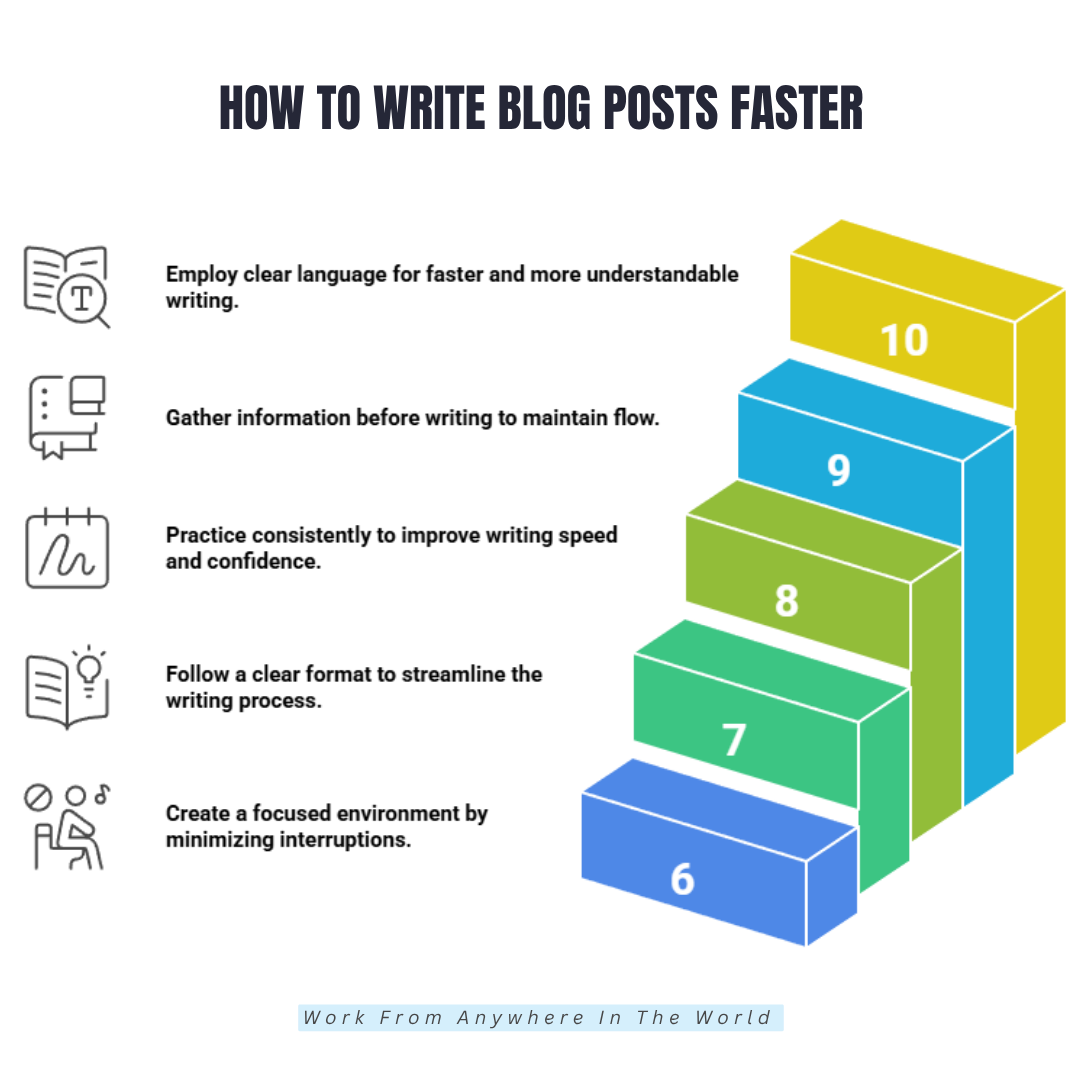
11. Create A Simple Writing Routine
Having a simple writing routine can make blog writing feel more manageable. When writing becomes part of a regular schedule, it may feel easier to get started and stay focused.
A routine does not need to be complicated. Even setting aside a small amount of time regularly can help build momentum and make writing feel more natural.
Simple routine ideas might include:
- Writing for 20–30 minutes in the morning
- Writing after finishing daily tasks
- Setting aside quiet time in the evening
- Choosing a regular time that fits your schedule
Why a routine may help:
- Writing can feel easier to start
- There may be less time spent procrastinating
- Focus can improve
- Writing habits may feel more consistent over time
The goal is not to follow a perfect schedule but to create a routine that feels realistic and easy to maintain.
12. Focus On One Blog Post At A Time
Switching between multiple blog posts can sometimes make writing feel slower and less organized. Moving between different topics may interrupt focus and make it harder to stay in a writing flow.
Focusing on one blog post at a time can make the process feel more manageable. Finishing one piece before starting another may also help build momentum and a sense of progress.
A simple approach might look like this:
- Choose one blog topic
- Finish the outline first
- Complete the first draft
- Edit and review the post
- Move on to the next blog post
Benefits of focusing on one blog post:
- Writing may feel more organized
- Focus can improve
- There may be less confusion between topics
- More blog posts may get completed
The goal is not perfection but steady progress. Focusing on one task at a time can often make writing feel simpler and less overwhelming.
13. Separate Writing From Editing
Writing and editing are two different tasks. Trying to do both at the same time can slow down the writing process and interrupt your flow of ideas.
During the first draft, focus only on getting ideas onto the page. Once the blog post is finished, return to improve grammar, wording, and readability.
A simple editing process might look like this:
- Finish the first draft
- Review the content for clarity
- Fix grammar and spelling mistakes
- Make small improvements to wording
Why this approach may help:
- Writing often feels smoother
- Editing can feel more manageable
- Focus may improve during drafting
- Blog posts may feel easier to finish
Separating writing from editing can help make blogging feel faster and less overwhelming.
14. Reusable Templates For Many Posts
Using a blog template can make writing feel faster and more organized. Instead of starting from scratch each time, a template gives you a familiar format to follow.
Templates can help reduce decision-making and make it easier to stay focused on writing. Many bloggers use a simple framework repeatedly because it saves time and keeps content consistent.
A simple blog template might include:
- Title
- Introduction
- Main sections or tips
- Examples or explanations
- Conclusion
Why templates may help:
- Writing often feels more organized
- There may be less time spent planning
- Blog posts can feel easier to complete
- Writing may feel less overwhelming
You do not need a complicated system. Even a simple template can make blog writing feel smoother over time.
15. Do Not Wait For Motivation
Waiting to feel fully motivated can sometimes make it harder to start writing. Many bloggers find that ideas flow more naturally once they start writing, even if they begin with only a few simple sentences.
Getting started does not have to feel perfect. Small steps can help build momentum and make writing feel easier over time.
Simple ways to begin:
- Start writing even if you do not feel fully ready
- Begin with a few simple sentences
- Avoid overthinking the first draft
- Focus on making progress, not perfection
Why this may help:
- Ideas can begin flowing more naturally
- Writing may feel easier to continue
- Confidence often grows with practice
- Writing habits can become more consistent over time
Sometimes, starting is the hardest part. A small step forward can make writing feel much more manageable.
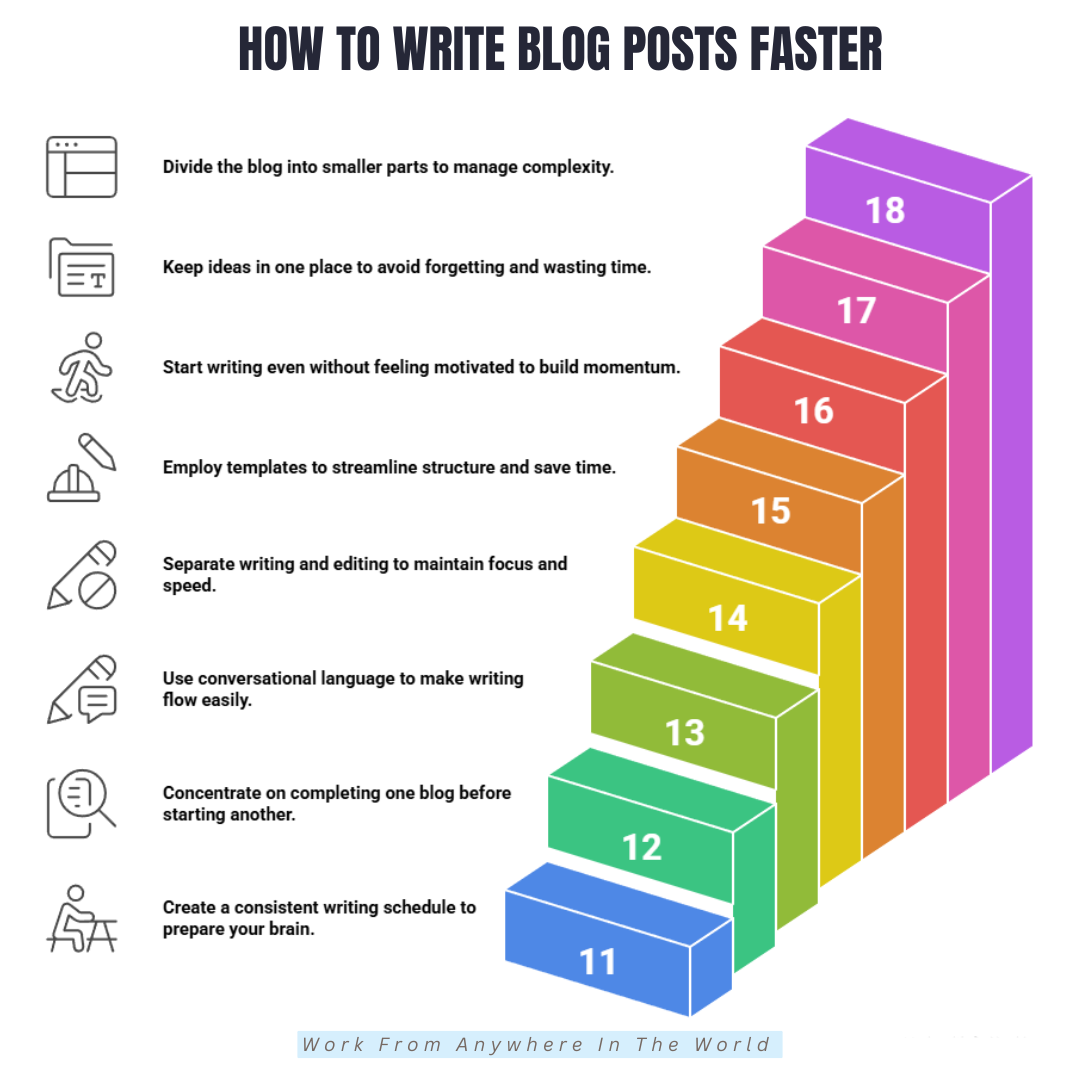
16. Keep Your Ideas In One Place
Writing can feel slower when ideas are scattered or difficult to remember. Keeping blog ideas in one place can make it easier to start writing and reduce the time spent thinking about topics.
A simple system can help you stay organized. Whether you prefer a notebook, a phone app, or a digital document, the goal is to have one place where ideas are easy to find later.
Simple ways to organize ideas:
- Keep a dedicated writing notebook
- Use a notes app on your phone
- Save blog title ideas as they come to mind
- Write down useful thoughts or inspiration
Why this may help:
- Ideas are easier to remember
- Writing can feel more organized
- Starting a blog post may feel easier
- There may be less time spent searching for ideas
Keeping ideas organized can make blog writing feel smoother and more manageable over time.
FAQs
1. Can I Write Faster Without Losing Quality?
Yes, writing faster does not mean sacrificing quality. Many bloggers improve speed by using simple systems, such as choosing familiar topics, creating outlines, and separating writing from editing.
Focusing on clear ideas, short sentences, and simple structure can also make blog posts easier to write and easier for readers to follow. Over time, regular practice often improves both writing speed and confidence.
2. How Can I Avoid Distractions While Writing?
Reducing distractions can make writing feel easier and more focused. Simple habits, such as turning off phone notifications, closing unnecessary browser tabs, and choosing a quiet place to work, may help improve concentration.
Even a short period of focused writing can sometimes feel more productive than spending hours switching between distractions. Creating a calm writing environment may also help ideas flow more naturally and make blog writing feel less stressful.
3. Does Daily Practice Help Writing Speed?
Regular writing practice can help improve writing speed over time. Even short writing sessions, such as 10–15 minutes a day, may help ideas flow more naturally and make blog writing feel easier.
Writing regularly can also build confidence and make it easier to organize thoughts while creating content. You do not need to write a full blog post every day — small, consistent practice can still make a noticeable difference over time.
Conclusion
Learning how to write blog posts faster is not about rushing or lowering quality. It is about finding simple systems that make writing feel easier, more organized, and less overwhelming.
Choosing familiar topics, creating outlines, reducing distractions, and building a simple writing routine can all help make the blogging process smoother over time. Small habits often lead to steady improvements.
The more regularly you write, the more natural the process may begin to feel. With patience and consistent practice, writing blog posts can become faster, easier, and more enjoyable.
I trust you enjoyed this article on How To Write Blog Posts Faster. Please stay tuned for more insightful blogs on affiliate marketing, online business, and working from anywhere in the world.
Take care!
— JeannetteZ 🌍✨
💬 Your Opinion Is Important To Me
Do you have thoughts, ideas, or questions? I’d love to hear from you. Please leave your comments below or email me directly at Jeannette@WorkFromAnywhereInTheWorld.com.
📚 More Work From Anywhere Reads
🚀 Ready to Build a Business You Can Run from Home
Or from Anywhere in the World?
Imagine creating income on your terms — from home, a cozy café, or wherever life takes you.
With the right tools, training, and community support, it’s entirely possible.
Start your own online business for free — no credit card needed.
Disclosure
This post may contain affiliate links. As an Amazon Associate and participant in other affiliate programs, I earn from qualifying purchases at no extra cost to you. Please read my full affiliate disclosure.