

Best Instagram Hashtag Strategies: 14 Easy Steps
Instagram Hashtag Strategies can determine whether your content gains traction or gets lost in the feed. Hashtags are not just decorative additions.
They are powerful tools for increasing visibility, attracting the right audience, and strengthening your brand presence. The key is using them strategically. In this guide, you’ll discover the best Instagram hashtag strategies broken down into 14 easy, actionable steps.
From choosing effective tags to creating branded hashtags, you’ll learn exactly how to build a system that drives consistent growth. By the end, you’ll have a clear plan you can implement immediately.
Why Hashtags Matter On Instagram
Hashtags on Instagram are more than just words with a “#” in front. They act as discovery tools that connect your content with people who care about it. Without hashtags, your posts mostly reach only your followers.
With them, you can appear in search results, explore pages, and niche communities. That means your content can reach users who have never heard of your brand before.
Instagram allows up to 30 hashtags per post, but relevance matters more than quantity. Using highly targeted hashtags helps you connect with users who are actually interested in your content.
For example, a vegan food creator using #PlantBasedRecipes or #VeganDesserts is more likely to attract people who want that content than just using broad hashtags like #Food or #Yummy.
Hashtags also help categorize your posts. When someone clicks on a hashtag, they see a feed of all posts using it. This is why choosing the right mix of trending, niche, and branded hashtags is important.
Trending hashtags can give your content a quick spike in views, while niche hashtags help you build a loyal audience. Branded hashtags encourage followers to engage and share content, creating a sense of community around your brand.
Moreover, hashtags work beyond feed posts. They are effective in Instagram Stories and Reels, increasing discoverability across multiple features.
By using hashtags strategically, you amplify your reach, grow your following, and increase engagement, turning Instagram from a simple social app into a powerful marketing tool.
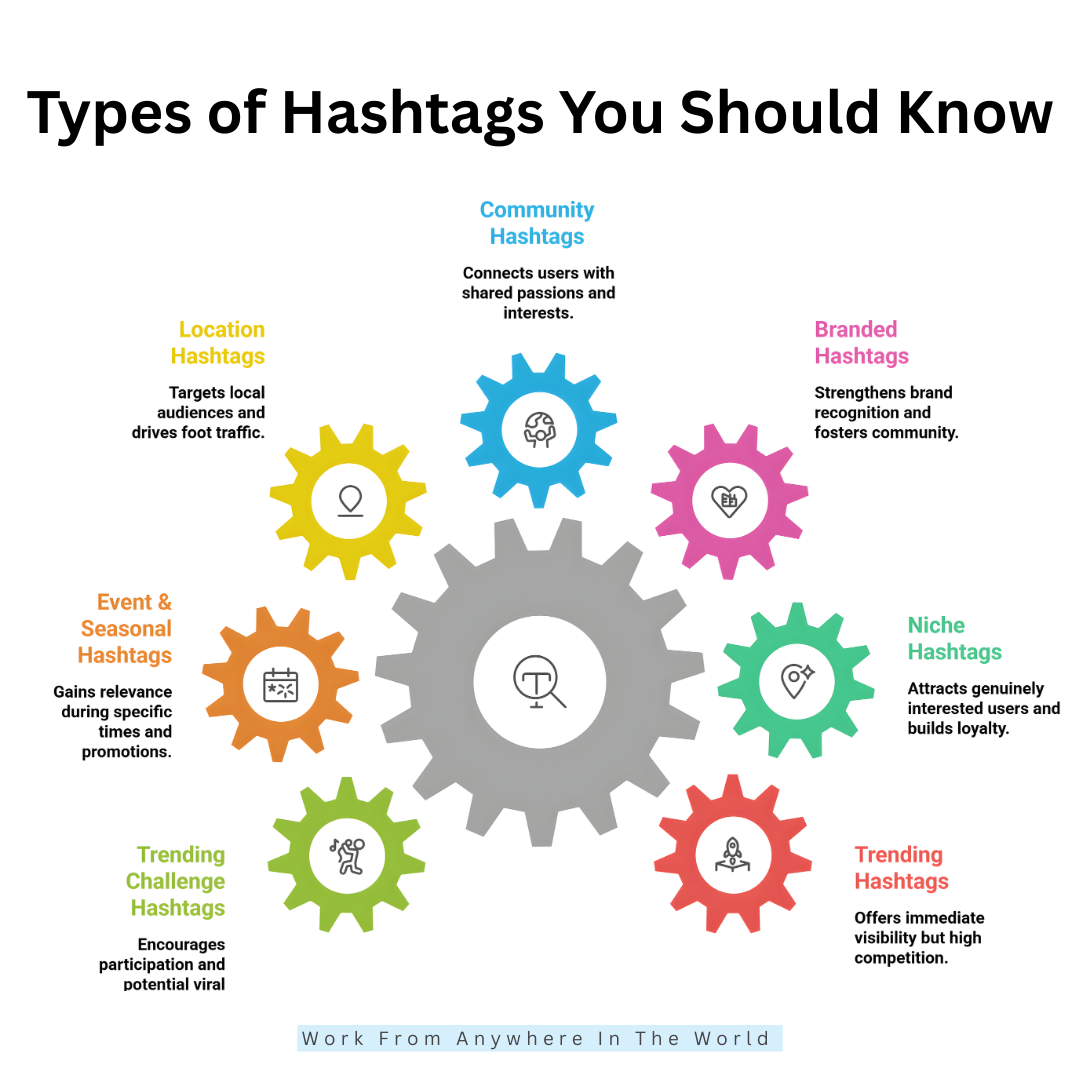
Types Of Hashtags You Should Know
Not all hashtags serve the same purpose. Understanding types helps you target the right audience.
1. Trending Hashtags
Trending hashtags are the most popular and widely searched at a given moment. They can give your posts immediate visibility and quick spikes in engagement.
However, they are highly competitive, so your content may get buried fast. Timing is essential, and relevance to your post is key to success.
2. Niche Hashtags
Niche hashtags are tailored to specific industries, hobbies, or audience segments. They usually have fewer posts, but they attract users who are genuinely interested in your content.
For example, a vegan chef might use #PlantBasedRecipes or #VeganMealPrep. Niche hashtags help you build a loyal, engaged community over time.
3. Branded Hashtags
Branded hashtags are unique to your brand, product, or campaign. They encourage followers to tag their content, creating user-generated content and community engagement.
Examples include #NikeRunClub or #StarbucksRedCup. They strengthen brand recognition, foster loyalty, and make it easier to track brand-related content.
4. Community Hashtags
Community hashtags connect people with shared passions, interests, or lifestyles. Examples include #Bookstagram for book lovers or #PetLovers for pet enthusiasts.
Using these hashtags positions your content within a group rather than just a feed, making it more likely to engage active, invested users in that community.
5. Location Hashtags
Location hashtags target users in specific areas, cities, or regions. Local businesses, events, and travel content benefit from tags like #NYCFoodies or #LondonCoffee.
These hashtags make your posts discoverable to nearby people and help you attract a local audience, driving foot traffic, event attendance, and local engagement.
6. Event & Seasonal Hashtags
These hashtags are tied to holidays, events, or seasons. Examples include #EarthDay, #HalloweenDecor, or #SummerVibes.
They help your content gain relevance during specific times and can attract users looking for timely, seasonal posts. They’re great for campaigns and limited-time promotions.
7. Trending Challenge Hashtags
Popular on Reels and in TikTok-inspired trends, challenge hashtags such as #DanceChallenge or #PhotoChallenge encourage participation.
Users actively search for and contribute to these hashtags, giving your content potential viral exposure. They combine fun, engagement, and discoverability for wider reach.
Instagram Hashtag Strategies
Step 1: Define Your Goals
Before choosing hashtags, know your goal. Are you trying to grow followers, increase engagement, drive website traffic, or build a community? Each goal needs a different approach.
For example, to drive engagement, use hashtags that resonate with your target audience. If your focus is traffic, include hashtags that attract users likely to click your link. Brand awareness may need trending or broad hashtags.
Community building works best with niche or branded hashtags. Clear goals help you select the right hashtags, save time, and get measurable results. Strategy always starts with intention.
Pro Tips
- Focus on one goal at a time.
- Align hashtags with audience intent.
- Track results to refine strategy.
- Avoid irrelevant trending hashtags.
Step 2: Mix Hashtag Types
Don’t rely on just one kind of hashtag. Use a mix for maximum reach. Combine trending, niche, branded, community, and location hashtags. Trending hashtags give quick exposure but are competitive.
Niche hashtags target users genuinely interested in your content. Branded hashtags build your identity and encourage user-generated content. Community hashtags connect you with like-minded audiences.
Location hashtags help local users discover you. Mixing types ensures your post reaches new users, engages your community, and reinforces your brand. Variety keeps your content visible in multiple streams. Always balance reach and relevance.
Pro Tips
- Include 3–5 hashtags per type.
- Rotate hashtag types per post.
- Focus on relevance over popularity.
- Combine broad and niche hashtags.
Step 3: Research Competitors
Check what hashtags your competitors use. Look at the top accounts in your niche. Note which hashtags get high engagement and visibility. Don’t copy unthinkingly. Adapt hashtags that fit your brand and content.
Pay attention to both popular and niche tags. See which posts attract comments, shares, and saves. Competitor research helps you discover hashtags you may have missed. It also shows industry trends.
By studying others, you can refine your strategy, reach the right audience, and avoid mistakes. Research is ongoing; keep updating your hashtag list regularly.
Pro Tips
- Track 3–5 top competitors weekly.
- Note hashtags with high engagement rates.
- Focus on niche over generic tags.
- Adapt, don’t unthinkingly copy hashtags.
Step 4: Create Branded Hashtags
Branded hashtags are unique to your brand or campaign. They help users easily easily identify and share your content—for example, #NikeRunClub or #StarbucksRedCup.
Branded hashtags encourage followers to post user-generated content, building a community around your brand. They also make tracking engagement easier. Promote your branded hashtag in captions, stories, and even offline materials.
Keep it short, memorable, and relevant to your brand. Encourage followers to use it regularly. Over time, a branded hashtag can become a recognizable part of your marketing strategy and strengthen your brand identity.
Pro Tips
- Keep it short and memorable.
- Make it relevant to your brand.
- Encourage user-generated content.
- Promote across all channels.

Step 5: Use Niche Hashtags
Niche hashtags target a specific audience interested in your content. They usually have fewer posts than broad hashtags, so your content stays visible longer.
For example, a vegan baker could use #VeganDesserts or #PlantBasedBaking instead of just #Food. Niche hashtags attract users who are more likely to engage with your posts. They help you build a loyal community around your brand.
Combining niche hashtags with trending or broad hashtags increases reach and engagement. Always use hashtags relevant to your post to maintain credibility and reach the right audience.
Pro Tips
- Focus on 5–10 highly targeted hashtags.
- Combine niche with trending hashtags.
- Monitor niche performance regularly.
- Avoid irrelevant or overly broad tags.
Step 6: Rotate Hashtags
Avoid using the same hashtags on every post. Instagram favours variation. Rotating hashtags reduces spammy signals and improves reach.
Create multiple hashtag sets for different types of content—for example, separate sets for feed posts, reels, and stories. Change a few hashtags per post while keeping top-performing ones.
This strategy keeps content fresh and helps you reach new audiences. Regular rotation also allows testing which hashtags work best for engagement, impressions, and follower growth. Think of it as refreshing your reach for every post to maximize discoverability.
Pro Tips
- Create 3–5 hashtag sets.
- Change hashtags per post type.
- Keep high-performing tags consistent.
- Test new hashtags regularly.
Wealthy Affiliate – Mini Review (2025)
If you’ve ever thought about turning your blog, passion, or niche into an online business,
Wealthy Affiliate (WA) is one of the most beginner-friendly platforms I’ve used.
It combines step-by-step training, website hosting, SEO research tools,
and an active community all in one place.
What I like most: you can start free (no credit card needed),
explore lessons, test the tools, and connect with other entrepreneurs
before upgrading. WA isn’t a “get rich quick” scheme — it’s a platform where success comes
from consistent effort and applying what you learn.
Step 7: Limit Quantity
Using all 30 hashtags isn’t always effective. Quality and relevance matter more than quantity. Focus on 5–15 highly targeted hashtags per post. Too many hashtags can look spammy and reduce engagement.
Fewer, more relevant hashtags help Instagram better understand your content. Prioritize hashtags that align with your goals and audience. A smaller, targeted set also improves readability for users.
Remember, the right hashtags can outperform a long list of irrelevant ones. This approach balances reach with credibility, ensuring your posts are discoverable by the right people without overwhelming the caption.
Pro Tips
- Stick to 5–15 relevant tags.
- Prioritize quality over quantity.
- Avoid filler hashtags.
- Keep captions visually clean.
Step 8: Target Local Audiences
Location hashtags are powerful for local businesses and events. Tags such as #NYCFoodies or #LondonFitness attract nearby users. They increase local visibility, foot traffic, or event attendance.
Combining location hashtags with niche or branded hashtags provides broader reach and relevance. Encourage customers to tag your location and hashtag. Local hashtags also help build a community within your city or region.
Monitoring local hashtag performance ensures your posts reach the right audience. For small businesses, this strategy is often more effective than broad, global hashtags.
Pro Tips
- Use city-specific hashtags.
- Combine with niche tags.
- Encourage customer tagging.
- Track local engagement regularly.

Step 9: Include Hashtags In Stories
Hashtags aren’t just for feed posts—they work in Stories too. Use hashtag stickers or add text hashtags. One clickable sticker per story is enough to boost discoverability.
Use trending, niche, or location hashtags relevant to your story. Hashtags help new users find your content beyond followers. They also make your Stories searchable.
You can mix stickers with text hashtags for extra reach. Stories often reach different audiences than feed posts, so hashtags expand visibility across Instagram’s features. Don’t forget to rotate hashtags here as well.
Pro Tips
- Use one clickable sticker per Story.
- Add relevant text hashtags.
- Rotate hashtags weekly.
- Combine trending and niche tags.
Step 10: Follow Trending Hashtags Carefully
Trending hashtags provide quick exposure but must be relevant. Using unrelated trending tags can come across as spammy and undermine credibility. Monitor trends in your niche for timely content opportunities.
Use trending hashtags alongside niche and branded ones. Timing is critical—posting too late may bury your content. Analyze which trending tags boost reach without diluting your brand.
Avoid overloading posts with only trending hashtags. Relevance and context matter more than popularity. Well-timed trending hashtags can quickly increase engagement and make your content visible to a wider audience.
Pro Tips
- Only use relevant trends.
- Post early for maximum reach.
- Combine with niche hashtags.
- Avoid irrelevant viral tags.
Step 11: Combine Short & Long-Tail Hashtags
Short hashtags (#Food) are popular but highly competitive. Long-tail hashtags (#VeganDessertRecipes) are niche and more targeted. Using both balance and relevance.
Short hashtags provide broad exposure; long-tail hashtags attract engaged audiences—testcombinations to see which generate impressions and interactions. Mix hashtags with high, medium, and low post counts for better performance.
Long-tail hashtags improve discoverability without getting lost in competition. This strategy ensures your content reaches both casual browsers and targeted followers, maximizing engagement across multiple user groups.
Pro Tips
- Mix high and low competition tags.
- Include 3–5 long-tail hashtags.
- Test combinations weekly.
- Track engagement per tag type.
Step 12: Avoid Banned Or Spammy Hashtags
Some hashtags are banned or flagged as spam by Instagram. Using them reduces visibility or limits reach. Always check before posting. Avoid irrelevant, overused, or misleading hashtags. Stick to tags that reflect your content and brand.
Monitoring hashtag status ensures posts reach your audience. Regular checks prevent account penalties. Using safe, relevant hashtags helps keep your content discoverable while maintaining credibility.
Awareness of banned or spammy tags helps protect your strategy and supports long-term growth. Clean, targeted hashtags perform better and foster trust with followers.
Pro Tips
- Check banned hashtags regularly.
- Avoid irrelevant trending tags.
- Stick to relevant hashtags only.
- Monitor performance for safety.

Step 13: Update Hashtag Lists Regularly
Instagram trends and audiences change. Update your hashtags monthly or quarterly. Remove banned or low-performing hashtags. Add trending or new niche hashtags to stay relevant.
Regular updates prevent stagnation and improve discoverability. Use Insights to see what works and refine lists. Refreshing your hashtags helps ensure your content consistently reaches the right audience.
Treat your hashtag list like an evolving strategy, not a fixed set. Active management keeps your posts visible, competitive, and effective as your account grows.
Pro Tips
- Refresh hashtags monthly.
- Remove banned hashtags immediately.
- Add trending tags regularly.
- Use Insights for updates.
Step 14: Test & Analyze
Experiment with different hashtag sets for feed posts, Stories, and Reels. —track which combinations drive the most impressions, engagement, and followers.
Testing helps identify what resonates with your audience. Adjust hashtags based on post type, content, or campaign goals. Avoid assuming what works—let data guide decisions.
Over time, testing reveals top-performing hashtags for each niche and content style. Analysis also helps avoid wasted space on ineffective tags.
Testing and analyzing create a data-driven approach that improves engagement and ensures your Instagram hashtag strategy delivers consistent results.
Pro Tips
- Test sets per content type.
- Track engagement and reach.
- Adjust based on performance.
- Avoid repeating ineffective hashtags.
FAQs
Q1: How Many Hashtags Should I Use Per Post?
Use 5–15 highly relevant hashtags. Quality beats quantity.
Q2: Can I Use The Same Hashtags Repeatedly?
No. Rotate hashtags to avoid spam signals and boost reach.
Q3: Do Hashtags Work In Stories And Reels?
Yes. Hashtags in stickers or text increase discoverability.
Q4: What Are Branded Hashtags?
Unique hashtags for your brand or campaigns, encouraging user-generated content.
Q5: Should I Use Trending Hashtags?
Only if relevant. They provide quick exposure, but can bury your post quickly.
Q6: How Do I Track Hashtag Performance?
Use Instagram Insights or tools like Later and Sprout Social.
Q7: Can Location Hashtags Help My Business?
Yes. They attract local users and boost local engagement.
Q8: Are Banned Hashtags Harmful?
Yes. Using them can limit visibility or reduce post reach.
Q9: Should I Mix Broad And Niche Hashtags?
Absolutely. Broad hashtags increase reach; niche hashtags attract engaged followers.
Q10: How Often Should I Update My Hashtag List?
Refresh monthly or quarterly to stay relevant and effective.
Conclusion
Hashtags are more than just tags—they are powerful tools to grow your reach, engagement, and community on Instagram. A smart strategy combines trending, niche, branded, and location hashtags with clear goals. Rotate hashtags, monitor performance, and stay relevant to maximize results. Testing and analysis help you refine your approach over time. By using hashtags thoughtfully, you can connect with the right audience, increase visibility, and turn Instagram into a growth engine for your brand.
I trust you enjoyed this article on the [Blog Post Title]. Please stay tuned for more insightful blogs on affiliate marketing, online business, and working from anywhere in the world.
Take care!
— JeannetteZ 🌍✨
💬 Your Opinion Is Important To Me
Do you have thoughts, ideas, or questions? I’d love to hear from you. Please leave your comments below or email me directly at Jeannette@WorkFromAnywhereInTheWorld.com.
📚 More Work From Anywhere Reads
🚀 Ready to Build a Business You Can Run from Home
Or from Anywhere in the World?
Imagine creating income on your terms — from home, a cozy café, or wherever life takes you.
With the right tools, training, and community support, it’s entirely possible.
Start your own online business for free — no credit card needed.
Disclosure
This post may contain affiliate links. As an Amazon Associate and participant in other affiliate programs, I earn from qualifying purchases at no extra cost to you. Please read my full affiliate disclosure.