

15 Best Twitter Tips For Beginners
Twitter can feel overwhelming when you're just starting. The feed moves fast, trends change quickly, and it's hard to know what actually works.
But growing on Twitter doesn't require luck or thousands of followers. It requires clarity, consistency, and smart engagement.
Regardless of your level of experience, these Twitter beginner guidelines can help you expand your following and interact with users more successfully.
Why Twitter Still Matters Today
Despite challenges and shifting social media trends, Twitter (rebranded as X) remains an important platform for users and businesses today due to its ongoing global reach, engagement, and revenue potential.
The platform still attracts around 610–611 million monthly active users worldwide, with between 237 million and 250 million daily users spending roughly 30 + minutes a day engaging with content — figures that keep it among the larger social networks globally.
For businesses, advertising remains central: ads account for about 68% of X’s revenue, and its global ad reach covers over 550 million people, making it a valuable channel for campaigns.
While ad revenue dipped compared with earlier years, projections showed growth in 2025, with total revenue nearing $3 billion, driven by ads, subscriptions, and creator monetization.
Brands and marketers continue to use the platform because nearly 38 % of users research products there, and many follow brands for updates, keeping Twitter relevant for engagement, customer support, and real-time communication.
Twitter Tips For Beginners
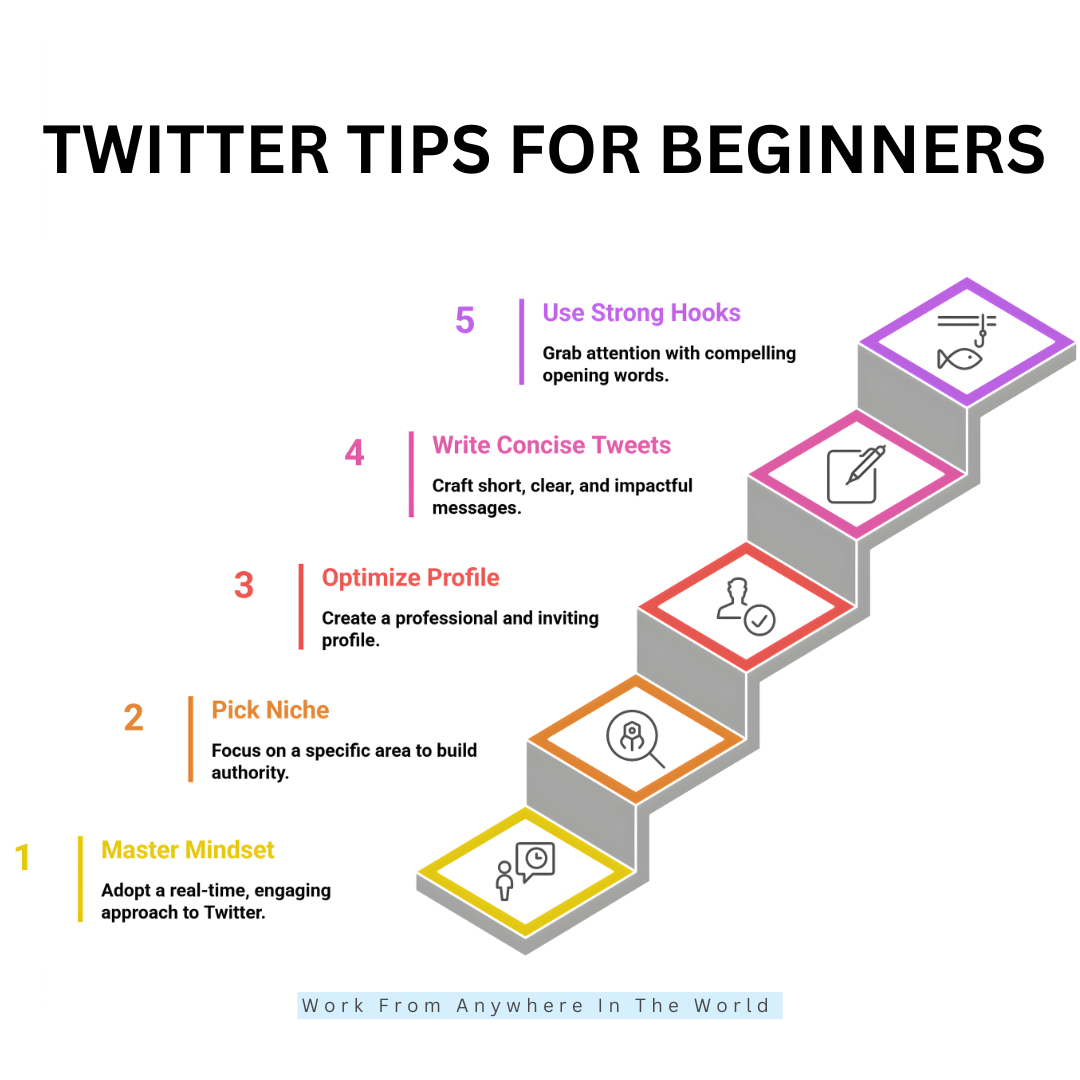
Tip 1: Master The Twitter Mindset
Twitter moves fast. Really fast. Trends appear and disappear within hours. To succeed, you must think in real-time. Don't expect your posts to linger like on Instagram or LinkedIn.
Twitter rewards clarity, brevity, and engagement. The mindset shift is key: focus on ideas, not perfection. Participate in conversations. Reply, share insights, and be present.
Observe what works, learn from it, and adapt quickly. The faster you understand the rhythm, the sooner your content will get noticed. Treat Twitter as a dynamic discussion, not a static feed.
Quick Action Steps
- Read trending topics daily.
- Reply to three posts daily.
- Observe top accounts' posting style.
- Note what sparks high engagement.
Tip 2: Pick A Laser-Focused Niche
Beginners often make the mistake of being “everything to everyone.” Don't. A clear niche helps people know exactly what to expect. It makes your profile memorable. It also attracts the right followers who care about your content.
Whether it's marketing tips, fitness, freelancing, or tech insights, focus on one primary area. You can add a secondary topic later. Being consistent builds authority faster than posting random content.
This is one of the most important Twitter tips for beginners because choosing a clear niche helps attract the right audience and build authority faster.
Quick Action Steps
- Choose one main topic focus.
- Define your ideal audience clearly.
- List 5 subtopics to cover.
- Review niche relevance weekly.
Tip 3: Optimize Your Profile First
Your profile is your Twitter landing page. It's the first thing people notice. A clear, professional profile builds trust immediately. Start with a bright, recognizable profile picture—ideally your face.
Use a header image that reflects your niche or brand. Craft a bio that explains who you help and how, in simple words. Add a pinned tweet that showcases your best content or introduces yourself.
Every element should answer one question: “Why should I follow this account?” A polished profile increases clicks, follows, and engagement.
Quick Action Steps
- Upload a clear profile photo.
- Design a niche-relevant header image.
- Write a concise, benefit-driven bio.
- Pin your top-performing tweet.
Tip 4: Write Clear And Concise Tweets
On Twitter, less is more. Long, complicated sentences get skipped. Your tweets should be short, clear, and easy to scan. Break ideas into multiple tweets if needed. Use line breaks or emojis to separate points.
Focus on one idea per tweet. Avoid jargon or complicated words. Imagine you're explaining your idea to a friend. The clearer your message, the higher the engagement.
People scroll fast; if they can't understand quickly, they'll move on. Writing concise tweets is a skill that improves with practice and observation.
Quick Action Steps
- Limit each tweet to one idea.
- Use short sentences under 20 words.
- Add line breaks or bullets for clarity.
- Replace jargon with simple words.
Tip 5: Use Strong Hooks
The first few words decide if someone reads your tweet. Weak openings get ignored. Strong hooks spark curiosity, emotion, or surprise. Ask questions, share bold statements, or challenge assumptions.
For example, instead of “Today I’ll share marketing tips,” say “Most beginners waste months on this marketing mistake.” Hooks make people stop scrolling. Combine a hook with concise content for maximum impact.
Even small adjustments in phrasing can boost engagement. Test different styles, analyze what works, and refine your hooks over time. Hook mastery is key to visibility and reach on Twitter.
Quick Action Steps
- Start tweets with curiosity or surprise
- Ask questions your audience cares about
- Test bold or controversial statements
- Track which hooks get the most engagement
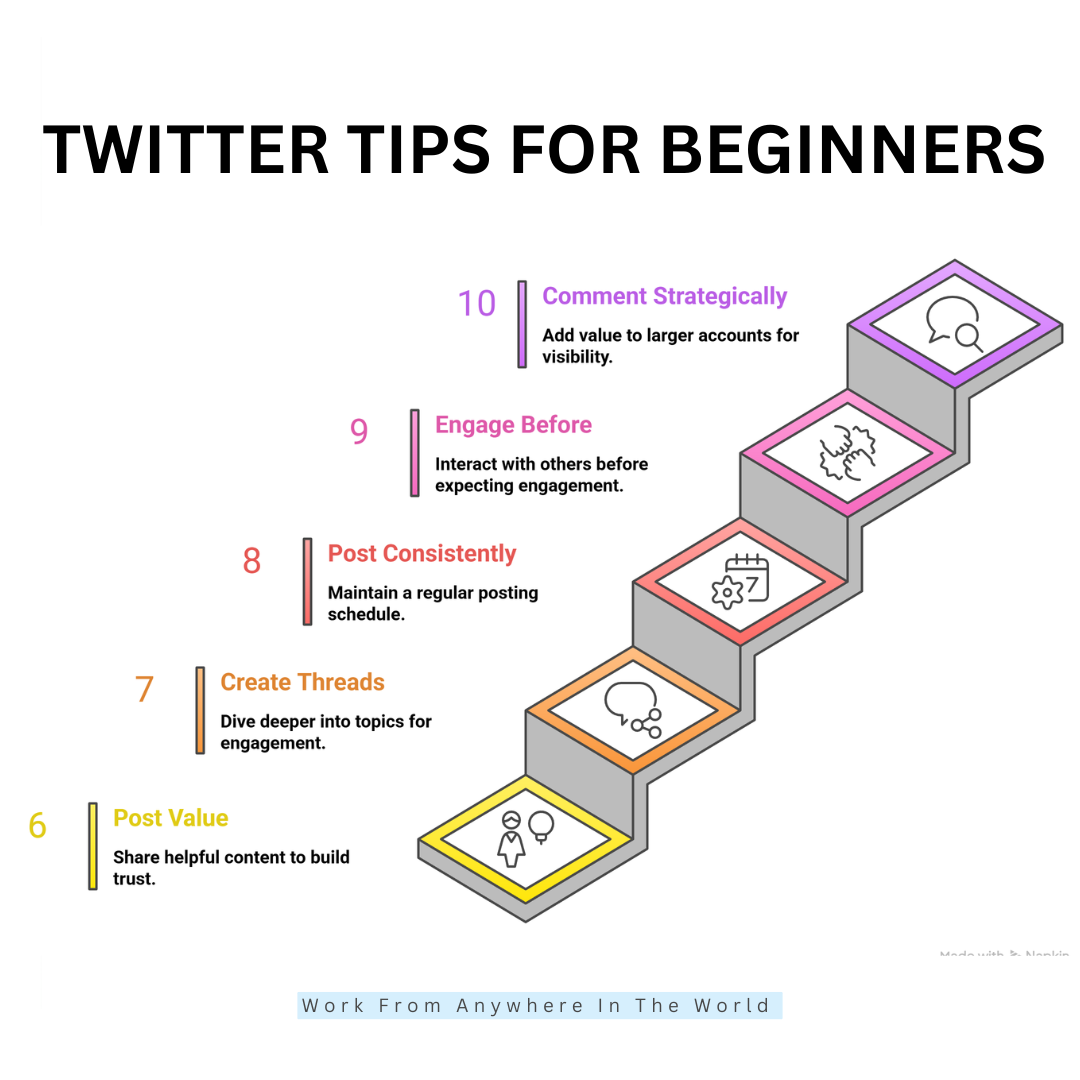
Tip 6: Start Posting Value-Based Content
Beginners often post promotions too soon. The key to growth is value first. Share tips, insights, tutorials, or advice your audience can use immediately. Educational tweets, mini-guides, and actionable steps perform best.
Help solves problems, builds trust, and encourages engagement. When people feel your content benefits them, they are more likely to follow, retweet, and comment. Avoid generic or vague statements; specificity matters.
Over time, consistent value positions you as an authority in your niche. Focus on teaching, inspiring, or entertaining before thinking about selling or self-promotion.
Quick Action Steps
- Share one helpful tip daily
- Break guides into short tweets
- Include actionable steps or examples
- Focus on solving audience problems
Tip 7: Create Engaging Twitter Threads
Twitter threads let you dive deeper than a single tweet. They allow storytelling, step-by-step guides, or detailed insights. Start with a strong hook, then break your idea into multiple connected tweets. End with a summary or call to action.
Threads keep readers engaged longer, increasing visibility in feeds. Use numbering or emojis to organize each point. Threads also establish authority, showing knowledge and effort.
Even beginners can benefit from simple how-to or personal experience threads. Well-crafted threads often go viral, helping you reach new followers organically and build credibility quickly.
Quick Action Steps
- Start threads with a strong hook
- Break content into multiple tweets
- Number tweets for clarity
- End with a summary or CTA
Tip 8: Post Consistently
Consistency beats random posting. Posting sporadically slows growth and reduces engagement. Set a manageable schedule: one to three tweets daily, plus one or two threads weekly.
Rotate between tips, personal insights, questions, or stories. Consistent posting trains the algorithm and builds audience expectations.
Your profile becomes a reliable source of value. Even small daily efforts compound over weeks. Avoid burnout by planning content.
Use simple content calendars or draft ideas in advance. Momentum comes from repeated presence, not viral luck. The more consistent you are, the more your authority and engagement grow.
Quick Action Steps
- Set a daily posting target
- Schedule threads weekly in advance
- Rotate tweet types for variety
- Plan content with a simple calendar
Tip 9: Engage Before You Expect Engagement
Among the most effective Twitter tips for beginners is learning to engage consistently, because meaningful interaction drives faster growth than posting alone.
Engage with others' content before expecting replies or retweets on your own. Reply to tweets in your niche, add insights, and ask questions. Thoughtful comments attract profile visits and followers.
Avoid generic phrases like “Nice post” or “Agree!” Instead, add perspective, examples, or small tips. Engaging builds relationships and trust faster than broadcasting alone.
Interaction also helps the algorithm surface your profile to active audiences. Beginners who prioritize engagement see faster follower growth and meaningful connections. Consistency in commenting is key.
Quick Action Steps
- Reply to three niche tweets daily
- Add value, not just praise
- Follow accounts relevant to your niche
- Track interactions for growth opportunities
Tip 10: Comment Strategically On Big Accounts
Commenting on larger accounts is a powerful way to gain visibility. When done strategically, your replies are seen by their followers, increasing profile visits.
Focus on adding value, insights, or alternative perspectives. Avoid generic comments or self-promotion. The goal is to demonstrate expertise or thoughtful opinions.
Timing matters: engage early on new posts for maximum visibility. Over time, consistent strategic commenting can attract followers, collaborations, or opportunities.
Think of it as networking in public. Quality comments build credibility and put your profile in front of a relevant, interested audience.
Quick Action Steps
- Identify top accounts in your niche
- Add insightful, original comments
- Engage soon after the post goes live
- Avoid self-promotion in replies
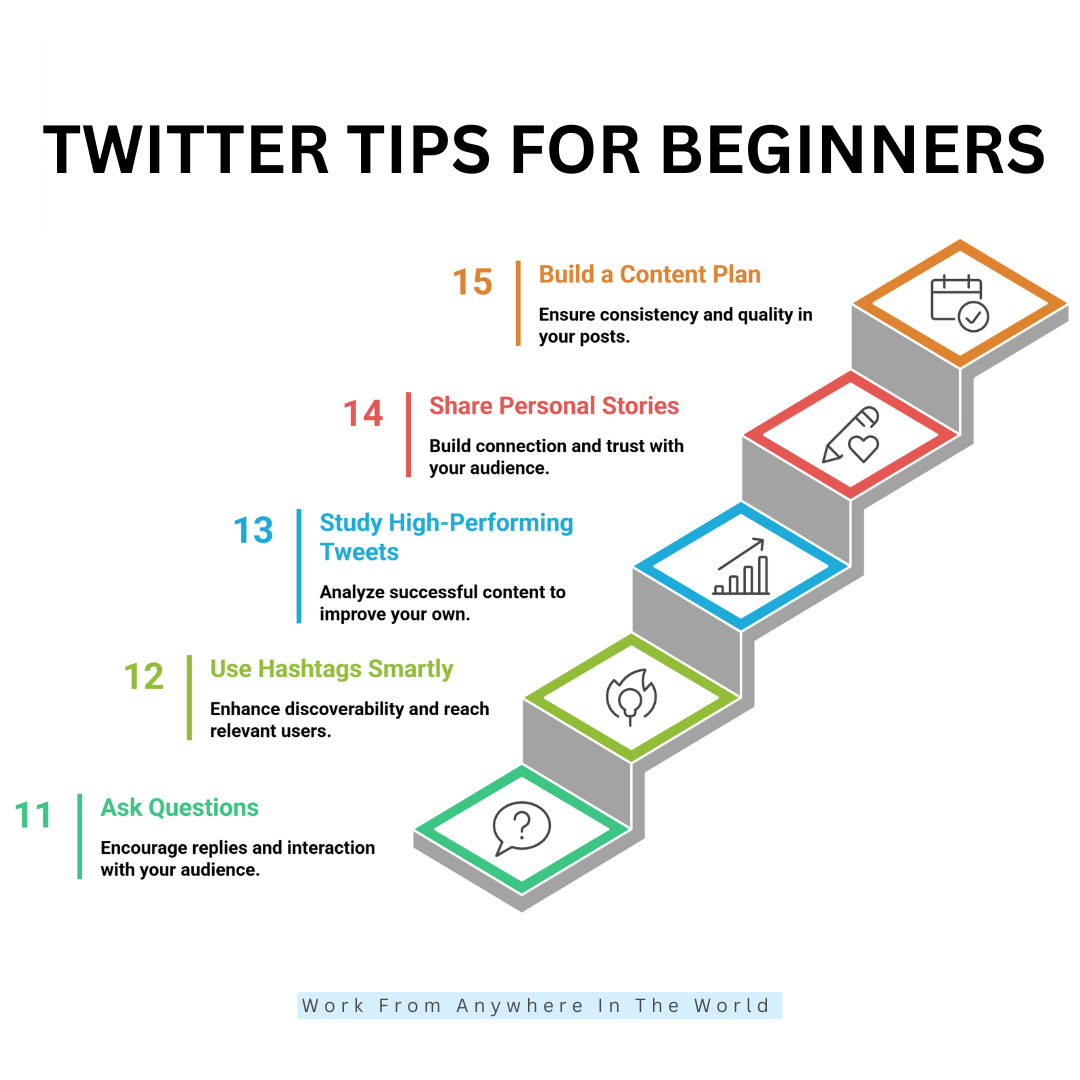
Tip 11: Ask Questions To Increase Replies
Questions naturally invite responses. Instead of statements, ask your audience what they think or need. Examples: “What’s your biggest challenge with marketing?” or “Do you prefer threads or single tweets?”
Relevant questions increase replies, profile visits, and engagement. Avoid generic yes/no questions; aim for curiosity or discussion.
Questions can be simple polls, open-ended prompts, or “choose one” style. The more thoughtful and niche-relevant, the better.
Over time, questions help you understand your audience, tailor content, and build relationships. Engagement grows when people feel heard and encouraged to participate.
Quick Action Steps
- Ask one engaging question daily
- Use polls for quick feedback
- Encourage detailed replies, not just yes/no
- Analyze responses to guide content
Tip 12: Use Hashtags Smartly
One of the smartest Twitter tips for beginners is to use hashtags strategically so your content is discoverable without appearing spammy. Choose one or two relevant, trending, or niche-specific hashtags per tweet.
Avoid generic hashtags that attract spam or unrelated users. Use hashtags in context within sentences to maintain natural flow. Research hashtags your audience follows and engages with.
Hashtags help new users find your content organically. They are especially effective for threads, events, or campaigns. Over time, you can create branded hashtags for your niche.
Smart use of hashtags boosts visibility without looking spammy, helping you attract engaged followers genuinely interested in your content.
Quick Action Steps
- Use 1–2 relevant hashtags per tweet
- Research trending hashtags weekly
- Integrate hashtags naturally in sentences
- Track hashtag performance for engagement
Wealthy Affiliate – Mini Review (2025)
If you’ve ever thought about turning your blog, passion, or niche into an online business,
Wealthy Affiliate (WA) is one of the most beginner-friendly platforms I’ve used.
It combines step-by-step training, website hosting, SEO research tools,
and an active community all in one place.
What I like most: you can start free (no credit card needed),
explore lessons, test the tools, and connect with other entrepreneurs
before upgrading. WA isn’t a “get rich quick” scheme — it’s a platform where success comes
from consistent effort and applying what you learn.
Tip 13: Study High-Performing Tweets
Analyzing popular tweets helps beginners understand what works. Look for patterns in format, tone, length, and content type.
Notice hooks, emojis, and sentence structure. Identify why certain tweets get more likes, replies, or shares. This insight guides your own content creation. Don't copy; adapt and put your voice into ideas.
Observing top accounts in your niche reveals audience preferences and engagement triggers. Over time, studying patterns improves your tweets' performance and strategy.
Continuous observation and iteration are key for beginners aiming to grow consistently and produce content that resonates naturally with followers.
Quick Action Steps
- Track top tweets in your niche
- Note engagement patterns and hooks
- Analyze formatting and tone choices
- Adapt ideas in your own voice
Tip 14: Share Personal Stories
People connect with experiences, not just facts. Sharing your personal wins, struggles, or lessons makes your content relatable.
Short stories or examples of success and failure help followers feel connected. Authenticity builds trust and encourages engagement. Don't overthink perfection; small, real-life insights work best.
Personal stories also humanize your profile, making you more approachable. Over time, consistent storytelling positions you as credible and relatable in your niche.
Stories create emotion, which drives shares and replies. Even beginners can start with one small story per week to gradually strengthen their connection with their audience.
Quick Action Steps
- Share one short story weekly
- Highlight lessons learned or insights
- Keep stories relatable and concise
- Encourage engagement through questions
Tip 15: Build A Simple Content Plan
A clear content plan reduces stress and ensures consistency. Decide how many tweets and threads you'll post each week. Rotate between tips, questions, stories, and engagement posts.
Schedule ideas in advance, even roughly, to avoid last-minute pressure. Content planning helps track which topics resonate with your audience. Beginners benefit from a weekly template, like 1–2 tips, 1 story, 1 poll, and 1 thread.
Planning also allows for adjustments based on analytics. A simple, repeatable plan keeps you consistent, improves quality, and helps grow followers steadily without burnout.
Quick Action Steps
- Draft weekly tweet ideas in advance
- Rotate content types for variety
- Use a simple posting schedule
- Adjust plan based on performance
Trends And Future Of Twitter
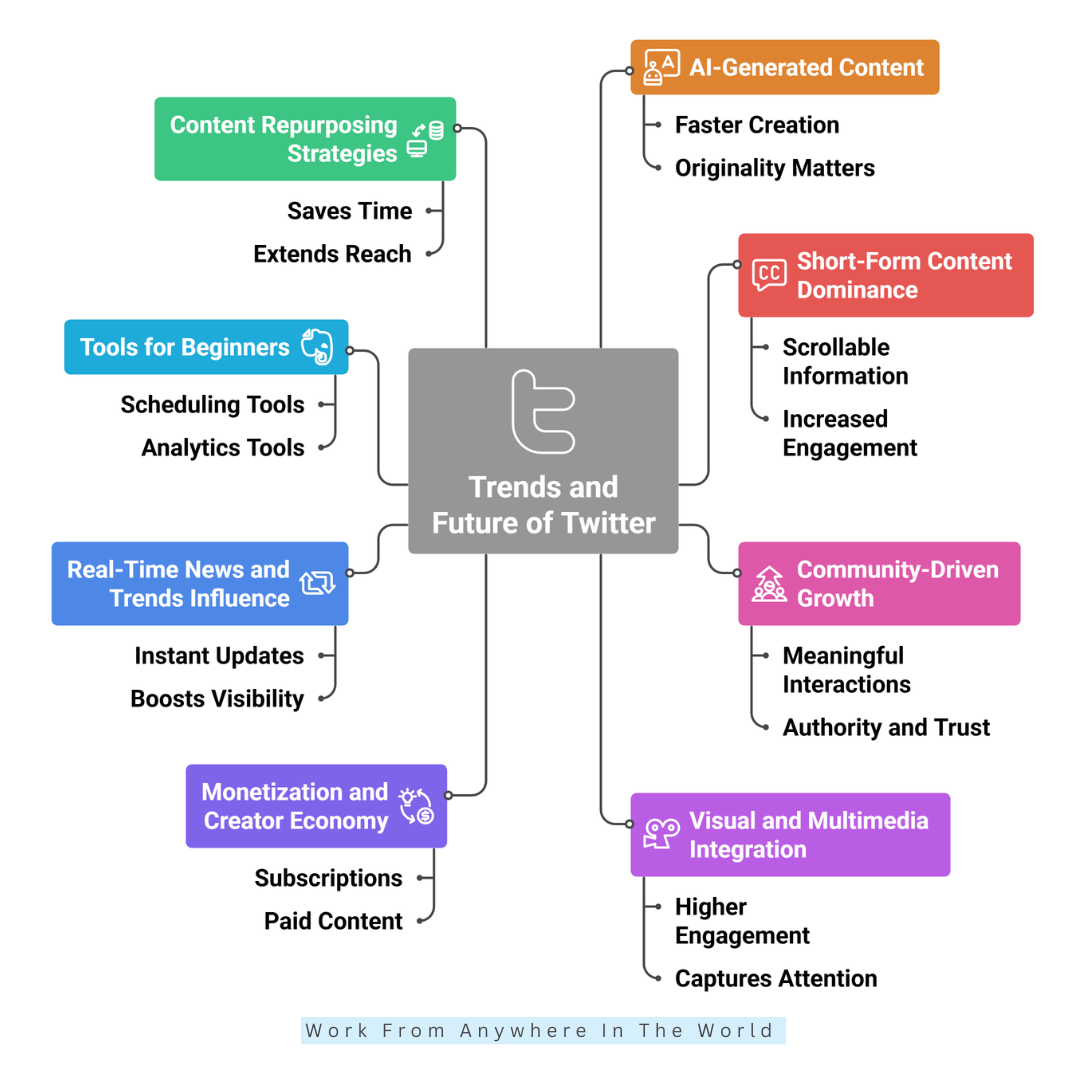
1. Rise Of AI-Generated Content
AI tools are making content creation faster and easier. Tweets, threads, and visuals can be generated quickly. Beginners can experiment with AI to maintain consistency.
However, originality still matters. Audiences value authentic insights over automated posts. AI will complement, not replace, thoughtful engagement on Twitter.
2. Short-Form Content Dominance
Quick, snappy tweets and micro-threads are becoming the most consumable content. Users prefer scrollable, bite-sized information. Short-form content increases engagement and reach.
It works well for tips, news updates, and insights. Creators who master concise messaging will gain an advantage in attention-saturated feeds.
3. Community-Driven Growth
Twitter Spaces, topic-focused chats, and private groups are trending. Communities allow meaningful interactions beyond public tweets.
Beginners can join niche groups to learn, network, and grow organically. Building or participating in communities establishes authority and trust, creating loyal followers rather than random engagement.
4. Visual And Multimedia Integration
Tweets with images, GIFs, charts, or short videos receive higher engagement. Multimedia helps explain ideas more quickly and captures attention.
Beginners should use simple visuals to complement text. Platforms will continue prioritizing rich media content to capture faster-scrolling audiences.
5. Monetization And Creator Economy
Twitter is expanding tools for subscriptions, tips, and paid content. Creators can earn directly from followers. Beginner creators can plan niche-based offers or exclusive content.
Monetization encourages consistent value creation and long-term growth. Understanding these features early prepares users for future opportunities.
6. Real-Time News And Trends Influence
Twitter is still a great place to find breaking news and popular topics. Users rely on it for instant updates. Engaging with trends intelligently can boost visibility.
Creators who respond quickly and add value to trending conversations will gain relevance and exposure.
7. Tools For Beginners
Scheduling tools like Buffer or TweetDeck save time and maintain consistency. Analytics tools track impressions, engagement, and audience behaviour. Thread formatting tools help create readable multi-tweet posts.
Hashtag research platforms identify trending or niche-specific tags. Using these tools strategically boosts efficiency and growth for new users without overwhelming them.
8. Content Repurposing Strategies
Repurposing content saves time and extends reach. Convert a thread into a blog post, or turn blog insights into multiple tweets. Short videos or images can accompany text tweets.
Repurposing ensures consistency and maximizes value from each idea. Beginners benefit by reaching different audience segments without creating content from scratch daily.
9. Common Mistakes To Avoid
Posting too much promotional content reduces engagement. Overusing hashtags looks spammy. Ignoring engagement slows growth. Copying others without adding value hurts authenticity.
Deleting tweets too quickly prevents learning from analytics. Avoiding these mistakes early ensures smoother growth, saves time, and helps beginners focus on building trust and authority effectively.
10. Networking And Collaboration Opportunities
Engaging with influencers and peers can accelerate growth. Comment thoughtfully on popular accounts, join Twitter Spaces, or participate in niche chats. Collaborations can include retweeting, co-hosting threads, or joint events.
Networking builds visibility, credibility, and follower trust. Beginners who actively connect with others see better results than those who post in isolation.
Conclusion
Twitter remains one of the best platforms for building authority, connecting with your audience, and growing a personal or business brand. Beginners who focus on clarity, consistency, and value-driven content see steady results.
Combine smart engagement, strategic posting, and analytics to refine your approach. Growth takes time, but anyone can leverage Twitter's fast-paced environment to acquire followers, establish credibility, and open new opportunities if they are patient and work hard. Start small, stay consistent, and keep learning.
I trust you enjoyed this article on the 15 Best Twitter Tips For Beginners. Please stay tuned for more insightful blogs on affiliate marketing, online business, and working from anywhere in the world.
Take care!
— JeannetteZ 🌍✨
💬 Your Opinion Is Important To Me
Do you have thoughts, ideas, or questions? I’d love to hear from you. Please leave your comments below or email me directly at Jeannette@WorkFromAnywhereInTheWorld.com.
📚 More Work From Anywhere Reads
🚀 Ready to Build a Business You Can Run from Home
Or from Anywhere in the World?
Imagine creating income on your terms — from home, a cozy café, or wherever life takes you.
With the right tools, training, and community support, it’s entirely possible.
Start your own online business for free — no credit card needed.
Disclosure
This post may contain affiliate links. As an Amazon Associate and participant in other affiliate programs, I earn from qualifying purchases at no extra cost to you. Please read my full affiliate disclosure.