BigCommerce vs Magento: Which Platform Is Right For You?
The BigCommerce vs Magento comparison is one many business owners make when choosing an e-commerce platform. The right platform can influence your website's performance, customer experience, and long-term business growth.
Both BigCommerce and Magento are powerful e-commerce solutions, but they are designed for different needs. BigCommerce is known for its ease of use, while Magento offers advanced customization and flexibility.
This comparison explores the strengths and weaknesses of both platforms. It will help you make an informed decision and choose the best solution for your business.
What Is BigCommerce?
BigCommerce is a leading Software-as-a-Service (SaaS) e-commerce platform founded in 2009. It enables businesses to create, manage, and grow online stores without requiring advanced technical skills.
Known for its user-friendly interface, BigCommerce offers responsive themes, built-in SEO tools, secure payment integrations, and inventory management features.
Its hosted solution also eliminates the need to manage servers, software updates, or website maintenance. The platform supports businesses selling physical products, digital downloads, and subscription services.
It also integrates with popular marketplaces such as Amazon, eBay, Facebook, and Instagram, making multi-channel selling simple.
BigCommerce is suitable for businesses of all sizes, from startups to established brands. Its scalability, built-in features, and ease of use make it a popular choice for merchants looking to grow their online business.
What Is Magento?
Magento, now part of Adobe Commerce, is a powerful open-source e-commerce platform launched in 2008. It allows businesses to build highly customized online stores tailored to their specific requirements.
Known for its flexibility, Magento supports businesses of all sizes, from startups to global enterprises. Its scalable architecture makes it a popular choice for companies expecting long-term growth.
Unlike hosted SaaS platforms, Magento requires self-managed hosting and technical expertise for installation, maintenance, and updates. This provides greater control but also requires more time and resources.
Magento includes advanced SEO tools, extensive integration options, multi-store management, and a wide range of customization features. These capabilities make it well-suited for businesses with complex e-commerce requirements.
Magento is available as the free Open Source edition and Adobe Commerce, a premium solution with additional features and support.
A large global developer community continues to enhance the platform, making it a popular choice for businesses operating multiple stores or serving international markets.
Key Features Comparison: BigCommerce vs Magento
Comparing the key features of BigCommerce and Magento can help you choose the platform that best fits your business. Each platform offers unique strengths, making it suitable for different types of online stores.
The following comparison highlights the main differences in ease of use, customization, pricing, scalability, and other essential features. Understanding these differences will help you make a more informed decision.
I wouldn't add much more than this. The detailed comparisons are about to begin, so the introduction should simply prepare the reader rather than repeat what's coming next. It stays short, readable, and follows the 2-line paragraph style we've been using.
1. Ease Of Use
Choosing an easy-to-use e-commerce platform can save time and reduce frustration. BigCommerce and Magento take very different approaches, making this an important factor for businesses with varying levels of technical experience.
BigCommerce
BigCommerce is designed for beginners and business owners with little or no technical experience. Its intuitive dashboard makes it easy to set up, manage, and grow an online store.
The platform handles hosting, software updates, security, and maintenance automatically. This allows you to spend more time managing your business instead of maintaining your website.
As a result, BigCommerce is an excellent choice for entrepreneurs who want a straightforward, all-in-one e-commerce solution.
- Simple interface designed for beginners and non-technical users.
- The platform fully manages hosting, updates, and maintenance.
Magento
Magento offers powerful features but has a much steeper learning curve than BigCommerce. Setting up and maintaining a Magento store typically requires technical knowledge or the assistance of an experienced developer.
Its advanced customization options give businesses complete control over their online store. However, this flexibility comes with greater complexity and ongoing maintenance responsibilities.
Magento is best suited for businesses with dedicated IT teams or access to professional developers.
- Requires technical skills for setup, customization, and ongoing maintenance.
- Ideal for businesses with dedicated IT teams or professional developers.
2. Customization And Flexibility
Customization and flexibility determine how much control you have over your online store. The right platform should provide the features you need today while allowing your business to adapt and grow in the future.
BigCommerce
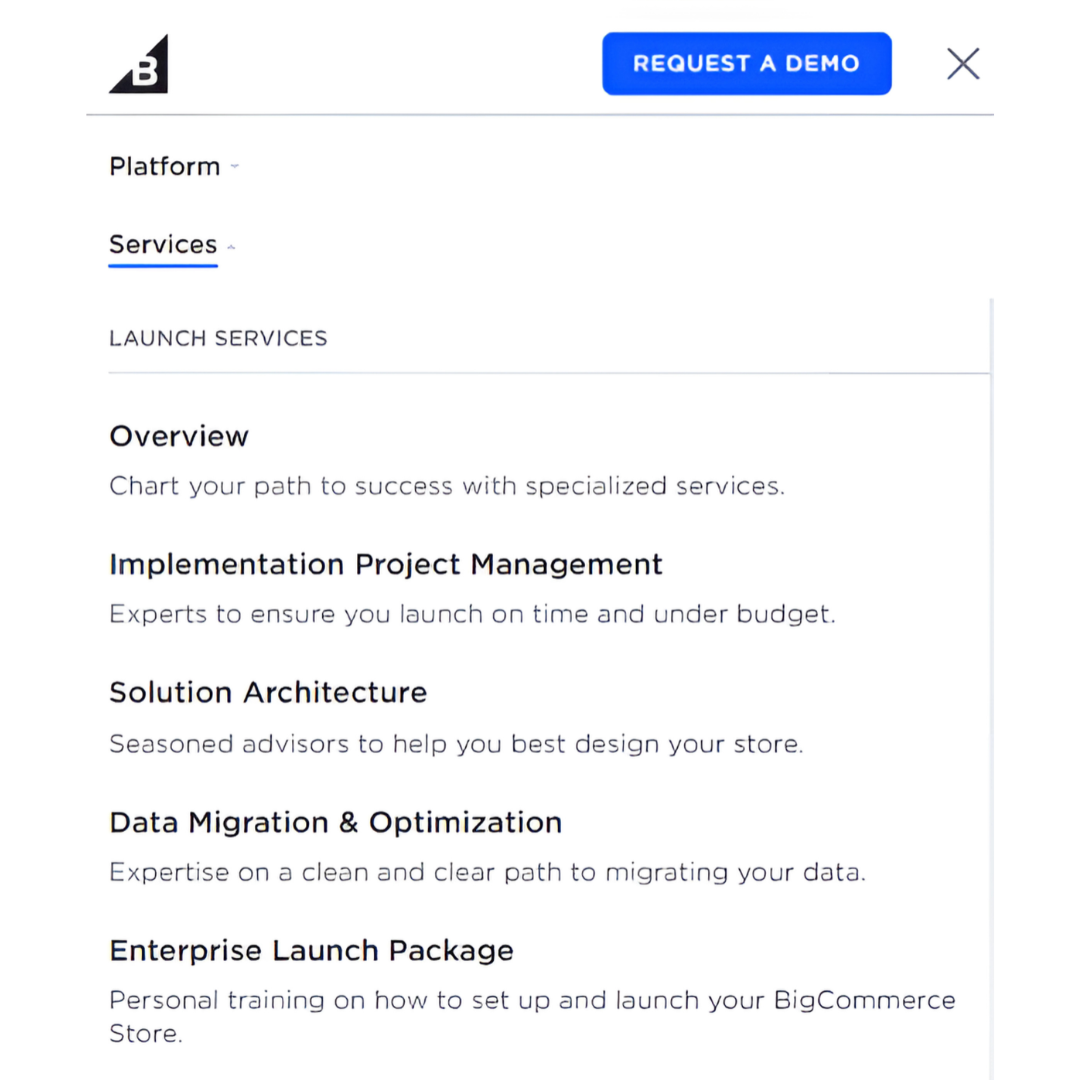
BigCommerce offers a variety of customizable themes and integrations to improve your store's appearance and functionality. Its built-in features make it easy to personalize your website without requiring advanced technical skills.
However, because BigCommerce is a hosted platform, its backend customization is more limited than open-source solutions. This makes it an excellent choice for businesses seeking simplicity, but it may not suit those with highly specialized requirements.
- Offers customizable themes and multiple integrations.
- Limited backend flexibility compared to open-source platforms.
- Simplifies customization for businesses without technical expertise.
Magento
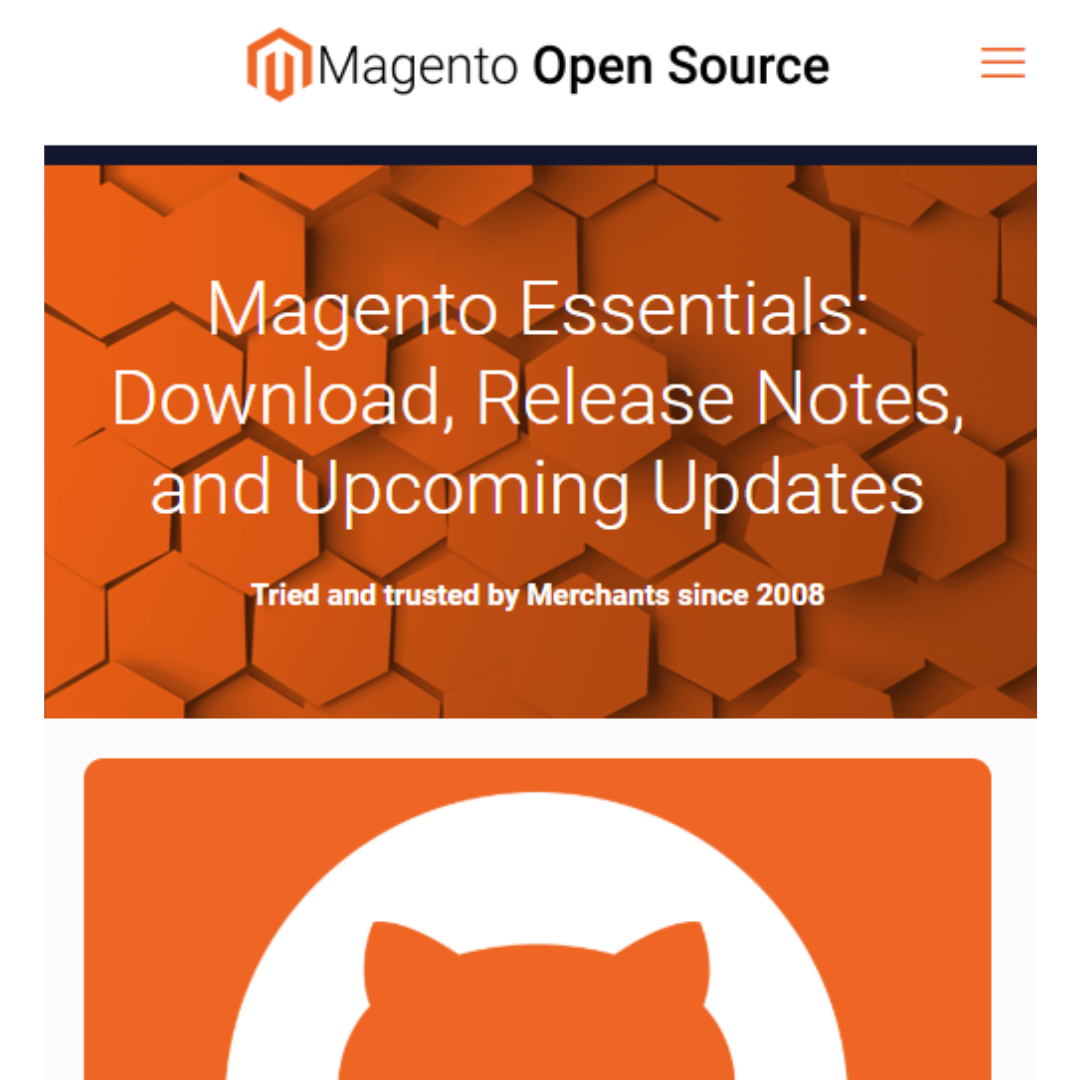
Magento offers one of the most flexible and customizable e-commerce platforms available. Developers can modify almost every aspect of the store, from its design and functionality to the backend, giving businesses a high level of control.
This flexibility makes Magento ideal for businesses with unique requirements or complex e-commerce operations. However, taking full advantage of its capabilities requires technical expertise, ongoing maintenance, and a larger investment of time and resources.
- Supports extensive customization, from design to advanced features.
- Best suited for businesses with unique and complex requirements.
- Offers exceptional control but requires experienced developers.
3. Scalability
Scalability is an important consideration when choosing an e-commerce platform. As your business grows, your platform should be able to handle increased traffic, larger product catalogues, and higher sales volumes.
BigCommerce
BigCommerce is well-suited for small and medium-sized businesses and can efficiently manage stores with growing traffic and sales. Its cloud-based infrastructure provides reliable performance as your business expands.
While BigCommerce supports business growth, it offers fewer advanced enterprise features than Magento. This may limit businesses with highly complex operations or large-scale customization requirements.
- Suitable for small and medium-sized businesses with growing traffic.
- Limited advanced scalability for large, complex operations.
- Provides reliable performance as your business grows.
Magento
Magento is designed to support large businesses and organizations with ambitious growth plans. Its flexible architecture can handle complex product catalogues, high transaction volumes, and international operations.
The platform also supports multi-store management and extensive customization, making it well suited for businesses with evolving requirements. However, achieving this level of scalability often requires experienced developers and ongoing technical maintenance.
- Ideal for large enterprises and rapidly growing businesses.
- Handles complex catalogues, multi-store setups, and global operations.
- Offers exceptional scalability with extensive customization options.
4. Pricing And Cost Analysis
Pricing is an important factor when selecting an e-commerce platform. Consider not only the monthly subscription costs but also expenses such as hosting, maintenance, extensions, and payment processing fees.
BigCommerce
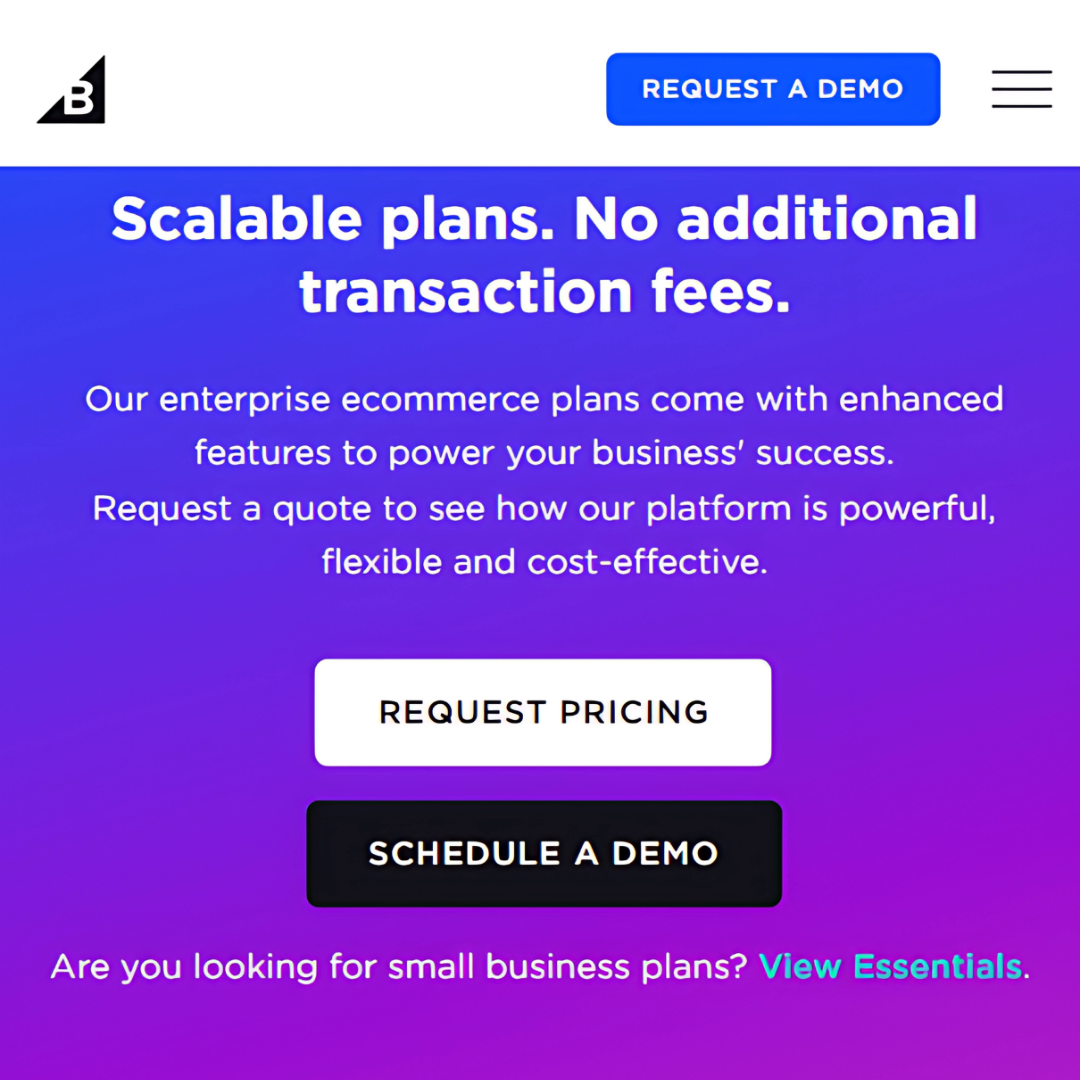
BigCommerce offers tiered pricing plans designed to suit businesses of different sizes. Its subscription plans typically include hosting, security, software updates, and customer support, making it easier to predict your monthly costs.
Depending on your chosen payment gateway and business requirements, additional fees or costs for premium apps may apply. Reviewing the available plans will help you select the option that best fits your budget and growth goals.
- Tiered pricing plans for businesses of different sizes.
- Hosting, security, and support are included.
- Additional fees may apply for certain payment gateways or premium apps.
Magento
Magento Open Source is free to download, but businesses are responsible for hosting, development, security, and ongoing maintenance costs. The total investment depends largely on the complexity of your online store and your technical requirements.
Adobe Commerce is the premium version, offering additional enterprise features, support, and cloud services. It is designed for larger businesses that require advanced functionality and are prepared for a higher overall investment.
- Magento Open Source is free to download.
- Hosting, development, and maintenance are additional costs.
- Adobe Commerce is designed for businesses requiring enterprise-level features.
5. SEO And Marketing
BigCommerce
BigCommerce simplifies website improvement by integrating SEO features like mobile-responsive designs, meta descriptions, and customizable URLs.
The platform also supports various marketing integrations, including Google Ads and social media platforms, enabling seamless promotion.
These features make BigCommerce a practical choice for businesses aiming for solid online visibility.
- Built-in SEO features like customizable URLs and mobile responsiveness.
- Supports marketing integrations such as Google Ads and social media.
- Simplifies online visibility for businesses without technical expertise.
Magento
Magento stands out for its advanced SEO capabilities, enabling businesses to implement custom strategies.
Developers can modify site architecture, metadata, and URLs to achieve superior search rankings. This customization potential provides a competitive edge, especially for businesses in highly competitive industries.
- Advanced SEO features for custom strategies and superior ranking potential.
- Developers can optimize site structure and metadata effectively.
- It is ideal for businesses needing tailored marketing approaches.
Wealthy Affiliate – Mini Review
If you’ve ever thought about turning your blog, passion, or niche into an online business,
Wealthy Affiliate (WA) is one of the most beginner-friendly platforms I’ve used.
It combines step-by-step training, website hosting, AI-powered tools,
keyword research, and an active community all in one place.
What I like most is that you can start free (no credit card needed), explore the platform,
test the tools, and connect with other entrepreneurs before upgrading.
WA isn’t a “get rich quick” scheme — success comes from consistent effort
and applying what you learn over time.
6. Third-Party Integrations And Extensions
Third-party integrations and extensions allow you to add new features and connect your online store with other business tools. Choosing a platform with strong integration options makes it easier to expand your store as your business grows.
BigCommerce
BigCommerce offers an extensive app marketplace with integrations for payment gateways, shipping providers, marketing platforms, and other business tools. Most integrations are easy to install, making it simple to extend your store's functionality.
Although the selection covers the needs of most businesses, it offers less flexibility than Magento's open-source ecosystem. This makes BigCommerce a practical choice for businesses looking for reliable integrations without extensive customization.
- Extensive app marketplace with essential business tools.
- Supports popular payment, shipping, and marketing integrations.
- Well suited for businesses seeking simple, reliable integrations.
Magento
Magento supports a wide range of third-party extensions that allow businesses to add advanced features and customize almost every aspect of their online store. Its open-source architecture provides greater flexibility when integrating with external tools and services.
This extensive ecosystem makes Magento an excellent choice for businesses with complex requirements or specialized workflows. However, installing and managing custom extensions often requires technical expertise.
- Extensive library of extensions for advanced functionality.
- Integrates with a wide variety of third-party tools and services.
- Ideal for businesses requiring advanced customization and flexibility.
7. Support And Community
Reliable support and a strong user community can make managing an e-commerce store much easier. Whether you're troubleshooting an issue or learning new features, access to helpful resources can save time and reduce frustration.
BigCommerce
BigCommerce provides customer support through live chat, email, and phone, helping users resolve issues quickly. It also offers an extensive knowledge base, tutorials, and training resources to support businesses at every stage.
These resources make BigCommerce an excellent choice for users with limited technical experience. Its combination of professional support and self-help tools helps businesses manage their stores with confidence.
- Customer support is available through live chat, email, and phone.
- Comprehensive knowledge base, tutorials, and training resources.
- Well suited for businesses seeking reliable and accessible support.
Magento
Magento benefits from a large global community of developers who contribute documentation, forums, extensions, and troubleshooting resources. These community resources provide valuable support for businesses managing Magento stores.
Adobe Commerce customers also have access to professional support services. However, businesses using Magento often rely on experienced developers or in-house technical teams to manage more complex issues.
- Large developer community with extensive documentation and forums.
- Professional support is available for Adobe Commerce customers.
- Best suited for businesses with technical expertise or developer support.
8. Security And Compliance
Security and compliance are essential for protecting your business and your customers. A secure e-commerce platform helps safeguard sensitive information, maintain customer trust, and meet industry standards.
BigCommerce
BigCommerce includes built-in security features that help protect online stores with minimal user configuration. The platform provides SSL certificates, secure payment processing, and PCI compliance as part of its hosted service.
Automatic security updates and managed infrastructure reduce the need for technical maintenance. This makes BigCommerce a practical choice for businesses that want strong security without having to manage it themselves.
- Includes built-in SSL certificates for secure transactions.
- PCI compliance is included in the hosted platform.
- Requires minimal technical effort to maintain security.
Magento
Magento provides extensive security features that can be customized to meet specific business requirements. This flexibility allows businesses to implement security measures that match their operational needs.
Because Magento is self-managed, users are responsible for configuring security settings, applying updates, and maintaining compliance with industry standards. Businesses often rely on experienced developers or IT teams to manage these responsibilities.
- Flexible security features with extensive customization options.
- Security settings and compliance require user management.
- Regular updates and maintenance help protect against vulnerabilities.
9. Use Cases And Business Suitability
The best e-commerce platform depends on your business goals, budget, and technical experience. While both BigCommerce and Magento are powerful solutions, each is better suited to different types of businesses.
BigCommerce
BigCommerce is well suited for small and medium-sized businesses looking for an easy-to-manage e-commerce platform. Its built-in features, cloud hosting, and straightforward setup make it ideal for businesses that want to launch and grow quickly.
The platform is an excellent choice for merchants who value simplicity, predictable costs, and minimal technical maintenance. It provides many of the essential tools needed to manage a successful online store.
When to choose BigCommerce
- You own a small or medium-sized business.
- You want a quick setup with minimal technical involvement.
- You prefer predictable monthly costs and built-in features.
- You want a hosted platform that requires little maintenance.
Magento
Magento is designed for businesses with complex e-commerce requirements and long-term growth plans. Its flexibility and extensive customization options make it well-suited for larger online stores and enterprise-level operations.
Businesses that choose Magento typically have access to experienced developers or dedicated IT teams. This allows them to take full advantage of the platform's advanced features and customization capabilities.
When to choose Magento
- You operate a large business or enterprise.
- You require extensive customization and advanced functionality.
- You have access to experienced developers or technical support.
- You plan to manage multiple stores or expand internationally.
Pros And Cons Of BigCommerce
BigCommerce is a popular e-commerce platform known for its ease of use and built-in features. Understanding its strengths and limitations can help you decide whether it is the right solution for your business.
Pros Of BigCommerce
User-Friendly Interface
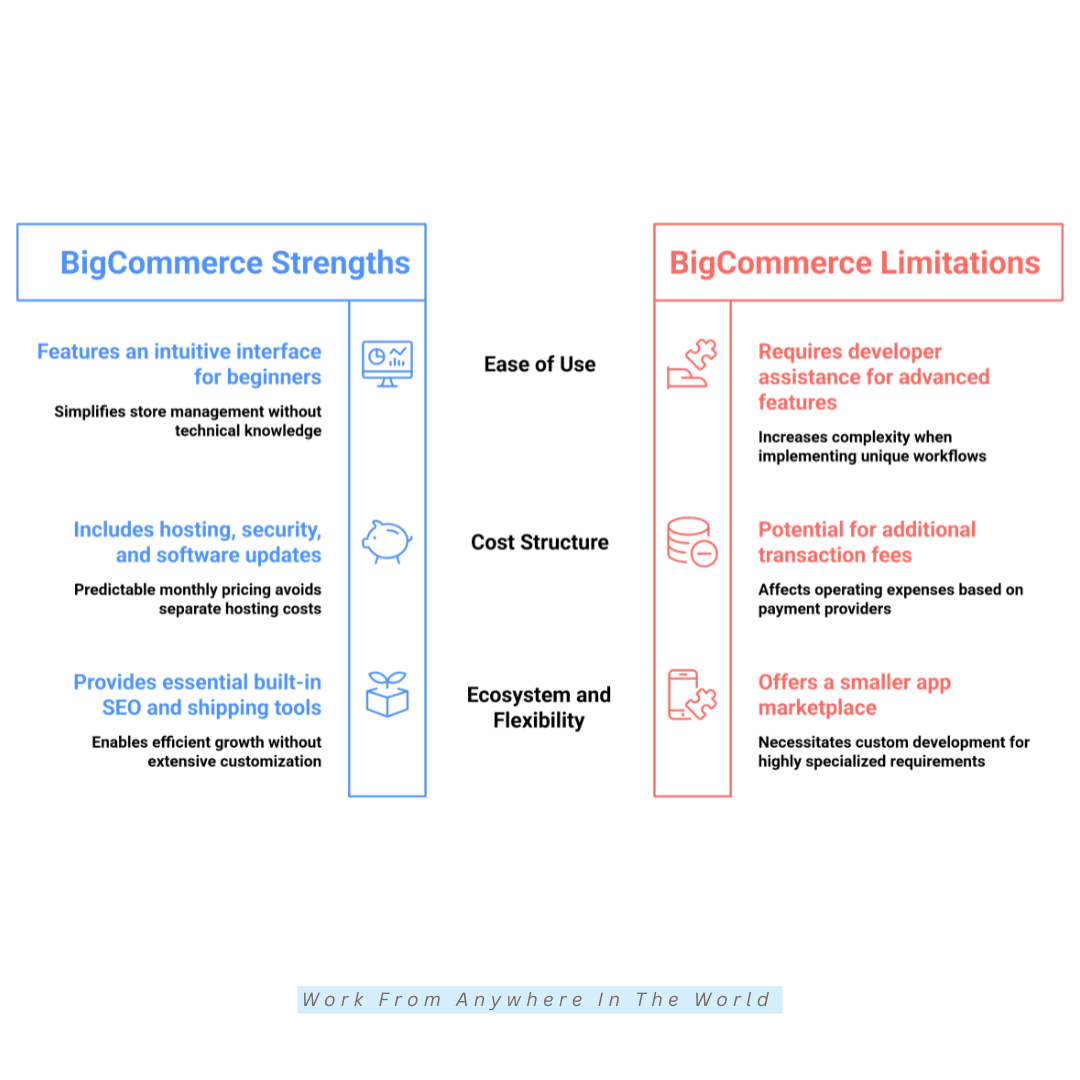
BigCommerce features an intuitive interface that makes it easy to build and manage an online store. Its user-friendly tools allow beginners and small business owners to get started without extensive technical knowledge.
The straightforward dashboard and built-in features simplify product management, store customization, and everyday tasks. This makes BigCommerce an excellent choice for businesses looking for a hassle-free experience.
Cost-Effective With Included Hosting
BigCommerce offers subscription plans that include hosting, security, and software updates. This all-in-one approach helps businesses avoid the cost and complexity of managing separate hosting services.
With predictable monthly pricing and essential features included, businesses can focus on growing their online store instead of maintaining the underlying infrastructure.
Ideal For Small And Medium-Sized Businesses
BigCommerce is well suited for small and medium-sized businesses seeking a reliable e-commerce platform. It includes built-in SEO tools, payment integrations, shipping options, and other essential features.
These tools allow businesses to launch and grow efficiently without requiring extensive customization or advanced development skills.
Cons Of BigCommerce
Despite its many advantages, BigCommerce has some limitations that may influence your decision. Understanding these drawbacks will help you determine whether the platform is the right fit for your business and long-term goals.
Limited Customization Options
Although BigCommerce offers many built-in features, its customization options are more limited than those of open-source platforms. Businesses requiring highly specialized functionality or unique workflows may find these restrictions challenging.
Customizing themes or adding advanced features often requires third-party apps or developer assistance. This can increase both the cost and complexity of managing your online store as your business grows.
Transaction Fees On Certain Payment Methods
Depending on your payment provider and pricing plan, additional transaction or processing fees may apply. These costs can affect your overall operating expenses, particularly if your business processes a large number of sales.
Before choosing a plan, compare the available payment options and pricing structure. Understanding the potential costs in advance can help you select the most cost-effective solution for your business.
Smaller App Marketplace
BigCommerce offers a wide selection of apps and integrations, but its marketplace is smaller than some competing platforms. Businesses with highly specialized requirements may need custom development or additional third-party solutions.
For most businesses, the available integrations will be more than sufficient for everyday operations. However, companies with complex workflows or niche requirements may prefer a platform that offers greater flexibility for extensions.
Pros And Cons Of Magento
Magento is a powerful e-commerce platform designed for businesses that require flexibility, scalability, and advanced customization. Understanding its advantages and limitations will help you determine whether it is the right choice for your business and technical requirements.
Pros Of Magento
Magento offers exceptional flexibility and advanced features for businesses with complex e-commerce requirements. Its powerful customization options make it a popular choice for companies that need greater control over their online stores.
Highly Customizable And Flexible
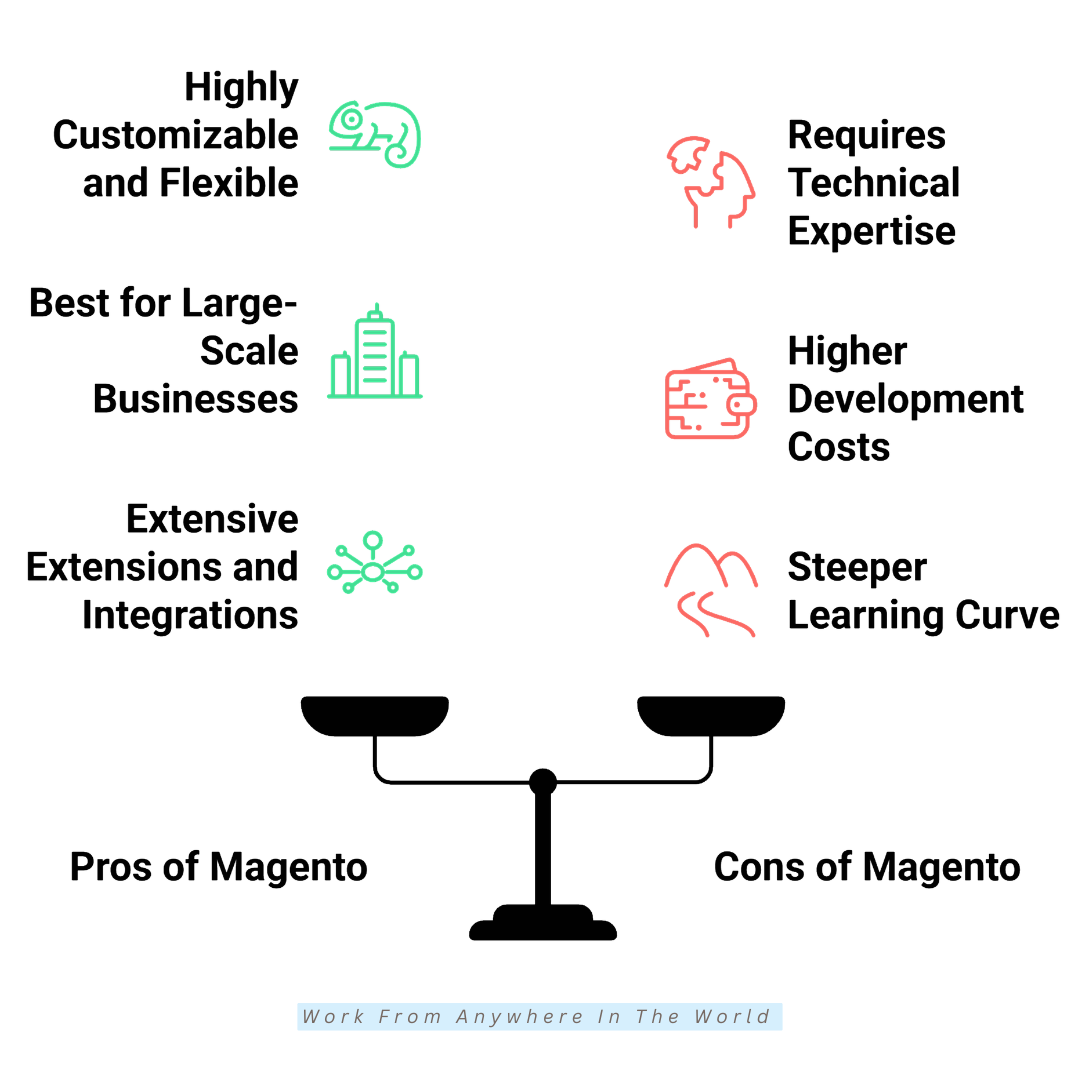
Magento gives businesses extensive control over the design, functionality, and performance of their online stores. Its open-source architecture allows developers to customize almost every aspect of the platform to meet specific business requirements.
This flexibility makes Magento well-suited for businesses with unique workflows, specialized features, or custom integrations. It is an excellent solution for companies that need more than a standard e-commerce platform can provide.
Best For Large-Scale And Enterprise-Level Businesses
Magento is designed to support businesses with large product catalogues, high website traffic, and complex business operations. Its scalable architecture allows companies to expand without outgrowing the platform.
The platform also supports multiple stores, international sales, and advanced customer management features. These capabilities make Magento a strong choice for businesses with ambitious long-term growth plans.
Extensive Extensions And Third-Party Integrations
Magento offers a large marketplace of extensions and third-party integrations that expand the platform's functionality. Businesses can connect payment gateways, shipping providers, CRM systems, inventory management tools, and many other business applications.
This extensive ecosystem allows companies to tailor their online stores to their specific operational requirements. As business needs evolve, additional features can be added without rebuilding the entire website.
Cons Of Magento
While Magento offers exceptional flexibility, it also presents challenges that may not suit every business. Understanding these limitations will help you determine whether the platform matches your budget, technical resources, and long-term goals.
Requires Technical Expertise
Magento is a powerful platform, but it requires technical expertise for installation, customization, and ongoing maintenance. Businesses often rely on experienced developers or dedicated IT teams to manage updates and resolve technical issues.
This can make Magento less suitable for beginners or small businesses without access to technical support. The additional expertise required should be considered before choosing the platform.
Higher Development And Maintenance Costs
Although Magento Open Source is free to download, the overall cost of running a Magento store can be significant. Expenses such as hosting, development, extensions, security, and ongoing maintenance can increase as your business grows.
For businesses with complex requirements, these additional costs may be worthwhile because of the platform's flexibility. However, smaller businesses should carefully evaluate whether the investment fits their budget and business objectives.
Steeper Learning Curve
Magento's advanced features and extensive customization options create a steeper learning curve than many hosted e-commerce platforms. New users may need additional time to become familiar with the platform and its capabilities.
Businesses without technical experience may also need training or professional assistance to manage their stores effectively. While the learning curve is greater, it provides access to powerful tools that support long-term business growth.
FAQs
Q1: Which Is Better For Beginners: BigCommerce Or Magento?
BigCommerce is generally the better choice for beginners because it is a hosted platform with an intuitive interface and built-in features. Magento offers greater flexibility but requires technical expertise to set up, customize, and maintain an online store.
Q2: Is Magento Better Than BigCommerce For Large Businesses?
Magento is often the preferred choice for large businesses because it offers advanced customization and enterprise-level scalability. It is also well suited for companies with complex requirements or international operations.
BigCommerce, however, is an excellent option for businesses that prefer a hosted platform with simpler management and built-in features. The best choice depends on your budget, technical expertise, and long-term business goals.
Q3: Which Platform Is Better For SEO?
Both BigCommerce and Magento include strong SEO features. BigCommerce provides built-in SEO tools that are easy to use, while Magento offers more advanced customization options for businesses with technical expertise.
Q4: Can I Migrate From BigCommerce To Magento Later?
Yes. Many businesses begin with BigCommerce and migrate to Magento as their requirements become more complex. Careful planning can help preserve your products, customer data, URLs, and search engine rankings during the migration process.
Conclusion
Choosing between BigCommerce and Magento ultimately depends on your business goals, budget, and technical expertise. Both platforms are powerful e-commerce solutions, but they are designed for different types of businesses and growth strategies.
BigCommerce is well suited for small and medium-sized businesses looking for an easy-to-use, hosted platform with built-in features. Magento is a better choice for businesses that require advanced customization, greater flexibility, and enterprise-level scalability.
Before making your decision, consider your current needs as well as your long-term growth plans. Selecting the platform that best aligns with your objectives and available resources will help position your e-commerce business for lasting success.
I trust you enjoyed this article on BigCommerce vs Magento: Which Platform Is Right For You? Please stay tuned for more insightful blogs on affiliate marketing, online business, and working from anywhere in the world.
Take care!
— JeannetteZ 🌍✨
💬 Your Opinion Is Important To Me
Do you have thoughts, ideas, or questions? I’d love to hear from you. Please leave your comments below or email me directly at Jeannette@WorkFromAnywhereInTheWorld.com.
📚 More Work From Anywhere Reads
🚀 Ready to Build a Business You Can Run from Home
Or from Anywhere in the World?
Imagine creating income on your terms — from home, a cozy café, or wherever life takes you.
With the right tools, training, and community support, it’s entirely possible.
Start your own online business for free — no credit card needed.
Disclosure
This post may contain affiliate links. As an Amazon Associate and participant in other affiliate programs, I earn from qualifying purchases at no extra cost to you. Please read my full affiliate disclosure.